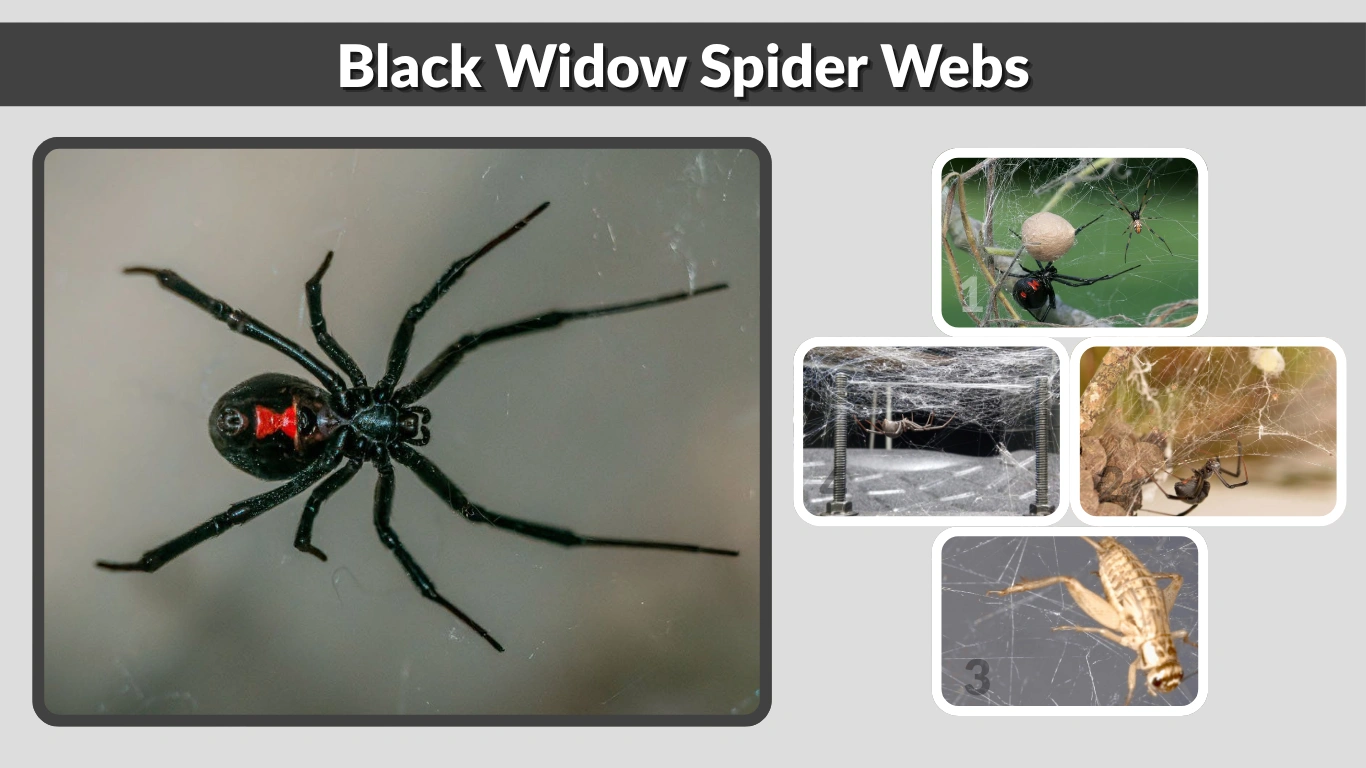
Black widow spider webs are among the most recognizable yet misunderstood structures in the spider world. While many people imagine classic circular orb webs, black widow webs look completely different—messy, irregular, and dense. Because these spiders prefer dark, hidden areas and build low to the ground, their webs often go unnoticed until the spider itself appears. Understanding what a black widow web looks like, where it forms, and how it differs from other spider webs is essential for safety, identification, and proper removal.
What a Black Widow Spider Web Looks Like
Black widow webs are not neat or symmetrical. Instead, they appear as tangled, uneven structures with sticky strands woven in multiple directions. They do not create circular patterns or spirals. The silk is extremely strong and slightly sticky to the touch, often thicker and more durable than webs from typical house spiders. Because the web extends three-dimensionally, it may look like a layered jumble of threads rather than a flat design.
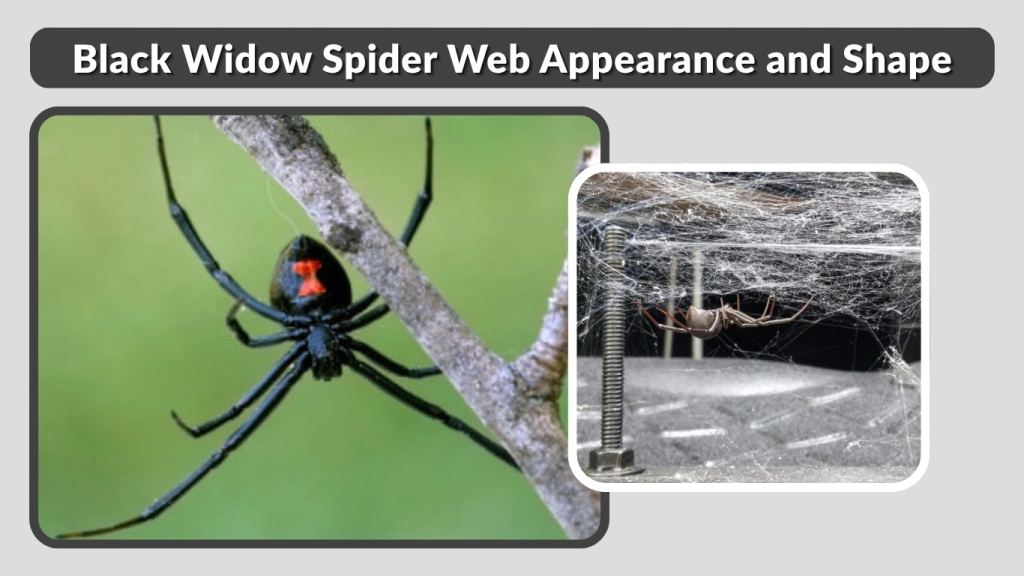
Black Widow Spider Web Appearance and Shape
Web Shape
The shape is irregular and chaotic, forming no clear pattern or organized center. Black widows intentionally build messy webs because they trap crawling insects rather than flying ones.
Texture and Silk Color
The silk is pale, slightly off-white, and incredibly strong. When light hits the strands, they may appear thicker than typical cobwebs.
Location of the Widow
The black widow typically hangs upside down in the web, displaying the red hourglass marking on its abdomen. This position is a key identification clue.
Where Black Widow Spider Webs Are Found
Black widows build webs in dry, dark, undisturbed locations. Outdoors, they frequently choose spots under patio furniture, inside woodpiles, around stone steps, under decks, and in sheds or barns. Indoors, webs may appear in garage corners, under appliances, inside cluttered storage areas, or along basement walls. Their preference for low, hidden areas makes their webs easy to overlook until they become larger or more populated.
Black Widow Spider Web Characteristics
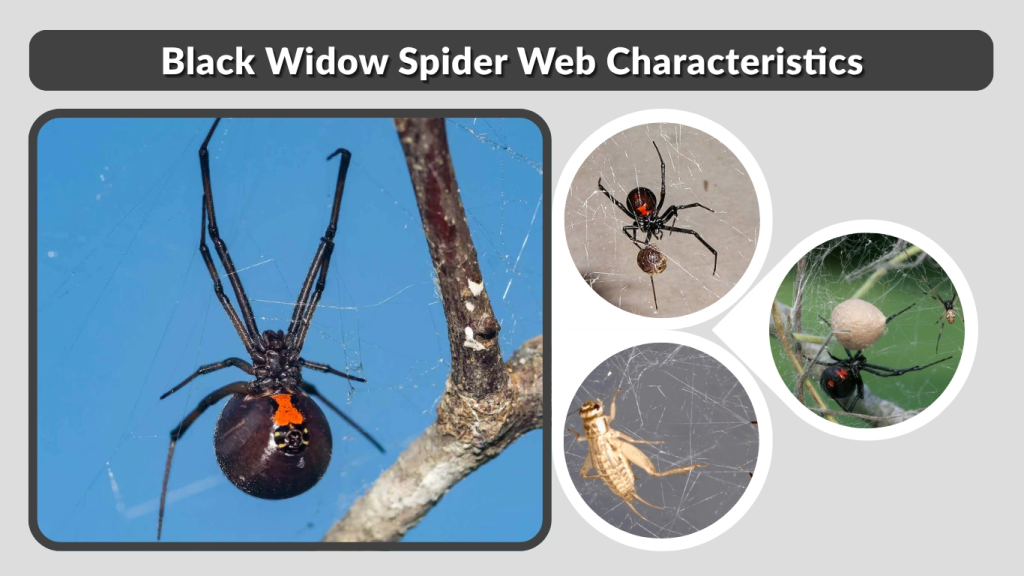
Black widow webs share several unique traits that set them apart from other spiders. The structure is dense, sticky, and designed to ensnare crawling insects like beetles, ants, and roaches. The material is strong enough that small insects often struggle immediately once caught. Unlike circular orb webs, black widow webs appear disorganized but are strategically constructed for maximum trapping efficiency. The spiders often create pockets or layers within the web, allowing them to move easily while prey becomes tangled.
Web Strength of the Black Widow Spider
Silk Durability
Black widow silk is stronger than many spider species of similar size. Its tensile strength allows it to withstand pressure, making it difficult to break even when stretched.
Comparisons to Other Spiders
Compared to ordinary cobweb spiders, the widow’s silk is thicker and more elastic. Orb weavers rely on delicate patterns, whereas widows rely on raw strength.
Uses and Scientific Applications
Researchers study black widow silk for its potential use in high-strength materials, including protective gear, synthetic fibers, and experimental lightweight armor.
Black Widow Spider Web vs Funnel Web Spider Web
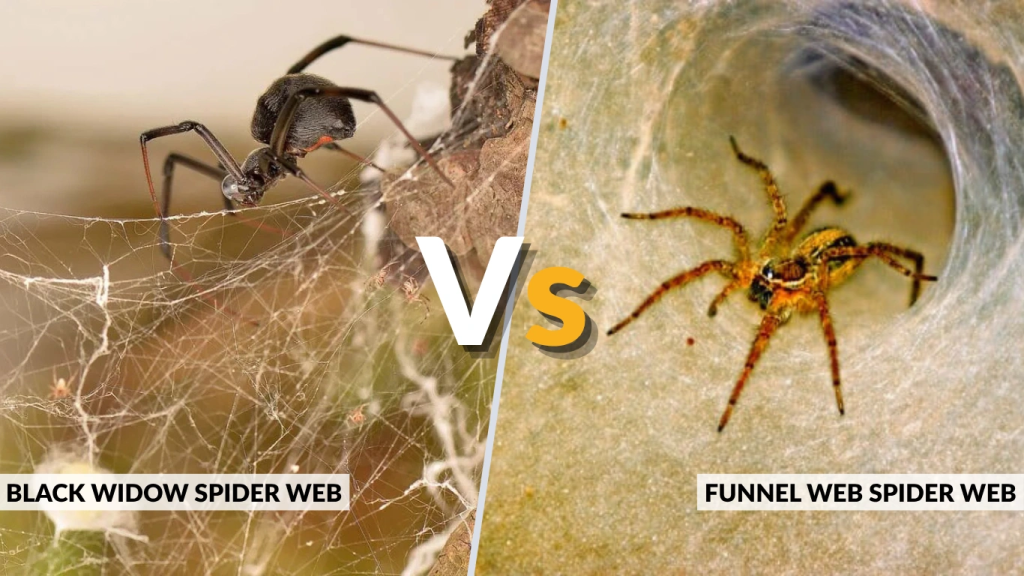
Black widow webs and funnel web spider webs are frequently confused, but they are very different. Funnel web spiders create a structured tunnel with a distinct opening, and the silk forms a sheet leading into the funnel. Black widow webs do not form tunnels or funnels. Instead, they are chaotic, sticky, and three-dimensional. Funnel webs are also built by a completely different species family, typically in moist soil areas rather than the dry sheltered places preferred by widows.
Black Widow Spider Web vs Other Spider Webs
Other spiders create webs that look far more organized. Orb weavers build circular webs, sheet-web spiders make flat layers, and house spiders typically make lighter cobwebs. Black widow webs, however, are heavier, messier, and constructed with stronger silk. Brown widow spiders make similar webs, but their silk is slightly less dense. False black widow spiders also produce messy webs, but these lack the widow’s distinctive thickness and strength.
False Black Widow Spider Web Identification
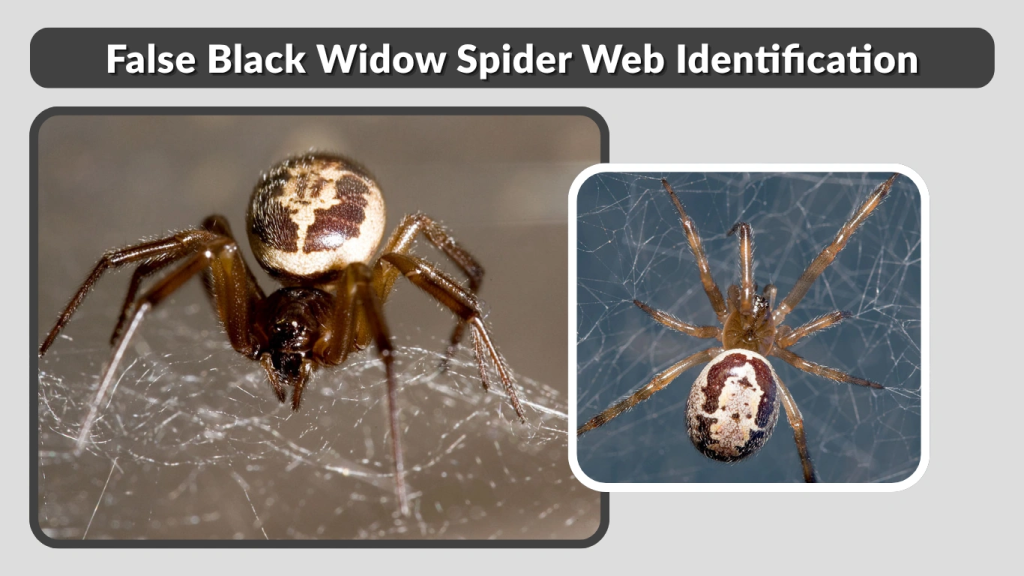
False black widow spiders (often mistaken for true black widows) also build messy webs, but there are notable differences. Their webs are thinner, less dense, and not as sticky. The silk strands feel weaker and break more easily when disturbed. False widows tend to build their webs slightly higher off the ground, and their egg sacs look different—more spindle-shaped rather than the rounder sacs of true black widows. While the web shape is still irregular, it lacks the heavy structure and layered thickness that characterizes a genuine black widow web.
How Black Widows Make Their Web
Behavior While Spinning
Black widows spin their webs mostly at night. They move with slow, deliberate steps, creating anchor points first and then adding strands in disorganized layers. Their web-building behavior is more instinctual than pattern-based, which explains the messy appearance.
Timing and Conditions
They prefer quiet, dark, dry environments where wind or movement won’t disturb the silk. Web construction often happens during warm weather when insect activity is highest.
Structure Formation
The web is created across multiple planes—horizontal, vertical, and diagonal. This design traps insects approaching from any direction. Black widows reinforce areas where prey is most likely to walk, creating a strong capture zone.
Black Widow Spider in the Web
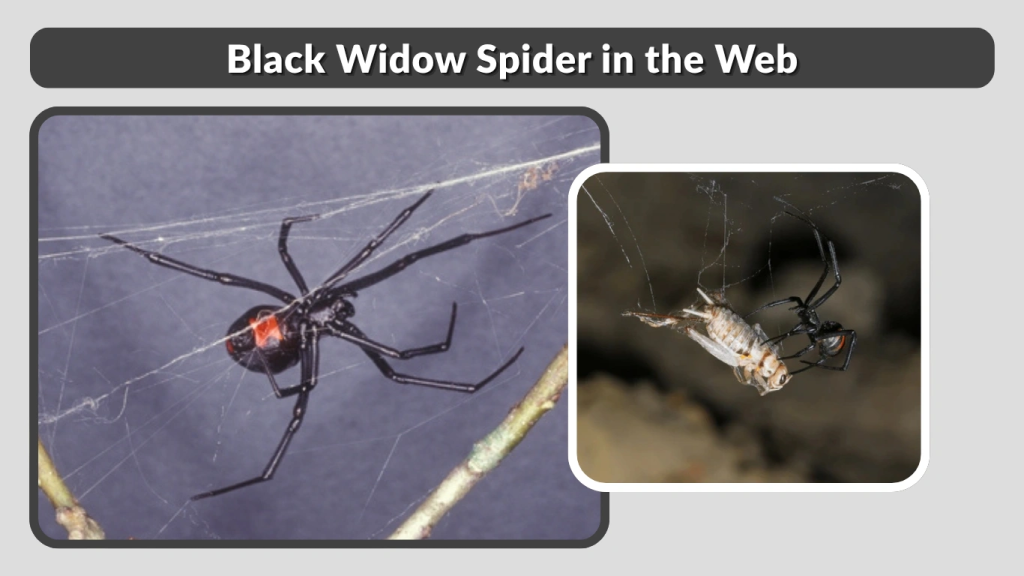
Black widows are typically found hanging upside down in the web, exposing the red hourglass marking on the underside of the abdomen. This unique position is intentional: it allows them to rapidly respond to trapped prey and defend themselves. When disturbed, they may retreat into a nearby crevice or remain perfectly still. The presence of prey remains, such as insect shells or dried husks, is a strong indicator that a widow is actively using the web. If multiple egg sacs are present, the web is likely a long-term nesting site.
Black Widow Spider Egg Sacs in the Web
Appearance
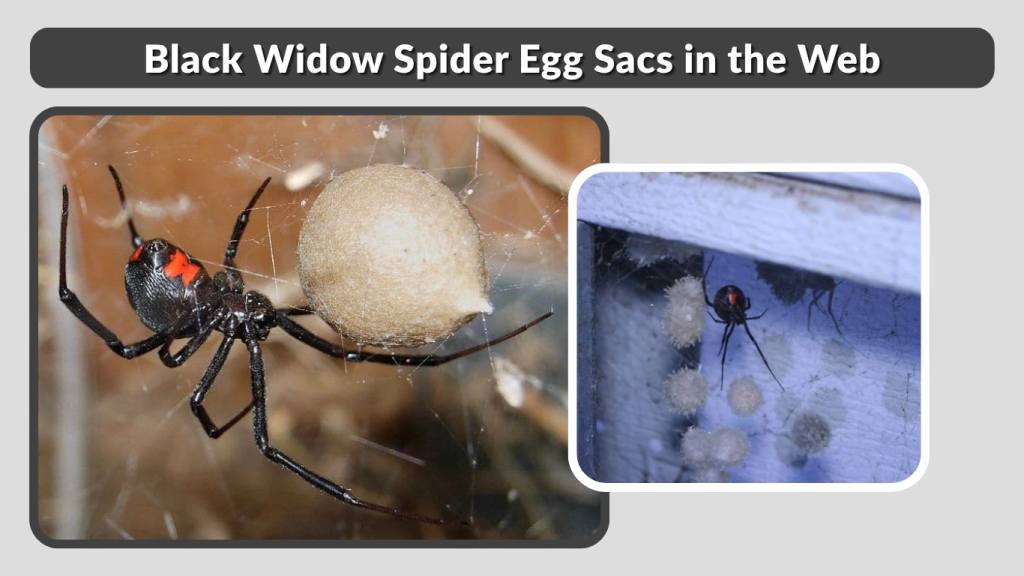
Black widow egg sacs are light beige or tan, round or slightly pointed depending on the widow species. They resemble small cotton balls hanging from the thickest part of the web.
Placement
Egg sacs are built in protected corners of the web—often tucked beneath shelves, behind boards, or inside hidden gaps. The female guards them closely.
Meaning of Multiple Sacs
If two or more sacs are present, the web has been active for a long time. Each sac can contain hundreds of eggs, which increases the likelihood of multiple young spiders emerging if the nest is undisturbed.
Black Widow Spider Web in the House
Finding a black widow web indoors is uncommon but possible, especially in garages, basements, and crawl spaces. Indoor webs are usually found low to the ground—behind boxes, under appliances, along wall corners, or beneath furniture. Since black widows prefer undisturbed environments, cluttered storage areas are ideal. Homeowners often discover the webs accidentally while cleaning or sorting stored items. Because of the spider’s venom, indoor webs should be handled carefully and removal should be done safely rather than rushed.
Black Widow Spider Food Web (Ecological Role)
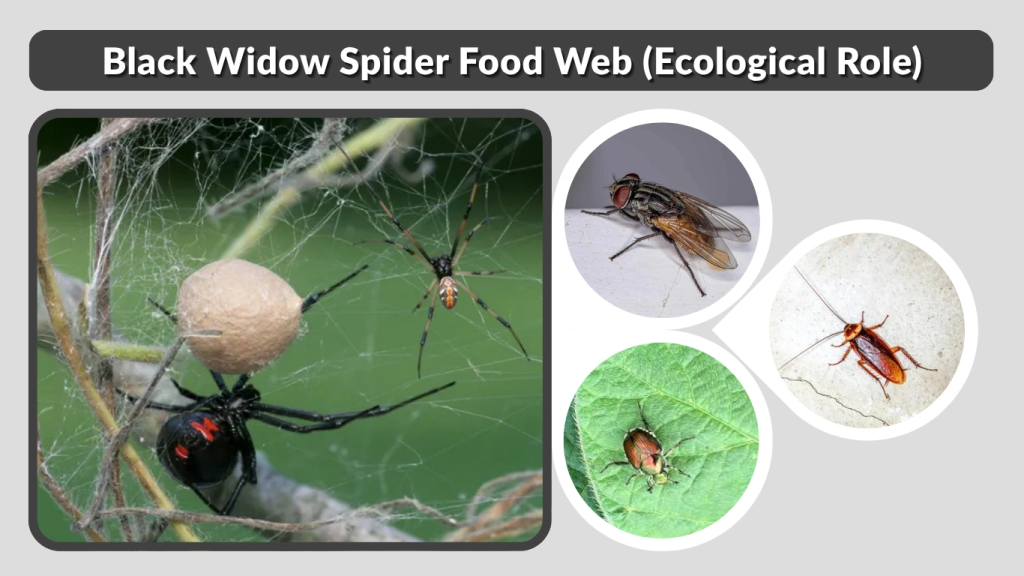
Black widows play an important role in the environment. Their webs trap common household pests such as flies, cockroaches, beetles, earwigs, ants, and moths. Despite their dangerous reputation, black widows help control insect populations and contribute to natural ecosystem balance. In the larger food web, black widows are both predators and prey: birds, lizards, wasps, and other spiders occasionally hunt them. Their webs support this role by providing a reliable way to capture prey efficiently.
Black Widow Spider Web Patterns in Art and Tattoos
Black widow webs not only hold biological importance but also strong cultural symbolism. In tattoos, a black widow spider web often represents power, resilience, danger, survival, or transformation. Some designs incorporate the spider hanging upside down from the web, while others feature web-only patterns with the signature hourglass motif. Many tattoo styles place these designs on the shoulder, elbow, or upper arm. A common misconception is that spider web tattoos are inherently racist; however, meaning depends entirely on the design, culture, and personal interpretation. A black widow-specific tattoo usually symbolizes confidence, control, or overcoming adversity.
Signs You May Have Black Widow Webs
Black widow webs provide several unmistakable signs. The tangled structure is dense and sticky, often thicker than typical cobwebs. If you notice insect remains stuck within the web or small round egg sacs, it’s likely occupied. A black widow hiding upside down near the web is the most conclusive indicator. Additionally, webs located low to the ground in dark corners are more typical of widows than other species. Regular inspections of garages, sheds, and storage spaces can help detect webs early.
How to Identify a Black Widow Web Safely
Identifying a black widow web should always be done without touching it. Start by observing the shape—if it looks messy, layered, and irregular, it may be a widow web. Use a flashlight to look for a spider hanging upside down. Look for egg sacs or insect remains. Avoid placing your hands near the web’s entry points and wear gloves if inspecting objects nearby. If identification is uncertain, professional removal is recommended to avoid accidental bites.
FAQs
1. What does a black widow spider web look like?
A black widow web is messy, irregular, and three-dimensional. It lacks the circular design of orb webs and instead forms tangled layers of sticky silk. The web is usually found low to the ground in dark, dry spaces.
2. Do black widows make funnel webs?
No. Funnel webs have a distinct tunnel entrance made by totally different species. Black widow webs are chaotic, sticky cobweb-style structures without any funnel or doorway-like shape.
3. How strong is a black widow spider web?
Black widow silk is extremely strong, thicker and tougher than the silk from many house spiders. It has high tensile strength and elasticity, which makes it difficult for insects to escape and interesting to researchers studying strong fibers.
4. How do I tell a false black widow web from a real one?
False black widow webs are less dense, weaker, and not as sticky. The strands break more easily and tend to be built slightly higher off the ground. Real widow webs have heavier, more durable silk and often contain egg sacs or insect remains.
5. What should I do if I find a black widow web in my house?
Avoid touching the web directly. Inspect from a safe distance, confirm the presence of the spider, and clear the area. Professional pest control is recommended, especially if egg sacs are present or if the web is in a frequently used area.