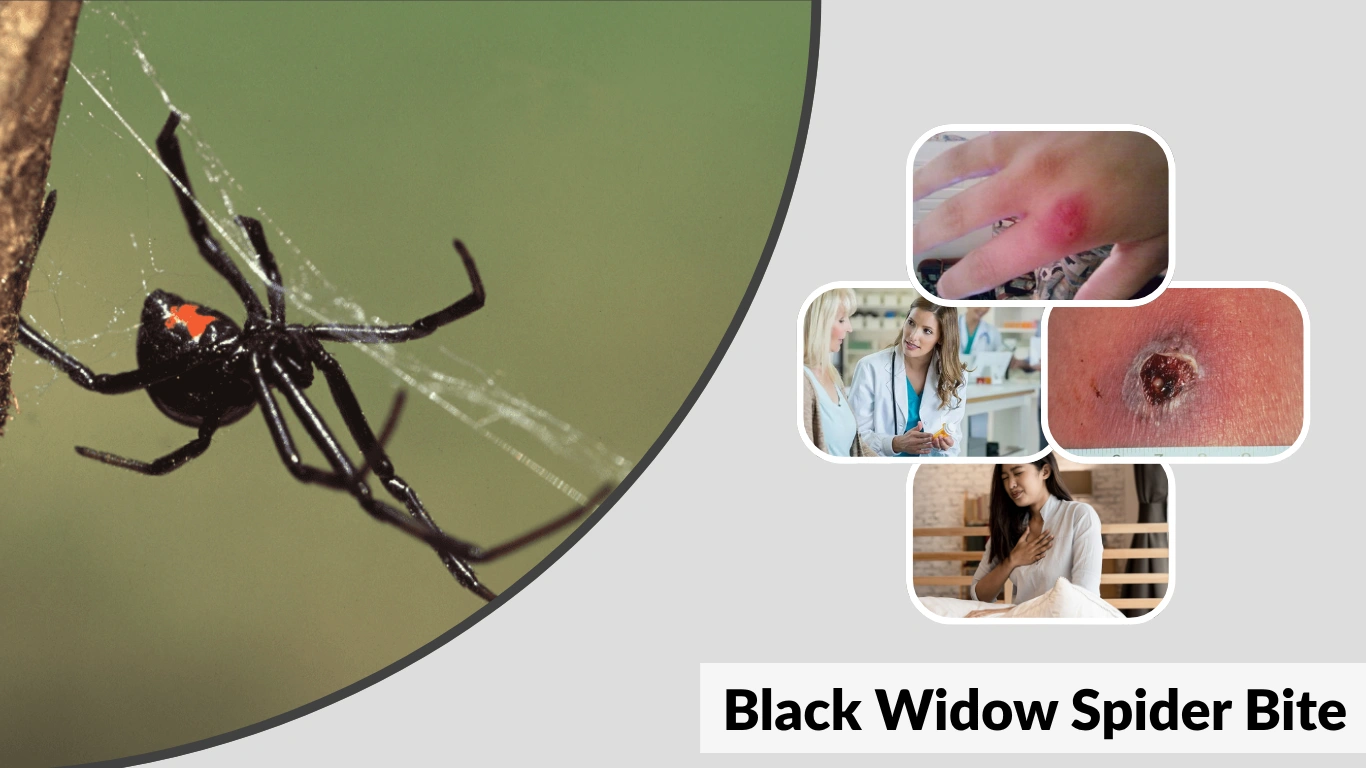
A black widow spider bite can be frightening because of the intense pain, muscle cramps, and unusual symptoms it can cause. Their venom is highly potent, and many people panic after noticing the classic red mark or swelling. Understanding what a black widow spider bite looks like, how symptoms progress, and what to do in the first 24–72 hours is essential for safety. This guide explains the stages, timelines, treatments, and key differences from other dangerous spiders such as brown recluse spiders. You’ll also learn what these bites look like on humans, dogs, and cats, and when to seek emergency care.
What Is a Black Widow Spider Bite?
How Black Widow Venom Affects the Body
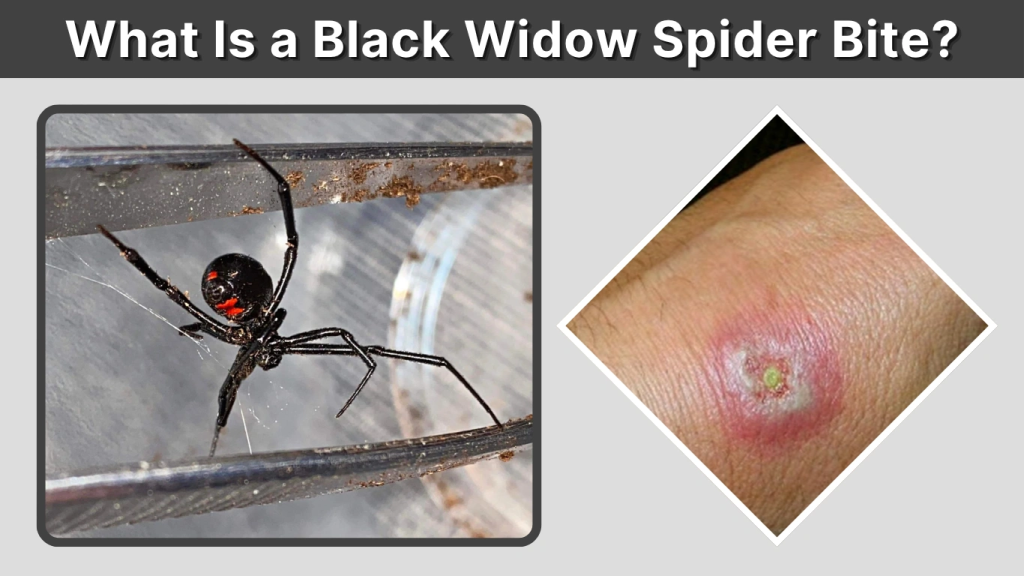
A black widow spider bite happens when the female spider injects neurotoxic venom into the skin. Female black widows are responsible for nearly all medically significant bites because they have much larger venom glands than males. Their venom contains alpha-latrotoxin, a powerful neurotoxin that affects the nervous system and causes severe pain, cramping, and systemic reactions.
When a black widow bites, it often feels like a pinprick or a sharp sting. Many people don’t immediately realize they were bitten until symptoms begin spreading. The venom quickly starts affecting nerves, causing muscles to contract involuntarily. Pain can radiate from the bite area to the chest, back, or abdomen, depending on where the bite occurred. Although extremely painful, most black widow bites are not fatal, especially with timely medical care.
What Does a Black Widow Spider Bite Look Like? (List Section)
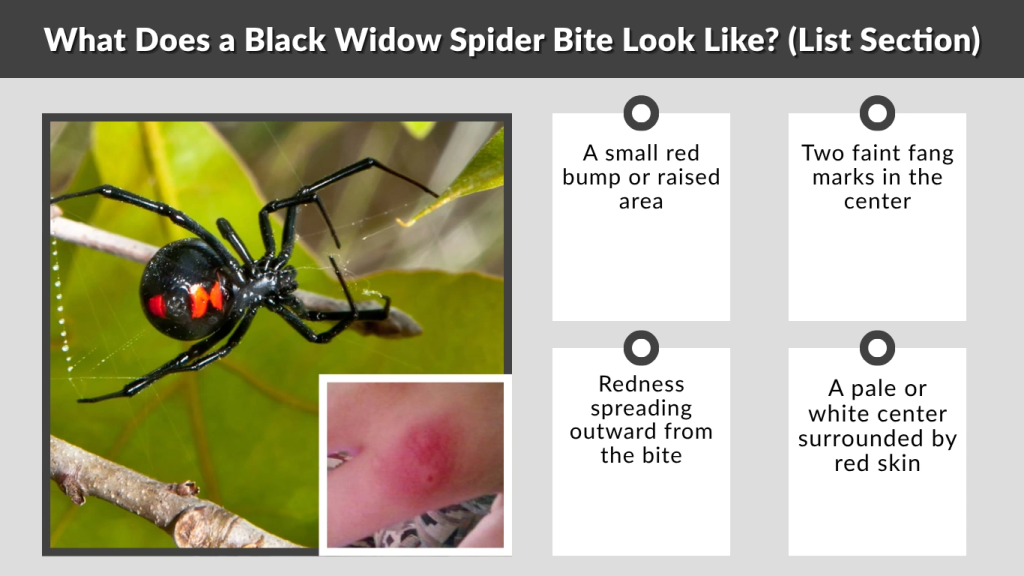
A black widow bite can look different depending on the stage. Here are common visual signs:
- A small red bump or raised area
- Two faint fang marks in the center
- Mild to moderate swelling
- Redness spreading outward from the bite
- A pale or white center surrounded by red skin
- Sensitivity or warmth at the site
- Appearance of a target-like pattern in some cases
- Unlike brown recluse bites, black widow bites rarely cause deep tissue death (necrosis)
Black Widow Spider Bite Symptoms
Early, Moderate & Severe Symptoms
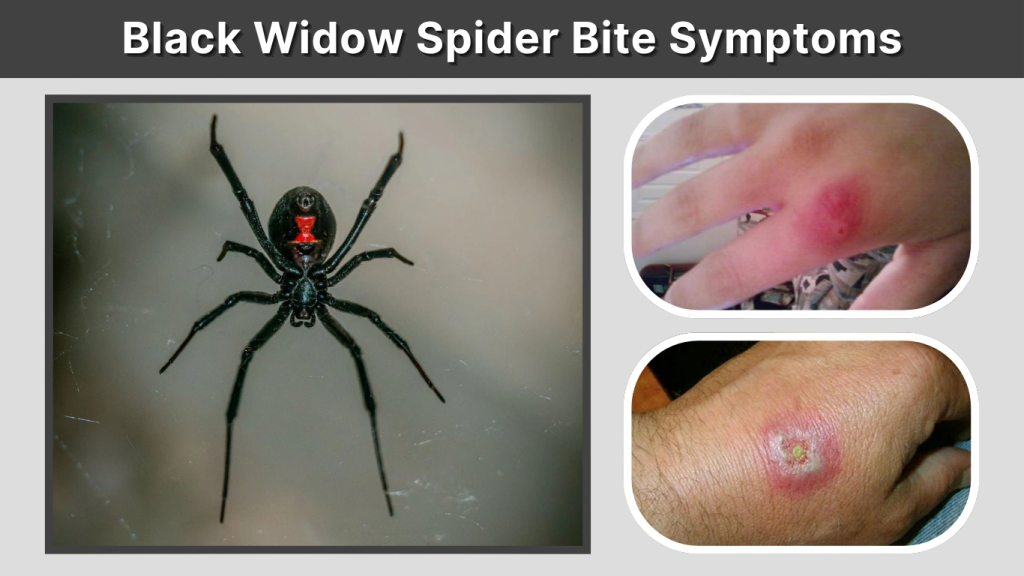
Symptoms of a black widow bite typically progress rapidly within the first hour. Early signs may be mild, such as local burning, redness, or small swelling. As the venom interacts with the nervous system, symptoms intensify.
Within 30 to 90 minutes, many people experience severe muscle cramps near the bite. These cramps often spread to the abdomen, back, or chest, sometimes being mistaken for a heart attack or appendicitis. Sweating, chills, and nausea are common as the body reacts to the toxin. In more serious cases, the nervous system triggers full-body effects, including tremors, vomiting, high blood pressure, or difficulty breathing.
Severe reactions are more likely in children, the elderly, and individuals with underlying health conditions. Fortunately, most symptoms improve with treatment, and serious complications are rare when medical care is sought promptly.
Black Widow Spider Bite Symptoms Timeline (List Section)
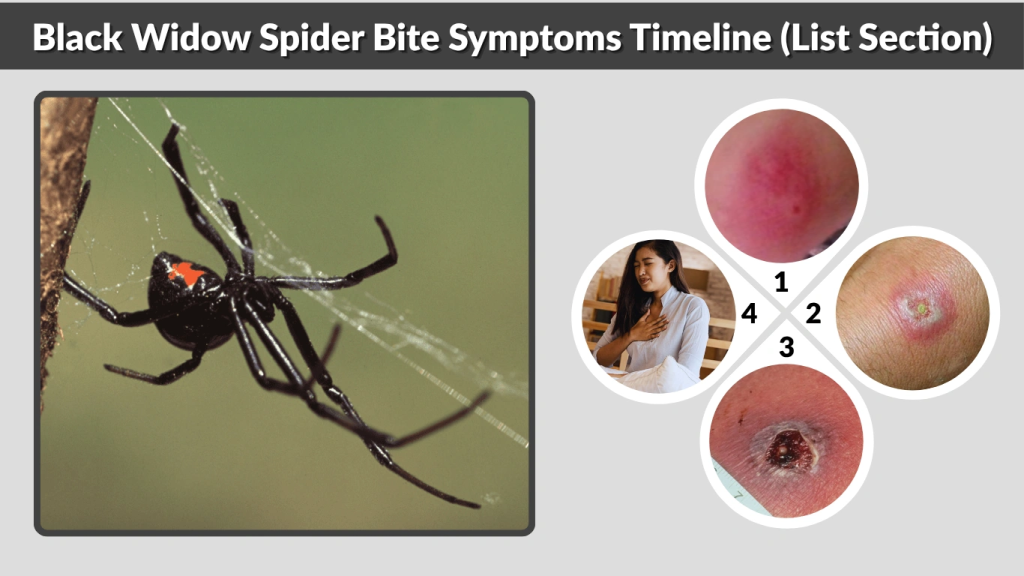
Here is how symptoms commonly progress:
- 0–10 minutes: Sharp sting or mild prick, redness begins.
- 10–60 minutes: Local swelling and burning intensify.
- 1–3 hours: Severe muscle cramps begin near the bite.
- 3–12 hours: Pain may spread to chest, back, or abdomen.
- 12–24 hours: Peak severity; sweating, nausea, or tremors possible.
- Day 1: Pain and cramps continue; bite area may darken.
- Day 2: Symptoms begin improving but discomfort persists.
- Day 3: Cramps decrease; fatigue may remain.
- 1–2 weeks: Full healing expected with proper care.
Black Widow Spider Bite Stages (With Pictures Guide)
A black widow bite progresses in distinct stages, each with noticeable visual changes. In the early stage, the bite may look like a small red welt or mosquito bite. Some people notice two tiny puncture marks, although they can be difficult to see. Within hours, swelling increases and a red halo may form around a pale or white center.
As the venom spreads, the area may feel tight or warm, even if the appearance doesn’t change dramatically. This is because black widow venom affects nerves more than skin tissue. In moderate stages, the bite may darken slightly or develop a target-like pattern. Severe systemic symptoms often occur without major changes to the skin. During healing, the swelling decreases, the redness fades, and the bite may scab lightly. Infection may occur if the area is scratched or improperly cleaned.
Black Widow vs Brown Recluse Spider Bite
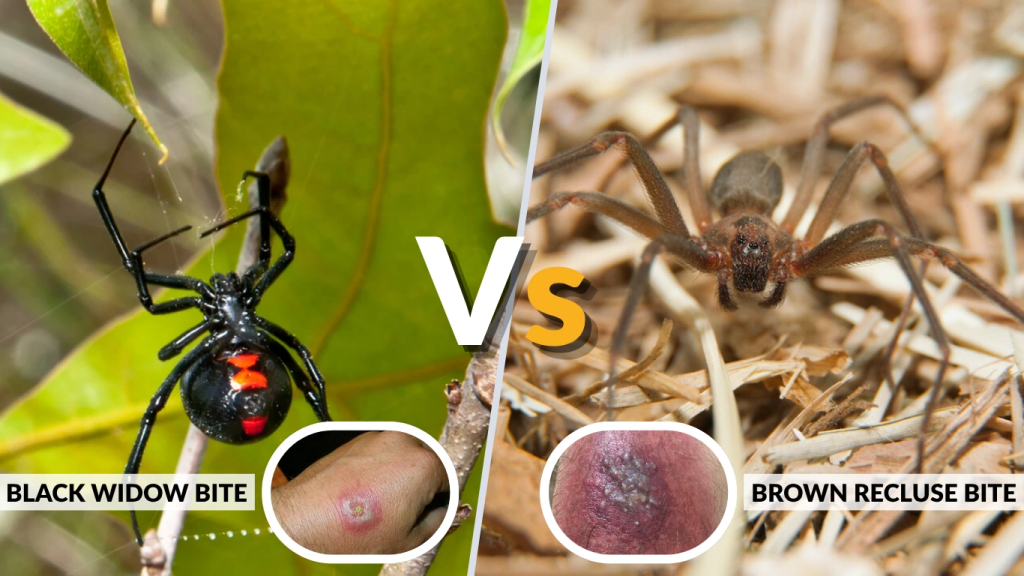
Key Differences & Warning Signs
Black widow and brown recluse bites are often confused, but their effects and appearances are very different. Black widow venom is neurotoxic, attacking the nervous system and causing intense, widespread pain. In contrast, brown recluse venom is cytotoxic, damaging tissue and potentially causing necrosis.
A brown recluse bite often forms a blister that later turns into a sunken ulcer with a dark, necrotic center. Black widow bites typically do not create deep wounds. Instead, they cause systemic symptoms like cramps, sweating, and intense nerve pain. Recognizing these differences helps ensure timely and appropriate treatment.
How Dangerous Is a Black Widow Spider Bite?
Black widow spider venom is highly potent, but modern medical care makes fatal outcomes extremely rare. The majority of people experience intense pain, cramps, and systemic discomfort, but they recover fully with proper treatment. Danger levels increase when the bite occurs on children, the elderly, or individuals with underlying health conditions. These groups may react more severely and should always seek immediate medical care.
Most healthy adults experience severe symptoms for the first 24–48 hours, followed by gradual improvement. Pain may linger for a few days, and fatigue can continue for a week or more. Although the venom affects the nervous system, long-term complications are uncommon. Seeking prompt treatment significantly reduces the risk of serious outcomes.
In extremely rare cases, uncontrolled muscle spasms, high blood pressure, or breathing problems can develop. These require immediate emergency intervention. With antivenom and improved medical support available today, the overall survival rate is extremely high.
Black Widow Spider Bite Treatment
First Aid Steps
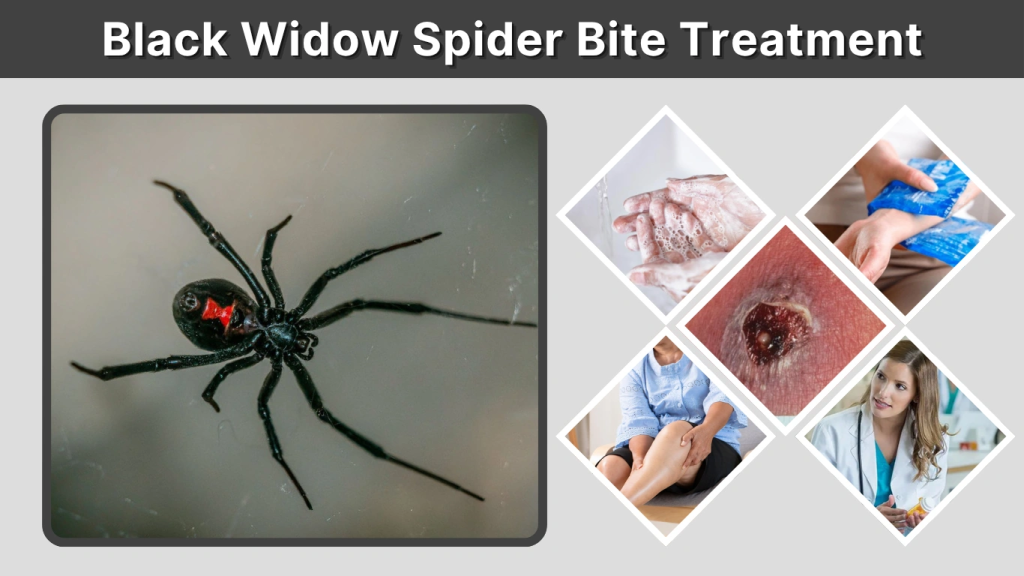
The first step in treating a black widow bite is cleaning the area with mild soap and water to remove bacteria. Applying a cold compress helps reduce swelling and temporarily numbs discomfort. Keeping the affected body part elevated slows the spread of venom and helps minimize inflammation.
Medical Treatment Options
If symptoms worsen quickly, medical professionals may administer strong pain relievers, muscle relaxers, or antivenom. Antivenom is reserved for severe cases but is highly effective. Hospitals monitor vital signs and manage complications such as high blood pressure or breathing difficulties.
Recovery and Symptom Management
After professional care, patients may still feel soreness or stiffness for several days. Mild stretching, hydration, and rest promote recovery. Over-the-counter pain relievers may help control lingering discomfort during the healing process.
When to Seek Emergency Care
Signs like vomiting, chest pain, breathing trouble, or full-body cramping indicate a severe reaction and require immediate treatment. Vulnerable individuals should always seek medical help—even if symptoms appear mild at first.
How to Treat a Black Widow Spider Bite at Home
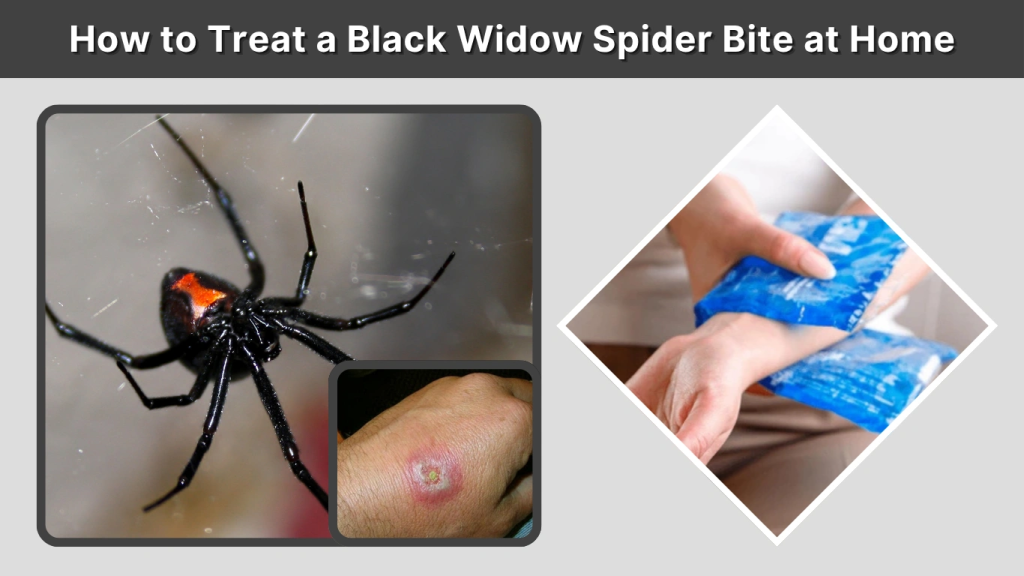
Home care can help manage mild symptoms while waiting for medical evaluation. Cold compresses and over-the-counter pain relievers reduce inflammation and ease discomfort. Antihistamines may help reduce itching and minor swelling. Hydration is essential because the venom can trigger muscle cramps.
Avoid outdated or dangerous remedies such as cutting the wound, applying heat, or attempting to remove venom manually. These methods increase the risk of infection or worsen symptoms. If cramps spread to the chest or abdomen, or if the bite begins to show signs of infection, medical treatment becomes necessary. In many cases, home treatment may relieve mild symptoms, but systemic effects typically require professional care.
Black Widow Spider Bite on Dogs and Cats
Symptoms in Pets
Dogs and cats often experience more severe reactions than humans because their bodies are more sensitive to neurotoxins. Pets may show signs such as muscle tremors, restlessness, drooling, vomiting, and intense pain. Cats are especially vulnerable and may deteriorate rapidly without treatment.
How the Bite Appears on Pets
Visually, a bite on a dog or cat may look similar to a small red bump or swollen area. The skin may feel warm or tender to the touch. However, pets often exhibit severe symptoms even when the bite looks relatively mild.
Emergency Care for Animals
If a pet displays symptoms like tremors, rigidity, or extreme distress, seek veterinary care immediately. Vets may administer antivenom, pain medication, and fluids to stabilize the animal. Early treatment significantly improves survival rates.
Pet Recovery Timeline
With proper treatment, many pets recover within 48–72 hours. Monitoring them closely for worsening symptoms is essential. Delaying veterinary care greatly increases the risks.
False Black Widow & Brown Black Widow Bites
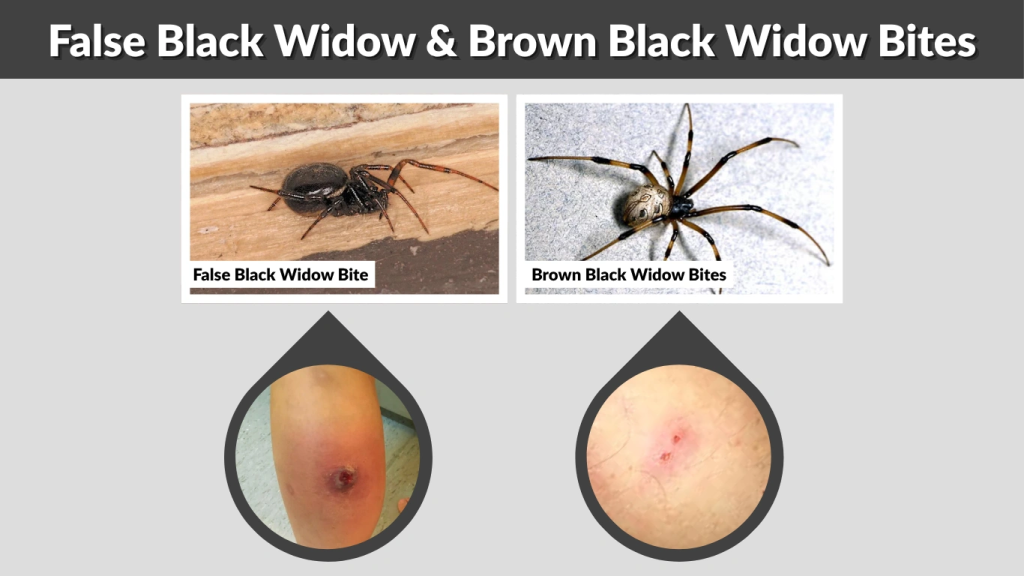
False black widows and brown widows belong to the same family but produce milder effects. Their bites typically cause localized pain, redness, or slight swelling. Unlike the true black widow, their venom rarely produces systemic symptoms.
Brown widows inject smaller amounts of venom and usually cause only moderate irritation. Their bites may form a small blister or red bump that resolves within a few days. False widows produce discomfort similar to a bee sting and rarely lead to serious reactions.
Identifying the spider can help determine bite severity. True black widows have a bright red hourglass, while brown widows display an orange or yellow marking. False widows lack vivid colors and have duller bodies. These bites are usually harmless and heal quickly with basic care.
When to Seek Emergency Care for a Black Widow Bite
Severe or Spreading Pain
If pain spreads rapidly or becomes unbearable, it may indicate a strong reaction to the venom. Pain radiating to the chest, back, or abdomen warrants immediate medical attention.
Breathing or Neurological Problems
Trouble breathing, chest tightness, dizziness, or tremors are serious symptoms. These may signal a dangerous systemic reaction requiring urgent treatment.
High Fever, Vomiting, or Elevated Blood Pressure
The venom may cause vomiting, sweating, fever, or rapid heart rate. These symptoms should be taken seriously, especially in children or older adults.
Special Risk Groups
Infants, elderly individuals, pregnant women, and people with chronic health issues are at higher risk for complications. They should always seek emergency care after a suspected black widow bite.
FAQs
Can a black widow spider bite kill you?
A black widow bite is extremely painful, but death is very rare with modern medical care. Severe reactions can occur in children, elderly adults, or people with weakened immune systems. With quick treatment—especially when antivenom is available—most individuals recover fully without long-term complications. Fatal cases are exceptionally uncommon today.
What does a black widow spider bite feel like?
Most people feel a sharp sting or pinprick at first. Within an hour, intense pain, burning, and muscle cramps begin spreading from the bite site. The discomfort often radiates to the back, chest, or abdomen. Many describe the pain as deep, throbbing, or similar to severe muscle spasms.
How long do black widow spider bite symptoms last?
Symptoms typically peak within the first 24–48 hours. Muscle cramps, stiffness, and pain gradually lessen over several days. Some individuals experience fatigue or mild soreness for one to three weeks. With proper treatment, most people recover fully without lasting effects, though severe cases may require medical monitoring.
What is the treatment for a black widow spider bite?
Treatment starts by cleaning the bite and applying a cold compress. Medical care may include pain relievers, muscle relaxers, IV fluids, or antivenom for severe cases. Most people improve quickly once treated. Seeking medical attention promptly greatly reduces the risk of complications and speeds up the recovery process.
What should you do if a black widow spider bites your dog or cat?
Pets often react more severely than humans. Dogs and cats may show tremors, vomiting, drooling, or extreme pain shortly after being bitten. Immediate veterinary care is critical because symptoms can worsen quickly. With fast treatment—such as pain relief, fluids, and antivenom—most pets have an excellent chance of full recovery.