A black widow spider bite progresses through several distinct stages, each marked by changes in pain levels, bite appearance, and systemic reactions. Because the venom affects the nervous system, symptoms often intensify quickly before easing over several days. Understanding this timeline helps you recognize normal progression, identify warning signs early, and determine when to seek emergency care. This guide explains the minute-by-minute, hour-by-hour, and day-by-day stages of a black widow spider bite, making the recovery process easier to understand.
What Happens When a Black Widow Bites?
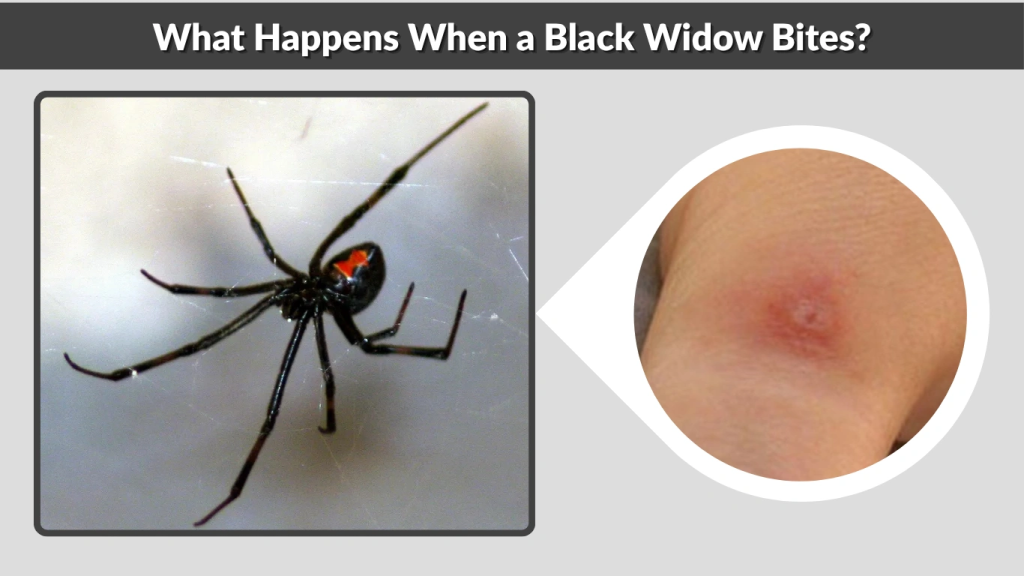
A black widow bite begins when the spider injects alpha-latrotoxin, a potent neurotoxin, into the skin. At the moment of the bite, many people feel a sharp pinprick, while others barely notice it. The venom does not cause major skin damage like a brown recluse bite; instead, it targets nerve endings, triggering intense muscle cramping and widespread pain.
During the first hour, the venom starts overstimulating the nervous system, causing local symptoms to spread outward. Pain may move from the bite area to nearby muscles, eventually reaching the chest, abdomen, or back. This spreading pain is one of the most recognizable signs of a black widow bite.
Although alarming, these reactions follow a predictable pattern. Most people experience the worst symptoms within the first 24 hours. With proper care, the likelihood of long-term complications is extremely low.
Early Bite Appearance (Minutes to Hours)

A black widow bite often looks mild at first. These early visual signs help identify the reaction:
- A small red bump or raised area
- Two tiny fang marks (often difficult to see)
- Mild swelling around the bite
- Warmth or tenderness
- Redness forming a small halo
- Slight tingling or burning sensation
Because the venom affects nerves, not skin tissue, the bite may look less dramatic than it feels. Most of the severe reactions occur within the body rather than on the surface.
Hour-by-Hour Timeline: First 12 Hours

0–30 Minutes
The bite may feel like a needle prick. Minor redness appears almost immediately. Some people dismiss it as a mosquito bite at first.
1–3 Hours
Localized pain becomes more noticeable. Muscle cramps usually begin near the bite area, gradually spreading outward. The skin may feel tight or warm.
3–6 Hours
Symptoms intensify. Pain and cramping move toward the back, chest, or abdomen depending on the bite location. Sweating and chills may develop as the nervous system reacts.
6–12 Hours
This is often the peak stage of discomfort. Severe muscle spasms, restlessness, nausea, and full-body tension may occur. People sometimes mistake these symptoms for heart or gastrointestinal problems.
Black Widow Bite: Day 1 Progression

Day 1 is typically the most painful and challenging stage. Symptoms reach their highest intensity and can last several hours. Pain may radiate across large muscle groups, making movement or rest uncomfortable. Abdominal rigidity is common, giving the stomach a tight, cramp-like feeling. Some individuals experience headaches, sweating, or sensitivity to touch.
Breathing usually remains normal, but the chest muscles may feel tight or strained. While these symptoms can be frightening, they are part of the expected reaction. Most people who seek medical attention on Day 1 recover quickly with proper treatment. Pain medications, muscle relaxers, and antivenom (in severe cases) dramatically reduce discomfort.
As Day 1 ends, symptoms may begin to ease slightly, although fatigue and soreness remain. The bite mark itself may darken or form a mild scab, but significant skin damage is unusual.
Black Widow Bite: Day 2 Symptoms

On Day 2, symptoms begin to slowly decline, although noticeable discomfort may continue. Many people experience:
- Persistent muscle stiffness
- Reduced but lingering pain
- Fatigue and weakness
- Mild headache
- Decreased swelling around the bite
- Generalized body soreness
Day 2 is often less intense but can still be uncomfortable. The worst danger has usually passed, though high-risk individuals should remain cautious.
Black Widow Bite: Day 3 & Recovery Stage
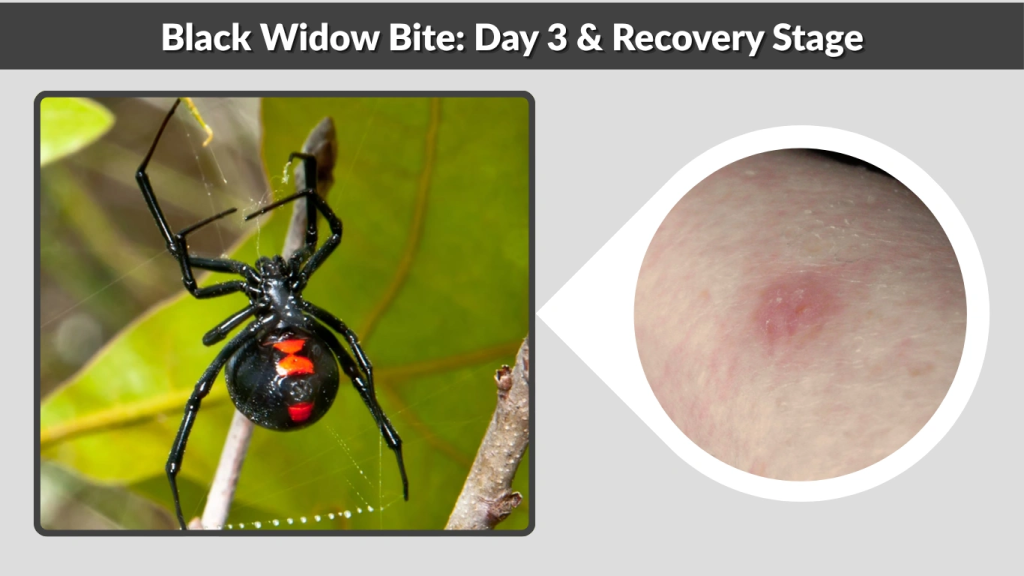
By Day 3, most people notice a significant decrease in pain and cramping. The intense muscle spasms have usually subsided, and symptoms become more manageable. Some individuals still feel tightness in major muscle groups, especially if the bite occurred on the leg, arm, or torso. Fatigue is very common during this stage because the body has expended a large amount of energy responding to the venom.
The bite mark itself may appear slightly darker or lightly scabbed. Redness often begins to fade, and swelling becomes minimal. Although the worst is over, it’s normal to have lingering soreness, particularly when moving or stretching. Some people also report feeling emotionally drained, as the effects of the venom and the stress of the symptoms can leave them exhausted.
Full recovery often begins at the end of Day 3. Many people return to normal activities at this point, but those who experienced severe reactions may continue to rest for several more days. Hydration, gentle movement, and warm baths can help relieve the residual stiffness.
Healing Stages & Bite Mark Changes (With Photos Guide)

Early Stage Appearance
During the first few hours, the bite may look like a small red bump or a mild swollen area. Some bites develop a pale center surrounded by redness, resembling a small target. The area remains tender but usually doesn’t show dramatic changes.
Mid-Stage Appearance
As symptoms progress, the bite mark may darken slightly. The surrounding skin can appear tighter due to muscle tension and inflammation. A faint halo of redness may spread outward a small distance. Unlike brown recluse bites, black widow wounds rarely blister or decay.
Late Stage Appearance
During recovery, the redness fades, and the bite may form a tiny scab. The skin gradually returns to normal, although some people experience slight discoloration for several days. Pain becomes minimal and is usually localized to the bite area only.
Signs of Infection
While infection is uncommon, you should watch for increasing redness, heat, swelling, pus, fever, or painful worsening. These symptoms indicate bacterial involvement rather than venom effects.
Black Widow Bite Stages vs Brown Recluse Bite Stages

Venom Differences
Black widow venom is neurotoxic, affecting the nervous system and causing severe pain and cramping. Brown recluse venom is cytotoxic, destroying skin tissue and leading to ulcers.
Wound Appearance
A brown recluse bite often develops a blister that breaks open, leading to a sunken wound with a dark necrotic center. Black widow bites rarely ulcerate. Their appearance is usually mild but accompanied by intense body symptoms.
Symptom Timeline Comparisons
Black widow symptoms escalate quickly—often within 1–3 hours—and peak by the first night. Brown recluse symptoms may take 12–24 hours to become noticeable and can worsen over several days as tissue damage progresses.
When Misdiagnosis Happens
Many people mistake black widow pain for internal issues and brown recluse wounds for infections. Knowing the differences helps ensure proper treatment and prevents unnecessary worry.
Severe Reaction Timeline (High-Risk Cases)
Some individuals may develop dangerous complications. These symptoms follow their own timeline:
- Rapid increase in blood pressure
- Difficulty breathing or chest tightness
- Full-body cramping or tremors
- Excessive sweating
- Vomiting or nausea
- Severe abdominal rigidity
- Dizziness or confusion
These reactions require immediate medical care. Prompt treatment dramatically reduces the risk of lasting complications.
Black Widow Bite Healing Timeline: 1–2 Weeks
During the first week, the body begins repairing strained muscles and calming the nervous system. Most symptoms fade within three to five days, but mild soreness can continue for up to two weeks, especially in people who experienced widespread cramping. The bite mark usually heals quickly, often disappearing completely within a week.
Some people experience residual fatigue or muscle sensitivity, particularly in the area where the symptoms were strongest. This is normal and typically resolves without additional treatment. By the second week, most individuals feel fully recovered and return to their normal routines with little discomfort.
When to Get Medical Help (Emergency Signs)
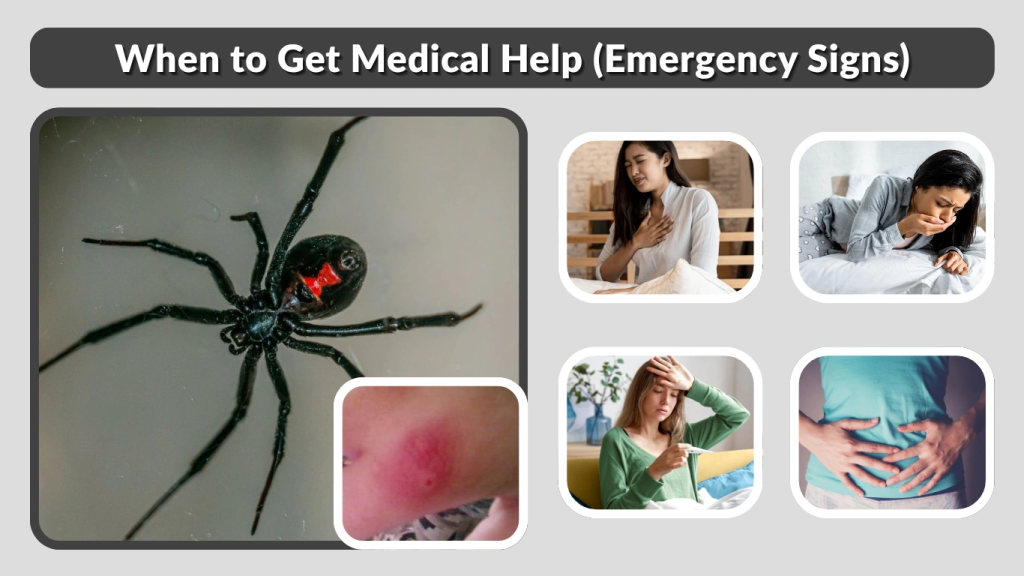
Black widow bites are rarely fatal, but certain symptoms should never be ignored. Seek immediate medical attention if you experience:
- Severe or spreading pain that worsens rapidly
- Breathing difficulty or chest tightness
- Uncontrollable vomiting
- High fever or chills
- Worsening abdominal cramps
- Signs of infection at the bite
- Muscle spasms that do not improve
- Symptoms affecting children, pregnant women, or elderly adults
FAQs
1. What are the first signs of a black widow spider bite?
Early signs usually include a sharp pinprick sensation, mild redness, and slight swelling. Within 30–60 minutes, localized pain increases and muscle cramps begin near the bite. Although the skin looks normal or slightly irritated, the internal symptoms—especially spreading cramps—are the key early indicators.
2. How long does a black widow bite take to heal?
Most people recover significantly within three to four days, with the worst symptoms occurring during the first 24 hours. Mild soreness, fatigue, or muscle stiffness may linger up to two weeks. The bite mark itself often heals quickly and may disappear within a few days without leaving a scar.
3. Can symptoms appear days after being bitten?
Symptoms usually begin within the first hour, but some mild effects—like fatigue, sensitivity, or muscle tightness—can appear or return in the days following the bite. Delayed symptoms are common in cases where the body reacts slowly to the venom or during the recovery phase.
4. When is antivenom needed for a black widow bite?
Antivenom is recommended when pain is severe, muscle spasms become uncontrollable, or symptoms spread rapidly through the body. It is especially helpful for children, older adults, or people with underlying health issues. Antivenom provides fast relief, often reducing symptoms within hours.
5. Do all black widow bites cause severe symptoms?
No. Not all bites inject venom, and even venomous bites vary in severity. Some people experience only mild discomfort and localized pain. Others, particularly high-risk individuals, may develop intense cramps and systemic reactions. Quick medical attention helps keep symptoms manageable and prevents complications.