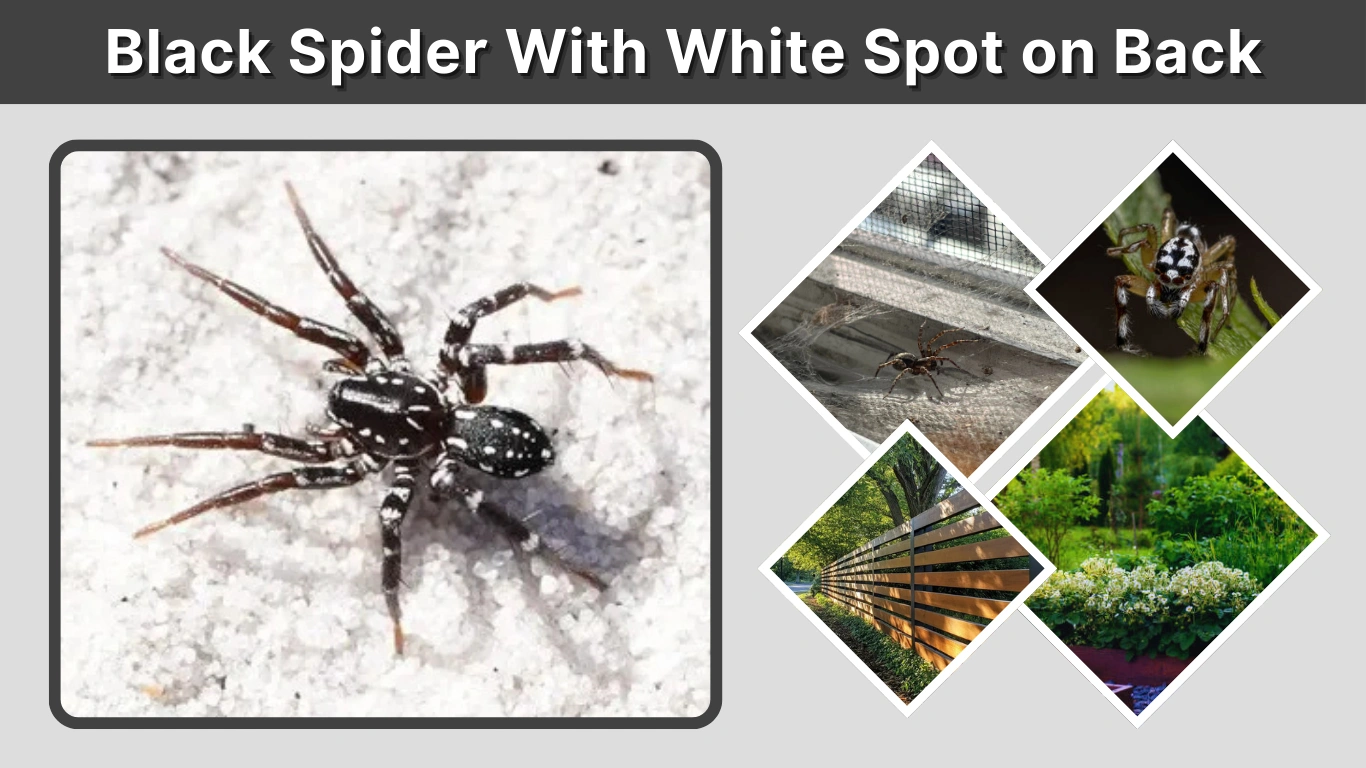
A black spider with a white spot on its back can refer to several different species, and these sightings often cause confusion or concern. Many people encounter these spiders in homes, gardens, garages, and wooded areas, especially in warm months. While some species are tiny and harmless, others—like young widow spiders—may pose a risk. This guide helps you identify the most common black spiders with white spots, understand their behavior, learn their habitat, and determine whether they’re dangerous to people or pets.
Identification
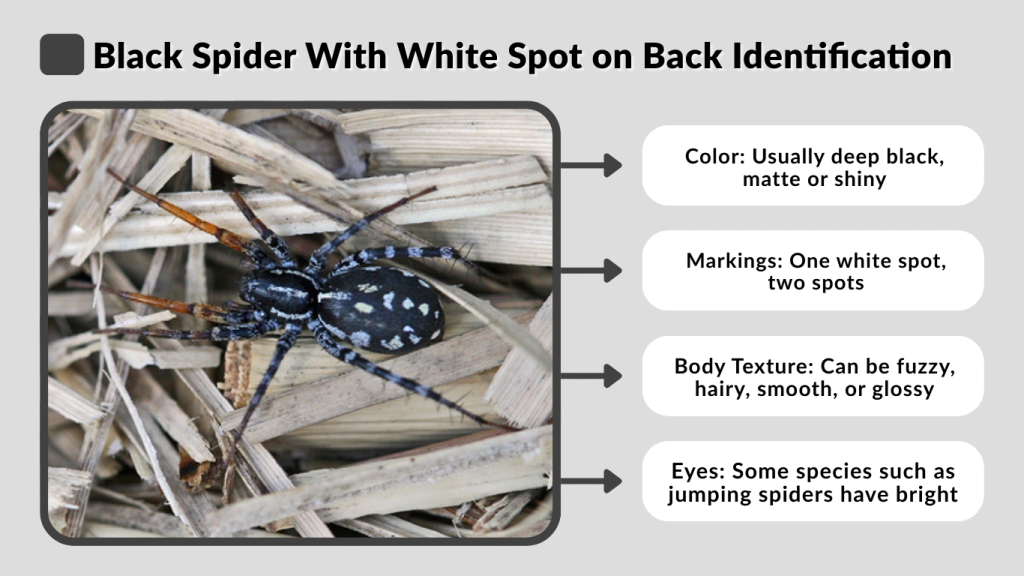
- Color: Usually deep black, matte or shiny
- Markings: One white spot, two spots, or clusters of 3–4 white dots
- Body Texture: Can be fuzzy, hairy, smooth, or glossy
- Eyes: Some species such as jumping spiders have bright, forward-facing eyes
- Fangs/Mouthparts: Metallic green or iridescent in some jumping spiders
- Size Range: From tiny 3–5 mm spiders to large orb-weavers over 15 mm
These features vary by species but give you a quick start when trying to identify the spider you found.
Common Species That Match the Description
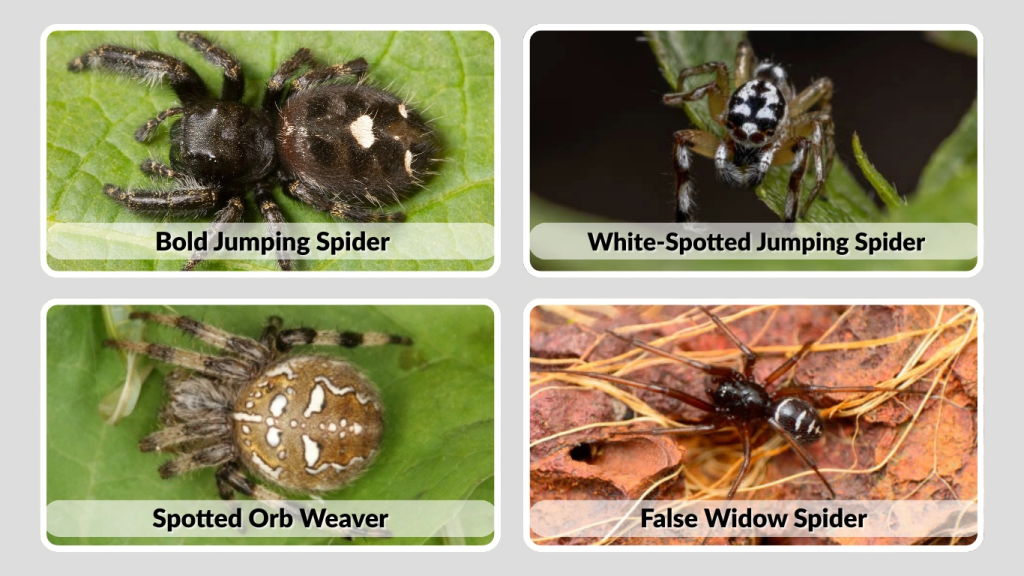
Bold Jumping Spider (Phidippus audax)
The bold jumper is the most common spider people are describing when they search for a “black spider with a white spot on back.” This species has a distinctive large central white dot on the abdomen and often smaller side spots. Its fuzzy body, bright green metallic fangs, and quick, jerky movements make it easy to recognize. Found across the United States—including Texas, Michigan, Pennsylvania, and California—it is harmless and beneficial as it hunts pests.
White-Spotted Jumping Spider (Phidippus regius)
Larger and fluffier than the bold jumper, P. regius features multiple white spots and sometimes orange or tan markings. They occur most commonly in the Southeast, including Florida and surrounding states. Despite their intimidating size, they are gentle and rarely bite unless provoked.
Spotted Orb Weaver (Neoscona domiciliorum)
This species is often confused with jumping spiders because juveniles can appear dark with pale white spots. Adults are larger, with rounder abdomens and a pattern of light spots along the top. They build webs around houses and porches during late summer and fall. Their bite is mild and not considered dangerous.
False Widow Spider (Steatoda grossa)
Often mistaken for black widows, false widows may display faint white or cream patches on the abdomen. These spiders have a bulbous, shiny body and prefer dark corners, garages, and sheds. Their venom can cause moderate localized pain but is far less dangerous than a true widow bite. They appear frequently in California, the UK, and parts of the eastern U.S.
Juvenile Black Widow (Latrodectus spp.)
Young black widows sometimes have white, yellow, or orange spots before they develop the adult red hourglass pattern. These juveniles can be mistaken for harmless jumping spiders, but their smooth, shiny bodies and long slender legs set them apart. Although venomous, they are less dangerous than adults, and bites are rare if left undisturbed.
Species Range by Region
Black spiders with white spots appear across many regions, but the dominant species vary:
United States
- Texas: Bold jumpers, false widows, juvenile widows, orb weavers
- Michigan: Bold jumpers, ground spiders with light dorsal spots
- California: False widows, jumping spiders, widow juveniles
- Colorado & Utah: High populations of P. audax and orb-weavers
- Virginia & Pennsylvania: Jumping spiders around homes and gardens
- Illinois & Wisconsin: Abundant northern Phidippus audax
United Kingdom
False widows with pale dorsal marks are the most common black-and-white spiders in the UK, especially in urban areas.
Australia
Various black jumping spiders with white spots appear, though species differ from North American varieties.
Spider Size & Appearance
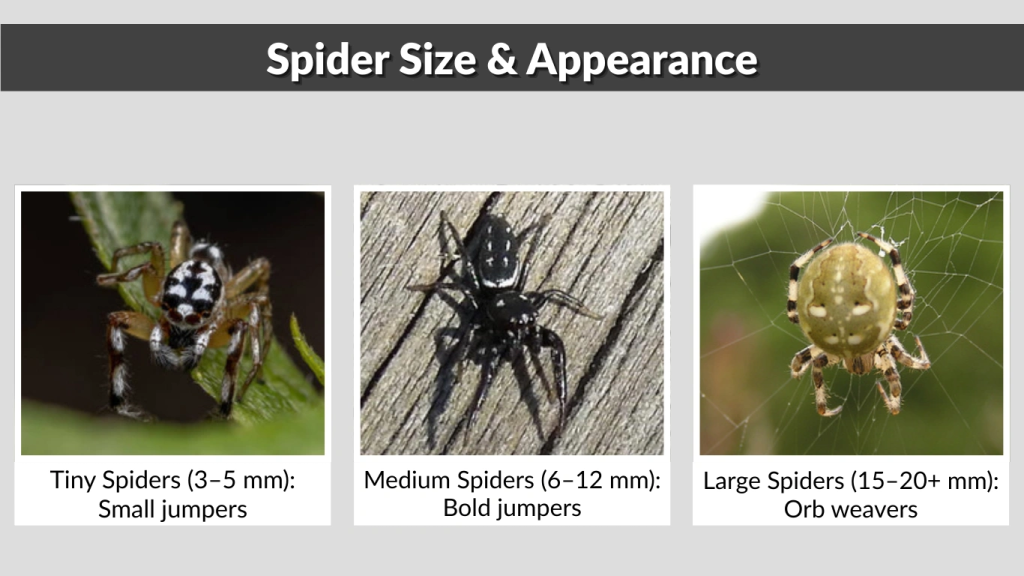
The size of a black spider with a white spot varies widely by species:
- Tiny Spiders (3–5 mm): Small jumpers, juveniles
- Medium Spiders (6–12 mm): Bold jumpers, false widows
- Large Spiders (15–20+ mm): Orb weavers with faint light spots
Jumping spiders tend to look compact and fuzzy, while widow-type species look smooth, shiny, and long-legged. Orb weavers appear round-bodied and larger overall.
Bite & Poison Information
Are They Dangerous?
Most black spiders with white spots are not dangerous. The bold jumping spider and its close relatives are harmless to humans and pets, delivering only mild, mosquito-like irritation if they bite at all. Orb weavers are similarly low-risk.
The false widow is moderately venomous, causing localized pain, swelling, or stiffness, though symptoms rarely require medical care. The juvenile black widow, however, can deliver medically significant venom, although they bite less often and are less potent than adults.
Symptoms Table
| Species | Venom Level | Typical Symptoms |
| Bold Jumping Spider | Low | Mild redness, slight itchiness, small swelling |
| False Widow | Medium | Local pain, burning sensation, mild stiffness |
| Juvenile Black Widow | High | Muscle cramping, sweating, nausea (rare in juveniles) |
| Orb Weaver | Low | Minor local irritation, no lasting effects |
Pet Safety (Including Dogs)
Jumping spiders pose no real risk to dogs, even if accidentally eaten. False widows may cause mild irritation but are not typically life-threatening. Black widow juveniles can cause more serious reactions if a dog is bitten or eats the spider, though encounters are uncommon. Seek veterinary advice if symptoms appear.
Habitat & Behavior
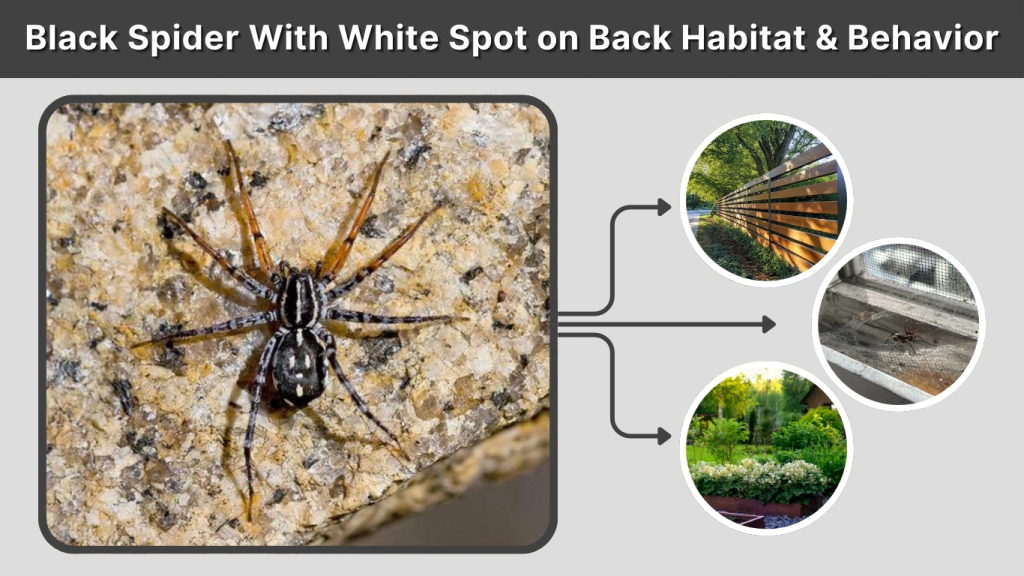
Black spiders with white spots live in a variety of environments depending on species:
Jumping Spiders
Active hunters that wander during the day, jumping across walls, fences, windowsills, and garden plants. They do not build webs for catching prey but may build small silk shelters.
Orb Weavers
Prefer outdoor areas where they can construct large circular webs—porches, eaves, trees, tall grasses. Most sightings occur in late summer and fall.
False Widows & Widow Juveniles
These spiders favor dark, dry hiding spots: garages, sheds, basements, wood piles, and cluttered corners. They are mostly active at night and rarely interact with humans.
Comparison Section
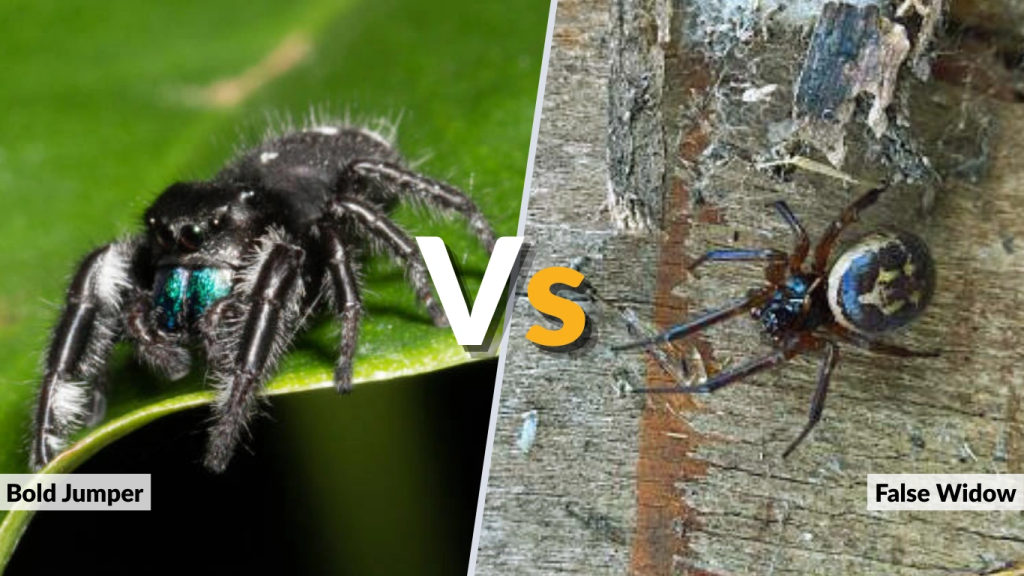
Bold Jumper vs False Widow
| Feature | Bold Jumping Spider | False Widow |
| Body Texture | Thick, fuzzy | Smooth and shiny |
| Spot Pattern | One large spot + small side dots | Faint pale patches |
| Venom | Low | Medium |
| Behavior | Daytime hunter | Nocturnal web-hider |
| Legs | Short, strong | Long, thin |
FAQs
What spider is black with a white spot on its back?
Several species can match this description, but the most common is the bold jumping spider (Phidippus audax). Other candidates include false widows, white-spotted jumping spiders, juvenile widows, and certain orb weavers. Identification depends on size, fuzziness, spot number, and whether the body is shiny or hairy.
Are black spiders with white spots poisonous?
Most are not. Jumping spiders and orb weavers pose almost no venom risk. False widows can cause moderate symptoms but typically aren’t medically significant. Only juvenile black widows have dangerous venom, though they usually avoid confrontation and rarely bite unless handled.
Is a black fuzzy spider with one white spot dangerous?
A fuzzy spider with a single distinct white spot is almost always a bold jumping spider, which is harmless. Their bites are rare and mild, and they generally prefer to retreat or jump away from threats. They are beneficial predators that help control insects around homes and gardens.
Do black jumping spiders bite humans or pets?
Jumping spiders rarely bite and usually only do so when squeezed or trapped. Their venom is not harmful to humans or pets beyond mild redness or small swelling. Dogs and cats often ignore or sniff them without issue. These spiders are considered household-safe.
Why do some black spiders have several white spots instead of one?
Multiple white spots usually indicate a different species or maturity stage. Bold jumping spiders may have several small side spots, while white-spotted jumpers can display larger and more numerous markings. Juvenile spiders of several species also show temporary spotting that fades with age.