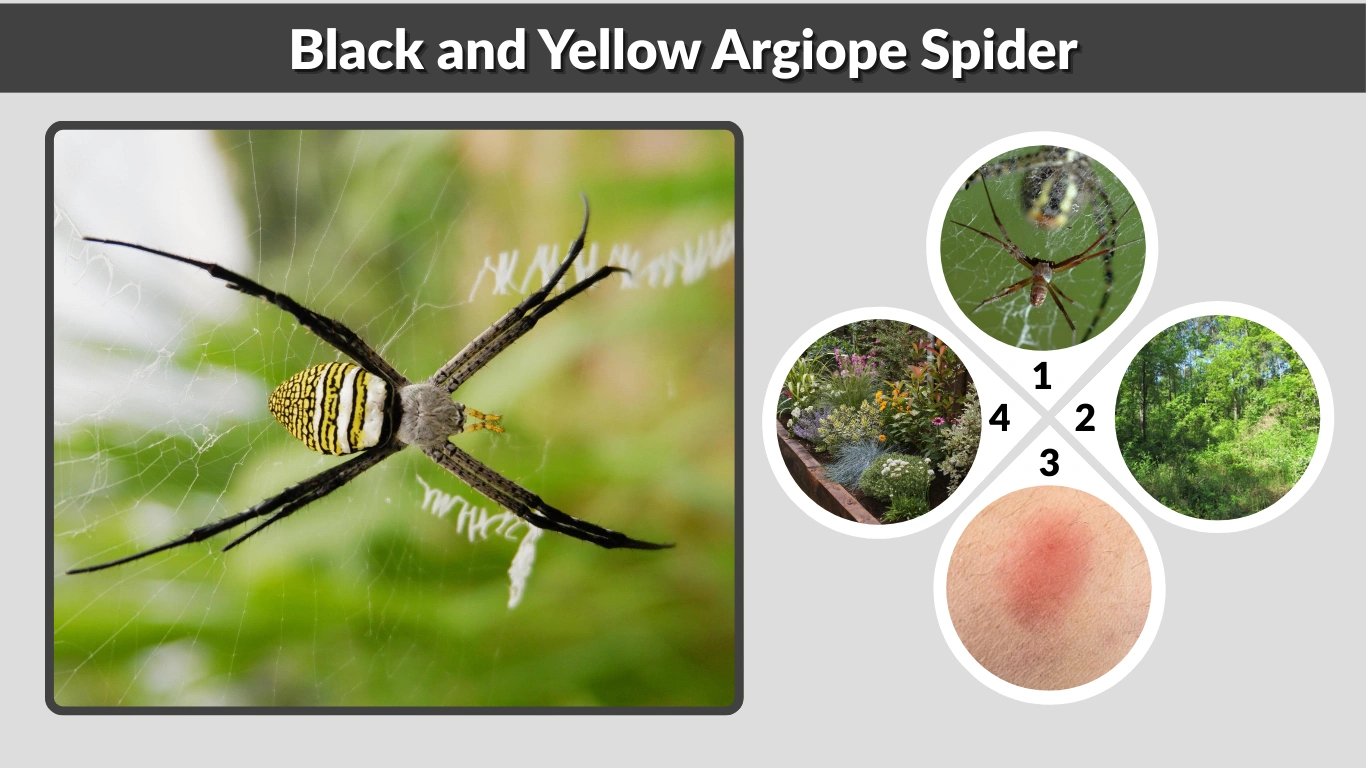
The black and yellow Argiope spider (Argiope aurantia) is one of North America’s most recognizable orb-weavers. Known for its dramatic coloration, large webs, and distinctive zigzag silk, it frequently appears in sunny gardens and fields. Despite its intimidating size, this species is harmless to humans and pets. This article explores identification, size, behavior, venom concerns, habitat, web structure, range, diet, egg sacs, and male–female differences.
Identification
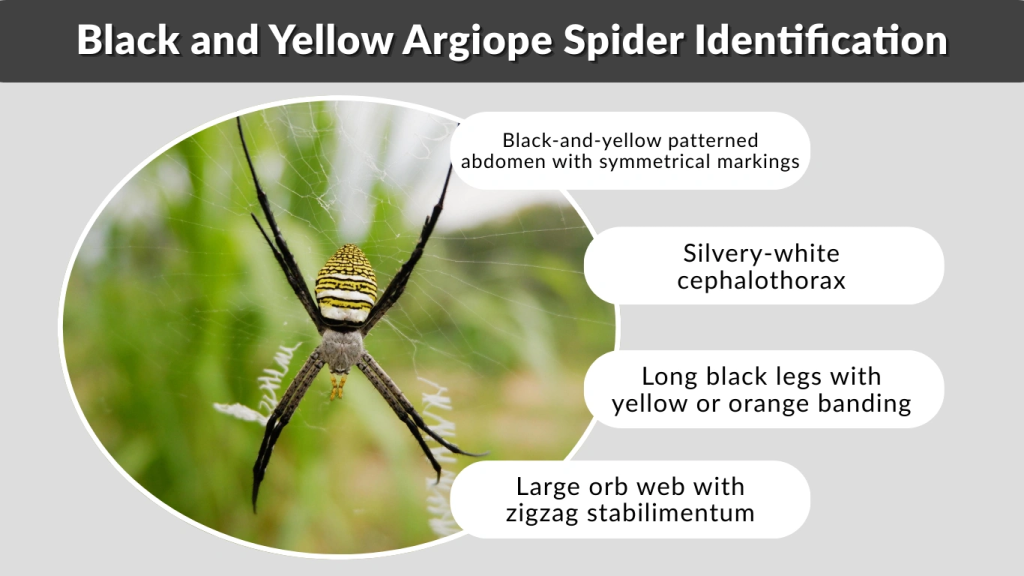
- Black-and-yellow patterned abdomen with symmetrical markings
- Silvery-white cephalothorax
- Long black legs with yellow or orange banding
- Some individuals show red femurs, especially in southern regions
- Large orb web with zigzag stabilimentum
- Papery, tan egg sacs shaped like teardrops
- Females large and vividly colored
- Males small, thin, and duller brown
- Juveniles have lighter markings and smaller webs
Size
The black and yellow Argiope spider varies dramatically in size depending on sex and region. Adult females typically measure 0.75–1.1 inches in body length and may reach 3 inches in leg span, making them one of the larger garden orb-weavers. Males are noticeably smaller, often only 0.20–0.35 inches, and are rarely seen because they position themselves at the edge of the female’s web.
Warm climates like Florida often produce larger specimens, while cooler northern regions have slightly smaller adults. By late summer and early fall, individuals reach their maximum size, making this the period when most people notice them.
Range & Habitat
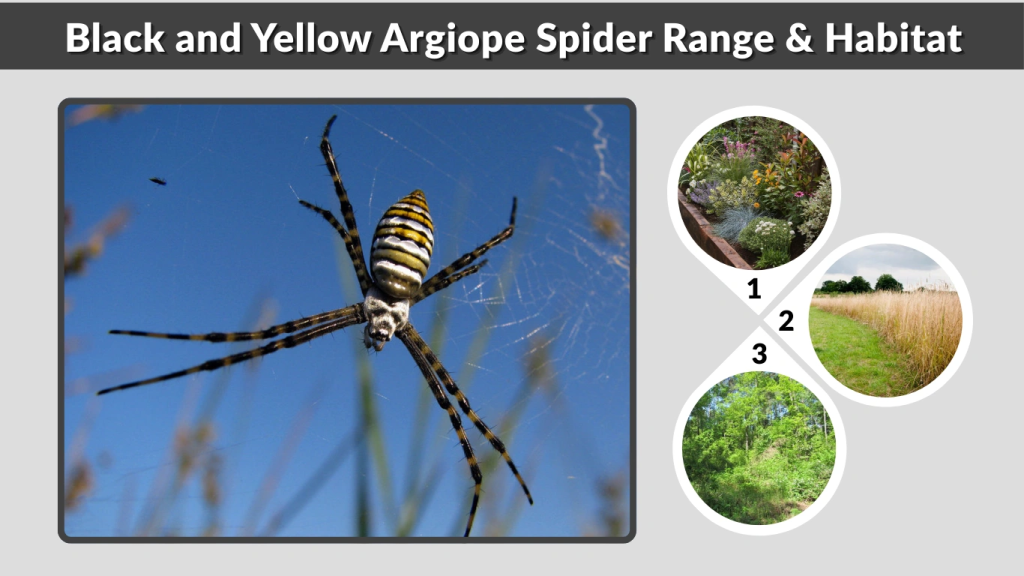
Argiope aurantia is widespread across North America. It thrives in:
- Sunny gardens and flower beds
- Meadows and tall grassy areas
- Shrub edges and forest margins
- Agricultural fields, including corn and soybean crops
- Fences, porch railings, and other stable structures
The species is common in Florida, the Southeast, Midwest, Northeast, and parts of southern Canada, including Ontario. It prefers spaces with strong anchor points for large webs. The presence of flying insects such as bees, flies, and grasshoppers makes gardens an ideal habitat.
Occasional sightings in other countries are usually cases of misidentification or accidental transport. Some people confuse this species with golden orb spiders (Nephila) or Joro spiders, but their body and web structures differ significantly.
Venom, Bite & “Poisonous” Concerns
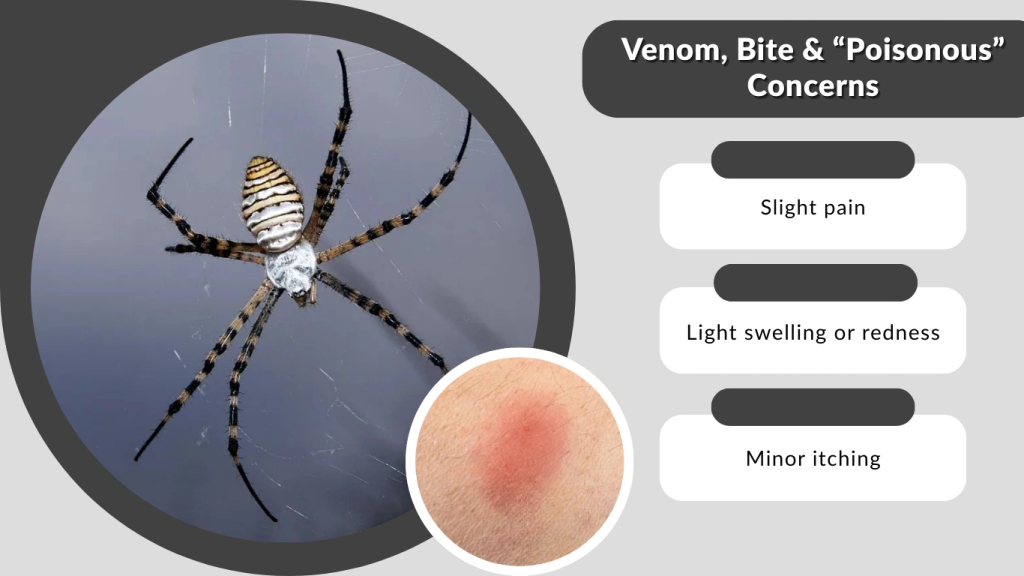
Because of its size and bright coloration, many people assume the black and yellow Argiope spider is poisonous or dangerous. In reality, the spider is venomous but not poisonous, and its venom is extremely mild.
The venom is designed for immobilizing insects, not harming mammals. A bite to a human is rare and occurs mainly when the spider is pressed against skin. Bite symptoms usually include:
- Slight pain
- Light swelling or redness
- Minor itching
Most people compare the sensation to a bee sting, but often milder. These spiders are not a threat to dogs or cats, as the venom is too weak to cause meaningful harm. Only individuals with severe insect sting allergies may experience stronger reactions, but such cases are extremely uncommon.
Despite common fears, Argiope aurantia is considered non-dangerous, shy, and reluctant to bite. They are beneficial garden predators that reduce pest insects.
Behavior
Black and yellow Argiope spiders are active during the day and rely heavily on their webs for hunting. They construct large, circular orb webs featuring the iconic zigzag stabilimentum, whose purpose may include attracting insects, strengthening the web, or camouflaging the spider.
When threatened, the spider may shake its web rapidly—“web bouncing”—as a defense strategy. This makes the spider harder to see and discourages predators.
Females typically remain in one web location, while males build small satellite webs nearby. During mating season, males cautiously approach the female to avoid being mistaken for prey. The species shows predictable seasonal behavior: early summer juveniles grow steadily, while late summer adults reach peak visibility.
Web
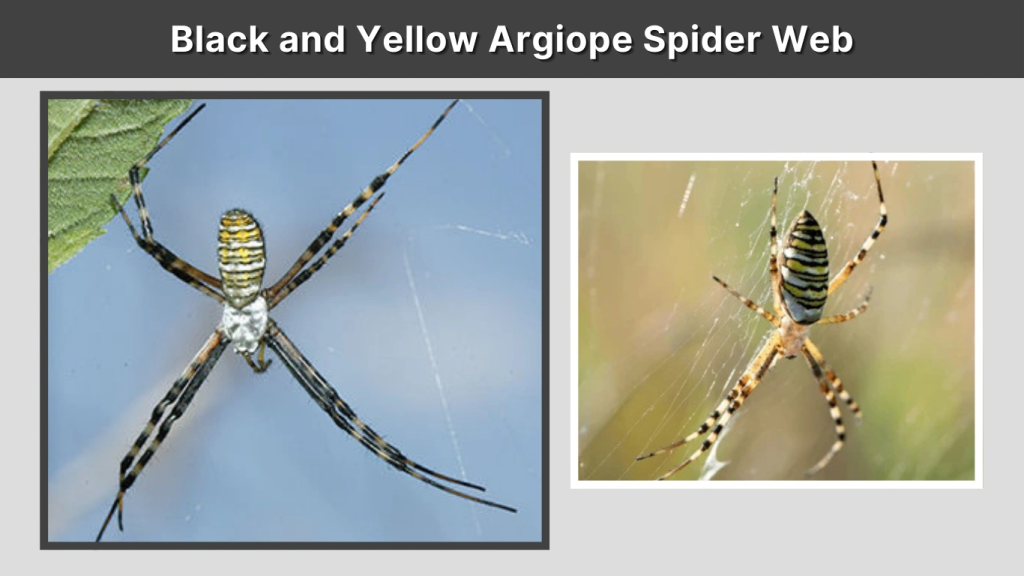
The orb web of the Argiope spider is both functional and visually striking. Typically 12–24 inches wide, the web is anchored between tall plants, shrubs, fences, or garden posts. The stabilimentum, or zigzag band, is the spider’s hallmark feature and often appears in a vertical or X-shaped pattern.
Spiders repair or rebuild their web daily. Unlike golden orb spiders, which produce golden silk, Argiope aurantia produces bright white silk, making the web more noticeable in sunlight.
Diet
The black and yellow Argiope spider plays an important ecological role by consuming a wide variety of insects. Its diet includes flies, grasshoppers, bees, wasps, mosquitoes, moths, and other flying pests. The spider detects vibrations on the web, rushes to subdue prey with venom, and wraps it tightly in silk before feeding. This natural pest control makes the species beneficial in gardens and agricultural areas.
Egg Sac & Reproduction
During late summer and early fall, adult females create one to four egg sacs. These sacs are tan, papery, and shaped like rounded or teardrop pouches. Each sac may contain hundreds of eggs that overwinter safely inside. Hatchlings emerge in spring and often disperse through ballooning, using silk threads carried by the wind. Females rarely survive after producing their final egg sac.
Male vs Female (Comparison Table)
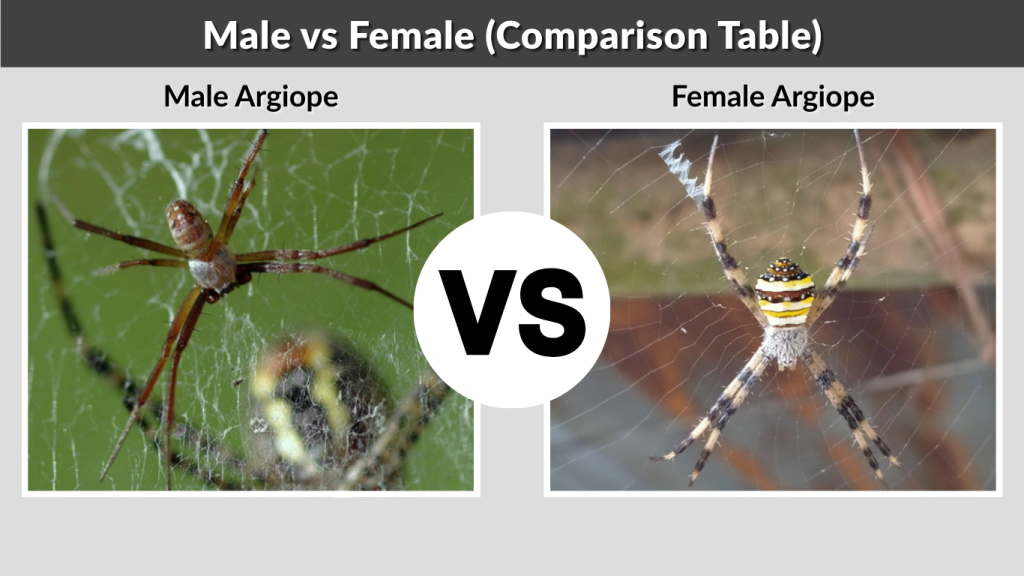
| Feature | Female Argiope | Male Argiope |
| Size | 0.75–1.1 inches | 0.20–0.35 inches |
| Coloration | Bright black-yellow pattern | Faint brown/yellow |
| Web | Builds large orb web | Small satellite web |
| Behavior | Stationary hunter | Avoids contact |
| Lifespan | Full season | Short after mating |
| Visibility | Very noticeable | Rarely seen |
Lifespan
Argiope aurantia lives for a single warm season. Spiderlings hatch in the fall and remain inside the egg sac through winter. In spring, juveniles emerge and begin hunting immediately. Adults reach full size by late summer, when mating occurs. Males die shortly after mating, while females survive long enough to produce egg sacs before cold weather ends their life cycle.
Regional Variations
Florida
Specimens in Florida tend to be larger with more vivid coloration, including occasional red femurs. Warm temperatures allow for rapid growth and extended activity.
Midwest & Northeast (Ohio, Wisconsin, etc.)
These populations appear later in the season due to cooler springs. Adults reach maximum size in August and September.
Ontario & Northern Regions
Shorter summers result in slightly smaller adults and shorter hunting periods.
Confusion with Similar Species
Some individuals are mistaken for golden orb spiders or Joro spiders, but Argiope aurantia has distinct body proportions and a bright white web.
Comparison Tables
Argiope aurantia vs Golden Orb Spider
| Feature | Argiope aurantia | Golden Orb Spider (Nephila) |
| Silk Color | White | Golden |
| Body Size | Smaller | Much larger |
| Web Type | Orb with zigzag | Large 3D webs |
| Range | North America | Tropical & subtropical regions |
Argiope aurantia vs Other Argiope Species
| Feature | A. aurantia | Other Argiope |
| Color Pattern | Bold black-yellow | Varies; often less contrasting |
| Leg Color | May show red femurs | Usually consistent banding |
| Stabilimentum | Large zigzag | Shape varies by species |
| Distribution | Widespread North America | Region-specific |
Facts
- The zigzag web silk may help attract insects by reflecting ultraviolet light.
- They are highly beneficial for pest control in gardens and farms.
- Females often stay in the same web location for weeks.
- Their defensive web-shaking behavior confuses predators.
- They rarely bite humans, even when disturbed.
FAQs
Is the black and yellow Argiope spider poisonous?
No, the black and yellow Argiope spider is not poisonous. It is venomous, like all spiders, but its venom is extremely mild and designed only to subdue small insects. A bite to humans is rare and causes only brief, minor irritation. This species poses no real danger to people or pets.
Can the Argiope aurantia spider bite humans?
Yes, it can bite, but only in self-defense and usually when handled roughly or pressed against the skin. Bites are infrequent because the spider typically retreats or vibrates its web when threatened. If a bite occurs, symptoms remain mild, resembling a light bee sting that fades within a short period.
Is the black and yellow Argiope spider dangerous?
No, the species is not considered dangerous. Despite its impressive size and bright coloration, there is no evidence of harmful effects on humans or animals. These spiders avoid confrontation and prefer remaining motionless or shaking their web when approached. Their bite is harmless and their temperament calm and non-aggressive.
How do you identify the black and yellow Argiope spider?
This species is easily identified by its bold black-and-yellow abdomen, silvery cephalothorax, and long banded legs. Many individuals also show orange or red femurs, especially in southern regions. It builds a large orb web with a distinctive zigzag stabilimentum. Females are much larger and brighter than males.
What does the Argiope spider’s egg sac look like?
The egg sac is a tan or brown, papery structure shaped like a rounded or teardrop pouch. Females attach the sac near their web in sheltered vegetation or structures. Each sac contains hundreds of eggs that overwinter inside. Spiderlings emerge in spring and disperse by ballooning into surrounding habitats.