
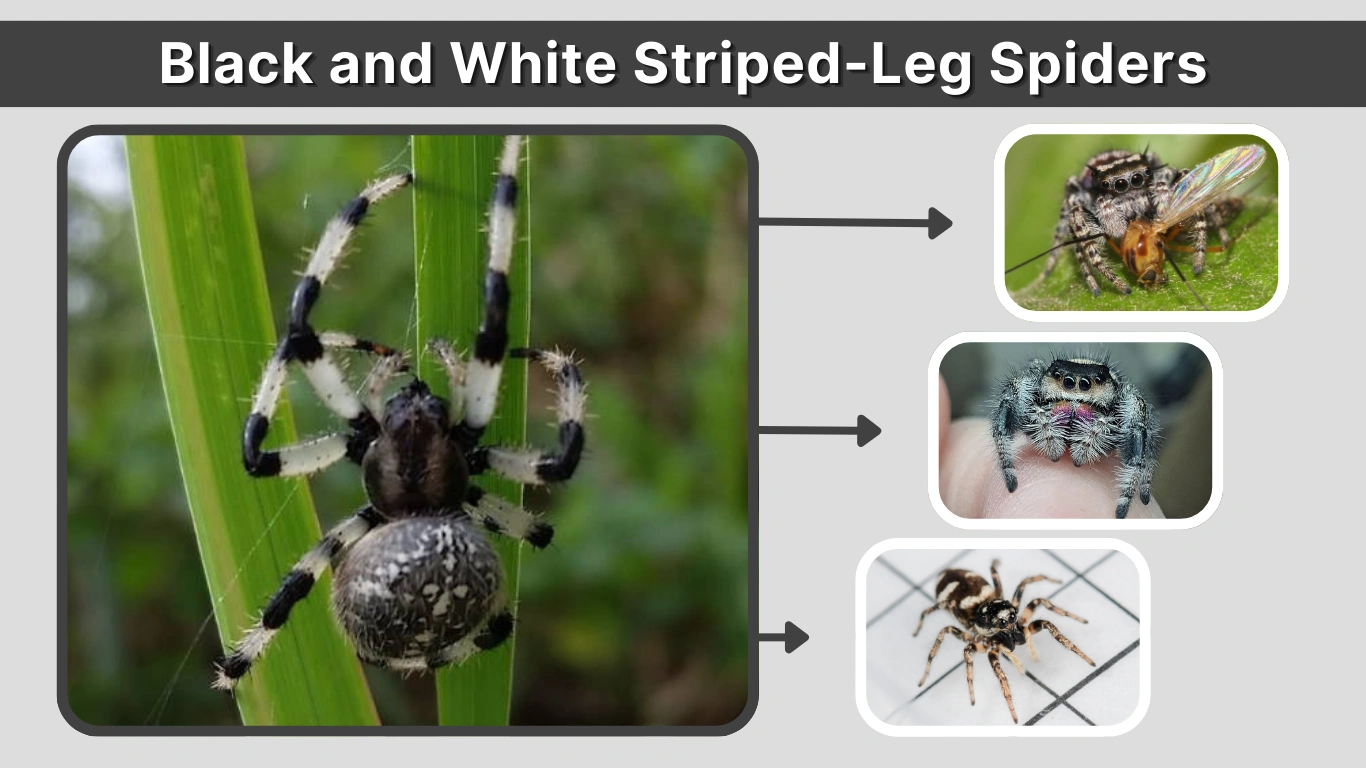
Spiders with black and white striped legs are among the most commonly misidentified arachnids worldwide. Their bold patterns, color variations, and widespread distribution make them stand out in gardens, homes, fields, and forests. Although their appearance may seem intimidating, most striped-leg spiders are harmless and beneficial predators. This guide explores identification features, species types, body colors, regional variations, habitat, and behavior to help you confidently recognize these fascinating spiders.
Common Types
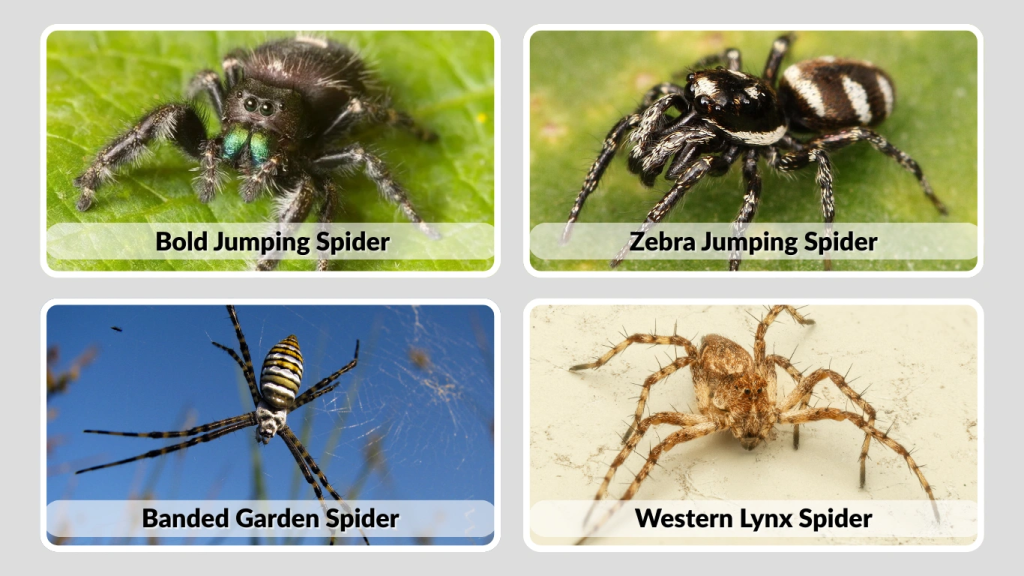
1. Bold Jumping Spider : A small, curious hunter with thick black-and-white banded legs and metallic green fangs.
2. Zebra Jumping Spider: A tiny wall-climbing jumper with sharp black-and-white zebra stripes across its legs and body.
3. Tri-Colored Orb-Weaver: A round-bodied garden spider with bright orange or red abdomens and boldly striped legs.
4. Banded Garden Spider: A large web-builder with long black-and-white striped legs and a yellow striped abdomen.
5. Western Lynx Spider: A fast grass-dwelling hunter with long, spiny legs marked by crisp black-and-white bands.
Key Identification Features
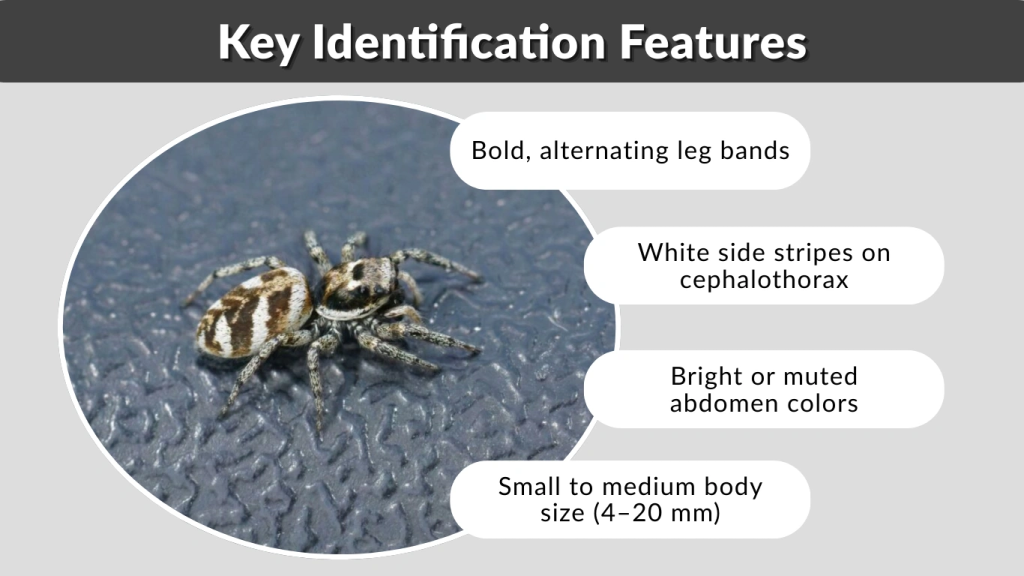
Identifying a spider with black and white striped legs requires more than just examining its leg pattern. Several anatomical and behavioral features help narrow the possibilities.
Leg Striping Patterns
Some spiders show sharp, contrasting black and white rings, while others have fuzzy, blended stripes. Jumping spiders typically have dense, velvety banding, whereas orb-weavers show more spaced-out rings.
Body Color Variations
Body colors range widely, including:
- Black (common in jumping spiders)
- Brown or tan (often orb-weavers)
- Red or orange (tri-colored orb-weavers)
- Yellow or white (juvenile or seasonal variations)
Eye Arrangement
Jumping spiders have large forward-facing eyes that create a “cute” or inquisitive expression. Orb-weavers have smaller eyes arranged in two neat rows.
Body Shape
- Compact, stout body = jumping spiders
- Large round abdomen = orb-weavers
- Long spiny legs = lynx spiders
Common Identifiers List
- Bold, alternating leg bands
- White side stripes on cephalothorax
- Bright or muted abdomen colors
- Fuzzy or bristled texture
- Small to medium body size (4–20 mm)
By combining these factors, you can quickly determine which group your spider belongs to.
Species Identification: Most Likely Candidates
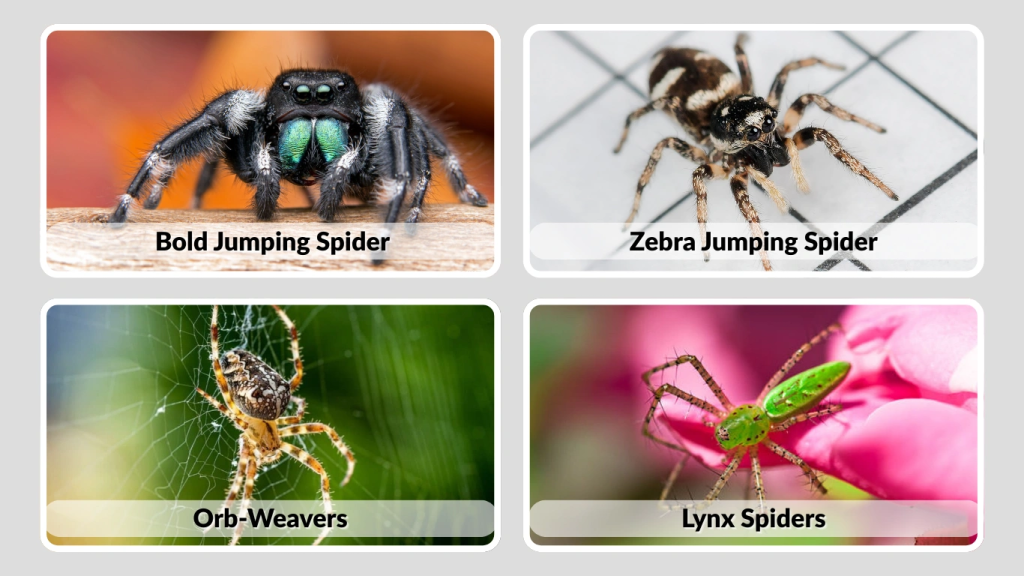
Several well-known species commonly match the “black and white striped legs” description. These are the most frequently encountered across different regions.
Bold Jumping Spider (Phidippus audax)
Perhaps the most iconic striped-leg spider, this species features thick black and white leg bands, a shiny black body, and metallic green or blue chelicerae. They do not build webs for catching prey; instead, they leap and stalk using incredible vision. Their curious behavior often brings them close to humans, but they are harmless and even beneficial for controlling small insects.
Zebra Jumping Spider (Salticus scenicus)
Known for their classic black-and-white zebra pattern across both their legs and body, these small spiders are common on house exteriors, fences, and sunlit walls. They are fast, excellent climbers, and rarely show aggression. Their distinctive horizontal body stripes make them easy to identify.
Orb-Weavers (Araneus species)
Many orb-weaver species develop striped legs—some with orange, red, or yellow bodies. The Tri-colored Orb-Weaver (Araneus trifolium) is a strong match for “red spider with black and white striped legs.” These spiders build circular webs and are most active in the evening. Body shape—round and bulbous—is a major identifier.
Lynx Spiders
Found in grassy areas, lynx spiders have long, spiny banded legs and often come in green, orange, or tan. Their leg striping can be sharp or faint, depending on age. They are agile hunters and rarely found inside homes.
Color Variations Explained
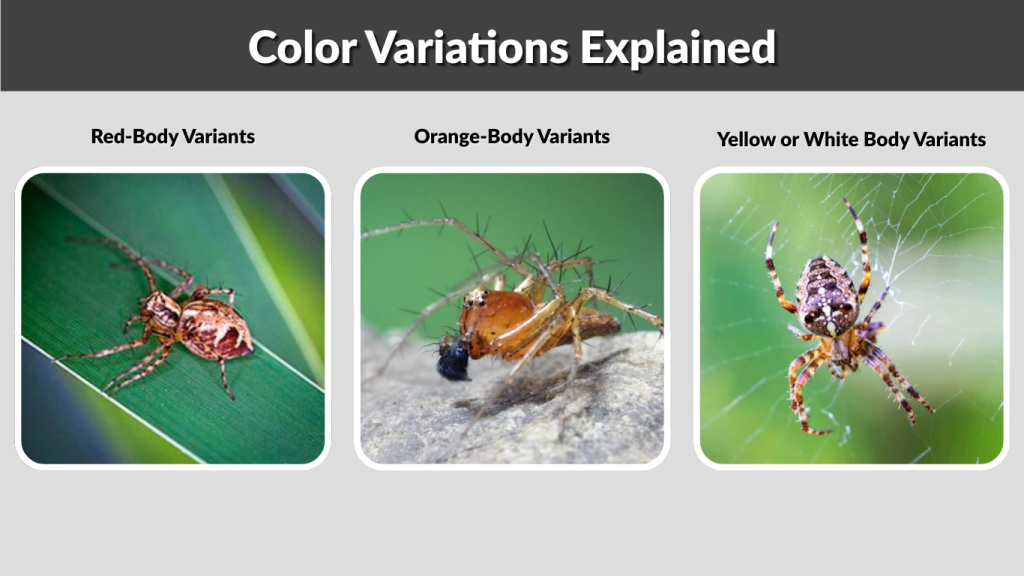
Color variation is one of the biggest reasons people misidentify striped-leg spiders. Changing shade, age, sex, and even temperature can alter appearance significantly.
Red-Body Variants
Spiders such as Araneus trifolium may have red, orange, or burgundy abdomens paired with distinct black and white striped legs. These are common in late summer and fall when orb-weavers reach maturity.
Orange-Body Variants
Orb-weavers often display orange or pumpkin-colored bodies. In the Midwest and southern states, these spiders commonly match searches like “orange spider with black and white striped legs.”
Yellow or White Body Variants
Some garden spiders show pale bodies early in their life cycle or after molting. White-bodied individuals with striped legs are common in juvenile orb-weavers and lynx spiders.
Size Range & Body Structure
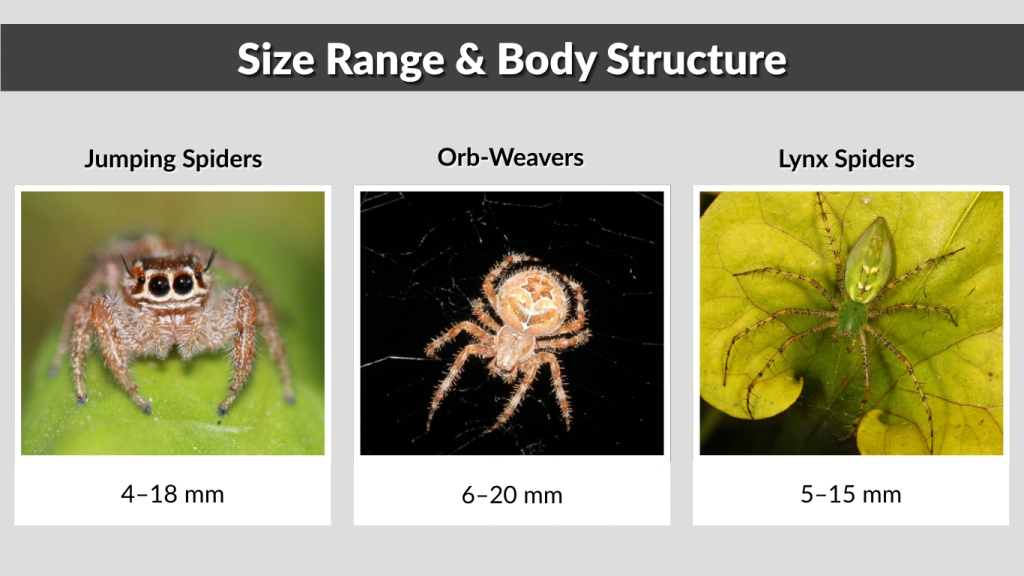
Black-and-white striped-leg spiders vary widely in size depending on species, age, and sex. Jumping spiders are typically small and compact, while orb-weavers may seem larger due to their round abdomens and long legs. Many people overestimate size because of bold markings or hairy legs, but most banded-leg spiders fall within a moderate range.
Body Size Table
| Spider Type | Body Size | Leg Length | Notable Traits |
| Jumping Spiders | 4–18 mm | Short–medium | Fuzzy body, large eyes |
| Orb-Weavers | 6–20 mm | Long | Round abdomen, web-builders |
| Lynx Spiders | 5–15 mm | Long, spiny | Grassland hunters, fast movement |
Juvenile spiders often appear brighter or more vividly striped than adults. Males also tend to have more dramatic leg patterns during mating season, using them in displays or territorial signals. In orb-weavers, females are significantly larger, with heavier abdomens and longer legs.
Habitat & Where They Live
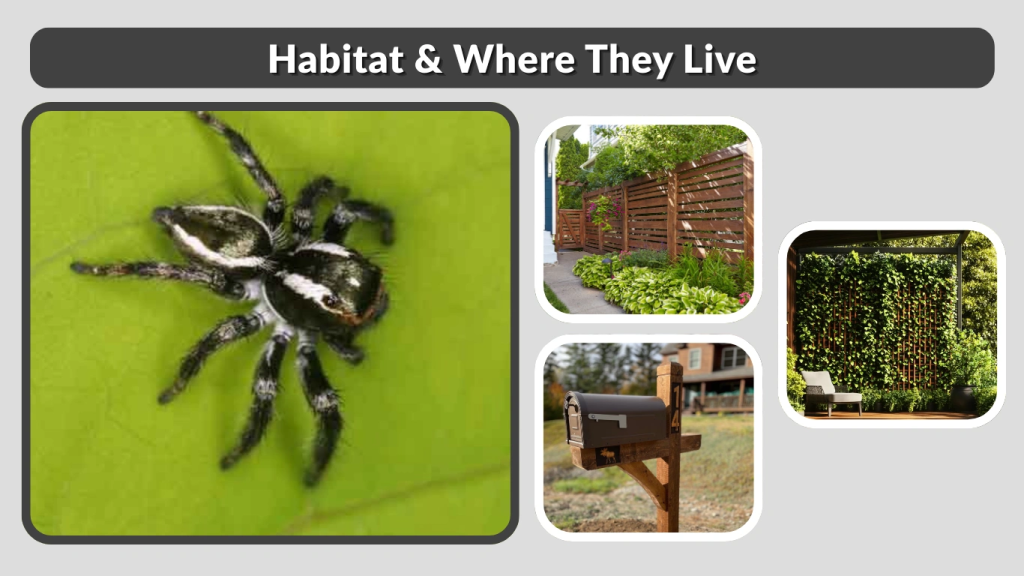
Black and white striped-leg spiders thrive across many environments. They prefer places with both sunlight and structural surfaces—ideal conditions for hunting or web-building. You’ll find them on fences, walls, decks, mailboxes, window frames, shrubs, tall grasses, flower beds, and garden corners.
Geographically, these spiders are extremely widespread. In the United States, sightings are especially common in Ohio, Texas, Florida, Wisconsin, Illinois, Georgia, Michigan, Pennsylvania, California, Arkansas, Oklahoma, Iowa, and Minnesota. Many species adapt well to suburban neighborhoods, agricultural land, and forest edges.
Globally, striped-leg spiders appear in the UK, New Zealand, and Australia, particularly in warm coastal regions. Australian species often exhibit higher contrast patterns due to intense sunlight and seasonal variation.
Seasonally, most sightings occur from late spring through early fall, when spiders are active, feeding, and mating. In cooler climates, they may overwinter in sheltered cracks or dormant egg sacs.
Behavior & Web-Building
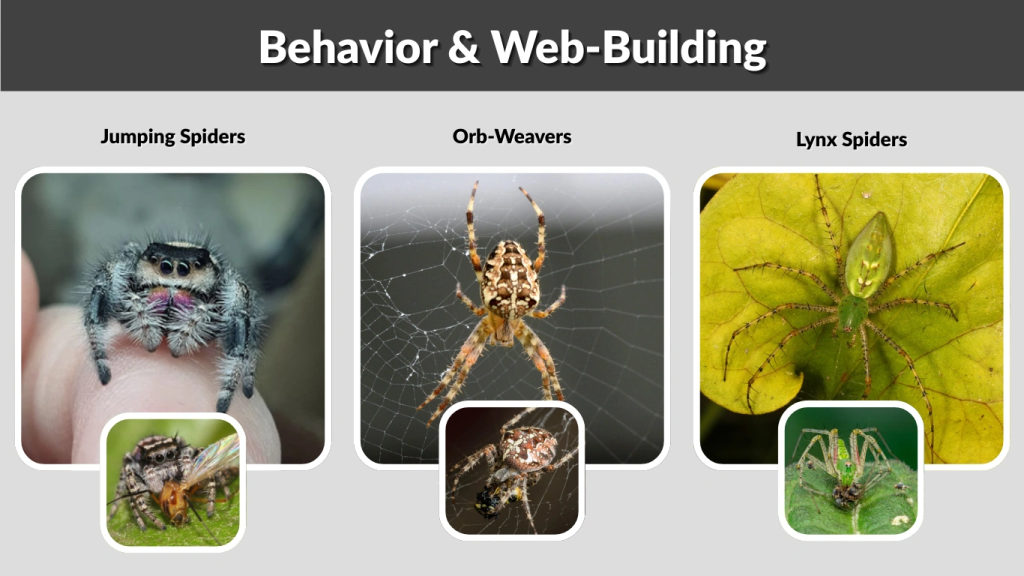
Behavior varies sharply between spider families, which helps with identification.
Jumping Spiders
These bold spiders do not build webs to catch food. Instead, they hunt using exceptional vision, pouncing on prey with precision. They anchor a silk “safety line” when leaping and often observe humans curiously.
Orb-Weavers
Orb-weavers construct large circular webs in gardens and around buildings. They rebuild portions daily, repairing damage caused by wind or insects. Their banded legs help them blend into vegetation while waiting at the web center or retreating to a silk-lined hideout.
Lynx Spiders
Lynx spiders are fast-moving predators that stalk insects on grass blades and shrubs. Their spiny, striped legs help them blend into vegetation. These spiders often jump sideways or backward when startled.
Overall, striped-leg species prefer areas rich in insect activity and shelter. Their behaviors—hunting, ambushing, observing—make them valuable garden allies.
Are They Dangerous? (Bite Risk & Safety)
Despite their dramatic appearance, spiders with black and white striped legs are overwhelmingly harmless to humans. Their venom is adapted for small insects, not people. Most bites occur only if the spider is trapped against skin or handled roughly.
Symptoms of a typical bite include mild redness, itching, or swelling—similar to a bee sting. Serious reactions are extremely rare and usually linked to allergies rather than venom strength.
If bitten, recommended care includes:
- Cleaning the area with soap and water
- Applying a cold compress
- Monitoring for allergic reactions
- Avoiding scratching or squeezing
In nearly all cases, discomfort fades within 24–48 hours.
Comparison Table (Look-Alikes)
| Species | Legs | Body Color | Behavior | Danger Level |
| Bold Jumping Spider | Black/white banded | Black w/ white dots | Active hunter | Low |
| Zebra Jumping Spider | Zebra-striped | Black/white body | Fast climber | Low |
| Tri-Colored Orb-Weaver | Banded black/white legs | Orange/red abdomen | Web-builder | Low |
| Lynx Spider | Spiny striped legs | Green/orange | Grass stalk hunter | Low |
This table highlights the visual similarities but also clarifies distinctions in behavior and body structure to assist with accurate identification.
FAQ
What spider has black and white striped legs?
Several spiders fit this description, including Bold Jumping Spiders, Zebra Jumping Spiders, Lynx Spiders, and many orb-weavers. The exact match depends on the spider’s body shape, web presence, region, and color pattern. Jumping spiders are the most frequently seen in homes and gardens.
Are striped-leg spiders venomous?
They have venom for catching insects, but their bites pose very little risk to humans. Most bites are mild and comparable to minor insect stings. Medical concern is rarely needed unless severe swelling, allergy symptoms, or unusual reactions occur.
Why do some spiders have black and white striped legs?
The striping provides camouflage and communication advantages. Jumping spiders use it during mating displays, while orb-weavers use it to break up their body outline among leaves and stems. Stripes may also create motion dazzle, confusing predators or prey.
What regions have black and white striped spiders?
They are widespread across the United States, especially in Ohio, Texas, Florida, Wisconsin, and California. They also appear in the UK, New Zealand, and Australia. Gardens, house exteriors, grassy fields, and wooded edges are common habitats.
How do I identify a harmless striped-leg spider?
Look for body shape and behavior: jumping spiders move in short bursts and have large front eyes, orb-weavers build circular webs and have round abdomens, and lynx spiders have long spiny legs. Harmless species retreat when disturbed and rarely bite unless handled.