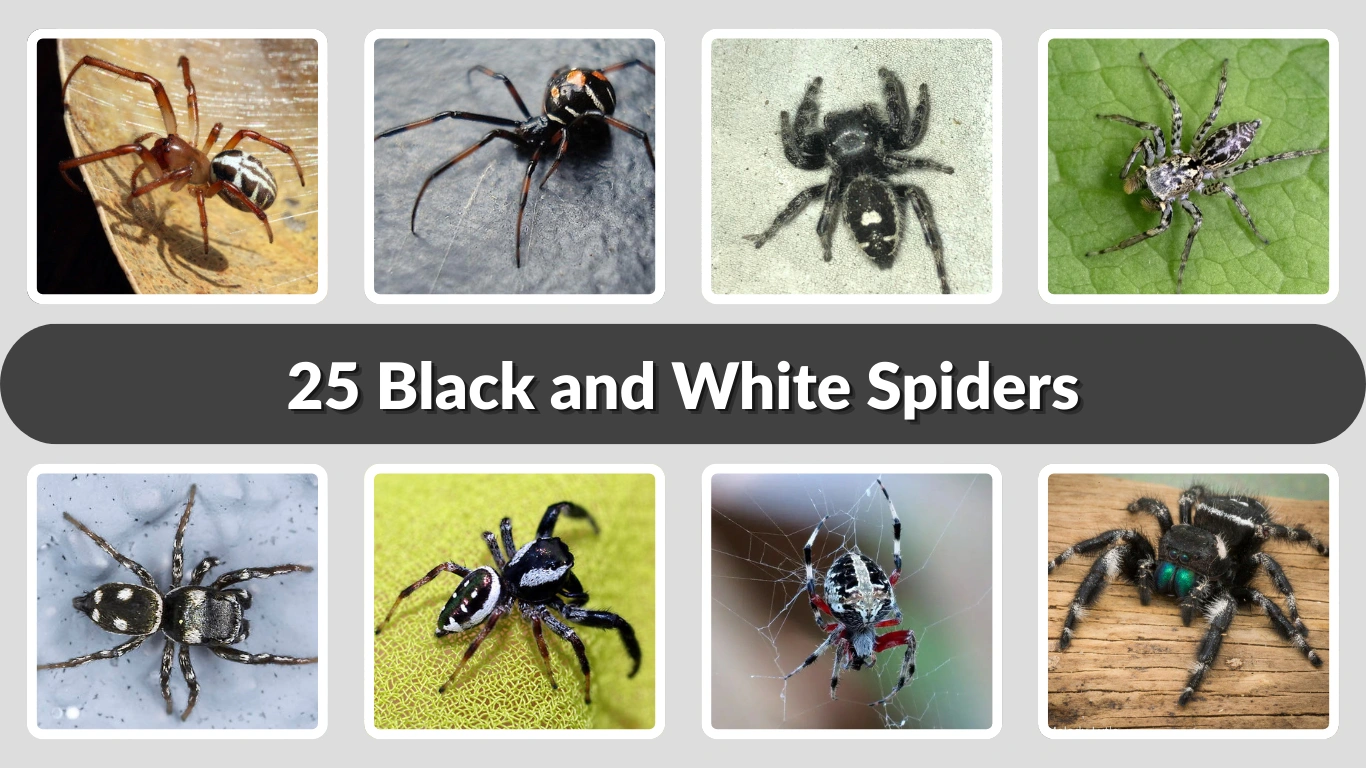
Black and white spiders are some of the most visually striking arachnids, featuring bold stripes, spots, bands, or fluffy contrasting patterns. These spiders appear in gardens, homes, forests, and even walls, with many harmless species that help control pests. This guide highlights the most notable black and white spiders and their key traits.
1. Bold Jumping Spider (Phidippus audax)
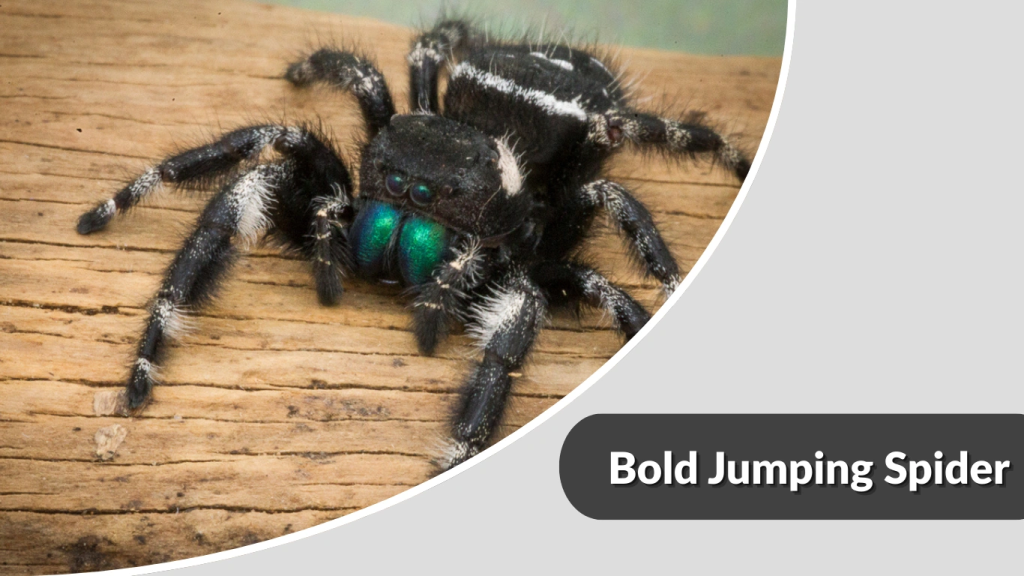
The Bold Jumping Spider is one of the most recognizable black and white jumping spiders, known for its striking pattern, iridescent green fangs, and confident movements.
Identification
- Black body with bold white or orange spots on abdomen
- White stripes or bands on legs
- Compact, fuzzy appearance
- Iridescent metallic green chelicerae (fangs)
- Short, powerful jumping legs
Behavior & Habitat
The Bold Jumping Spider is an active hunter, relying on sharp vision and quick leaps rather than webs. It is commonly found on walls, fences, windowsills, and plants. These spiders prefer sunny areas and are especially common around homes, gardens, and open fields.
Range & Distribution
This species is widespread across North America, thriving in both urban and rural environments. It is frequently seen throughout the United States and southern Canada, and is especially common in warm regions and during summer months.
Is It Dangerous?
Despite its intimidating appearance, the Bold Jumping Spider is harmless to humans. Its bite is rare and mild, similar to a bee sting. It is also considered beneficial because it helps control pests by hunting flies, moths, and other small insects.
2. Zebra Jumping Spider (Salticus scenicus)
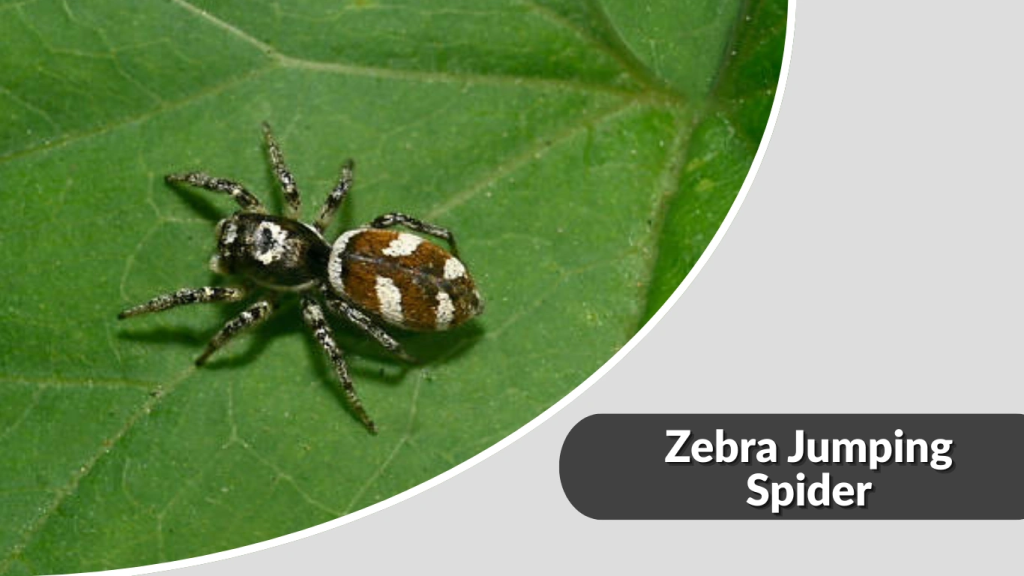
The Zebra Jumping Spider is a small black and white striped spider known for its bold patterns and quick, agile movements. Often seen on walls and windowsills, it’s easily recognized by its zebra-like markings.
Identification
- Distinct black and white horizontal stripes across the body
- Short, compact body shape
- Large forward-facing eyes
- Quick, jerky movement style
- Small size, usually 5–7 mm
Behavior & Habitat
This species actively hunts during the day, using its sharp vision to track prey. It prefers sunny surfaces like fences, exterior walls, and rocks, often approaching humans out of curiosity but never aggressively.
Range & Distribution
Found across North America, Europe, and Asia, the Zebra Jumping Spider thrives in urban areas where flat surfaces are abundant. It is extremely common in temperate climates and around human structures.
Is It Dangerous?
The Zebra Jumping Spider is completely harmless to humans. It rarely bites and provides natural pest control by feeding on tiny insects such as gnats and flies.
3. Banded Garden Spider (Argiope trifasciata)
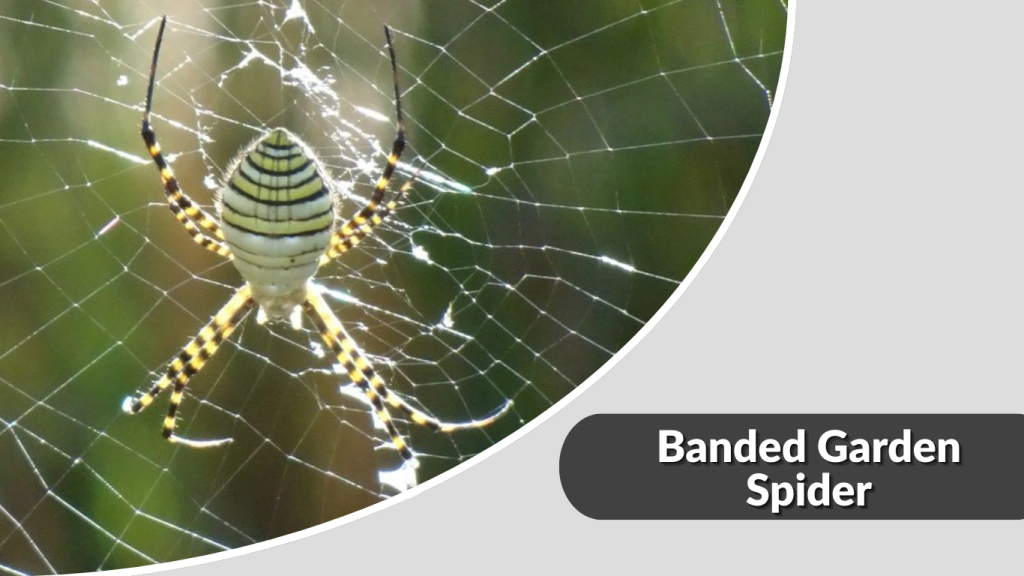
The Banded Garden Spider is a striking black and white garden spider known for its bold striped abdomen and large web structures often found in sunny garden spaces.
Identification
- Distinct black, white, and sometimes yellow bands
- Long, striped legs extending outward
- Large orb-shaped web
- Elongated abdomen with sharp contrasting patterns
- Typically 15–25 mm in body length
Behavior & Habitat
This orb-weaving spider builds large, circular webs in open, sunny areas such as gardens, tall grasses, and fields. It remains motionless at the web’s center, waiting for flying insects to get trapped.
Range & Distribution
The species is widespread across North and South America, thriving in warm climates. It is especially common in late summer and early fall when insect activity is highest.
Is It Dangerous?
The Banded Garden Spider poses no danger to humans. While it may appear intimidating due to its size and coloration, its bite is mild and rare, and the spider is highly beneficial for controlling insect pests.
4. Silver Garden Spider (Argiope argentata)
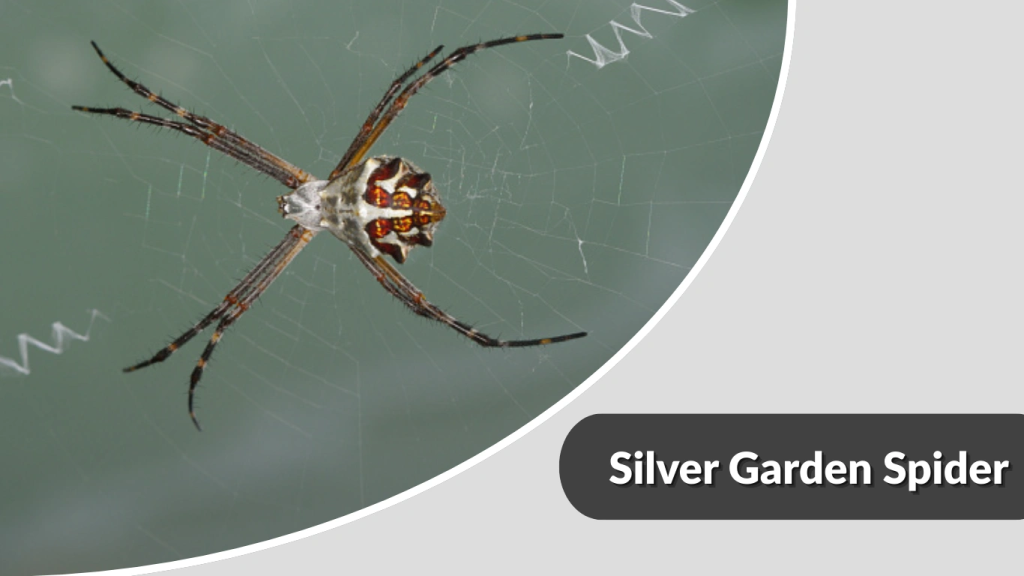
The Silver Garden Spider is a shimmering white and black garden spider recognized for its bright silver body and bold contrasting leg patterns, commonly seen in sunny outdoor spaces.
Identification
- Silvery-white cephalothorax
- Black and white banded legs
- Oval abdomen with subtle pale markings
- Builds large circular orb webs
- Medium to large body size, 12–20 mm
Behavior & Habitat
This species creates strong orb-shaped webs in open areas such as gardens, shrubs, and fences. It typically sits head-down in the center of its web, waiting for insects to fly into the sticky strands.
Range & Distribution
Found widely across the southern United States, Mexico, Central America, and the Caribbean, the Silver Garden Spider thrives in warm climates and is most active during summer and early autumn.
Is It Dangerous?
The Silver Garden Spider is harmless to people. Its bite is mild and extremely uncommon, and the spider is valued for reducing insect populations in gardens and yards.
5. Spotted Orbweaver (Neoscona crucifera) — Pale Morph
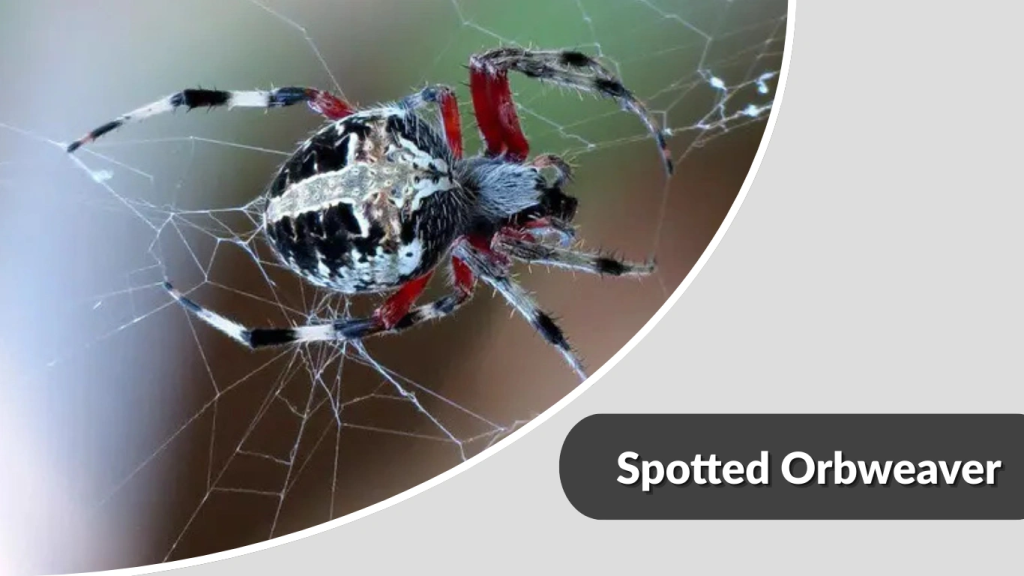
The pale form of the Spotted Orbweaver can appear as a black and white spotted spider, especially when its lighter patterns contrast sharply with its darker body during certain seasons.
Identification
- Pale spots scattered across the abdomen
- Subtle black and white pattern variations
- Rounded abdomen with fine hairs
- Builds classic wheel-shaped orb webs
- Medium-sized body, typically 7–14 mm
Behavior & Habitat
This spider is nocturnal, spending evenings repairing and sitting on its web while hiding during the day. It prefers wooded areas, porches, gardens, and spots with steady insect activity.
Range & Distribution
Common throughout the eastern and central United States, the Spotted Orbweaver thrives in warm months and is most visible during late summer and autumn.
Is It Dangerous?
The Spotted Orbweaver is non-aggressive and harmless to humans. Bites are extremely rare and mild. Its presence is beneficial, as it captures moths, flies, and other nighttime insects.
6. Western Black-and-White Jumping Spider (Colonus hesperus)
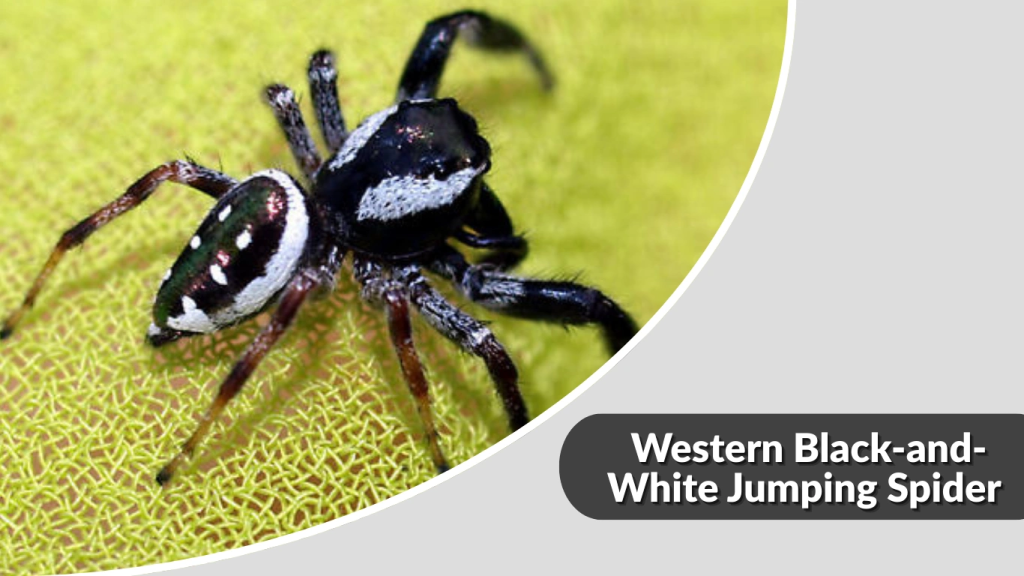
This species is a small, energetic black and white jumping spider known for its sharp color contrasts and quick, darting movement across walls, fences, and outdoor structures.
Identification
- Distinct black and white body pattern
- Lightly banded or spotted abdomen
- Short, fuzzy legs with pale markings
- Large, forward-facing eyes
- Small size, usually 4–6 mm
Behavior & Habitat
The Western Black-and-White Jumping Spider is an active daytime hunter, using precision leaps to capture tiny insects. It frequents sunlit surfaces, wooden posts, and vegetation while showing curious but harmless behavior toward humans.
Range & Distribution
This species is found mainly in the western United States, including California, Arizona, Nevada, and surrounding regions. It prefers dry, warm environments and is common throughout spring and summer.
Is It Dangerous?
Completely harmless to humans, this spider rarely bites and offers natural pest control. Its gentle behavior and striking coloration make it a frequently observed backyard jumping spider.
7. Eastern Parson Spider (Herpyllus ecclesiasticus)
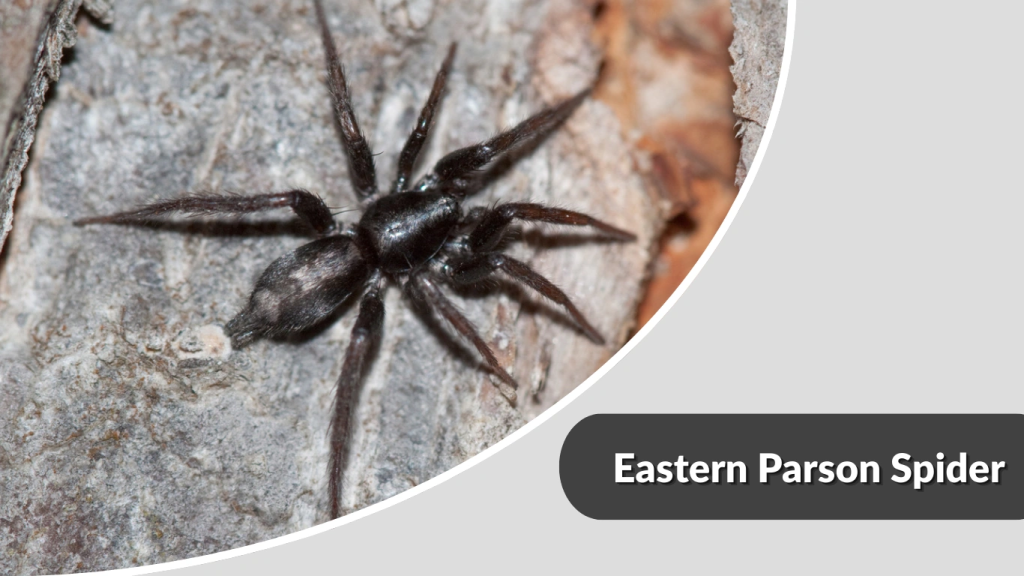
The Eastern Parson Spider is a fast-moving black and white house spider often found indoors, recognized by its dark body and distinctive white abdominal marking.
Identification
- Black or dark brown body
- White central stripe on abdomen
- Flat, agile body shape
- Fast runner; does not build webs to catch prey
- Medium size, typically 10–15 mm
Behavior & Habitat
This spider is a nocturnal hunter that roams floors, baseboards, and walls searching for insects. It hides beneath furniture, rocks, and logs during the day and prefers warm, sheltered environments inside homes.
Range & Distribution
Widespread throughout the eastern United States and parts of Canada, it commonly enters houses, sheds, and garages, especially during colder months.
Is It Dangerous?
The Eastern Parson Spider is generally harmless. Though it may bite if pressed against skin, symptoms are mild and short-lived. It helps reduce indoor pests by feeding on insects and other small arthropods.
8. False Widow Spider (Steatoda grossa) — Pale Band Form
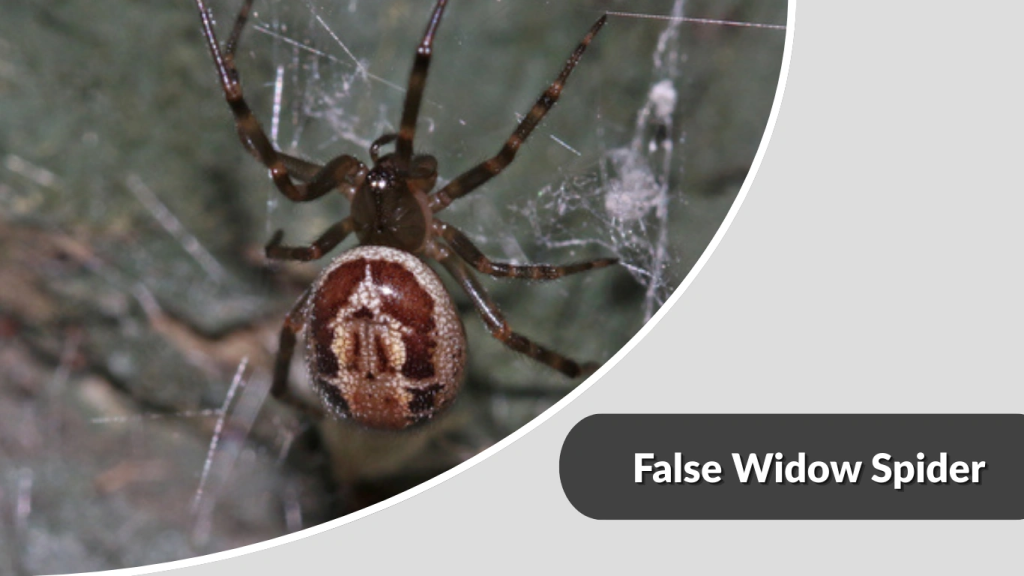
The pale-banded form of the False Widow can appear as a black and white widow spider, showing light streaks across its dark body that resemble widow-like patterns.
Identification
- Dark brown to black body
- Pale or white banding on abdomen (in banded morph)
- Smooth, shiny appearance
- Rounded abdomen similar to widow spiders
- Medium size, 6–10 mm
Behavior & Habitat
This spider builds messy cobwebs in sheltered locations such as garages, basements, sheds, and exterior corners of houses. It waits upside down in its web and feeds on insects and other spiders that become trapped.
Range & Distribution
Common across North America, Europe, and Australia, the False Widow adapts well to human environments. It thrives year-round indoors and in mild climates outdoors.
Is It Dangerous?
Although sometimes mistaken for the venomous black widow, Steatoda grossa is far less harmful. Bites are rare and typically cause mild, localized pain. It is beneficial for controlling pest insects and even other spiders.
9. White-Banded Fishing Spider (Dolomedes albineus)
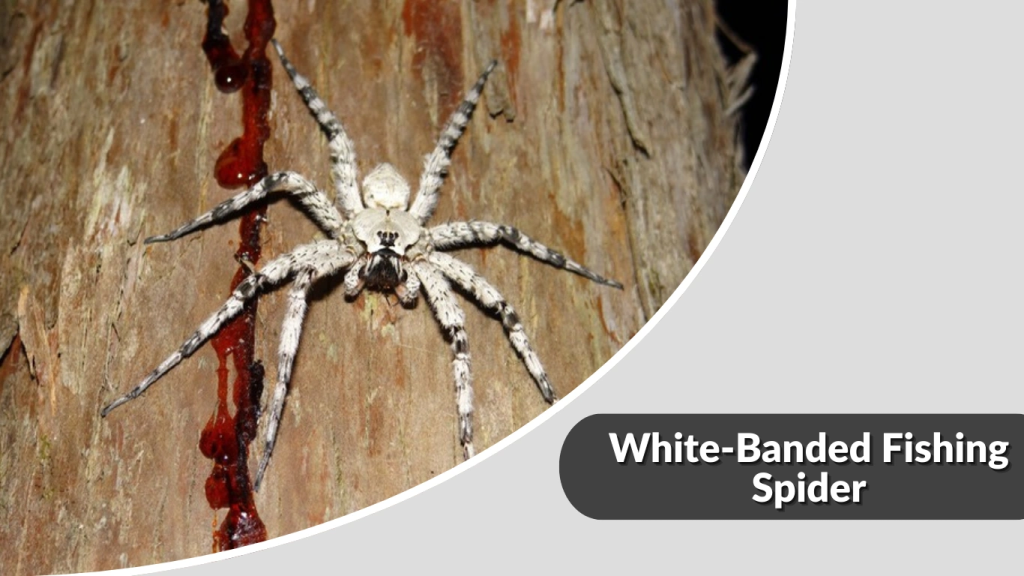
The White-Banded Fishing Spider is a large white and black spider known for its pale body markings and long striped legs, often seen resting near water or on tree trunks.
Identification
- Light gray to white band across the front of the cephalothorax
- Black, brown, or dark gray body
- Long legs with subtle white striping
- Flattened body for hiding on bark
- Large size, 15–25 mm (body only)
Behavior & Habitat
This spider is semi-aquatic and skilled at walking on water, hiding under bark, and ambushing prey. It hunts insects and even small aquatic animals, relying on stealth rather than webs.
Range & Distribution
Found primarily in the southeastern United States, the White-Banded Fishing Spider inhabits forests, wetlands, cypress swamps, and areas near ponds or streams.
Is It Dangerous?
Despite its size, this species is not dangerous to humans. It may appear intimidating, but it avoids confrontation, and any bite would be mild. It plays a valuable ecological role by reducing insect populations.
10. Spotted Jumping Spider (Phidippus clarus)
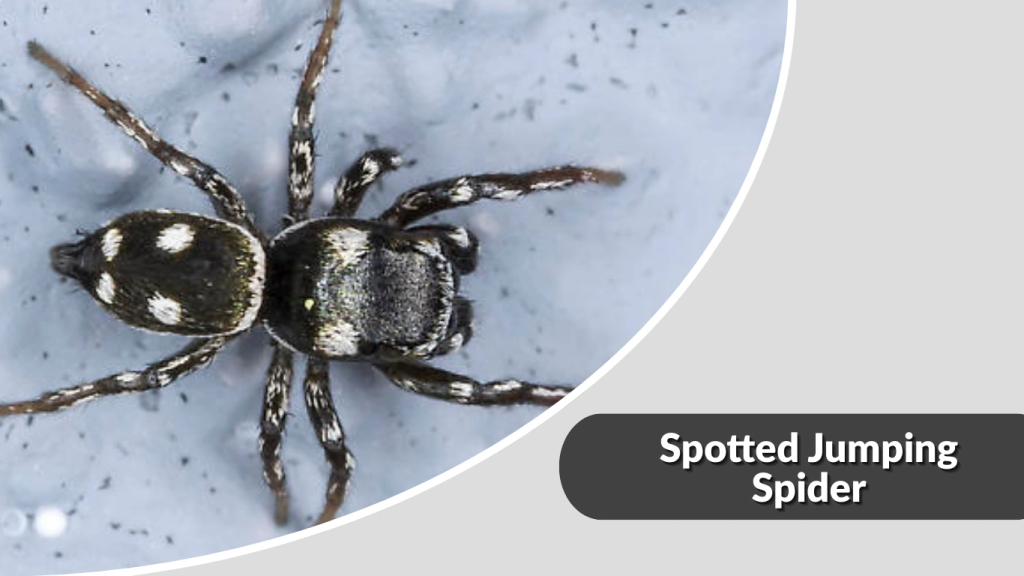
The Spotted Jumping Spider is a colorful black and white spotted spider whose contrasting patterns become most visible in certain seasonal or regional morphs.
Identification
- Dark body with pale or white spots on abdomen
- Fuzzy texture with short dense hairs
- Large forward-facing eyes typical of jumping spiders
- Subtle banding on legs
- Medium size, around 6–12 mm
Behavior & Habitat
An active daytime hunter, this spider relies on sharp vision to stalk insects on plants, fences, and exterior walls. It builds small silk retreats in leaves or crevices and shows curious but harmless behavior toward humans.
Range & Distribution
Common across the eastern and central United States, Phidippus clarus thrives in grassy fields, gardens, forest edges, and sunny open areas. Its appearance varies with age, region, and season.
Is It Dangerous?
This species is harmless and non-aggressive. Bites are extremely rare and mild, and the spider provides natural pest control by capturing flies, moths, and other small insects.
11. Peppered Jumping Spider (Pelegrina galathea)
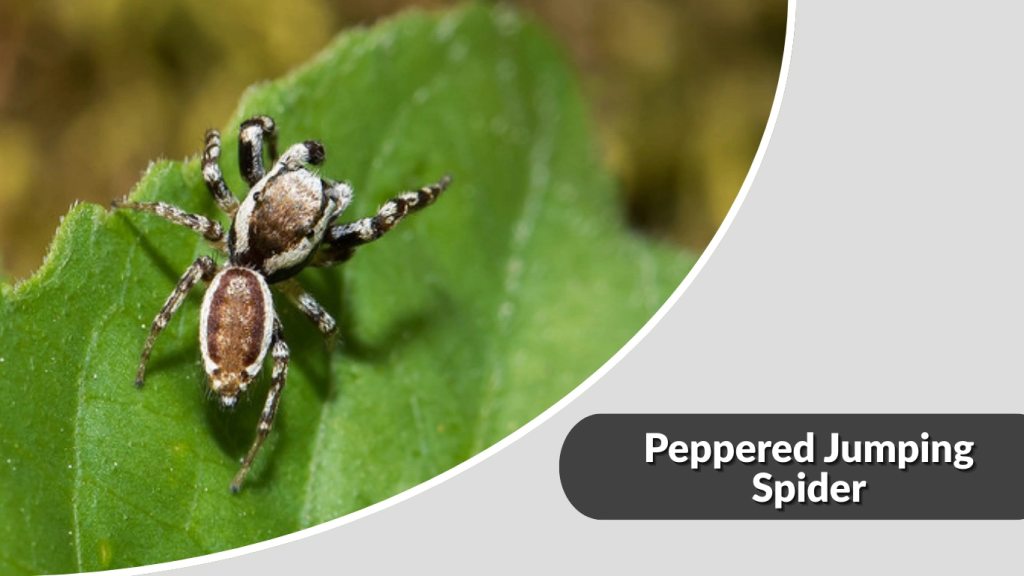
The Peppered Jumping Spider is a tiny black and white little spider, known for its speckled appearance and quick, alert movements across leaves, walls, and garden plants.
Identification
- Small body with black, white, and gray speckling
- Fuzzy texture typical of jumping spiders
- Short legs with pale markings
- Large central eyes used for precision hunting
- Usually 3–5 mm in size
Behavior & Habitat
This spider actively hunts during daylight, scanning for tiny insects with its excellent vision. It is commonly found on low vegetation, fences, and window frames, often blending into its surroundings thanks to its peppered pattern.
Range & Distribution
Widespread across North America, the Peppered Jumping Spider prefers temperate climates and is frequently seen during spring and summer in gardens, forest edges, and grassy areas.
Is It Dangerous?
Completely harmless to humans, this tiny spider poses no threat and provides valuable pest control. Its small size and timid nature make encounters brief and non-aggressive.
12. Pantropical Jumping Spider (Hyllus diardi)
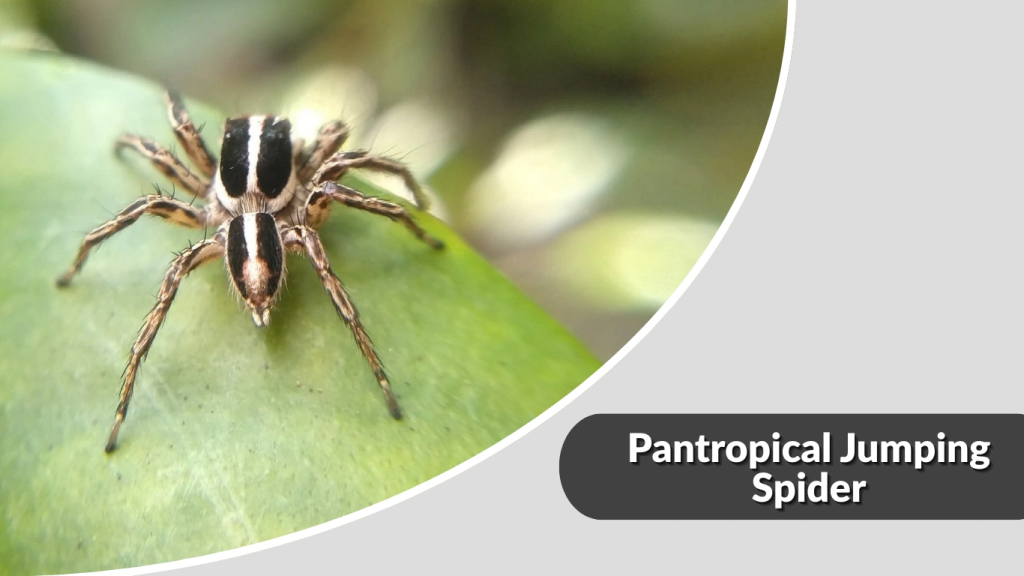
The Pantropical Jumping Spider is a striking black and white hairy spider known for its fuzzy appearance, bold contrast markings, and confident, curious movements around vegetation and building surfaces.
Identification
- Dense black and white hair covering the body
- Thick, strong legs with pale banding
- Large, shiny forward-facing eyes
- Rounded, fluffy cephalothorax
- Medium to large size for a jumper: 10–15 mm
Behavior & Habitat
This spider is an active daytime hunter that uses short leaps and exceptional vision to capture insects. It prefers warm, humid environments such as tropical gardens, tree trunks, and exterior house walls. It often displays curiosity toward humans without aggression.
Range & Distribution
Found across Southeast Asia, Australia, and tropical regions worldwide, Hyllus diardi thrives in warm climates and is often spotted near human dwellings and lush vegetation.
Is It Dangerous?
Despite its bold appearance, this species is harmless to people. Bites are extremely rare and mild, and the spider is valued for its pest-control benefits.
13. White-Backed Garden Spider (Araneus sclopetarius)
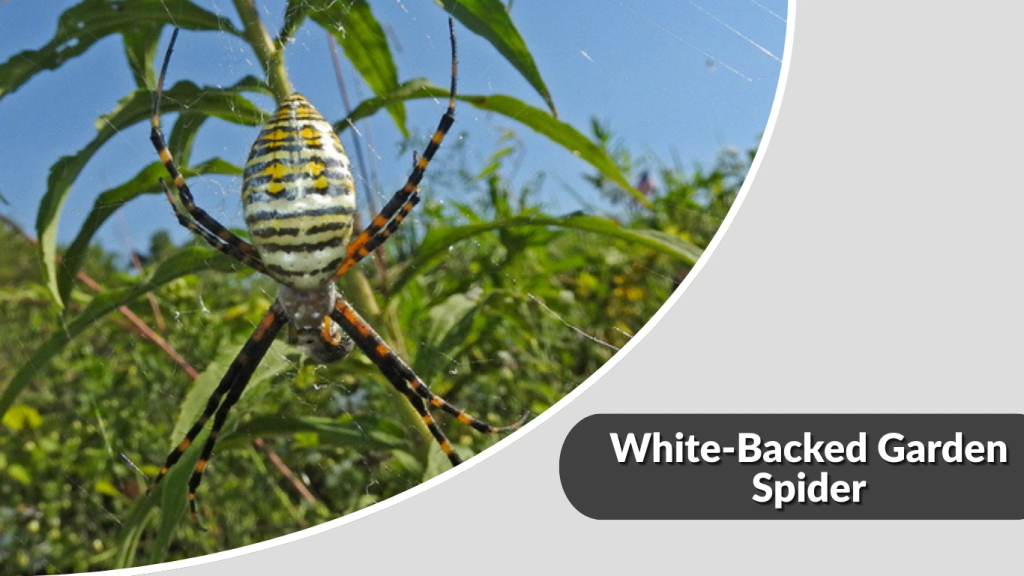
The White-Backed Garden Spider is a distinctive spider with white and black back featuring pale dorsal markings that contrast sharply with its darker body, often seen near buildings and bridges.
Identification
- Prominent white patch on the upper abdomen
- Dark brown to black body tones
- Slight banding on legs
- Robust orb-weaver shape
- Medium size, usually 10–15 mm
Behavior & Habitat
This spider builds large orb webs, often choosing bridges, outdoor lights, and building exteriors where insects gather. It is mostly nocturnal, repairing its web at night and hiding in nearby crevices during the day.
Range & Distribution
Common throughout Europe and parts of North America, this species thrives in urban environments. It is especially abundant near water, railings, concrete structures, and well-lit areas.
Is It Dangerous?
The White-Backed Garden Spider is harmless to humans. Its bite is considered very mild and unlikely to occur, and it contributes to controlling flying insects around structures.
14. Western Lynx Spider (Oxyopes scalaris)
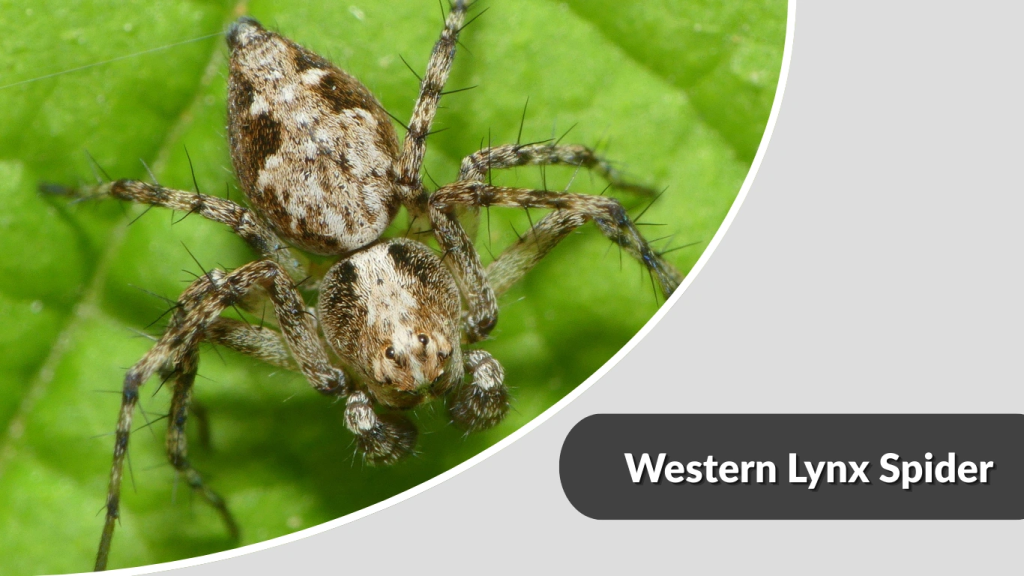
The Western Lynx Spider is a slender white and black legged spider known for its spiny legs, sharp markings, and active hunting style across grasses and shrubs.
Identification
- White and dark markings along the legs
- Slim, elongated body with subtle striping
- Spiny legs used for ambush hunting
- Pale abdomen with patterned lines
- Small to medium size, around 6–12 mm
Behavior & Habitat
Unlike web-building spiders, the Western Lynx Spider is an agile hunter that stalks and leaps on prey. It is often found in dry grassy fields, bushes, and garden plants, where it camouflages well among vegetation.
Range & Distribution
This species is widespread in western North America, especially in arid and semi-arid regions. It thrives in warm seasons and is commonly seen from spring through late summer.
Is It Dangerous?
The Western Lynx Spider poses no risk to humans. It is timid, fast-moving, and avoids contact with people. Any rare bite is mild, and the spider plays an important role in natural insect control.
15. Dimorphic Jumping Spider (Maevia inclemens)
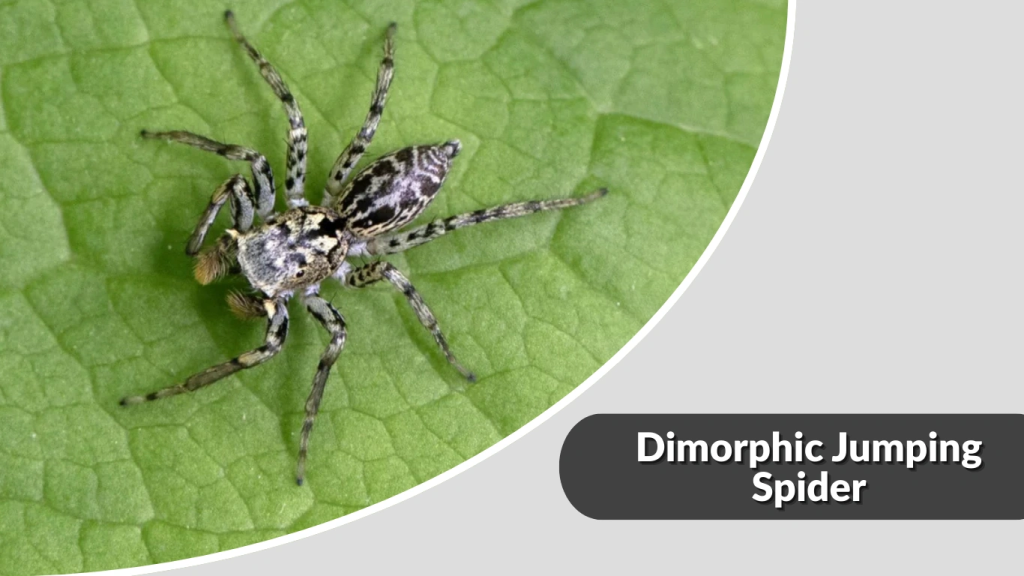
The Dimorphic Jumping Spider is a visually striking black and white spider with two distinct male forms, both displaying bold patterns and lively, curious behavior.
Identification
- Males appear in two forms: black-and-white or tan with stripes
- Black-and-white morph has bright contrasting facial patches
- Females feature mottled gray, black, and white patterns
- Fuzzy texture typical of jumping spiders
- Small to medium size, 6–10 mm
Behavior & Habitat
This species is active during the day, often performing animated courtship dances. It hunts insects using precision jumps and excellent eyesight. You can find it on fences, window frames, tree bark, and garden plants.
Range & Distribution
Found throughout eastern and central North America, the Dimorphic Jumping Spider lives near homes, woodlands, and open fields. It thrives in temperate climates and becomes most visible in warm months.
Is It Dangerous?
Harmless to humans, this spider rarely bites and exhibits gentle behavior. Its presence is beneficial, helping control small insects around homes and gardens.
16. Regal Jumping Spider (Phidippus regius)
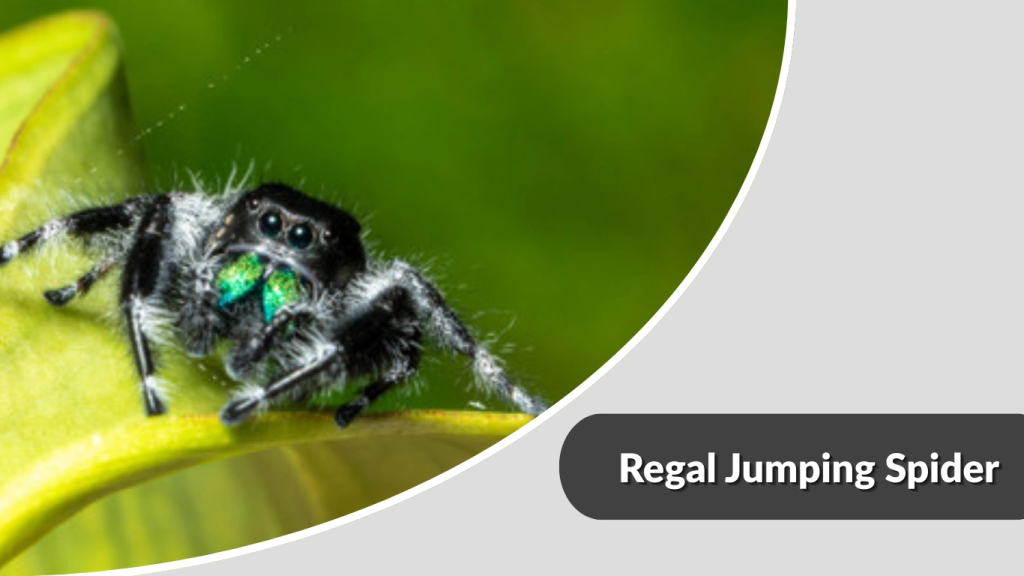
The Regal Jumping Spider is a bold black and white jumping spider with a fluffy appearance and metallic green or blue fangs, commonly spotted on walls, plants, and outdoor structures.
Identification
- Black body with white side bands or spots
- Females often have a patterned white or gray abdomen
- Fuzzy legs with contrasting bands
- Iridescent green or blue chelicerae
- Large for a jumper: 12–18 mm
Behavior & Habitat
This species is a confident predator that stalks insects using powerful leaps and exceptional eyesight. It builds silk retreats in leaves, corners, and crevices and shows curious, non-aggressive behavior toward humans.
Range & Distribution
Common in the southeastern United States—especially Florida—Phidippus regius prefers warm, sunny environments. It is frequently seen on fences, garden plants, and house exteriors.
Is It Dangerous?
The Regal Jumping Spider is harmless to people. Bites are extremely rare and mild, and the species benefits homes and gardens by reducing pest insect populations.
17. Variegated Spider (Argiope appensa)
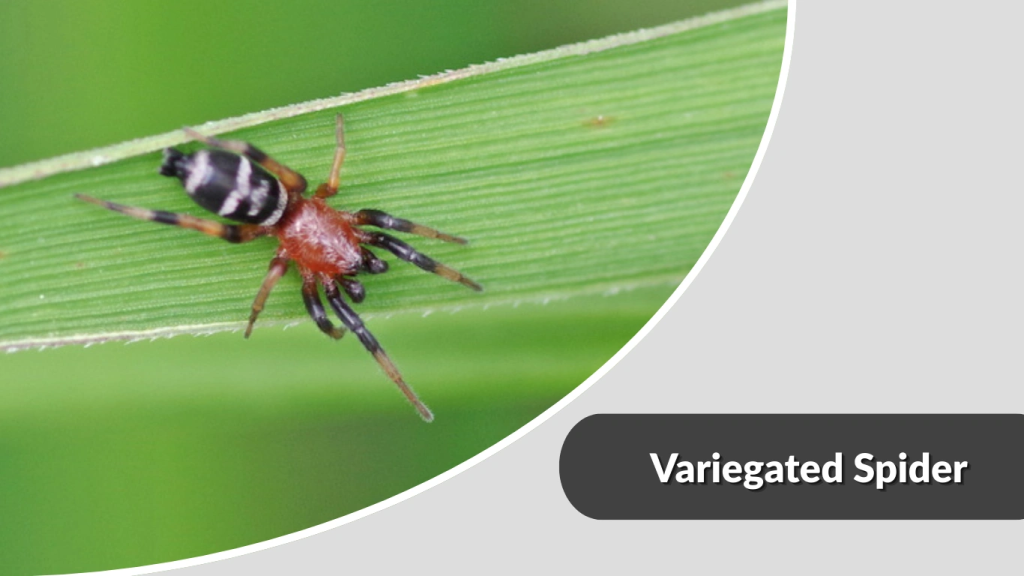
The Variegated Spider is a vibrant yellow white and black spider known for its bold abdominal patterns and striking web designs, commonly found in tropical and Pacific island regions.
Identification
- Bright yellow, white, and black abdominal markings
- Long legs with subtle banding
- Large circular orb web
- Females significantly larger than males
- Body size typically 15–25 mm
Behavior & Habitat
This orb-weaver builds large, symmetrical webs in open sunny areas such as gardens, forest edges, and fences. It often hangs head-down in the center of its web, waiting for flying insects to become trapped.
Range & Distribution
Native to the Pacific Islands, including Hawaii, Guam, and Samoa, the Variegated Spider thrives in warm tropical climates. It adapts well to human environments and is often seen near homes, parks, and roadside vegetation.
Is It Dangerous?
This species is harmless to humans. Although its bright colors may appear intimidating, its bite is mild and extremely rare, and it plays an important role in controlling insect populations.
18. European Garden Spider (Araneus diadematus) — Pale Morph
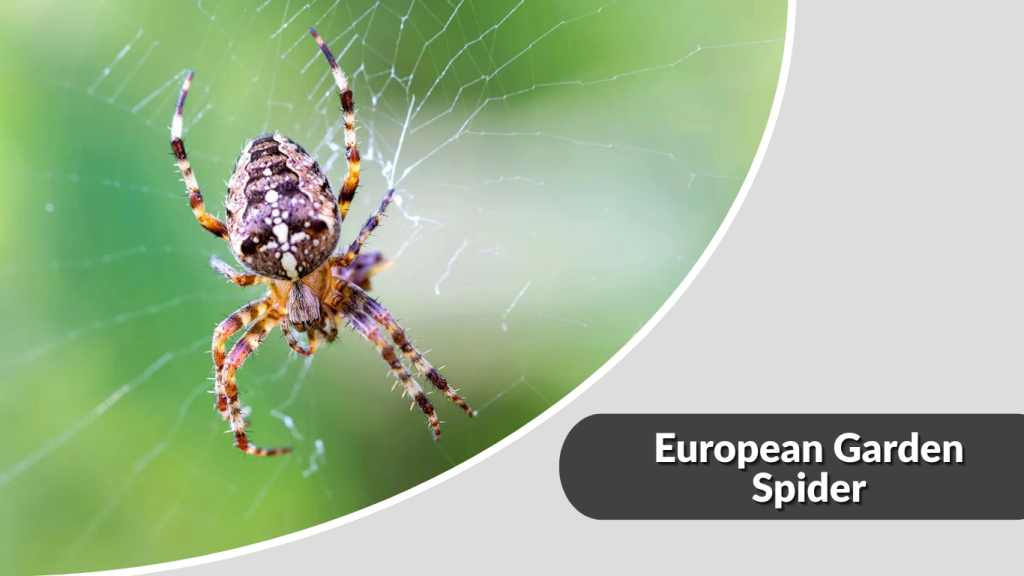
The pale form of the European Garden Spider often appears as a white and black spider, especially when its lighter cross-shaped markings stand out against the darker parts of its abdomen.
Identification
- Pale white cross pattern on the abdomen
- Body ranges from light gray to dark brown
- Slight striping on legs
- Round orb-weaver body shape
- Medium size, about 10–18 mm
Behavior & Habitat
This spider builds classic circular orb webs in gardens, forests, and around homes. It typically sits at the web’s center during the evening and hides in nearby foliage during the day. It feeds on flying insects like flies, moths, and beetles.
Range & Distribution
Widespread across Europe and introduced to North America, this species thrives in temperate climates. It is commonly seen from late summer into autumn when adults reach their largest size.
Is It Dangerous?
The European Garden Spider is harmless to people. Bites are rare and mild, and the species is valued for its ability to naturally control insect populations in gardens and yards.
19. Australian St. Andrew’s Cross Spider (Argiope keyserlingi)
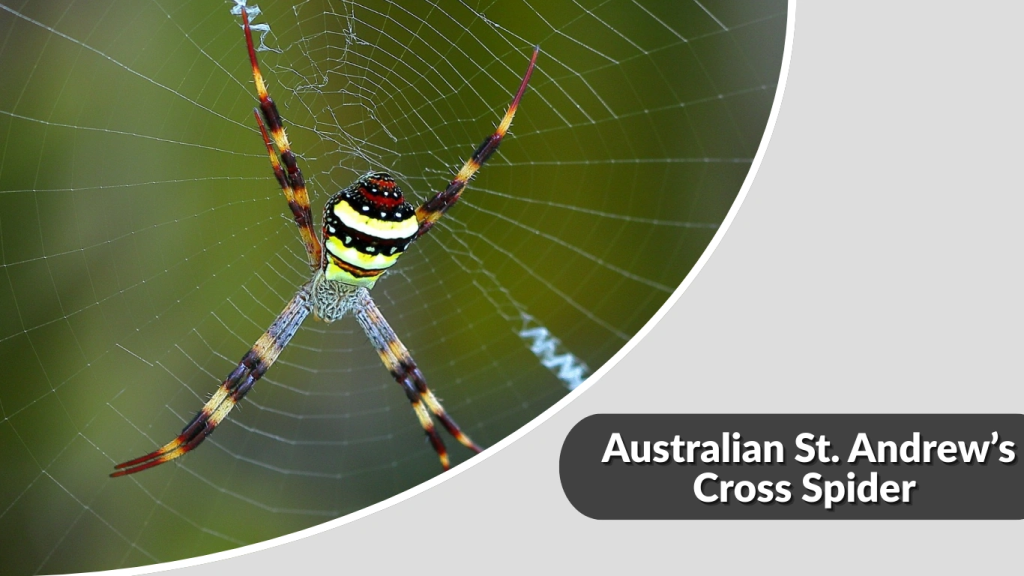
The Australian St. Andrew’s Cross Spider is a bold black white and yellow spider recognized for its bright coloration and the distinctive X-shaped silk pattern it creates in its web.
Identification
- Black, white, and yellow banded abdomen
- Long legs with striped patterns
- Unique X-shaped stabilimentum in the web
- Females larger and more colorful than males
- Body size typically 10–16 mm
Behavior & Habitat
This spider constructs large orb webs in open, sunny locations, often near gardens, shrubs, and pathways. It rests at the center of the web with legs arranged in an X-shape, blending with the stabilimentum to confuse predators.
Range & Distribution
Native to Australia and surrounding regions, this species thrives in warm climates and is common in suburban areas, bushlands, and coastal vegetation.
Is It Dangerous?
Despite its dramatic appearance, the St. Andrew’s Cross Spider is harmless to humans. It rarely bites, and its venom is mild. It provides excellent natural pest control by capturing flying insects in its intricate web.
20. White-Spotted Jumping Spider (Attulus fasciger)
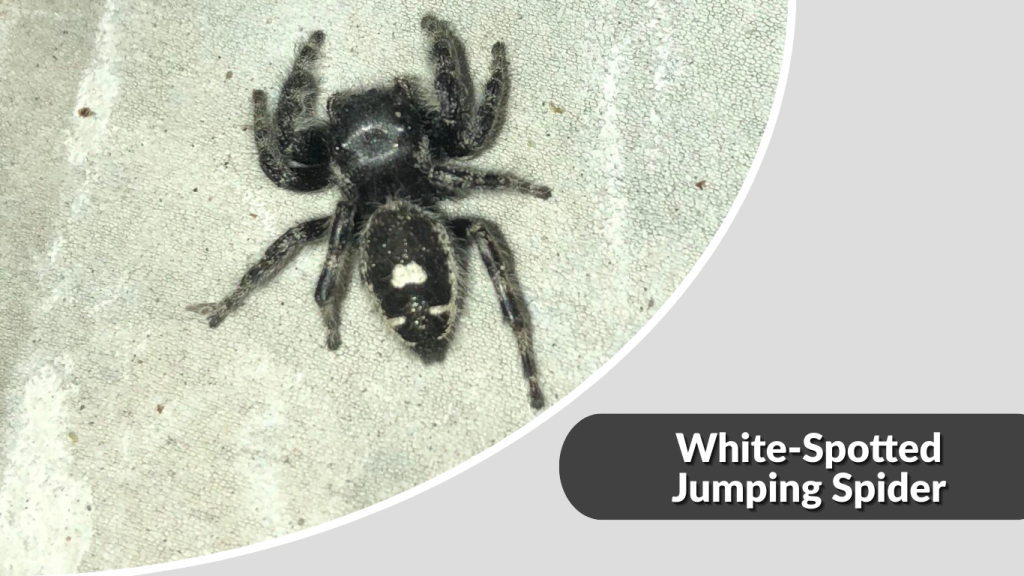
The White-Spotted Jumping Spider is a tiny black and white polka dot spider known for its speckled abdomen and energetic movements across walls, plants, and outdoor surfaces.
Identification
- Black or dark brown body with distinct white spots
- Dense, short hairs creating a speckled look
- Small, compact jumping spider shape
- Subtle pale banding on legs
- Very small size, around 3–5 mm
Behavior & Habitat
This species hunts actively during the day, using sharp eyesight to capture tiny insects. It is often seen on fences, house exteriors, tree bark, and vegetation, moving quickly and pausing to observe its surroundings.
Range & Distribution
Common across North America, Europe, and Asia, this spider thrives in temperate climates. It frequently appears in gardens, outdoor walls, rocky areas, and buildings where small insects gather.
Is It Dangerous?
The White-Spotted Jumping Spider is harmless to humans. Its bite is extremely rare and mild, and its presence helps reduce small insect pests around homes and gardens.
21. Gray Wall Jumping Spider (Felisatta viridis)
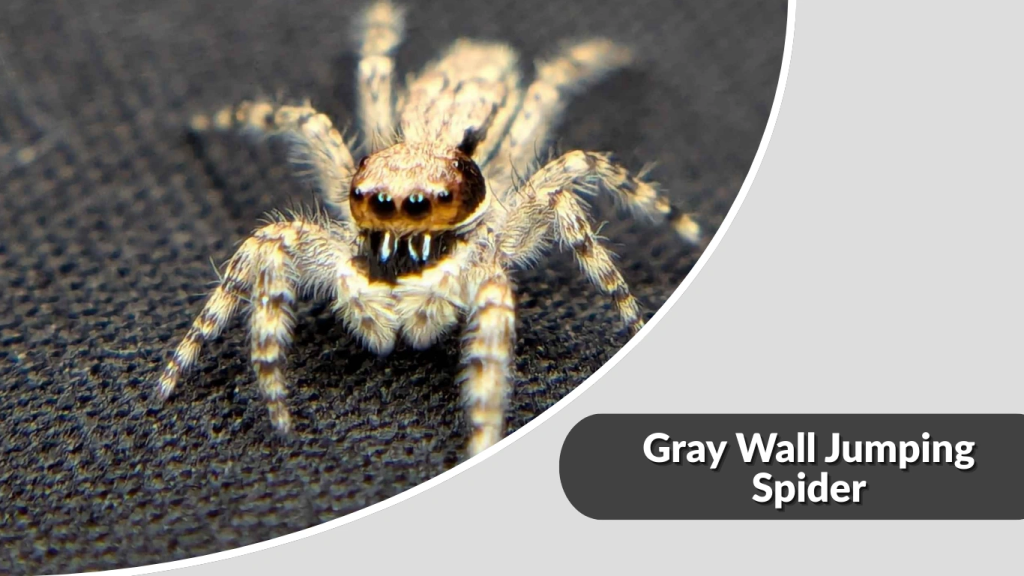
The Gray Wall Jumping Spider is a tiny black and white little spider with a speckled, dusty appearance that helps it blend into stone, brick, and concrete surfaces around buildings.
Identification
- Gray, black, and white mottled body pattern
- Compact, fuzzy jumping spider shape
- Pale banding on legs
- Large forward-facing eyes
- Very small size, typically 3–4 mm
Behavior & Habitat
This spider hunts actively on exterior walls, rocks, and man-made structures. It relies on its excellent vision and quick movements to capture tiny insects, often pausing to observe movement around it.
Range & Distribution
Found across parts of Europe, Asia, and introduced regions, the Gray Wall Jumping Spider prefers urban environments. It thrives in sunny spots on buildings, garden walls, and outdoor furniture.
Is It Dangerous?
This species is completely harmless to humans. Its small size makes bites nearly impossible, and it serves as a natural pest-controller by feeding on gnats and other small insects.
22. Golden Silk Orb Weaver (Juvenile) (Trichonephila clavipes)
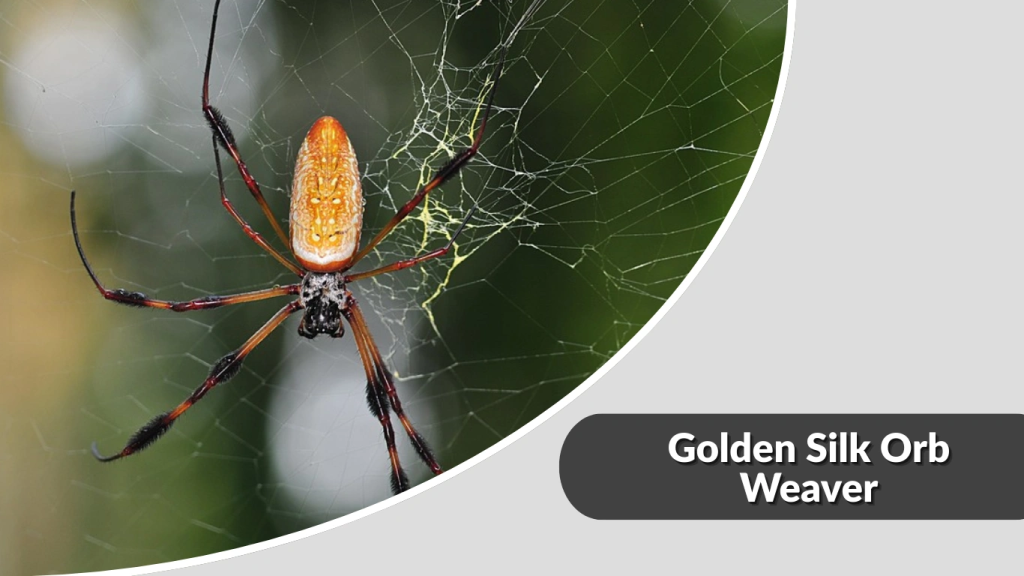
Juvenile Golden Silk Orb Weavers often appear as yellow white and black spiders, displaying sharp contrasts before developing the golden tones seen in adult females.
Identification
- Juveniles show white, black, and yellow abdominal patterns
- Long, slender legs with banded markings
- Elongated abdomen typical of orb weavers
- Builds large, strong webs
- Juvenile size ranges from 5–12 mm
Behavior & Habitat
Young spiders spin smaller orb webs in shrubs, forest edges, and garden spaces. They are active during warm months, capturing flying insects and gradually relocating as they grow. Their web silk becomes more golden as they mature.
Range & Distribution
Common throughout the southeastern United States, Central America, and the Caribbean, this species prefers warm, humid environments and is often found in wooded areas, parks, and gardens.
Is It Dangerous?
Juvenile Golden Silk Orb Weavers are harmless to humans. Their venom is mild, and bites are rare. Despite their striking coloration, they play a beneficial role in controlling insect populations.
23. Northern Black Widow (Juvenile) (Latrodectus variolus)
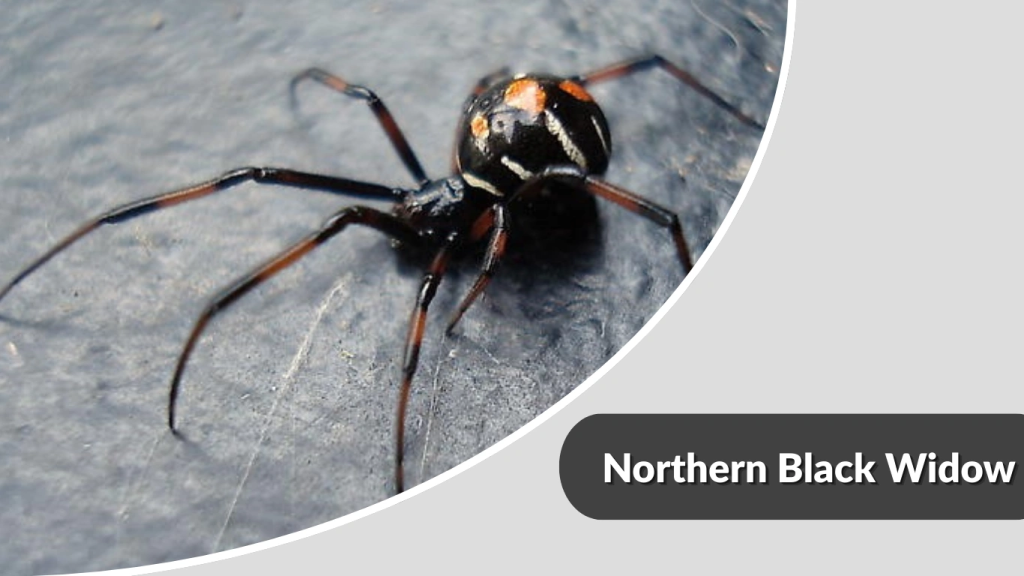
Juvenile Northern Black Widows sometimes appear as black and white spotted spiders, with pale dorsal markings that fade as they mature into their solid-black adult form.
Identification
- Black body with white or pale spots and streaks (juveniles)
- Slender legs with faint banding
- Oval abdomen with mixed patterning
- Distinct widow shape even at young stages
- Small to medium size: 5–12 mm depending on age
Behavior & Habitat
Juveniles spin irregular, tangled webs in secluded corners of woodpiles, fences, sheds, and under outdoor furniture. They hide during the day and become more active at night, preying on insects and small arthropods.
Range & Distribution
Found in the northeastern and central United States, this species prefers wooded regions, suburban areas, and sheltered outdoor spots. Juveniles are often encountered more frequently than adults due to their wandering behavior.
Is It Dangerous?
Juvenile Northern Black Widows are far less dangerous than adults. Their venom is weaker at this stage, and bites are extremely rare. They typically avoid humans, and juvenile sightings pose minimal risk when left undisturbed.
24. Leaf-Curling Spider (Phonognatha graeffei)
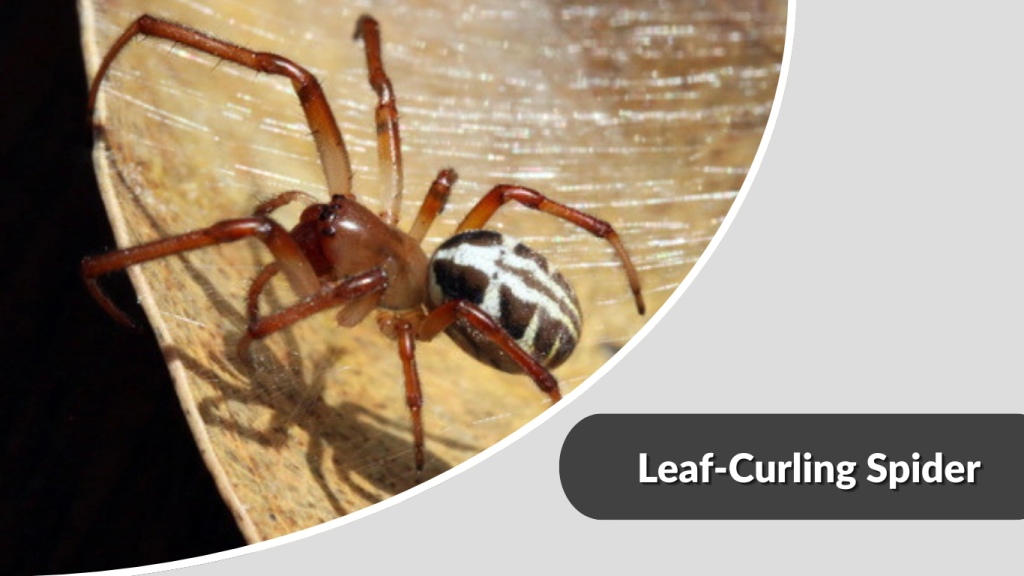
The Leaf-Curling Spider is a distinctive white and black spider whose body patterns and curled-leaf retreat make it easy to recognize in Australian gardens and bushland.
Identification
- Pale white to light-gray abdomen with dark markings
- Black or brown legs with subtle striping
- Oblong body shape typical of orb-weavers
- Builds curled-leaf shelters in the web
- Medium size, usually 8–12 mm
Behavior & Habitat
This spider creates a unique retreat by pulling a leaf into the center of its web and hiding inside it during the day. It waits for prey to hit the web at night, emerging quickly to capture insects such as moths and flies.
Range & Distribution
Common throughout eastern and southeastern Australia, the Leaf-Curling Spider thrives in gardens, forests, and shrublands. It is frequently seen in warm months when insect activity is high.
Is It Dangerous?
The Leaf-Curling Spider is harmless to humans. Although it may startle people when emerging from its curled-leaf retreat, its bite is mild and rare, and it helps reduce garden pests naturally.
25. Bold Dwarf Spider (Erigone atra)
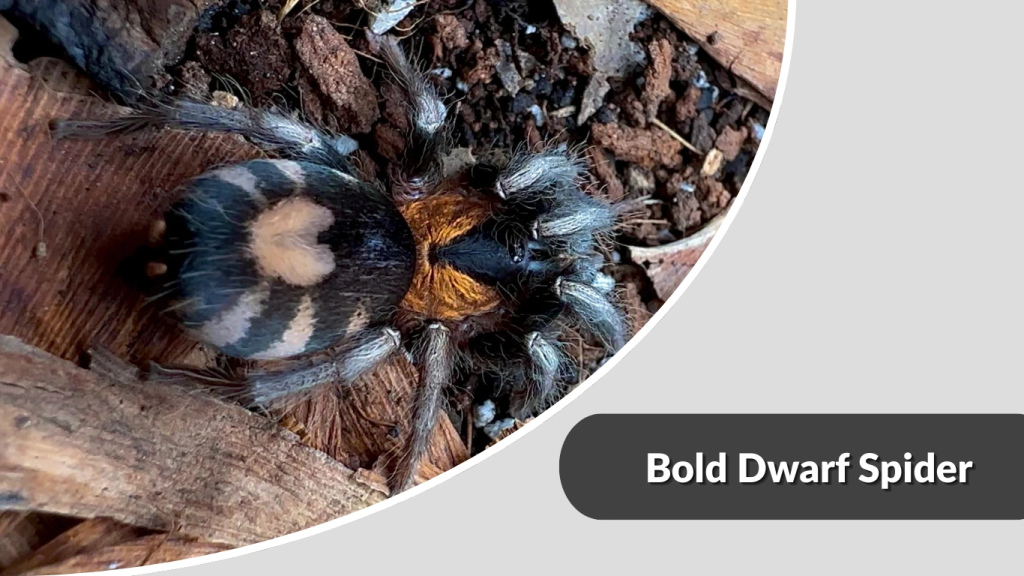
The Bold Dwarf Spider is a very small black and white spider whose subtle pale markings stand out against its dark body, commonly found in grassy fields and garden areas.
Identification
- Dark black or deep brown body
- Small pale or white patches on abdomen
- Slender legs with faint lighter bands
- Tiny body structure typical of dwarf spiders
- Very small size, usually 2–4 mm
Behavior & Habitat
This spider builds small sheet-like webs close to the ground, often hidden among grass, leaf litter, and low vegetation. It is most active in cooler months and hunts tiny insects that wander into its silk traps.
Range & Distribution
Widespread across North America and Europe, the Bold Dwarf Spider thrives in meadows, gardens, agricultural fields, and forest edges. Its tiny size makes it easy to overlook despite being common.
Is It Dangerous?
Completely harmless to humans, this species poses no threat. Its extremely small size makes bites highly unlikely, and it plays an important ecological role by helping control small pest insects.