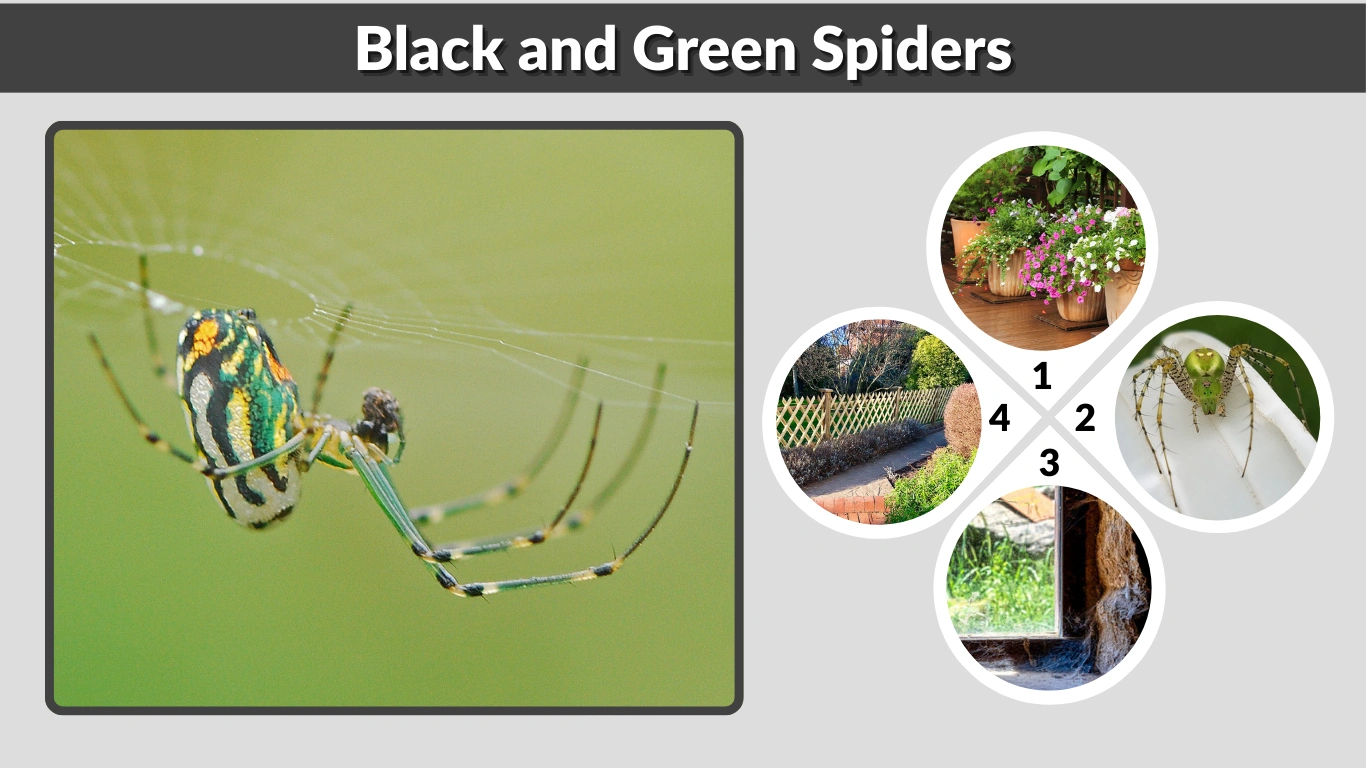
Black-and-green spiders are among the most striking arachnids people encounter in gardens, homes, and wooded areas. Their bold coloration often sparks curiosity and concern, especially when the spider features metallic green fangs or glowing green eyes. Many species share this coloration, from harmless jumping spiders to delicate orb weavers and vibrant lynx spiders. This guide explores why these spiders are colored this way, how to identify them, and what species most commonly match black-and-green descriptions.
What Are Black and Green Spiders?
Black-and-green coloration appears in several spider families, and it is far more common—and less dangerous—than many people assume. The green coloring usually comes from structural iridescence, meaning light reflects off certain body surfaces to create a metallic or neon effect. In other species, green pigmentation helps the spider camouflage among leaves, shrubs, and grass.
Families that commonly display black-and-green patterns include:
- Salticidae (Jumping Spiders): known for green fangs and reflective eyes
- Araneidae (Orb Weavers): metallic green abdomens with black or silver markings
- Oxyopidae (Lynx Spiders): bright green bodies with black dots or stripes
Many of these spiders are frequently misidentified as venomous, but most are harmless and beneficial predators.
Identification Guide
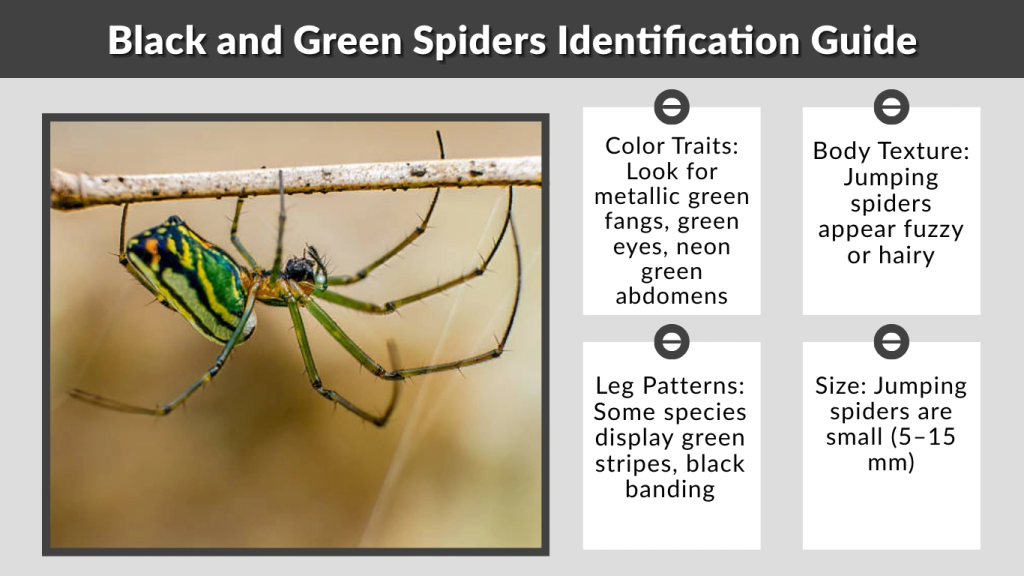
Below is a simple diagnostic list to help identify black-and-green spiders:
- Color Traits: Look for metallic green fangs, green eyes, neon green abdomens, or black bodies with green spots.
- Body Texture: Jumping spiders appear fuzzy or hairy, while orb weavers and lynx spiders have smoother, sleeker bodies.
- Leg Patterns: Some species display green stripes, black banding, or translucent green legs with dark joints.
- Size: Jumping spiders are small (5–15 mm), orchard orb weavers are slender, and lynx spiders may appear longer with spiked legs.
- Behavior: Jumping spiders actively stalk prey; orb weavers sit on webs; lynx spiders ambush insects on plants.
- Region: Many sightings occur in the southeastern U.S., including Georgia and Florida.
- Movement: Quick leaps indicate a jumping spider, while a stationary posture in a web suggests an orb weaver.
This checklist helps narrow down the species before diving into specific identification.
Common Black-and-Green Species
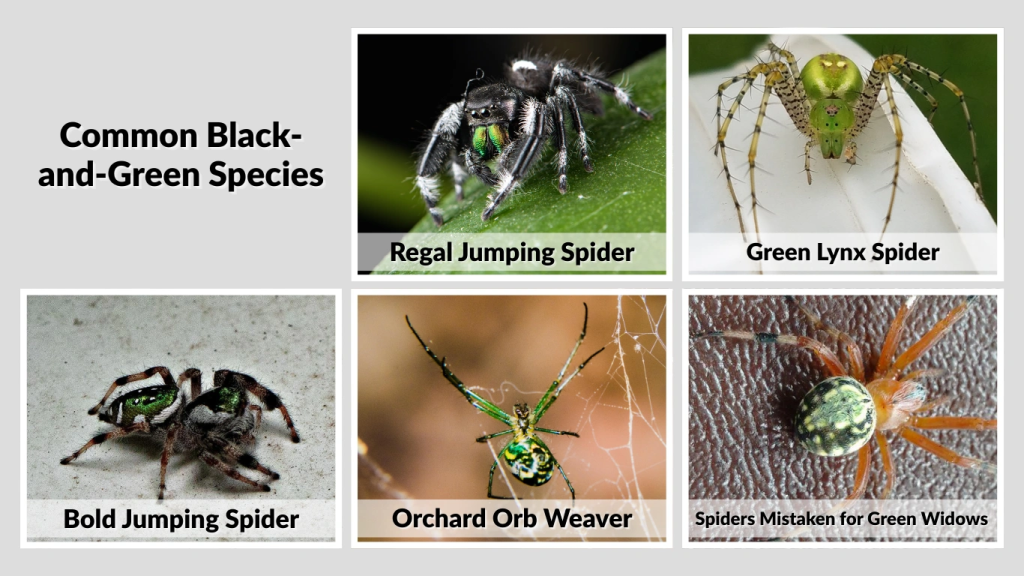
Below are the most frequently encountered spiders that match black-and-green coloration, including those with green fangs, green eyes, or neon green spotting.
Bold Jumping Spider (Phidippus audax)
Perhaps the most iconic black-and-green spider, the Bold Jumping Spider features shiny iridescent green fangs that shift colors under sunlight. Its black, fuzzy body often displays white or greenish spots on the abdomen. This species is widespread across the United States and is commonly seen on walls, fences, garden plants, and windowsills.
Despite their strong appearance, Bold Jumping Spiders are gentle, curious, and extremely unlikely to bite. Their metallic green chelicerae explain the majority of searches such as “black spider with green fangs” and “black jumping spider with green eyes.” Juveniles sometimes show slightly different spot colors, including light green or white.
Regal Jumping Spider (Phidippus regius)
Regal Jumping Spiders are larger than Bold Jumpers and display more variation in color. Males are typically black with white stripes and vivid green or blue-green fangs. Females may exhibit gray, black, or faintly greenish tones across the abdomen, although their fangs remain visibly iridescent.
This species is especially common in Florida and the southeastern U.S., making it a frequent subject of searches like “black and green spider Georgia” or “big black spider with green eyes.” Their impressive size and bright facial coloration make them appear intimidating, but they are harmless and often quite docile around humans.
Green Lynx Spider (Peucetia viridans)
Although predominantly green rather than black, the Green Lynx Spider fits many search terms involving “green spider black spots” or “green spider with black stripes.” This species has a vivid lime-green body with black dots, orange highlights, and long spiny legs. It is an active hunter that lives on shrubs, flowers, and garden plants, where its coloration serves as excellent camouflage.
Green Lynx Spiders do not possess green fangs like jumping spiders; instead, their bright coloration helps them stalk insects in open sunlight. While they may appear fierce, they are harmless to humans and rarely interact with people unless disturbed on outdoor plants.
Orchard Orb Weaver (Leucauge venusta)
One of the most visually striking orb weavers, the Orchard Orb Weaver features a metallic green abdomen with black, yellow, and silver markings. Its slender body and angled webs distinguish it from bulkier orb weavers. This species is responsible for many “neon green and black spider” sightings.
Unlike jumping spiders, orchard orb weavers stay in webs and rarely wander into homes. Their reflective coloration appears almost glowing under sunlight, adding to their distinctive appearance and frequent misidentification.
Spiders Mistaken for Green Widows
Many people search terms like “green black widow spider,” but there is no true green widow species. Confusion often arises when jumpers or orb weavers display green iridescence that resembles a widow’s glossy sheen. Widow spiders typically have black bodies with red or orange markings—not green—so black-and-green coloration almost always indicates a harmless species.
Color Pattern Breakdown
Green Fangs (Chelicerae)
Green fangs are the most frequently searched feature involving black-and-green spiders. These iridescent chelicerae belong almost exclusively to jumping spiders, especially Phidippus audax and Phidippus regius. The green color isn’t pigment—it’s caused by microscopic structures reflecting light. This effect makes the fangs appear neon, metallic, or rainbow-shifted depending on lighting.
Jumping spiders use their fangs not only to subdue prey but also for visual communication during courtship or territorial displays.
Green Eyes
Green eyes are another frequently searched feature, often linked to jumping spiders. Their large, forward-facing eyes reflect light in unique ways, creating a shimmering green or teal glow. This reflective quality is not due to pigment but to the tapetum structure behind the retina, which enhances night vision. Many people notice this shine when a spider is photographed with flash or seen under bright sunlight. Species like the Bold Jumping Spider can appear to have glowing emerald eyes as they observe movement with curiosity.
Green Spots, Dots, or Stripes on Black Spiders
Green spotting or striping is typically associated with jumping spiders and orchard orb weavers. Small, round green dots may appear on the abdomen of Phidippus species due to iridescence. Meanwhile, orb weavers often have patterned abdomens that include green, black, and white bands. In some cases, the green coloration intensifies in daylight, giving the spider a neon appearance. These patterns are completely harmless and serve to confuse predators or conceal the spider against foliage.
Neon Green and Black Coloration
When people reference “neon green and black spiders,” they are usually describing orchard orb weavers or lynx spiders. Neon green is especially prominent in younger orchard orb weavers, whose metallic sheen reflects yellow, silver, and blue tones. These spiders commonly build webs low to the ground or between shrubs, and their webs often have a slight tilt that differentiates them from typical vertical orb webs. Their bright colors can appear almost fluorescent, especially at dawn or dusk.
Behavior and Habitat
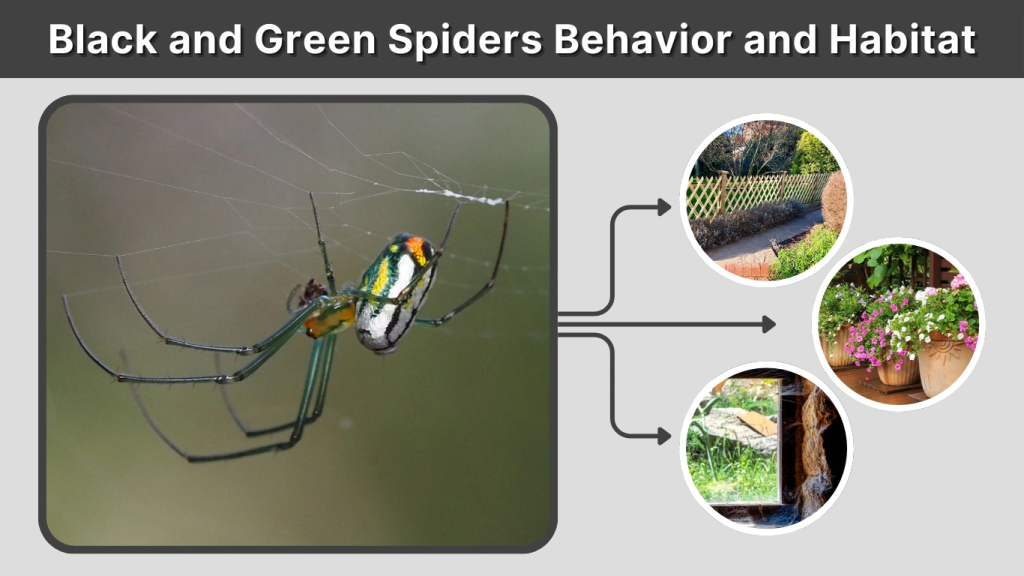
Black-and-green spiders inhabit a variety of environments, although many prefer sunny, warm climates. Jumping spiders thrive in open, sunlit areas where they can hunt insects with their excellent vision. They wander across fences, garden pots, walls, and window frames, pausing to observe movement and occasionally interacting with humans out of curiosity.
Orb weavers, such as orchard orb weavers, construct delicate, symmetrical webs between branches or along garden edges. They often rest at the center of their webs, relying on vibration rather than sight to detect prey. These spiders are active mostly at night, rebuilding webs as necessary.
Green lynx spiders typically perch on flowering plants and shrubs. Their long legs and spiny appearance make them seem intimidating, but they primarily target insects such as moths and flies. Their bright green coloration camouflages them so well that they often blend completely into vegetation.
Seasonally, these spiders are most visible during late summer and early fall, when they are fully grown and actively hunting or constructing webs.
Are Black and Green Spiders Dangerous?
Despite their vivid colors and sometimes fierce appearance, the vast majority of black-and-green spiders are not dangerous to humans. Jumping spiders have venom only strong enough to subdue tiny insects, and their bites—when they occur—are mild and comparable to a mosquito bite. They prefer escaping or hiding rather than confronting threats.
Orb weavers are equally harmless, and their fangs are too small to break human skin in most situations. Green lynx spiders may bite if directly handled, but their venom pose little to no medical concern.
Confusion often arises from misidentifying brightly colored spiders as widow species. True black widows have red hourglass markings, not green. Any black spider with green features is almost certainly harmless.
In general, admiration and distance are the safest approach. These spiders are excellent natural pest control agents and benefit gardens significantly.
Comparison Table
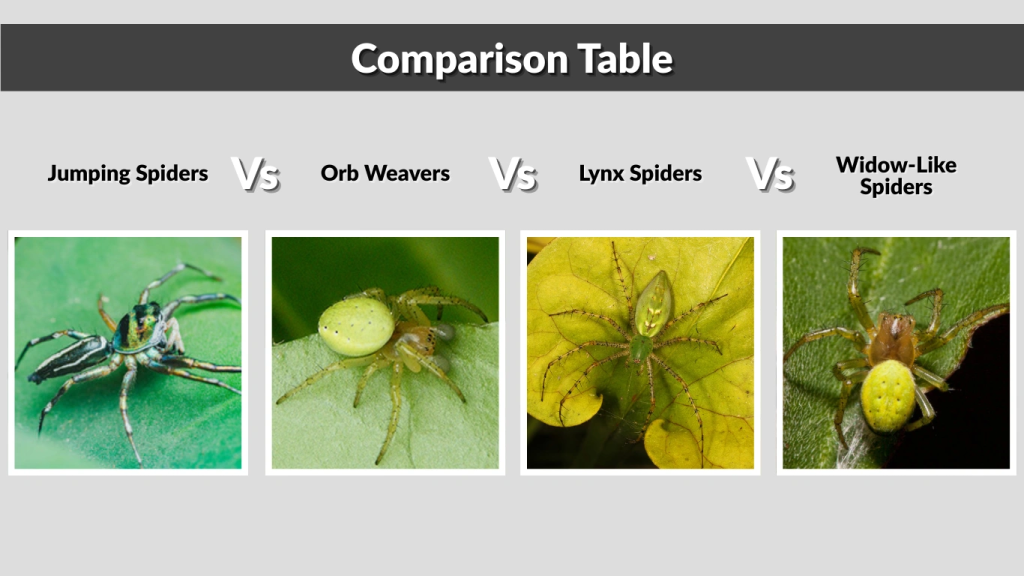
| Feature / Pattern | Jumping Spiders | Orb Weavers | Lynx Spiders | Widow-Like Spiders |
| Color Source | Iridescent green fangs, eyes | Metallic green abdomens | Transparent green bodies | Dark with red/orange marks |
| Behavior | Active hunters | Web builders | Ambush hunters | Hiding, slow |
| Body Texture | Fuzzy, hairy | Smooth, slender | Sleek, spiny legs | Smooth |
| Danger Level | Very low | Very low | Very low | Moderate (only true widows) |
How to Identify Your Black-and-Green Spider (Checklist)
Use this quick reference to narrow down your identification:
- Green fangs visible? → Likely a Bold or Regal Jumping Spider
- Spider sitting in a web? → Probably an Orchard Orb Weaver
- Long, spiny green legs? → Green Lynx Spider
- Neon or metallic green patterns? → Orb Weaver or jumping spider
- Fuzzy black body with reflective eyes? → Jumping spider family
- Shiny black body shaped like a widow? → Check for red markings; not green
These clues help identify species accurately without needing close contact.
When to Leave It Alone
Most black-and-green spiders pose no threat and serve as valuable pest control agents. Jumping spiders help reduce flies and small insects indoors and outdoors. Orb weavers dramatically cut mosquito populations and maintain ecological balance in gardens. Removing these spiders can interrupt natural pest management, so relocation should only occur if the spider is indoors or creating a web in a high-traffic area.
When relocating, the cup-and-paper method is the safest option and avoids harming the spider.
FAQs
What spider is black with green fangs?
This is most commonly the Phidippus audax jumping spider, known for its metallic green chelicerae. The green appearance comes from structural iridescence, not pigment. These spiders are small, fuzzy, curious, and completely harmless to humans.
Is a black and green spider dangerous?
Most black-and-green spiders are harmless. Bright colors often cause concern, but species with green fangs or green eyes—especially jumping spiders—pose little to no risk. They rarely bite and contribute significantly to insect control in gardens and homes.
What spider has green eyes?
Jumping spiders frequently appear to have green or teal eyes due to reflective structures inside the retina. This effect becomes more noticeable under bright light or flash photography. Green-eyed spiders are typically friendly observers and not aggressive.
What is a neon green and black spider?
Neon green and black spiders are usually Orchard Orb Weavers or juvenile lynx spiders. Their bodies shimmer under sunlight, producing metallic green or yellow reflections. These species are harmless and often found in low garden webs.
What’s the difference between a green lynx spider and a jumping spider?
Green lynx spiders are long-legged hunters that sit on shrubs, while jumping spiders are compact, fuzzy, and actively stalk prey. Jumpers often have green fangs and expressive eyes, whereas lynx spiders rely on camouflage and speed. Both species are harmless.