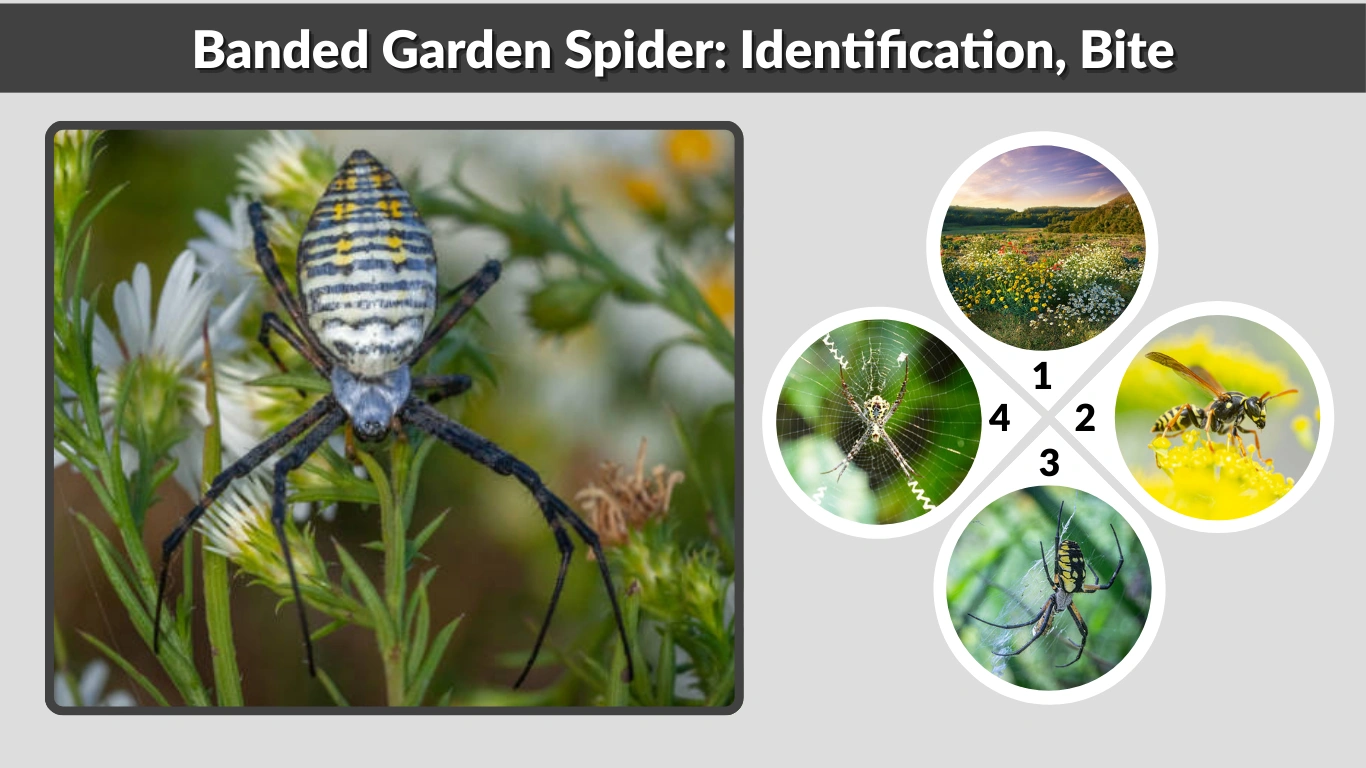
The banded garden spider (Argiope trifasciata) is a striking orb-weaving spider commonly found in gardens, meadows, and open fields. With its bold black, yellow, and white striping and its distinctive zigzag web pattern, this spider often attracts both curiosity and concern. Many people wonder whether it is dangerous or if its bite poses a risk. Fortunately, the banded garden spider is largely harmless to humans and plays an important role in controlling insect populations. In this guide, you’ll learn how to identify this species, understand its web structure, and discover why it’s beneficial to have around.
What Is a Banded Garden Spider?
The banded garden spider is a member of the orb-weaver family, known for building large, circular webs. It belongs to the genus Argiope, which includes several visually striking spider species found throughout North America.
Scientific Classification and Background
- Kingdom: Animalia
- Phylum: Arthropoda
- Class: Arachnida
- Order: Araneae
- Family: Araneidae
- Genus: Argiope
- Species: Argiope trifasciata
The genus Argiope includes other well-known species, such as the yellow garden spider (Argiope aurantia). Although these species look similar, subtle differences in coloration and patterning help distinguish them.
Why Is It Called “Banded”?
The name “banded” refers to the horizontal striping across the spider’s abdomen. These bands typically consist of alternating black, yellow, and white markings. The stripes are usually more defined and evenly spaced than those of the yellow garden spider.
This distinct banding makes identification easier, especially during late summer when the spiders are fully grown and highly visible.
Other Common Names
Depending on the region, the banded garden spider may also be called:
- Writing spider
- Striped garden spider
- Orb-weaver garden spider
The term “writing spider” comes from the zigzag pattern woven into the center of its web, which resembles handwriting.
Physical Characteristics and Identification
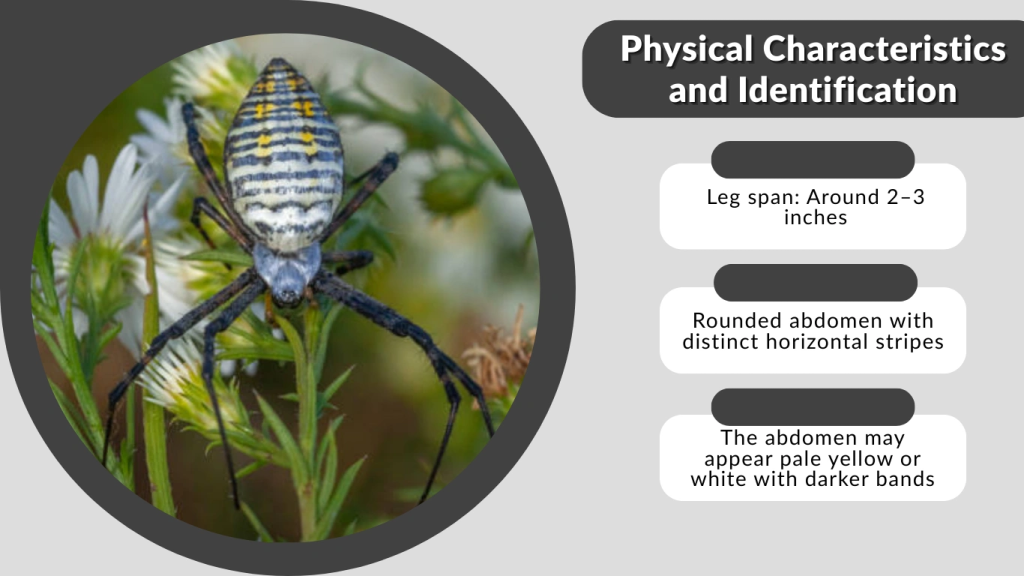
The banded garden spider is relatively easy to identify once you know what features to look for.
Size and Sexual Dimorphism
Like many orb-weavers, this species displays strong sexual dimorphism. Females are significantly larger than males.
- Female body length: Up to about 1 inch
- Leg span: Around 2–3 inches
- Male body length: Much smaller, often less than half an inch
Because of this size difference, most spiders seen in gardens are females. Males are smaller, less colorful, and often remain near the edge of the female’s web.
Body Color and Markings
The female banded garden spider has a rounded abdomen with distinct horizontal stripes. The abdomen may appear pale yellow or white with darker bands. The cephalothorax (front body section) is typically silvery or grayish in color.
Its legs are long, slender, and sometimes subtly banded as well. The combination of bright striping and large web makes this spider highly noticeable.
Posture in the Web
One interesting behavioral trait is how the banded garden spider positions itself in the web. It often sits head-down in the center with its legs paired together, forming an “X” shape.
This posture may help with camouflage or reduce its visible outline to predators. When disturbed, the spider may vibrate rapidly in the web to blur its appearance and discourage threats.
The Zigzag Web Pattern (Stabilimentum)
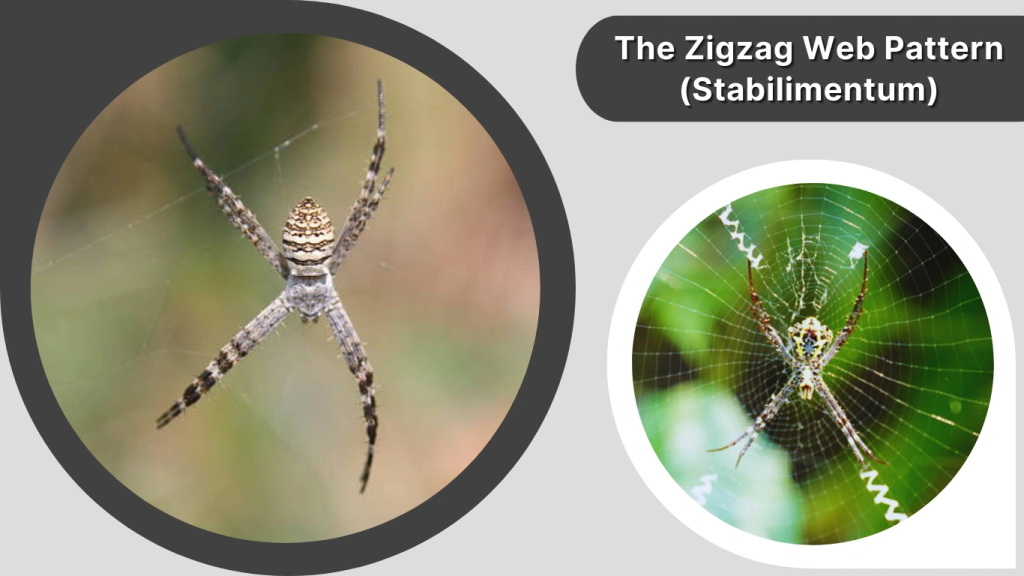
One of the most fascinating features of the banded garden spider is the zigzag design in its web.
What Is a Stabilimentum?
The zigzag pattern in the center of the web is called a stabilimentum. It is made of thicker silk woven into a visible vertical or zigzag stripe.
Not all orb-weavers create this structure, but species in the Argiope genus are well known for it.
Why Do Banded Garden Spiders Build It?
Scientists have proposed several theories about the purpose of the stabilimentum:
- Attracting prey: The bright silk may reflect ultraviolet light, drawing insects toward the web.
- Warning birds: The visible pattern may prevent birds from flying through and destroying the web.
- Camouflage: The zigzag may break up the spider’s outline when it sits in the center.
- Structural support: It may help strengthen the web’s center.
Although the exact purpose is still debated, it likely serves multiple functions.
Differences from Other Orb Webs
Most orb-weaver webs are simple circular designs without additional decoration. The presence of a stabilimentum makes the banded garden spider’s web easy to recognize.
These webs are typically built in open, sunny areas between tall plants or grasses, where flying insects are abundant.
Habitat and Geographic Distribution
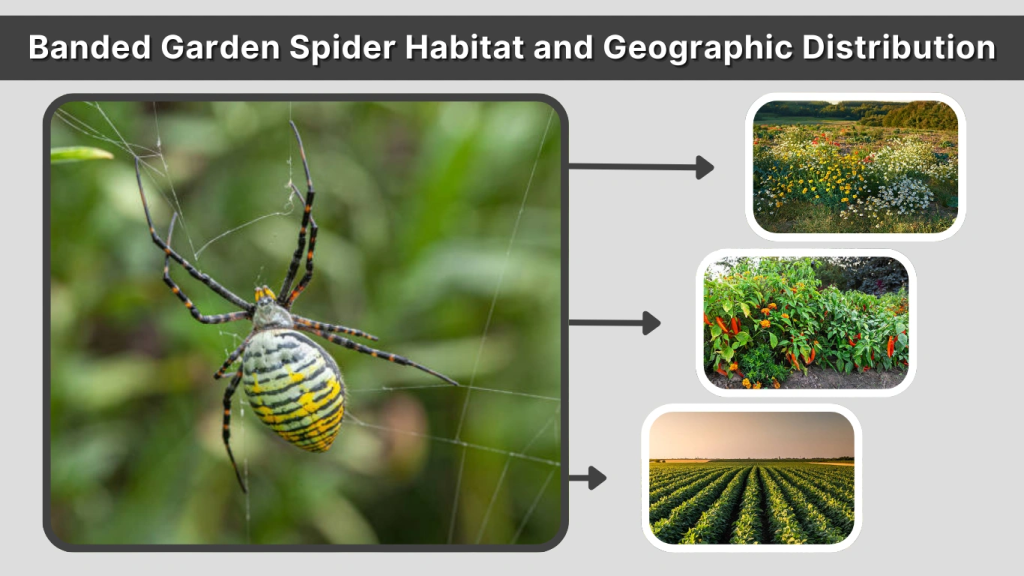
Where Do Banded Garden Spiders Live?
Banded garden spiders are widely distributed throughout North America. They are commonly found in:
- The United States
- Southern Canada
- Mexico
- Parts of Central America
They thrive in warm climates but can also survive in temperate regions during the summer months.
Preferred Environment
This species prefers open, sunny habitats with tall vegetation. You’re likely to find them in:
- Meadows
- Gardens
- Agricultural fields
- Tall grasses
- Shrubs
They typically build their webs between sturdy plant stems, positioning them where insects frequently fly.
Seasonal Activity
In cooler regions, banded garden spiders are most visible from late summer through early fall. During this time, females are fully mature and actively maintaining their webs.
As temperatures drop, adult spiders die off, and the next generation develops from egg sacs laid earlier in the season.
Diet and Hunting Behavior
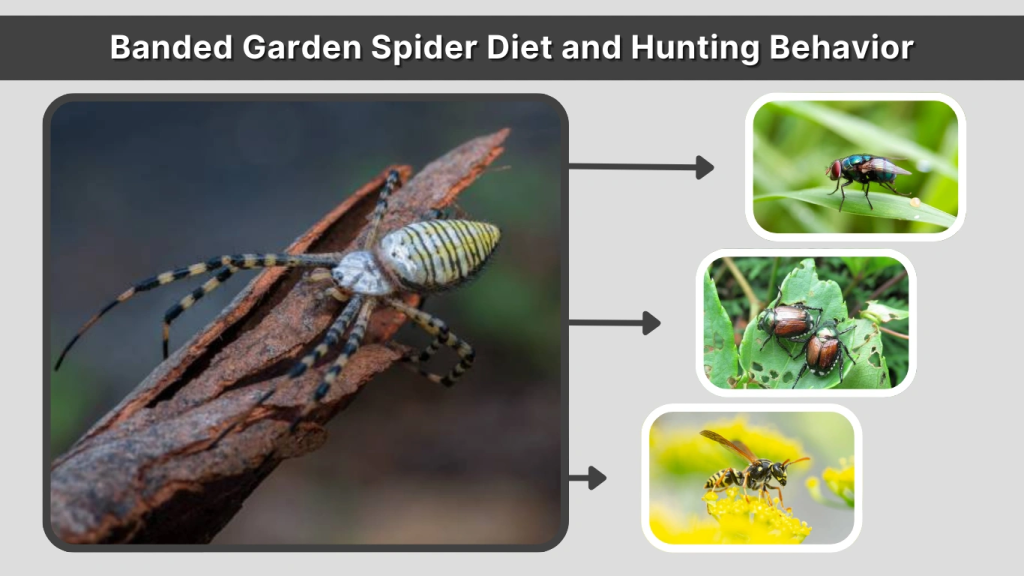
The banded garden spider is a passive hunter that relies entirely on its web to capture prey. Rather than chasing insects, it waits patiently at the center of its web for vibrations that signal a trapped meal.
What Do Banded Garden Spiders Eat?
Their diet consists mainly of flying insects, including:
- Grasshoppers
- Flies
- Beetles
- Wasps
- Bees
- Moths
Because their webs are large and strong, they are capable of catching relatively sizable insects, especially grasshoppers in late summer.
Hunting Strategy
When an insect becomes trapped in the sticky spiral threads of the web, the spider quickly senses the vibrations. It rushes toward the prey and injects venom to immobilize it. The venom is designed specifically to subdue insects, not large animals.
After biting, the spider often wraps the prey in silk to prevent escape. It may store wrapped insects in the web to consume later. This efficient strategy allows the banded garden spider to conserve energy while maintaining a steady food supply.
Role in Garden Pest Control
Banded garden spiders provide natural pest control in gardens and agricultural areas. By feeding on grasshoppers, beetles, and flies, they help reduce populations of insects that may damage crops or plants.
For gardeners and farmers, their presence is typically beneficial. Although their webs can sometimes be inconvenient, the ecological advantages they provide outweigh minor disruptions.
Are Banded Garden Spiders Dangerous?
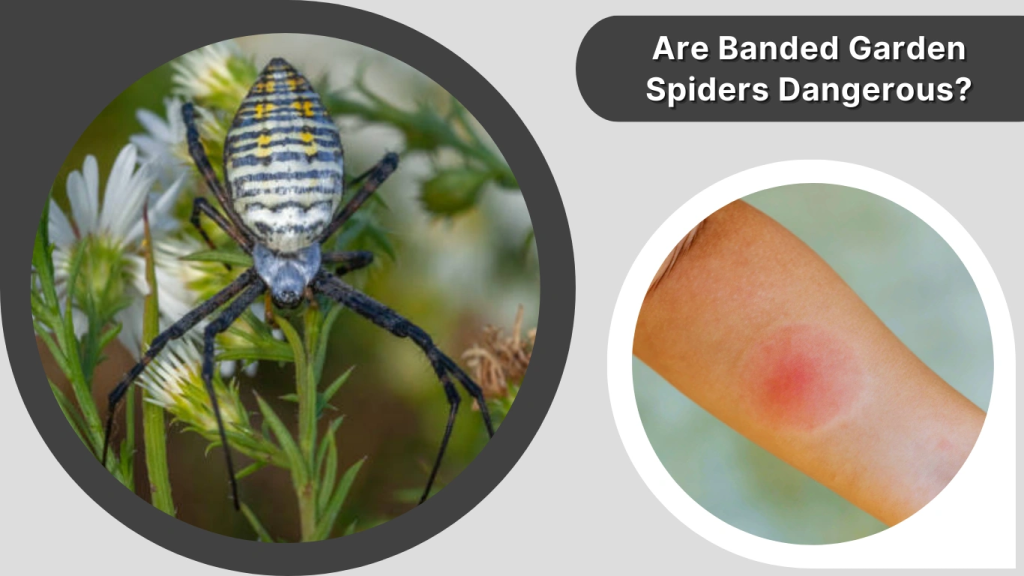
Despite their bold coloring and large webs, banded garden spiders are not considered dangerous to humans.
Venomous vs. Poisonous Explained
Like nearly all spiders, banded garden spiders are venomous. This means they inject venom through a bite. However, they are not poisonous, meaning they are not harmful if touched.
Their venom is mild and adapted for capturing small insects rather than defending against humans.
Banded Garden Spider Bite Symptoms
Bites are extremely rare and usually occur only if the spider is accidentally pressed against the skin. When bites do happen, symptoms may include:
- Mild pain or stinging
- Redness
- Slight swelling
- Minor irritation
The reaction is often compared to a mild bee sting and typically resolves without medical treatment.
When to Seek Medical Attention
Medical attention may be necessary if:
- Severe swelling occurs
- Symptoms worsen instead of improving
- Signs of an allergic reaction appear
For most people, washing the bite area and applying a cold compress is sufficient.
Life Cycle and Reproduction
The banded garden spider follows a typical annual life cycle in temperate climates.
Mating Behavior
Male banded garden spiders are much smaller than females and must approach cautiously during mating season. Because of the size difference, males are vulnerable and risk being mistaken for prey.
Mating typically occurs in late summer when females are fully mature.
Egg Sac Development
After mating, the female produces one or more egg sacs. These sacs are brown and papery in appearance and are usually attached to nearby vegetation rather than the web itself.
Each egg sac may contain hundreds of eggs. The sacs protect the developing spiderlings through colder months in temperate regions.
Spiderlings and Growth
Spiderlings hatch in spring or early summer. Many disperse using a method called ballooning, where they release fine silk threads that catch the wind and carry them to new areas.
As they grow, they build progressively larger webs. Most banded garden spiders complete their life cycle within one year.
Banded Garden Spider vs Yellow Garden Spider
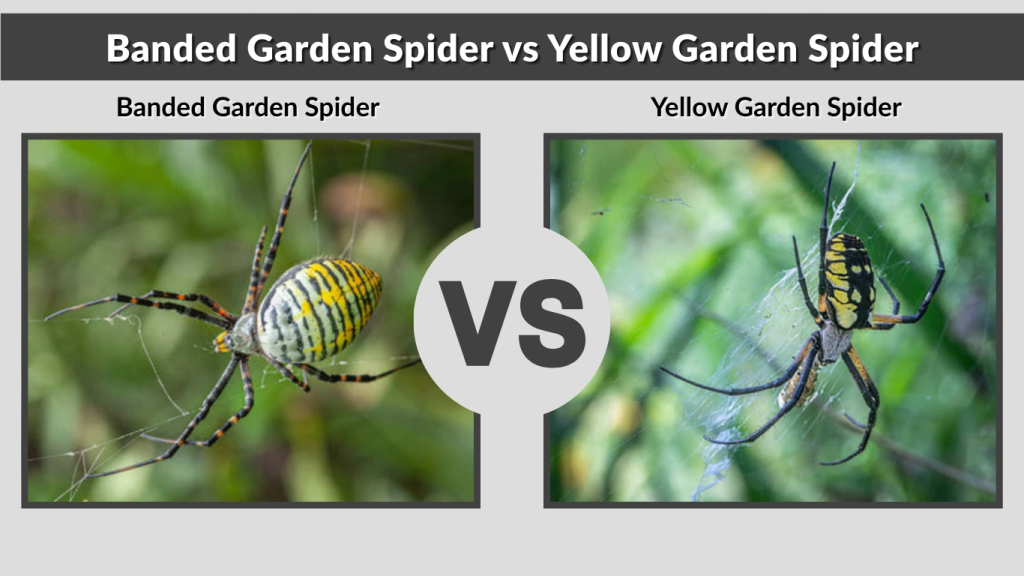
The banded garden spider is often confused with the yellow garden spider (Argiope aurantia). While they share similarities, there are clear differences.
Visual Differences
- Banded Garden Spider: Horizontal black, yellow, and white striping across the abdomen.
- Yellow Garden Spider: Larger patches of bright yellow and black with less uniform banding.
The banded garden spider often appears slimmer and more elongated.
Web Differences
Both species create a zigzag stabilimentum in the center of their webs. However, the web size and positioning may vary slightly depending on habitat.
Habitat and Behavior Similarities
Both species prefer open, sunny environments and rely on large orb webs to capture insects. They are beneficial predators and non-aggressive toward humans.
Interesting Facts About the Banded Garden Spider
- Females are far more noticeable than males due to their larger size and bright markings.
- They often hold their legs in pairs, forming an “X” shape in the web.
- The stabilimentum may reflect ultraviolet light, which insects can see.
- Their webs are often rebuilt or repaired regularly.
- They are important prey for birds and other predators.
Should You Remove a Banded Garden Spider?
In most cases, removal is unnecessary. These spiders are beneficial and help control insect populations naturally. If a web is located in a high-traffic area, you may gently relocate the spider using a container and release it in a nearby garden or shrub.
Because they are not aggressive and rarely bite, coexistence is usually the best option.
FAQs
Are banded garden spiders poisonous?
No, they are not poisonous. They are venomous like most spiders, but their venom is mild and not dangerous to humans.
Do banded garden spiders bite humans?
Bites are very rare and usually occur only if the spider is handled or trapped against the skin.
How big do banded garden spiders get?
Females can reach about 1 inch in body length with a leg span of 2–3 inches. Males are much smaller.
What does a banded garden spider eat?
They primarily eat flying insects such as grasshoppers, flies, beetles, and wasps.
Where do banded garden spiders live?
They are found throughout North America in gardens, meadows, agricultural fields, and other sunny, open areas.
What is the zigzag pattern in their web?
The zigzag pattern is called a stabilimentum. It may attract prey, warn birds, or provide camouflage for the spider.
Conclusion
The banded garden spider is a fascinating and beneficial species commonly found in gardens and open fields. With its bold striping and distinctive zigzag web, it is easy to identify and generally harmless to humans. By controlling insect populations, it plays a valuable ecological role. Rather than fearing this spider, understanding its behavior and benefits can help foster appreciation for one of nature’s most effective web builders.