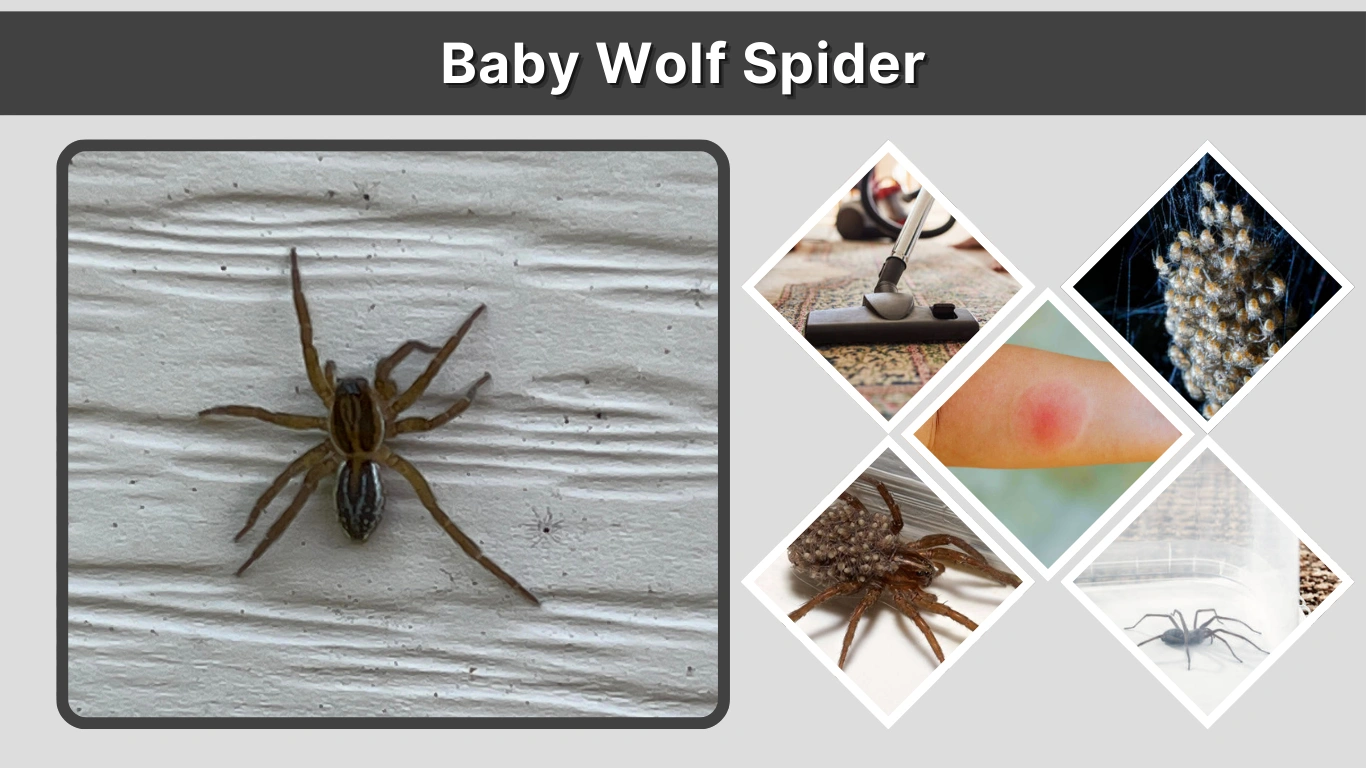
Seeing a wolf spider with babies on her back can be shocking. Dozens—sometimes over a hundred—tiny spiders clinging to a large spider looks like something out of a horror movie. But this behavior is completely natural and actually one of the most fascinating parenting strategies in the spider world. In this guide, we’ll explain what a baby wolf spider looks like, why they ride on their mother, how many babies a wolf spider can have, and whether you should be concerned.
What Is a Baby Wolf Spider?
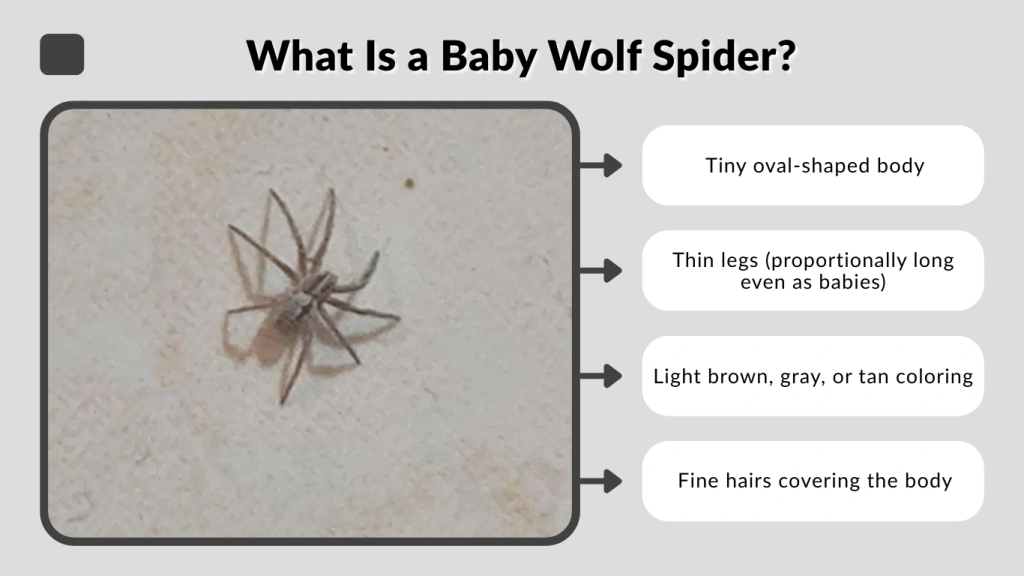
A baby wolf spider (also called a spiderling) is the newly hatched offspring of an adult female wolf spider. Unlike some spiders that stay in webs, wolf spiders are active hunters from birth.
What does a baby wolf spider look like?
Baby wolf spiders look like miniature versions of adults, but much smaller and lighter in color. Key features include:
- Tiny oval-shaped body
- Thin legs (proportionally long even as babies)
- Light brown, gray, or tan coloring
- Fine hairs covering the body
A newly hatched wolf spider baby size is extremely small—often about the size of a grain of sand or a pinhead. As they grow and molt, they begin to resemble adult wolf spiders more clearly.
Many people confuse a baby wolf spider with a brown recluse spider. However, wolf spider babies are hairier and lack the distinct violin-shaped marking seen on brown recluses.
Why Do Wolf Spider Babies Ride on Their Mother’s Back?
One of the most unique behaviors in the spider world is a wolf spider carrying babies on her back.
Here’s how it works:
- The female lays eggs and wraps them in a silk egg sac.
- She attaches the egg sac to her spinnerets and carries it everywhere.
- When the eggs hatch, the spiderlings climb onto her back.
- The babies remain there for several days to weeks.
This is why you may see a wolf spider with babies on back or a female wolf spider with babies clustered tightly together.
Why do they do this?
The mother provides:
- Protection from predators
- Transportation to safer areas
- Higher survival rates
Very few spider species show this level of maternal care. It’s one of the defining traits of wolf spiders.
How Many Babies Does a Wolf Spider Have?
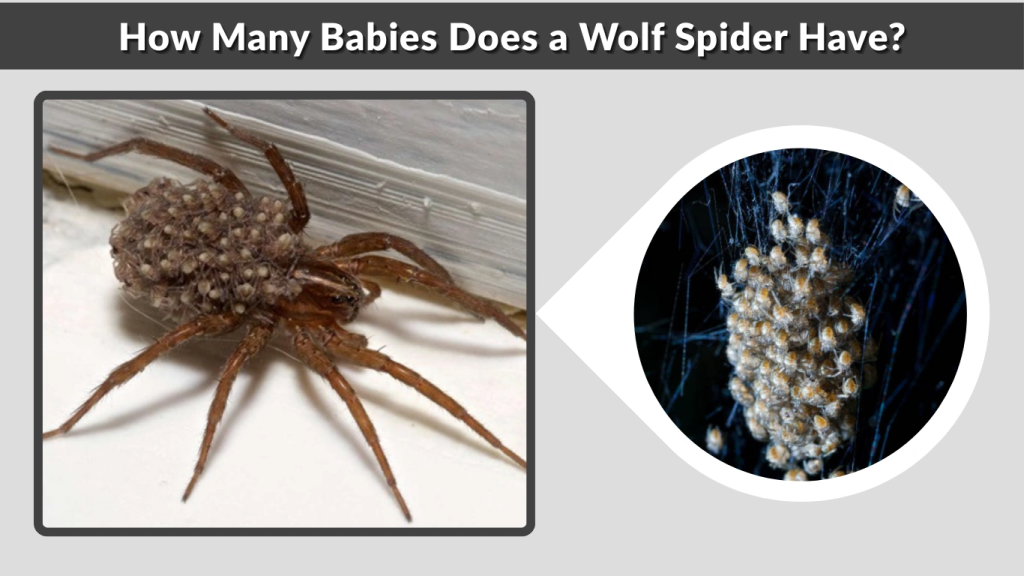
One of the most searched questions is: How many babies does a wolf spider have?
The answer depends on the species, but generally:
- A female wolf spider can lay 50 to 200+ eggs in one sac.
- Larger species may produce even more.
- She can carry all surviving spiderlings on her back at once.
So if you see a wolf spider with babies on her back, you may be looking at dozens—or even over a hundred—tiny spiderlings.
How many babies can a wolf spider carry?
She typically carries the entire brood that hatches from her egg sac. However, not all spiderlings survive to adulthood. In fact, most baby wolf spiders do not make it past their first few molts.
What Happens When Wolf Spider Babies Scatter?
If the mother is disturbed or the babies are ready to become independent, the spiderlings will suddenly disperse. This is often described online as wolf spider babies scatter or a “baby explosion.”
If someone crushes a wolf spider with babies on its back, the spiderlings may rapidly scatter in all directions. This sudden movement can look alarming, but it is simply a survival instinct.
After dispersing:
- The babies spread out to reduce competition.
- Each spider begins hunting small insects.
- They quickly become independent.
This scattering behavior is why experts advise against crushing a spider carrying babies indoors.
Can Wolf Spider Babies Survive Without Their Mom?
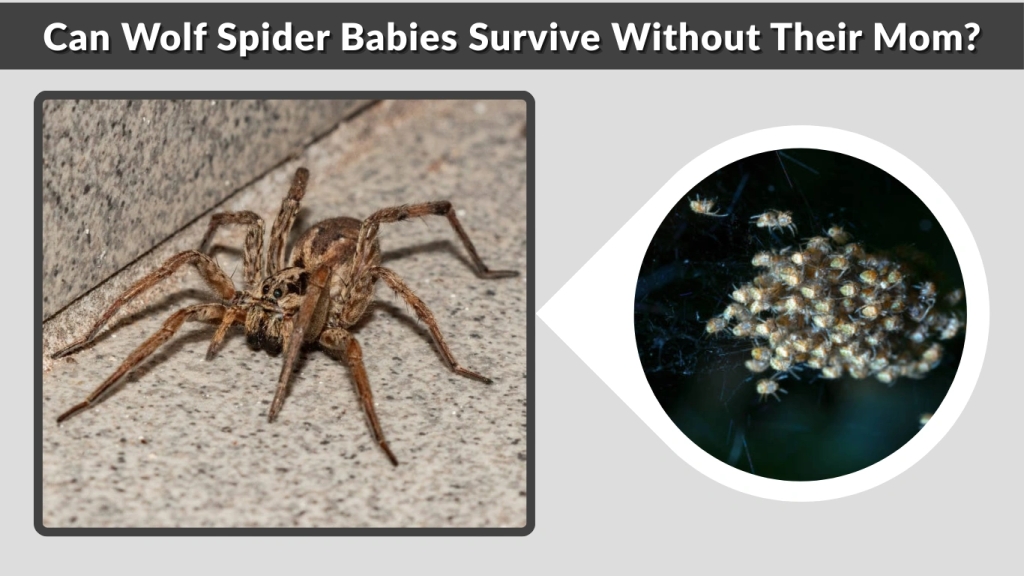
Yes—but only after a certain point.
During the first few days after hatching, the spiderlings rely on their mother for protection. Once they leave her back, they are fully capable of surviving on their own.
So if you’re wondering, can wolf spider babies survive without mom? The answer is yes, once they’ve dispersed. They do not require feeding or teaching from the mother. Hunting instincts are natural from birth.
Do Wolf Spider Babies Eat Their Mother?
There’s a common myth that wolf spider babies eat their mother, but this is false.
Unlike some insects and rare spider species, wolf spider spiderlings do not consume their mother. After dispersing, they simply go their separate ways. The mother continues living and may produce additional egg sacs later in the season.
If you’ve heard stories about babies eating the mom, they likely come from confusion with other arthropods—not wolf spiders.
Baby Wolf Spider Size
Newly hatched baby wolf spiders are extremely small:
- About 1–2 millimeters long
- Barely visible unless clustered together
As they grow, they molt several times, gradually increasing in size. Within weeks, they begin to look like small adult wolf spiders.
Even though they may appear alarming in large numbers, each individual baby wolf spider is tiny and fragile.
Are Baby Wolf Spiders Poisonous?
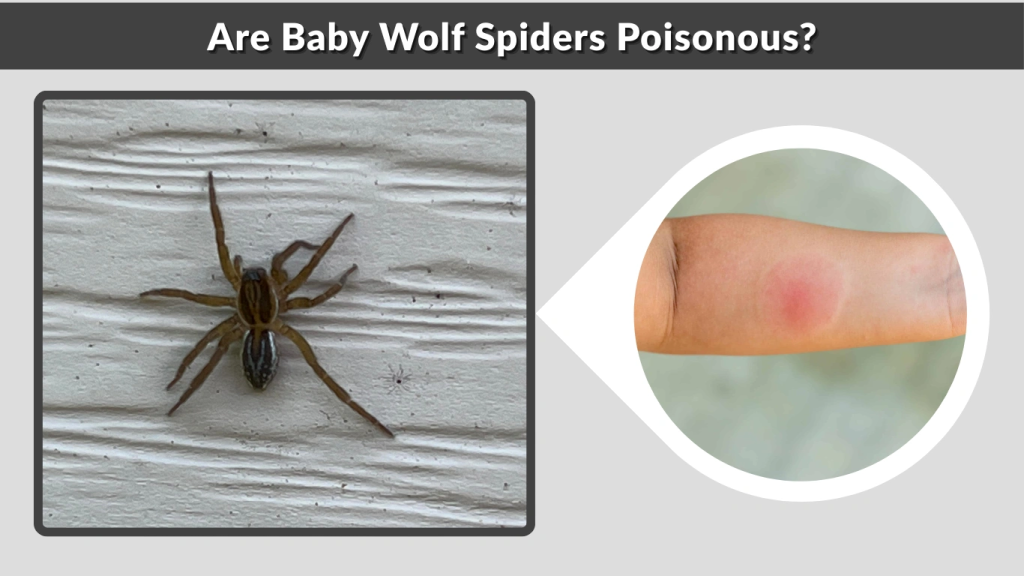
Many people panic when they see a wolf spider with babies on her back and immediately wonder if the spiderlings are dangerous.
The truth is:
- Baby wolf spiders do have venom, just like adults.
- However, their venom is mild and not medically significant for healthy adults.
- Their fangs are extremely small and often cannot penetrate human skin easily.
Can a baby wolf spider bite?
Yes, but it’s rare. A baby wolf spider bite may cause:
- Mild redness
- Slight swelling
- Temporary itching
Serious reactions are uncommon. If someone searches baby wolf spider bite symptoms, the typical answer is similar to a minor insect bite.
Can a wolf spider bite kill a baby?
There is no evidence that a wolf spider bite—adult or baby—can kill a healthy human infant. As with any bite, medical attention should be sought if unusual symptoms occur, but wolf spiders are not considered dangerous.
Baby Wolf Spider vs Brown Recluse (How to Tell the Difference)
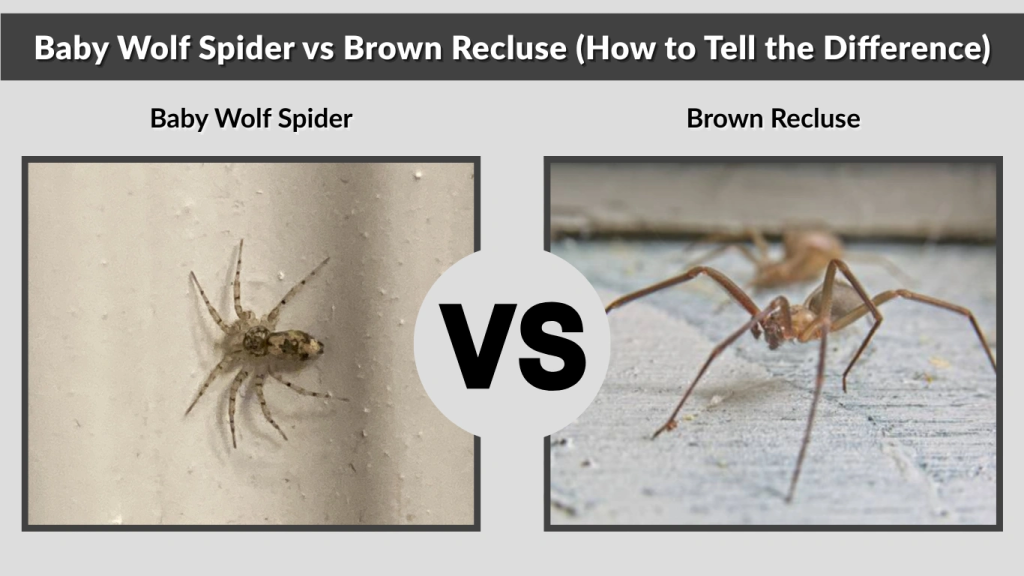
One of the most common fears is confusing a baby wolf spider with a brown recluse.
Here’s how to tell them apart:
1. Body Hair
- Wolf spider baby: Hairy, fuzzy appearance
- Brown recluse: Smooth body, very little visible hair
2. Eye Pattern
- Wolf spider: 8 eyes arranged in three rows
- Brown recluse: 6 eyes arranged in pairs
3. Violin Mark
- Brown recluses have a dark violin-shaped marking.
- Wolf spider babies do NOT.
If you’re unsure whether you’re seeing a baby wolf spider or brown recluse, the hairiness is usually the easiest clue.
Baby Wolf Spider in the House: Should You Worry?
Finding a baby wolf spider in the house can be unsettling, especially if there are multiple spiderlings.
However, this does not usually mean an infestation.
Here’s why:
- Wolf spiders do not build webs indoors to establish colonies.
- The babies disperse quickly.
- Most will die or leave within days.
If you see a wolf spider with babies at night, it’s because wolf spiders are nocturnal hunters and are more active after dark.
Baby Wolf Spider Infestation: Is It Possible?
True infestations are rare. A single female entering the home and hatching her egg sac is usually the cause. Once the babies scatter, they do not remain clustered or nest together long-term.
How to Get Rid of a Wolf Spider With Babies (Safely)
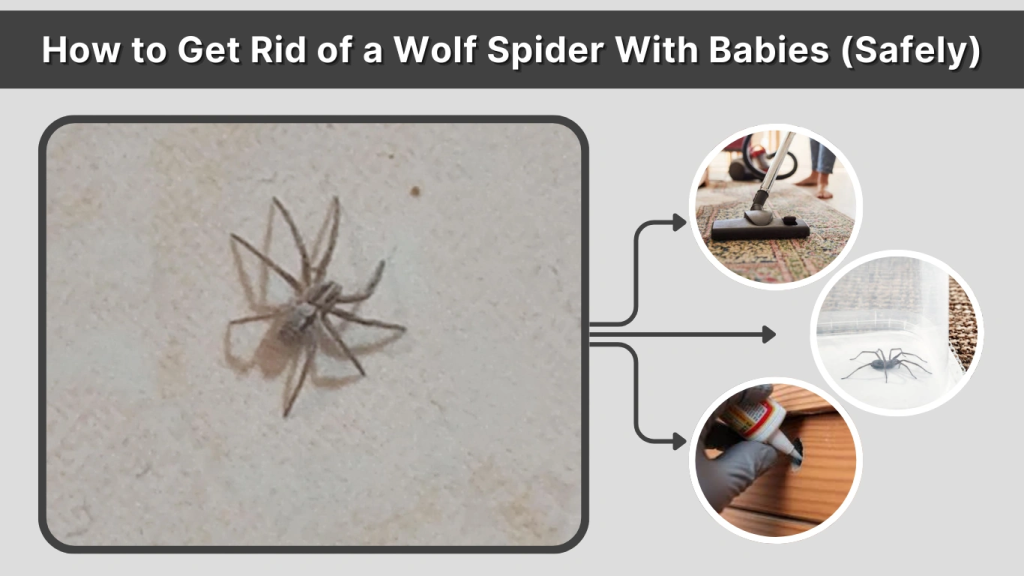
If you discover a wolf spider with babies on her back, avoid crushing her. This can cause the spiderlings to scatter rapidly.
Safer removal methods include:
1. Vacuum Method
Use a vacuum with a hose attachment to remove the spider and babies together. Dispose of the vacuum contents immediately.
2. Capture and Release
If you’re comfortable, place a container over the spider and slide cardboard underneath. Release her outside away from your home.
3. Seal Entry Points
Prevent future encounters by:
- Sealing cracks around doors and windows
- Reducing clutter
- Installing door sweeps
If you’re dealing with repeated sightings, professional pest control may help.
Baby Wolf Spiders by Region
Searches like baby wolf spider Texas, baby wolf spider Florida, or baby wolf spider Arizona are common.
The appearance and size of baby wolf spiders vary slightly depending on the species in that region. However:
- Florida and Texas species may grow larger as adults.
- Northern species (Michigan, Minnesota) tend to be slightly smaller.
- Australian wolf spider babies look similar to U.S. species but may belong to different genera.
Regardless of location, baby wolf spider behavior—riding on the mother and dispersing—is consistent worldwide.
Cute or Creepy? Why Wolf Spider Moms Go Viral
Images of a wolf spider with babies on the back often go viral online. Some people find them terrifying, while others think they’re fascinating—or even cute.
The reaction usually depends on perspective:
- The clustered spiderlings create a dramatic visual effect.
- The strong maternal instinct is rare among spiders.
- The sudden scattering can be startling.
Despite their intimidating appearance, wolf spider mothers are simply protecting their young in one of nature’s more unusual parenting displays.
Final Thoughts: Should You Be Concerned?
A wolf spider with babies may look alarming, but it’s rarely a cause for panic.
Here’s what to remember:
- A female can carry 50–200+ babies.
- The babies stay on her back briefly before dispersing.
- They are not aggressive.
- Bites from baby wolf spiders are rare and mild.
- Long-term infestations are uncommon.
In most cases, the sighting is temporary. Once the spiderlings scatter, they become independent hunters and quickly disappear from view.
FAQs
How many babies does a wolf spider carry?
A female wolf spider typically carries between 50 and 200 spiderlings on her back after they hatch. Larger species may produce even more eggs in a single sac.
How long do wolf spider babies stay on their mother?
Wolf spider babies usually remain on their mother’s back for several days to a few weeks. Once they are ready to survive independently, they disperse.
Are baby wolf spiders dangerous?
No. While they do have venom, baby wolf spiders are not considered medically significant to humans. Bites are rare and usually mild.
What happens if you kill a wolf spider carrying babies?
If crushed, the spiderlings may scatter quickly in all directions. This is a survival response, not aggression.
Can baby wolf spiders infest a house?
True infestations are rare. A single female may hatch babies indoors, but the spiderlings disperse quickly and do not form colonies.