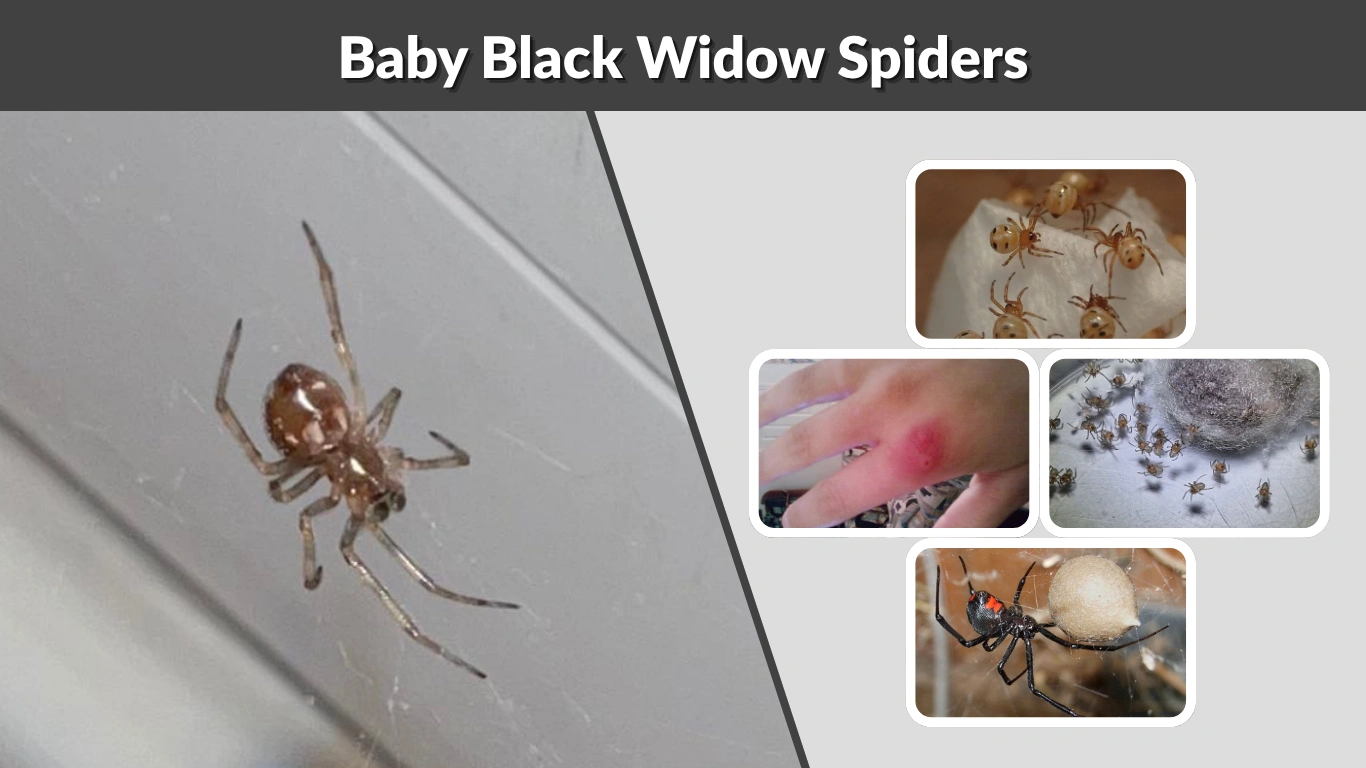
Baby black widow spiders—known as spiderlings—look dramatically different from the shiny black adults most people recognize. These tiny, pale, fast-moving babies often go unnoticed until they gather near egg sacs, disperse across walls, or appear in quiet corners of homes and garages. Understanding how baby black widows look, how dangerous they are, and where they tend to appear is essential for safety and accurate identification. This guide covers everything you need to know about identifying, locating, and understanding baby black widow spiders.
What Are Baby Black Widow Spiders?
Baby black widow spiders are newly hatched spiderlings that emerge from egg sacs containing 100–400 eggs. They belong to the genus Latrodectus, which includes the Western, Southern, and Northern black widow species. Although widow babies grow into highly venomous adults, the spiderlings themselves do not resemble the classic black widow appearance.
A baby black widow spider is officially called a spiderling. In the early stages, they are very small, pale, and fast-moving, making them easy to mistake for harmless house spiders. Only through multiple molts do they develop the characteristic colors and patterns found in adult widows.
Spiderlings do not stay with their mother. Shortly after hatching, they disperse through ballooning or crawling, which is why homeowners sometimes find clusters of tiny pale spiders near an egg sac before they spread out.
Baby Black Widow Spider Identification
What Baby Black Widows Look Like
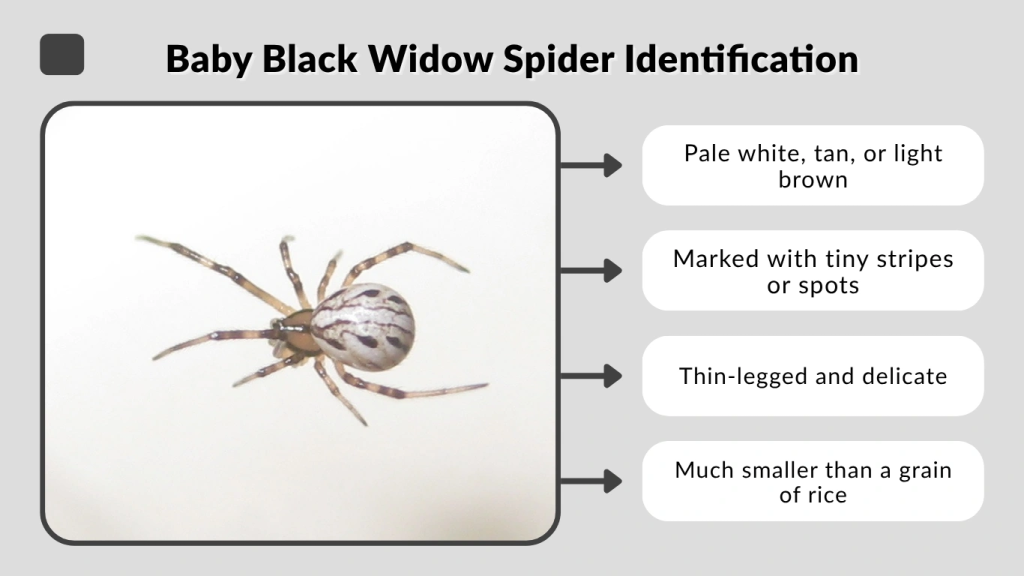
Baby black widow spiders are not black. Instead, they are usually:
- Pale white, tan, or light brown
- Marked with tiny stripes or spots
- Thin-legged and delicate
- Much smaller than a grain of rice
These markings often resemble small dots or bands that darken as the spider ages. Because of these juvenile patterns, spiderlings can look more like baby false widow spiders or even house spider babies, which leads to common misidentification.
Baby Black Widow Spider Size
Baby black widow spiders are incredibly small—typically 1–2 millimeters at hatching. Even with legs extended, they appear tiny and fragile. As they molt, their size increases gradually, but they remain very small for several weeks.
Key points about baby size:
- Spiderlings are nearly microscopic immediately after hatching
- They become easier to see after their first molt
- Baby males and females are the same size early on
- True adult features appear much later
This tiny size makes them difficult to spot until dozens appear near an egg sac or scatter along a wall or corner.
Baby Black Widow Hourglass Markings
One of the most important facts:
Baby black widows do NOT have a visible red hourglass at birth.
Instead:
- Babies often have pale orange or white markings
- The hourglass shape appears gradually during later molts
- Some juveniles have a faint, incomplete hourglass
- Only subadult and adult females show the classic bright red hourglass
Males typically never develop a bold red hourglass, even in adulthood, which makes distinguishing baby males and early juvenile females challenging without close inspection.
Baby Black Widow vs Baby False Widow
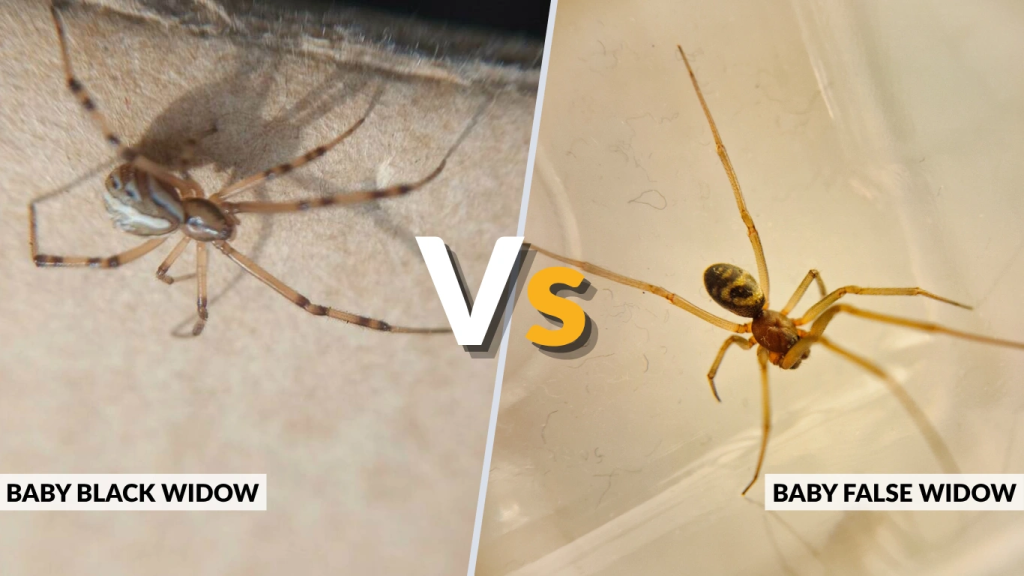
False widow babies are commonly mistaken for baby black widows.
Differences:
- False widow babies are more purplish-brown
- Black widow babies are pale and striped
- False widows have rounder abdomens
- Baby widows tend to be more slender
- Web structure differs (widows make messy, irregular webs)
Because both species share similar habitats, misidentification happens frequently, especially in garages, sheds, and outdoor clutter.
Baby Black Widow Spider Behavior
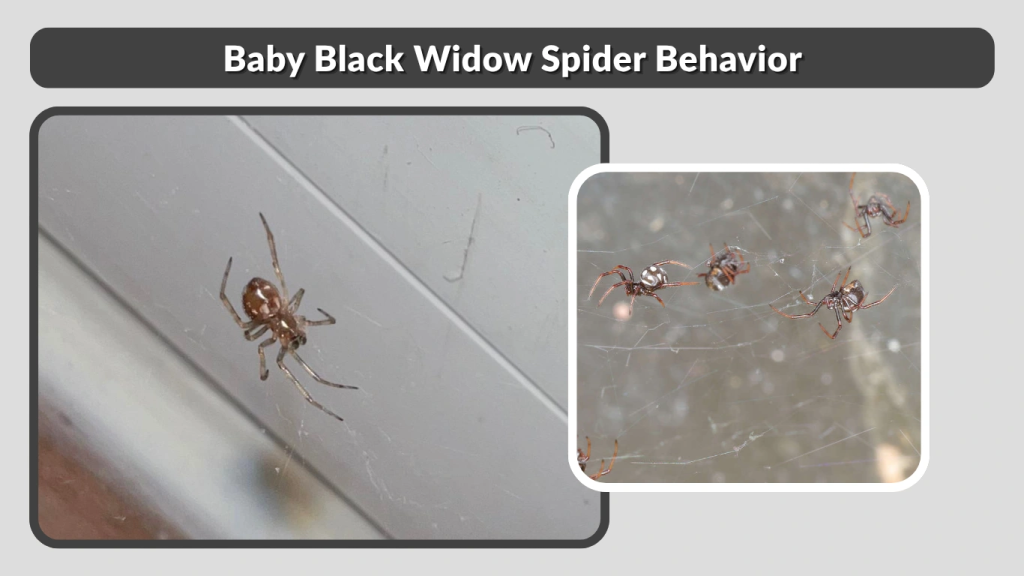
Baby black widows behave differently from adults. Spiderlings are active, mobile, and not tied to a single web. Their main focus is survival: dispersing, avoiding cannibalism, and finding food sources.
Hatching & Dispersal
Once the egg sac opens, hundreds of spiderlings emerge. Their earliest behaviors include:
- Cannibalism — spiderlings often eat each other to reduce competition
- Dispersal — many leave the sac area immediately
- Ballooning — some spin silk threads and let wind carry them
- Climbing — they move upward toward light and warmth
- Finding new hiding places — cracks, corners, furniture edges
This dispersal explains why homeowners sometimes find baby spiders all over a room or structure.
Web-Building Behavior in Babies
Spiderlings build very small, scattered webs—not the large, tangled webs associated with adult widows. Their web behavior includes:
- Creating tiny silk patches instead of full webs
- Testing anchor lines for new locations
- Building small, temporary structures
- Leaving webs frequently as they search for food
Only after several molts do they begin building the classic, messy, three-dimensional widow webs.
Venom, Bites & Dangerous Myths
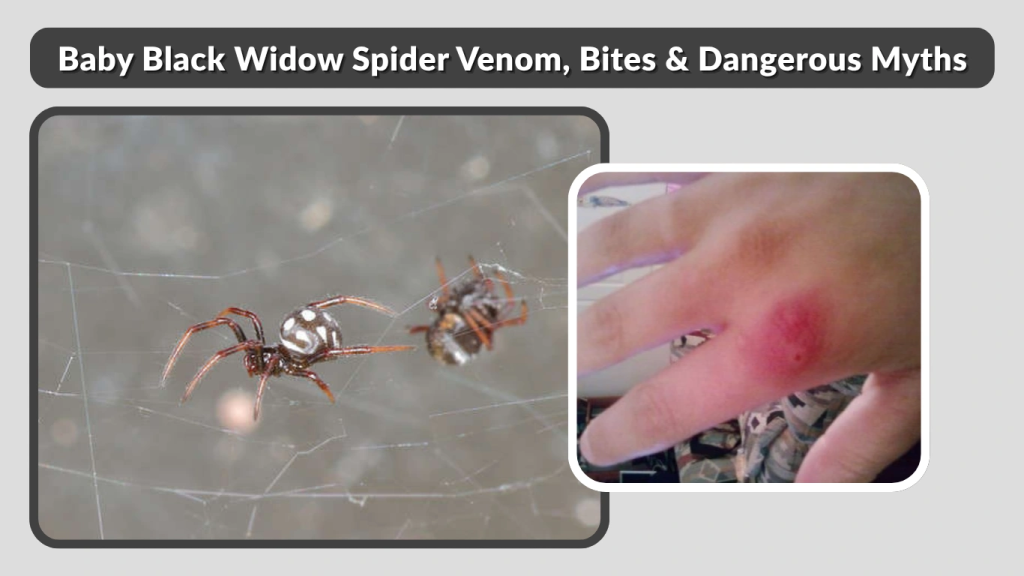
Baby black widows carry venom, but their bites are far less harmful than the bite of an adult female. Their fangs are extremely small, and they cannot deliver enough venom to cause serious symptoms in most cases.
Are Baby Black Widow Spiders Poisonous?
Baby black widows are venomous, but they are not considered dangerous to humans. Their venom potency exists, but fang size limits how much venom they can deliver.
Baby Black Widow Bite Symptoms
If bitten (which is rare), symptoms are typically mild:
- Local redness
- Slight itching
- Tiny raised bump
- Mild discomfort
Serious reactions are extremely uncommon.
Where Baby Black Widows Are Found
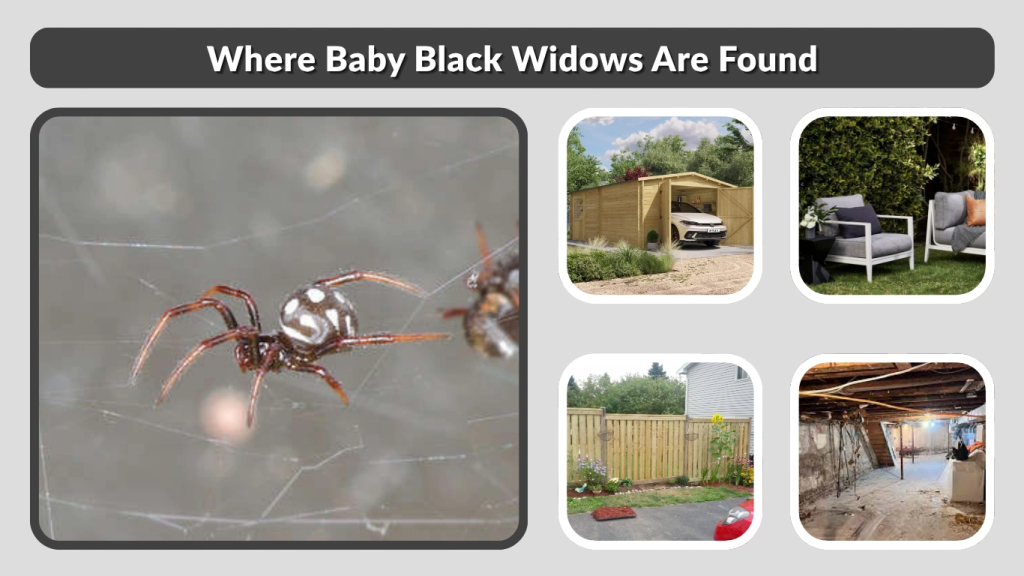
Baby black widow spiders appear in many of the same places adults live, but because spiderlings disperse immediately after hatching, they often scatter far from the original sac. Homeowners may find dozens of tiny pale spiders along ceilings, window corners, or garage walls within hours of hatching.
Common Locations Where Babies Appear
- Garages and sheds
- Behind patio furniture
- Inside toy bins or outdoor playsets
- Along fence posts and siding gaps
- Basements and crawlspaces
- Under eaves and porch corners
- Around wood piles or decaying debris
- Near recently hatched egg sacs
In certain areas such as Northern Nevada, baby black widows often appear outdoors around foundation edges and desert landscaping, where temperatures and shelter conditions suit their early growth.
Growth: From Baby to Adult Widow
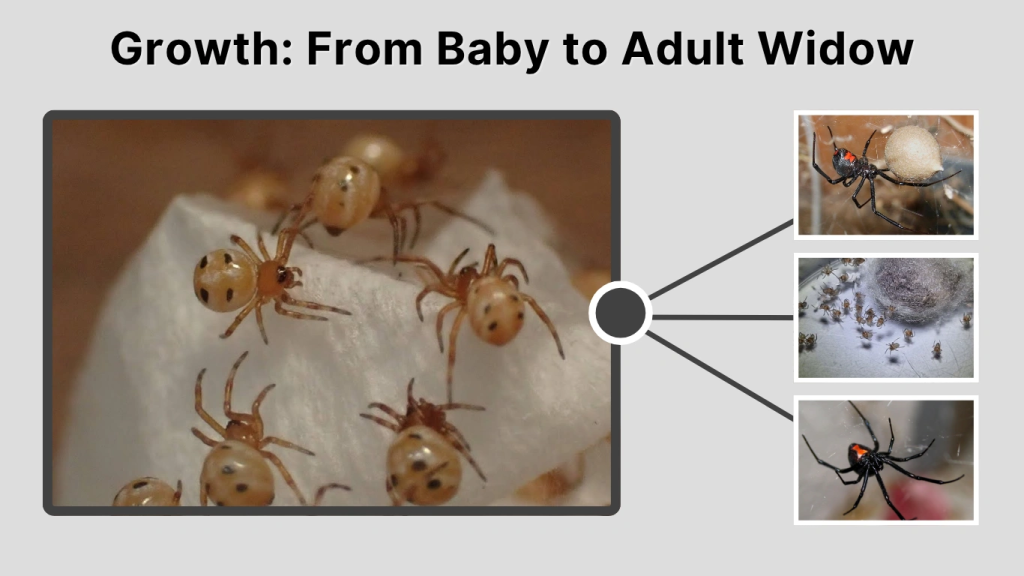
Baby black widows undergo multiple molts as they grow from tiny, pale spiderlings into recognizable adult females or small adult males. Their transformation happens gradually and is influenced by temperature, food supply, and species.
Stages of Development
Baby black widow growth stages include:
- Spiderling stage: Pale and tiny, freshly hatched
- Early juvenile stage: Slightly darker; striped patterns become visible
- Late juvenile stage: Females begin forming faint hourglass shapes
- Subadult stage: Females darken significantly; males remain brown
- Adult stage: Females become shiny black with bright red hourglass; males stay small and light
Only after several molts does the spider begin to look like what most people recognize as a black widow.
How Long It Takes to Mature
Black widows typically reach adulthood in 2–4 months, depending on conditions. Warmer environments with plentiful food accelerate growth, while cooler regions slow development. Babies that hatch indoors often mature faster because temperatures are stable.
Baby Black Widow vs Other Baby Spiders

Many baby spiders resemble black widow spiderlings. A comparison makes identification easier.
Comparison Table
| Feature | Baby Black Widow | Baby False Widow | Baby Brown Recluse |
| Color | Pale white/tan | Purple-brown | Light brown |
| Markings | Stripes/spots | Faded blotches | Violin shape (later stage) |
| Danger Level | Low | Low | Moderate |
| Body Shape | Slender | Rounder | Flat body |
| Web Type | Small messy patches | Neater cobwebs | No web (hunters) |
This table helps distinguish baby black widows from similar species often found in homes and yards.
Facts About Baby Black Widow Spiders
Baby black widow spiders have several unique behaviors and biological traits not seen in adult spiders.
Interesting facts include:
- Cannibalism is common: Babies often eat siblings to reduce competition.
- They are not carried by the mother: Wind disperses most spiderlings.
- Females grow larger, faster: Baby females quickly outpace males in size.
- Venom exists but is not dangerous: Their fangs are too small for serious envenomation.
- Size remains tiny for weeks: They slowly increase in size until full molting cycles are complete.
- They hatch in clusters: Dozens to hundreds emerge simultaneously.
Risks & Safety Tips
While baby black widows are not a major threat on their own, their presence indicates a reproductive female nearby. This increases the chance of finding adult widows, which are dangerous.
Are Babies More Poisonous?
No—this is a myth. Adult female widows are the real danger. Baby black widows may have venom, but their bite strength, fang size, and venom output are extremely limited. They are unlikely to penetrate skin effectively.
Can Black Widow Babies Kill a Human?
There are no verified cases of a baby widow killing a person. They lack the ability to inject enough venom, and many bites don’t break skin at all. Still, caution is recommended, especially around infants or pets.
Protecting Children & Pets
To reduce risk:
- Remove egg sacs promptly
- Clean clutter around garages and porches
- Shake out shoes, toys, and outdoor gear
- Use gloves when moving wood or debris
- Consider pest control if multiple sacs are found
Proactive prevention is the most effective approach.
Baby Black Widow Spider Identification Summary
Baby black widow spiders look nothing like the iconic glossy black females. Instead, they are pale, striped, and extremely small, making identification challenging. They disperse quickly after hatching, often traveling far from their egg sac through ballooning or crawling. Although spiderlings have venom, their bite risk is minimal due to tiny fangs and limited venom delivery.
The main reason to take baby widows seriously is their future potential: within a few months, those harmless spiderlings can grow into adult female black widows capable of delivering medically significant bites. Early identification and removal of egg sacs dramatically reduce long-term risk.
FAQs
What do baby black widow spiders look like?
Baby black widow spiders are pale white or tan with small stripes or spots on their abdomen. They are extremely tiny—only 1–2 millimeters at hatching—and do not have the classic red hourglass. Their slender legs and lightly patterned bodies distinguish them from other baby spiders.
Are baby black widow spiders poisonous?
Baby black widows are venomous, but they are not dangerous to humans. Their fangs are too small to deliver significant venom, and most bites do not break skin. The medically serious venom associated with black widows comes from adult females, not spiderlings.
How big is a baby black widow spider?
A baby black widow measures about 1–2 millimeters at hatching, roughly the size of a grain of sand. They increase in size gradually with each molt but remain very small for several weeks before transitioning into juvenile stages.
What is a baby black widow spider called?
A baby black widow spider is called a spiderling. All newly hatched spiders share this term. Spiderlings quickly disperse from the egg sac, undergo several molts, and eventually grow into either small adult males or large venomous adult females.
How many babies does a black widow spider have?
A single egg sac contains 100–400 spiderlings, and a healthy female can produce up to 10 sacs in one reproductive season. This means a single female widow can create thousands of babies, though many do not survive due to cannibalism and environmental factors.