
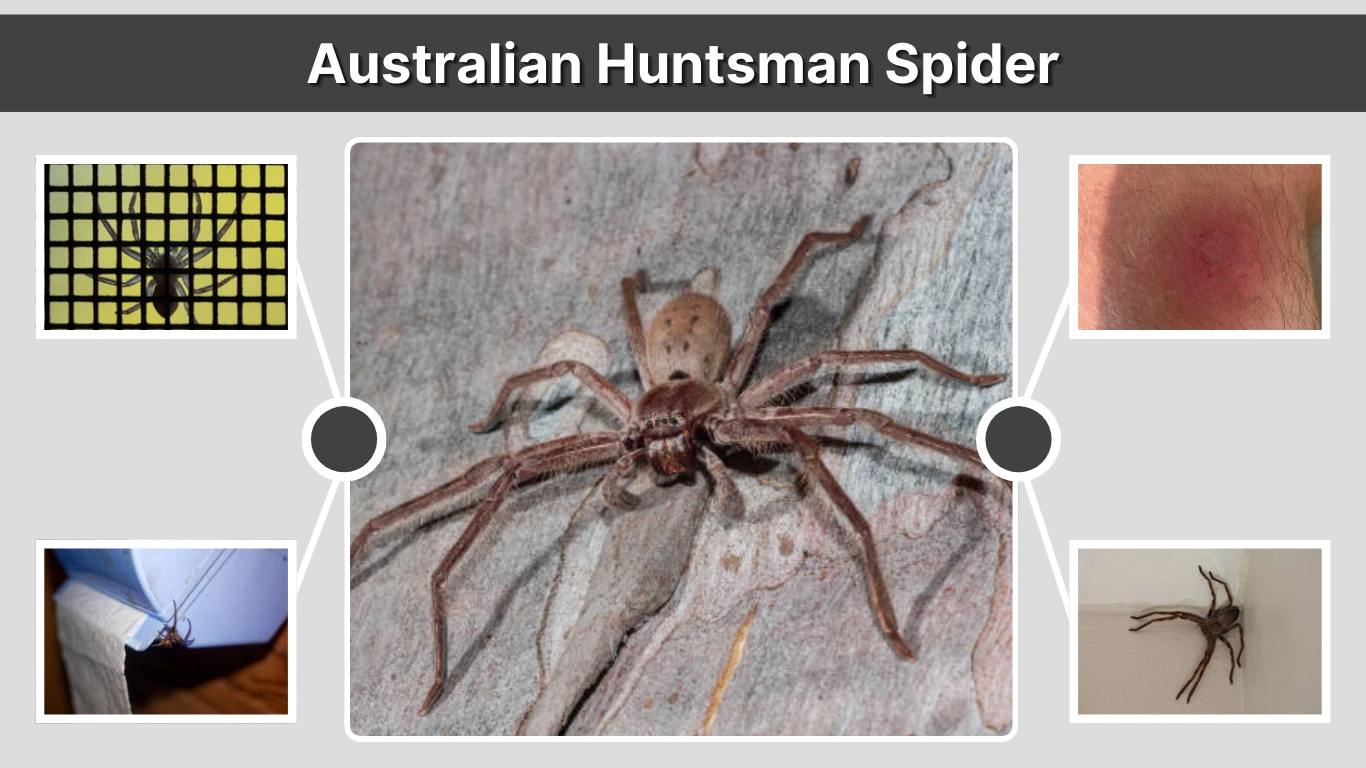
The Australian huntsman spider is one of the most well-known and frequently encountered spiders in Australia. Famous for its large size, long legs, and sudden appearances on walls or ceilings, this spider often causes fear despite being relatively harmless. Many people associate the huntsman spider with danger simply because of its appearance, but scientific evidence paints a very different picture. In reality, the huntsman spider plays an important ecological role and poses little risk to humans. This article explores what the Australian huntsman spider is, how to identify it, where it lives, and whether it is truly dangerous.
What Is the Australian Huntsman Spider?
The Australian huntsman spider belongs to the family Sparassidae, a group of large, fast-moving spiders found in warm climates around the world. In Australia, several species are commonly referred to as huntsman spiders, with the most recognizable belonging to the genera Heteropoda, Delena, and Isopeda. Unlike web-building spiders, huntsman spiders actively hunt their prey, which is how they earned their name.
These spiders are often called “giant crab spiders” because of their flattened bodies and legs that extend sideways, giving them a crab-like appearance. Although their size can be intimidating, huntsman spiders are generally shy and prefer to avoid human contact whenever possible.
Scientific Name and Classification
- Kingdom: Animalia
- Phylum: Arthropoda
- Class: Arachnida
- Order: Araneae
- Family: Sparassidae
Huntsman spiders are closely related to other wandering spiders but are distinct in their body shape and leg orientation. Their evolutionary adaptations allow them to squeeze into narrow spaces under bark, rocks, and inside buildings.
Physical Characteristics and Identification
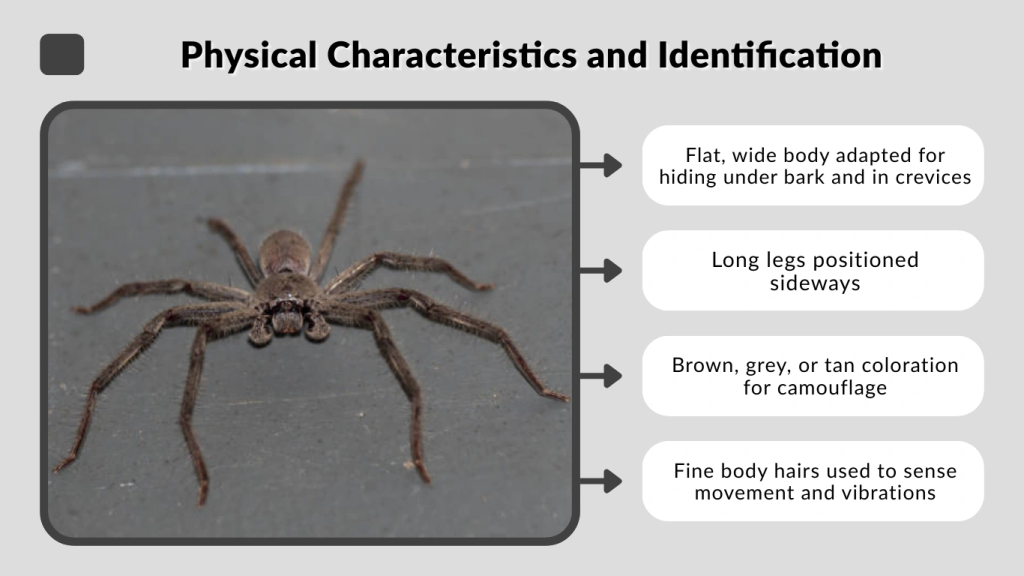
The Australian huntsman spider is easily recognized by its large size, flattened body, and long legs that extend sideways. Its appearance often makes it look more intimidating than it actually is. These physical traits allow the spider to move quickly and squeeze into narrow spaces, helping it survive in both natural and indoor environments.
Key identifying features include:
- Flat, wide body adapted for hiding under bark and in crevices
- Long legs positioned sideways, giving a crab-like appearance
- Brown, grey, or tan coloration for camouflage
- Fine body hairs used to sense movement and vibrations
- Large leg span compared to a relatively small body
These characteristics distinguish huntsman spiders from other common Australian spiders and make them easy to identify once you know what to look for.
Habitat and Distribution in Australia
Huntsman spiders are found throughout Australia, including coastal regions, forests, deserts, and suburban areas. They are highly adaptable and can survive in a wide range of climates, from tropical northern regions to temperate southern areas.
In the wild, huntsman spiders typically live under tree bark, loose stones, fallen logs, and crevices. These environments provide shelter and access to insects, which make up their primary diet.
Why Huntsman Spiders Enter Houses
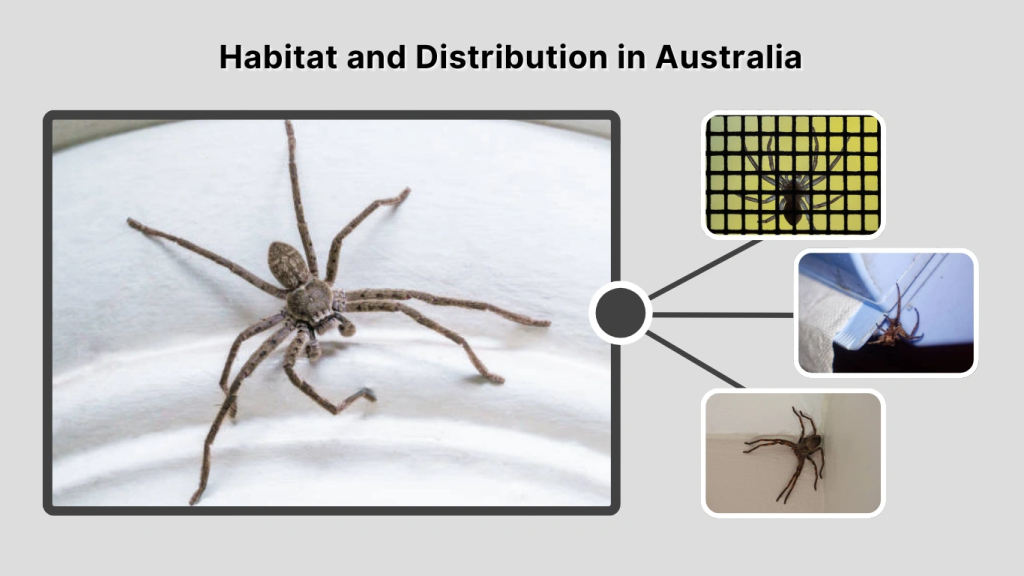
Huntsman spiders often enter homes accidentally while searching for food or shelter. Houses provide stable temperatures, hiding places, and an abundance of insects such as flies and cockroaches.
Common indoor hiding spots include:
- Behind curtains
- Under furniture
- Inside wardrobes
- Around window frames
Their presence indoors does not mean an infestation, as huntsman spiders are solitary and do not build webs.
Behavior and Lifestyle
Huntsman spiders are nocturnal hunters, becoming most active at night when insects are abundant. Instead of trapping prey in webs, they rely on speed and stealth to catch insects. Their diet includes cockroaches, moths, flies, and other household pests.
Despite their intimidating appearance, huntsman spiders are not aggressive. They usually flee when approached and only bite if handled or trapped against the skin.
Are Huntsman Spiders Aggressive?
Huntsman spiders are defensive rather than aggressive. When threatened, they may raise their front legs or display warning behavior, but this is meant to deter predators. Bites are rare and almost always occur when the spider is accidentally pressed or handled.
Are Australian Huntsman Spiders Dangerous?
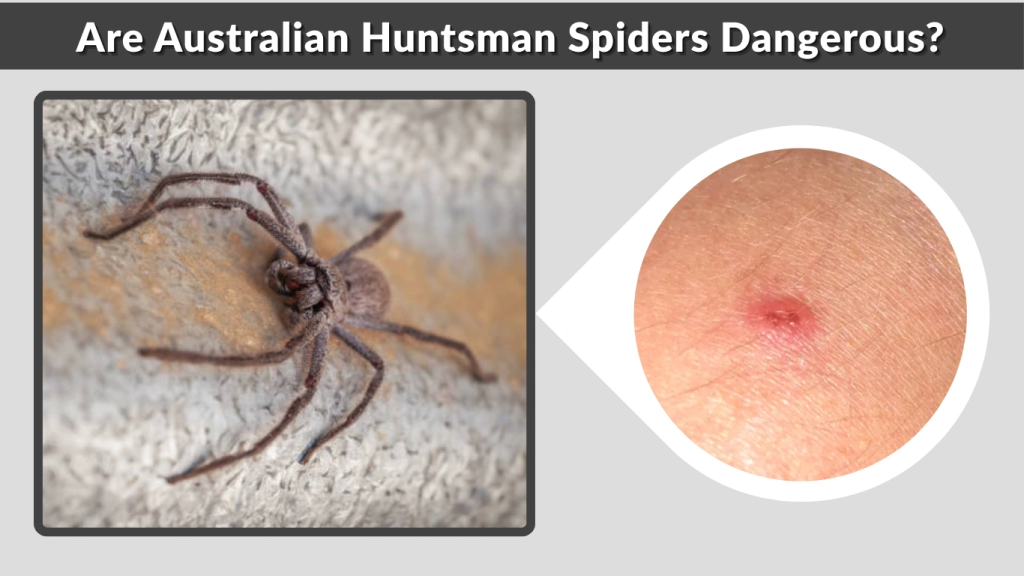
Despite their size and sudden movements, Australian huntsman spiders are not considered dangerous to humans. Their venom is relatively mild and is designed to subdue insects rather than cause harm to people. Huntsman spiders are not classified as medically significant, unlike the funnel-web or redback spider, which are known for their potent venom.
Most encounters with huntsman spiders end without any physical contact. They prefer to escape rather than confront humans and will only bite if they feel trapped or threatened. In many cases, people live alongside huntsman spiders without ever experiencing a bite.
Are Huntsman Spiders Poisonous to Humans?
Huntsman spiders are venomous, like almost all spiders, but their venom is not poisonous to humans in a dangerous way. A bite may cause mild pain, redness, or swelling, similar to a bee sting. Serious reactions are extremely rare and usually related to allergies rather than venom toxicity.
Huntsman Spider Bite: Symptoms and Treatment
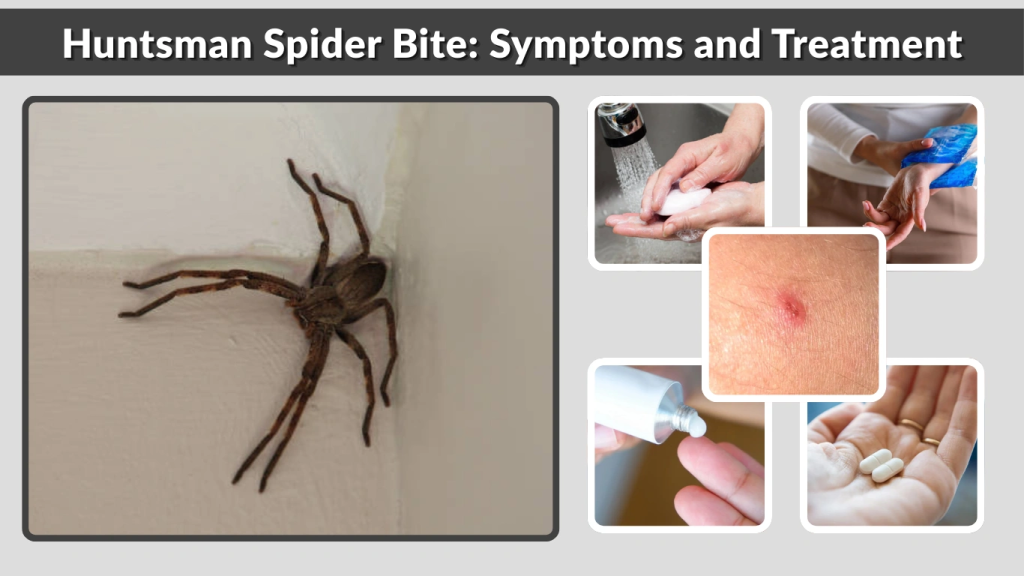
Bites from huntsman spiders are uncommon and usually occur when the spider is accidentally handled or pressed against the skin. Because huntsman spiders are shy and non-aggressive, most bites happen indoors when someone unknowingly comes into contact with one.
Typical symptoms of a huntsman spider bite include:
- Mild to moderate pain
- Localized swelling
- Redness around the bite area
In rare cases, nausea or headache may occur, but these symptoms usually resolve quickly without medical intervention.
First Aid for Huntsman Spider Bites
If a huntsman spider bite occurs, basic first aid is usually sufficient:
- Wash the bite area with soap and water
- Apply a cold pack to reduce swelling
- Use over-the-counter pain relief if needed
Medical attention should be sought if symptoms worsen, signs of infection appear, or if the person bitten has a known allergy to insect or spider venom.
Huntsman Spider Life Cycle
The life cycle of a huntsman spider begins with mating, which typically occurs during warmer months. Female huntsman spiders lay their eggs inside a flat, oval egg sac, which they guard aggressively until the spiderlings hatch.
After hatching, young huntsman spiders disperse and begin hunting on their own. They go through several molting stages as they grow, shedding their exoskeleton to increase in size. Huntsman spiders can live for up to two years, depending on species and environmental conditions.
Huntsman Spider vs Other Australian Spiders
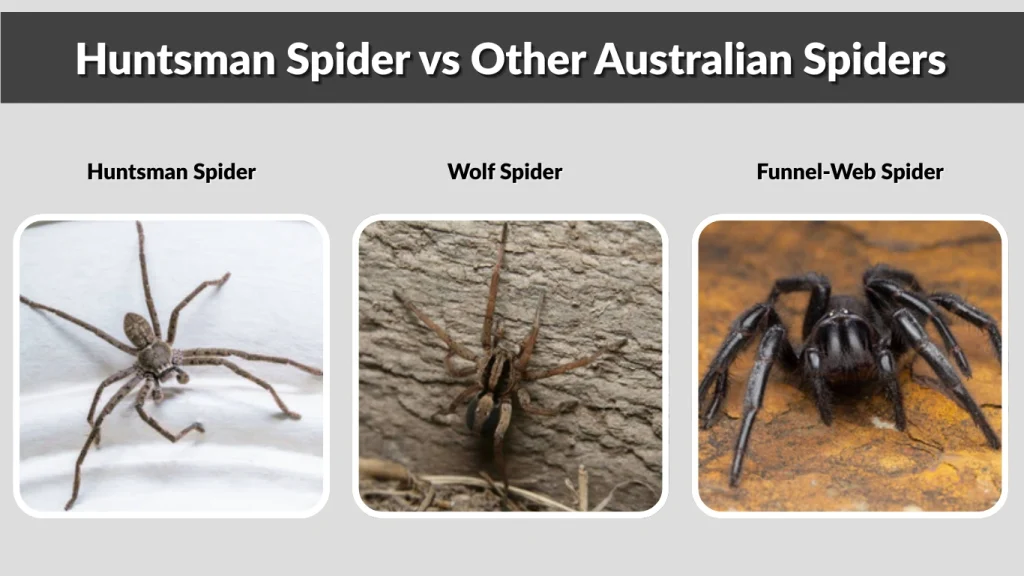
Australia is home to many spider species, some of which are far more dangerous than the huntsman spider. Understanding the differences can help reduce unnecessary fear.
Huntsman Spider vs Wolf Spider
While both huntsman and wolf spiders are active hunters, wolf spiders are generally smaller and have a more compact body shape. Wolf spiders live mostly on the ground, whereas huntsman spiders are commonly found on walls and ceilings. Both are considered low-risk to humans.
Huntsman Spider vs Funnel-Web Spider
The funnel-web spider is one of the most dangerous spiders in the world and should not be confused with the huntsman spider. Funnel-web spiders have a stockier body, shorter legs, and glossy black appearance. Unlike huntsman spiders, funnel-webs are aggressive and possess highly toxic venom.
Ecological Importance of Huntsman Spiders
Huntsman spiders play an important role in Australia’s ecosystem by controlling insect populations. They are natural pest controllers, feeding on cockroaches, flies, and other household insects. In many homes, the presence of a huntsman spider actually reduces the number of unwanted pests.
Because they do not build webs and prefer to remain hidden, huntsman spiders rarely interfere with daily life. For this reason, they are often tolerated or even welcomed by homeowners who understand their benefits.
What to Do If You Find a Huntsman Spider in Your Home
Finding a huntsman spider indoors can be startling, but there is usually no need to panic. The safest approach is to leave it alone or gently encourage it outside using a container and a piece of cardboard.
To reduce the chances of huntsman spiders entering your home:
- Seal gaps around doors and windows
- Reduce outdoor lighting that attracts insects
- Keep rooms clutter-free
Professional pest control is rarely necessary unless spiders are entering in large numbers.
Common Myths About Australian Huntsman Spiders
Many myths surround huntsman spiders, contributing to their fearsome reputation. One common myth is that they chase people, which is untrue. Their rapid movement is an attempt to escape, not attack. Another myth claims that huntsman spiders are deadly, despite there being no recorded fatalities attributed to their bites.
Some people also believe huntsman spiders lay eggs in beds or cars, but this behavior is extremely unlikely. They prefer quiet, undisturbed environments.
Conclusion
The Australian huntsman spider may look intimidating, but it is largely harmless and plays a valuable role in controlling insect populations. While its size and speed can be unsettling, it poses little danger to humans and rarely bites. Understanding its behavior and ecological importance helps replace fear with respect, making coexistence both possible and beneficial.
FAQs
Are Australian huntsman spiders dangerous to humans?
Australian huntsman spiders are not considered dangerous. Their venom is mild and rarely causes more than temporary pain or swelling. Bites are uncommon and usually occur only when the spider is handled or trapped.
How big do Australian huntsman spiders get?
Huntsman spiders can have a leg span of up to 15–20 centimeters, making them appear very large. However, their body size is much smaller, which often leads people to overestimate the level of danger they pose.
Are huntsman spiders poisonous?
Huntsman spiders are venomous, like most spiders, but their venom is not poisonous to humans. Serious reactions are extremely rare and usually related to allergies rather than the venom itself.
Why do huntsman spiders enter houses?
Huntsman spiders enter homes in search of shelter, stable temperatures, and food. Indoor environments often attract insects, which makes houses an ideal hunting ground for them.
What should I do if I find a huntsman spider in my home?
If you find a huntsman spider indoors, it is best to calmly guide it outside using a container and cardboard. Killing the spider is unnecessary, as it helps control other household pests.