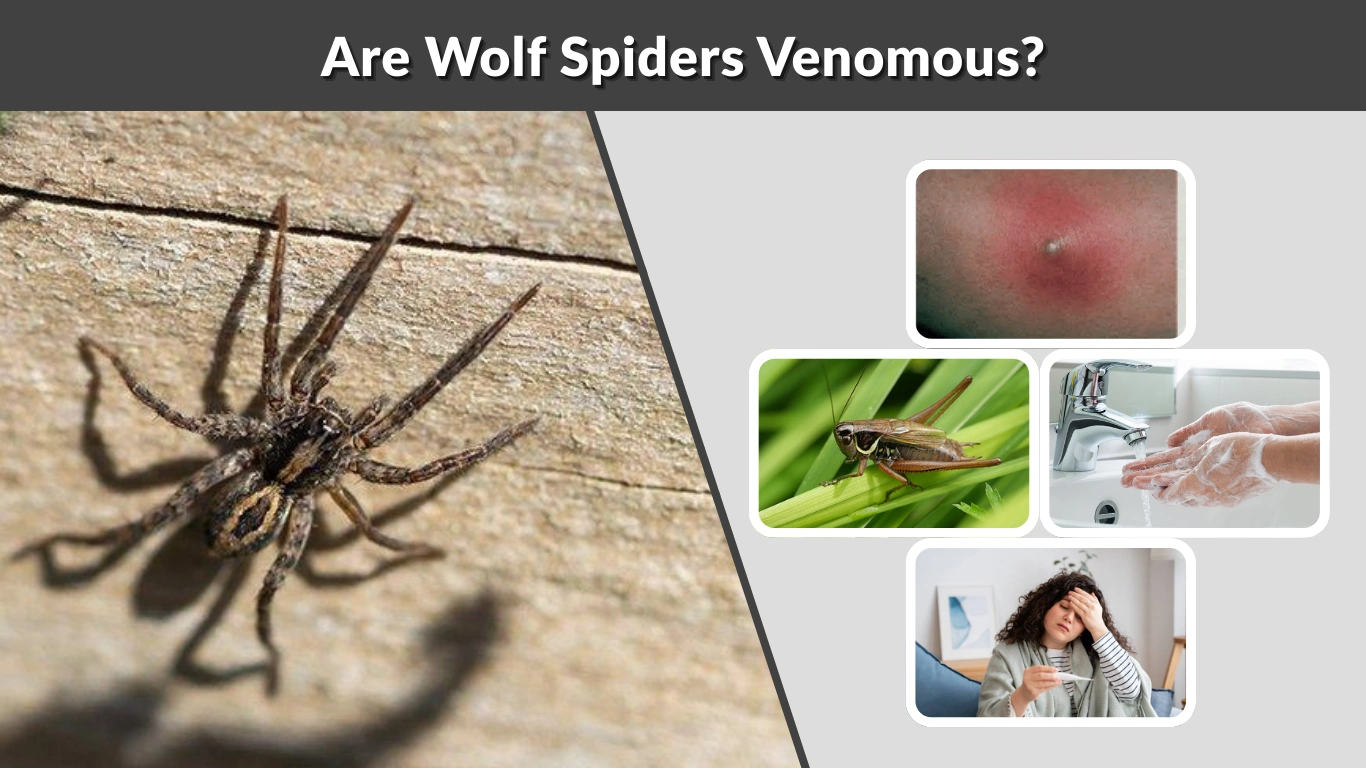
Wolf spiders often look intimidating. They’re large, fast-moving, and sometimes appear suddenly as they scurry across floors or lawns. Because of their size and hunting behavior, many people wonder: Are wolf spiders venomous?
The short answer is yes—wolf spiders are venomous. However, their venom is not considered dangerous to humans in most cases. In this article, we’ll explore how wolf spider venom works, what happens if you’re bitten, how serious it can be, and when you should seek medical attention.
Are Wolf Spiders Venomous or Poisonous?
First, it’s important to understand the difference between venomous and poisonous.
- Venomous animals inject venom through bites or stings.
- Poisonous animals are harmful if touched or eaten.
Wolf spiders are venomous, meaning they inject venom through their fangs to subdue prey. They are not poisonous, and simply touching one will not harm you.
Why Do Wolf Spiders Have Venom?
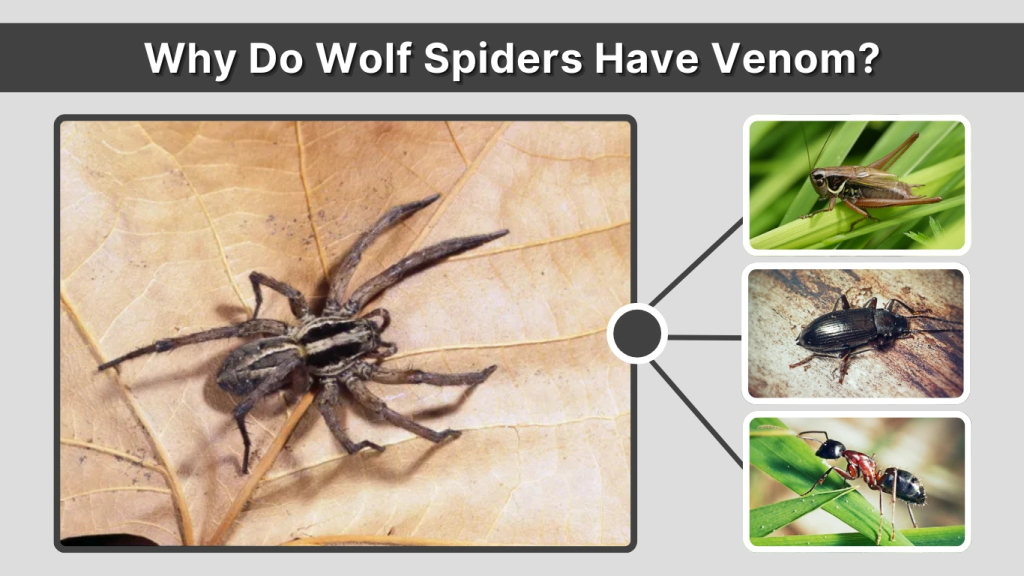
Like most spiders, wolf spiders use venom to hunt. They are active ground hunters that chase down insects such as:
- Crickets
- Beetles
- Ants
- Grasshoppers
- Other small arthropods
Their venom quickly immobilizes prey so the spider can feed safely. The venom is highly effective against insects but is relatively mild when it comes to humans.
Is Wolf Spider Venom Dangerous to Humans?
For the vast majority of people, wolf spider venom is not medically significant.
Their venom is not designed to harm mammals and is generally too weak to cause serious complications. Most bites result in mild, localized symptoms that resolve on their own within a few days.
Severe reactions are rare and usually related to allergies or secondary infections rather than the venom itself.
What Does a Wolf Spider Bite Feel Like?
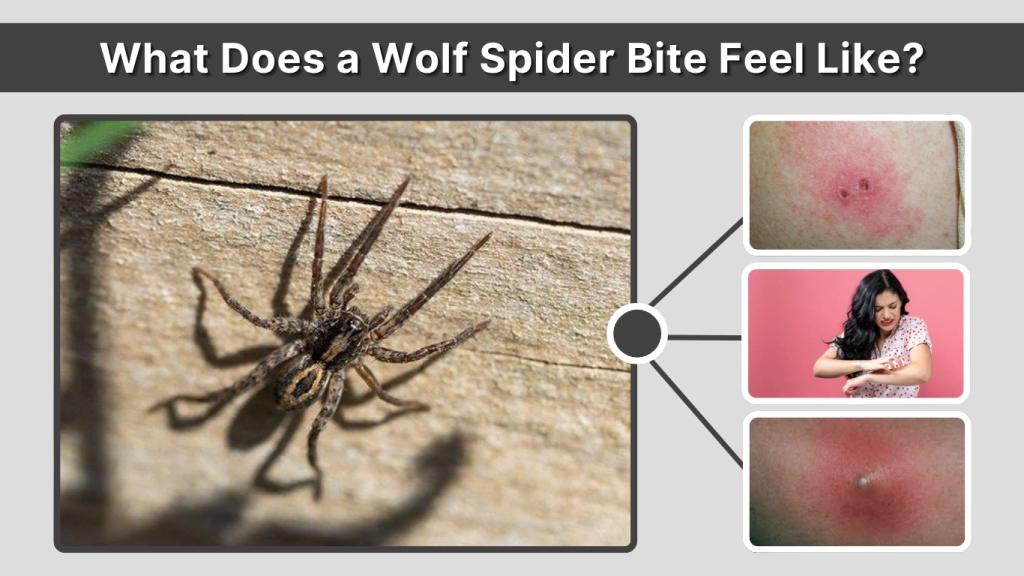
If a wolf spider bites, you may experience:
- Immediate mild pain (similar to a bee sting)
- Redness around the bite site
- Slight swelling
- Itching
- Tenderness
Some people may develop a small raised bump or mild inflammation. Symptoms typically improve within 24 to 72 hours.
In rare cases, mild nausea or dizziness has been reported, but these reactions are uncommon.
Do Wolf Spiders Bite Often?
Wolf spiders are not aggressive toward humans. They usually bite only when:
- They feel threatened
- They are handled
- They are trapped against the skin (for example, inside clothing or bedding)
Most bites occur accidentally when someone unknowingly presses against the spider.
If disturbed, wolf spiders typically try to run away rather than attack.
How Serious Can a Wolf Spider Bite Be?
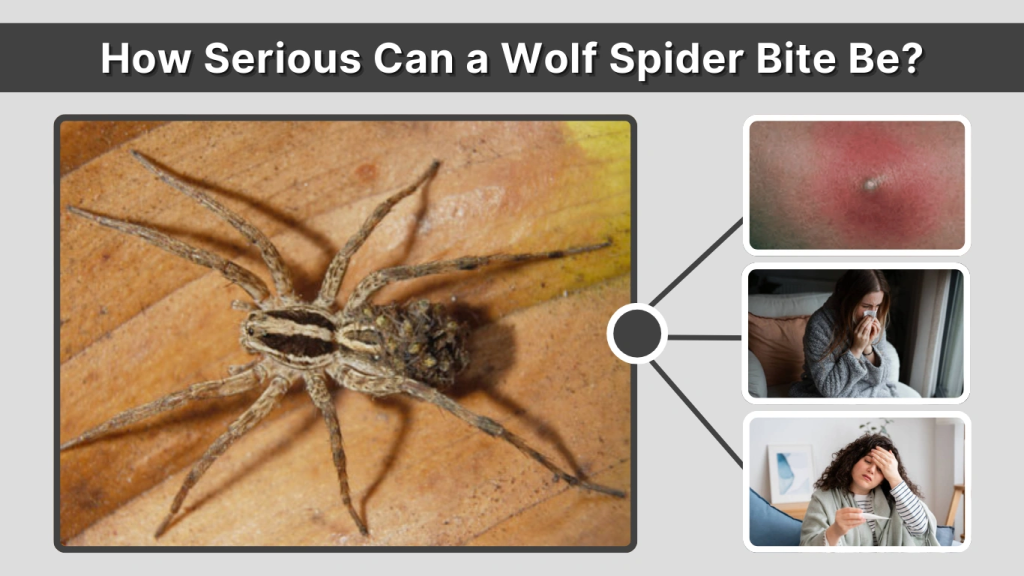
In healthy adults, a wolf spider bite is generally minor. However, there are a few situations where medical attention may be necessary:
- Signs of an allergic reaction (difficulty breathing, swelling of the face or throat)
- Severe or worsening pain
- Spreading redness
- Pus or signs of infection
- Fever
These complications are uncommon but should not be ignored.
Children, elderly individuals, and people with weakened immune systems should be monitored more carefully after any spider bite.
Wolf Spider vs. More Dangerous Spiders
It’s important not to confuse wolf spiders with more dangerous species like:
- Brown recluse spiders
- Black widow spiders
Brown Recluse Comparison
Brown recluse bites can cause tissue damage (necrosis) in some cases. Wolf spider bites do not cause necrotic lesions.
Black Widow Comparison
Black widow venom affects the nervous system and can cause severe muscle pain and cramping. Wolf spider venom does not have this strong neurotoxic effect.
Many wolf spider bites are mistakenly blamed for more serious spider bite symptoms.
What Should You Do If Bitten?
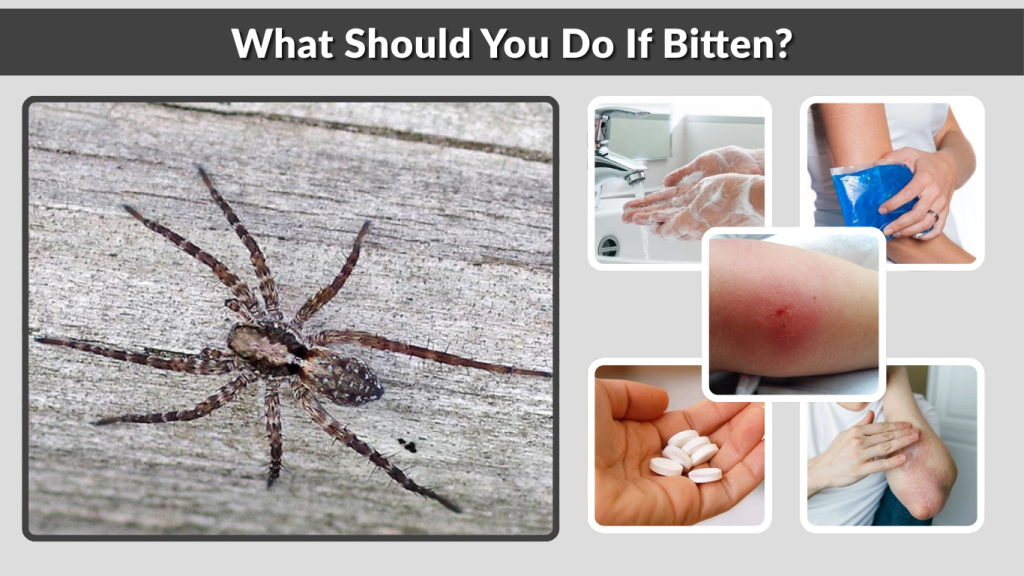
If you believe a wolf spider has bitten you, follow these simple steps:
- Clean the area with soap and water.
- Apply a cold compress to reduce swelling and pain.
- Use over-the-counter pain relievers if needed.
- Avoid scratching to prevent infection.
Most bites heal without any special treatment.
If symptoms worsen or do not improve within a few days, consult a healthcare professional.
Can Wolf Spider Bites Become Infected?
Yes, like any wound, a wolf spider bite can become infected if bacteria enter the skin. Signs of infection include:
- Increased redness
- Warmth around the bite
- Swelling that worsens
- Pus discharge
- Fever
Often, infections occur because the bite was scratched excessively, not because of the venom itself. Keeping the area clean greatly reduces the risk.
Why Do Wolf Spiders Look So Scary?
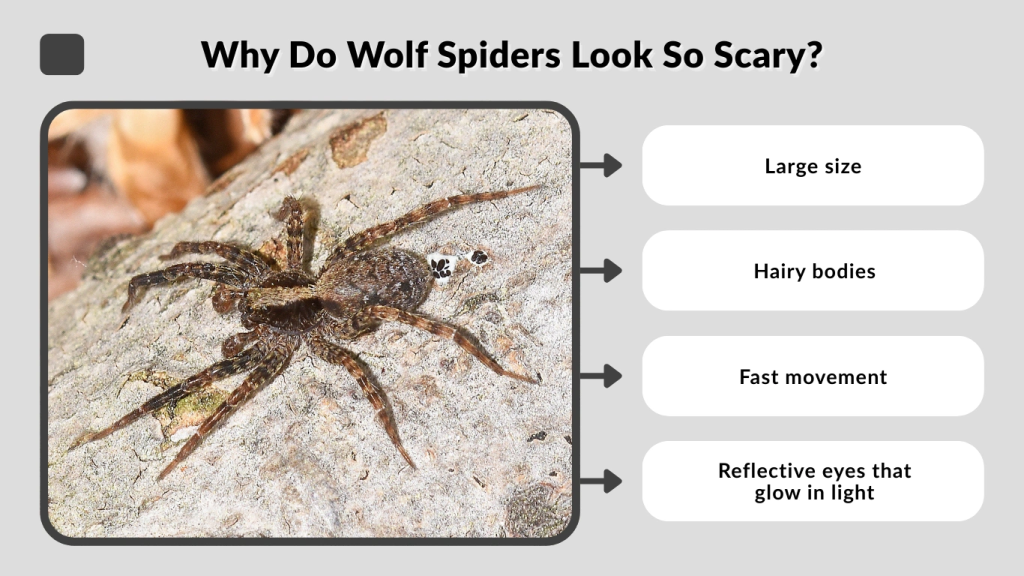
Wolf spiders have a few features that make them appear more threatening than they actually are:
- Large size
- Hairy bodies
- Fast movement
- Reflective eyes that glow in light
Their speed and sudden appearance can startle people, but they are not naturally aggressive toward humans.
Do All Wolf Spiders Have Venom?
Yes, all species of wolf spiders possess venom glands and fangs. There are over 2,000 species worldwide, and all use venom to hunt prey.
However, venom potency varies slightly by species. Even so, none are considered dangerously venomous to healthy humans.
Are Pets at Risk from Wolf Spiders?
Wolf spider bites are generally not dangerous to pets either.
Curious dogs or cats may attempt to play with or bite a spider, potentially getting bitten in return. Symptoms in pets may include:
- Mild swelling
- Temporary discomfort
- Licking at the affected area
If a pet shows signs of severe pain, vomiting, lethargy, or swelling of the face, contact a veterinarian. Serious complications are rare.
How to Prevent Wolf Spider Bites
While wolf spiders are not dangerous, preventing bites can give peace of mind.
Outdoor Prevention
- Wear gloves while gardening
- Shake out shoes left outside
- Avoid placing hands into dark crevices without looking
Indoor Prevention
- Seal cracks around windows and doors
- Keep clutter minimal
- Reduce insect populations (their food source)
- Vacuum regularly
Wolf spiders often enter homes accidentally while searching for prey.
Do Wolf Spiders Inject Venom Every Time They Bite?
In some cases, spiders may deliver a “dry bite,” meaning no venom is injected. This can happen if the spider is biting defensively rather than hunting.
Even when venom is injected, the amount is typically small when biting humans.
How Long Does It Take to Heal?
Most wolf spider bites heal within:
- 1–3 days for mild cases
- Up to a week if swelling or irritation persists
Lingering discomfort beyond a week should be evaluated by a healthcare provider.
When Should You See a Doctor?
Seek medical attention if you experience:
- Severe or spreading pain
- Signs of infection
- Allergic reaction symptoms
- Fever
- A wound that worsens instead of improving
While rare, it’s always better to err on the side of caution if symptoms seem unusual.
The Bottom Line
Yes, wolf spiders are venomous—but their venom is not dangerous to most humans. Their bites typically cause mild pain, redness, and swelling that resolve within a few days. They are not aggressive and will usually run away rather than bite.
Despite their intimidating appearance, wolf spiders play an important role in controlling insect populations. Understanding the facts about their venom can help reduce unnecessary fear and promote safe coexistence.
FAQs
Are wolf spiders more venomous than brown recluse spiders?
No. Brown recluse spiders have more medically significant venom that can cause tissue damage. Wolf spider venom is milder and typically results in only minor, temporary symptoms in humans.
Can a wolf spider bite send you to the hospital?
It’s very unlikely. Most wolf spider bites cause mild irritation that heals quickly. Hospital visits are usually only necessary if there is an allergic reaction or infection.
Do wolf spiders chase people?
No, wolf spiders do not chase people. They may appear to run toward someone, but they are usually trying to escape and seeking shelter.
How can I tell if a spider bite is from a wolf spider?
It can be difficult to confirm without seeing the spider. Wolf spider bites usually cause mild, localized symptoms. More severe symptoms may indicate a different spider species or another cause altogether.