
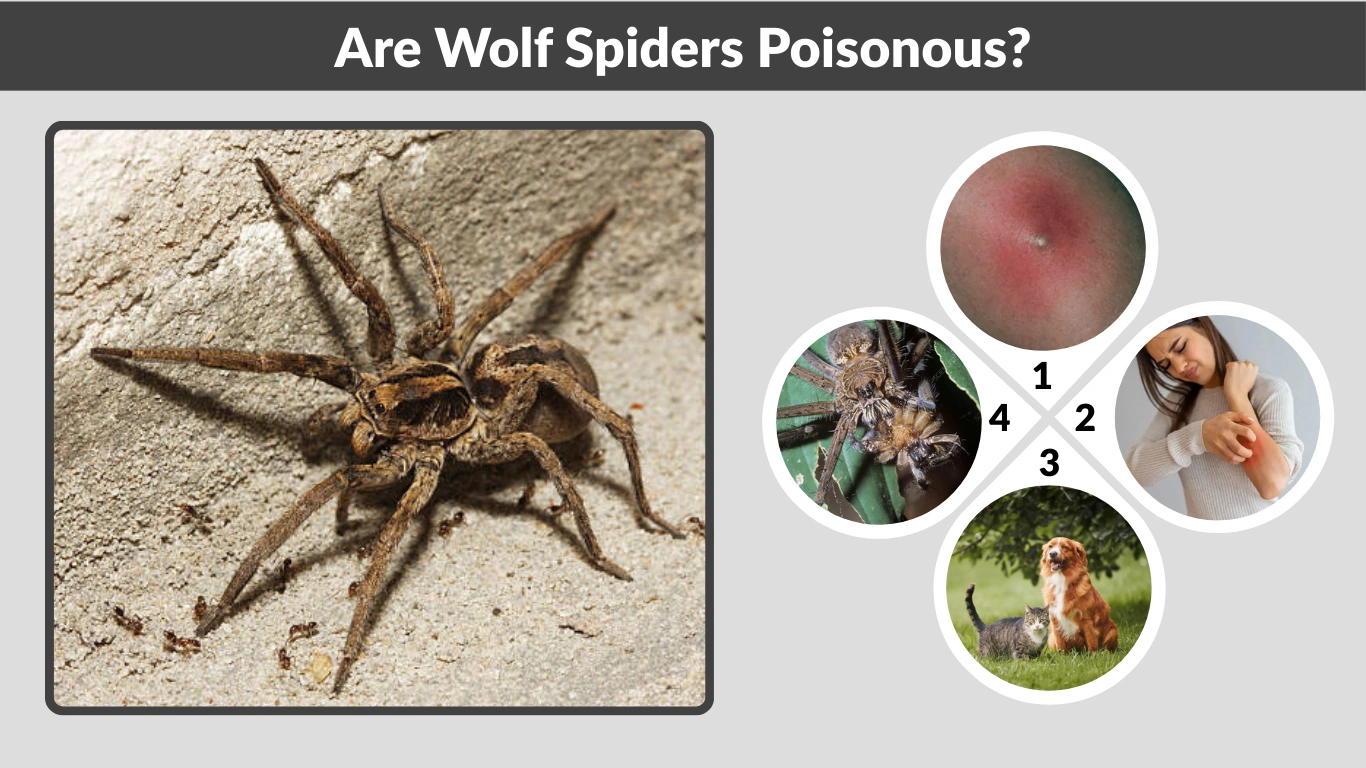
Wolf spiders are large, fast-moving spiders that often alarm homeowners. Their size and hairy appearance make them look dangerous, leading many people to ask: are wolf spiders poisonous?
The simple answer is no — wolf spiders are not poisonous. However, they are venomous. Understanding the difference between poisonous and venomous is important before deciding whether these spiders are truly a threat to you, your children, or your pets.
In this guide, we’ll explain how dangerous wolf spiders really are and what happens if one bites a human or animal.
Are Wolf Spiders Poisonous or Venomous?
Wolf spiders are venomous, not poisonous.
Poisonous organisms are harmful if touched or eaten. Venomous animals inject venom through a bite or sting. Wolf spiders use venom to immobilize insects such as crickets, ants, beetles, and roaches.
They do have venom glands, but their venom is mild and designed for small prey. Simply touching a wolf spider will not poison you, and they are not toxic to handle accidentally. Their venom must be injected through a bite to have any effect.
So while wolf spiders do have venom, they are not poisonous in the way many people assume.
Are Wolf Spiders Dangerous to Humans?
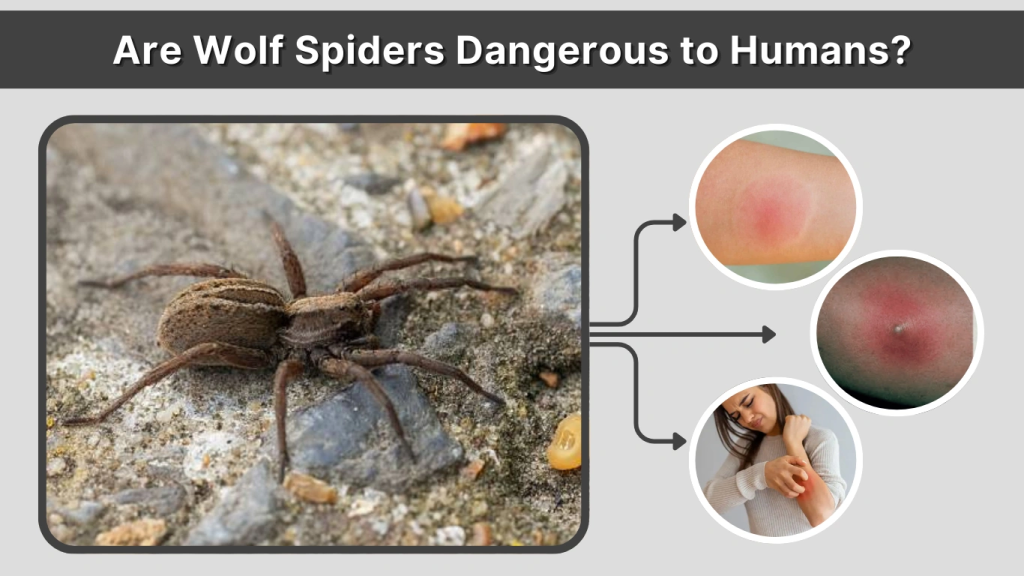
Wolf spiders can bite, but they are not aggressive. Most bites happen only when the spider feels trapped, stepped on, or pressed against the skin.
A wolf spider bite typically causes:
- Mild to moderate pain
- Redness
- Slight swelling
- Itching or irritation
The sensation is often compared to a bee sting. For most healthy adults, symptoms fade within a few days without medical treatment.
Unlike brown recluse spiders, wolf spiders do not cause tissue damage or necrotic wounds. Their venom is not medically significant for the vast majority of people.
Serious reactions are rare but may occur in individuals who are allergic to spider venom. Signs of a severe reaction include excessive swelling, dizziness, or difficulty breathing. In those cases, medical attention should be sought.
For babies and infants, reactions are generally similar but may appear more dramatic due to sensitive skin. Even so, wolf spiders are not considered dangerous to children.
How Poisonous Are Wolf Spiders?
When people ask how poisonous wolf spiders are, the more accurate question is how strong their venom is.
Wolf spider venom is relatively mild. It is effective against insects but not potent enough to cause serious harm to humans. Compared to spiders like the black widow or brown recluse, wolf spiders pose far less medical risk.
Most reported bites resolve on their own. In fact, wolf spiders are often considered beneficial because they naturally reduce pest insect populations around homes and gardens.
Are Wolf Spiders Poisonous to Dogs and Cats?
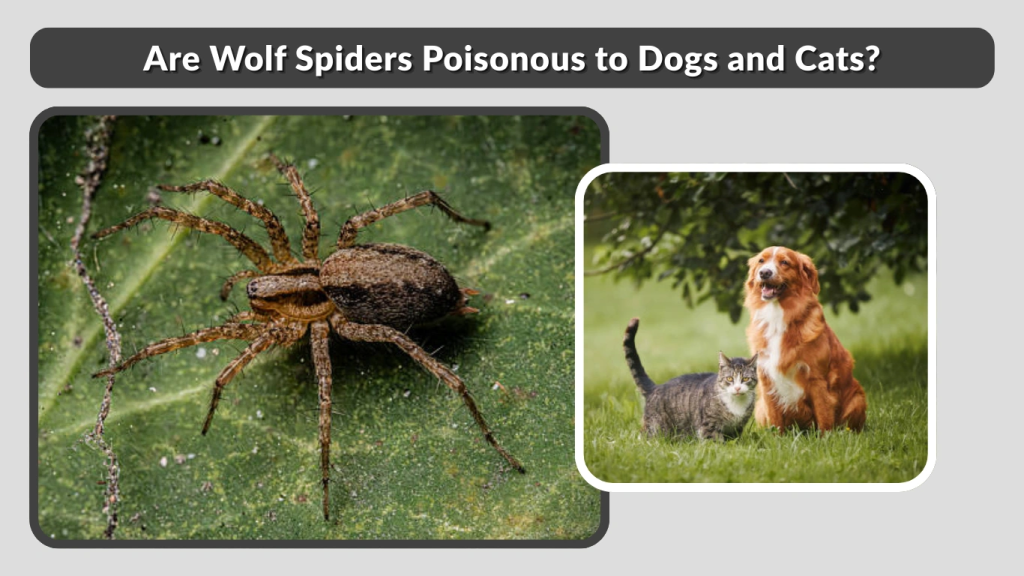
Wolf spiders are not considered dangerous to dogs or cats. If a pet is bitten, the reaction is usually mild and localized.
A dog that is bitten may show:
- Minor swelling
- Redness
- Temporary discomfort
- Licking or scratching at the bite site
Cats typically experience similar mild irritation. Because pets are often larger than the spider’s intended prey, the venom does not cause serious systemic effects.
If a pet eats a wolf spider, the spider is not poisonous when swallowed. At most, it may cause mild digestive upset. Vomiting or slight stomach irritation can occur, but toxicity is not expected.
In rare cases, small dogs or sensitive animals may react more noticeably due to body size or allergies. Monitoring the pet for unusual symptoms is usually sufficient.
Are Wolf Spiders in Different States More Poisonous?
Wolf spiders are found across the United States and in many other parts of the world, including Australia and New Zealand. People often wonder whether wolf spiders in places like Texas, Florida, Ohio, California, Michigan, or Georgia are more poisonous than others.
The answer is no. Wolf spider venom strength does not significantly vary by state. Whether you encounter a wolf spider in Arizona, Colorado, Pennsylvania, Kentucky, Missouri, Illinois, Virginia, Delaware, or Oklahoma, the level of risk remains the same.
Regional species may differ slightly in size or color, but their venom potency is similar and generally mild.
Are Baby, Giant, or Female Wolf Spiders More Dangerous?
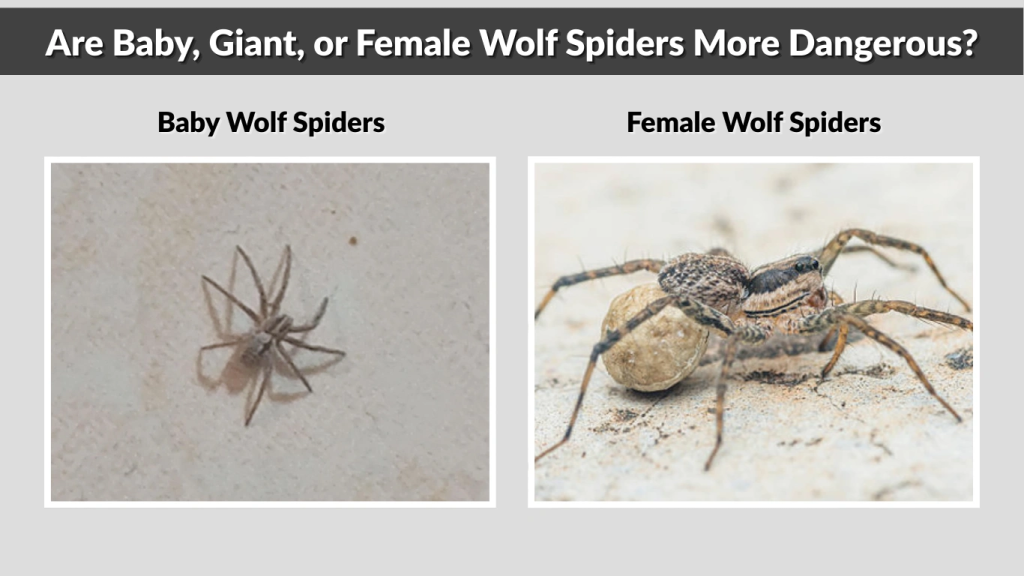
Wolf spiders come in many sizes and color variations. Some are black, brown, grey, spotted, or even two-toned. Others are labeled as beach wolf spiders, field wolf spiders, burrowing wolf spiders, or Carolina wolf spiders.
Despite these differences, their venom strength is largely the same.
Baby wolf spiders are not more poisonous than adults. Female wolf spiders are not more venomous than males, though females carrying egg sacs may be more defensive if disturbed. Giant wolf spiders may look more intimidating due to size, but their venom is not stronger simply because they are larger.
Color variations such as black, brown, white, tiger-striped, or grey wolf spiders do not indicate greater danger. Appearance does not change venom potency.
There are no known types of wolf spiders that are considered highly dangerous to healthy humans.
Wolf Spider vs Brown Recluse
Wolf spiders are often mistaken for brown recluse spiders due to their brown coloring and body shape. However, they are very different in terms of medical risk.
Brown recluse spiders possess venom that can cause tissue damage and serious wounds. Wolf spiders do not. A wolf spider bite does not lead to skin necrosis and is far less dangerous.
Correct identification is important, but in most cases, a wolf spider is far less concerning than a brown recluse.
Are Any Wolf Spiders Truly Dangerous?
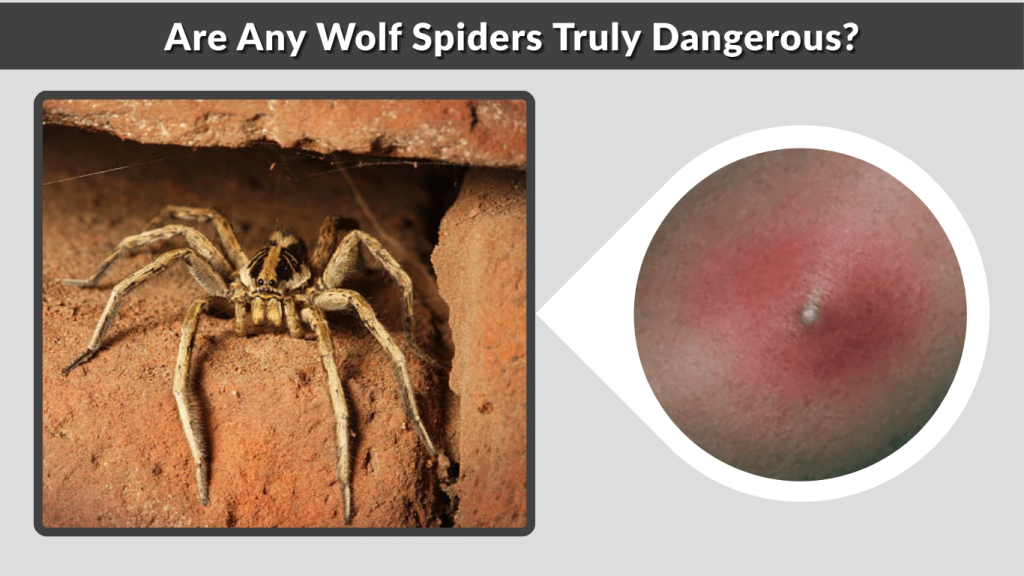
There are hundreds of wolf spider species worldwide, including burrowing wolf spiders, field wolf spiders, beach wolf spiders, thin-legged wolf spiders, tiger wolf spiders, rabbit wolf spiders, and many regional varieties. Despite their different names and appearances, they share one important trait: their venom is mild and not considered medically significant to healthy humans.
No known species of wolf spider is classified as highly dangerous in the way black widows or brown recluses are. While individual reactions to bites can vary, severe complications are extremely uncommon.
Some people search about “rabid wolf spiders,” but spiders do not carry or transmit rabies. Rabies affects mammals, not insects or arachnids. A wolf spider cannot become rabid, and its bite does not transmit rabies or similar diseases.
The only situation in which a wolf spider bite may become serious is if a person has an allergic reaction. In those rare cases, swelling may spread beyond the bite area, or other symptoms such as dizziness or difficulty breathing may appear. Immediate medical care is recommended if those symptoms occur.
What Happens If You Eat a Wolf Spider?
Although it sounds unusual, pets — and occasionally even people — may accidentally swallow a spider. Wolf spiders are not poisonous if eaten. Their venom works through injection, not ingestion.
If swallowed, a wolf spider is likely to be digested like any other insect. At most, mild stomach discomfort could occur. The larger concern would be bacteria or general contamination, not venom toxicity.
For dogs, cats, or even larger animals such as horses, eating a wolf spider is not considered dangerous. Monitoring for vomiting or minor digestive upset is typically sufficient.
Are Wolf Spiders More Poisonous in Certain Colors or Patterns?
Wolf spiders can appear black, brown, grey, white, spotted, striped, or two-toned. Some have bold markings, while others blend into soil or sand. These color variations often lead people to assume certain types may be more poisonous.
Color does not determine venom strength. A black wolf spider is not more dangerous than a brown wolf spider. A spotted or tiger-patterned wolf spider does not have stronger venom than a plain grey one.
Size also does not significantly affect toxicity. A giant wolf spider may look more threatening, but its venom composition is similar to that of smaller species. Baby wolf spiders also carry venom, yet their bite is typically even less noticeable due to their smaller size.
In short, appearance does not make one wolf spider more poisonous than another.
Do Wolf Spiders Eat Other Poisonous Spiders?
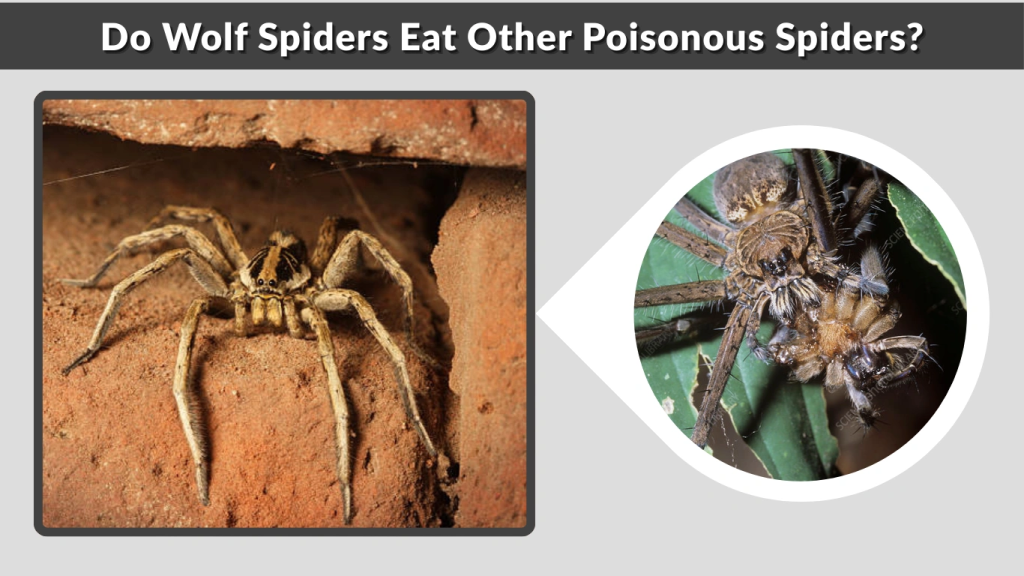
Wolf spiders are active hunters. They chase down insects rather than building webs to trap prey. Occasionally, they may attack and eat other spiders, including species that are venomous.
Eating another venomous spider does not make a wolf spider poisonous or more dangerous. Venom is a specialized protein mixture produced in venom glands. It is not absorbed or transferred through diet in a way that increases toxicity.
In fact, wolf spiders can help control populations of other pest insects and even some more concerning spider species.
How to Get Rid of Wolf Spiders Safely
Even though wolf spiders are not highly dangerous, many homeowners prefer not to share indoor space with them. If wolf spiders are appearing in your home, there are practical steps you can take.
First, reduce their food supply. Because wolf spiders hunt insects, eliminating other pests such as crickets, roaches, and ants will make your home less attractive to them.
Second, seal entry points. Close gaps around windows, doors, and foundation cracks. Install door sweeps and repair torn screens.
Third, reduce outdoor hiding spots. Remove piles of leaves, firewood, and debris near the home’s foundation. Keep grass trimmed and landscaping maintained.
Sticky traps can help monitor and reduce indoor spider activity. In more persistent infestations, professional pest control services may use targeted treatments labeled for spider control.
If chemical treatments are used, always follow label instructions carefully and ensure they are safe for pets and children.
Common Myths About Wolf Spiders
Several myths continue to circulate about wolf spiders.
One myth claims they are among the most poisonous spiders in North America. This is false. Their venom is mild compared to medically significant species.
Another myth suggests that wolf spiders aggressively chase people to attack. In reality, they move quickly because they are hunters and may run toward a person accidentally while trying to escape.
Some believe wolf spiders lay eggs under human skin after biting. This is entirely untrue. Female wolf spiders carry egg sacs attached to their abdomen and later carry spiderlings on their backs — not inside bite wounds.
Understanding these facts helps reduce unnecessary fear.