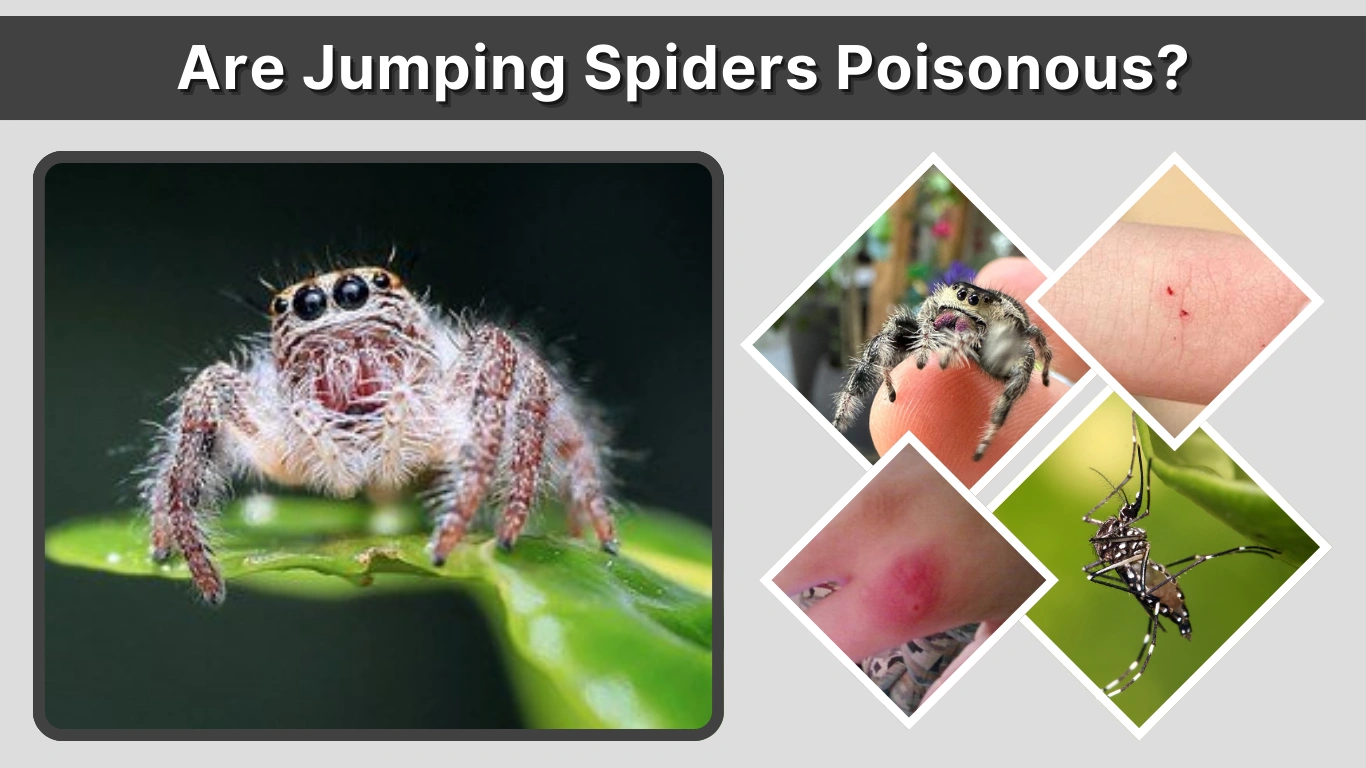
Jumping spiders are small, energetic spiders commonly found on walls, windowsills, gardens, and plant leaves. Their large forward-facing eyes and quick movements often catch people’s attention, sometimes causing fear or curiosity. One of the most common questions people ask is whether jumping spiders are poisonous and if they pose any real danger. This article explores what science says about jumping spider venom, whether they bite humans, and what actually happens if contact occurs.
What Are Jumping Spiders?
Jumping spiders belong to the family Salticidae, one of the largest spider families in the world, with over 6,000 known species. They live on every continent except Antarctica and thrive in a wide range of environments, from forests and grasslands to homes and city gardens. Unlike web-building spiders, jumping spiders actively hunt their prey during the daytime.
They are famous for their excellent eyesight. Their large front eyes give them sharp, detailed vision, allowing them to judge distance, recognize movement, and stalk insects with impressive accuracy. Instead of trapping prey in webs, they creep close and then leap to capture flies, mosquitoes, ants, and other small insects.
Jumping spiders are also known for their curious behavior. They often turn to watch humans, tilt their heads, or slowly move closer, which makes them appear intelligent compared to many other spiders. Because they are active during the day and often live near windows, plants, and walls, people encounter them more often than many other spider types.
Why Jumping Spiders Are Different From Other Spiders
Jumping spiders stand out because they rely on vision rather than webs. Their eye structure gives them depth perception, which is rare among spiders. They can plan movements, track prey, and even recognize other jumping spiders during mating displays. This advanced hunting style reduces their need to hide in dark corners, which is why they are frequently seen in open areas.
Poisonous vs. Venomous — Clearing the Confusion
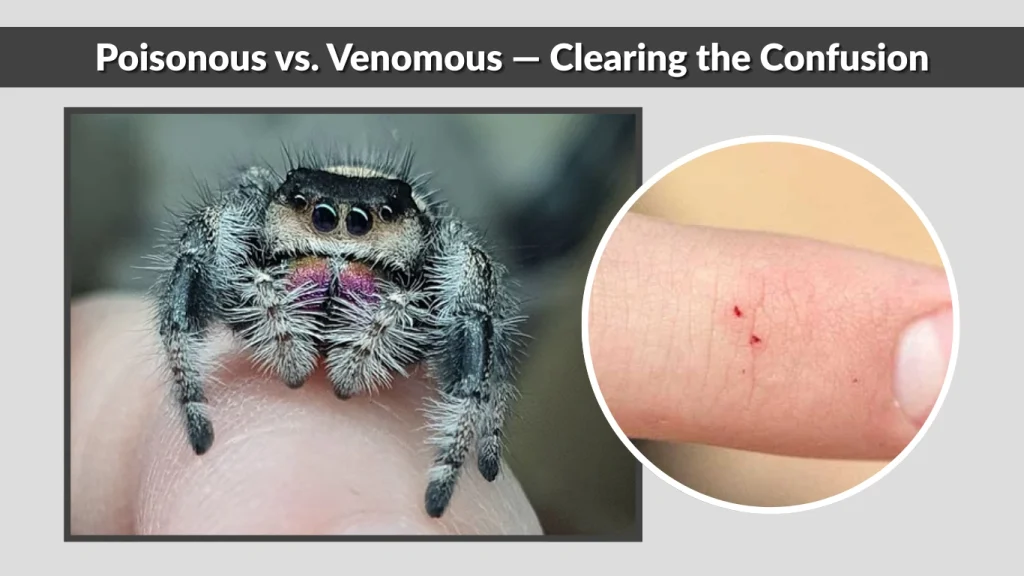
Many people use the word “poisonous” to describe spiders, but scientifically, spiders are venomous, not poisonous. Poisonous animals harm you if you touch or eat them. Venomous animals inject toxins through bites or stings. Spiders, including jumping spiders, use venom to subdue prey.
This distinction matters because “poisonous” suggests danger through contact, while “venomous” refers specifically to venom delivered by a bite. Jumping spiders do not secrete toxins through their skin, and touching one does not poison you. Their venom is stored in glands connected to their fangs and is mainly used to paralyze insects.
Understanding this difference helps reduce fear. Almost all spiders are venomous, but only a very small number have venom strong enough to seriously affect humans.
Are Jumping Spiders Venomous? (Scientific Explanation)
Jumping spiders do possess venom, but its purpose is to immobilize tiny prey, not to defend against large animals like humans.
Key facts about jumping spider venom
- They do produce venom in small amounts
- Venom is used primarily to kill insects
- The venom is very mild
- It is not medically significant to humans
- They rarely use venom defensively
Compared to medically important spiders such as black widows or brown recluses, jumping spiders have extremely weak venom. Their fangs are small, and in many cases, they cannot easily penetrate human skin. Even when a bite occurs, the venom dose is minimal.
Scientists and medical sources classify jumping spiders as harmless to humans. There are no verified cases of serious injury, systemic illness, or death caused by jumping spider bites. Their venom simply is not designed to affect large mammals.
Can Jumping Spiders Bite Humans?

Jumping spiders can bite, but it is very rare. They are shy, alert, and prefer to jump away rather than defend themselves. Bites usually happen only when a spider is trapped against skin, squeezed, or accidentally pressed inside clothing.
Most reported “spider bites” are actually caused by insects such as mosquitoes, fleas, or mites. Because jumping spiders are visible and memorable, they are often blamed even when they are not responsible.
In natural situations, jumping spiders avoid confrontation. They do not build webs in beds, do not hide in shoes often, and do not seek out humans. Their first response to danger is escape, not aggression.
What Does a Jumping Spider Bite Feel Like?
When a jumping spider bite does occur, symptoms are typically very mild. Many people report a slight pinprick sensation or do not feel the bite at all. The most common reactions include minor redness, slight swelling, and mild itching.
The discomfort usually fades within a few hours and rarely lasts more than a day. For most individuals, a jumping spider bite feels similar to a small ant bite or mosquito bite. It does not cause tissue damage, necrosis, or systemic symptoms.
Rare Reactions and When to See a Doctor
Although extremely uncommon, some people may experience a stronger local reaction due to individual sensitivity. Signs that deserve medical attention include increasing pain, spreading redness, signs of infection, or allergic symptoms such as difficulty breathing or facial swelling. These reactions are related to the body’s response, not to dangerous venom.
Identification of Jumping Spiders
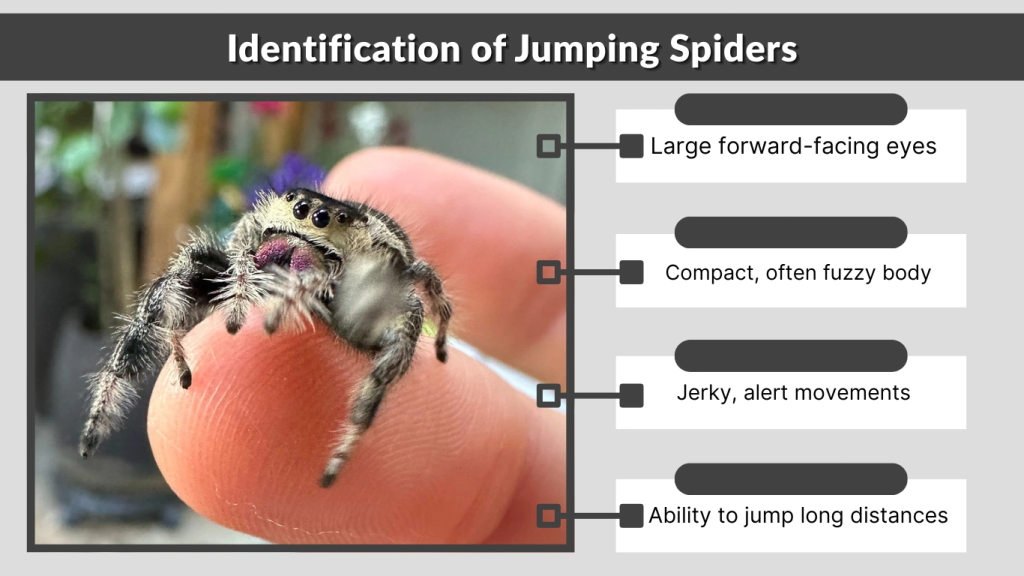
Jumping spiders are easy to recognize once you know what to look for.
Common identification features
- Large forward-facing eyes
- Compact, often fuzzy body
- Jerky, alert movements
- Ability to jump long distances
- Often brightly colored or patterned
They are often mistaken for wolf spiders, but jumping spiders are usually smaller, more compact, and more visually expressive. Their daytime activity and tendency to watch movement closely are strong identifying clues.
Are Jumping Spiders Dangerous to Children or Pets?
Jumping spiders are not considered dangerous to children, babies, or household pets. Their small size, weak venom, and non-aggressive behavior make serious incidents extremely unlikely. Even if a curious child touches or briefly holds a jumping spider, the spider’s natural response is to escape rather than bite.
For pets such as cats and dogs, jumping spiders pose virtually no threat. If a pet were to paw at or swallow one, the spider’s venom would not be strong enough to cause poisoning or illness. At most, a pet might experience brief mouth irritation from the spider’s defensive chemicals, but this is rare and not medically significant.
Basic supervision is still wise, especially with infants who may grab insects. Teaching children not to touch spiders and gently removing spiders from play areas is usually all that is needed. Veterinary or medical care is only necessary if unusual symptoms appear, which is extremely uncommon.
Benefits of Jumping Spiders in Homes and Gardens
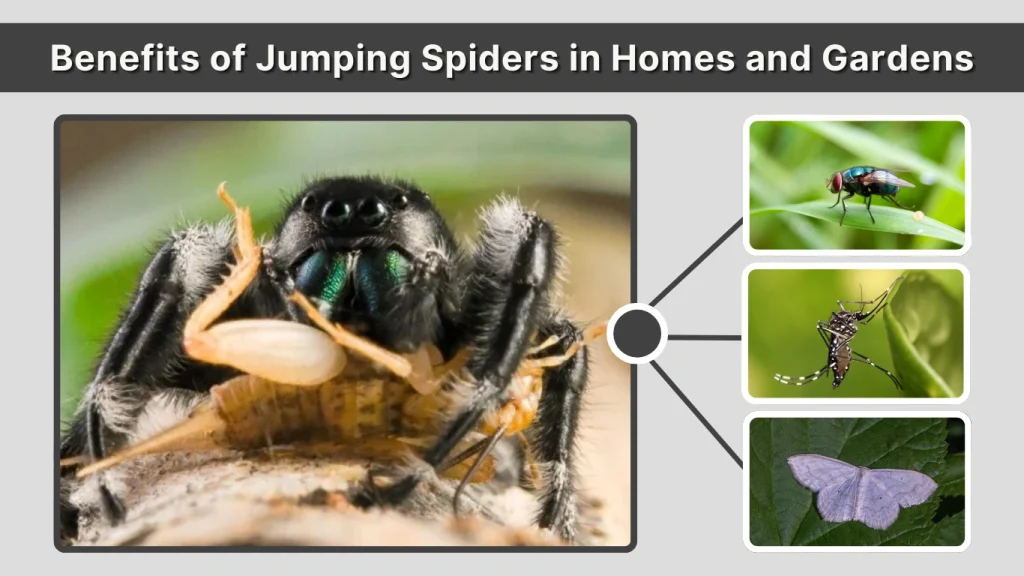
Jumping spiders are beneficial predators that help control pest populations. They actively hunt flies, mosquitoes, moths, aphids, ants, and other insects that often invade homes and damage plants.
In gardens, they contribute to natural pest management without the need for chemical sprays. By reducing insect numbers, jumping spiders help protect vegetables, flowers, and ornamental plants. Indoors, they quietly hunt nuisance insects that gather near lights and windows.
Because they do not spin messy webs and are not aggressive, many people consider jumping spiders one of the most welcome spider species. Their presence often indicates a healthy environment with a balanced insect population.
What to Do If You Find a Jumping Spider Indoors
Finding a jumping spider indoors is not a reason to panic. In most cases, it can simply be left alone.
Safe actions to take
- Leave it undisturbed and allow it to hunt insects
- Gently capture it with a cup and release it outside
- Avoid crushing or spraying it
- Seal small gaps around windows and doors
- Teach children not to touch spiders
Professional pest control is almost never needed for jumping spiders. They do not infest homes, do not damage property, and do not reproduce indoors in large numbers. A single spider usually wandered in while following prey.
Jumping Spiders vs. Dangerous Spiders
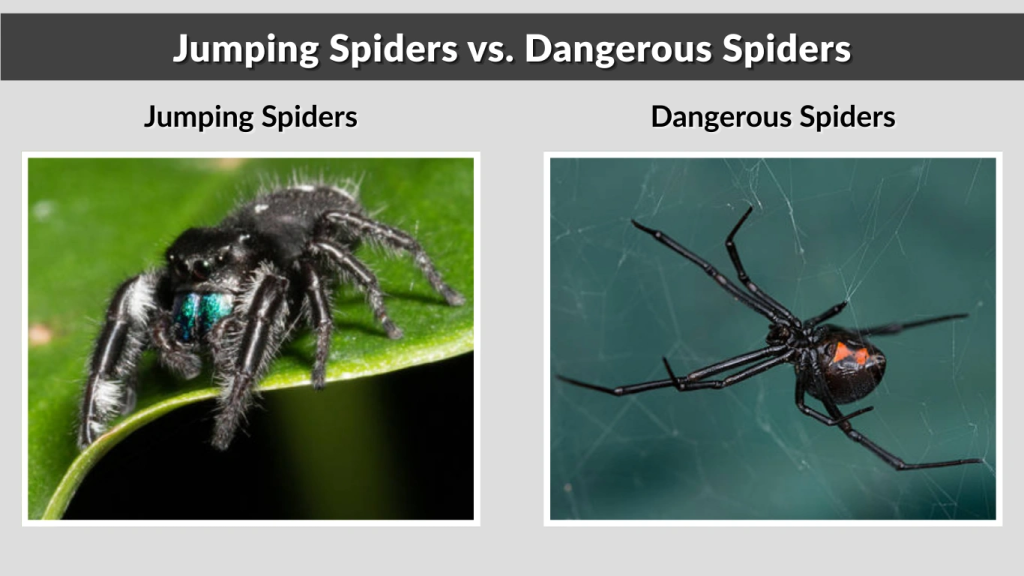
Not all spiders are equal in terms of medical risk. Jumping spiders are in a completely different category from spiders considered medically significant.
Black widows have neurotoxic venom that can cause muscle pain, cramping, and systemic symptoms. Brown recluse spiders have venom that can damage tissue and cause slow-healing wounds. Jumping spiders lack both the venom potency and the delivery capability to cause such effects.
Behavior is also different. Dangerous spiders are secretive and defensive when disturbed. Jumping spiders are alert, visual hunters that rely on speed and avoidance rather than biting. Their medical importance is considered negligible by toxicologists and arachnologists.
Myths and Misconceptions About Jumping Spiders
One common myth is that all spiders are dangerous. In reality, the vast majority of spider species pose no threat to humans. Another misconception is that bright colors mean a spider is poisonous. Many jumping spiders are colorful, but their appearance has more to do with mating displays than danger.
Some people believe jumping spiders chase humans. What often looks like chasing is actually the spider tracking movement visually or trying to find an escape route. They are not aggressive and do not attack people.
Internet stories sometimes exaggerate spider bites. Scientifically verified cases show that jumping spider bites are rare, mild, and not medically significant.
Final Answer — Are Jumping Spiders Poisonous?
Jumping spiders are not poisonous to humans. They are technically venomous, like nearly all spiders, but their venom is extremely weak and designed only to subdue tiny insect prey. They are not dangerous, not aggressive, and not a medical concern.
Bites are rare and usually cause only mild, short-lived irritation. Jumping spiders play a helpful ecological role by controlling insect populations and should be considered harmless and even beneficial visitors rather than pests.
FAQs
Are jumping spiders poisonous to humans?
Jumping spiders are not poisonous to humans. They do have venom, but it is very mild and used only to immobilize insects. Their venom is not medically significant and does not cause serious health problems in people.
Can a jumping spider bite make you sick?
A jumping spider bite almost never makes people sick. Most bites cause only minor redness or itching. Serious symptoms are extremely rare and usually linked to individual allergic reactions rather than the spider’s venom.
Are jumping spiders dangerous to babies?
Jumping spiders are not dangerous to babies. They are shy, small, and unlikely to bite. Even if a bite occurred, it would usually be mild and not harmful. Supervision and gentle removal are generally sufficient.
Do jumping spiders have strong venom?
No, jumping spiders do not have strong venom. Their venom is adapted to kill tiny insects and has little effect on humans. It is far weaker than the venom of black widows or brown recluses.
Should I remove jumping spiders from my house?
Removal is not necessary because jumping spiders are harmless and help control pests. If you prefer not to keep them indoors, gently capture and release them outside instead of killing them.