
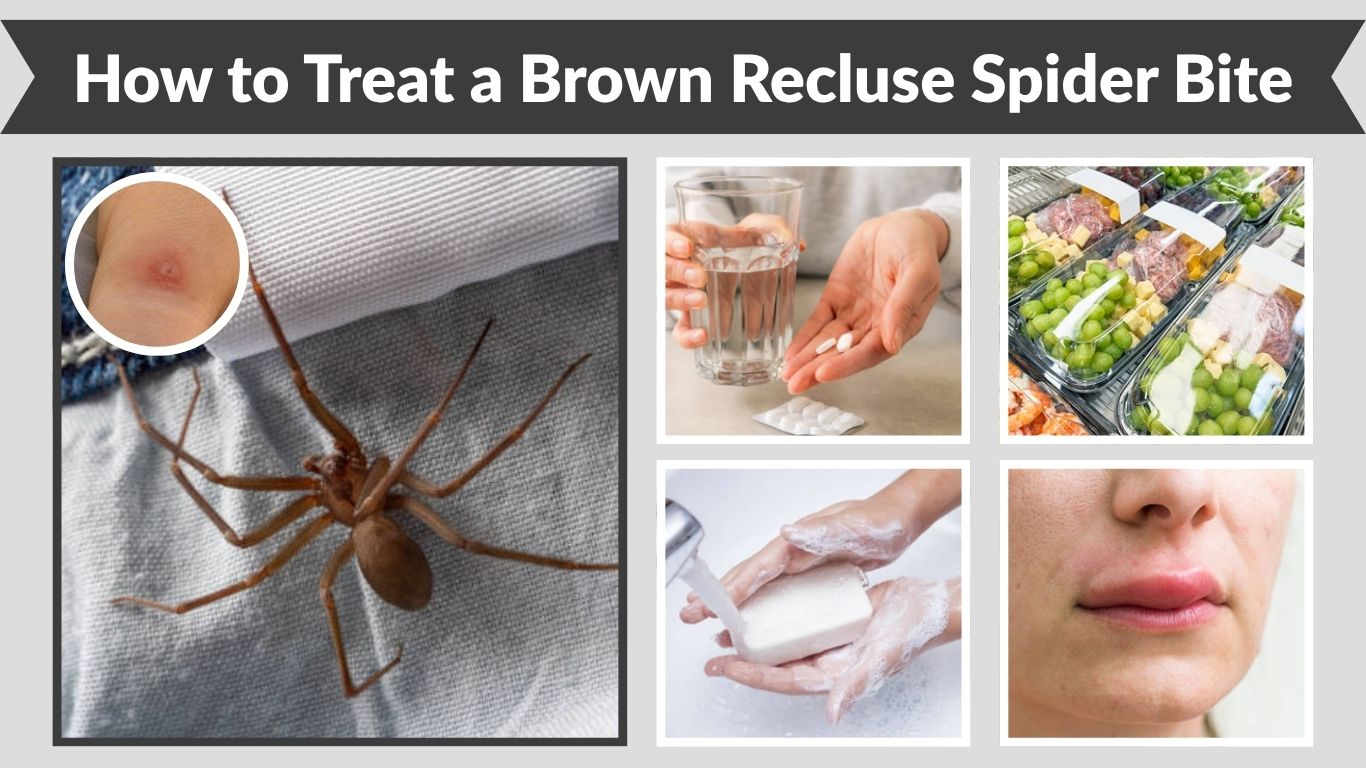
A brown recluse spider bite can look mild at first, but some bites may develop into painful wounds that need medical care. Most suspected spider bites are not dangerous, and many skin sores are caused by other problems such as infection. Still, a true brown recluse bite can sometimes damage skin tissue, so early first aid and careful monitoring are important. This guide explains what to do step by step.
First, Know When It May Be Serious
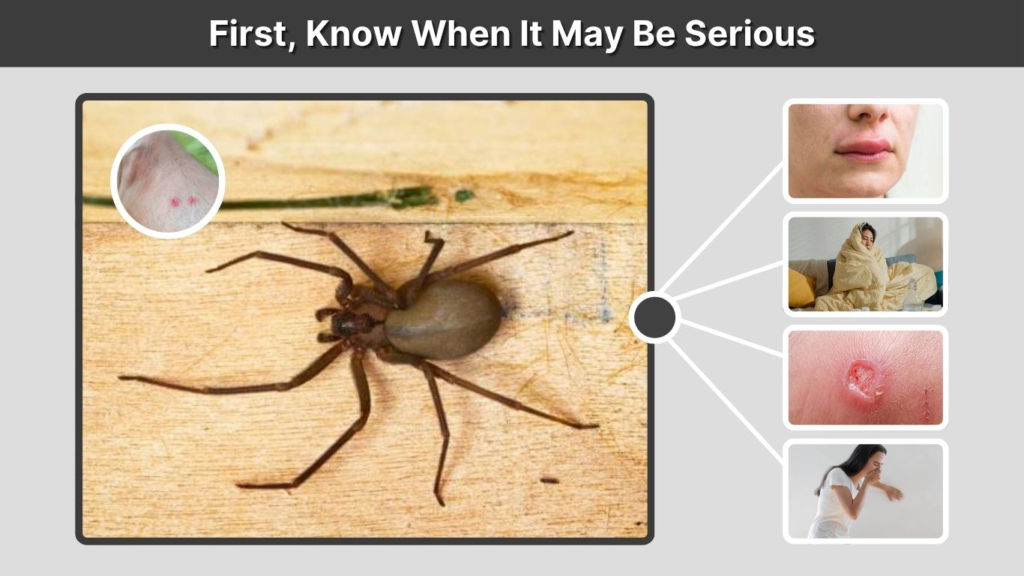
A brown recluse spider is a venomous spider found mainly in the south-central and midwestern United States. It is often described as brown with a dark violin-shaped marking, but the mark can be hard to see. The CDC notes that brown recluse bites may cause a stinging feeling, local pain, a small white blister, and in severe cases, skin tissue damage that needs professional care.
Not every red bump is a brown recluse bite. Mayo Clinic explains that many skin sores can look like spider bites but may actually be caused by bacterial infections or other conditions.
Emergency Warning Signs
Get urgent medical help right away if the person has:
- Trouble breathing
- Swelling of the face, lips, tongue, or throat
- Severe spreading pain
- Fever, chills, vomiting, or body aches
- A rapidly growing wound
- Blue, purple, black, or dead-looking skin
- Red streaks spreading from the bite
- Pus, warmth, or signs of infection
- Bite on a child, older adult, or medically fragile person
- Severe symptoms after a suspected brown recluse bite
Mayo Clinic lists fever, chills, body aches, upset stomach, vomiting, headache, shaking, and sweating as possible concerning symptoms after serious spider bites.
Step 1: Stay Calm and Move Away from the Spider
The first step is to stay calm and move away from the area where the bite happened. Brown recluse spiders usually bite when trapped against the skin, such as inside clothing, bedding, shoes, or gloves. They are not aggressive hunters of people.
If you safely can, try to identify the spider without handling it. Do not risk another bite. A photo from a safe distance may help a healthcare provider, but treatment should not be delayed just to find or capture the spider.
What to Do Immediately
- Move to a safe, well-lit area.
- Remove the person from the spider’s hiding place.
- Do not squeeze or cut the bite.
- Do not try to suck out venom.
- Do not apply heat.
- Keep the person calm and still.
- Begin basic first aid.
If the person is having severe symptoms, call emergency services or poison control immediately.
Step 2: Wash the Bite Area
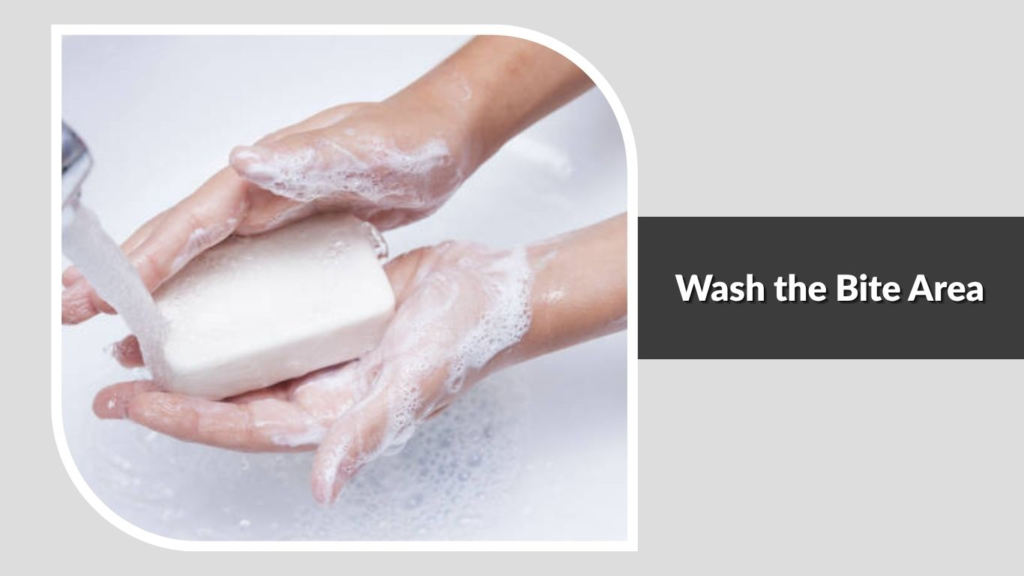
Clean the bite gently with soap and water. This helps reduce the chance of infection, especially if the skin is broken or scratched. Use clean running water and mild soap. Avoid harsh chemicals, bleach, strong alcohol, or irritating home remedies.
Mayo Clinic recommends cleaning spider bites with mild soap and water as part of first aid.
Cleaning Tips
Wash the skin carefully and pat it dry with a clean towel. If the bite has not opened, do not pick at it. If there is a blister, do not pop it. A broken blister can make infection more likely.
After washing, you may cover the bite with a clean bandage if the area is irritated or rubbing against clothing. Change the bandage daily or whenever it becomes wet or dirty.
Step 3: Apply a Cold Compress
Use a cold compress or ice pack wrapped in a cloth. Place it on the bite for short periods to reduce swelling and pain. Do not place ice directly on the skin, because this can damage the tissue.
Mayo Clinic recommends applying a cool, damp cloth or ice pack to spider bites for about 15 minutes every hour.
| Step | What to Do | Why It Helps |
|---|---|---|
| Clean the bite | Wash with soap and water | Lowers infection risk |
| Use cold | Apply wrapped ice or cool cloth | Reduces pain and swelling |
| Elevate | Raise the bitten area if possible | Helps control swelling |
| Monitor | Watch symptoms for 24–72 hours | Detects worsening early |
| Seek care | Call a doctor for severe signs | Prevents complications |
Cold Compress Safety
Apply cold for 10–15 minutes at a time, then remove it. Repeat as needed during the first day. If the skin becomes numb, very pale, or more painful, stop using ice and check the area.
Cold treatment may help with swelling and discomfort, but it does not “neutralize” venom. It is only supportive care.
Step 4: Elevate the Bitten Area
If the bite is on an arm or leg, raise the area above heart level when possible. Elevation can help reduce swelling and throbbing. This is especially useful during the first several hours after the bite.
Keep movement gentle. Do not massage the bite area. Rubbing or squeezing the skin may worsen irritation.
Best Elevation Method
Rest the arm or leg on pillows while sitting or lying down. Keep the position comfortable. If elevation increases pain, lower the area slightly.
Elevation is not a replacement for medical care. If symptoms are spreading or the person feels sick, contact a healthcare provider.
Step 5: Use Pain Relief Carefully
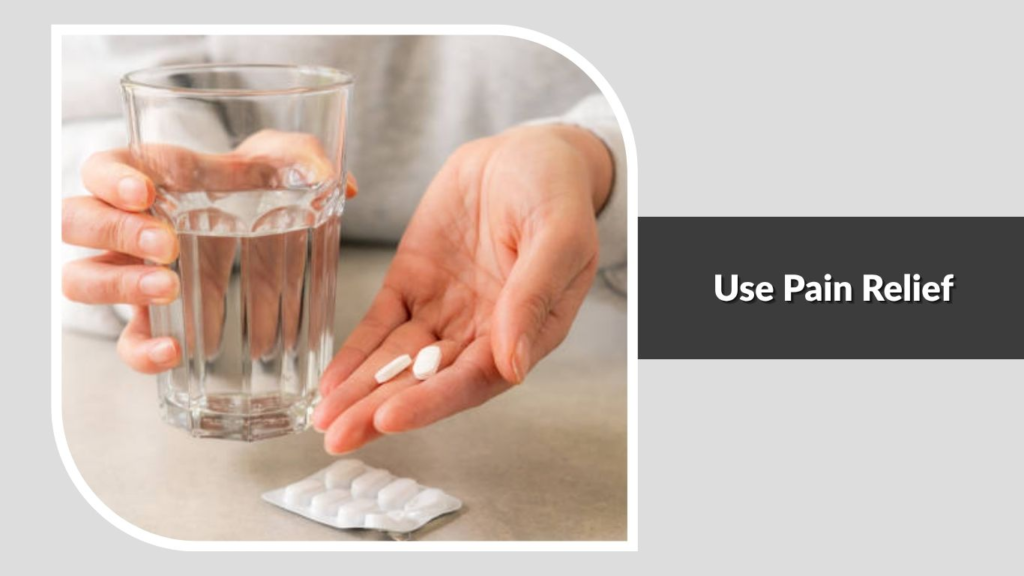
For mild pain, an over-the-counter pain reliever may help. Acetaminophen or ibuprofen may be used by many people, but follow the label and avoid medicines that are unsafe for your health condition. People with kidney disease, stomach ulcers, blood-thinning medication, liver disease, pregnancy, or other medical concerns should ask a doctor or pharmacist first.
Cleveland Clinic notes that brown recluse bites can cause itching, pain, and wounds, and proper identification can help guide management.
Itching and Discomfort
For itching, a healthcare provider or pharmacist may suggest an antihistamine or anti-itch treatment. Avoid scratching because it can break the skin and increase infection risk.
Do not apply unknown herbal pastes, strong oils, or chemical products to the bite. These can irritate skin and make it harder for a doctor to assess the wound.
Step 6: Mark and Monitor the Bite
Use a pen to lightly mark the edge of redness or swelling. Write down the time. This helps you see whether the affected area is growing. You can also take a clear photo every few hours in the same lighting.
Brown recluse symptoms may not look severe right away. Some people notice burning, itching, or pain several hours after the bite. WebMD notes that symptoms such as burning and itchiness often develop about 2–8 hours after a bite.
What to Watch For
Monitor the bite for:
- Increasing redness
- Swelling that spreads
- Worsening pain
- A blister or open sore
- Blue, purple, or black skin
- Fever or chills
- Nausea or vomiting
- Muscle aches
- Pus or bad smell
- Red streaks from the wound
If any of these symptoms appear or worsen, contact a doctor.
Step 7: Know What a Brown Recluse Bite May Look Like
A brown recluse bite may begin as a mild sting or painless bite. Later, the area may become red, painful, itchy, or blistered. In some cases, the center may turn pale, blue, purple, or dark as tissue damage develops.
MedlinePlus explains that brown recluse venom can damage skin and blood vessels, causing skin around the bite to die, a process called necrosis.
Possible Bite Stages
A suspected bite may progress like this:
- First few hours: Mild sting, redness, itching, or little pain
- 2–8 hours: Burning, swelling, or increasing discomfort
- 1–2 days: Blistering, color change, or more pain in some cases
- Several days: Open sore or dark center may appear in severe cases
- Weeks: Slow wound healing may be needed if tissue is damaged
Many bites do not become severe. However, any worsening wound should be checked.
Step 8: Call a Doctor or Poison Control
Call a healthcare provider if you suspect a brown recluse bite, especially if symptoms are more than mild. Professional care is important when there is significant pain, spreading redness, blistering, skin color change, fever, or a bite in a high-risk person.
MedlinePlus states that its brown recluse information is not for self-treatment and advises calling emergency services or poison control if someone is bitten.
When Medical Care Is Needed
See a doctor if:
- You think the bite was from a brown recluse.
- The wound is getting larger.
- Pain is worsening.
- A blister or ulcer forms.
- Skin turns blue, purple, gray, or black.
- The person develops fever, chills, nausea, or body aches.
- The bite is on the face, hand, foot, or genital area.
- The person is a child, older adult, pregnant, or immunocompromised.
- The bite shows signs of infection.
A doctor may clean the wound, check for infection, update tetanus protection, recommend pain control, or monitor for complications.
Step 9: Follow Medical Treatment Instructions
There is no simple home cure that instantly heals a brown recluse bite. Treatment depends on symptoms and wound severity. Some bites need only cleaning, cold compresses, pain control, and monitoring. Others may require wound care, infection treatment, or specialist evaluation.
Mayo Clinic notes that treatment for spider bites may include cleaning the wound, pain medicines, muscle relaxants if needed for certain spider bites, and sometimes antibiotics if infection develops.
Possible Medical Treatment
A healthcare provider may recommend:
- Professional wound cleaning
- Pain medicine
- Anti-itch medicine
- Tetanus booster if needed
- Antibiotics only if bacterial infection is present
- Wound dressing instructions
- Follow-up visits
- Referral to wound care or surgery for severe wounds
Do not use leftover antibiotics. Antibiotics do not treat venom damage unless there is a bacterial infection.
Step 10: Avoid Dangerous Home Remedies
Some home remedies can make a brown recluse bite worse. A bite should not be cut open, burned, squeezed, or treated with harsh chemicals. These methods can damage skin and increase infection risk.
What Not to Do
Avoid these actions:
- Do not cut the bite.
- Do not suck out venom.
- Do not apply heat.
- Do not use bleach or strong chemicals.
- Do not pop blisters.
- Do not scratch the wound.
- Do not wrap the area too tightly.
- Do not delay care if symptoms worsen.
- Do not assume every skin sore is a spider bite.
The safest approach is cleaning, cold compress, elevation, monitoring, and medical care when needed.
How Long Does a Brown Recluse Bite Take to Heal?
Healing time depends on bite severity. Mild bites may improve within days. More serious wounds may take weeks or months to heal, especially if skin tissue is damaged. Severe wounds can leave scars.
Healthline notes that mild bites may resolve within days to weeks, while more severe cases can take months to heal.
Factors That Affect Healing
Healing may depend on:
- Amount of venom injected
- Location of the bite
- Person’s age and health
- Whether infection develops
- How quickly first aid begins
- Whether the wound is protected
- Access to proper medical care
A wound that is not improving should be rechecked by a healthcare provider.
How to Prevent Brown Recluse Spider Bites
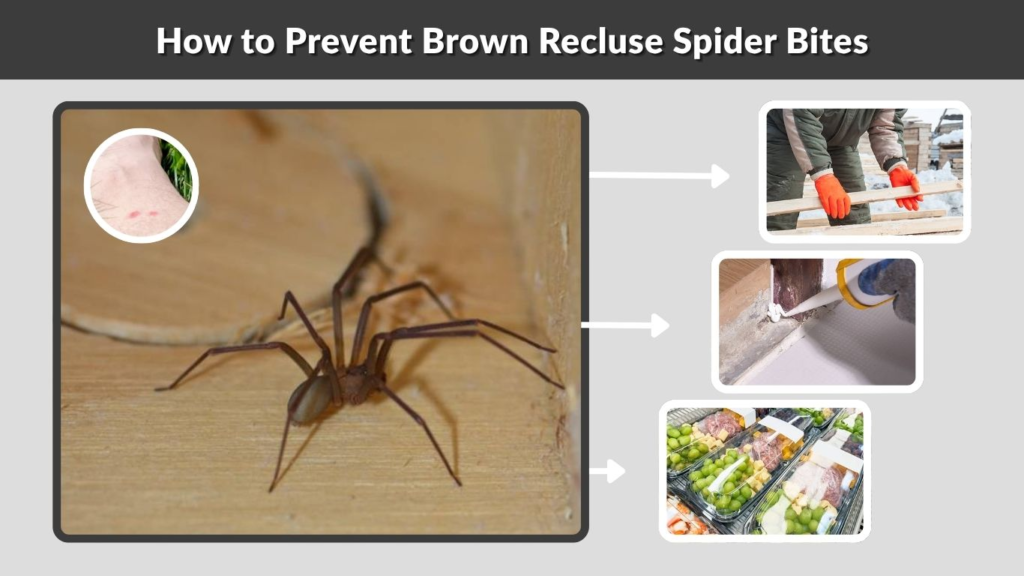
Brown recluse spiders prefer dark, quiet, undisturbed places. Bites often happen when a spider is trapped against the skin in clothing, bedding, shoes, storage boxes, or work gloves.
The CDC says brown recluse spiders are found in undisturbed areas such as woodpiles, eaves, fences, and debris areas.
Prevention Tips
To reduce bite risk:
- Shake out shoes before wearing them.
- Check gloves, boots, and clothing stored in garages.
- Wear long sleeves and gloves when moving boxes or wood.
- Keep beds away from walls.
- Reduce clutter in closets, basements, and storage rooms.
- Seal cracks and gaps around the home.
- Store items in sealed plastic containers.
- Remove woodpiles and debris from near the house.
- Use caution in sheds, garages, and attics.
Prevention is especially important in areas where brown recluse spiders are common.
FAQs
What is the first thing to do for a brown recluse bite?
Wash the bite with mild soap and water, apply a cold compress wrapped in cloth, and keep the area elevated. Monitor symptoms closely. If the bite becomes painful, blistered, dark, or swollen, or if fever or body aches develop, contact a doctor.
Should I go to the doctor for a brown recluse bite?
Yes, you should contact a doctor if you strongly suspect a brown recluse bite or if symptoms worsen. Medical care is especially important for spreading redness, severe pain, blistering, dark skin, fever, vomiting, or bites in children, older adults, or medically fragile people.
Can a brown recluse bite heal on its own?
Some mild bites may heal with basic first aid and monitoring. However, brown recluse venom can sometimes damage skin tissue and cause a serious wound. Any bite that gets worse, changes color, opens, or causes body-wide symptoms should be checked by a healthcare provider.
What should you not put on a brown recluse bite?
Do not put bleach, strong alcohol, heat, unknown herbal pastes, or harsh chemicals on the bite. Do not cut the wound, squeeze it, or try to suck out venom. These actions can damage the skin and increase the risk of infection.
How long after a brown recluse bite do symptoms appear?
Some bites are painless at first. Burning, itching, swelling, or pain may appear within a few hours. More serious skin changes can develop over the next one to several days. Monitor the bite carefully and seek medical advice if symptoms are worsening.
