
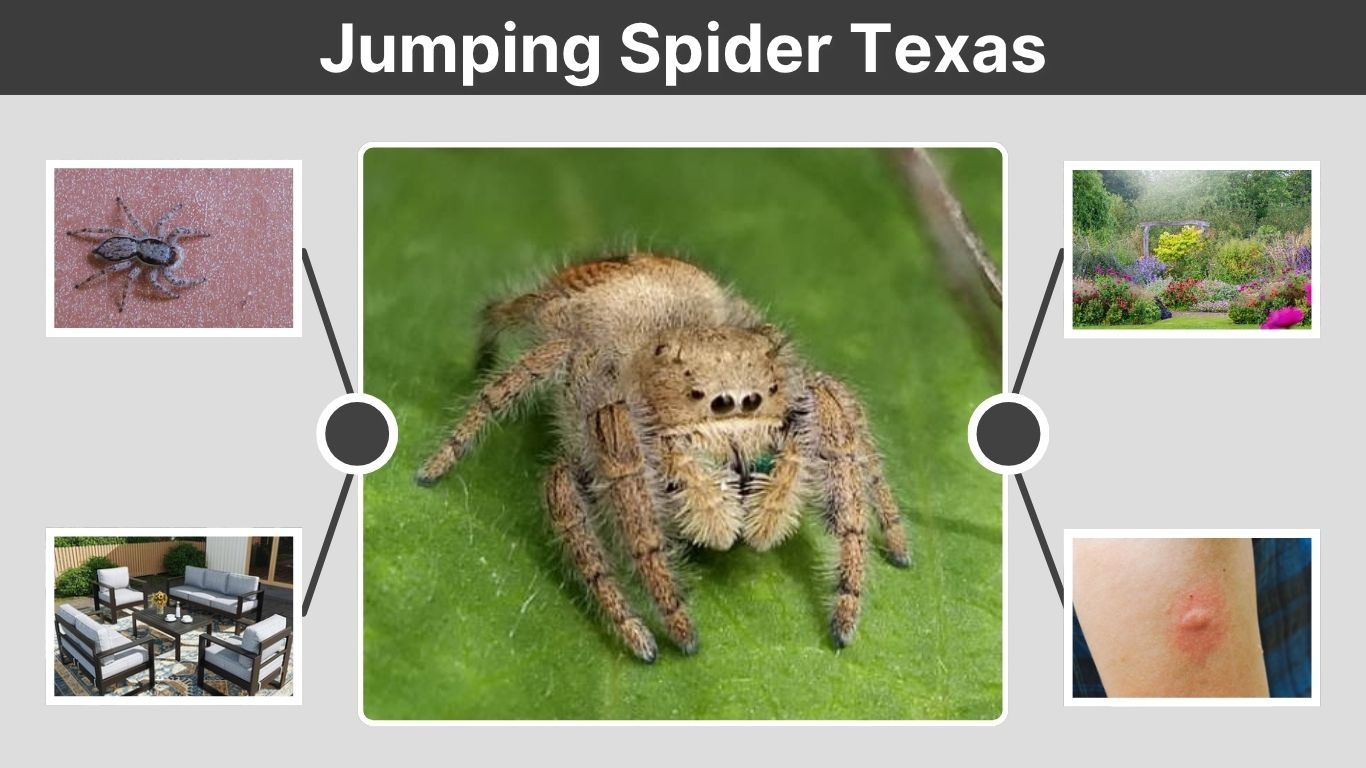
Jumping spiders are common across Texas, from sunny house walls and garden fences to fields, trees, and patios. These small, alert spiders are known for their large eyes, fuzzy bodies, and quick jumping movement. Most Texas jumping spiders are harmless to people and helpful outdoors because they hunt flies, mosquitoes, moths, gnats, and other small insects.
What Is a Texas Jumping Spider?
A Texas jumping spider is not just one species. It refers to many jumping spiders in the family Salticidae that live in Texas. These spiders are active hunters, meaning they do not depend on sticky webs to catch prey. Instead, they use excellent eyesight to stalk insects and jump quickly when close enough.
Quick Facts About Jumping Spiders in Texas
| Feature | Details |
| Common group | Jumping spiders |
| Family | Salticidae |
| Common Texas type | Bold jumping spider |
| Body size | Usually small to medium-sized |
| Main colors | Black, brown, gray, white, orange, red, tan, or yellow |
| Common places | Walls, fences, gardens, windows, trees, shrubs, patios |
| Diet | Flies, mosquitoes, gnats, moths, small insects, and other spiders |
| Danger level | Usually harmless to humans |
| Bite risk | Rare and usually mild |
| Web use | Silk retreats, egg sacs, and safety lines, not trap webs |
Why Texas Has Many Jumping Spiders
Texas has warm weather, many habitats, and a long growing season in many regions. These conditions support many insects, and insects attract jumping spiders. You may find them in North Texas yards, Central Texas gardens, East Texas wooded areas, South Texas warm outdoor spaces, and West Texas dry habitats.
They are also common around homes because lights, plants, and walls attract small insects. A jumping spider near a window or porch light is often there because prey is nearby.
Texas Jumping Spider Identification
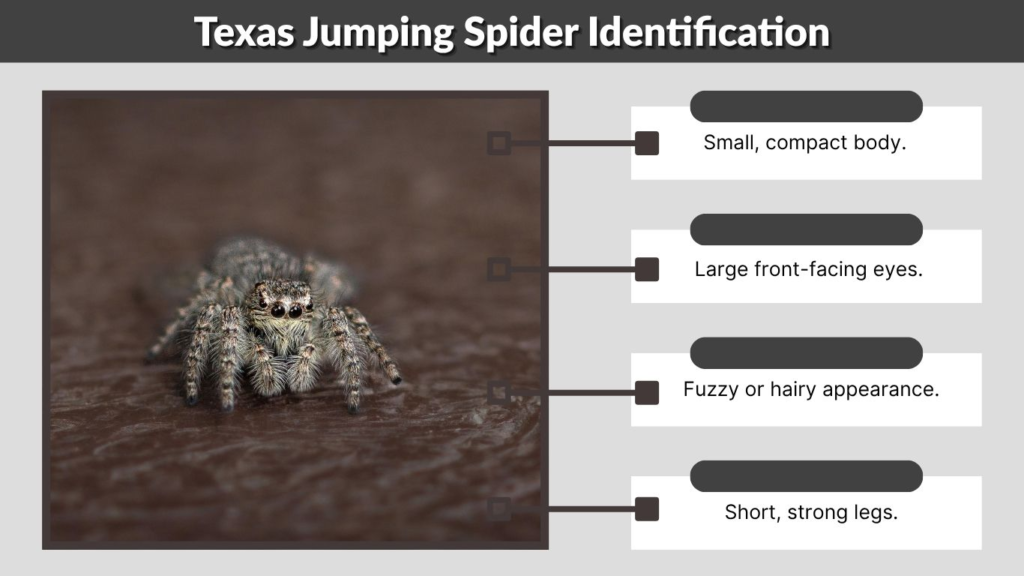
Jumping spiders are usually easy to identify by their body shape, movement, and eyes. They look compact, fuzzy, and alert. Many have bold markings, while others blend into bark, walls, grass, or dry leaves.
Identification
- Small, compact body.
- Large front-facing eyes.
- Fuzzy or hairy appearance.
- Short, strong legs.
- Quick stop-and-go movement.
- Can jump suddenly when hunting or escaping.
- Often turns toward movement.
- Usually active during the day.
- Does not build a large web for catching prey.
- Often found on walls, fences, plants, patios, and windows.
- May have white, orange, red, yellow, gray, brown, or black markings.
- Uses silk as a safety line before jumping.
Eye Pattern
The eyes are one of the best clues. Jumping spiders have large forward-facing eyes that make them look curious. When you move near one, it may turn toward you and appear to stare. This is not aggression. It is using its strong vision to understand movement.
This eye pattern helps separate jumping spiders from many house spiders, wolf spiders, and recluse spiders.
Movement
A jumping spider does not usually crawl smoothly in one long motion. It often walks a short distance, stops, turns, watches, and then jumps. This stop-and-go hunting style is one of the easiest ways to recognize it.
Common Jumping Spider Species in Texas
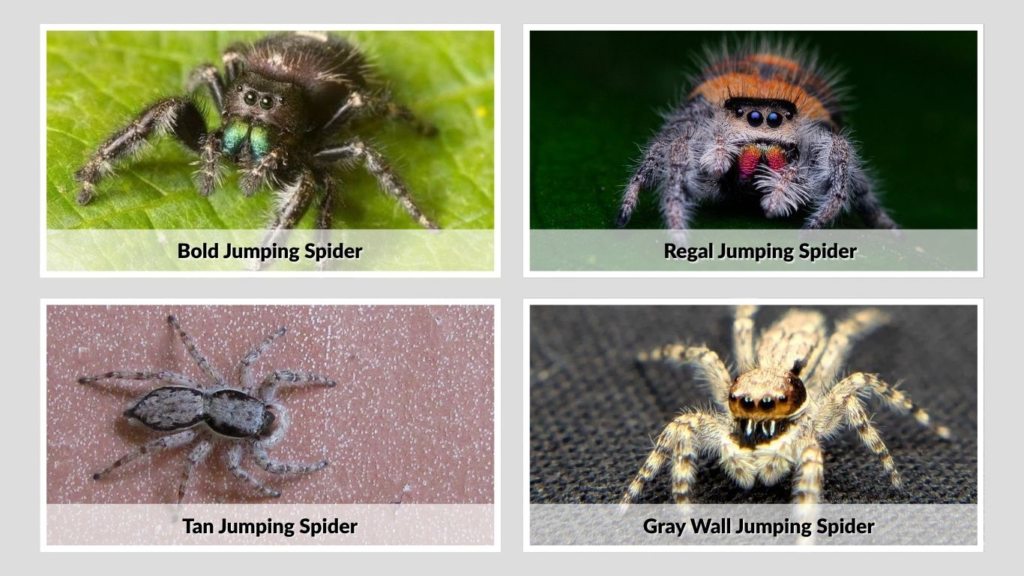
Texas has many jumping spider species. Some are black and white, some are brown, some are orange or red, and others are gray or tan. Many people identify them first by color, but color alone is not always enough.
1. Bold Jumping Spider
The bold jumping spider, also called the daring jumping spider, is one of the most familiar jumping spiders in Texas. It often has a black body with white spots or bands. Some individuals have orange markings when young. Adults may have shiny green or blue mouthparts.
Bold jumping spiders are often found on fences, walls, garden plants, windows, porches, and outdoor structures. They are active hunters and often pause to watch movement around them.
2. Regal Jumping Spider
The regal jumping spider is larger and more colorful than many small jumpers. It is more common in warmer southern areas but may also appear in collections as a pet spider. Females are often gray, orange, or patterned, while males can be darker.
Regal jumpers may look intimidating because of their size, but they are not considered dangerous to humans. Like other jumping spiders, they usually avoid people.
3. Tan Jumping Spider
Tan jumping spiders are often brown, gray, or tan with markings that help them blend into tree bark, wood, fences, and outdoor surfaces. They may be harder to notice than black and white jumping spiders.
These spiders are useful around gardens because they hunt small insects. Their camouflage helps them avoid predators and sneak up on prey.
4. Gray Wall Jumping Spider
The gray wall jumping spider is often found on walls, buildings, fences, windows, and tree trunks. It has a flattened grayish body with light and dark patterns. In Texas, it may be seen around houses and outdoor lights where small insects gather.
It does not damage buildings or create messy webs. If it enters the home, it can be gently moved outside.
5. Red or Orange Jumping Spiders
Some Texas jumping spiders may have red, orange, or reddish markings. These colors can make people nervous, but color alone does not mean the spider is dangerous. Young bold jumpers, cardinal jumping spiders, and some other species may show red or orange tones.
A red jumping spider in Texas is usually not a major health threat, but it should still be observed without handling if you are unsure of the species.
Black Jumping Spider in Texas
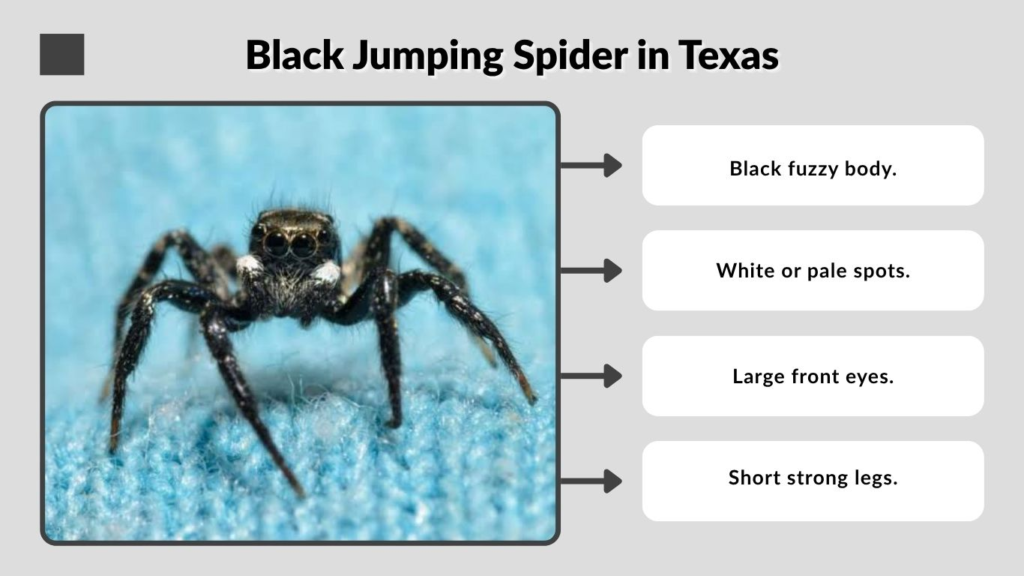
Black jumping spiders are among the most noticed types in Texas. They stand out on pale walls, windowsills, fences, and garden furniture. Many black jumping spiders with white spots are bold jumping spiders.
Black and White Jumping Spider Texas
A black and white jumping spider in Texas often has a dark body with pale spots or stripes. The bold jumping spider is a common example. It may have a white spot on the abdomen and pale leg markings.
Common signs include:
- Black fuzzy body.
- White or pale spots.
- Large front eyes.
- Short strong legs.
- Quick jumping movement.
- Metallic green or blue mouthparts in some adults.
- Active daytime hunting.
- Often found near homes and gardens.
Is a Black Jumping Spider in Texas Venomous?
A black jumping spider is technically venomous because it uses venom to catch insects. However, it is not considered dangerous to humans. Its venom is mainly useful for small prey.
It may bite if squeezed or trapped, but most bites are mild. People often confuse “venomous” with “dangerous,” but they are not the same.
Brown, Tan, Yellow, and White Jumping Spiders in Texas
Not all jumping spiders in Texas are black. Many are brown, tan, gray, yellowish, or white-marked. These lighter spiders are often seen on dry grass, tree bark, fences, walls, and garden plants.
Brown Jumping Spider Texas
A brown jumping spider in Texas may be a tan jumper or another bark-colored species. These spiders often blend into wood, leaves, and soil. They may be confused with small wolf spiders or even brown recluse spiders, but jumping spiders usually have a more compact body and larger front eyes.
If you are unsure whether a brown spider is a jumping spider, avoid handling it. Look for the eye pattern, body shape, and jumping behavior.
Yellow or White Jumping Spider Texas
Yellow or white jumping spiders may appear on flowers, leaves, or light-colored walls. Some may have pale markings rather than a fully white or yellow body. These spiders use color for camouflage, mating, or species recognition.
A white jumping spider in Texas is not automatically dangerous. Identification should be based on body shape, eyes, and movement, not only color.
Texas Jumping Spider Bite
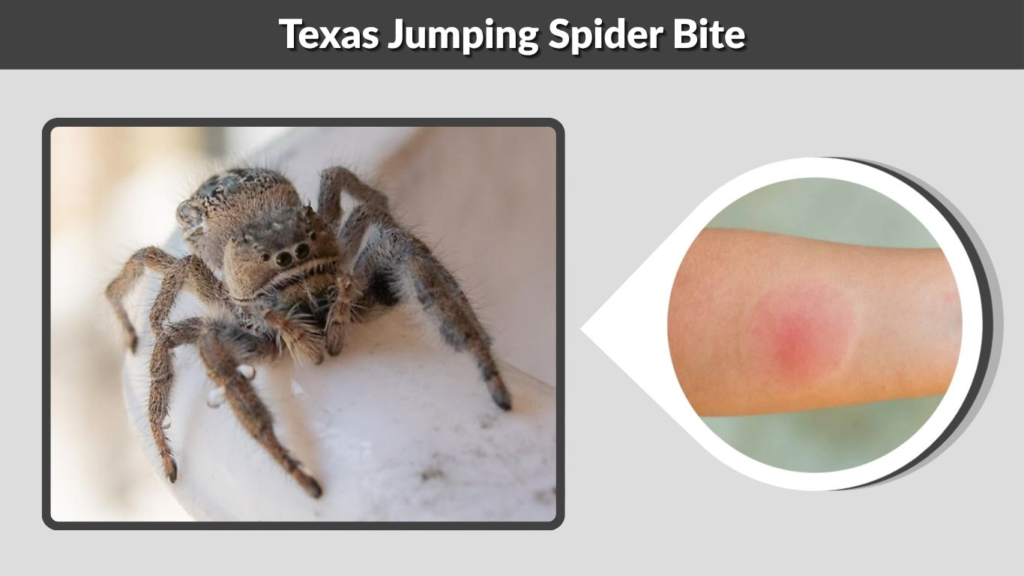
A Texas jumping spider can bite, but bites are uncommon. These spiders are not aggressive toward humans. Most bites happen when a spider is trapped against the skin, squeezed, or handled roughly.
What Does the Bite Look Like?
A jumping spider bite may look like a small red bump. It can resemble a mosquito bite or minor skin irritation. Some people may feel a quick pinch, while others may only notice slight itching later.
Possible symptoms include:
- Mild redness.
- Small swelling.
- Itching.
- Tenderness.
- A tiny raised bump.
- Slight warmth around the area.
- Short-lasting irritation.
A severe wound, spreading tissue damage, or large open sore is not typical of a jumping spider bite. If symptoms look serious, it may be something else or a reaction that needs medical attention.
What to Do After a Bite
Wash the area with soap and water. Apply a cold compress for 10–15 minutes to reduce swelling. Avoid scratching the bite because broken skin can become irritated or infected.
Seek medical care if redness spreads, swelling becomes severe, pus appears, pain increases, fever develops, or breathing becomes difficult.
Are Texas Jumping Spiders Poisonous?
Texas jumping spiders are not poisonous to humans. The more accurate word is venomous because they inject venom through a bite. But their venom is not medically significant for most people.
Poisonous vs Venomous
A poisonous animal is harmful when touched, swallowed, or absorbed. A venomous animal injects venom through a bite or sting. Jumping spiders are venomous in the basic spider sense, but they are not dangerous in normal household encounters.
They use venom to subdue small insects, not to attack people. Most Texas jumping spiders would rather escape than bite.
Are They Dangerous to Pets?
Jumping spiders are not usually dangerous to dogs or cats. A curious pet may paw at one, but serious problems are unlikely. However, if a pet shows swelling, drooling, vomiting, weakness, or unusual discomfort after contact with any spider, contact a veterinarian.
Where Do Jumping Spiders Live in Texas?
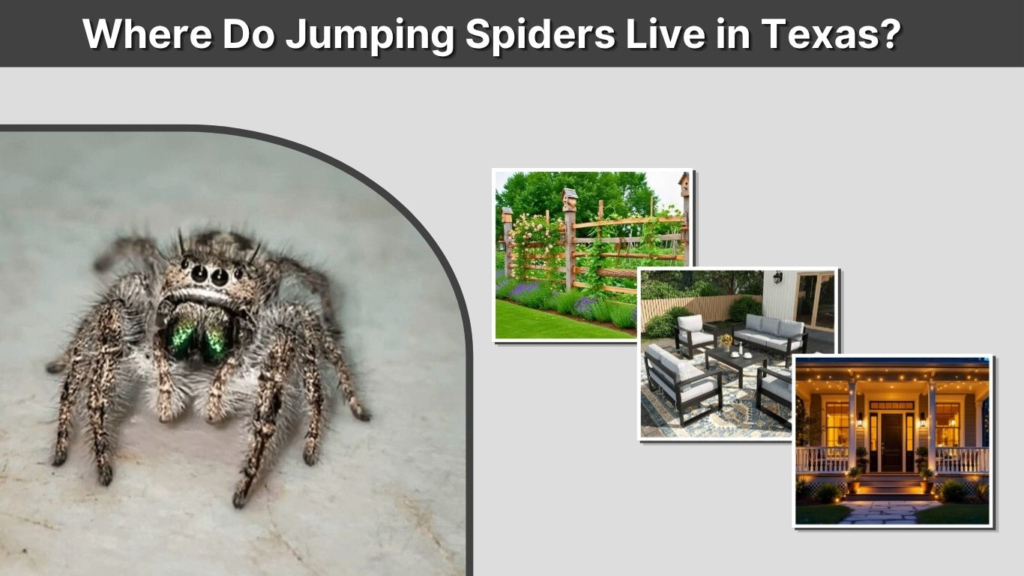
Jumping spiders live in many parts of Texas because the state has forests, grasslands, deserts, gardens, farms, parks, and urban neighborhoods. They are adaptable and often live near people without causing problems.
Common Places Around Homes
You may find Texas jumping spiders in:
- Window frames.
- Door frames.
- House siding.
- Garden fences.
- Patio furniture.
- Porch lights.
- Garage walls.
- Outdoor plants.
- Tree bark.
- Shrubs.
- Mailboxes.
- Wood piles.
- Brick walls.
- Ceiling corners.
- Sheds and barns.
They often appear where insects are common. Outdoor lights, flowering plants, and damp garden areas can attract prey, which then attracts jumping spiders.
North, Central, South, East, and West Texas
In North Texas, jumping spiders may be common around suburban yards, fences, gardens, and parks. In Central Texas, they are often seen on limestone walls, patios, oak trees, and house exteriors. In East Texas, wooded areas and humid gardens provide many insect-rich habitats.
South Texas has warm conditions that support jumping spider activity for much of the year. West Texas jumping spiders may be found on dry ground, walls, rocks, shrubs, and desert plants where prey is available.
Jumping Spider in the House in Texas
A jumping spider inside a Texas home is usually not a problem. It may have entered through a gap, window, door, or carried item. It may also be following tiny insects indoors.
Should You Remove It?
You do not need to kill it. Jumping spiders do not damage furniture, clothing, wood, or food. They do not build large messy webs. If you do not want it indoors, use a cup and paper to move it outside.
Safe removal steps:
- Place a cup over the spider.
- Slide paper under the cup.
- Carry it outside.
- Release it on a plant, wall, fence, or tree.
- Avoid squeezing it with your fingers.
- Seal gaps if spiders keep coming in.
- Repair torn screens.
- Reduce indoor insects.
How to Reduce Indoor Encounters
The best way to reduce jumping spiders indoors is to reduce small insects and block entry points. Check screens, door sweeps, window gaps, and cracks around walls.
You can also reduce insects near doors by limiting outdoor lights at night or moving lights away from entrances.
What Do Texas Jumping Spiders Eat?
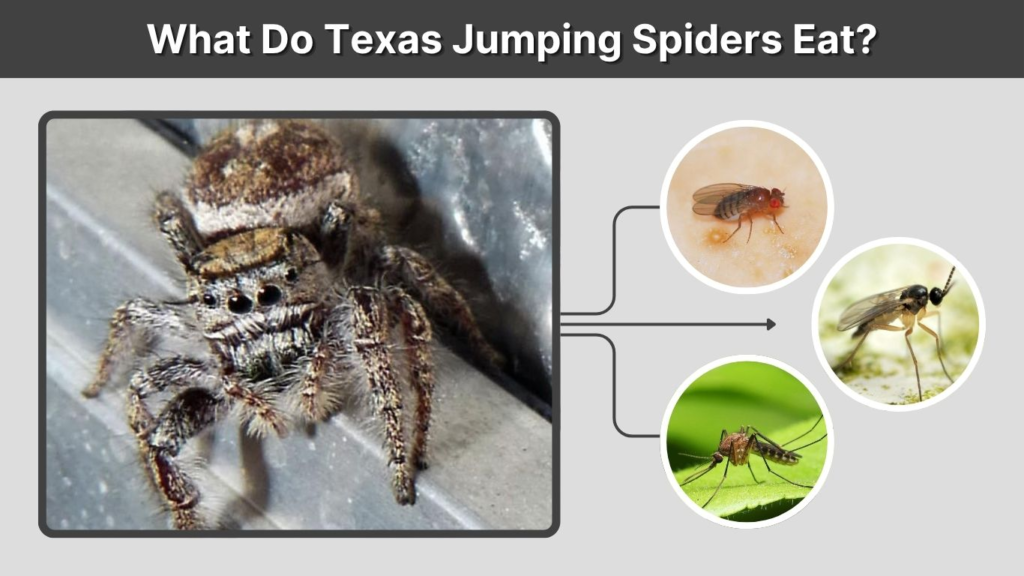
Texas jumping spiders eat small insects and other tiny arthropods. They are useful predators in gardens, yards, and around homes. Instead of building sticky webs, they hunt by sight.
Common Prey
Their diet may include:
- Flies.
- Mosquitoes.
- Gnats.
- Small moths.
- Leafhoppers.
- Small beetles.
- Aphids.
- Tiny crickets.
- Small roaches.
- Spider mites.
- Other small spiders.
Because they eat pest insects, jumping spiders can be helpful in gardens and around homes. They are part of natural pest control.
Texas Jumping Spider for Sale
Some people search for jumping spiders for sale in Texas because species like bold jumping spiders and regal jumping spiders are popular pets. Before buying one, make sure you understand care needs, feeding, enclosure size, humidity, and local rules.
Pet Care Basics
Pet jumping spiders need a safe enclosure with ventilation, climbing space, hiding spots, and proper moisture. They eat live feeder insects such as fruit flies, small crickets, bottle flies, or small mealworms.
Never collect or buy a spider if you cannot identify it safely. Also avoid feeding wild-caught insects from areas that may have pesticides.
FAQs
Are jumping spiders common in Texas?
Yes, jumping spiders are common in Texas. They live in gardens, yards, parks, forests, grasslands, and around homes. You may see them on walls, fences, windows, patios, tree bark, and outdoor plants, especially where small insects are available.
Are Texas jumping spiders poisonous?
Texas jumping spiders are not poisonous to humans. They are technically venomous because they use venom to catch insect prey, but they are not considered dangerous in normal situations. A bite is rare and usually causes only mild local irritation.
What does a Texas jumping spider bite look like?
A Texas jumping spider bite may look like a small red bump with mild swelling, itching, or tenderness. It can resemble a mosquito bite. If redness spreads, pain becomes severe, pus appears, or fever develops, seek medical advice.
What is the black jumping spider in Texas?
A black jumping spider in Texas is often the bold jumping spider, also called the daring jumping spider. It usually has a black fuzzy body, white spots or markings, large front-facing eyes, and sometimes shiny green or blue mouthparts.
Should I kill jumping spiders in my Texas home?
No, you usually do not need to kill them. Jumping spiders are helpful insect hunters and are not dangerous in normal household encounters. If one is indoors, gently move it outside with a cup and paper instead of crushing it.
