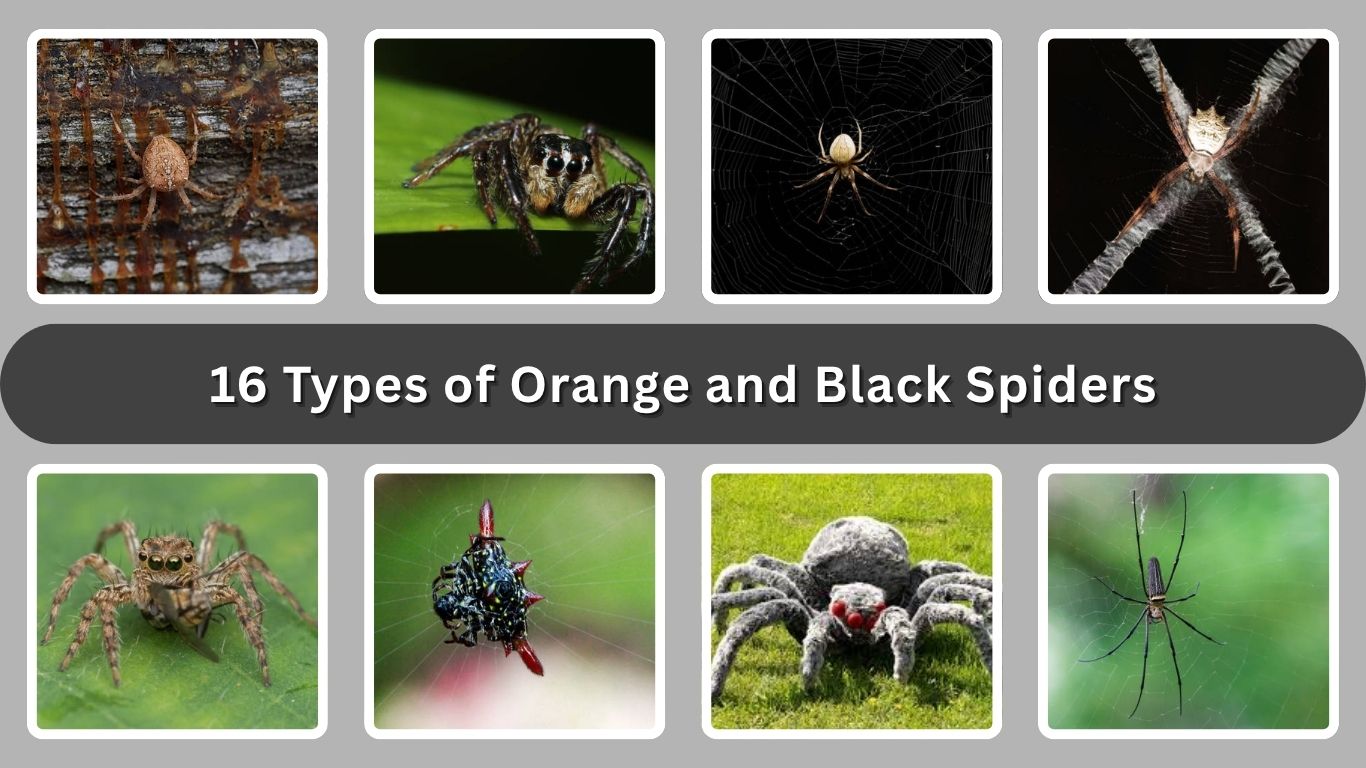
Orange and black spiders are among the most visually striking arachnids found in nature. Their bold colors and unique patterns make them easy to identify and fascinating to observe. These spiders can be found in a variety of habitats, from gardens and forests to grasslands and even near homes. While their appearance may seem intimidating, most are harmless and play an important role in controlling insect populations, making them beneficial for ecosystems and natural pest control.
1. Marbled Orb Weaver

The Marbled Orb Weaver is a visually striking orange and black spider recognized for its vivid coloration and rounded abdomen. It is commonly seen in gardens, forests, and areas with dense vegetation. This spider is especially noticeable in late summer and autumn when it reaches full size and actively builds large, circular webs to catch prey.
Identification
- Bright orange, yellow, or sometimes white abdomen with black marbled or swirled markings
- Large, bulbous body that gives it a distinctive rounded appearance
- Legs are banded with orange, black, or brown
- Females are much larger and more colorful than males
- Average body size ranges from 1 to 2 cm (excluding legs)
Habitat and Distribution
The Marbled Orb Weaver is found across North America and parts of Europe. It thrives in moist, vegetated environments such as forests, gardens, meadows, and near streams or ponds. This spider prefers building its web in sheltered areas like bushes, tall grasses, or low tree branches. It is most active during late summer through early fall. As temperatures drop, the adult spiders die off, leaving behind egg sacs that hatch in the following spring.
Behavior and Diet
This spider is known for constructing classic orb-shaped webs, which are rebuilt regularly to maintain effectiveness. It is a nocturnal or crepuscular hunter, meaning it is most active during dawn and dusk. The Marbled Orb Weaver feeds mainly on flying insects such as flies, beetles, and moths. It waits patiently on or near its web, quickly wrapping captured prey in silk before feeding.
Is It Dangerous to Humans?
The Marbled Orb Weaver is not dangerous to humans. It is generally shy and avoids contact. Bites are extremely rare and usually occur only when the spider is handled or threatened. Even in such cases, the bite is mild and may cause slight redness or irritation. This species is beneficial, as it helps control insect populations naturally.
2. Spiny Orb Weaver

The Spiny Orb Weaver is a small but eye-catching orange and black spider known for its unique, spiked appearance. Unlike many other orb weavers, it has a flattened body with hard, shell-like features. It is commonly found in warm regions and is easily recognized due to its bright colors and unusual shape.
Identification
- Flattened, disc-like abdomen with prominent spines
- Bright orange, white, or yellow body with black markings
- Six distinct spines projecting from the edges of the abdomen
- Hard, crab-like outer shell
- Small size, usually around 5–10 mm
Habitat and Distribution
Spiny Orb Weavers are commonly found in warm climates, especially in the southeastern United States, Central America, and parts of Asia. They prefer open, sunny areas such as gardens, forests, and shrublands. Their webs are usually built between branches, fences, or other structures where flying insects are abundant. These spiders are often seen hanging in the center of their webs during the day.
Behavior and Diet
This species builds classic circular orb webs to trap prey. Despite their intimidating appearance, they are harmless and relatively inactive, spending most of their time waiting for insects to get caught in their web. Their diet mainly consists of small flying insects like flies, mosquitoes, and gnats. Once prey is captured, they quickly immobilize it with silk and begin feeding.
Is It Dangerous to Humans?
Spiny Orb Weavers are completely harmless to humans. They are non-aggressive and rarely bite. Even if a bite occurs, it is not medically significant and causes little to no discomfort. These spiders are beneficial for controlling pest insect populations, making them helpful in gardens and natural environments.
3. Garden Orb Weaver

The Garden Orb Weaver is a large and colorful spider often seen in outdoor spaces such as gardens and yards. Known for its impressive web-building skills, this orange and black spider plays an important role in controlling insect populations. It becomes especially noticeable during late summer when its webs are large and highly visible.
Identification
- Orange, brown, or black abdomen with patterned markings
- Rounded, slightly elongated body
- Legs are long and banded with black and orange
- Often has a leaf-like or cross-like pattern on the abdomen
- Females are larger, typically reaching up to 2.5 cm
Habitat and Distribution
Garden Orb Weavers are widely distributed across North America, Europe, and parts of Asia. They prefer gardens, fields, forests, and areas around homes where insects are plentiful. These spiders build their webs between plants, fences, or structures, usually in places with minimal disturbance. Their webs are often rebuilt daily and are most visible in the early morning due to dew.
Behavior and Diet
This species is known for spinning large, circular orb webs that efficiently trap flying insects. Garden Orb Weavers are mostly nocturnal, becoming active in the evening to repair or rebuild their webs. They feed on flies, beetles, moths, and other small insects. After capturing prey, they wrap it in silk and consume it at their own pace.
Is It Dangerous to Humans?
Garden Orb Weavers are not dangerous to humans. They are shy and prefer to avoid contact. Bites are extremely rare and usually only occur if the spider is disturbed. Even then, the bite is mild and may cause slight irritation. These spiders are beneficial and help maintain a healthy balance by reducing insect populations.
4. Shamrock Orb Weaver

The Shamrock Orb Weaver is a colorful orange and black spider known for the distinctive pattern on its abdomen, which sometimes resembles a shamrock. It is commonly found in gardens and wooded areas, where it builds neat circular webs to catch prey. This species is especially active during late summer and early fall.
Identification
- Bright orange, yellow, or reddish abdomen with black markings
- Patterns may resemble a shamrock or leaf-like shape
- Rounded, slightly bulbous body
- Legs are banded with orange and black
- Females grow up to about 1–1.5 cm in body length
Habitat and Distribution
Shamrock Orb Weavers are primarily found in North America, especially in the eastern regions. They prefer habitats such as forests, gardens, and shrublands where vegetation is dense. These spiders build their webs in bushes, tall grass, and low tree branches. Their webs are often positioned to catch flying insects in areas with good airflow.
Behavior and Diet
Like other orb weavers, this species constructs circular webs that are rebuilt or repaired regularly. It is mostly active at night, staying hidden during the day. The Shamrock Orb Weaver feeds on flying insects such as flies, moths, and beetles. It waits patiently for prey to become trapped, then quickly wraps it in silk before feeding.
Is It Dangerous to Humans?
The Shamrock Orb Weaver is harmless to humans. It is non-aggressive and rarely bites unless directly handled or threatened. Even if a bite occurs, it is mild and causes minimal discomfort. This spider is beneficial, as it helps reduce insect populations and supports a balanced ecosystem.
5. Arrowhead Orb Weaver

The Arrowhead Orb Weaver is a distinctive orange and black spider named for the triangular, arrow-shaped pattern on its abdomen. It is commonly seen in gardens, forests, and areas with dense vegetation. This species is especially noticeable in late summer when it builds large, well-structured webs.
Identification
- Triangular or arrowhead-shaped abdomen
- Bright orange, yellow, or white coloration with black markings
- Sharp, pointed rear end of the abdomen
- Legs are banded with black and orange
- Females are larger, reaching about 1–1.5 cm in body length
Habitat and Distribution
Arrowhead Orb Weavers are widely found in North America, particularly in the eastern and central regions. They thrive in gardens, woodlands, and fields where there is plenty of vegetation. Their webs are usually built in shrubs, tall grasses, or between tree branches. These spiders prefer areas with moderate sunlight and good insect activity.
Behavior and Diet
This spider constructs classic circular orb webs, which are often rebuilt daily. It is mostly nocturnal, becoming active in the evening to repair its web and hunt. The Arrowhead Orb Weaver feeds primarily on flying insects such as flies, mosquitoes, and moths. It waits in or near its web and quickly immobilizes prey using silk.
Is It Dangerous to Humans?
The Arrowhead Orb Weaver is not dangerous to humans. It is shy and avoids interaction. Bites are rare and typically occur only when the spider is handled. Even then, the bite is mild and causes little more than slight irritation. This species is beneficial, helping to control insect populations in its environment.
6. Orchard Orb Weaver

The Orchard Orb Weaver is a delicate and colorful spider often recognized for its subtle orange and black markings combined with silvery or green tones. It is commonly found in gardens, orchards, and wooded areas, where it builds small but effective orb webs. Despite its fragile appearance, it is an efficient insect hunter.
Identification
- Slender body with a silvery or slightly greenish sheen
- Orange and black markings along the abdomen
- Long, thin legs often with dark bands
- Smaller than many orb weavers, usually around 5–7 mm
- Females are larger and more brightly colored than males
Habitat and Distribution
Orchard Orb Weavers are widely distributed across North and Central America. They prefer moist environments such as gardens, orchards, forest edges, and areas near water. Their webs are usually built in low vegetation, often in shrubs or tall grass. These spiders are commonly seen hanging upside down in their webs during the warmer months.
Behavior and Diet
This species builds small, neat orb webs that are often slightly tilted rather than perfectly vertical. It is active during the day and night, depending on conditions. The Orchard Orb Weaver feeds on small flying insects like gnats, mosquitoes, and flies. After capturing prey, it quickly wraps it in silk and consumes it at a safe distance from disturbances.
Is It Dangerous to Humans?
The Orchard Orb Weaver is harmless to humans. It is non-aggressive and rarely bites. Even if disturbed, it prefers to drop from its web and escape rather than defend itself. Bites are extremely rare and not medically significant. This spider is beneficial, as it helps reduce populations of small pest insects.
7. Banded Garden Spider

The Banded Garden Spider is a striking orange and black spider known for its bold coloration and large, visible webs. Often found in gardens and open fields, it is easily recognized by its banded legs and patterned abdomen. This species is most active during late summer and is an important natural pest controller.
Identification
- Yellow, orange, and black banded abdomen
- Long legs with distinct black and orange bands
- Elongated body shape compared to other orb weavers
- Often holds legs in pairs while resting in the web
- Females are large, reaching up to 2.5 cm in body length
Habitat and Distribution
Banded Garden Spiders are commonly found across North and Central America. They prefer open, sunny areas such as gardens, grasslands, and fields. Their webs are typically built between tall plants, shrubs, or structures like fences. These webs are large and often feature a zigzag silk pattern called a stabilimentum, which makes them highly visible.
Behavior and Diet
This spider is known for constructing large, strong orb webs that capture a wide range of flying insects. It is mostly active during the day, sitting in the center of its web waiting for prey. Its diet includes grasshoppers, flies, bees, and other insects. Once prey is caught, it quickly wraps it in silk before feeding.
Is It Dangerous to Humans?
The Banded Garden Spider is not dangerous to humans. It is non-aggressive and rarely bites unless directly handled. Even in rare bite cases, the effects are mild, similar to a small insect bite. This spider is highly beneficial, helping to control harmful insect populations in gardens and agricultural areas.
8. Wasp Spider

The Wasp Spider is a bold and visually striking orange and black spider, named for its resemblance to a wasp due to its bright striped pattern. It is commonly found in grassy areas and open fields, where it builds large orb webs. This species is especially noticeable during late summer.
Identification
- Bright yellow, orange, and black striped abdomen
- Pattern closely resembles a wasp
- Long legs with alternating light and dark bands
- Body is elongated with a slightly flattened appearance
- Females are larger, reaching up to 1.5–2 cm in body length
Habitat and Distribution
Wasp Spiders are widely distributed across Europe, parts of Asia, and some regions of North Africa. They prefer warm, open habitats such as grasslands, meadows, and fields. Their webs are usually built low to the ground among tall grasses. A distinctive zigzag pattern, known as a stabilimentum, is often visible in the center of the web.
Behavior and Diet
This species constructs strong orb webs designed to capture larger insects. It is mostly active during the day and remains at the center of its web. The Wasp Spider feeds on grasshoppers, flies, and other flying insects. After capturing prey, it injects venom and wraps it in silk before consuming it.
Is It Dangerous to Humans?
The Wasp Spider is harmless to humans. It is non-aggressive and prefers to remain still or retreat when disturbed. Bites are extremely rare and not medically significant, causing only mild discomfort if they occur. This spider is beneficial, as it helps control insect populations in natural environments.
9. Golden Orb Weaver

The Golden Orb Weaver is a large and impressive orange and black spider known for spinning strong webs with a golden sheen. It is often found in warm regions and is easily recognized by its long legs and vibrant coloration. This species plays an important role in controlling flying insect populations.
Identification
- Orange to yellow body with black markings
- Extremely long, slender legs with dark bands
- Females are much larger than males
- Body length can reach up to 3–5 cm (excluding legs)
- Produces golden-colored silk webs
Habitat and Distribution
Golden Orb Weavers are found in tropical and subtropical regions around the world, including Asia, Africa, Australia, and the Americas. They prefer forests, gardens, and areas with abundant vegetation. Their webs are often built high between trees or large shrubs and can span several feet in width. These spiders thrive in warm, humid environments.
Behavior and Diet
This species builds large, durable orb webs that can catch a wide variety of prey. The golden silk is strong and slightly sticky, making it highly effective. Golden Orb Weavers feed on flies, moths, beetles, and sometimes even small birds or bats caught in their webs. They usually remain in the center of the web, waiting for vibrations that signal trapped prey.
Is It Dangerous to Humans?
Golden Orb Weavers are not considered dangerous to humans. They are generally shy and avoid contact. Bites are rare and usually occur only when the spider is handled. If a bite does happen, it may cause mild pain or redness but is not medically significant. They are beneficial spiders that help maintain ecological balance.
10. Halloween Spider

The Halloween Spider is a bright orange and black orb weaver that gets its name from its vivid, pumpkin-like coloration. It becomes especially noticeable in autumn, around Halloween, when its large webs and bold colors stand out in gardens and wooded areas.
Identification
- Bright orange abdomen with black markings
- Rounded, pumpkin-like body shape
- Legs are orange with darker bands
- Often confused with the Marbled Orb Weaver
- Females can grow up to about 2–2.5 cm in body length
Habitat and Distribution
Halloween Spiders are commonly found in North America, particularly in gardens, forests, and suburban areas. They prefer locations with plenty of vegetation, such as shrubs, trees, and tall grasses. Their webs are usually built at moderate heights between branches or structures. They are most active and visible during late summer and fall.
Behavior and Diet
This spider builds large, circular orb webs that are often rebuilt daily. It is mostly active at night, repairing its web and capturing prey. During the day, it may rest nearby or remain hidden. The Halloween Spider feeds on flying insects like moths, flies, and beetles. Once prey is caught, it quickly wraps it in silk before feeding.
Is It Dangerous to Humans?
The Halloween Spider is harmless to humans. It is non-aggressive and prefers to avoid contact. Bites are very rare and typically occur only if the spider is handled. Even then, the bite is mild and may cause slight irritation. This species is beneficial, helping to control insect populations naturally.
11. Crab-like Spiny Orb Weaver

The Crab-like Spiny Orb Weaver is a small but highly distinctive orange and black spider known for its crab-shaped body and sharp spines. Its unusual appearance and bright coloration make it easy to spot in gardens and forests. Despite its intimidating look, it is harmless and plays a useful role in controlling insects.
Identification
- Flattened, crab-like body shape
- Bright orange, red, or yellow coloration with black spots
- Multiple sharp spines extending from the abdomen
- Hard, shell-like exterior
- Small size, typically around 5–8 mm
Habitat and Distribution
This spider is found in tropical and subtropical regions, including parts of Asia, Australia, and the Americas. It prefers warm environments such as gardens, forests, and shrublands. The Crab-like Spiny Orb Weaver builds its web between branches, leaves, or man-made structures where flying insects are common. It is often seen sitting at the center of its web during the day.
Behavior and Diet
Like other orb weavers, this species spins circular webs to catch prey. It is mostly active during daylight hours and remains relatively still, waiting for insects to become trapped. Its diet consists of small flying insects such as flies, mosquitoes, and gnats. Once prey is caught, it quickly immobilizes it using silk before feeding.
Is It Dangerous to Humans?
The Crab-like Spiny Orb Weaver is not dangerous to humans. It is non-aggressive and rarely bites. Even if disturbed, it is more likely to remain still or drop from its web than attack. Any bite would be mild and not medically significant. This spider is beneficial, helping to reduce pest insect populations in its habitat.
12. Orange Wolf Spider

The Orange Wolf Spider is a fast-moving ground spider known for its orange and black coloration and hunting ability. Unlike orb weavers, it does not build webs to catch prey. Instead, it actively hunts insects, making it an efficient predator in gardens and natural habitats.
Identification
- Orange-brown body with black markings or stripes
- Robust, hairy body with a somewhat rugged appearance
- Long, strong legs adapted for running
- Eyes arranged in three rows, giving it excellent vision
- Medium size, typically 1–3 cm in body length
Habitat and Distribution
Orange Wolf Spiders are found in many parts of the world, including North America, Europe, and Asia. They prefer ground-level habitats such as grasslands, forests, gardens, and even inside homes occasionally. These spiders hide under rocks, leaves, or debris during the day and become more active at night.
Behavior and Diet
Unlike web-building spiders, the Orange Wolf Spider is an active hunter. It relies on speed and keen eyesight to chase down prey. Its diet includes insects like crickets, ants, beetles, and other small invertebrates. It may also ambush prey rather than chase it, depending on the situation.
Is It Dangerous to Humans?
The Orange Wolf Spider is generally harmless to humans. It is not aggressive and will usually flee when disturbed. Bites are rare but can occur if handled. A bite may cause mild pain, redness, or swelling, similar to a bee sting, but it is not dangerous. These spiders are beneficial due to their role in controlling insect populations.
13. Spotted Orb Weaver

The Spotted Orb Weaver is a common orange and black spider known for the distinct spots on its abdomen. It is frequently found in gardens, forests, and around homes, where it builds large, circular webs. This spider is especially visible in late summer and plays an important role in controlling insect populations.
Identification
- Orange, brown, or yellow abdomen with white or black spots
- Rounded, slightly bulbous body shape
- Legs are long and banded with darker markings
- Pattern may resemble a cross or scattered spots
- Females can reach up to 1.5–2 cm in body length
Habitat and Distribution
Spotted Orb Weavers are widely distributed across North America and parts of Europe. They prefer areas with plenty of vegetation such as gardens, forests, and shrublands. These spiders often build their webs near lights, porches, or between plants where insects are abundant. Their webs are usually rebuilt regularly and are most noticeable in the early morning.
Behavior and Diet
This species constructs classic orb webs designed to trap flying insects. It is mostly nocturnal, becoming active at night to repair its web and hunt. The Spotted Orb Weaver feeds on flies, moths, beetles, and other small insects. It typically waits at the center of the web and quickly wraps captured prey in silk before feeding.
Is It Dangerous to Humans?
The Spotted Orb Weaver is harmless to humans. It is shy and prefers to avoid contact. Bites are rare and usually occur only if the spider is handled. Even then, the bite is mild and may cause slight irritation. This spider is beneficial, helping to naturally reduce pest insect populations.
14. Tropical Orb Weaver

The Tropical Orb Weaver is a brightly colored orange and black spider commonly found in warm climates. Known for its large size and impressive web structures, it is often seen in gardens, forests, and near human dwellings. Its bold appearance makes it one of the more noticeable orb weaver species.
Identification
- Bright orange abdomen with black or white markings
- Rounded, slightly elongated body shape
- Long legs with dark bands
- Color patterns can vary but are usually vivid
- Females can grow up to 2–3 cm in body length
Habitat and Distribution
Tropical Orb Weavers are widely distributed in tropical and subtropical regions, including parts of Asia, Africa, Australia, and the Americas. They thrive in warm, humid environments such as forests, gardens, and agricultural areas. Their webs are often built between trees, shrubs, or structures, sometimes spanning large distances.
Behavior and Diet
This spider builds large, circular orb webs that are highly effective at trapping flying insects. It is mostly active at night, repairing its web and hunting for prey. Its diet includes moths, flies, beetles, and other flying insects. After catching prey, it quickly wraps it in silk and consumes it at a safe location.
Is It Dangerous to Humans?
The Tropical Orb Weaver is not dangerous to humans. It is non-aggressive and rarely bites unless directly handled. Even if a bite occurs, it typically causes only mild irritation. This species is beneficial, as it helps control insect populations in its habitat, making it useful in both natural and cultivated environments.
15. Jewel Spider

The Jewel Spider is a small but beautifully colored orange and black spider known for its shiny, jewel-like appearance. Its vibrant colors and patterned body make it stand out among other spiders. It is often found in vegetation where it builds delicate orb webs.
Identification
- Bright orange, yellow, and black coloration
- Shiny, glossy abdomen with intricate patterns
- Small, rounded body shape
- Legs are slender with dark bands
- Typically small, around 5–8 mm in body length
Habitat and Distribution
Jewel Spiders are found in tropical and subtropical regions, particularly in parts of Asia and Australia. They prefer habitats such as forests, gardens, and areas with dense vegetation. Their webs are usually built among leaves, shrubs, or low branches where insects are abundant. They are more commonly seen in warm and humid environments.
Behavior and Diet
This species constructs small orb webs that are effective in catching tiny flying insects. Jewel Spiders are generally active during the day, remaining in the center of their web or hiding nearby. Their diet consists mainly of small insects such as flies, gnats, and mosquitoes. Once prey is caught, they quickly immobilize it with silk before feeding.
Is It Dangerous to Humans?
The Jewel Spider is harmless to humans. It is non-aggressive and rarely bites. Even if disturbed, it prefers to retreat rather than defend itself. Bites are extremely rare and not medically significant. This spider is beneficial, as it helps control populations of small pest insects in its environment.
16. Black and Orange Jumping Spider

The Black and Orange Jumping Spider is a small, active spider known for its excellent vision and quick movements. Unlike web-building spiders, it hunts its prey by stalking and jumping. Its bright orange and black coloration makes it easy to recognize among jumping spider species.
Identification
- Compact, hairy body with black and orange coloration
- Large, forward-facing eyes giving it excellent vision
- Short, strong legs adapted for jumping
- Distinctive facial appearance with noticeable eye arrangement
- Small size, usually around 5–10 mm in body length
Habitat and Distribution
Black and Orange Jumping Spiders are found in various regions, including parts of North America, Asia, and Africa. They prefer sunny environments such as gardens, walls, tree trunks, and rocky surfaces. These spiders do not build webs for catching prey but may create small silk shelters for resting.
Behavior and Diet
This spider is an active daytime hunter. It uses its sharp eyesight to detect prey and then carefully stalks it before making a precise jump to capture it. Its diet includes small insects like flies, ants, and other tiny arthropods. It often explores its surroundings and displays curious, alert behavior.
Is It Dangerous to Humans?
The Black and Orange Jumping Spider is harmless to humans. It is non-aggressive and rarely bites. Even if handled, it is more likely to jump away than attack. Any bite would be mild and not medically significant. These spiders are beneficial, helping to control small insect populations.
FAQs
Are orange and black spiders dangerous?
Most orange and black spiders are harmless to humans. While some can bite if provoked, their venom is usually mild and causes only minor irritation. These spiders are generally non-aggressive and prefer to avoid human contact whenever possible.
Where are orange and black spiders commonly found?
These spiders are commonly found in gardens, forests, grasslands, and near human homes. They prefer areas with plenty of vegetation and insects. Many species build webs between plants, while others live on the ground or in sheltered spots.
What do orange and black spiders eat?
Orange and black spiders mainly feed on insects such as flies, mosquitoes, moths, and beetles. Some larger species may catch bigger prey like grasshoppers. They play an important role in controlling insect populations in their environment.
Do all orange and black spiders build webs?
No, not all of them build webs. Orb weavers create circular webs to catch prey, but others like wolf spiders and jumping spiders actively hunt. These hunting spiders rely on speed, stealth, and vision instead of webs.
Why are some spiders brightly colored?
Bright colors in spiders can serve multiple purposes, including warning predators, attracting mates, or blending into flowers and surroundings. In some species, bold orange and black patterns may help deter predators by making the spider appear dangerous.
