
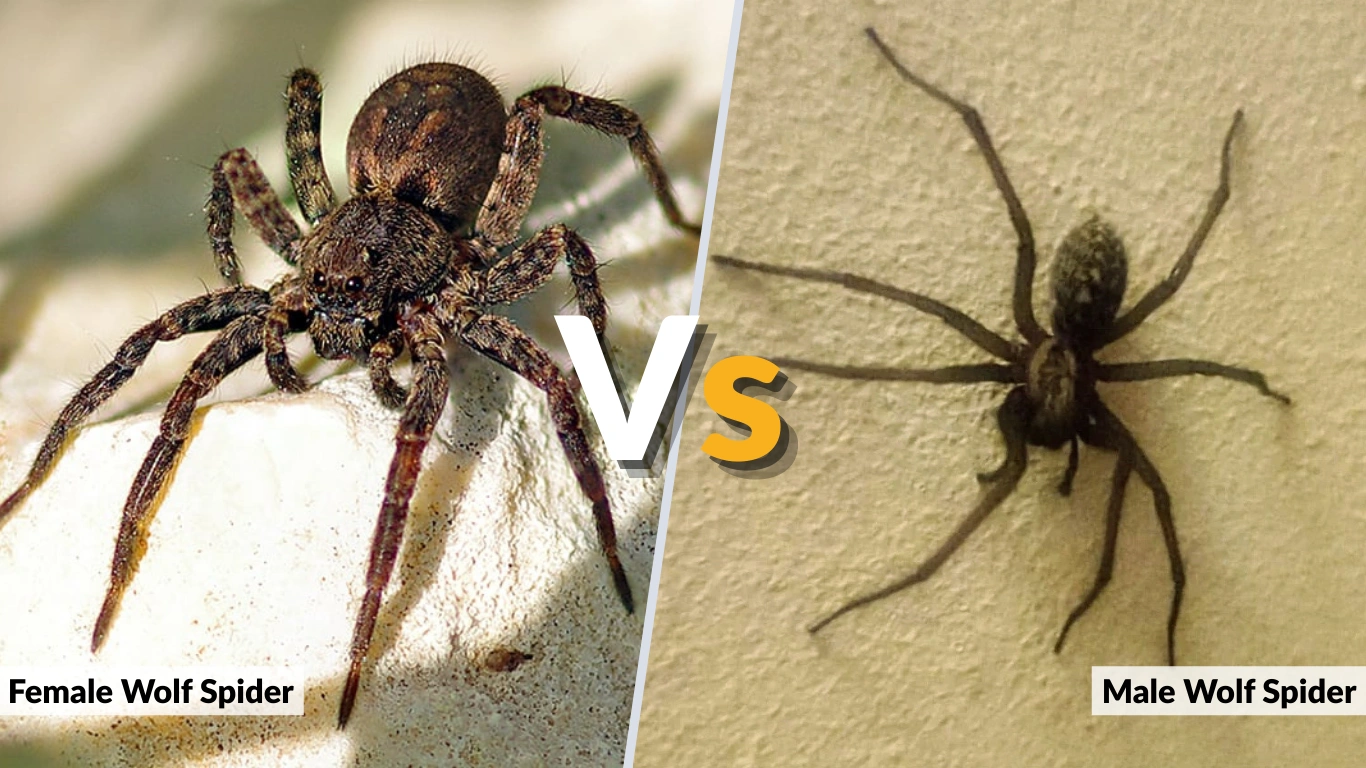
Wolf spiders are large, fast-moving ground hunters that often alarm homeowners when spotted indoors or in gardens. However, not all wolf spiders are the same. When comparing a female wolf spider vs male, there are clear differences in size, behavior, lifespan, and reproductive roles. While they share similar coloring and hunting styles, males and females play very different roles in survival and reproduction. Understanding these distinctions can help with accurate identification and reduce unnecessary fear of these beneficial spiders.
Overview of Wolf Spiders
Wolf spiders belong to the Lycosidae family and are known for their speed, excellent eyesight, and active hunting behavior. Unlike web-building spiders that wait for prey, wolf spiders chase and ambush insects on the ground.
They are commonly found in:
- Grasslands and gardens
- Forest edges
- Under rocks and logs
- Basements and garages
Their brown, gray, or tan coloring helps them blend into soil and leaf litter. Because of their size and hairy appearance, they are often mistaken for more dangerous spiders. However, wolf spiders are generally harmless and play an important role in controlling insect populations.
Female vs Male Wolf Spider – Quick Comparison

At first glance, male and female wolf spiders look very similar. Both have strong legs, keen eyesight, and similar color patterns. However, closer observation reveals noticeable differences.
| Feature | Female Wolf Spider | Male Wolf Spider |
| Size | Larger and heavier | Smaller and slimmer |
| Lifespan | 1–2 years | Usually less than 1 year |
| Behavior | Stays near burrow | Roams frequently |
| Reproductive Role | Produces and carries egg sac | Searches for mate |
| Pedipalps | Small and slender | Enlarged, bulb-like |
These differences become even clearer when examining their body structure and behavior more closely.
Size Differences Between Female and Male Wolf Spiders
One of the most noticeable distinctions between female and male wolf spiders is their size. This difference is an example of sexual dimorphism, which refers to physical differences between males and females of the same species.
Female wolf spiders are generally larger and bulkier than males. Their bodies are built to carry and protect egg sacs, which can contain dozens or even hundreds of eggs. A larger abdomen allows them to store energy for reproduction and maternal care.
Male wolf spiders, on the other hand, are usually slimmer with relatively longer legs compared to their body size. Their lighter build makes them more agile and better suited for traveling long distances in search of females during mating season.
Although exact size varies depending on species, females are consistently the larger of the two.
Physical Appearance Differences

While size is a strong indicator, other physical traits can help distinguish a female wolf spider from a male.
Abdomen and Body Shape
The female wolf spider typically has a broader, more rounded abdomen. This is especially noticeable when she is carrying eggs. Her body appears more robust and compact.
In contrast, the male wolf spider tends to have a narrower abdomen and a more elongated appearance. His overall frame looks leaner, which supports his active roaming behavior.
Pedipalps – The Key Identification Feature
The most reliable way to tell a male and female wolf spider apart is by examining the pedipalps. Pedipalps are small appendages located near the spider’s mouth.
In males, these pedipalps are enlarged and bulb-like at the tips. They function as reproductive organs used to transfer sperm to the female during mating. The swollen appearance makes them easy to spot, even without magnification.
In females, pedipalps remain small and slender. They are used mainly for sensing and handling food, not reproduction.
If you notice a wolf spider with noticeable “boxing glove” structures near its face, it is most likely a male.
Color and Markings
Both male and female wolf spiders share similar coloration. Most species display shades of brown, gray, black, and tan with stripe or mottled patterns that provide camouflage.
There is usually no dramatic color difference between the sexes. However, females may appear darker or fuller-bodied simply because of their larger size. The eye arrangement — eight eyes in three rows — remains the same in both genders.
Behavioral Differences
Behavior is another major factor when comparing a female wolf spider vs male. Even if physical differences are subtle, their movement patterns often reveal their gender.
Hunting Habits
Both males and females are active hunters. They do not build webs to trap prey. Instead, they rely on speed, stealth, and strong vision to capture insects.
They typically hunt at night and rest during the day in burrows, under debris, or in sheltered areas. Their diet consists mainly of insects such as crickets, beetles, ants, and other small arthropods.
There is little difference in hunting strategy between the two sexes.
Roaming and Movement Patterns
The biggest behavioral difference lies in movement.
Male wolf spiders roam much more frequently, especially during mating season. Their primary goal is to locate females, which requires extensive wandering. This increased activity is why males are more commonly seen inside homes.
Female wolf spiders are more likely to stay near their burrow or nesting site. They focus on hunting nearby prey and protecting their territory. Once carrying an egg sac, females become even less likely to wander far from shelter.
Because males move around more, people often encounter them more frequently — even though females are larger.
Reproductive Roles and Mating Behavior

Reproduction is where the differences between a female wolf spider vs male become most significant. Each gender has a specific role, and their behaviors change noticeably during mating season.
Male wolf spiders actively search for females. Once a male locates a potential mate, he performs a courtship display. This may include vibrating his body, waving his legs, or tapping the ground in rhythmic patterns. These signals help the female recognize him as a mate rather than prey.
If the female is receptive, mating occurs. The male uses his enlarged pedipalps to transfer sperm to the female. After mating, males often leave quickly to avoid being attacked. While sexual cannibalism can occur in some spider species, it is not extremely common in wolf spiders.
Females, once fertilized, focus on producing and protecting eggs.
Female Wolf Spider With Egg Sac
One of the most recognizable traits of a female wolf spider is the egg sac she carries. After laying eggs, the female wraps them in silk to create a round, protective sac.
Unlike many spiders that leave their egg sacs behind, female wolf spiders attach the egg sac to their spinnerets at the rear of their abdomen. They carry it everywhere they go — even while hunting.
During this time, females may appear more defensive. If disturbed, they will prioritize protecting the egg sac.
Spiderlings Riding on the Mother’s Back
After the eggs hatch, the spiderlings climb onto their mother’s back. This behavior is unique among many spider species and is a defining characteristic of wolf spiders.
Dozens of tiny spiderlings may cover the female’s abdomen and remain there for several days or weeks. During this period, the mother continues hunting and protecting her young.
Eventually, the spiderlings disperse and begin living independently. The level of maternal care provided by female wolf spiders is one of the key differences between males and females.
Lifespan Comparison
Another important difference between male and female wolf spiders is lifespan.
Female wolf spiders generally live longer than males. Many females survive for one to two years, depending on environmental conditions. Their extended lifespan allows them to reproduce at least once and sometimes multiple times.
Male wolf spiders typically have shorter lives, often less than a year. Many males die shortly after the mating season. Their energy is primarily invested in locating mates rather than long-term survival.
Environmental factors such as climate, food availability, and predators also influence lifespan, but in nearly all species, females outlive males.
Bite Risk and Aggression – Female vs Male

A common concern is whether female or male wolf spiders are more aggressive. In reality, neither gender is naturally aggressive toward humans.
Wolf spiders bite only when threatened, trapped, or handled. Their venom is not considered medically significant for most people.
Typical symptoms of a wolf spider bite include:
- Mild pain
- Redness
- Swelling
- Temporary itching
Female wolf spiders may appear slightly more defensive when guarding an egg sac or carrying spiderlings. However, this defensive behavior is protective rather than aggressive.
Male wolf spiders, despite roaming more frequently, are not more likely to bite. Their increased visibility simply leads to more encounters with humans.
How to Tell a Male and Female Wolf Spider Apart
If you are trying to identify whether a wolf spider is male or female, there are several practical steps you can follow.
- Check the size. Larger, heavier spiders are more likely to be female.
- Look at the pedipalps. Enlarged, bulb-like pedipalps indicate a male.
- Observe behavior. A spider wandering frequently indoors is often male.
- Look for an egg sac. A round sac attached to the abdomen confirms a female.
- Check for spiderlings. Babies riding on the back indicate a female.
Using a combination of these signs provides the most accurate identification.
Ecological Importance of Both Genders
Both male and female wolf spiders play an important role in the ecosystem. As natural predators, they help control insect populations.
They feed on:
- Crickets
- Roaches
- Ants
- Beetles
- Other small pests
By reducing pest populations, wolf spiders contribute to natural balance in gardens and outdoor spaces. Even inside homes, they often target nuisance insects rather than people.
Eliminating wolf spiders unnecessarily can disrupt this ecological benefit.
Common Myths About Male and Female Wolf Spiders
There are several misconceptions surrounding wolf spiders and their behavior.
Myth: Female wolf spiders are deadly.
Fact: Their venom is mild and rarely causes serious reactions.
Myth: Male wolf spiders are more aggressive.
Fact: Males roam more but are not naturally aggressive.
Myth: Wolf spiders chase humans.
Fact: They may run toward light or shelter, which can appear like chasing, but they are trying to escape.
Understanding the truth about female and male wolf spiders helps reduce fear and promotes coexistence.
Conclusion
When comparing a female wolf spider vs male, the differences are clear once you know what to look for. Females are larger, live longer, and provide maternal care by carrying egg sacs and spiderlings. Males are smaller, more mobile, and focused primarily on finding mates. Despite these distinctions, both genders are beneficial predators that help control insect populations. Rather than viewing them as threats, recognizing their roles can lead to better understanding and fewer unnecessary concerns about these fascinating spiders.
