
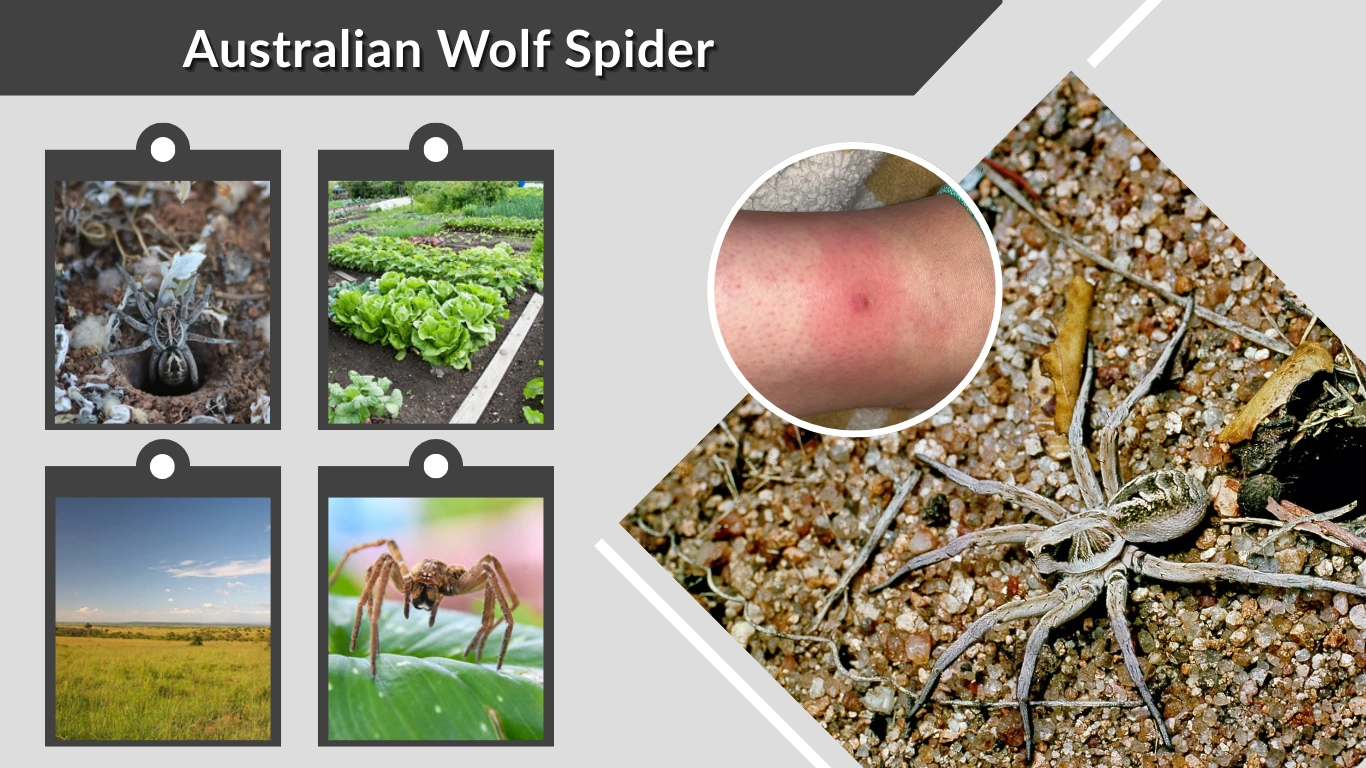
The Australian wolf spider is one of the most commonly encountered ground spiders across the country. Known for its large size, fast movement, and hairy appearance, it often startles homeowners who spot it in gardens or occasionally inside houses. Despite its intimidating look, this spider is generally not dangerous to humans. Unlike web-building spiders, wolf spiders actively hunt their prey and play an important role in controlling insect populations. In this guide, we’ll explore how to identify an Australian wolf spider, where it lives, how it behaves, and whether its bite is something to worry about.
What Is an Australian Wolf Spider?
Australian wolf spiders belong to the Lycosidae family, a large group of ground-dwelling hunting spiders found worldwide. Australia is home to many different species of wolf spiders, and they are well adapted to a wide range of environments — from coastal regions to dry inland areas.
Unlike orb-weaving spiders that spin large webs to trap prey, wolf spiders are active hunters. They roam across the ground, relying on speed, camouflage, and excellent eyesight to catch insects. Their name comes from their hunting style, which resembles the way wolves chase down prey rather than waiting for it to come to them.
These spiders are mostly nocturnal, meaning they are more active at night. During the day, they typically hide under rocks, logs, leaf litter, or inside burrows.
How to Identify an Australian Wolf Spider

Correct identification is important because wolf spiders are often confused with other large Australian spiders, especially huntsman spiders.
Size and Body Structure
Australian wolf spiders are medium to large in size. Their body length usually ranges from 10 to 35 millimeters, though when including their legs, they can appear much larger.
They have:
- A robust, stocky body
- Thick, hairy legs
- A low, ground-hugging posture
- Females that are generally larger than males
Their solid build and quick movements make them appear more intimidating than they actually are.
Color and Markings
Wolf spiders are typically brown, grey, black, or mottled in color. Their patterns often help them blend into soil, bark, or dry leaves. Many species have:
- Stripes running down the body
- Mottled or speckled markings
- Camouflage patterns suited to their environment
This natural camouflage makes them difficult to spot in gardens and bushland.
Unique Eye Arrangement
One of the easiest ways to identify a wolf spider is by examining its eye pattern.
They have eight eyes arranged in three rows:
- Four small eyes in the bottom row
- Two very large forward-facing eyes in the middle row
- Two medium-sized eyes on top
The two large middle eyes are especially noticeable and often reflect light at night. If you shine a flashlight across the ground in the dark, you may see small reflective glints — these could be wolf spiders.
Wolf Spider vs Huntsman Spider
Wolf spiders are commonly mistaken for huntsman spiders, but there are key differences:
- Body shape: Wolf spiders are stockier; huntsman spiders have flatter bodies.
- Leg position: Huntsman legs extend sideways (crab-like), while wolf spider legs angle downward.
- Movement: Wolf spiders run along the ground; huntsman spiders often climb walls.
- Habitat: Wolf spiders prefer ground environments; huntsman spiders are frequently found indoors on walls and ceilings.
Understanding these differences can help prevent unnecessary fear.
Where Are Australian Wolf Spiders Found?

Australian wolf spiders are highly adaptable and can live in many different environments.
Natural Habitats
They are commonly found in:
- Grasslands
- Bushland
- Forest edges
- Deserts
- Coastal regions
Some species dig burrows in the soil, while others shelter beneath rocks and logs. Their coloring helps them blend perfectly with the terrain.
Around Homes and Gardens
Wolf spiders are frequently spotted in suburban areas. You might find them:
- In garden beds
- Under outdoor furniture
- In lawns
- Inside garages or sheds
- Occasionally inside homes
When they enter houses, it is usually by accident while hunting insects. They do not invade homes in large numbers like some pest species.
Seasonal Activity
Wolf spiders are more active during warmer months, particularly in spring and summer. Increased insect activity during these seasons provides them with abundant food, which can lead to more frequent sightings.
Because they are nocturnal, you are more likely to see them at night when they are actively hunting.
Behavior and Hunting Style

Wolf spiders are solitary predators that rely on stealth and speed rather than webs.
They:
- Actively chase or ambush prey
- Use strong eyesight to detect movement
- Move quickly across the ground
- Retreat rapidly when disturbed
Their behavior is generally defensive rather than aggressive. If threatened, they prefer to run away rather than confront a human.
Burrowing Behavior
Some Australian wolf spider species are burrowers. They dig vertical tunnels in the soil that may be lined with silk. These burrows serve as:
- Shelter from predators
- Protection from extreme temperatures
- Safe spaces for molting and reproduction
You may notice small, round holes in lawns or garden soil — these could be wolf spider burrows.
Maternal Behavior
One of the most fascinating traits of wolf spiders is their parental care.
Female wolf spiders:
- Carry their egg sacs attached to their spinnerets
- Guard the eggs until they hatch
- Allow spiderlings to ride on their backs after hatching
Seeing a spider covered with tiny baby spiders can be surprising, but this behavior increases the survival rate of the young. Few spider species demonstrate this level of maternal investment.
What Do Australian Wolf Spiders Eat?

Australian wolf spiders are beneficial predators that help control insect populations. Their diet typically includes:
- Beetles
- Ants
- Cockroaches
- Crickets
- Grasshoppers
- Other small invertebrates
By feeding on common garden pests, they play an important ecological role. In agricultural and suburban environments, they can naturally reduce insect numbers without the need for chemical pesticides.
Are Australian Wolf Spiders Dangerous?
One of the most common concerns people have is whether the Australian wolf spider poses a serious threat. While their large size and fast movements can be alarming, they are not considered medically significant to humans.
Wolf spiders do produce venom, but it is designed to immobilize small insects, not large mammals. For most people, their bite is mild and comparable to a bee sting.
Venom Potency
The venom of an Australian wolf spider is used to subdue prey such as beetles and crickets. In humans, the venom typically causes only localized effects.
There are no verified reports of life-threatening reactions in healthy individuals. However, as with any bite or sting, allergic reactions are possible, though rare.
Do They Bite Humans?
Wolf spiders are not aggressive toward humans. They usually bite only when:
- Trapped in clothing or bedding
- Accidentally stepped on
- Handled or provoked
- Defending themselves
In most situations, they will attempt to run away rather than bite. Their first response to disturbance is escape, not confrontation.
Bite Symptoms
If a bite does occur, symptoms are generally mild and may include:
- Sharp but short-lived pain
- Redness around the bite area
- Mild swelling
- Itching
- Tenderness
Symptoms usually fade within a few hours to a couple of days. Severe reactions are uncommon.
Australian Wolf Spider Bite Treatment

If you suspect a wolf spider bite, simple first aid is usually sufficient.
Basic treatment steps include:
- Wash the area with soap and water to reduce infection risk.
- Apply a cold compress to minimize swelling and discomfort.
- Use over-the-counter pain relievers if necessary.
- Apply an antihistamine cream if itching develops.
Seek medical attention if:
- Severe swelling occurs
- Signs of infection appear
- The person experiences difficulty breathing
- The bitten individual has a known allergy to insect or spider venom
In most cases, professional treatment is not required.
Life Cycle of the Australian Wolf Spider
Understanding the life cycle of a wolf spider helps explain their seasonal visibility and behavior.
Egg Sac Development
After mating, the female produces an egg sac containing dozens to hundreds of eggs. She attaches this sac to her spinnerets and carries it with her everywhere she goes.
This constant attachment protects the eggs from predators and environmental dangers.
Spiderlings
When the eggs hatch, the spiderlings climb onto their mother’s back. They remain there for several days or weeks until they are ready to disperse.
This maternal care significantly increases survival rates compared to many other spider species.
Growth and Lifespan
Wolf spiders grow by molting, shedding their exoskeleton multiple times before reaching adulthood.
Their typical lifespan is around one to two years, though environmental conditions can influence longevity. Females may live slightly longer than males.
Benefits of Australian Wolf Spiders in the Ecosystem
Despite their fearsome appearance, wolf spiders are highly beneficial.
They help:
- Control pest insect populations
- Reduce reliance on chemical pesticides
- Maintain ecological balance
- Serve as prey for birds, reptiles, and small mammals
In gardens, they act as natural pest controllers, quietly reducing insects that might otherwise damage plants.
Rather than viewing them as pests, many ecologists consider them valuable allies in maintaining biodiversity.
How to Prevent Wolf Spiders from Entering Your Home
Although wolf spiders are not dangerous, many people prefer not to share indoor space with them. Preventative measures can reduce encounters.
Outdoor Prevention
- Remove piles of wood, rocks, and debris
- Trim tall grass and dense vegetation
- Keep garden areas tidy
- Reduce outdoor lighting that attracts insects
Since wolf spiders follow food sources, fewer insects mean fewer spiders.
Indoor Prevention
- Seal cracks around doors and windows
- Install door sweeps
- Repair damaged screens
- Vacuum regularly to remove insects
- Keep clutter minimal
These steps reduce entry points and make your home less attractive to prey insects.
When to Call Pest Control
Professional help may be useful if:
- You notice repeated sightings indoors
- Burrows appear near entryways
- There is a significant spider population around the property
However, isolated sightings are normal and usually do not indicate infestation.
Interesting Facts About Australian Wolf Spiders
- Their large middle eyes give them excellent night vision.
- They do not spin webs to catch prey.
- Some species can survive in very dry desert environments.
- Mothers carrying babies on their backs is a rare behavior among spiders.
- Their reflective eyes can be seen shining in torchlight at night.
These traits make wolf spiders one of Australia’s more fascinating arachnids.
FAQs
How big do Australian wolf spiders get?
Australian wolf spiders typically have a body length between 10 and 35 millimeters. When including their legs, they can appear much larger. Females are usually bigger than males, and their thick, hairy legs give them an even more impressive size appearance.
Are Australian wolf spiders aggressive?
No, wolf spiders are generally not aggressive toward humans. They prefer to flee rather than fight. Bites usually occur only when the spider feels threatened, such as when trapped or handled accidentally.
Can an Australian wolf spider kill a human?
There are no confirmed cases of a healthy adult dying from a wolf spider bite in Australia. Their venom is mild compared to medically significant spiders and typically causes only temporary, localized symptoms.
Why do wolf spiders carry their babies?
Female wolf spiders carry their egg sacs for protection. After hatching, the spiderlings ride on their mother’s back for added safety until they are strong enough to survive independently.
What attracts wolf spiders to homes?
Wolf spiders enter homes mainly in search of food or shelter. Indoor insects, open entry points, and cluttered areas can attract them. Reducing insects and sealing gaps helps minimize encounters.
Conclusion
The Australian wolf spider may look intimidating, but it is largely harmless and plays a vital role in controlling insect populations. With its unique hunting style, strong maternal instincts, and adaptability to diverse environments, it is an important part of Australia’s ecosystem. While occasional encounters can be startling, understanding their behavior and applying simple prevention measures can help you coexist with these beneficial ground hunters without unnecessary fear.
