
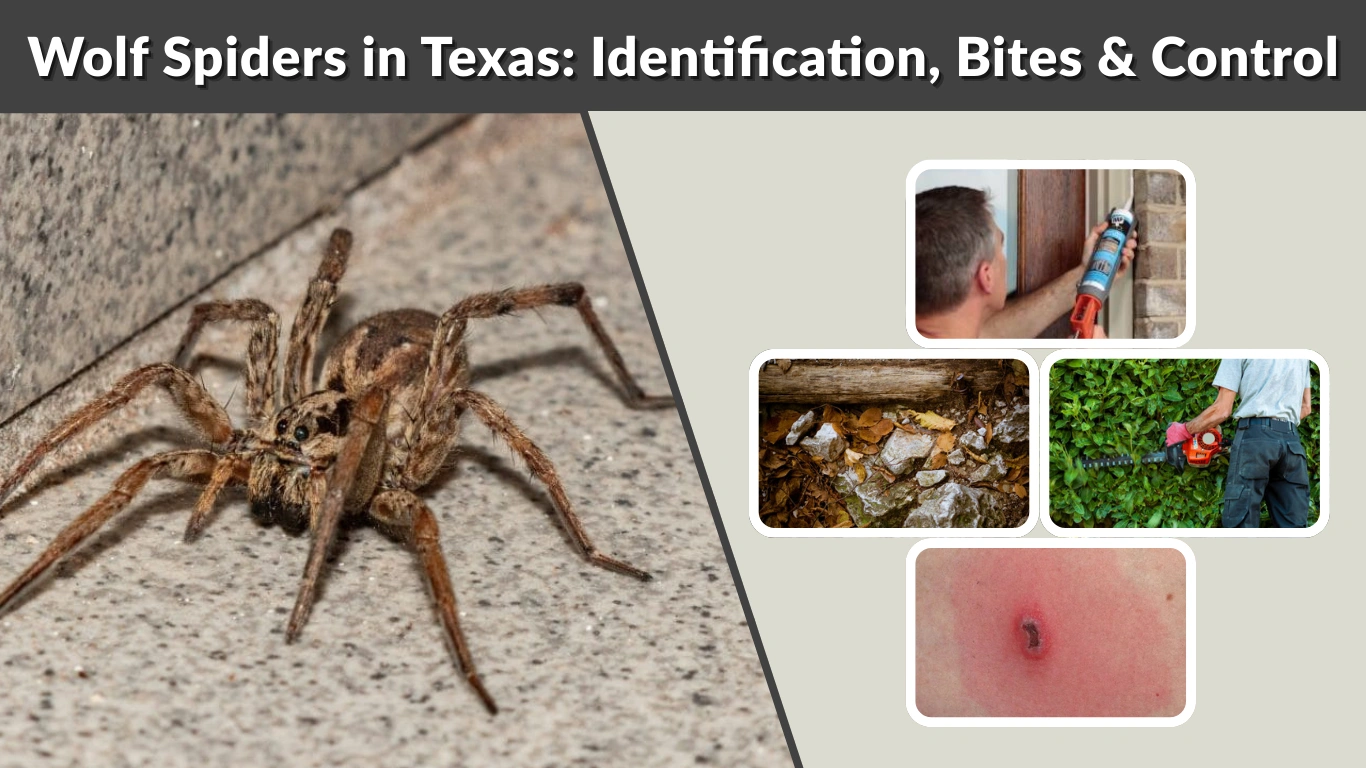
Wolf spiders are among the most common large spiders found across Texas. Their size, speed, and hairy appearance often alarm homeowners, especially when they suddenly dart across a floor or garage at night. Many people mistake them for brown recluse spiders, which increases concern. However, wolf spiders are generally not dangerous to humans. Understanding how to identify them, where they live in Texas, and whether their bites are harmful can help you respond calmly and appropriately.
What Is a Wolf Spider?
Wolf spiders belong to the family Lycosidae and are known for their hunting ability and strong vision. Unlike many other spiders, they do not rely on webs to capture prey. Instead, they actively chase and ambush insects.
Physical Characteristics
Wolf spiders in Texas are typically brown, gray, tan, or dark brown with subtle striping or mottled patterns that help them blend into soil and grass. Their bodies are covered in fine hairs, giving them a somewhat thick, robust appearance.
Most adult wolf spiders measure between ½ inch to 2 inches in total length, including their leg span. Females are usually larger than males. One of their most distinctive features is their eye arrangement. Wolf spiders have eight eyes arranged in three rows, with two large forward-facing eyes that reflect light at night.
Other identifying traits include:
- Stout body structure
- Long, strong legs built for running
- No violin-shaped marking (unlike brown recluse spiders)
- Fast, sudden movements when disturbed
Because of their size and speed, they are often described as “giant spiders,” though they are not the largest spiders found in Texas.
How Wolf Spiders Hunt
Wolf spiders are active hunters. They do not spin webs to trap insects. Instead, they roam at night searching for prey such as:
- Crickets
- Roaches
- Ants
- Beetles
- Other small insects
Their excellent eyesight and quick reflexes allow them to pounce on prey like a wolf hunting in the wild — which is how they earned their name.
They are mostly nocturnal, meaning you’re more likely to see them after dark. If you shine a flashlight across your lawn at night, you may see small reflective glints from their eyes.
Common Wolf Spider Species in Texas

Texas is home to several species of wolf spiders due to its diverse climate and geography. While most look similar to the untrained eye, a few species are especially common.
Carolina Wolf Spider (Hogna carolinensis)
The Carolina wolf spider is one of the largest wolf spider species in North America and is commonly found in Texas. It prefers dry, sandy, or open areas such as:
- Fields
- Pastures
- Road edges
- Desert regions
These spiders often dig shallow burrows in the ground where they rest during the day.
Rabid Wolf Spider (Rabidosa rabida)
Despite its alarming name, the rabid wolf spider is not actually rabid. The name refers to its quick and erratic movements. This species is commonly seen in:
- Lawns
- Gardens
- Wooded areas
- Around foundations
They are slightly more slender than the Carolina wolf spider and have noticeable striping patterns.
Are There Giant Wolf Spiders in Texas?
Many Texans report seeing “giant wolf spiders,” especially in rural areas. While wolf spiders can appear large, they are often confused with tarantulas. Tarantulas are bulkier, slower, and much larger than wolf spiders.
Wolf spiders may look intimidating, but they typically max out around 2 inches in leg span, making them large — but not enormous — compared to other Texas spiders.
Are Wolf Spiders Dangerous in Texas?

One of the most common questions homeowners ask is whether wolf spiders are dangerous.
Are They Venomous?
Yes, wolf spiders are venomous — but their venom is designed to immobilize insects, not harm humans. Their venom is considered mild and not medically significant for most people.
They are not aggressive and rarely bite unless:
- Trapped against the skin
- Accidentally handled
- Threatened
In most cases, they try to escape rather than attack.
Wolf Spider Bite Symptoms
If a wolf spider does bite, symptoms are typically mild and may include:
- Localized redness
- Minor swelling
- Mild pain or itching
- Temporary irritation
The discomfort usually fades within a few days. Serious reactions are rare but can occur in individuals who are sensitive to insect or spider bites.
When to Seek Medical Attention
Although wolf spider bites are usually harmless, you should seek medical care if you notice:
- Severe swelling
- Increasing pain
- Signs of infection (pus, warmth, spreading redness)
- Fever
- Allergic reaction symptoms such as difficulty breathing
It’s important to remember that many skin irritations are misidentified as spider bites. In Texas, brown recluse bites are often confused with wolf spider bites. Proper identification matters.
Wolf Spider vs Brown Recluse in Texas

Because both spiders can appear brown and are found in Texas homes, they are frequently confused. However, there are clear differences.
Key Visual Differences
The brown recluse has a distinct violin-shaped marking on its back. Wolf spiders do not have this marking. Instead, wolf spiders often display striped or mottled patterns.
Another major difference is eye arrangement. Brown recluse spiders have six eyes arranged in pairs, while wolf spiders have eight eyes in three rows, including two large forward-facing eyes.
Wolf spiders also appear hairier and more robust, while brown recluses are smoother and more slender.
Bite Severity Comparison
Brown recluse bites can be medically significant and may cause tissue damage in severe cases. In contrast, wolf spider bites are typically mild and do not result in necrosis.
Because of this difference, correctly identifying the spider is extremely important when evaluating bite symptoms.
Where Do Wolf Spiders Live in Texas?

Wolf spiders are highly adaptable and can be found throughout Texas, from dry western regions to humid eastern areas. They prefer living outdoors but may occasionally wander inside homes.
Outdoor Habitats
In Texas, wolf spiders commonly live in:
- Grasslands and open fields
- Gardens and landscaped yards
- Under rocks, logs, and leaf litter
- Around building foundations
- Woodpiles and debris
Some species dig shallow burrows in soil, especially in dry or sandy areas. Others hide beneath natural cover during the day and emerge at night to hunt. Because they do not rely on webs to capture prey, they need open ground where they can move quickly.
Why They Enter Texas Homes
Wolf spiders typically do not invade homes in large numbers, but they may wander indoors for several reasons:
- Extreme heat during Texas summers
- Heavy rain or flooding
- Searching for insects
- Accidental entry through cracks and gaps
Garages, basements, and ground-level rooms are the most common areas where they are spotted. Unlike some other spider species, wolf spiders do not build messy webs in corners, so sightings are usually of individual roaming spiders rather than clusters.
Seasonal Activity in Texas
Wolf spiders are most active in spring and summer when insect populations are high. During fall, you may notice increased indoor sightings as temperatures begin to fluctuate.
In warmer parts of Texas, they can remain active for much of the year. However, activity slows during colder winter months.
Signs You Have Wolf Spiders in Your Home
Most wolf spider encounters involve seeing a single large spider running quickly across the floor. However, there are other indicators to watch for.
Common signs include:
- A large, fast-moving brown spider at night
- No visible webs despite spider sightings
- Females carrying round white egg sacs attached to their abdomen
- Tiny spiderlings riding on the mother’s back
One unique characteristic of wolf spiders is that females carry their egg sacs with them. After the eggs hatch, the spiderlings climb onto the mother’s back and remain there temporarily. This behavior is distinctive and helps with identification.
If you are regularly seeing wolf spiders indoors, it may indicate a larger insect population attracting them.
How to Get Rid of Wolf Spiders in Texas

While wolf spiders are generally harmless and even beneficial outdoors, many homeowners prefer not to have them inside. Prevention is usually more effective than chemical treatment.
Natural Prevention Methods
Start with simple steps to make your home less attractive to spiders:
- Seal cracks around doors, windows, and foundations
- Install tight-fitting door sweeps
- Reduce outdoor lighting that attracts insects
- Keep grass trimmed and bushes away from the house
- Remove leaf litter, woodpiles, and yard debris
Because wolf spiders follow their food source, reducing insect populations around your home can significantly decrease spider activity.
Indoor Control Tips
If wolf spiders are already inside:
- Vacuum regularly along baseboards and corners
- Use sticky traps to monitor activity
- Declutter storage areas
- Keep floors clear to reduce hiding spots
Most wolf spiders found indoors are accidental visitors and do not establish long-term infestations.
When to Call a Texas Pest Control Professional
You may want to contact a pest control professional if:
- Spider sightings are frequent
- You suspect a larger infestation
- You are unsure about spider identification
- You want preventative perimeter treatment
A professional can identify the species and recommend targeted treatment options appropriate for Texas climates.
Are Wolf Spiders Beneficial?
Despite their intimidating appearance, wolf spiders play an important role in the Texas ecosystem.
They help control populations of:
- Roaches
- Crickets
- Grasshoppers
- Other household and garden pests
Because they are natural hunters, they reduce the need for chemical pest control outdoors. In most cases, leaving wolf spiders undisturbed in yards and gardens can be beneficial.
Indoors, however, their presence can understandably cause concern. The key is balancing pest control with awareness of their ecological value.
FAQs
Are wolf spiders common in Texas?
Yes, wolf spiders are very common throughout Texas. The state’s warm climate and abundant insect population provide ideal conditions for them to thrive in yards, fields, and occasionally inside homes.
How big do wolf spiders get in Texas?
Most wolf spiders in Texas grow between ½ inch to 2 inches in total leg span. Females are typically larger than males. Although they may look huge when spotted indoors, they are smaller than tarantulas.
Do wolf spiders chase people?
Wolf spiders do not chase people. They may appear to run toward someone, but they are usually trying to escape and reach a hiding place. Their fast speed can make their movements seem aggressive.
What attracts wolf spiders to Texas homes?
Wolf spiders are attracted to homes primarily because of insects. Bright outdoor lighting, gaps in doors, clutter, and excess moisture can increase the likelihood of them wandering inside.
Should I kill a wolf spider if I see one?
Killing a wolf spider is not usually necessary, as they are not dangerous and help control pests. However, if one is inside your home and makes you uncomfortable, removing it safely is reasonable.
Conclusion
Wolf spiders in Texas may look intimidating, but they are generally harmless and even beneficial outdoors. They do not aggressively seek out humans, and their bites are typically mild. Proper identification is essential, especially to distinguish them from brown recluse spiders.
By sealing entry points, reducing insects, and maintaining your yard, you can minimize indoor encounters. Understanding their behavior and habitat helps turn fear into informed action — making it easier to manage wolf spiders confidently in Texas homes.
