
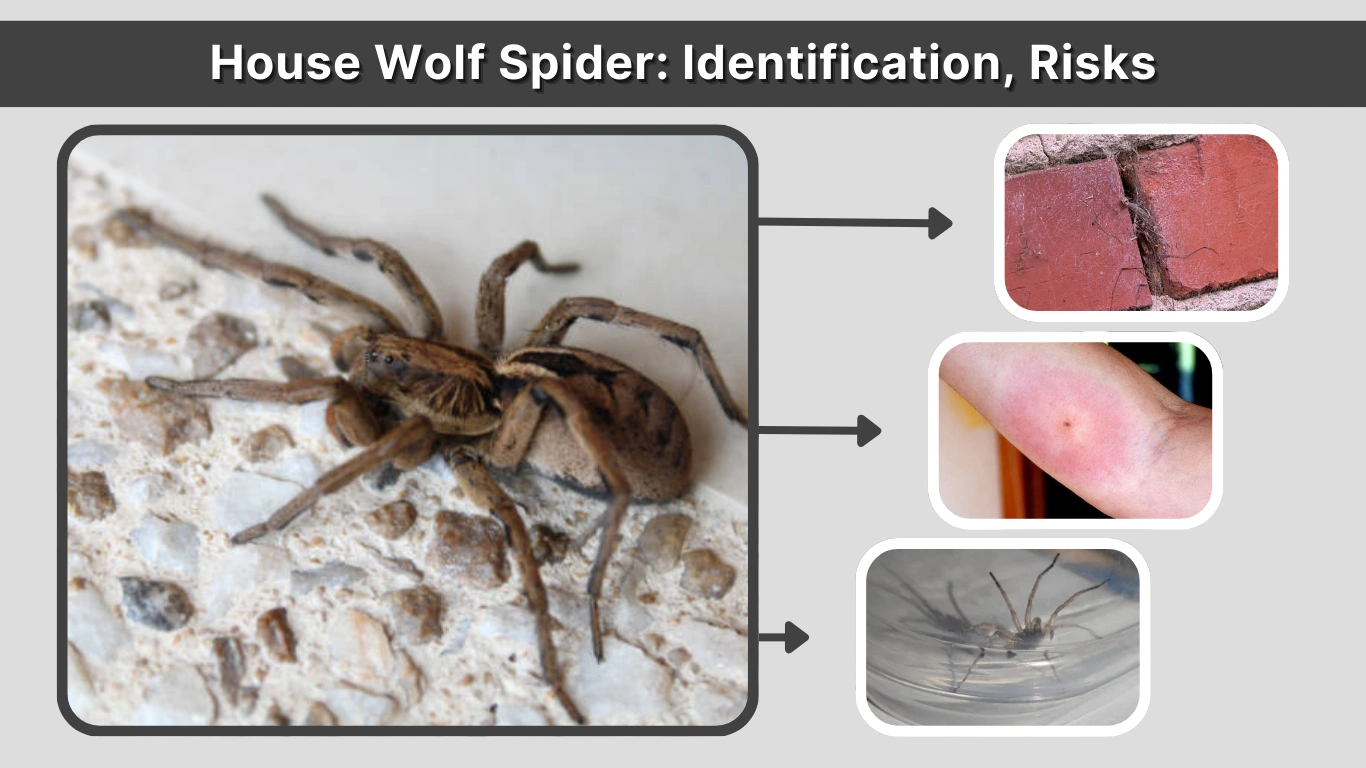
Finding a large, fast-moving spider inside your home can be alarming. One of the most commonly spotted species is the house wolf spider. Despite its intimidating size and speed, this spider is often misunderstood. It is not a separate species but a wolf spider that has wandered indoors. In most cases, it is harmless and simply searching for food or shelter. In this guide, you’ll learn how to identify a house wolf spider, whether it’s dangerous, and why it may be inside your home.
What Is a House Wolf Spider?
A house wolf spider refers to a wolf spider (family Lycosidae) that has entered a home. Wolf spiders are ground-dwelling hunters found throughout the world. Unlike web-building spiders, they actively chase and capture their prey.
Scientific Classification and Family
Wolf spiders belong to the family Lycosidae, which includes over 2,000 species worldwide. They are known for their excellent vision, speed, and hunting ability. These spiders typically live outdoors in grasslands, forests, gardens, and leaf litter.
Why They Appear Inside Homes
Wolf spiders do not prefer indoor living, but they may wander inside for several reasons:
- Searching for insects to eat
- Escaping cold or extreme weather
- Accidentally entering through cracks or open doors
Basements, garages, and ground-level rooms are the most common areas where they are spotted.
Are They True “House Spiders”?
No. True house spiders, such as the common house spider (Parasteatoda tepidariorum), build messy webs and thrive indoors. Wolf spiders, on the other hand, are hunters and do not rely on webs to catch prey. When you see a wolf spider inside, it is usually a temporary visitor rather than a permanent resident.
How to Identify a House Wolf Spider

Correct identification is important, especially because wolf spiders are often confused with more dangerous species like the brown recluse.
Size and Physical Appearance
House wolf spiders are typically medium to large in size. Including their legs, they can measure between ½ inch and 2 inches across. They have:
- A robust, stocky body
- Long, strong legs
- A noticeably hairy appearance
Their large size is often what causes alarm.
Color and Body Markings
Wolf spiders are usually brown, gray, or tan. Their bodies feature camouflage patterns that help them blend into soil and leaf litter. Many species have:
- A light stripe running down the cephalothorax
- Darker side stripes
- Subtle patterned markings on the abdomen
These natural tones make them harder to notice outdoors.
Unique Eye Arrangement
One of the easiest ways to identify a wolf spider is by its eyes. They have eight eyes arranged in three rows:
- Four small eyes on the bottom row
- Two large, forward-facing eyes in the middle
- Two medium-sized eyes on top
The two large middle eyes often reflect light, which can make them appear shiny when illuminated with a flashlight.
Wolf Spider vs. Brown Recluse
Wolf spiders are commonly mistaken for brown recluse spiders, but there are key differences:
- Wolf spiders are hairy; brown recluses have smoother bodies.
- Brown recluses have a violin-shaped marking on their back; wolf spiders do not.
- Wolf spiders have eight eyes; brown recluses have six.
Proper identification helps prevent unnecessary panic.
Why Do Wolf Spiders Come Into Houses?

Seeing a wolf spider indoors often leads homeowners to worry about infestations. In most cases, their presence is linked to environmental factors.
Seasonal Changes (Fall and Winter)
Wolf spiders are more commonly seen indoors during fall and early winter. As temperatures drop, they may seek warmer shelter. Homes provide protection from cold weather and predators.
Searching for Food
Wolf spiders are hunters. If your home has insects such as ants, flies, crickets, or small roaches, it can attract them. They follow their food source indoors.
Entry Points Around the Home
Wolf spiders can enter through surprisingly small gaps, including:
- Cracks in foundations
- Gaps under doors
- Torn window screens
- Open garage doors
Ground-level access points are especially vulnerable.
Moisture and Shelter Factors
Damp areas such as basements, crawl spaces, and laundry rooms may attract insects—and in turn, wolf spiders. Cluttered storage spaces also provide ideal hiding spots during the day.
Are House Wolf Spiders Dangerous?

Despite their large size and quick movements, house wolf spiders are generally not dangerous to humans.
Are They Venomous?
Yes, wolf spiders are venomous, but their venom is designed to immobilize small insects. It is not considered medically significant for humans.
What Happens If a Wolf Spider Bites?
Bites are rare and typically occur only if the spider feels trapped or threatened. Symptoms may include:
- Mild redness
- Swelling
- Slight pain or itching
Most reactions are similar to a bee sting and resolve within a few days without medical treatment.
Are They Aggressive?
Wolf spiders are not aggressive toward humans. They may appear to “chase” people, but this behavior is usually an attempt to escape. Their speed can make encounters feel more dramatic than they actually are.
Behavior and Habits Indoors
Understanding how a house wolf spider behaves can make it less frightening to encounter one inside your home. These spiders are active hunters and prefer to roam rather than hide in webs.
Do Wolf Spiders Build Webs?
Wolf spiders do not spin webs to catch prey. Unlike common house spiders that build sticky traps in corners, wolf spiders chase and ambush insects. They may create small silk retreats under rocks, wood, or clutter, but these are used for shelter—not hunting.
If you see a large spider moving quickly across the floor instead of sitting in a web, it may be a wolf spider.
Nocturnal Activity
Wolf spiders are primarily nocturnal. They are more active at night when they hunt for insects. During the day, they typically hide in:
- Shoes or clothing left on the floor
- Cardboard boxes
- Basement corners
- Under furniture
Because of this behavior, many people spot them suddenly when turning on lights at night.
Female Wolf Spiders and Egg Sacs
One unique trait of wolf spiders is their maternal behavior. Females carry their egg sacs attached to the spinnerets at the end of their abdomen. After the eggs hatch, the spiderlings climb onto the mother’s back and ride there for several days until they are ready to disperse.
Seeing a spider covered in tiny baby spiders can be startling, but it is a natural part of their life cycle.
Lifespan and Reproduction
Wolf spiders typically live about one to two years. Females may produce multiple egg sacs during their lifetime. However, most spiderlings do not survive to adulthood due to predators and environmental factors.
An occasional indoor sighting does not usually mean your home is infested.
How to Get Rid of a House Wolf Spider

If you find a wolf spider indoors and prefer to remove it, there are safe and effective options.
Safe Removal Methods
The simplest method is the cup-and-card technique:
- Place a clear cup over the spider.
- Slide a stiff piece of paper or cardboard underneath.
- Carefully carry it outside and release it away from the home.
Alternatively, you can use a vacuum to remove the spider quickly and safely. Avoid handling it directly.
Natural Repellents
Some homeowners prefer natural deterrents, such as:
- Peppermint oil spray (mixed with water)
- Vinegar solutions
- Diatomaceous earth near entry points
While these methods may discourage insects, sealing entry points is often more effective long term.
Reducing Indoor Prey
Since wolf spiders enter homes in search of food, reducing insects can significantly lower spider activity. You can:
- Store food in sealed containers
- Clean crumbs and spills promptly
- Take trash out regularly
- Address ant or roach infestations
Less prey means less reason for spiders to stay.
When to Call Pest Control
Professional help may be necessary if:
- You frequently see multiple large spiders
- There is an ongoing insect infestation
- You feel uncomfortable managing the issue yourself
In most cases, however, occasional sightings can be handled without professional intervention.
How to Prevent Wolf Spiders From Entering Your Home

Prevention focuses on sealing entry points and reducing attractants.
Seal Entry Points
Inspect your home’s exterior for gaps and cracks. Pay attention to:
- Foundation cracks
- Gaps under doors
- Damaged weather stripping
- Torn window screens
Use caulk or weather sealing materials to block potential access points.
Outdoor Yard Maintenance
Your yard can influence spider activity inside your home. To reduce risk:
- Trim shrubs and plants away from the foundation
- Remove woodpiles from direct contact with the house
- Clear leaf litter and debris
- Keep grass trimmed
These steps reduce hiding places close to entry points.
Improve Indoor Conditions
Inside the home, aim to:
- Reduce excess moisture with dehumidifiers
- Declutter storage areas
- Keep floors clean and free of debris
A clean, dry environment is less attractive to insects and, therefore, to wolf spiders.
Common Myths About House Wolf Spiders
There are many misconceptions about wolf spiders.
Myth: They are deadly.
Wolf spider venom is not considered dangerous to healthy adults.
Myth: They infest homes.
They do not typically establish indoor colonies like some pests.
Myth: They chase people.
Their fast movement is usually an escape response.
Myth: Killing one prevents others.
Seeing one spider does not automatically mean many more are present.
Understanding these myths can help reduce unnecessary fear.
Should You Be Concerned About a Wolf Spider in Your House?
In most situations, a single wolf spider indoors is not a cause for alarm. They may actually help by reducing insect populations. However, repeated sightings could indicate an underlying insect problem that needs attention.
If bites occur frequently (which is rare), or if someone in the household has severe allergic reactions, further action may be warranted.
FAQs
Is a house wolf spider dangerous to humans?
House wolf spiders are not considered dangerous to humans. While they are venomous, their venom is mild and primarily used to subdue insects. Bites are rare and usually cause only minor redness, swelling, or irritation that resolves within a few days.
Why do I keep seeing wolf spiders in my house?
Repeated sightings often mean your home has insects attracting them. Seasonal changes, especially in fall, can also drive wolf spiders indoors seeking warmth. Sealing entry points and reducing indoor insect activity typically decreases encounters.
Do wolf spiders lay eggs in houses?
Wolf spiders may carry egg sacs indoors, but they do not usually establish long-term nests inside homes. Spiderlings disperse quickly after hatching. Most indoor appearances are temporary rather than signs of infestation.
How can I tell if the spider is a wolf spider?
Look for a large, hairy body, brown or gray coloring, and eight eyes arranged in three rows. The two large middle eyes are especially distinctive. Unlike house spiders, wolf spiders do not build webs to catch prey.
Will wolf spiders leave on their own?
Yes, in many cases they will leave if they cannot find food or suitable shelter. Removing insects and sealing entry points encourages them to move elsewhere. Occasional sightings do not usually require aggressive treatment.
