
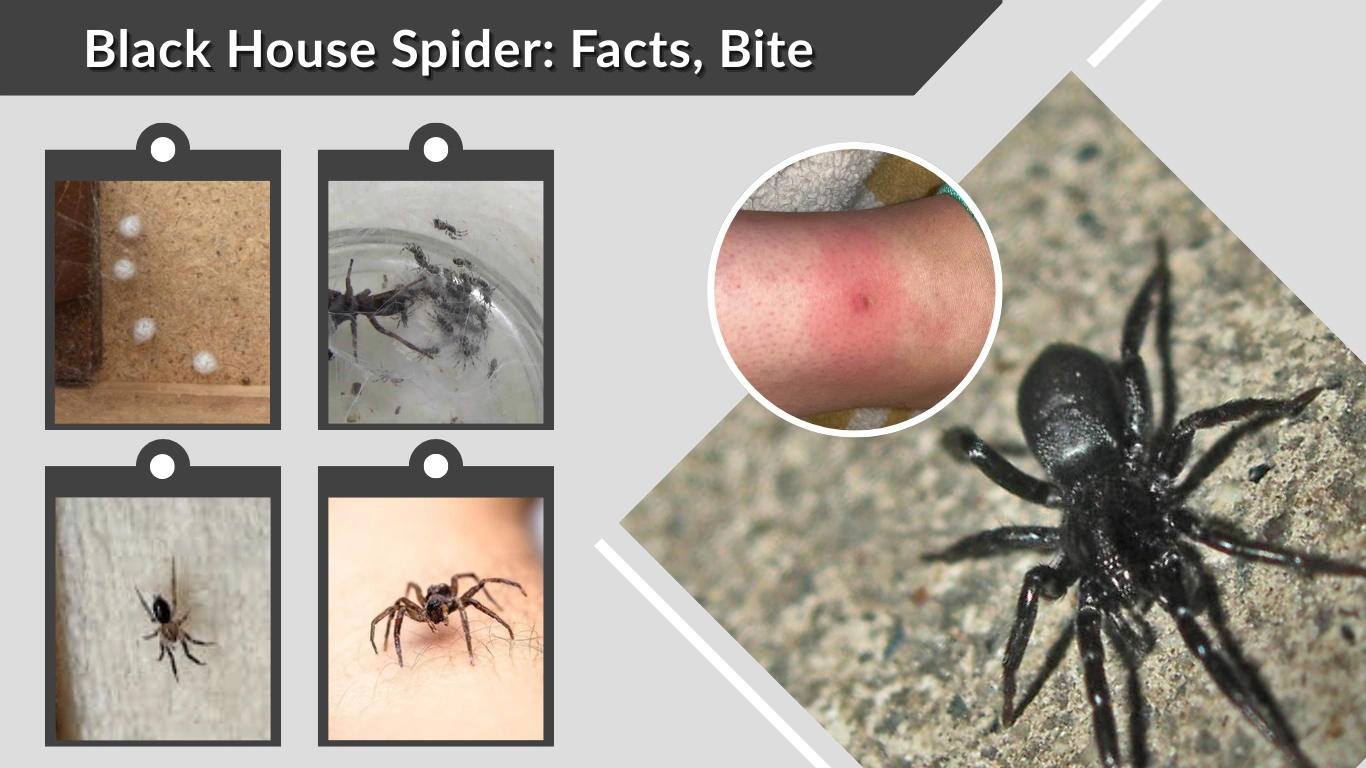
The black house spider is a common species often found around homes, especially near windows, walls, and quiet corners. Its dark color and messy web can make it look intimidating, leading many people to wonder: are black house spiders dangerous? Are they poisonous? And what happens if one bites you? In this guide, you’ll learn essential black house spider facts, including identification, behavior, bite symptoms, and whether they pose any real threat.
What Is a Black House Spider?

Scientific Name and Classification
The black house spider’s scientific name is Badumna insignis. It belongs to the family Desidae. This species is native to Australia but has spread to parts of New Zealand and other regions. Despite its somewhat alarming name, it is not considered one of the highly dangerous spider species.
Physical Appearance
Black house spiders are dark brown to black in color. Their bodies have a slightly velvety texture, and females are generally larger than males.
- Female body length: About 10–18 mm
- Male body length: Around 9 mm
- Leg span: Can appear larger due to extended legs
They have relatively robust bodies and long legs. Their appearance can sometimes cause confusion with other dark-colored spiders, but their web structure usually helps identify them.
Where Black House Spiders Are Commonly Found
Black house spiders prefer sheltered areas and often build webs in:
- Window frames
- Door corners
- Brick walls
- Sheds and garages
- Outdoor fences
They like rough surfaces, especially brick or stone walls, where they can anchor their silk easily. Once established, a female may remain in the same web for years.
Black House Spider Facts

Quick Facts Overview
Here are some key black house spider facts:
- They are mostly nocturnal.
- Females stay in one web for long periods.
- They build permanent, messy-looking webs.
- They are shy and not aggressive toward humans.
- Males wander more often, especially during mating season.
Unlike wandering spiders, black house spiders rely heavily on their webs to catch prey.
Web Structure and Hunting Behavior
The black house spider builds a tangled, woolly-looking web with a small funnel-like retreat at one end. This retreat acts as a hiding spot. When an insect gets trapped in the sticky threads, vibrations alert the spider.
The spider quickly rushes out, injects venom into the prey, and drags it back into the retreat. Their venom is designed to immobilize insects efficiently, not humans.
These webs are usually built in corners where flying insects are likely to pass, such as near lights or windows.
Natural Predators
Even though they live close to humans, black house spiders still have natural predators, including:
- Spider-hunting wasps
- Birds
- Larger spiders
These predators help regulate their population in outdoor environments.
Are Black House Spiders Dangerous?

One of the most common questions people ask is: are black house spiders dangerous?
Temperament and Aggression Level
Black house spiders are not aggressive. They prefer to stay inside their web retreat and avoid confrontation. A bite typically occurs only if:
- The spider is directly handled
- It becomes trapped in clothing
- It feels threatened with no escape
In most cases, they would rather retreat than attack.
Risk to Humans
Black house spiders are venomous, meaning they inject venom through a bite. However, their venom is considered mild for humans. They are not classified as medically dangerous.
There are no recorded fatalities from black house spider bites. While the bite can be painful, it does not pose serious health risks for most people.
Risk to Children and Pets
For healthy children and pets, the risk remains low. The symptoms are typically localized and mild. However, individuals with allergies to insect or spider bites should monitor reactions carefully.
Black House Spider Bite

Although rare, black house spider bites can happen. Understanding what to expect can reduce unnecessary panic.
What Happens If a Black House Spider Bites You?
A black house spider bite may cause:
- Immediate sharp pain
- Redness around the bite area
- Mild swelling
- Itching
The pain is often described as moderate but not severe.
Common Symptoms
Most symptoms remain localized to the bite area. These may include:
- Swelling
- Tenderness
- Mild inflammation
In rare cases, a person may experience mild nausea or headache. Symptoms usually subside within 24 to 48 hours.
Serious reactions are uncommon but possible in people who are highly sensitive to spider venom.
When to Seek Medical Attention
You should seek medical care if:
- The pain becomes severe or worsens
- Swelling spreads significantly
- You experience difficulty breathing
- Signs of infection develop
While black house spider bites are not considered dangerous, complications from secondary infection can occur if the bite is not properly cleaned.
Is the Black House Spider Poisonous?
Many people search for “black house spider poisonous,” but technically, spiders are not poisonous — they are venomous.
Venomous vs. Poisonous – What’s the Difference?
- Poisonous organisms are harmful if touched or eaten.
- Venomous organisms inject toxins through bites or stings.
Black house spiders are venomous because they inject venom into prey. They are not poisonous to touch.
How Strong Is Their Venom?
The venom of the black house spider is primarily adapted for subduing insects. In humans, it causes mild to moderate localized effects but is not considered medically significant.
Compared to highly venomous species like funnel-web spiders, black house spiders pose a much lower risk.
Black House Spider Life Cycle

Understanding the black house spider life cycle helps explain why they often remain in one location for long periods and how their populations grow around homes.
Egg Stage
After mating, the female produces several egg sacs during her lifetime. Each sac can contain around 30 to 80 eggs.
- Egg sacs are small and silk-covered
- They are usually hidden inside the web retreat
- Incubation typically lasts several weeks
The female guards her egg sacs within the safety of her web, reducing the risk of predators.
Spiderling Stage
When the eggs hatch, tiny spiderlings emerge. At this stage:
- They remain in the web briefly
- They undergo their first molt
- They eventually disperse to find new locations
Dispersal may involve short-distance crawling or “ballooning,” where young spiders release silk strands to catch the wind and travel to new areas.
Many spiderlings do not survive due to predators and environmental challenges.
Juvenile Development
As juvenile spiders grow, they go through several molting stages. Each molt allows them to increase in size.
- Growth depends on food availability
- Warmer climates may accelerate development
- Multiple molts occur before adulthood
During this stage, they begin building small webs and practicing hunting behaviors.
Adult Stage
Once mature, females establish permanent webs and rarely move. Males, on the other hand, wander in search of mates.
After mating:
- Males typically have a shorter remaining lifespan
- Females may continue producing egg sacs
This stationary lifestyle is one reason black house spiders are commonly found in the same spot year after year.
Black House Spider Lifespan

Many people are surprised to learn how long these spiders can live.
How Long Do Black House Spiders Live?
The black house spider lifespan varies by sex:
- Females: 2 to 5 years
- Males: Around 1 to 2 years
Females tend to live significantly longer because they remain protected in their webs. Males face greater risks while wandering to find mates.
Factors That Affect Lifespan
Several factors influence how long a black house spider lives:
- Food supply
- Climate conditions
- Presence of predators
- Human disturbance
In stable, undisturbed environments, females can survive for several years in the same web.
Black House Spider vs Similar Spiders

Because they are dark and web-building, black house spiders are sometimes confused with other species.
Black House Spider vs Wolf Spider
Wolf spiders differ in several important ways:
- Wolf spiders do not build webs to catch prey.
- They actively hunt and roam.
- Their bodies are often hairier and more patterned.
If you see a spider running across the floor without a web nearby, it is likely not a black house spider.
Black House Spider vs Funnel-Web Spider
This is an important distinction because funnel-web spiders are highly venomous.
Differences include:
- Funnel-web spiders have more glossy, shiny bodies.
- Their webs are more structured and tunnel-like.
- Funnel-web spiders are medically significant and dangerous.
Black house spiders, while they build messy funnel-shaped webs, do not possess the same level of venom toxicity.
Should You Remove Black House Spiders From Your Home?
Whether to remove a black house spider depends on personal comfort and location.
Benefits of Keeping Them
Black house spiders can actually be beneficial:
- They control flying insect populations
- They reduce mosquitoes and flies
- They rarely leave their webs
Because they stay in one area, they are less likely to wander into beds or clothing compared to roaming spiders.
When Removal Is Necessary
Removal may be appropriate if:
- The web is in a high-traffic area
- Someone in the household has severe spider anxiety
- There are repeated accidental encounters
In most cases, relocation is preferable to killing the spider.
Safe Removal Tips
If you choose to remove one:
- Wear gloves
- Use a container to trap and relocate it outdoors
- Seal cracks and gaps around windows
- Regularly clean corners and remove old webs
Prevention involves reducing insect populations and sealing entry points around your home.
FAQs
Are black house spiders dangerous to humans?
Black house spiders are not considered dangerous to humans. While they are venomous, their bites usually cause only mild, localized symptoms like pain and swelling. They are shy spiders and rarely bite unless directly handled or threatened.
Is a black house spider bite serious?
In most cases, a black house spider bite is not serious. Symptoms typically include redness, swelling, and moderate pain that fades within one to two days. Severe reactions are rare but may require medical attention if symptoms worsen.
Are black house spiders poisonous?
Black house spiders are not poisonous; they are venomous. This means they inject venom through a bite rather than being harmful to touch or ingest. Their venom is primarily designed to immobilize insects and has mild effects on humans.
How long does a black house spider live?
The lifespan of a black house spider depends on sex. Females can live between two and five years, while males typically live one to two years. Females often remain in the same web for much of their lives.
Do black house spiders leave their webs?
Female black house spiders rarely leave their webs and prefer to stay inside their funnel-like retreat. Males, however, may wander during mating season. Generally, they are stationary spiders that rely on their webs for food and shelter.
