
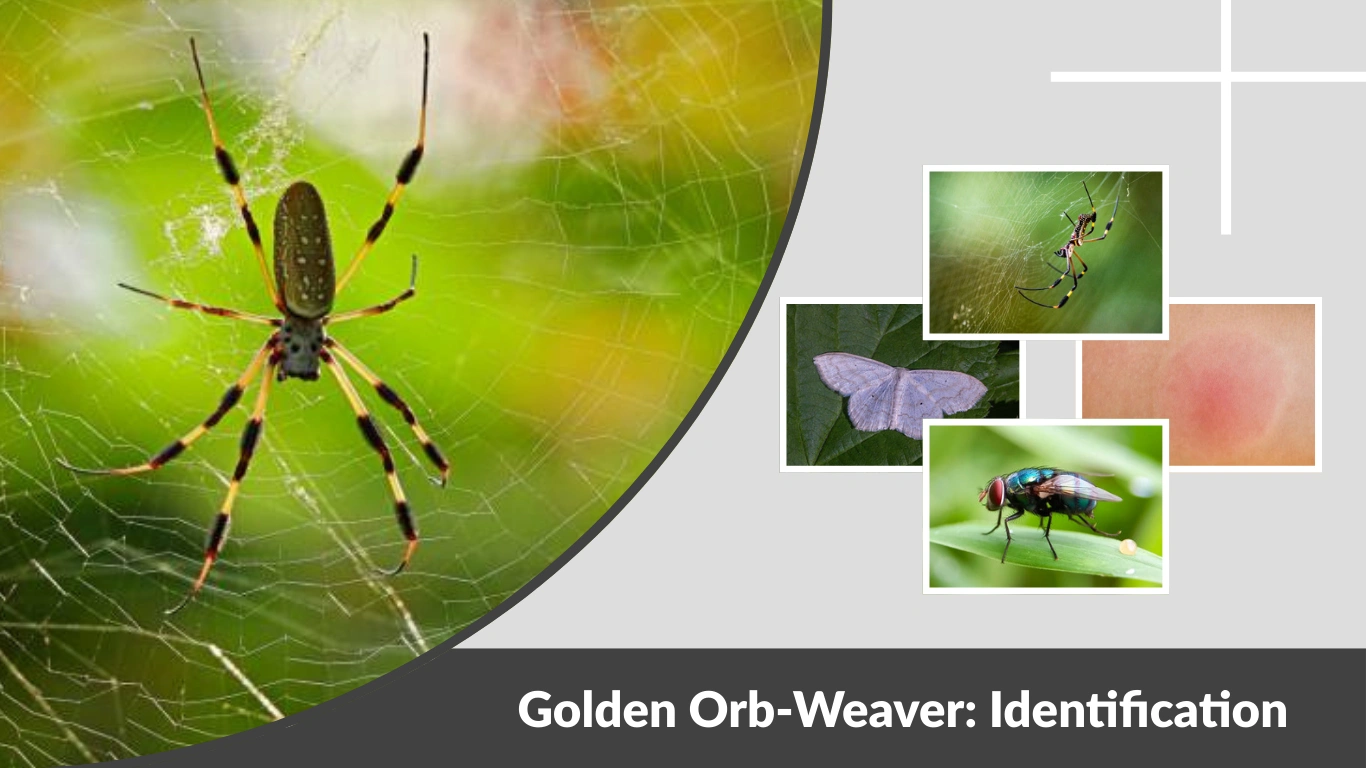
The golden orb-weaver is one of the largest and most striking web-building spiders found in warm climates. Known scientifically as Trichonephila clavipes, this spider is famous for its impressive size and the shimmering golden color of its silk. Often called the “banana spider,” it frequently causes alarm due to its appearance, but it is far less dangerous than many people assume. In this guide, you’ll learn how to identify a golden orb-weaver, where it lives, how big it gets, and what makes its silk so unique.
What Is a Golden Orb-Weaver?
The golden orb-weaver belongs to a group of spiders known for building large, circular webs. It is part of the genus Trichonephila, which includes several large orb-weaving species found in tropical and subtropical regions.
Scientific Classification
- Kingdom: Animalia
- Phylum: Arthropoda
- Class: Arachnida
- Order: Araneae
- Genus: Trichonephila
- Species: Trichonephila clavipes
This species was previously classified under the genus Nephila, which is why some older sources still refer to it as Nephila clavipes. Regardless of the classification update, it remains one of the most recognized orb-weaving spiders in the Americas.
Why Is It Called “Golden”?
The name “golden orb-weaver” comes from the distinctive golden sheen of its web silk. In bright sunlight, the strands appear yellow or gold rather than clear. This coloration is not just decorative — researchers believe it may help attract insects or strengthen the silk against ultraviolet light.
The silk itself is incredibly strong and elastic. In fact, golden orb-weaver silk has been studied for potential applications in medical sutures and high-performance textiles due to its impressive durability.
Other Common Names
This spider goes by several different names depending on location:
- Golden silk orb weaver
- Banana spider
- Giant wood spider
The term “banana spider” often causes confusion. In some parts of the world, this nickname refers to other spider species, including more dangerous ones. However, in the southeastern United States, it typically refers to the golden orb-weaver.
Physical Characteristics and Identification

The golden orb-weaver spider is relatively easy to identify once you know what to look for.
Size and Sexual Dimorphism
One of the most fascinating aspects of this species is its extreme sexual dimorphism, meaning there is a large size difference between males and females.
- Female body length: Approximately 1 to 2 inches
- Leg span: Can reach 4 to 5 inches or more
- Male body length: Usually less than half an inch
Females are dramatically larger and more colorful than males. Most sightings involve females, as males are small, brownish, and often remain near the edges of the female’s web.
Body Color and Markings
Female golden orb-weavers have elongated abdomens with striking yellow and black patterns. Their cephalothorax (front body section) often appears silvery or gray. The legs are long and slender, usually banded with dark and light segments.
Some individuals also have noticeable tufts of hair on their legs, giving them a slightly fuzzy appearance. These features, combined with their size, make them look intimidating — but they are not aggressive toward humans.
Web Structure
The web of a golden orb-weaver is one of its most impressive features. These webs can span several feet across and are often built between trees, shrubs, or along forest edges.
Key characteristics of the web include:
- Large circular (orb-shaped) design
- Strong radial support threads
- Sticky spiral capture threads
- Distinct golden sheen in sunlight
Unlike some spiders that rebuild their webs daily, golden orb-weavers may maintain and expand the same web over time. Their webs are incredibly strong and capable of trapping large insects such as grasshoppers and beetles.
In wooded areas or along hiking trails, these webs are often built at head height, making them highly noticeable — especially if you accidentally walk into one.
Habitat and Geographic Distribution

Where Do Golden Orb-Weavers Live?
Golden orb-weavers thrive in warm, humid environments. They are commonly found in:
- The southeastern United States (especially Florida and the Gulf Coast)
- Mexico
- Central America
- South America
- Parts of the Caribbean
They prefer tropical and subtropical climates where insect populations are abundant year-round.
Preferred Environment
These spiders favor areas that provide sturdy anchor points for their large webs. You’re most likely to find them in:
- Forest edges
- Woodland trails
- Gardens with tall vegetation
- Shrubs and small trees
- Areas near water sources
They are especially common in places with consistent insect activity. Their large webs are often positioned in open spaces between trees or bushes where flying insects frequently pass.
Seasonal Activity
In the United States, golden orb-weavers are most visible from late summer through early fall. During this time, females are fully grown and actively maintaining their webs.
In tropical regions, they may remain active throughout the year. In cooler climates, populations decline as temperatures drop, and the next generation emerges the following season.
Diet and Hunting Behavior

Golden orb-weavers are passive hunters that rely on their powerful webs to capture prey.
What Do Golden Orb-Weavers Eat?
Their diet mainly consists of flying insects, including:
- Flies
- Grasshoppers
- Beetles
- Wasps
- Moths
Because of their large web size and strong silk, they are capable of capturing relatively large insects compared to smaller orb-weaving species.
Once an insect becomes entangled, the spider senses vibrations through the web and quickly moves toward the prey.
Once the golden orb-weaver reaches its prey, it uses its venom to immobilize the insect. The venom is mild and specifically adapted to subdue insects rather than large animals. After biting, the spider wraps the prey in silk and begins feeding. This efficient hunting strategy allows it to capture a steady supply of food without actively chasing prey.
Importance as Natural Pest Control
Golden orb-weavers play an important ecological role by controlling insect populations. By feeding on flies, grasshoppers, beetles, and other flying insects, they help maintain balance in gardens and wooded environments. Although their large webs can be inconvenient in high-traffic areas, these spiders are generally beneficial and reduce the number of nuisance insects.
Are Golden Orb-Weavers Dangerous?

Despite their intimidating size and bold coloring, golden orb-weavers are not considered dangerous to humans.
Venomous vs. Poisonous Explained
Golden orb-weavers are venomous, meaning they inject venom through a bite. They are not poisonous, which would imply they are harmful if touched or consumed. Like most orb-weaving spiders, their venom is mild and designed for subduing small prey.
They are not aggressive and will usually retreat or remain still if disturbed.
Golden Orb-Weaver Bite Symptoms
Bites are rare and typically occur only if the spider is pressed against the skin. If a bite does happen, symptoms may include:
- Mild pain or stinging
- Redness at the bite site
- Minor swelling
- Temporary irritation
Most reactions are comparable to a bee sting and resolve within a short period. Serious reactions are uncommon.
Myths About Banana Spiders
The nickname “banana spider” often causes confusion. In some parts of the world, this term refers to the Brazilian wandering spider, which is significantly more venomous and does not build orb webs.
Golden orb-weavers are web builders and are far less dangerous. Media stories and online rumors sometimes exaggerate their threat, but in reality, they pose little risk to humans.
Life Cycle and Reproduction
Golden orb-weavers have a life cycle typical of many orb-weaving spiders, though their size difference between males and females makes their reproductive behavior especially interesting.
Mating Behavior
Males are much smaller and often live on or near the female’s web. During mating season, multiple males may occupy the same web, competing for the opportunity to mate.
Because of the large size difference, males must approach females cautiously. In some spider species, males risk being eaten, though this is not always the case with golden orb-weavers.
Egg Sac and Spiderlings
After mating, the female produces egg sacs that contain hundreds of eggs. These sacs are usually attached to vegetation near the web rather than within it.
The eggs hatch into spiderlings after several weeks. Young spiders may disperse by releasing silk threads that catch the wind, a process known as ballooning. This allows them to spread to new areas.
Lifespan
In temperate regions, golden orb-weavers typically complete their life cycle within one year. Adults are most visible in late summer and fall. As temperatures cool, adults die off, and the next generation develops from egg sacs.
In tropical climates, they may survive longer due to consistent warm conditions.
Golden Orb-Weaver vs Similar Spiders

Because of their size and nickname, golden orb-weavers are sometimes confused with other large spiders.
Vs. Garden Orb Weaver
Garden orb weavers are generally smaller and do not produce golden silk. While both build circular webs, the golden orb-weaver’s web is often larger and stronger.
Vs. Joro Spider
The Joro spider (Trichonephila clavata) is closely related and also builds large orb webs. However, the Joro spider has more vivid yellow and blue striping and is native to East Asia, though it has spread to parts of the United States.
Vs. Brazilian Wandering Spider
The Brazilian wandering spider does not build orb webs and actively hunts on the ground. It is significantly more venomous and medically important. Confusion between the two species is largely due to the shared nickname “banana spider.”
Fascinating Facts About Golden Orb-Weavers
- Their silk is among the strongest natural fibers known.
- The golden color may help camouflage the web in sunlight.
- Females dominate the web, while males are tiny in comparison.
- Some webs are strong enough to trap small birds or bats, though this is rare.
- Scientists have studied their silk for potential medical and engineering applications.
Should You Remove a Golden Orb-Weaver?
In most situations, removal is unnecessary. These spiders are beneficial and help control insect populations. However, if a web is built in a doorway or frequently used path, you may choose to relocate it carefully.
Using a long stick to gently remove the web or encouraging the spider to move with a container is safer than direct contact. Since they are not aggressive, they typically retreat when disturbed.
FAQs
Are golden orb-weavers harmful to humans?
No, golden orb-weavers are not considered harmful. They are shy, non-aggressive spiders, and their venom is mild. Bites are rare and usually cause only minor irritation.
How big do golden orb-weavers get?
Females can reach 1 to 2 inches in body length with a leg span of up to 5 inches or more. Males are much smaller and less noticeable.
Why are they called banana spiders?
The nickname “banana spider” may come from their yellow coloring or their presence in tropical fruit-growing regions. However, this name is also used for other species, which can cause confusion.
What do golden orb-weavers eat?
They primarily eat flying insects such as flies, beetles, grasshoppers, and wasps. Their large webs allow them to capture relatively large prey.
Where do golden orb-weavers live?
They are found in warm climates, including the southeastern United States, Central America, South America, and the Caribbean, typically in wooded areas and gardens.
Conclusion
The golden orb-weaver is a remarkable spider known for its impressive size and shimmering golden web. Although its appearance can be intimidating, it poses little threat to humans and serves an important ecological role. By capturing large numbers of insects, it helps maintain balance in gardens and forests. Understanding this species can replace fear with appreciation for one of nature’s most fascinating web builders.
