
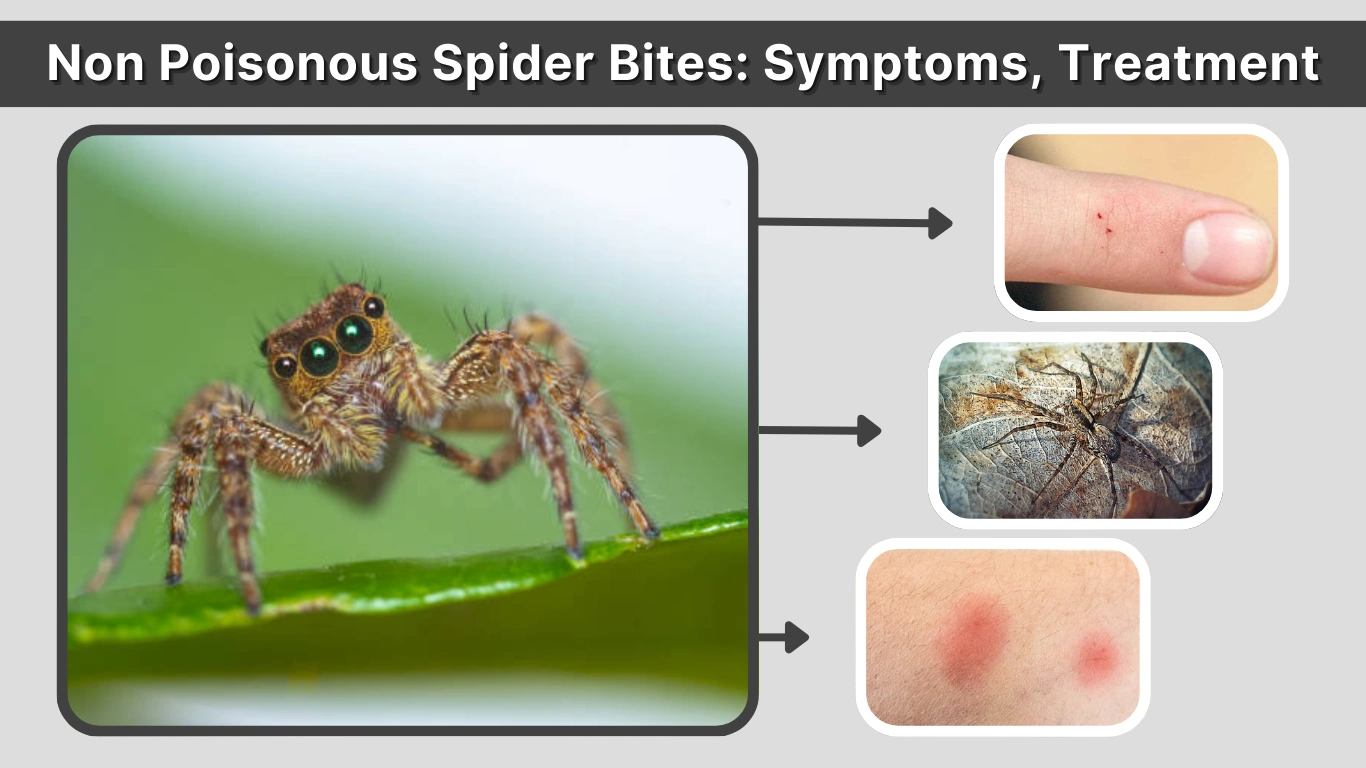
Spider bites often cause unnecessary fear, but the truth is that most spiders are harmless to humans. In many cases, what people believe to be a dangerous spider bite is actually caused by a non poisonous spider or even another insect altogether. Non-poisonous spider bites usually result in mild, localized skin reactions that heal without medical treatment. Understanding how these bites look, feel, and behave can help reduce anxiety, prevent misdiagnosis, and ensure proper care when a bite does occur.
What Are Non Poisonous Spider Bites?

Non-poisonous spider bites are caused by spiders that either lack venom harmful to humans or inject venom in such small amounts that it produces only mild symptoms. These spiders typically bite only in self-defense, such as when they are trapped against the skin or accidentally disturbed.
Unlike venomous spiders, non-poisonous spiders do not cause systemic symptoms such as muscle cramps, breathing problems, or tissue damage. Their bites mainly affect the surface of the skin and surrounding tissue, making them far less dangerous than commonly believed.
Why Non Poisonous Spider Bites Are Commonly Misidentified
Confusion With Insect Bites
One of the main reasons non-poisonous spider bites are misidentified is their similarity to insect bites. Mosquitoes, fleas, mites, and ants can all cause red, itchy bumps that closely resemble spider bites. Since spiders are rarely seen biting, people often assume a spider was responsible without clear evidence.
Myths About Spider Bites
Another reason for misidentification is the widespread myth that spiders frequently bite humans. In reality, spiders tend to avoid human contact. Many skin reactions blamed on spiders are actually allergic reactions, bacterial infections, or other dermatological conditions unrelated to spider bites.
Common Non Poisonous Spiders That May Bite Humans

House Spiders
House spiders are among the most common spiders found indoors. They usually hide in corners, basements, and storage areas. Bites from house spiders are rare and generally occur only when the spider is accidentally pressed against the skin. Their bites typically cause mild redness and irritation.
Wolf Spiders
Wolf spiders are larger and more noticeable, which often leads to fear. Despite their size, they are non-poisonous to humans. Wolf spider bites may be slightly more painful than other non venomous bites but usually result in temporary swelling and discomfort.
Jumping Spiders
Jumping spiders are small, active spiders commonly found near windows and plants. They are not aggressive and rarely bite humans. If a bite does occur, it is usually very mild and resolves quickly without treatment.
Garden and Orb-Weaver Spiders
These spiders are commonly found outdoors in gardens and wooded areas. While they can bite if threatened, their bites are non poisonous and usually cause minimal skin irritation.
What Does a Non Poisonous Spider Bite Look Like?

A non-poisonous spider bite typically appears as a small red bump or raised welt on the skin. The bite area may be slightly swollen and warm to the touch. In most cases, there is only one bite mark rather than a cluster.
Unlike venomous spider bites, non-poisonous bites do not develop severe blistering, ulceration, or darkened skin tissue. Over time, the redness usually fades, and the skin returns to normal within a few days.
Symptoms of Non Venomous Spider Bites
Mild and Common Symptoms
Most non-poisonous spider bites cause mild, localized symptoms that appear shortly after the bite. These symptoms may include redness, minor swelling, itching, and slight tenderness around the bite area. Some people describe a mild stinging or burning sensation that fades within a few hours.
Less Common Symptoms
In some cases, a non venomous spider bite may lead to mild blistering or a slightly firm bump under the skin. These reactions are usually temporary and improve as the body heals. Severe pain, spreading redness, or systemic symptoms are not typical of non-poisonous spider bites.
Non Poisonous Spider Bite vs Insect Bite

Visual Differences
Non-poisonous spider bites usually appear as a single red bump with mild swelling, while insect bites often show up in clusters or lines. Mosquito and flea bites are more likely to have a central puncture and intense itching, whereas spider bites tend to look more uniform and less inflamed. The absence of severe blistering or skin breakdown is another sign that a bite is likely non venomous.
Pain and Sensation Differences
Spider bites often cause mild tenderness or a light stinging sensation at the time of the bite. Insect bites, on the other hand, are more commonly associated with immediate itching. Non poisonous spider bites rarely cause sharp pain or burning that lasts more than a short period.
Healing Time Comparison
Most non-poisonous spider bites heal within a few days, similar to minor insect bites. Insect bites may itch longer, especially if scratched, while spider bites usually improve steadily without significant irritation.
Are Non Poisonous Spider Bites Dangerous?
Non-poisonous spider bites are generally not dangerous and rarely require medical attention. The body’s immune system typically resolves the reaction on its own. Complications are uncommon and usually result from excessive scratching, which can introduce bacteria into the skin and cause infection.
People with sensitive skin, allergies, or weakened immune systems may experience slightly stronger reactions, but serious health risks from non venomous spider bites are extremely rare.
How Long Do Non Poisonous Spider Bites Last?

In most cases, non-poisonous spider bites last between two and seven days. Redness and swelling often peak within the first 24 hours and gradually fade. Proper hygiene and avoiding irritation can speed up healing.
Bites that remain swollen, painful, or red beyond a week may indicate infection or another skin condition rather than a simple spider bite.
Home Treatment for Non Poisonous Spider Bites
Immediate First Aid Steps
The first step in treating a non poisonous spider bite is to gently wash the area with soap and water. This helps prevent infection. Applying a cold compress for 10 to 15 minutes can reduce swelling and relieve discomfort.
Medications and Natural Remedies
Over-the-counter anti-itch creams, such as hydrocortisone, can help reduce itching and redness. Oral antihistamines may also be useful for people who experience itching or mild allergic reactions. Natural remedies like aloe vera or calamine lotion can soothe the skin and promote comfort.
What to Avoid During Healing
Scratching the bite should be avoided, as it can slow healing and increase the risk of infection. Harsh home remedies, including strong essential oils or abrasive substances, may irritate the skin and should not be used.
When to See a Doctor

Medical attention is rarely needed for non-poisonous spider bites, but it may be necessary if signs of infection develop. These include increasing redness, warmth, pus, or pain around the bite area. Seek medical care immediately if symptoms such as severe pain, muscle cramps, fever, or spreading skin discoloration occur, as these may suggest a venomous bite or another medical condition.
How to Prevent Non Poisonous Spider Bites
Prevention Inside the Home
Keeping the home clean and clutter-free reduces the likelihood of spiders settling indoors. Sealing cracks, vacuuming corners, and shaking out clothing or bedding stored for long periods can help prevent accidental bites.
Outdoor Bite Prevention Tips
When spending time outdoors, wearing long sleeves and gloves while gardening can reduce exposure. Avoid placing hands into dark or undisturbed areas where spiders may be hiding, such as woodpiles or storage sheds.
FAQs
Can non-poisonous spider bites cause itching?
Yes, non-poisonous spider bites can cause mild itching due to the body’s immune response. The itching is usually temporary and less intense than that caused by insect bites.
Do non venomous spider bites leave scars?
Most non venomous spider bites heal without scarring. Scars are more likely if the bite becomes infected or is repeatedly scratched during healing.
How can I tell if a spider bite is harmless?
A harmless spider bite typically causes mild redness, slight swelling, and minimal pain. The absence of severe symptoms or worsening skin damage is a good indicator.
Are non-poisonous spider bites common at night?
Spiders are more active at night, but bites are still uncommon. Most nighttime bites occur when a spider is accidentally trapped against the skin during sleep.
Can children react differently to spider bites?
Children may experience more noticeable swelling or itching due to sensitive skin, but non-poisonous spider bites are still usually mild and heal quickly.
Conclusion
Non poisonous spider bites are far more common—and far less dangerous—than many people believe. In most cases, they cause only mild skin reactions that resolve with simple home care. Understanding how to recognize these bites, treat them properly, and prevent future exposure can help reduce unnecessary worry. When symptoms remain mild and localized, non-poisonous spider bites are best managed with reassurance, hygiene, and patience.
