
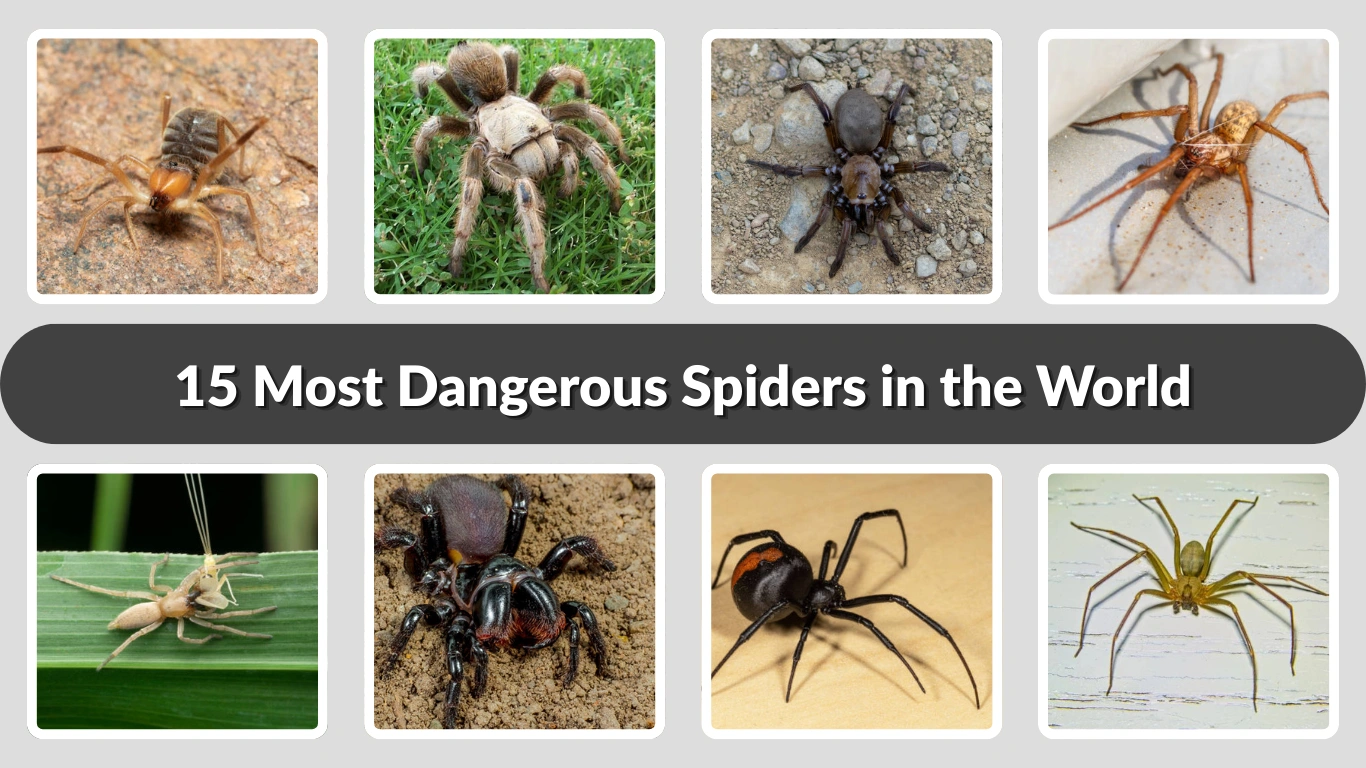
Spiders are among the most feared creatures on Earth, and while most species are harmless, a small number possess venom capable of causing serious medical emergencies in humans. These spiders vary in size, behavior, and habitat, but what unites them is their potential danger when threatened or accidentally encountered. In this list, we explore the world’s most dangerous spiders, focusing on those known for highly toxic venom, aggressive defense, or a history of medically significant bites.
1. Sydney Funnel-Web Spider

The Sydney funnel-web spider is widely regarded as one of the most dangerous spiders in the world. Native to eastern Australia, it is infamous for its highly toxic venom and aggressive defensive behavior, especially when threatened. Before modern antivenom, bites were often fatal, making this species a major concern for humans living in its habitat.
Identification
- Glossy black or dark brown body
- Large, powerful fangs
- Medium to large size (up to 5 cm body length)
- Funnel-shaped silk burrow, usually in moist soil
Venom Toxicity
The venom of the Sydney funnel-web spider contains a powerful neurotoxin called atracotoxin, which directly affects the human nervous system. It is especially dangerous to primates and can act very rapidly after a bite.
Bite Symptoms
A bite can cause severe pain, muscle spasms, numbness, sweating, nausea, difficulty breathing, and in extreme cases, loss of consciousness. Symptoms may escalate within minutes if untreated.
Risk to Humans
This spider poses a significant threat due to its tendency to stand its ground and strike repeatedly. Adult males are particularly dangerous and often enter human homes during mating season, increasing the risk of encounters.
2. Brazilian Wandering Spider

The Brazilian wandering spider is often cited as the most venomous spider in the world based on toxicity. Found mainly in South and Central America, it gets its name from its habit of roaming the ground at night rather than living in a fixed web. Its aggressive nature and potent venom make it particularly dangerous to humans.
Identification
- Brown body with darker markings
- Long, strong legs adapted for fast movement
- Body length up to 5 cm, leg span up to 15 cm
- Often found in banana plantations, leaf litter, and homes
Venom Toxicity
The venom contains powerful neurotoxins that disrupt nerve signal transmission. Even small amounts can cause severe physiological reactions, and untreated bites have historically resulted in fatalities.
Bite Symptoms
Symptoms may include intense pain, sweating, drooling, nausea, vomiting, elevated heart rate, muscle tremors, and in severe cases, paralysis. In males, bites can also cause prolonged and painful erections, a rare but dangerous medical condition.
Risk to Humans
Because this spider frequently wanders into human dwellings and agricultural shipments, accidental encounters are common. Its tendency to adopt a defensive posture and strike when disturbed increases the likelihood of envenomation.
3. Black Widow Spider

The black widow spider is one of the most recognizable and feared spiders worldwide. Found on almost every continent, it is known for its distinctive appearance and potent venom, which primarily affects the nervous system.
Identification
- Shiny black body
- Red hourglass marking on the underside of the abdomen
- Females significantly larger than males
- Irregular, messy webs near ground level
Venom Toxicity
Black widow venom contains latrotoxin, a neurotoxin that triggers massive neurotransmitter release. While rarely fatal with modern medical care, it is considered extremely potent relative to the spider’s size.
Bite Symptoms
Bites may cause sharp pain followed by muscle cramps, abdominal rigidity, sweating, chills, nausea, headache, and elevated blood pressure. Symptoms can last from several hours to a few days.
Risk to Humans
Black widows are not naturally aggressive and usually bite only when threatened or accidentally pressed against skin. Most bites occur in garages, woodpiles, or outdoor storage areas, making human awareness a key factor in prevention.
4. Brown Recluse Spider

The brown recluse spider is one of the most medically significant spiders in North America. Although it is shy and avoids human contact, its venom can cause serious tissue damage in rare cases. Many bites occur when the spider is accidentally trapped against the skin, such as in clothing or bedding.
Identification
- Light to dark brown body
- Distinct violin-shaped marking on the cephalothorax
- Six eyes arranged in three pairs (most spiders have eight)
- Body length about 6–12 mm
Venom Toxicity
The venom contains necrotic enzymes that can destroy skin and underlying tissue. While not usually life-threatening, it can cause severe localized damage if untreated.
Bite Symptoms
Initial bites are often painless, but within hours redness, blistering, and intense pain may develop. In severe cases, the bite can form a deep ulcer or open wound that heals slowly.
Risk to Humans
Serious reactions are uncommon, but children, the elderly, and individuals with weakened immune systems are more vulnerable. Misdiagnosis is common, as many skin conditions are mistaken for brown recluse bites.
5. Redback Spider

The redback spider is a close relative of the black widow and is native to Australia. It is responsible for more bite incidents than any other Australian spider, though fatalities are extremely rare due to effective antivenom.
Identification
- Black body with a red or orange stripe on the back
- Females much larger than males
- Long front legs
- Builds tangled webs in dry, sheltered locations
Venom Toxicity
Redback venom contains neurotoxins similar to those of the black widow. It affects nerve endings, causing prolonged pain and systemic symptoms if untreated.
Bite Symptoms
Common symptoms include intense localized pain, sweating, nausea, headache, muscle weakness, and swollen lymph nodes. Pain can persist for days or even weeks.
Risk to Humans
Redbacks are not aggressive but will bite defensively. They are often found around homes, sheds, and outdoor furniture, making accidental encounters relatively common in Australia.
6. Mouse Spider

The mouse spider is a highly venomous species native to Australia and is often mistaken for the Sydney funnel-web spider due to its similar appearance. Although bites are rare, this spider is considered dangerous because its venom is powerful and it has long fangs capable of penetrating fingernails and soft shoes.
Identification
- Shiny black or dark brown body
- Large head and thick legs
- Males may have red jaws or head patches
- Lives in deep burrows with trapdoor-style entrances
Venom Toxicity
Mouse spider venom contains neurotoxins that closely resemble those of the funnel-web spider. While less aggressive, its venom can still cause serious neurological effects in humans.
Bite Symptoms
Symptoms may include severe pain, sweating, muscle twitching, nausea, numbness, and difficulty breathing. In untreated cases, symptoms can escalate quickly, especially in children.
Risk to Humans
Although encounters are uncommon, the risk increases during mating season when males wander. Funnel-web antivenom has been proven effective against mouse spider venom, significantly reducing fatal outcomes.
7. Six-Eyed Sand Spider

The six-eyed sand spider is one of the most feared spiders due to its potentially deadly venom, even though it is extremely reclusive. Found in the deserts of southern Africa and South America, it relies on camouflage rather than aggression.
Identification
- Sandy brown or reddish coloration
- Six eyes arranged in three pairs
- Flat, crab-like body shape
- Buries itself under sand for concealment
Venom Toxicity
This spider’s venom is cytotoxic and hemolytic, meaning it destroys tissues and blood cells. Laboratory studies suggest the venom is extremely potent, though confirmed human bite cases are very rare.
Bite Symptoms
Potential symptoms include severe tissue necrosis, internal bleeding, blood clotting disorders, and organ failure. Due to the lack of documented cases, exact symptom progression is not fully understood.
Risk to Humans
Direct risk is low because the spider avoids human contact and lives in remote desert regions. However, the absence of antivenom and the potency of its venom make any bite a serious medical emergency.
8. Chilean Recluse Spider

The Chilean recluse spider is considered the most dangerous recluse species in the world and is responsible for the majority of serious spider bite cases in South America. Commonly found in Chile and neighboring countries, this spider often lives inside human homes, increasing the chance of accidental bites.
Identification
- Light brown to tan body
- Dark violin-shaped marking on the cephalothorax
- Long, thin legs with fine hairs
- Body length up to 4 cm including legs
Venom Toxicity
The venom of the Chilean recluse contains powerful necrotic toxins, particularly sphingomyelinase D, which can destroy skin tissue and damage red blood cells. This venom is significantly more potent than that of other recluse spiders.
Bite Symptoms
Bites may begin with mild pain or itching, followed by swelling, redness, and blistering. In severe cases, extensive skin necrosis, fever, nausea, kidney failure, and hemolysis can occur, sometimes requiring surgery or skin grafts.
Risk to Humans
This species poses a high risk because it thrives in dark indoor spaces such as closets, shoes, and behind furniture. Children and elderly individuals are especially vulnerable to severe systemic reactions.
9. Yellow Sac Spider

The yellow sac spider is widespread across North America, Europe, and parts of Asia. Although smaller and less feared than other species on this list, it is responsible for a high number of spider bites due to its tendency to live close to humans.
Identification
- Pale yellow to light green body
- Darker mouthparts
- Slender legs and oval abdomen
- Builds small silk sacs in corners of walls and ceilings
Venom Toxicity
The venom is mildly cytotoxic and can cause localized tissue irritation. While it does not typically cause severe necrosis, it is strong enough to produce painful and noticeable reactions in humans.
Bite Symptoms
Bites are often immediately painful, followed by redness, swelling, itching, and a burning sensation. In some cases, mild blistering or ulcer formation may occur, but symptoms usually resolve within a few days.
Risk to Humans
Yellow sac spiders are nocturnal and frequently wander indoors at night. They are more likely to bite than many other spiders when trapped against skin, making them a common cause of medically reported spider bites despite their relatively mild venom.
10. Wolf Spider

Wolf spiders are large, fast-moving hunters found on every continent except Antarctica. Although they are not considered deadly, their size, speed, and painful bite make them one of the more intimidating spiders people encounter.
Identification
- Brown, gray, or mottled body with stripes
- Large forward-facing eyes
- Robust, hairy body and long legs
- Does not build webs; hunts on the ground
Venom Toxicity
Wolf spider venom is not highly toxic to humans, but it contains compounds that can cause localized pain and inflammation. Allergic reactions, while rare, are possible.
Bite Symptoms
Bites usually cause immediate sharp pain, redness, swelling, and itching. In some cases, nausea, dizziness, or mild fever may occur, especially in sensitive individuals.
Risk to Humans
Wolf spiders are not aggressive and usually bite only when provoked or handled. Most encounters happen outdoors or when the spider accidentally enters homes, posing minimal serious risk.
11. Hobo Spider

The hobo spider is native to Europe but has spread to parts of North America. It gained a dangerous reputation in the past, though recent studies suggest its venom is less harmful than once believed.
Identification
- Brown body with chevron-like abdominal markings
- Long legs with fine hairs
- Funnel-shaped web in basements or ground crevices
- Body length up to 14 mm
Venom Toxicity
The venom is mildly cytotoxic and was once thought to cause severe necrotic wounds. Current evidence indicates that serious tissue damage is uncommon.
Bite Symptoms
Symptoms may include mild pain, redness, headache, fatigue, and temporary skin irritation. Severe reactions are rare and usually linked to secondary infections.
Risk to Humans
Hobo spiders are shy and avoid human interaction. Bites typically occur when the spider is accidentally disturbed, making the actual threat to humans relatively low.
12. Trapdoor Spider

Trapdoor spiders are ancient, heavy-bodied spiders known for living in silk-lined burrows with hinged “trapdoors.” While their appearance and large fangs can be alarming, they are generally less dangerous than some other spiders on this list.
Identification
- Dark brown or black, stocky body
- Very large, downward-pointing fangs
- Short, thick legs
- Lives in underground burrows with camouflaged lids
Venom Toxicity
Trapdoor spider venom is moderately toxic. It is designed to subdue insects rather than harm large mammals, but the venom can still cause significant pain and local reactions in humans.
Bite Symptoms
Bites are often extremely painful due to the spider’s powerful fangs. Symptoms may include swelling, redness, bleeding at the bite site, and lingering soreness that can last several days.
Risk to Humans
Trapdoor spiders are reclusive and rarely bite unless handled or provoked. Their bites are more a mechanical injury than a venomous threat, and serious medical complications are uncommon.
13. Mediterranean Recluse Spider

The Mediterranean recluse spider is closely related to the brown and Chilean recluse spiders. Found across southern Europe, North Africa, and parts of the Middle East, it is medically significant due to its necrotic venom.
Identification
- Light brown to gray body
- Faint violin-shaped marking on the cephalothorax
- Long, thin legs
- Six eyes arranged in three pairs
Venom Toxicity
Its venom contains cytotoxic enzymes capable of damaging skin and underlying tissue. While less potent than the Chilean recluse, it can still cause serious localized injuries.
Bite Symptoms
Bites may begin with mild discomfort and progress to redness, swelling, blistering, and tissue necrosis. Healing can be slow, sometimes leaving permanent scars.
Risk to Humans
This spider often lives in undisturbed indoor areas such as attics, closets, and storage spaces. Bites typically occur when it is accidentally pressed against the skin, making caution in infested areas important.
14. Chinese Bird Spider

The Chinese bird spider is a large tarantula species native to China and Vietnam. Despite its intimidating size and name, it does not prey on birds regularly, but it is considered dangerous due to its potent venom and aggressive defensive behavior.
Identification
- Large, dark brown to black hairy body
- Thick legs with noticeable spines
- Body length up to 6 cm, leg span over 15 cm
- Lives in burrows or under rocks and logs
Venom Toxicity
The venom contains neurotoxic compounds that can cause serious reactions in humans. Unlike many tarantulas, its venom is considered medically significant and stronger than that of most New World tarantulas.
Bite Symptoms
Symptoms may include intense pain, swelling, muscle cramps, nausea, fever, and in severe cases, breathing difficulty or neurological effects such as numbness.
Risk to Humans
This spider is aggressive when threatened and will bite readily if provoked. Encounters are more likely in rural areas, and lack of specific antivenom increases medical concern.
15. Camel Spider

Camel spiders, also known as solifuges or wind scorpions, are often mistaken for true spiders. While technically not spiders, they are commonly included in dangerous spider lists due to their frightening appearance and painful bites.
Identification
- Large tan or brown body
- Massive forward-facing jaws (chelicerae)
- Long legs adapted for speed
- No venom glands
Venom Toxicity
Camel spiders are not venomous. Their danger comes from powerful jaws that can tear skin and cause deep wounds rather than toxin-based effects.
Bite Symptoms
Bites can cause severe pain, bleeding, and risk of infection. In desert environments, secondary infections are a greater concern than the bite itself.
Risk to Humans
Camel spiders are fast and may run toward humans, usually seeking shade. While not deadly, their size, speed, and biting capability make encounters alarming and potentially painful.
FAQs
1. What is the most dangerous spider in the world?
The Sydney funnel-web spider is often considered the most dangerous spider due to its extremely toxic venom and aggressive behavior, especially toward humans.
2. Are spider bites usually fatal?
No, spider bites are rarely fatal. With modern medical care and antivenom, deaths from spider bites are extremely uncommon worldwide.
3. Which spider causes the most human bites?
Spiders like the yellow sac spider and redback spider cause a high number of reported bites because they commonly live near human homes.
4. How can you avoid dangerous spider bites?
Avoid placing hands in dark or undisturbed areas, shake out shoes and clothing before wearing them, and keep living spaces clean and clutter-free.
5. Should you seek medical help after a spider bite?
Yes. If a bite causes severe pain, spreading redness, muscle spasms, or systemic symptoms, medical attention should be sought immediately.
