
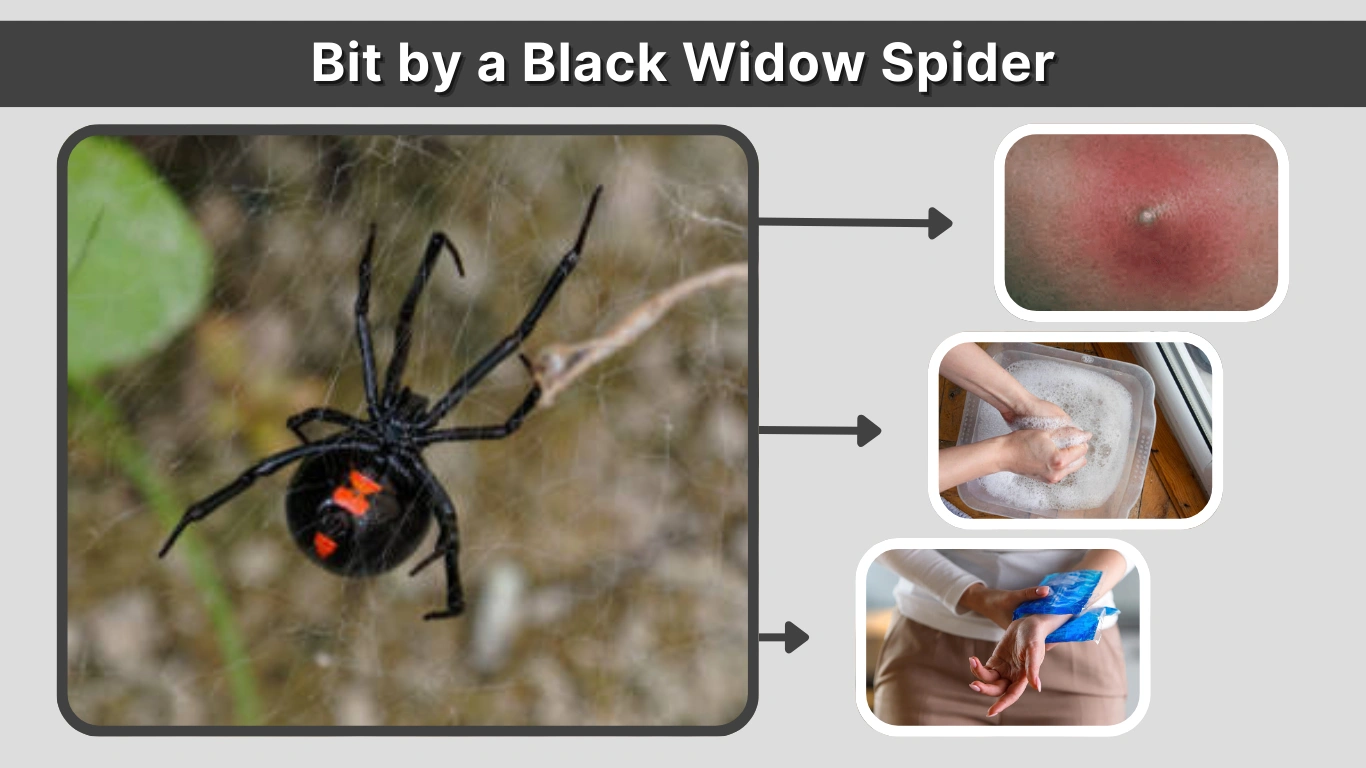
Being bit by a black widow spider is a frightening experience for many people because this spider is widely known for its potent venom and painful bite. Although black widow bites are rarely life-threatening, they can cause intense muscle pain, cramping, and uncomfortable systemic symptoms. Many bites happen accidentally and are not immediately recognized. Understanding how a black widow bite occurs, what early signs look like, and how symptoms progress helps people respond quickly and avoid unnecessary panic or serious complications.
How a Black Widow Spider Bite Happens
Black widow spiders are not aggressive and almost never bite unless they feel trapped or threatened. Most bites occur when a person unknowingly presses a spider against their skin. This often happens while putting on shoes, reaching into storage boxes, handling firewood, cleaning garages, moving outdoor furniture, or working in dark, undisturbed spaces.
Black widows prefer quiet, hidden environments such as woodpiles, sheds, crawl spaces, mailboxes, outdoor toilets, and cluttered corners of garages or basements. When disturbed, they usually try to escape. A bite is a defensive reaction, not an attack.
When a black widow bites, it injects venom through two small fangs. The initial bite may feel like a pinprick, mild sting, or slight burning sensation. Because the early pain can be subtle, many people do not realize they have been bitten until symptoms begin to spread within 20 to 60 minutes.
Identification of a Black Widow Spider Bite

A black widow bite often looks mild on the skin but feels much more serious inside the body. Common identification signs include:
- Two tiny puncture marks close together
- Mild redness or a small pale or swollen spot
- Burning, stinging, or sharp localized pain
- Increased sweating near the bite area
- Muscle tightness beginning around the bite
Unlike some other spider bites, black widow bites usually do not cause major skin damage. Blistering or tissue breakdown is uncommon. The most important identifying feature is the way symptoms move beyond the skin and affect muscles and nerves.
Early Symptoms After Being Bit by a Black Widow Spider
Immediate Reactions
In the first few minutes, the bite may cause slight redness, tingling, or warmth. Some people describe the feeling as similar to a needle prick or mild bee sting. Others feel almost nothing at first. A small red mark or faint swelling may appear, but dramatic skin changes are rare.
Within 30 to 60 minutes, pain often becomes more noticeable. It may change from a mild sting into a burning, throbbing, or stabbing sensation. The area around the bite can feel tight, sore, or unusually sensitive to touch.
Symptoms Within the First Few Hours
As the venom spreads through the nervous system, symptoms often move away from the bite site. Muscle cramps may begin near the bite and gradually extend into larger muscle groups. The abdomen, chest, shoulders, back, and thighs are commonly affected.
During this stage, people may experience abdominal pain that mimics appendicitis, intense back pain, sweating, chills, nausea, headache, restlessness, or anxiety. Some develop rapid heartbeat or elevated blood pressure. These symptoms can feel alarming, which is why black widow bites often lead to emergency room visits.
Stages of a Black Widow Spider Bite

Stage 1: Local Bite Response
This stage focuses on the bite site itself. Pain, redness, and mild swelling develop. The skin usually remains intact, without open wounds or major blistering. This stage may last from a few minutes to several hours.
Stage 2: Spreading Systemic Effects
Venom begins affecting the nervous system. Muscle cramps, tightening, and deep aching pain develop. Abdominal and chest muscles may become rigid or sore. Sweating, nausea, chills, and restlessness are common. This stage often causes the greatest discomfort.
Stage 3: Peak Venom Activity
Symptoms usually intensify between 6 and 24 hours after being bit by a black widow spider. Muscle spasms may be severe. Fatigue, weakness, anxiety, and elevated blood pressure can occur. This is the phase when medical treatment is most often required to control pain and muscle contractions.
Stage 4: Early Recovery Phase
After peak symptoms, pain and cramping slowly begin to ease. Muscles remain sore, and energy levels may be low. Some people feel improvement within a day, while others continue to experience discomfort for several days.
What a Black Widow Bite Feels Like Compared to Other Spider Bites
Most common spider bites mainly irritate the skin, causing itching, redness, or small bumps similar to insect bites. Being bit by a black widow spider is different because the venom affects nerves and muscles rather than destroying skin tissue.
Instead of large wounds, black widow bites create deep internal pain, cramping, sweating, and body-wide discomfort. This nerve-targeting effect explains why symptoms can seem much worse than what the skin shows.
First Aid After Being Bit by a Black Widow Spider

If you believe you have been bit by a black widow spider, quick and calm first aid can help reduce discomfort and prevent complications. The bite area should be gently washed with soap and clean water to lower the risk of infection. Avoid cutting the skin, attempting to suck out venom, or applying harsh chemicals.
- Clean the bite gently with soap and water
- Apply a cool compress for 10 minutes at a time
- Keep the affected area still and elevated if possible
- Avoid heavy physical activity that may spread venom faster
- Use mild over-the-counter pain relief if needed
- Observe symptoms closely for the next several hours
Cold compresses can reduce pain and minor swelling, but ice should never be placed directly on the skin. Wrapping ice in a cloth is safer and more comfortable.
Medical Treatment Options
When to Seek Medical Help
Medical evaluation is strongly advised if severe pain, intense muscle cramps, chest tightness, breathing difficulty, vomiting, or spreading symptoms occur. Children, older adults, pregnant individuals, and people with heart or chronic health conditions should seek medical care even for moderate symptoms.
Hospital and Clinical Treatments
In medical settings, treatment focuses on symptom control and monitoring. Doctors may provide stronger pain medication, muscle relaxants, or intravenous fluids. In rare severe cases, antivenom may be administered to rapidly reduce symptoms. Blood pressure, heart rate, and breathing are monitored until the patient stabilizes.
Most people experience significant improvement within 24 to 48 hours after proper treatment.
How Long Does Recovery Take?

Recovery time varies based on age, health, and venom sensitivity. In mild cases, pain and cramping may ease within one to two days. In more severe cases, symptoms can last several days. Fatigue, mild weakness, or muscle soreness may linger for up to two weeks.
Permanent damage is extremely rare. Most healthy adults make a full recovery without long-term effects. Returning to normal activities should be gradual, especially if muscle pain or weakness remains.
Possible Complications and Warning Signs
Although black widow bites are rarely fatal, complications can occur. High blood pressure, severe muscle rigidity, breathing difficulty, or uncontrolled pain require urgent care. Allergic reactions to venom or medication may cause swelling of the face, hives, or trouble breathing and should be treated as medical emergencies.
Secondary skin infection is possible if the bite area is scratched or not kept clean.
How to Prevent Black Widow Spider Bites

Black widow bites are largely preventable with simple precautions, especially in areas where these spiders are common.
- Wear gloves when handling firewood, boxes, or garden materials
- Shake out shoes, clothing, and towels before use
- Reduce clutter in garages, basements, and sheds
- Seal cracks, gaps, and dark hiding spots around the home
- Use outdoor lighting to reduce insect prey and spider activity
Regular cleaning and cautious handling of stored items greatly reduce the risk of accidental contact.
FAQs
Can being bit by a black widow spider be life-threatening?
Deaths from black widow bites are extremely rare. Most healthy adults recover fully, even when symptoms are intense. Severe reactions are more likely in children, the elderly, or people with serious health conditions, which is why medical evaluation is important when symptoms become strong.
What does a black widow spider bite look like?
A black widow bite usually shows two tiny puncture marks with mild redness or swelling. The skin often looks less serious than it feels. Unlike some spider bites, black widows rarely cause open sores or major tissue damage.
How quickly do symptoms start after a black widow bite?
Symptoms often begin within 20 to 60 minutes. Pain may spread from the bite site into the abdomen, chest, back, or shoulders within a few hours as the venom affects nerves and muscles.
Do all black widow bites require medical treatment?
Not all bites need hospital care. Mild cases may be managed at home with cleaning, cold compresses, and rest. However, severe pain, muscle spasms, breathing problems, or bites in high-risk individuals should always be evaluated by a doctor.
How long does black widow venom stay in the body?
Venom effects usually peak within 24 hours and gradually fade over several days. Some people experience lingering soreness or fatigue for one to two weeks, but the body naturally clears the venom over time.
