
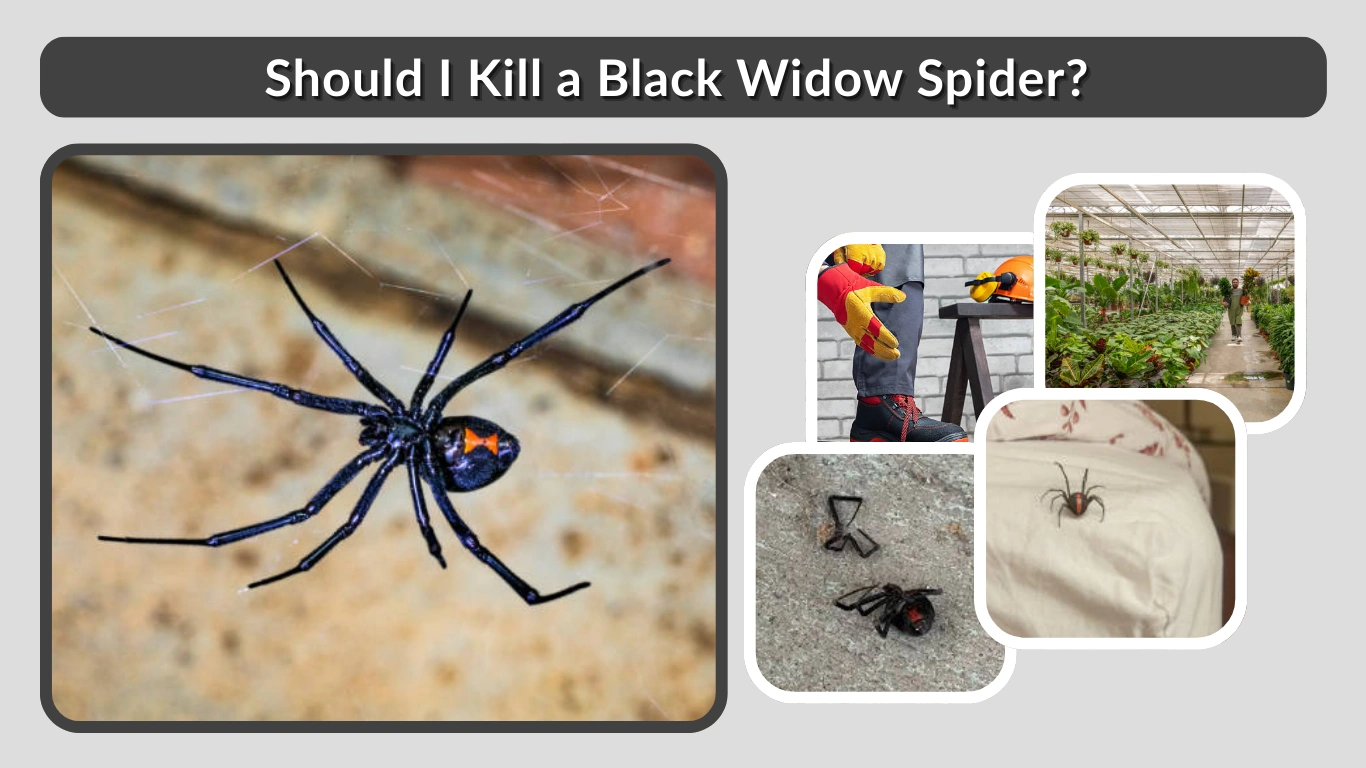
Many people panic when they see a black widow spider because of its reputation as one of the most dangerous spiders in the world. This fear leads to a common question: should I kill a black widow spider, especially if it is in my house or near where my family lives? While black widows do carry potent venom, bites are rare and spiders usually avoid human contact. Understanding the real level of risk, where the spider is located, and what safer options exist can help you make the right decision without unnecessary danger.
Should I Kill a Black Widow Spider?
The short answer is: not always, but sometimes. Black widow spiders are not aggressive and almost never bite unless they are crushed, trapped, or accidentally pressed against skin. In many outdoor situations, they pose little threat and actually help control insect populations. However, when black widows are inside the home or in areas where accidental contact is likely, the risk increases significantly.
The decision should be based on location, accessibility, and who lives in the home. A single black widow in a remote outdoor woodpile is very different from one inside a child’s bedroom, laundry area, or shoe storage space. Killing a spider may eliminate an immediate risk, but removal, exclusion, and prevention often provide safer long-term solutions.
Understanding black widow behavior is essential. These spiders prefer dark, undisturbed places and usually retreat when disturbed. When people are bitten, it almost always happens because a spider was hidden in clothing, bedding, gloves, or stored items. This context explains why indoor encounters deserve more serious attention than outdoor sightings.
How Dangerous Are Black Widow Spiders to Humans?

Actual Risk of Bites
Black widow spiders are venomous, but bites are uncommon. Most bites occur when a person unknowingly presses a spider against their skin, such as when putting on shoes, reaching into storage boxes, or moving firewood. Black widows do not chase, jump, or attack humans. They remain in their webs and retreat when possible.
The highest risk groups include children, elderly individuals, pregnant women, and people with heart or respiratory conditions. For these populations, even a single bite can cause more serious symptoms. In healthy adults, most bites are not life-threatening, but they can still be extremely painful and medically significant.
What Happens If a Black Widow Bites You
A black widow bite may start as a mild sting but can progress into severe muscle pain, cramping, sweating, nausea, chest tightness, and abdominal rigidity. These symptoms often require medical treatment. While deaths are rare, untreated severe bites can lead to complications, which is why black widows inside living spaces are taken seriously.
Should I Kill a Black Widow Spider in My House?
Finding a black widow spider inside your home changes the risk level. Indoor environments create more opportunities for accidental contact, which is how most bites occur.
- Homes with children, elderly residents, or pets carry higher risk
- Black widows often hide in shoes, bedding, laundry, and storage boxes
- Indoor spiders are more likely to be crushed against skin
- Killing may be justified if the spider is in a high-contact area
- Removal can be safer if done correctly and immediately
- Quick safety actions should be taken to avoid accidental exposure
Because black widows reproduce and lay egg sacs, even one indoor spider may indicate others nearby. Indoor sightings should always trigger inspection and cleanup.
Should I Kill a Black Widow Spider Outside My House?

Black widow spiders outside the home usually pose far less danger. They commonly live in sheds, fences, outdoor furniture, woodpiles, crawl spaces, and garden borders. In these areas, they are unlikely to come into contact with people unless someone reaches into their hiding spot without protection.
In outdoor environments, black widows play a beneficial ecological role by feeding on flies, mosquitoes, roaches, and other pests. If a spider is located far from living spaces and can be easily avoided, killing it is often unnecessary. Wearing gloves, using tools, and keeping distance is usually sufficient to prevent bites.
However, outdoor black widows become a problem when they establish webs near doorways, children’s play equipment, mailboxes, or frequently handled items. In such locations, the chance of accidental contact increases, and removal or elimination becomes more reasonable.
When Killing a Black Widow Spider Is NOT Necessary
In many situations, killing a black widow spider is driven more by fear than by real danger. If the spider is outside, in a low-traffic area, and not near human activity, it can often be left alone. Black widows are not roaming hunters and will stay in one location unless disturbed.
Relocation may be an option for those who prefer not to kill spiders, but it should only be attempted with proper protection and tools. Simply spraying or crushing spiders without addressing habitat issues often leads to repeat encounters.
Understanding that black widows are defensive, not aggressive, helps reduce panic-driven reactions and encourages safer, more controlled responses.
When Killing a Black Widow Spider May Be the Safest Option

High-Risk Indoor Situations
Killing a black widow spider may be the safest choice when it is found in places where accidental contact is likely. Bedrooms, nurseries, bathrooms, laundry rooms, and clothing storage areas are high-risk zones because spiders can hide in sheets, towels, shoes, and folded clothes. In these environments, even careful people can unknowingly press a spider against their skin.
Homes with infants, elderly residents, or individuals with health conditions should be especially cautious. In these cases, removing the immediate threat may outweigh the benefits of relocation, particularly if the spider cannot be safely captured.
Repeated Sightings and Egg Sacs
Seeing multiple black widows or finding egg sacs suggests an established population. Egg sacs can contain hundreds of spiderlings, greatly increasing future risk. In these situations, killing visible spiders alone is not enough. Integrated pest control, including removal of webs, egg sacs, and habitat cleanup, becomes necessary to prevent recurring infestations.
What People on Reddit Often Get Wrong About Black Widows
Discussions on Reddit and social media often exaggerate the aggressiveness of black widow spiders. A common myth is that black widows chase people or actively seek to bite, which is not true. Another misconception is that every black widow bite is deadly. In reality, fatalities are rare, and most medically treated bites result in full recovery.
Some posts also promote dangerous “home remedies” such as smashing spiders with bare hands or using makeshift tools. These actions increase the risk of being bitten. Reliable decisions should be based on real spider behavior and safety principles, not viral fear stories.
How to Safely Kill a Black Widow Spider

If killing a black widow spider is necessary, it must be done without direct contact.
- Never attempt to kill a spider with bare hands
- Wear gloves and closed shoes for protection
- Use aerosol insecticide labeled for spiders
- Crush the spider with a hard object from a distance
- Vacuum spiders only with sealed bags and discard immediately
- Clean the area afterward to remove webs and egg sacs
The goal is to eliminate the spider without bringing your skin near it.
How to Remove a Black Widow Spider Without Killing It
Safe Capture and Relocation Methods
Relocation is safest when the spider is stationary and accessible. A long object, rigid container, and thick gloves are essential. The spider can be guided into a jar or box and sealed without touching it. The container should remain closed until relocation.
Where to Release a Black Widow Spider
Release should occur far from the home, ideally into natural, undisturbed environments away from human structures. Do not release spiders near sheds, garages, or woodpiles close to living areas. Always wash hands and tools after handling.
What to Do After Finding a Black Widow Spider
After any encounter, inspect surrounding areas carefully. Remove webs, vacuum corners, and look for egg sacs, which appear as round, papery spheres. Wash gloves, clothing, and tools used in the area. Reduce clutter and seal cracks to prevent reentry.
Regular monitoring is important. One spider may indicate others nearby. Consistent cleaning and habitat reduction significantly lower the chance of future encounters.
How to Prevent Black Widows in and Around Your Home
Preventive action reduces the need to make kill-or-remove decisions.
- Declutter dark, undisturbed spaces
- Seal cracks around doors, vents, and foundations
- Reduce insects that attract spiders
- Store firewood and boxes away from the home
- Inspect garages, sheds, and basements regularly
- Consider professional pest control for repeated problems
FAQs
Should I kill a black widow spider if I see one in my house?
If a black widow is inside living areas, especially near bedrooms, clothing, or children, removal or killing may be justified. Indoor environments increase accidental contact risk, which is how most bites happen. Safety should be the top priority.
Is it safe to leave a black widow spider outside?
In low-traffic outdoor areas, black widows usually pose little risk and can be left alone. They rarely move far from their webs. Problems arise only when they build webs near frequently handled objects or entryways.
Do black widow spiders attack humans?
No. Black widows are defensive, not aggressive. They bite only when crushed, trapped, or directly threatened. Most bites happen when people accidentally touch hidden spiders.
What is the safest way to kill a black widow spider?
Using a spider insecticide or crushing the spider from a distance with a solid object while wearing protective gear is safest. Never use bare hands or attempt close-range killing.
Should I call pest control if I find a black widow spider?
If you see repeated spiders, egg sacs, or infestations, professional pest control is recommended. They can safely remove spiders and address the environmental conditions attracting them.
