
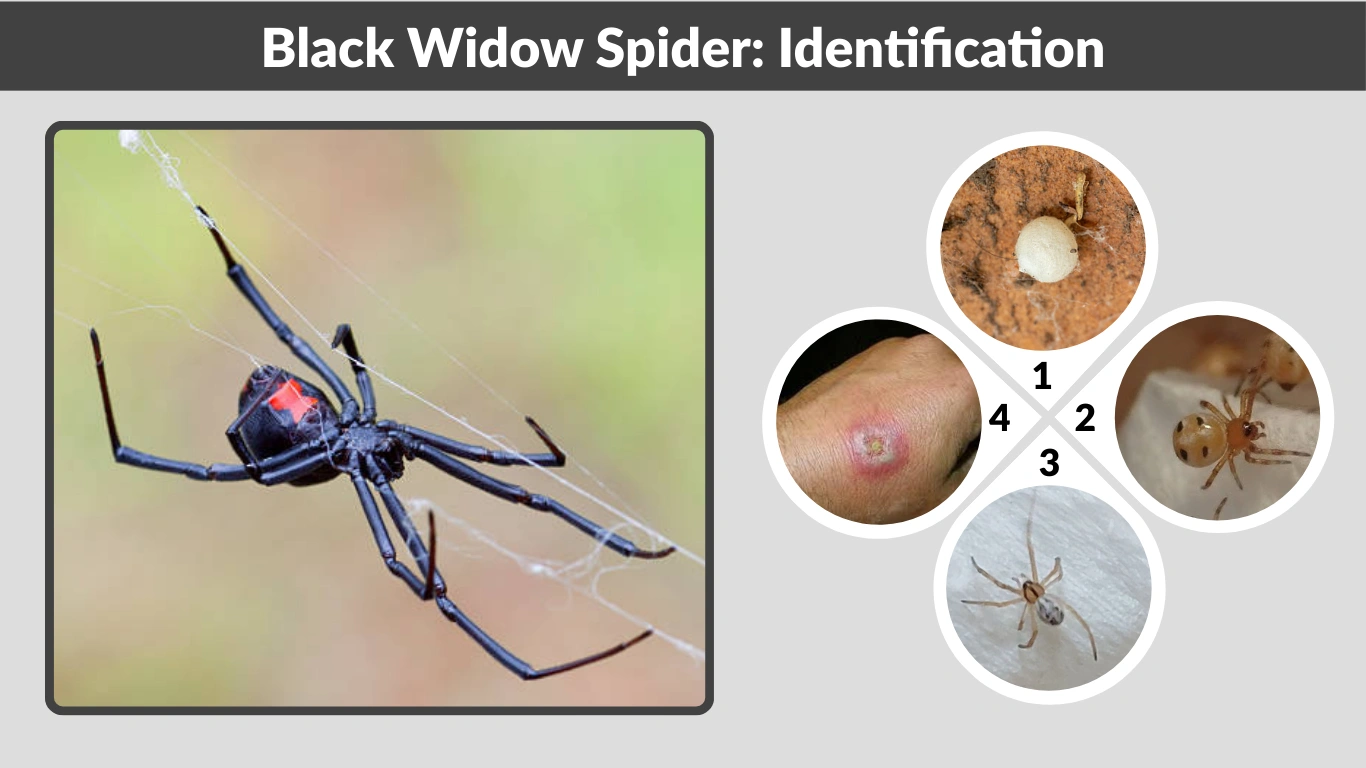
The black widow spider is one of the most recognizable and misunderstood spiders in the world. Famous for its shiny black body and red hourglass marking, this spider is often associated with fear, danger, and deadly myths. In reality, black widows are shy, secretive creatures that prefer to hide rather than bite. This article explores black widow spider identification, physical features, habitat, behavior, and early biological traits to build a clear, factual understanding of this remarkable arachnid.
What Is a Black Widow Spider?
Black widow spiders belong to the genus Latrodectus, a group of venomous spiders found in many parts of the world. The name “black widow” comes from early observations of females sometimes killing and consuming males after mating, though this behavior is less common in natural environments than in captivity.
These spiders are members of the cobweb spider family (Theridiidae) and are known for building irregular, tangled webs rather than the neat circular webs associated with garden spiders. Black widows play an important ecological role by controlling insect populations. Despite their potent venom, they are not aggressive and usually bite only when threatened or accidentally pressed against skin.
Physical Appearance and Identification

Black widow spiders have a very distinct look, making them easier to identify than many other spider species. Although appearance can vary slightly between species and regions, several traits are consistent.
- Body color and texture: Adult females are typically jet black with a smooth, glossy surface that reflects light clearly.
- Red hourglass marking: Most females display a red or orange hourglass shape on the underside of the abdomen, though some may show spots or broken markings.
- Size: Females are much larger, usually 8–13 mm in body length, with long, slender legs extending their overall size.
- Male appearance: Males are smaller, lighter in color, and often patterned with white or red markings instead of solid black.
- Juveniles: Young black widows often appear gray or brown with stripes and spots, darkening with each molt.
Because several harmless spiders resemble black widows, the presence of the red hourglass on a glossy black abdomen is the most reliable identification feature.
Male vs Female Black Widow Spiders

Size and Color Differences
Female black widows are significantly larger and darker than males. Their large, round abdomen and shiny black coloration make them visually striking. Males are much smaller, slimmer, and usually light brown or gray with red, white, or yellow markings. This strong difference in appearance is one of the most extreme examples of sexual dimorphism among spiders.
Behavioral Differences
Females are web-dwellers that remain in one sheltered area for most of their lives. They wait in their webs for vibrations that signal trapped prey. Males, on the other hand, wander in search of females and are rarely noticed by humans. Because males roam more and live shorter lives, they are much less commonly encountered.
Lifespan Differences
Female black widows can live one to three years under favorable conditions, while males often survive only a few months after reaching maturity. Many males die shortly after mating, either naturally or, in some cases, by being eaten by the female.
Habitat and Distribution
Black widow spiders are found on every continent except Antarctica. They thrive in warm and temperate regions, including North America, South America, Africa, Australia, and parts of Asia and Europe. Different species occupy slightly different climates, but all prefer dry, sheltered environments.
Outdoors, black widows are commonly found under rocks, inside woodpiles, beneath outdoor furniture, and in dark crevices. Indoors, they may inhabit garages, basements, storage rooms, sheds, and cluttered corners where insects are abundant. They avoid open spaces and light, choosing quiet, undisturbed locations.
Although they sometimes live near homes, black widows do not actively seek human contact. Their presence usually indicates available prey rather than aggressive expansion.
Web Structure and Hunting Behavior

Black widow spiders build irregular, tangled webs close to the ground. Unlike the symmetrical orb webs of garden spiders, these webs look messy and chaotic. The silk, however, is extremely strong and sticky, allowing it to trap insects effectively.
The spider usually hangs upside down in the web, waiting for vibrations. When an insect becomes trapped, the black widow quickly wraps it in silk and delivers venom to immobilize it. Feeding often occurs at night, as black widows are primarily nocturnal hunters. Their web placement in dark corners increases their hunting success while keeping them hidden from predators.
Diet and Feeding Habits
Black widow spiders are carnivorous predators that rely on their powerful silk and venom to subdue prey. Their diet mainly consists of insects and other small invertebrates that wander into their webs. Once prey is captured, digestive enzymes are injected to liquefy internal tissues, which the spider then consumes.
- Common prey: Flies, mosquitoes, beetles, ants, caterpillars, and grasshoppers.
- Occasional prey: Small spiders, centipedes, and other soft-bodied arthropods.
- Feeding method: Prey is tightly wrapped in silk before venom is delivered.
- Feeding frequency: Adults may eat every few days depending on food availability.
- Ecological role: They help naturally control pest insect populations.
Life Cycle and Reproduction

Mating Behavior
Mating typically occurs during warmer months when males leave their small webs and search for females. To avoid being mistaken for prey, the male performs cautious courtship signals by plucking strands of the female’s web. While sexual cannibalism can occur, it is not guaranteed and is less common in the wild.
Egg Sacs and Spiderlings
After mating, the female produces one or more egg sacs, which are pale brown and papery in texture. Each sac may contain over 200 eggs. She guards these sacs aggressively until spiderlings emerge. The young spiders disperse by ballooning, releasing silk threads that carry them on air currents.
Growth and Development
Spiderlings go through several molting stages as they grow. With each molt, their coloration darkens and markings become more defined. Reaching maturity may take several months depending on temperature, food supply, and species.
Venom and How It Works
Black widow venom is neurotoxic, meaning it affects the nervous system. It is extremely effective against insects, rapidly causing paralysis. In humans, venom can trigger pain, muscle cramps, sweating, nausea, and elevated blood pressure.
The spider uses venom mainly for hunting, not defense. Bites usually occur only when the spider is accidentally pressed against skin. In many encounters, black widows deliver a “dry bite” without venom, conserving it for prey.
Black Widow Spider Bite

A black widow bite often feels like a sharp pinprick or may go unnoticed at first. Symptoms typically develop within one to three hours.
- Early signs: Local redness, swelling, and mild pain.
- Systemic symptoms: Muscle cramps, abdominal pain, sweating, headache, and nausea.
- Severe reactions: Chest pain, breathing difficulty, and high blood pressure.
- High-risk groups: Young children, elderly individuals, and people with chronic illnesses.
- Recovery: Most healthy adults recover within a few days with medical care.
Although black widow bites are medically significant, fatalities are extremely rare.
Are Black Widow Spiders Dangerous to Humans?
Black widow spiders are venomous, but they are not considered deadly to most people. Modern medicine has made serious complications uncommon. Most bites result in discomfort rather than life-threatening reactions.
Deaths from black widow bites are exceptionally rare and usually associated with untreated cases or vulnerable individuals. Compared to many other venomous animals, black widows pose a low overall risk. Fear often exceeds the actual danger.
Behavior and Temperament
Black widows are shy, non-aggressive spiders. They prefer to retreat rather than attack and usually bite only when trapped or threatened. Females remain hidden in their webs, while males avoid confrontation entirely.
They are primarily nocturnal and become more active at night. During colder months, activity decreases, and spiders may remain hidden for long periods.
Black Widow Spiders Around Homes
Black widows may live near houses because human structures provide shelter and insects. Common hiding places include garages, sheds, outdoor furniture, firewood stacks, and cluttered storage areas.
Seeing one does not mean infestation. Most populations remain small and localized. Reducing clutter and insect numbers lowers the chance of encounters.
Interesting Black Widow Spider Facts
Black widow silk is exceptionally strong relative to its thickness. Despite their reputation, females do not always kill males after mating. They can survive months without food and are important natural pest controllers.
Their red hourglass marking serves as a warning signal to predators. Some species lack the full hourglass but retain venom equally potent.
FAQs
How dangerous is a black widow spider bite?
A black widow bite is medically important but rarely life-threatening. Most healthy adults experience pain and muscle cramps that improve within a few days. Severe reactions are uncommon and usually affect children, elderly individuals, or those with weakened immune systems.
Can a black widow spider kill a human?
Deaths from black widow bites are extremely rare. With modern medical treatment, fatal outcomes are highly unlikely. Most bites result in discomfort rather than serious complications.
Where do black widow spiders usually live?
Black widows prefer dark, sheltered places such as woodpiles, rocks, garages, basements, sheds, and outdoor furniture. They thrive where insects are abundant and disturbance is minimal.
How can you identify a true black widow spider?
True black widows usually have a shiny black body with a red or orange hourglass marking on the underside of the abdomen. Females are much larger and darker than males.
Are black widow spiders aggressive toward people?
No. Black widows are shy and avoid humans. They bite only when trapped, squeezed, or directly threatened. Most encounters end without any defensive behavior.
