
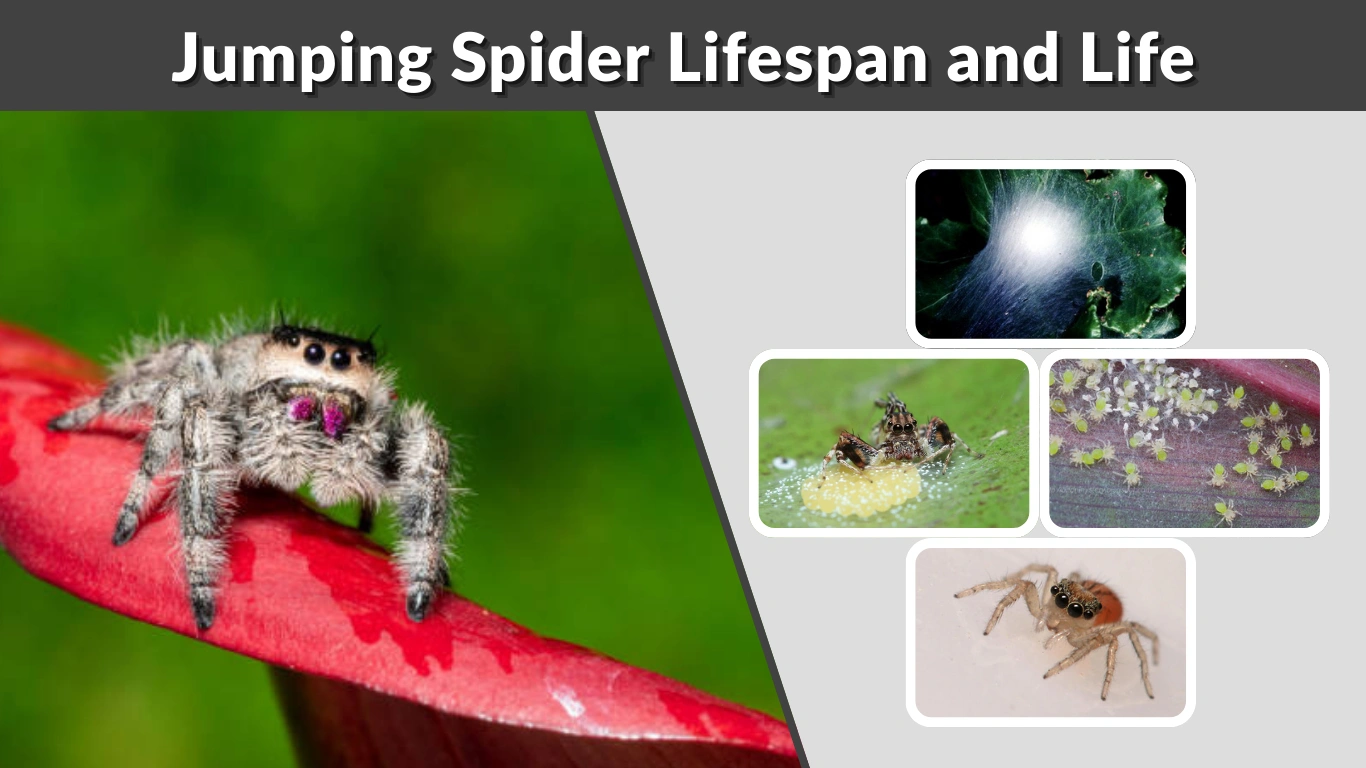
Jumping spiders are among the most fascinating spiders in the world, known for their sharp eyesight, curious behavior, and impressive jumping ability. Many people are surprised to learn that these tiny hunters also have a complex life cycle and a lifespan that varies widely depending on species and environment. Understanding the jumping spider lifespan and life cycle helps nature lovers, students, and pet keepers learn how these spiders grow, reproduce, and survive. From fragile eggs to active adults, every stage plays an important role in their development.
What Makes Jumping Spiders Unique
Jumping spiders belong to the family Salticidae, one of the largest spider families on Earth. Unlike web-building spiders, they actively hunt prey using excellent vision and quick movements. Their large forward-facing eyes allow them to judge distance, recognize shapes, and even respond to movement with surprising accuracy.
These spiders are found on every continent except Antarctica. They live on leaves, tree bark, walls, fences, and even inside homes. Because they do not rely on webs to catch prey, they are constantly moving, exploring, and hunting. This active lifestyle influences both their life cycle and their lifespan. Energy use, food availability, temperature, and molting success all affect how long a jumping spider can survive and how quickly it develops.
Average Lifespan of a Jumping Spider

The average jumping spider lifespan usually ranges from six months to about two years, depending on species, sex, and living conditions. Some small species may complete their entire life cycle in under a year, while larger or tropical species may live longer.
In general, females tend to live longer than males. Males often die earlier due to risky wandering behavior, mating stress, and higher exposure to predators.
Lifespan in the Wild
In natural environments, jumping spiders face constant threats. Birds, lizards, frogs, larger spiders, and insects prey on them. Weather conditions such as heavy rain, cold seasons, and drought also reduce survival. Food shortages and failed molts are common causes of early death. Because of these pressures, many wild jumping spiders never reach old age, even if their species has the potential to live longer.
Lifespan in Captivity
Jumping spiders kept in captivity often live longer than wild ones. They are protected from predators and extreme weather and receive regular food. With proper humidity, clean enclosures, and suitable prey, some pet jumping spiders can reach the upper end of their natural lifespan. However, poor care, dehydration, or molting problems can still significantly shorten their lives.
Key Factors That Affect Lifespan
Several elements directly influence how long a jumping spider lives. Species genetics determine the natural lifespan range, while environment shapes the outcome. Temperature, humidity, food quality, and successful molting are critical. Stress, parasites, and disease can reduce lifespan at any stage of life.
Overview of the Jumping Spider Life Cycle

Jumping spiders do not undergo complete metamorphosis like butterflies. Instead, they develop gradually, looking more like adults after each molt. Their life cycle progresses through several distinct stages.
Main life cycle stages:
- Egg stage
- Spiderling stage
- Juvenile stage
- Sub-adult stage
- Adult stage
Each stage brings physical changes, new behaviors, and different survival challenges.
Egg Stage – The Beginning of Life

The life cycle of a jumping spider begins inside a silk egg sac. After mating, the female produces a thick, protective silk nest, often hidden under leaves, bark, stones, or inside small crevices. Inside this sac, she lays anywhere from a few dozen to over a hundred tiny eggs, depending on the species.
The eggs remain sealed inside the sac for days or weeks. During this time, warmth and humidity are extremely important. Cold or dry conditions can prevent proper development. In many species, the female stays close, guarding the sac against predators, parasites, and environmental threats. This early protection greatly increases the survival rate of the young.
Egg Sac Protection and Survival
Female jumping spiders are known for strong maternal instincts. They often refuse to hunt and remain with the egg sac, repairing the silk and chasing away intruders. Some species even continue guarding the spiderlings briefly after they hatch. This care stage is short, but it is one of the most important periods in the entire life cycle.
Spiderling Stage – Early Development

When the eggs hatch, tiny spiderlings emerge. At first, they usually remain inside the nest, absorbing the last of their yolk reserves. Soon after, they molt for the first time and begin moving more actively.
Once they leave the nest, spiderlings face extreme danger. Their small size makes them easy prey for ants, mites, insects, and even other spiders. Many do not survive this stage. Those that do begin hunting very small prey such as springtails and fruit flies.
Some spiderlings disperse by a method called ballooning, releasing silk threads that catch the wind and carry them to new locations. This helps prevent overcrowding and reduces competition with siblings.
Juvenile Growth and Molting Process

After the spiderling phase, jumping spiders enter the juvenile stage. This is the longest part of their life cycle and the period when most physical growth occurs. Juveniles look like small versions of adults but lack mature coloration and reproductive organs. Growth only happens through molting.
Key parts of the juvenile growth process:
- Pre-molt behavior, including reduced activity and appetite
- The molting event, when the spider sheds its old exoskeleton
- Post-molt recovery, while the new body hardens
- Rapid increase in size
- Improvement in vision, jumping, and hunting skills
Each successful molt brings the spider closer to maturity.
Sub-Adult Stage and Physical Changes
After several molts, juvenile jumping spiders enter the sub-adult stage. At this point, they closely resemble adults in body shape and hunting behavior, but they are not yet sexually mature. Their colors often become brighter, patterns more defined, and body proportions closer to adult form. They are stronger jumpers, more accurate hunters, and better able to defend themselves.
Internally, major changes are happening. Reproductive organs are developing, and in males, the pedipalps begin to enlarge, preparing for mating. This stage may last several weeks to months depending on species, temperature, and food availability. One final successful molt transforms the sub-adult into a fully mature adult.
How to Identify a Sub-Adult Jumping Spider
Sub-adult jumping spiders are larger than juveniles but slightly smaller than adults. Their colors are clearer, yet not as bold as fully mature individuals. Males often show swelling pedipalps without the fully developed structures seen in adults. Females appear broader but lack the full reproductive maturity of adult females.
Adult Stage – Maturity and Reproduction
The adult stage is the most biologically important phase of a jumping spider’s life. Adults have reached their final size and will no longer molt. Their vision is fully developed, making them highly efficient hunters capable of stalking, ambushing, and precisely leaping onto prey.
Adult jumping spiders are also known for their complex courtship displays. Males perform dances, leg waves, and body vibrations to attract females and avoid being mistaken for prey. Once adulthood is reached, the spider’s focus shifts toward reproduction. Although adults may live several months to over a year, this stage is often shorter than the combined juvenile phases, especially for males.
Mating and Reproductive Cycle
Reproduction is a defining feature of the adult life stage and directly influences overall lifespan.
Key parts of the reproductive cycle include:
- Courtship dances and visual signaling
- Careful mating interactions
- Egg production and egg-laying
- Egg sac construction and guarding
- Lifespan differences after mating
Males often die weeks or months after mating, either from exhaustion, predation, or natural decline. Females usually live longer, especially if they produce multiple egg sacs. A single female may repeat the egg-laying process several times, extending her adult lifespan.
Seasonal and Environmental Life Cycle Patterns
The speed of the jumping spider life cycle depends heavily on climate. In warm tropical regions, jumping spiders may breed year-round, and their development can be continuous. In temperate climates, most activity happens in spring and summer. Eggs are laid during warmer months when insects are abundant.
As temperatures drop, juveniles may slow their growth or overwinter in sheltered locations. Some species survive cold months as juveniles or sub-adults and complete their final molt the following spring. These seasonal pauses can lengthen the total lifespan even though active growth is slowed.
Jumping Spider Lifespan as Pets
In captivity, jumping spiders are protected from predators and harsh weather, which often allows them to reach the upper limit of their natural lifespan. With proper care, many live between one and two years, depending on species and age at capture.
Pet jumping spiders require small but well-ventilated enclosures, regular access to water droplets, and appropriately sized live prey. Stable humidity is especially important during molting. Stress-free environments and gentle handling help reduce premature death.
Common Causes of Early Death in Captivity
Many captive jumping spiders die early due to dehydration, failed molts, or unsuitable prey. Poor ventilation can lead to mold, while overcrowding increases stress. Sudden temperature changes and lack of moisture during molting are among the most common fatal problems.
Ecological Importance Throughout the Life Cycle
At every life stage, jumping spiders play a valuable ecological role. Spiderlings and juveniles feed on tiny insects, while adults control populations of flies, mosquitoes, aphids, and other pests. This makes them important natural pest regulators in gardens, forests, and even homes.
They are also a crucial food source for birds, reptiles, amphibians, and larger arthropods. Through this balance of predator and prey relationships, jumping spiders contribute to healthy ecosystems and biodiversity.
FAQs
How long do jumping spiders usually live?
Jumping spiders typically live between six months and two years, depending on species, sex, and environment. Females often live longer than males. Wild spiders usually have shorter lives due to predators and climate, while captive spiders may reach the higher end of their lifespan range.
How many times does a jumping spider molt?
Most jumping spiders molt between five and nine times before becoming adults. Each molt allows them to grow larger and develop new features. Molting is a dangerous time because the spider is soft and vulnerable until the new exoskeleton hardens.
When do jumping spiders lay eggs?
In most regions, jumping spiders lay eggs during spring and summer when temperatures are warm and insects are abundant. Tropical species may reproduce year-round. Females usually hide their egg sacs and guard them closely to improve survival rates.
Do female jumping spiders live longer than males?
Yes, female jumping spiders generally live longer than males. Males often die sooner after mating, while females may survive long enough to produce several egg sacs. This extended reproductive role usually results in a longer overall lifespan.
Can jumping spiders live longer in captivity?
Jumping spiders often live longer in captivity because they are protected from predators and extreme weather. However, proper humidity, feeding, and clean enclosures are essential. Poor care can shorten their lives just as quickly as natural threats.
