
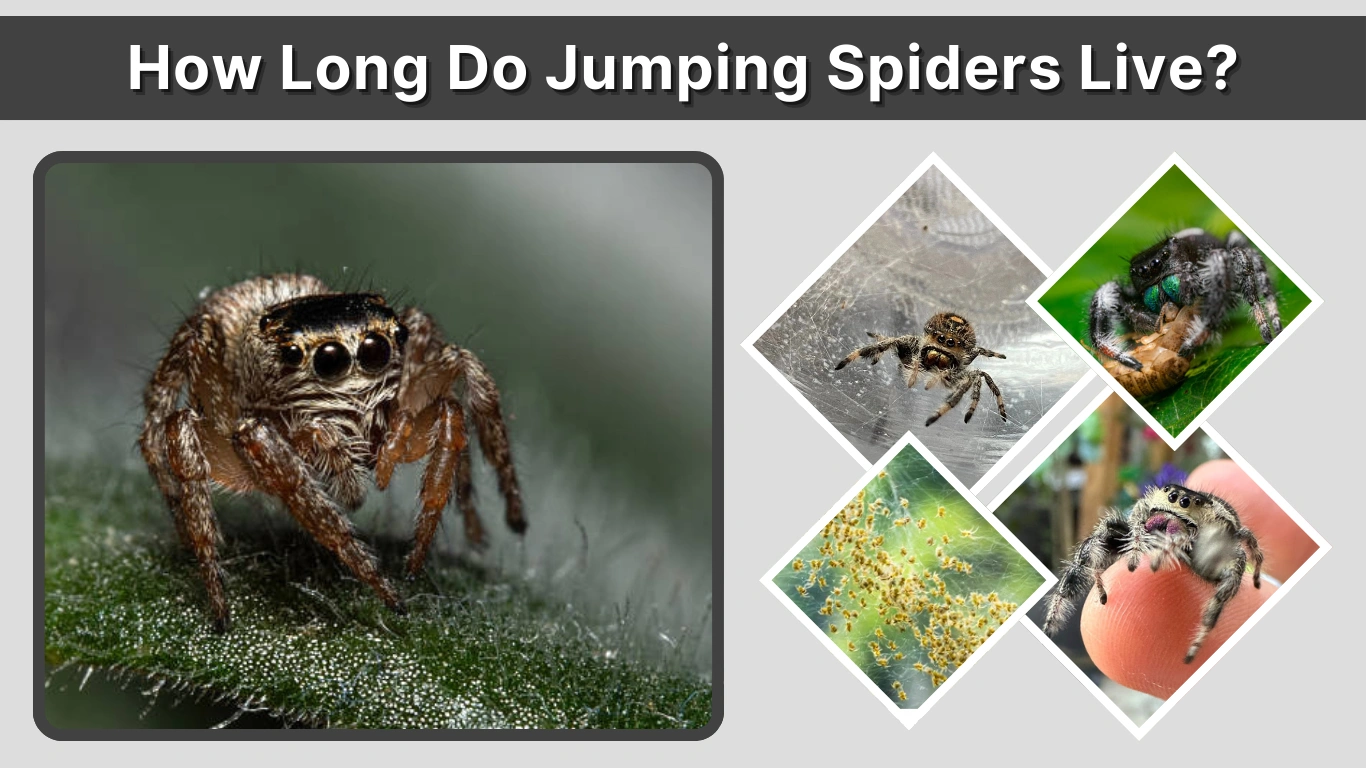
Jumping spiders are among the most fascinating spiders in the world, recognized for their sharp eyesight, alert movements, and curious behavior. Because they are commonly seen on walls, plants, and garden surfaces, many people wonder how long jumping spiders live and what factors influence their lifespan. The truth is that jumping spider lifespan varies widely depending on species, environment, and gender. This guide explores the average lifespan of jumping spiders, their life stages, and what determines how long they survive.
How Long Do Jumping Spiders Live on Average?

Most jumping spiders live between six months and two years, depending on species and living conditions. Many smaller species complete their entire life cycle within a single year, while some larger or colder-climate species may live longer, especially if they overwinter before reaching maturity.
In the wild, jumping spiders often have shorter lifespans due to predators, weather, parasites, and food shortages. Many never reach adulthood. In captivity, where food and safety are controlled, some jumping spiders live significantly longer than their wild counterparts.
Females usually outlive males. Males often die soon after reaching maturity and mating, while females may survive long enough to lay multiple egg sacs over several months.
Jumping Spider Life Cycle and Aging

Egg Stage
The life of a jumping spider begins inside a silk egg sac, usually hidden under leaves, bark, rocks, or human-made structures. A single egg sac may contain dozens of eggs. The mother often guards the eggs, protecting them from predators and environmental threats.
Incubation time varies by species and temperature, usually lasting a few weeks. Many eggs never hatch, and even fewer spiderlings survive long after emergence.
Spiderling Stage
When spiderlings hatch, they are extremely small and vulnerable. They remain in or near the nest briefly before dispersing. At this stage, mortality is very high. Spiderlings face threats from ants, other spiders, birds, and environmental hazards.
Spiderlings grow by molting, shedding their exoskeleton multiple times. Each molt allows them to increase in size and strength. Nutrition during this period is critical, as poor feeding can slow development or cause death.
Juvenile Stage
Juvenile jumping spiders resemble small adults but lack reproductive maturity. During this stage, they become more skilled hunters and expand their prey range. They continue molting at intervals, depending on species and temperature.
This stage may last several weeks to several months. In colder climates, juveniles may overwinter, remaining inactive during cold periods and resuming growth when conditions improve.
Adult Stage
Adulthood begins after the final molt. Adult jumping spiders focus on feeding and reproduction. Males usually become active in searching for females and may engage in elaborate courtship displays.
Adult lifespan varies. Some males live only a few weeks after maturity, while females may survive for many months, especially if they successfully reproduce. Aging in jumping spiders involves slower movement, reduced hunting success, and eventual decline.
Factors That Affect Jumping Spider Lifespan

Many environmental and biological factors influence how long a jumping spider lives.
- Species genetics and natural life expectancy
- Temperature and seasonal climate
- Availability of food and water
- Predators, parasites, and disease
- Habitat stability and shelter
- Human activity and pesticide exposure
- Quality of care in captivity
These factors determine whether a spider dies early in development or survives long enough to reproduce.
Lifespan of Jumping Spiders in the Wild
In natural environments, most jumping spiders face constant threats. Birds, lizards, frogs, ants, wasps, and larger spiders all prey on them. Heavy rain, extreme heat, and cold temperatures further reduce survival.
Because of these dangers, the majority of jumping spiders die before reaching adulthood. Those that survive must continually find food while avoiding predators. Seasonal changes also play a major role. In temperate regions, many adults die as winter approaches, leaving eggs or juveniles to survive into the next season.
Wild jumping spiders often live shorter lives than those in captivity, but they play a vital role in maintaining insect populations and supporting food webs.
Lifespan of Jumping Spiders in Captivity

Average Lifespan of Pet Jumping Spiders
Jumping spiders kept in captivity often live longer than those in the wild. With regular feeding, stable temperatures, and protection from predators, many pet jumping spiders live one to two years, and some females may exceed this range. Species commonly kept as pets, such as regal jumping spiders and bold jumping spiders, are known to survive well under proper care.
Spiderlings raised in captivity also have a much higher survival rate because they receive consistent food and are not exposed to outdoor threats. This controlled environment allows them to complete more molts successfully and reach adulthood more reliably.
Why Captive Jumping Spiders Often Live Longer
Several factors contribute to increased lifespan in captivity. Pet jumping spiders are not exposed to birds, parasites, or extreme weather. They receive regular meals and hydration, reducing stress and malnutrition. Enclosures also protect them from accidental injury and environmental instability.
However, improper care, such as low humidity, oversized prey, or unclean enclosures, can shorten a captive spider’s life. Longevity depends heavily on responsible husbandry.
Differences in Lifespan Between Male and Female Jumping Spiders
Sex plays a major role in how long jumping spiders live.
- Males mature faster than females
- Males often die shortly after mating
- Females typically live longer
- Egg production affects female longevity
- Females may survive several months after laying eggs
Males invest much of their adult life in locating mates and performing energy-intensive courtship displays, which contributes to earlier death. Females, once fertilized, may focus on feeding and egg-laying, allowing them to extend their lifespan.
Seasonal Life Cycles of Jumping Spiders
Many jumping spider species follow seasonal life cycles. In warm climates, some species reproduce year-round. In temperate regions, most species complete their life cycle in one year. Adults often die as winter approaches, leaving eggs or juveniles to overwinter.
Some juveniles enter a state of reduced activity during cold months, sheltering under bark, stones, or within buildings. When temperatures rise, they resume feeding and continue development. These seasonal patterns strongly influence average lifespan estimates.
Signs of Aging in Jumping Spiders
Physical Signs
As jumping spiders age, physical changes become noticeable. Colors may fade, body hairs may thin, and movements often become slower. Legs may show wear, and older spiders may struggle with precise jumps. The abdomen may appear less firm, and molting eventually stops.
Behavioral Signs
Older jumping spiders tend to hunt less actively. They may spend longer periods resting and show reduced interest in prey. Courtship behavior also declines. These changes usually indicate that the spider is nearing the end of its natural lifespan.
How to Help a Jumping Spider Live Longer
Providing supportive conditions can help maximize a jumping spider’s natural lifespan.
- Offer properly sized, nutritious prey
- Maintain access to clean water or moisture
- Provide a secure, well-ventilated habitat
- Keep temperatures stable and appropriate
- Reduce stress from handling and overcrowding
Good care cannot make a spider live forever, but it can prevent premature death and support healthy aging.
Common Myths About Jumping Spider Lifespan
A common myth is that jumping spiders only live a few weeks. In reality, many live for months, and some for over a year. Another misconception is that all spiders die immediately after mating. While males often die sooner, females may live long after reproduction. It is also false that pet spiders automatically live longer; without proper care, captivity can shorten lifespan.
Why Jumping Spider Lifespan Matters Ecologically
Jumping spider lifespan affects population size, reproduction cycles, and insect control. Short life spans with high reproduction allow them to respond quickly to environmental changes. Their continual turnover supports healthy predator-prey balance and contributes to biodiversity within ecosystems.
FAQs
What is the average lifespan of a jumping spider?
Most jumping spiders live between six months and two years. Smaller species often complete their life cycle within a year, while larger species and females may live longer. Environment, food availability, and climate play major roles in determining actual lifespan.
Do jumping spiders live longer in captivity?
Yes, many jumping spiders live longer in captivity because they receive steady food, stable temperatures, and protection from predators. With proper care, pet jumping spiders often reach one to two years of age, and some females may live even longer.
Why do male jumping spiders die sooner?
Male jumping spiders mature quickly and invest most of their adult life in finding mates. Courtship displays and constant movement increase energy use and risk. After mating, many males decline rapidly, which is why they usually die earlier than females.
Can jumping spiders live more than one year?
Yes. While many species live less than a year in the wild, some jumping spiders, especially females and those in captivity, can live longer than one year. Overwintering juveniles may also extend the total lifespan.
How can you tell if a jumping spider is old?
Older jumping spiders often move more slowly, hunt less, and show faded colors or worn legs. They may rest more and stop molting. These physical and behavioral changes usually indicate advanced age.
