
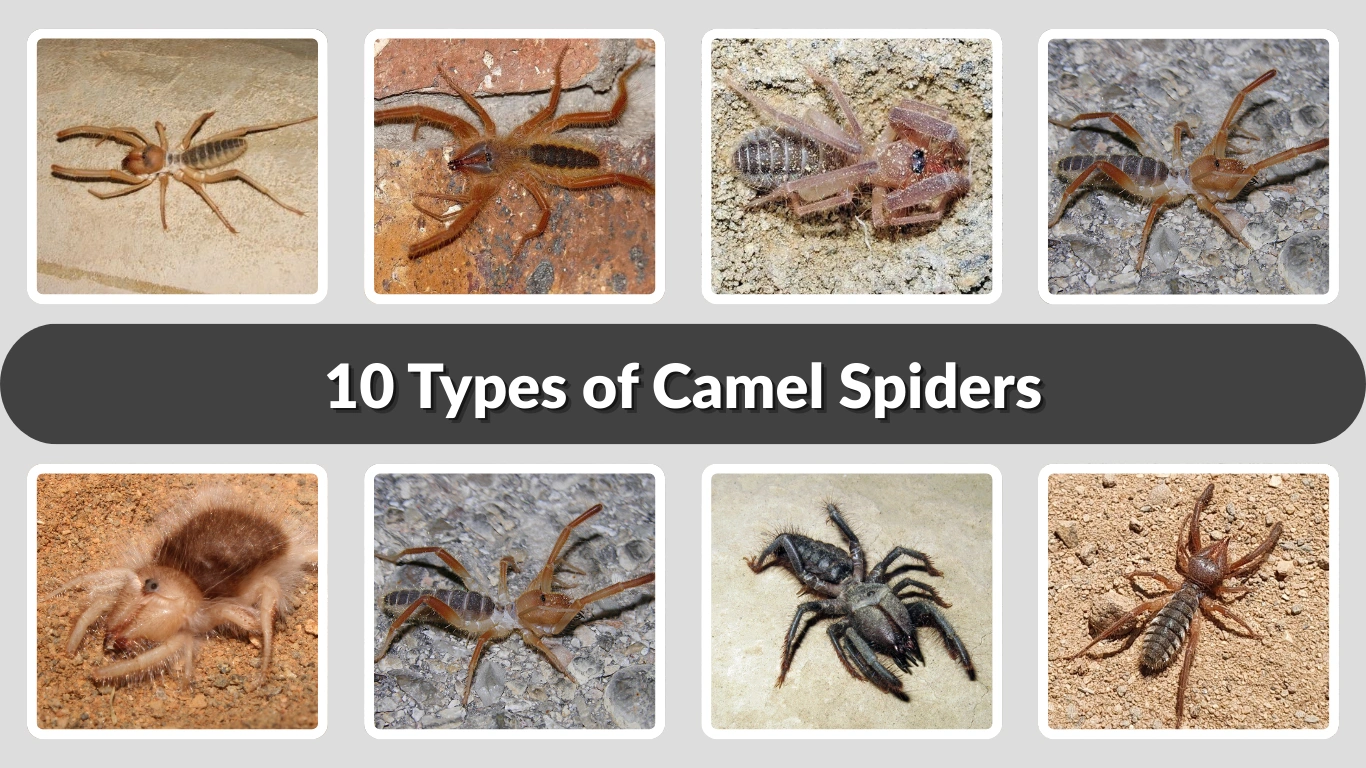
Camel spiders, also known as solifuges or wind scorpions, are fascinating arachnids adapted to some of the harshest environments on Earth. Despite common myths, they are neither true spiders nor scorpions but belong to their own distinct order. Across deserts and arid regions worldwide, camel spiders are grouped into several families based on body structure, behavior, and habitat. Below is a structured overview of the major camel spider families, highlighting their key characteristics and ecological roles.
1. Galeodidae

Galeodidae is one of the most well-known families of camel spiders, commonly found in arid and semi-arid regions. Members of this family are fast-moving, nocturnal predators and are often mistaken for spiders or scorpions, though they belong to a distinct arachnid order.
Identification
- Large, powerful chelicerae (jaw-like mouthparts)
- Elongated body with a segmented abdomen
- Long, leg-like pedipalps used for sensing and capturing prey
- Sandy or brown coloration suited for desert camouflage
Habitat
Galeodidae species primarily inhabit deserts, scrublands, and dry grasslands. They shelter under rocks, in burrows, or beneath debris during the day to avoid extreme heat.
Behavior
These camel spiders are mostly nocturnal and highly active hunters. They rely on speed rather than venom or webs, showing aggressive defensive behavior when threatened.
Diet
Their diet consists mainly of insects, termites, beetles, and occasionally small vertebrates such as lizards, which they overpower using their strong chelicerae.
2. Solpugidae

Solpugidae is a widely distributed family of camel spiders, especially common in deserts and dry regions. These arachnids are known for their agility, strong jaws, and adaptability to harsh environments.
Identification
- Robust body with well-developed chelicerae
- Prominent pedipalps resembling extra legs
- Light yellow to dark brown coloration
- Covered with fine sensory hairs
Habitat
Solpugidae species are found in deserts, semi-deserts, and rocky terrains. They often hide in shallow burrows or under stones during daylight hours.
Behavior
They are fast-running, nocturnal predators. When disturbed, they may raise their front body and chelicerae in a defensive display.
Diet
Their diet mainly includes insects, spiders, and other small arthropods, which they crush using their powerful jaws.
3. Rhagodidae

Rhagodidae is a family of camel spiders mostly found in the Middle East, Central Asia, and parts of South Asia. They are relatively large and well-adapted to extreme desert climates.
Identification
- Large body size compared to many camel spiders
- Thick, strong chelicerae with visible teeth
- Dense body hair, often golden or brown
- Stout legs adapted for rapid movement
Habitat
Rhagodidae typically inhabit hot deserts and sandy plains. They seek shelter in self-made burrows or natural crevices to escape daytime heat.
Behavior
These camel spiders are solitary and mainly nocturnal. They are known for short bursts of speed and strong defensive reactions when threatened.
Diet
They feed on insects, beetles, termites, and occasionally small reptiles, relying entirely on physical strength rather than venom.
4. Daesiidae

Daesiidae is a diverse family of camel spiders found mainly in Africa, the Middle East, and parts of Asia. They are medium-sized solifuges known for their agility and strong hunting instincts.
Identification
- Medium-sized body with slender appearance
- Strong, curved chelicerae with sharp teeth
- Long pedipalps used for prey detection
- Pale brown to reddish coloration
Habitat
Daesiidae species inhabit dry deserts, savannas, and rocky regions. They commonly hide under stones, logs, or shallow burrows during the daytime.
Behavior
They are mostly nocturnal and highly active hunters. Daesiidae camel spiders depend on speed and tactile sensing rather than sight.
Diet
Their diet includes insects, termites, ants, and other small arthropods captured during nighttime foraging.
5. Eremobatidae

Eremobatidae is a camel spider family primarily found in North America. They are among the most studied solifuges due to their regional abundance and distinct morphology.
Identification
- Compact body with relatively short legs
- Enlarged chelicerae adapted for crushing prey
- Hairy body with sensory bristles
- Tan, brown, or yellowish coloration
Habitat
Eremobatidae species live in deserts, grasslands, and arid scrub regions. They often occupy burrows in sandy or loose soil.
Behavior
These camel spiders are nocturnal and ground-dwelling. They show rapid movements and may appear aggressive when disturbed, though they are harmless to humans.
Diet
They primarily feed on insects, spiders, and other small invertebrates, using brute force rather than venom to subdue prey.
6. Hexisopodidae

Hexisopodidae is a unique family of camel spiders recognized for their short legs and burrowing lifestyle. They are mainly adapted to sandy desert environments.
Identification
- Short, stout legs adapted for digging
- Compact and rounded body shape
- Strong chelicerae for burrowing and feeding
- Pale yellow to sandy coloration
Habitat
Members of Hexisopodidae live in sandy deserts where they spend much of their time underground. They construct burrows to avoid heat and predators.
Behavior
They are less active on the surface compared to other camel spiders. Most activity occurs at night or within their burrows.
Diet
Their diet consists of insects and other small invertebrates encountered underground or near the burrow entrance.
7. Karschiidae

Karschiidae is a smaller and less commonly known family of camel spiders, distributed mainly in parts of Africa and Asia. They are agile hunters with a relatively slender build.
Identification
- Slender body with long legs
- Well-developed chelicerae
- Long, sensitive pedipalps
- Light brown to dark brown coloration
Habitat
Karschiidae species inhabit dry regions such as deserts and semi-arid landscapes, often sheltering under rocks or debris.
Behavior
They are nocturnal and fast-moving predators. When threatened, they rely on speed to escape rather than confrontation.
Diet
They feed primarily on insects and other small arthropods, capturing prey during active nighttime hunting.
8. Melanoblossiidae

Melanoblossiidae is a small and lesser-known family of camel spiders, mainly distributed in southern Africa. They are adapted to dry environments and are rarely encountered.
Identification
- Small to medium body size
- Dark brown to blackish coloration
- Slender legs with fine sensory hairs
- Well-developed chelicerae
Habitat
These camel spiders inhabit arid and semi-arid regions, including sandy soils and rocky deserts. They usually remain hidden under stones or within soil crevices.
Behavior
Melanoblossiidae species are nocturnal and secretive. They avoid open areas and rely on concealment rather than aggression.
Diet
Their diet consists of small insects and other tiny arthropods found within their habitat.
9. Ceromidae

Ceromidae is a distinct family of camel spiders found primarily in Africa. They are recognized by their relatively flattened bodies and specialized adaptations for desert life.
Identification
- Flattened body shape
- Strong, forward-projecting chelicerae
- Long pedipalps with sensory functions
- Pale yellow to brown coloration
Habitat
Ceromidae species live in dry deserts and semi-desert regions. They often shelter under rocks, bark, or shallow burrows to escape heat.
Behavior
They are fast-moving and mostly nocturnal. Ceromidae camel spiders show cautious behavior and retreat quickly when disturbed.
Diet
They feed on insects and other small arthropods, relying on speed and strong jaws to capture prey.
10. Ammotrechidae

Ammotrechidae is a family of camel spiders mainly found in Central and South America. They are relatively small but highly active solifuges, well adapted to warm and dry environments.
Identification
- Small to medium body size
- Slender body with long legs
- Strong, toothed chelicerae
- Light yellow to brown coloration
Habitat
Ammotrechidae species inhabit dry forests, grasslands, and semi-arid regions. They commonly take shelter under rocks, leaf litter, or shallow soil burrows.
Behavior
These camel spiders are fast-moving and mostly nocturnal. They rely on quick bursts of speed to hunt and to escape threats.
Diet
Their diet consists mainly of insects, spiders, and other small arthropods captured during active nighttime foraging.
