
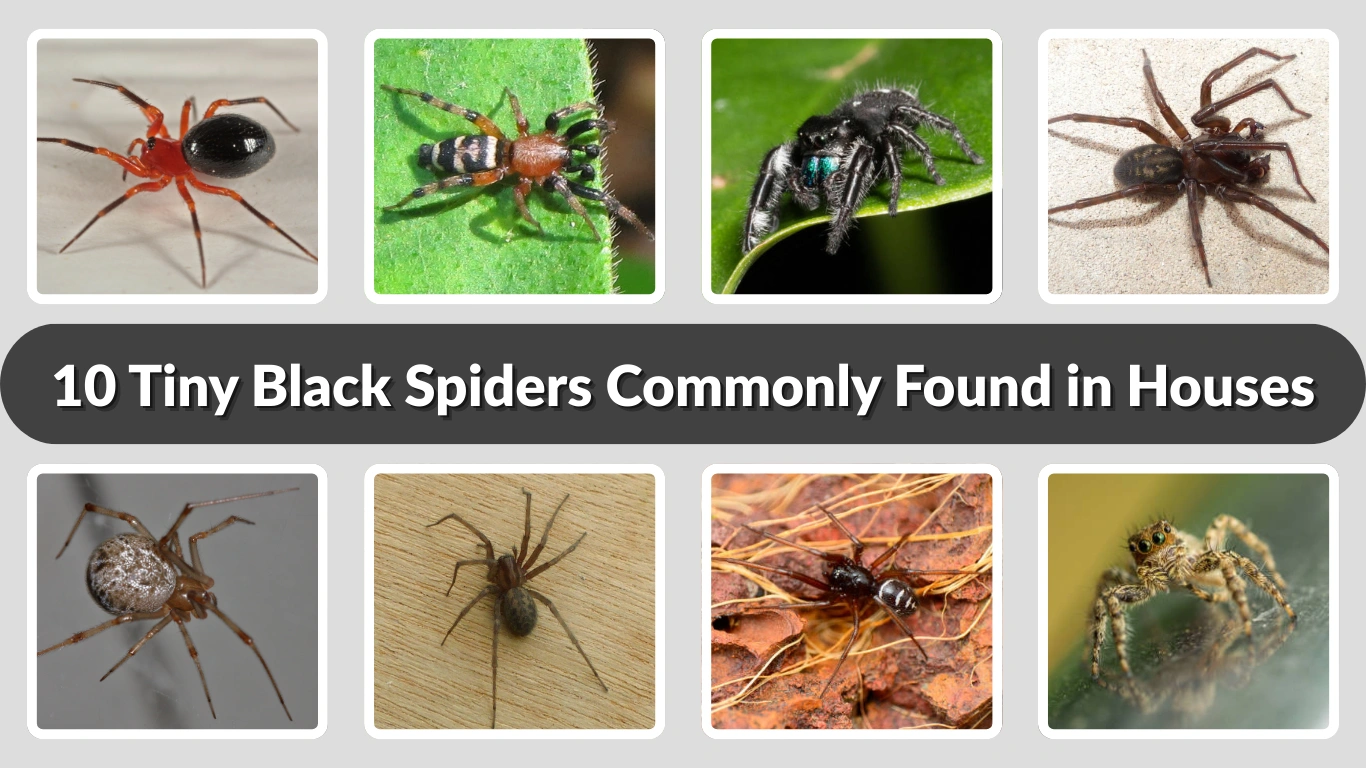
Many small black spiders appear inside homes, and most of them are harmless helpers that control insects. These tiny species hide in corners, windows, basements, and quiet places where they build webs or hunt. Understanding their names and traits makes it easier to identify them and stay calm when you spot one. Here is a quick guide to 10 of the most common tiny black spiders found indoors.
1. Black House Spider

The Black House Spider (Badumna insignis) is a small, dark-colored spider often found around windows, corners, and sheltered indoor spaces. Known for its messy web and shy behavior, this spider is generally harmless and avoids human contact. It is commonly seen in houses due to its preference for man-made structures.
Identification
- Small to medium size (usually 1–1.5 cm body length)
- Dark brown to black body with velvety texture
- Robust front legs and rounded abdomen
- Builds messy, funnel-shaped webs in corners or crevices
Habitat
Black House Spiders prefer dry, sheltered locations such as window frames, doorways, cracks, garages, and wall corners. Indoors, they stay hidden during the day and rely on vibrations to detect prey caught in their web.
Behavior
This species is shy and retreats quickly when disturbed. It creates a sticky web to trap insects like moths, flies, and mosquitoes. Females tend to stay in the same web for long periods, enlarging it over time.
Bite
Bites are uncommon and usually occur only when the spider is accidentally pressed against the skin. Symptoms may include mild pain, swelling, or redness, but serious reactions are rare. The Black House Spider is not considered dangerous to humans.
2. Common House Spider

The Common House Spider (Parasteatoda tepidariorum) is one of the most widespread spiders found inside homes. Known for spinning tangled webs in corners and undisturbed areas, it helps control insect populations and is harmless to humans. Its small size and brown-black coloration make it easy to overlook.
Identification
- Small body, typically 5–8 mm
- Brown to dark brown with subtle patterns on the abdomen
- Long, thin legs relative to body
- Builds messy cobweb-style webs in corners or ceiling edges
Habitat
Common House Spiders prefer quiet, undisturbed indoor spaces such as basements, attics, garages, and high room corners. Outdoors, they can be found around window frames, porch ceilings, and sheds where insects frequently pass.
Behavior
They spend most of their time waiting in their web for prey, often hanging upside down. When disturbed, they may drop from the web or retreat to a nearby hiding spot. Females often remain in one web for long periods, while males wander more.
Bite
Bites are rare and typically mild, causing minor redness or irritation. These spiders are not dangerous to humans and are even considered beneficial for reducing indoor insect pests.
3. Cobweb Spider

The Cobweb Spider (Family Theridiidae) is a tiny, dark-colored spider well known for creating irregular, sticky webs in corners, under furniture, and in quiet household spaces. These spiders are common indoors and help control small insects. They are harmless and usually avoid contact with people.
Identification
- Very small body, often 3–6 mm
- Black or dark brown with rounded abdomen
- Long, slender legs
- Builds messy, tangled cobwebs in sheltered areas
Habitat
Cobweb Spiders thrive in undisturbed indoor spots such as behind furniture, closets, basements, wall corners, and ceiling edges. Outdoors, they occupy porch ceilings, sheds, and gaps in wood or brick structures where insects gather.
Behavior
These spiders stay in their webs and wait for prey, detecting vibrations through the silk. When disturbed, they may drop from the web or retreat to a hidden area. Females often maintain the same web for long periods.
Bite
Cobweb Spider bites are rare and usually mild, causing minor redness or irritation. They are not harmful to humans and play a beneficial role in reducing indoor insect populations.
4. Jumping Spider

The Jumping Spider (Family Salticidae) is a tiny, active spider often seen indoors moving in short, quick bursts. Known for excellent vision and curious behavior, they are typically black or dark-colored and harmless. Their compact bodies and large front eyes make them easy to recognize.
Identification
- Small body, usually 4–10 mm
- Black or dark gray with compact, sturdy build
- Large forward-facing eyes
- Moves in quick jumps rather than spinning webs
Habitat
Jumping Spiders prefer sunny windowsills, walls, corners, and places where they can hunt insects. Inside homes, they wander freely rather than building webs. Outdoors, they stay on plants, fences, and walls with good light for spotting prey.
Behavior
They actively hunt rather than trap prey, using their excellent eyesight to stalk insects. Curious by nature, they may observe humans but quickly retreat if approached. Their jumps are controlled and used for hunting or escaping threats.
Bite
Jumping Spider bites are extremely rare and typically cause only mild redness or itching. These spiders are not dangerous, and many people appreciate them for naturally reducing pests.
5. False Widow Spider

The False Widow Spider (Steatoda species) is a small, dark-colored spider often mistaken for the more dangerous black widow. Common in homes and buildings, this spider builds tangled webs in corners and sheltered spaces. Though slightly more noticeable than other house spiders, it is generally shy and avoids people.
Identification
- Small to medium size (4–12 mm)
- Dark brown to black with a smooth, rounded abdomen
- May show faint markings or sheen on the abdomen
- Creates messy, sticky cobweb-style webs in corners
Habitat
False Widows prefer quiet indoor areas such as attics, garages, sheds, and behind furniture. Outdoors, they occupy window frames, fences, and wall crevices. They remain close to their web and often hide nearby during the day.
Behavior
These spiders wait in their webs for prey, using their strong silk to subdue insects. They are generally calm and retreat when disturbed. Females usually stay in one web for long periods, while males may wander to search for mates.
Bite
False Widow bites are uncommon. When they do occur, symptoms may include mild to moderate pain, redness, and slight swelling. Most cases are not serious, and the species is far less dangerous than true black widows.
6. Black Lace-Weaver Spider

The Black Lace-Weaver Spider (Amaurobius ferox) is a dark, medium-small spider commonly found in houses, basements, and outdoor structures. Known for its lace-like web pattern, this species prefers dim, sheltered locations. Though it may look intimidating, it is generally harmless to humans.
Identification
- Body length around 8–12 mm
- Dark brown to black coloration with a slightly patterned abdomen
- Sturdy legs and somewhat flattened body
- Builds lace-like, sheet-style webs near cracks or corners
Habitat
Black Lace-Weavers inhabit basements, crawl spaces, garages, and door frames. They prefer cool, dark, and moist areas. Outdoors, they occupy wood piles, stone walls, and gaps in building foundations. They rarely wander far from their web.
Behavior
These spiders are nocturnal, emerging at night to hunt small insects. They are shy and will retreat quickly if disturbed. Females often stay in the same web for extended periods and guard their egg sacs until the young hatch.
Bite
Bites are rare and typically mild, causing slight redness or discomfort. The Black Lace-Weaver is not medically significant and poses no serious risk to humans.
7. Ground Spider

The Ground Spider (Family Gnaphosidae) is a small, fast-moving spider often found indoors by accident while searching for prey. These spiders do not build webs to catch insects; instead, they actively hunt on floors, walls, and hidden corners. Their dark coloration makes them easy to mistake for other tiny house spiders.
Identification
- Small body, typically 5–10 mm
- Dark brown to black, with an elongated abdomen
- Long legs adapted for running
- Does not build capture webs; hunts on foot
Habitat
Ground Spiders prefer hidden, low areas such as under furniture, baseboards, closets, and storage rooms. Outdoors, they live under rocks, leaf litter, logs, and foundation cracks. They sometimes wander inside while seeking shelter or prey.
Behavior
These spiders are active hunters, moving quickly and stealthily at night. They hide during the day and may freeze when approached. Although fast, they avoid humans and are rarely aggressive.
Bite
Ground Spider bites are extremely uncommon and typically mild if they occur. Symptoms may include light redness or irritation. They are not dangerous and generally pose no health risk to people.
8. Bold Jumping Spider

The Bold Jumping Spider (Phidippus audax) is a small, striking spider known for its bold black body and iridescent green or blue chelicerae. Frequently seen in homes, it moves with quick, confident jumps and keen eyesight. Despite its energetic behavior, it is harmless and often helps reduce indoor pests.
Identification
- Small to medium size (6–13 mm)
- Black body with distinctive white or orange spots
- Iridescent metallic green or blue mouthparts
- Moves in quick, deliberate jumps instead of building webs
Habitat
Bold Jumping Spiders favor sunny indoor areas such as windowsills, walls, and corners. Outdoors, they live on plants, fences, and building exteriors where insects are abundant. They wander freely and do not depend on webs for capturing prey.
Behavior
These spiders are curious hunters, often pausing to observe their surroundings. They stalk and pounce on insects using excellent vision. Although they may approach humans out of curiosity, they retreat quickly when disturbed.
Bite
Bites are very rare and normally mild, causing slight redness or itching. The Bold Jumping Spider is not harmful to humans and generally avoids confrontation.
9. Cellar Spider (Dark Variant)

The Cellar Spider (Pholcidae family, dark variant) is a slender, long-legged spider often found in quiet indoor spaces. Though usually pale, some variants appear darker, giving them a tiny black spider look. They build delicate webs and remain harmless, frequently helping control small insects and other spiders.
Identification
- Very small, thin body (2–8 mm)
- Dark gray to black variant with extremely long, thin legs
- Small rounded abdomen
- Builds loose, irregular webs on ceilings or corners
Habitat
Cellar Spiders prefer cool, shaded indoor spaces such as basements, bathrooms, garages, attics, and storage rooms. They hang upside down in their webs and often remain in the same location for long periods. Outdoors, they live under decks and in shaded structures.
Behavior
These spiders vibrate rapidly in their webs when threatened, creating a blurring effect to evade predators. They feed on insects and sometimes other spiders, using their long legs to safely subdue prey. They are passive and avoid direct contact with humans.
Bite
Bites are extremely rare and very mild, usually unnoticed. Cellar Spiders are not dangerous and are considered beneficial due to their pest-control habits.
10. Dwarf Spider

The Dwarf Spider (Family Linyphiidae) is a tiny, dark-colored spider commonly found indoors, especially in corners, windowsills, and hidden spaces. Known for their extremely small size, these spiders often go unnoticed. They build small sheet-like webs and pose no threat to humans.
Identification
- Very small body, usually 2–5 mm
- Dark brown to black coloration
- Fine legs and compact body shape
- Creates small sheet or tangle webs near corners or cracks
Habitat
Dwarf Spiders prefer undisturbed indoor areas such as wall corners, window edges, storage spaces, and behind furniture. Outdoors, they live in leaf litter, under stones, and in vegetation. They thrive in cool, shaded environments.
Behavior
These spiders are passive web-builders, waiting quietly for tiny insects to become trapped. They move slowly and rarely leave their webs unless disturbed. Their small size makes them difficult to spot.
Bite
Bites are virtually unheard of. Even if they occur, symptoms are extremely mild or unnoticed. Dwarf Spiders are harmless and contribute to natural insect control indoors.
FAQs
Are tiny black spiders in the house dangerous?
Most tiny black spiders found indoors are harmless. While some can bite if pressed against the skin, their bites are usually mild, causing slight redness or irritation. None of the common house species are considered medically significant.
Why do tiny black spiders come inside?
Spiders enter homes in search of shelter, warmth, prey, or a safe place to build a web. Gaps around windows, doors, and foundations make it easy for them to come inside, especially during seasonal changes.
How can I prevent spiders from entering my home?
Seal cracks, repair window screens, reduce clutter, and keep rooms clean to minimize hiding spots. Regular vacuuming and removing old webs can also discourage spiders from settling indoors.
Do spiders help control pests in the house?
Yes. Most small black spiders feed on flies, ants, mosquitoes, and other indoor insects. Their presence often reduces pest activity naturally, making them beneficial despite their unsettling appearance.
Should I remove tiny black spiders or leave them alone?
If they are not causing issues, it’s safe to leave them alone, as they help control pests. If removal is preferred, gently relocate them outside using a container and paper instead of killing them.
