
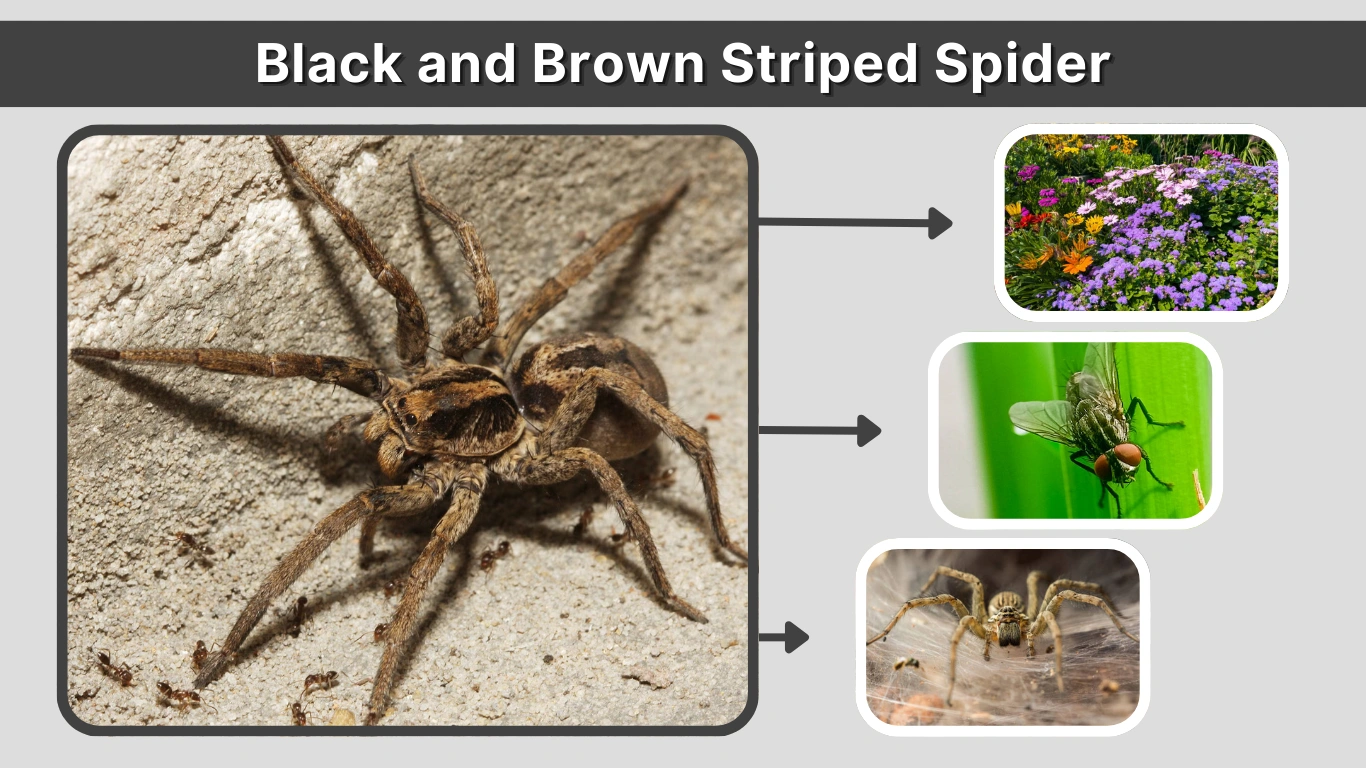
Black and brown striped spiders are among the most commonly spotted arachnids around homes, gardens, and natural landscapes. Their banded appearance makes them stand out, yet this same pattern appears in several unrelated species, which can make identification confusing. Understanding which spider you’ve encountered helps you determine risk, behavior, and whether it poses any danger. This guide explores appearance, habitat, behavior, and common look-alike species to help you confidently identify these striking spiders.
Identification

Spiders with black and brown striping share several recognizable traits, though exact features differ by species. Here are the most reliable markers to observe:
- Alternating black and brown body bands running across the cephalothorax or abdomen.
- Distinct striping on the legs, often more pronounced on the femur and tibia.
- Eye arrangement typical of wolf spiders or grass spiders—two large front eyes for wolf spiders, while grass spiders display a more flattened arrangement.
- Presence or absence of a web structure: funnel-shaped webs suggest grass spiders; lack of web suggests wolf spiders.
- General body shape: athletic and low-slung for hunters, rounded for orb-weavers.
These cues allow rapid field identification even when the spider moves quickly or hides in vegetation.
Appearance and Size
Key Features
Black and brown striped spiders commonly fall within a moderate size range, though exact measurements vary. Most adults measure between 6–20 mm in body length, while larger wolf spiders may stretch farther. Females are typically larger than males in both length and abdomen width. The abdomen often shows the most defined striping, while the legs display alternating light and dark bands that enhance camouflage.
Multi-Paragraph Description
The cephalothorax of these spiders tends to exhibit strong contrast—dark central markings surrounded by lighter brown margins. This patterning helps them blend into soil, bark, or leaf litter. Many species develop a narrow, pale median stripe bordered by darker lateral bands, creating a visually striking look that observers often remember.
Leg structure is another key detail. Hunters such as wolf spiders have stout, powerful legs with dense hair, helping them move rapidly across the ground. Grass spiders have thinner, longer legs adapted for navigating their horizontal webs. In contrast, orb-weavers have more rounded bodies and less intense striping, though brown-black banding still appears on some individuals.
Color vibrancy may shift with age and environment. Juvenile spiders often show bolder contrasts, while adults may appear faded due to wear, sun exposure, or molting. Seasonal changes, especially during dry months, can also influence coloration, making them appear lighter or duller.
Range and Habitat

Habitat Summary
These spiders occur widely across North America and other temperate regions worldwide. They thrive in grasslands, gardens, wooded areas, and residential zones. You can often find them near ground-level structures, under rocks, in thick vegetation, or around exterior walls where insects gather.
Multi-Paragraph Expansion
Black and brown striped spiders prefer micro-habitats that offer consistent prey and secure hiding spots. Leaf litter, mulch beds, and garden debris create ideal environments, allowing them to ambush insects or build funnel-shaped webs. In suburban settings, they frequently settle in corners of porches, garages, and window frames.
Climate plays an important role in their distribution. These spiders adapt well to a range of temperatures, but they are most active during warm months. As nighttime temperatures cool, some individuals wander indoors seeking shelter, leading to common late-summer and autumn sightings.
Human structures unintentionally attract them by providing both food and protection. Outdoor lighting draws moths and small insects, which then lure these spiders into predictable hunting zones. Even so, most remain timid and avoid direct contact with people whenever possible.
Behavior and Diet

Behavioral Traits
- Primarily nocturnal activity
- Quick ground movement for hunting species
- Funnel or sheet-web construction for grass spiders
- Broad insect diet that includes flies, beetles, moths, and small arthropods
- Mating behaviors that vary by species but typically occur in late summer
Multi-Paragraph Expansion
Their behaviors depend heavily on whether they are hunters or web-builders. Wolf spiders rely on speed and eyesight, using their keen front eyes to detect movement while patrolling the ground. Grass spiders wait at the narrow entrance of their funnel webs, rushing out to seize prey that wanders across the sheet.
Many of these striped spiders play a vital ecological role by regulating insect populations. They help reduce pests naturally, making them beneficial residents in gardens and outdoor spaces. Despite their bold appearance, they tend to retreat quickly when disturbed and rarely display defensive behavior unless cornered.
Bite and Medical Importance
Typical Bite Symptoms
Most black and brown striped spiders are not medically significant, and bites are uncommon. When they do occur, symptoms typically include mild redness, slight swelling, and short-term discomfort. These reactions usually resolve within a few hours to a couple of days with simple home care, such as rinsing the area and applying a cold compress.
Multi-Paragraph Explanation
Although these spiders may look intimidating, they rarely bite unless trapped against the skin or directly provoked. Their first instinct is to flee rather than defend themselves. Many bites attributed to them are often caused by other insects or general skin irritations misidentified as spider activity.
In the rare case of a true bite, severe reactions tend to be linked to allergies rather than venom potency. Individuals with sensitive skin or preexisting allergies might experience increased irritation. Signs like spreading redness, persistent pain, or flu-like symptoms should be evaluated by a medical professional, though such outcomes remain uncommon.
Because these spiders provide natural pest control around homes and gardens, allowing them to remain undisturbed is usually the safest and most beneficial approach. They contribute significantly to reducing populations of mosquitoes, flies, and other nuisance insects.
Common Species With Black and Brown Stripes

Several species groups include spiders with the distinctive black-and-brown banded pattern. The most frequently encountered include:
- Wolf Spiders (Lycosidae): Fast ground hunters with strong leg striping and excellent eyesight.
- Grass Spiders (Agelenidae): Known for their funnel-shaped webs and elongated legs featuring clear bands.
- Orb-Weavers (Araneidae): Some species exhibit subtle brown-black striping on their rounded abdomens.
- Jumping Spiders (Salticidae): Small, active spiders that may show bold band patterns and large forward-facing eyes.
Each group uses its striped pattern differently—some for camouflage during hunting, others for blending into vegetation where webs are anchored.
Black and Brown Striped Spider vs Similar Spiders
Comparison Table
| Feature | Black & Brown Striped Spider | Wolf Spider | Grass Spider |
| Body Banding | Alternating dark and light stripes | Often mottled brown | Subtle or faint striping |
| Leg Pattern | Distinct black-brown leg bands | Hairy legs with muted stripes | Long, slender legs with fine bands |
| Behavior | Depends on species | Fast ground hunter | Builds horizontal funnel webs |
| Bite Risk | Low | Low to moderate | Very low |
This comparison helps narrow down identification by focusing on markings, behavior, and typical habitat. Observing whether a web is present—or absent—offers one of the most reliable clues.
How to Prevent Encounters
Prevention Tips
- Reduce exterior lighting that attracts insects.
- Seal gaps around doors, windows, and foundations.
- Keep vegetation trimmed and clear of home walls.
- Remove clutter indoors and outdoors to limit hiding spaces.
- Relocate spiders humanely using a jar-and-paper method when necessary.
Multi-Paragraph Tips
Prevention begins with reducing insect populations, since these spiders follow food sources. Outdoor lights are a major attractant for moths and other small insects, so switching to motion-activated lighting or warm-colored bulbs can significantly decrease spider activity near entrances.
Sealing structural cracks is equally important. Even small openings can allow spiders to wander indoors, especially during seasonal temperature shifts. Inspecting window screens, weather stripping, and door sweeps helps keep them outside where they belong.
Maintaining a tidy environment—both inside and out—removes hiding spots. Spiders prefer dark, undisturbed areas, so regular cleaning and decluttering reduce the chances of unexpected encounters.
FAQs
What spider is black with brown stripes?
Several species display this pattern, most commonly wolf spiders and grass spiders. Their striping can appear bold or subtle depending on age, habitat, and lighting. Because multiple species share similar coloration, identifying the spider usually requires noting body shape, eye arrangement, and the presence or absence of a web.
Are black and brown striped spiders dangerous?
In general, these spiders are not dangerous to humans. Their venom is mild, and bites are extremely rare. Most will flee rather than defend themselves. While mild irritation can occur if bitten, serious reactions are uncommon and usually linked to allergies rather than venom strength.
How big do these spiders get?
Most species in this color group measure between 6–20 mm in body length, with wolf spiders sometimes reaching larger sizes. Females tend to be noticeably bigger than males. Jumping spiders within this patterning are smaller, while grass spiders have longer legs that make them appear larger than their actual body size.
Do striped spiders live indoors?
They primarily live outdoors but may wander inside seeking warmth, food, or shelter, especially in late summer and fall. Indoors, they prefer quiet corners, basements, or garages. They typically do not reproduce indoors and will often leave on their own if conditions are unsuitable.
How can I tell if the spider is a wolf spider or a grass spider?
Wolf spiders have thick, muscular bodies and two large forward-facing eyes that reflect light. Grass spiders are slimmer, with longer legs and typically found near funnel-shaped webs. Wolf spiders hunt freely on the ground, while grass spiders remain near the entrance of their sheet-like webs.
