
Black-and-white striped spiders appear across gardens, homes, and outdoor spaces worldwide. Their sharp contrasting patterns—whether on legs, abdomens, or the entire body—often make them look striking or intimidating, especially when combined with bright accents like red, orange, or yellow. Despite the dramatic appearance, most of these spiders are harmless jumping spiders or orbweavers. This guide helps you identify the most common black-and-white striped species, understand their behavior, spot regional variations, and know whether they pose any danger.
Identification

- Distinct leg striping in black and white
- Fuzzy or compact body, especially in jumping spiders
- Strong contrast patterns: spots, bands, or zebra-like markings
- Metallic green or blue chelicerae (common in jumpers)
- Color accents: red, orange, yellow, or brown on abdomen
- Small to large size range: 3 mm to 28 mm
- Fast, jerky movements (jumpers) or web-building behavior (orbweavers)
Common Species With Black-and-White Stripes

Bold Jumping Spider (Phidippus audax)
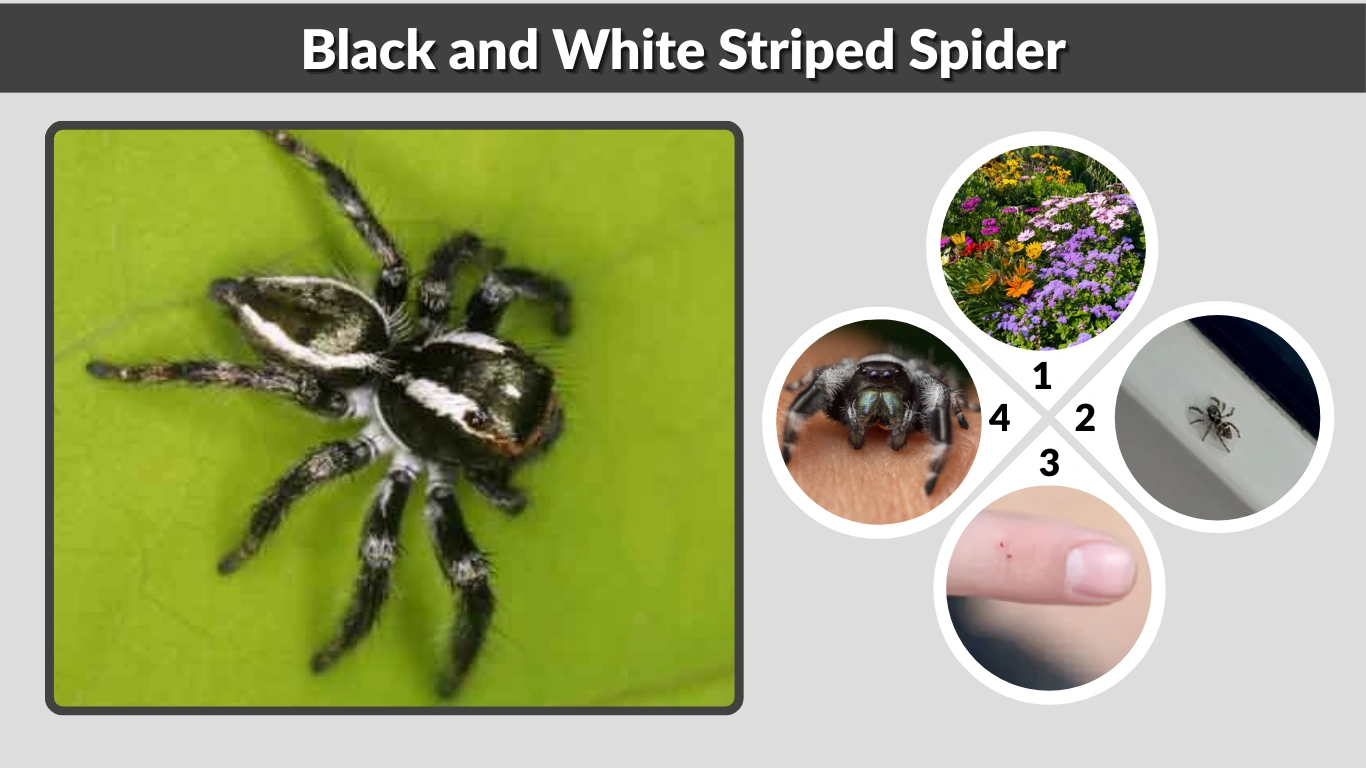
One of the most recognized striped spiders in North America, the bold jumping spider has thick black legs with clear white striping and a robust, fuzzy body. Its abdomen usually shows three white spots, and the front fangs often shine metallic green. This species is curious, frequently approaching humans out of interest rather than aggression. It prefers walls, decks, fences, and sunny outdoor surfaces. Color variations include red, orange, or white accents.
Zebra Jumping Spider (Salticus scenicus)
This small spider is common around windows, siding, and interior spaces. It has a pronounced zebra-patterned body with crisp black-and-white banding. Its small size (often 4–7 mm) and rapid movement make it easy to miss until it jumps. Found widely in North America, the UK, and Europe, it is one of the most likely “tiny black and white striped spiders” seen in homes.
Banded Garden Spider (Argiope trifasciata)
A much larger spider with elongated legs, the banded garden spider displays black, white, and often yellow striping across its abdomen and legs. Unlike jumping spiders, this species builds large orb webs in gardens and tall grassy areas. They are frequently mistaken for dangerous species due to their size, but they are harmless and beneficial predators.
Other Variants
Some lynx spiders, orbweaver juveniles, and uncommon species develop striped legs or bodies. Color morphs also occur, producing combinations like red spiders with black-and-white legs, orange jumpers with striped legs, or brown spiders with a white stripe. These variations fall within normal ranges for many species, especially jumpers.
Range & Distribution
Black-and-white striped spiders appear in nearly every region, but certain species dominate in specific locations.
- North America: Bold jumpers and zebra jumpers are widespread. Banded garden spiders thrive in warmer states like Florida and Texas and in open fields across the Midwest.
- United Kingdom & Europe: Zebra jumpers are extremely common in both urban and rural settings.
- West Coast (California): Several orbweaver species display striped leg patterns, especially in late summer.
- Midwest regions (Ohio, Michigan, Wisconsin): Small black-and-white jumpers frequently appear on homes in spring and summer.
Their success comes from adaptability—jumping spiders hunt actively in various environments while orbweavers rely on abundant insects and suitable web-anchoring locations.
Habitat

Most black-and-white striped spiders prefer environments that offer prey, shelter, and sunlight:
- Gardens, flowerbeds, and tall grasses
- Siding, window frames, porch railings
- Tree trunks, bark, stones, and fences
- Outdoor furniture and storage structures
- Indoor corners (primarily zebra jumpers)
Jumping spiders favor warm, sunlit walls and textured surfaces that allow good grip for climbing and leaping. Orbweavers seek open spaces where webs can extend between tall plants or structures.
Behavior
Black-and-white striped spiders show very different behaviors depending on family:
Jumping Spiders
Jumping spiders are active hunters with excellent vision. They stalk or pounce on prey, often stopping to observe movement around them. Their curiosity makes them appear bold, sometimes watching humans closely before darting away. Males may perform leg-waving or tapping displays during courtship or when threatened.
Orbweavers
Orbweavers such as the banded garden spider rely on their webs rather than active hunting. They typically sit at the center of their web during dusk or dawn and retreat to hidden corners during the day. When disturbed, they may shake their web or drop to the ground.
General Traits
- Shy and non-aggressive
- Retreat quickly when approached
- Active during warm months
- Nocturnal or crepuscular (in orbweavers)
Size
Black-and-white striped spider sizes vary significantly:
- Small species (3–7 mm): Zebra jumping spider
- Medium species (7–15 mm): Bold jumping spider
- Large species (15–28 mm): Banded garden spider and similar orbweavers
Orbweavers may appear even larger due to their long, extended legs.
Bite / Safety Information

Despite their bold appearance, these spiders are overwhelmingly harmless. They rarely bite and typically only in self-defense if trapped against skin. Their venom is designed for insect prey, not humans, and reactions are mild.
Typical bite symptoms include slight redness, itchiness, or swelling like a minor bee sting. Severe reactions are extremely uncommon. If symptoms worsen or signs of allergy occur—persistent swelling, hives, or difficulty breathing—medical attention is recommended.
Comparison Table: Common Look-Alikes
| Feature | Bold Jumping Spider | Zebra Jumping Spider | Banded Garden Spider |
| Size | Medium (7–15 mm) | Small (3–7 mm) | Large (15–28+ mm) |
| Legs | Thick, bold black-white stripes | Thin, even banding | Long, banded, sometimes yellow |
| Abdomen | Black with white spots | Zebra-striped body | White, black, and yellow stripes |
| Behavior | Jumps, explores | Jumps, hunts walls/windows | Builds large webs |
| Indoors? | Sometimes | Frequently | Rarely |
This chart helps separate the three most frequently misidentified striped spiders. Jumping spiders are compact, curious, and highly mobile, while orbweavers appear larger, still, and web-bound.
Black-and-White Spiders by Color Variants
Red Body With Black-and-White Striped Legs
Often a variation of Phidippus audax or a related jumping spider species. Red accents typically appear on the abdomen and fade as the spider ages. Fuzzy body texture and forward-facing eyes confirm it’s a jumper rather than an orbweaver.
Orange Body With Striped Legs
Some juvenile orbweavers and regional jumping spider morphs develop orange tones. If paired with a large circular web, it’s almost certainly an orbweaver. Small, fuzzy, and fast-moving specimens tend to be jumping spiders.
Yellow Body With Black-and-White Legs
The banded garden spider frequently shows yellow striping on its abdomen while retaining black-and-white leg patterns. These spiders can appear intimidating due to their size, but they pose no harm to humans.
Brown Body With Black and White Stripes
Brown-bodied spiders with white stripes on the abdomen are typically young orbweavers or small hunting spiders. The presence of a wood-colored, mottled base body often indicates camouflage adaptations for tree bark or leaf litter.
Grey or Fuzzy Black-and-White Species
Grey, fuzzy, zebra-patterned spiders found on walls or inside homes are almost always zebra jumping spiders. Their distinctive alternating black-white bands and tiny size make them easy to identify.
Regional Guides
Florida
Florida hosts a wide variety of striped spiders, including bold jumpers, large Argiope species, and rare tropical jumping spiders with red or orange abdomens. High humidity and warm temperatures increase their visibility year-round.
Texas
Texas landscapes house numerous striped orbweavers and jumpers. Dry climates and open fields support large banded garden spiders, while suburban structures attract zebra jumpers.
California
California offers a coastal mix of jumping spiders and orbweavers displaying black-and-white patterns. Species diversity is highest in Southern California, where warm weather supports more tropical morphs.
Midwest (Ohio, Michigan, Wisconsin)
Cooler regions see fewer orbweavers with bright patterns, but jumping spiders—especially zebra jumpers—are extremely common on walls, garages, sheds, and window frames.
United Kingdom & Europe
The zebra jumping spider is one of the most frequently spotted spiders in Europe. It thrives on stone walls, garden fences, and building exteriors. Orbweaver species with striped legs appear in late summer.
When to Be Concerned
Black-and-white striped spiders are normally harmless, but a few situations may require attention:
- Large orbweaver webs blocking doorways or walkways
- Bites accompanied by swelling, hives, or allergic reactions
- Misidentifying them as dangerous spiders (widows/wandering spiders)
- Multiple spiders appearing indoors, indicating a possible insect food source
Even in these cases, professional pest intervention is rarely necessary unless populations become excessive.
FAQs
What spider has black and white striped legs?
Most spiders with vivid black-and-white striped legs belong to the jumping spider family, especially the bold jumper and zebra jumper. Larger species like the banded garden spider can also display dramatic striping on their legs. Observing web presence, movement style, and body shape helps confirm the species.
Are black-and-white striped spiders poisonous?
These spiders are not medically dangerous to humans. Their venom is mild and used exclusively to subdue small insects. Most bites cause only minor itching or redness. Serious reactions are exceptionally rare and typically linked to allergy rather than venom strength.
What small black-and-white striped spider appears in houses?
This is usually the zebra jumping spider, known for its crisp bands and rapid movements. It frequently hunts on sunny window sills and walls. Despite its energetic behavior, it is harmless and beneficial for controlling flies and gnats.
What spider has a red body with black-and-white striped legs?
This description most often matches a color variant of a bold jumping spider or close relatives in the same genus. The fuzzy body and forward-facing eyes distinguish them from orbweaver species that also occasionally show red juvenile coloring.
What large spider has black and white striped legs in gardens?
The banded garden spider (Argiope trifasciata) fits this description. Its extended legs, bold patterns, and large webs make it easy to spot. Despite their intimidating appearance, they pose no threat to humans and are highly effective at controlling pest insects.
