
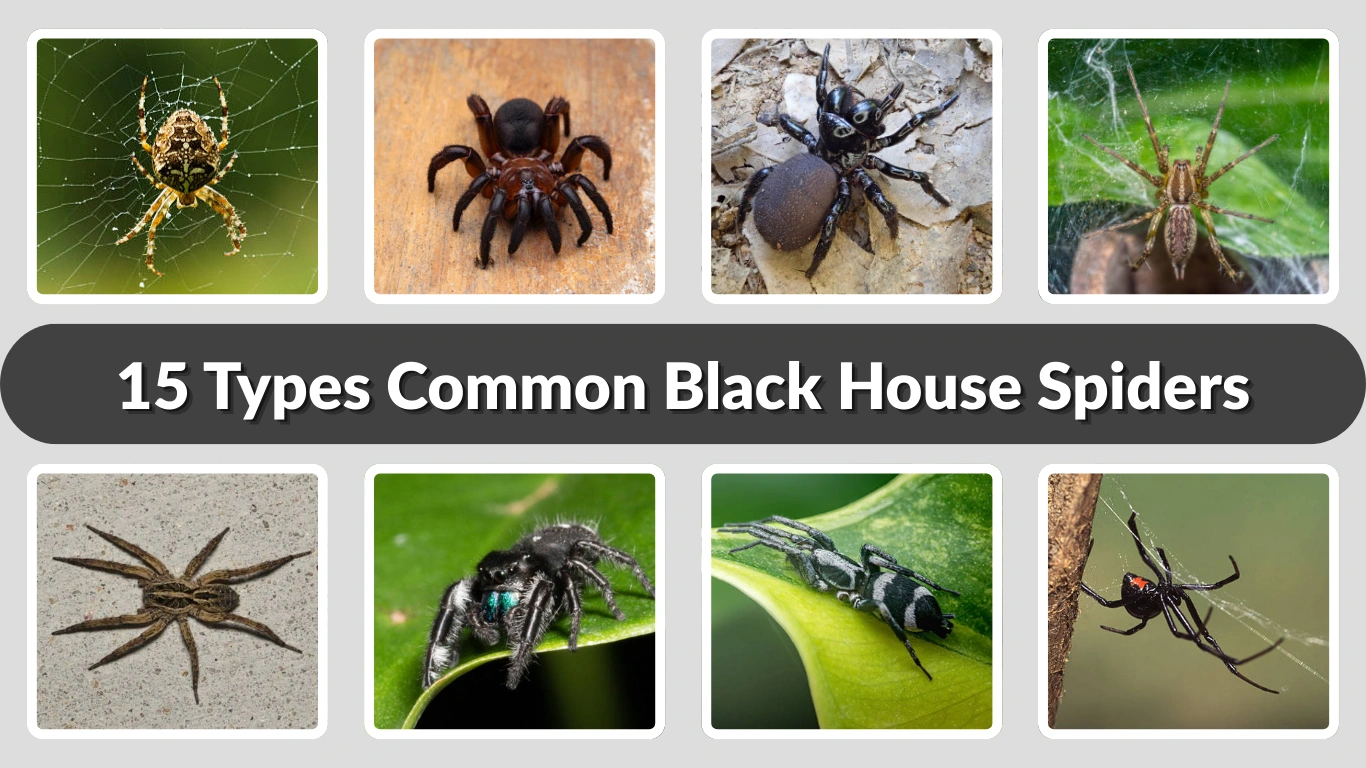
Black house spiders and other dark-colored home spiders are commonly spotted across the United States, causing curiosity, confusion, and sometimes concern. Many species look similar—some small, some large, some fast, and some web-bound. This guide brings together the most common black or dark house spiders, helping you identify them, understand their habits, and know their true risk level.
1. Black House Spider

The black house spider is a dark, web-building species commonly found around window frames, corners, sheds, and walls. It is often mistaken for more dangerous spiders but is mostly harmless and prefers to stay hidden in its web retreats.
Identification
- Dark charcoal-gray to black coloration
- Velvety abdomen with textured appearance
- Females larger, reaching about 1 inch with legs
- Messy funnel-shaped web structure
- Thick, slightly hairy legs that darken toward the tips
Habitat
Black house spiders thrive in sheltered outdoor areas such as window sills, fences, brick walls, porch corners, and sheds. Indoors, they settle in quiet upper corners or behind furniture where their funnel-like retreat webs can remain undisturbed.
Behaviors
This species builds a dense, irregular web and tends to stay close to its retreat. Females rarely leave their web, while males roam during mating seasons. They rely on vibrations to detect prey and will quickly retreat when threatened, making them shy rather than aggressive.
Bite & Risk
Black house spider bites are uncommon and usually mild. Symptoms may include localized pain, slight swelling, and redness. While some individuals may feel minor nausea or headache, severe complications are rare. Overall, the species is considered not dangerous to people.
2. Southern House Spider

The southern house spider is a dark brown-to-black crevice-dwelling species often found in the southeastern United States. It is frequently mistaken for the black widow due to its size and color, but it is harmless and avoids confrontation.
Identification
- Dark brown, charcoal, or black body
- Females large and robust; males slender with long legs
- Velvety or slightly fuzzy texture
- Flattened cephalothorax with narrow oval abdomen
- Long legs that spread widely when resting
Habitat
Southern house spiders live in cracks, wall gaps, door frames, stucco surfaces, porch ceilings, barns, and sheds. They prefer dry, sheltered spaces and often stay in the same retreat for long periods. Indoors, they hide behind trim, vents, and high corners.
Behaviors
This species builds irregular, sheet-like webs and stays close to its hiding spot. Females remain stationary for years, while males wander widely and may accidentally enter homes. Despite their intimidating appearance, they are extremely shy and will retreat rather than defend themselves.
Bite & Risk
Their bite is rare and typically mild, causing slight redness or localized discomfort. Southern house spiders are not medically significant and pose no real danger to humans. Their resemblance to black widows often causes fear, but their venom is weak and harmless to people.
3. Black Widow Spider

The black widow spider is a shiny, jet-black species known for its red hourglass marking and medically significant venom. It prefers dark, cluttered, and undisturbed areas around homes, where it builds irregular, sticky webs close to the ground.
Identification
- Glossy black body with bright red hourglass on abdomen
- Females larger and more robust than males
- Long, thin legs with smooth appearance
- Round, bulbous abdomen
- Web is messy, sticky, and built low to the ground
Habitat
Black widows live in garages, sheds, wood piles, outdoor furniture, crawl spaces, meter boxes, stone walls, and cluttered corners. They prefer warm, dry, sheltered areas where insects frequently pass. Indoors, they stay hidden in dark, quiet locations that remain undisturbed.
Behaviors
This species is nocturnal and highly reclusive. Females rarely leave their webs and wait motionless for prey. They are not aggressive and only bite when pressed, trapped, or threatened. Males wander for mates but are much smaller and rarely seen by homeowners.
Bite & Risk
A black widow bite can cause significant symptoms, including muscle pain, cramping, sweating, nausea, and elevated heart rate. Severe reactions are possible but treatable. Deaths are extremely rare with modern medical care. Bites usually occur only when the spider is accidentally pressed or handled.
4. Northern Black Widow

The northern black widow is a shiny black spider found in the eastern and northeastern United States. It closely resembles the southern species but features a broken or split red hourglass marking, and it prefers dark, secluded places around human structures.
Identification
- Glossy black body with a broken or hourglass-like red marking
- Females large with rounded abdomen
- Males smaller, lighter, and rarely encountered
- Long, smooth legs with minimal hair
- Builds messy, sticky webs in hidden low areas
Habitat
Northern black widows live in wood piles, stone walls, crawl spaces, garages, basements, sheds, and under outdoor debris. They prefer cool, sheltered environments and are frequently found around old logs, abandoned materials, and cluttered storage spaces.
Behaviors
This species is shy and nocturnal, spending most of its time motionless in its web. Females rarely wander, while males move more during mating seasons. They avoid confrontation, retreat quickly, and only bite when pressed or threatened. Their hunting relies on web vibrations.
Bite & Risk
The bite of a northern black widow can cause symptoms similar to other widow species: muscle cramps, sweating, nausea, tremors, and localized pain. Serious reactions are possible but rarely life-threatening with proper care. Bites are uncommon and nearly always defensive.
5. Western Black Widow

The western black widow is a glossy black spider common across the western United States. It is known for its bright red hourglass marking and strong venom, often found in dark, sheltered, and undisturbed outdoor and indoor spaces.
Identification
- Shiny black females with a solid red hourglass
- Males smaller, lighter, and rarely seen indoors
- Rounded, bulbous abdomen
- Long, thin, smooth legs
- Builds irregular, sticky webs close to the ground or inside cluttered areas
Habitat
Western black widows inhabit garages, sheds, wood piles, outdoor equipment, basements, meter boxes, stone walls, and porch storage areas. They prefer dry, dark spaces that offer shelter and a steady supply of insects. Indoors, they hide in corners, clutter, or behind items left undisturbed.
Behaviors
This species is solitary and nocturnal, remaining still inside its web during the day. Females stay close to their retreats, while males wander during mating seasons. They avoid confrontation and will retreat when possible. They rely heavily on web vibrations to detect prey.
Bite & Risk
A western black widow bite can cause intense pain, muscle cramping, nausea, sweating, and stiffness. Severe symptoms may require medical attention, but deaths are extremely rare. Bites occur only when the spider is accidentally touched, trapped, or handled, making encounters uncommon.
6. Bold Jumping Spider

The bold jumping spider is a black, fuzzy, energetic species known for its bright white or orange spots and curious behavior. Common around homes across the United States, it is harmless and often seen exploring walls, windows, and ceilings.
Identification
- Black, fuzzy body with white or orange spots on abdomen
- Metallic green or blue mouthparts (chelicerae)
- Compact body with strong front legs
- Excellent vision with large forward-facing eyes
- Quick, jerky movements and agile jumping ability
Habitat
Bold jumping spiders live around windows, porches, garden areas, siding, and walls where insects gather. Indoors, they may appear on ceilings, shelves, and sunny areas. They prefer warm, bright spots and often wander in search of prey rather than building webs.
Behaviors
This species actively hunts rather than relying on webs. It stalks prey visually, leaps precisely, and uses a silk “safety line” during jumps. Bold jumpers are curious and may face humans directly, but this behavior is not aggression. They explore widely and remain harmless.
Bite & Risk
Bold jumping spider bites are rare and mild. Symptoms might include slight redness, itching, or warmth at the bite site. They are not dangerous, and most bites occur only when the spider is accidentally pressed. Their venom is weak and harmless to humans.
7. Zebra Jumping Spider

The zebra jumping spider is a small black-and-white striped species commonly found on walls, windows, and sunny outdoor surfaces. Its striking pattern and quick movements make it easy to recognize, and it is completely harmless to humans.
Identification
- Black body with distinct white horizontal stripes
- Small size, usually 5–7 mm
- Large forward-facing eyes for sharp vision
- Compact, fuzzy appearance
- Quick, jerky movements and precise jumping ability
Habitat
Zebra jumping spiders prefer bright, sunlit areas such as window frames, brick walls, fences, garden furniture, and siding. Indoors, they appear near windows or warm, well-lit spots. They favor locations with consistent insect activity for easy hunting.
Behaviors
This species hunts visually, stalking small insects with deliberate, cat-like movements before jumping. They rely heavily on their excellent eyesight and rarely use webs except to create silk retreats. Their movements may appear curious or attentive when observing humans.
Bite & Risk
Bites from zebra jumping spiders are extremely rare and usually harmless. Mild redness or slight itching may occur, but the venom poses no danger to people. They avoid confrontation, preferring to jump away quickly when threatened.
8. Wolf Spider

The wolf spider is a large, fast-moving hunter commonly found inside homes and around yards. Their dark brown-to-black appearance often causes confusion with house spiders, but they do not build webs and prefer to roam freely in search of prey.
Identification
- Dark brown, gray, or black coloration with subtle stripes
- Large, robust body with long legs
- Prominent reflective eyeshine at night
- Hairy legs and body
- Carries egg sacs and young spiders on its back (females)
Habitat
Wolf spiders live in lawns, leaf litter, garages, basements, sheds, and ground-level corners of homes. They wander indoors while chasing insects or seeking shelter. Outdoors, they hide under rocks, logs, mulch, and debris, preferring damp or shaded areas.
Behaviors
This species does not spin webs to catch prey. Instead, it actively hunts, using speed and vision to capture insects. Wolf spiders are shy, fleeing quickly when encountered. Females show strong maternal behavior, protecting their egg sacs and carrying spiderlings after hatching.
Bite & Risk
Wolf spider bites are uncommon and generally mild. Symptoms may include swelling, redness, and moderate discomfort. Although painful, their bites are not dangerous, and serious reactions are rare. Most bites occur only when the spider is trapped or handled accidentally.
9. Giant House Spider

The giant house spider is a large, fast-moving species with dark brown-to-black coloring. Known for its impressive leg span and quick bursts of speed, it often enters homes during cooler months but is harmless and helps control insects.
Identification
- Dark brown to black body with subtle patterns
- Very long legs, often reaching 3–4 inches in span
- Slightly hairy appearance
- Flattened body shape allowing it to squeeze into gaps
- Builds large funnel-shaped webs but may also roam indoors
Habitat
Giant house spiders prefer quiet, sheltered areas such as basements, garages, crawl spaces, attics, sheds, and storage rooms. Outdoors, they hide under rocks, logs, and wood piles. They seek places with stable temperatures and minimal disturbance.
Behaviors
This species builds funnel-like webs but often leaves them to wander, especially during mating seasons. They can move surprisingly fast when startled but are not aggressive. Their primary prey consists of insects, making them beneficial inhabitants of homes.
Bite & Risk
Bites are rare and typically mild, causing slight redness or discomfort. The giant house spider is not considered dangerous to humans. It prefers to flee rather than defend itself and will only bite if accidentally trapped or severely provoked.
10. Funnel-Weaver Spider

The funnel-weaver spider is a brown-to-black house spider known for its sheet-like horizontal web leading into a funnel-shaped retreat. Common around homes and gardens, it is fast, shy, and completely harmless to people.
Identification
- Brown, gray, or dark charcoal body
- Distinct funnel-shaped web attached to a flat sheet
- Long, slender legs built for speed
- Light striping or mottling on abdomen
- Slightly hairy body and legs
Habitat
Funnel-weaver spiders thrive in gardens, lawns, porches, sheds, and the exterior of houses. They build webs in grass, bushes, window corners, stair edges, and wall crevices. Indoors, they may settle in basements, garages, or low corners but prefer outdoor locations.
Behaviors
These spiders wait inside the funnel and dash out rapidly when prey lands on the sheet web. They are extremely fast and retreat instantly when disturbed. Funnel-weavers rarely wander far from their webs, except during mating seasons when males roam in search of females.
Bite & Risk
Bites from funnel-weavers are uncommon and usually mild. Some localized itching or redness may occur, but medical issues are rare. They are considered harmless, posing little risk to humans and contributing to natural pest control around homes.
11. Parson Spider

The parson spider is a small, fast-moving dark spider commonly found indoors across much of the United States. Its black or charcoal coloration and quick movements often startle homeowners, but it is harmless and avoids interactions.
Identification
- Dark black or charcoal-gray body
- Distinct white or pale stripe running down the abdomen
- Flat body shape that fits into narrow cracks
- Fast runner with long, slender legs
- Slightly velvety appearance on the abdomen
Habitat
Parson spiders prefer dry, quiet indoor areas such as basements, bedrooms, closets, baseboards, and behind furniture. Outdoors, they hide under logs, rocks, leaf litter, and bark. They frequently wander at night while hunting for insects.
Behaviors
This species does not rely on webs for catching prey. Instead, it roams quickly across floors and walls in search of insects. Parson spiders are nocturnal, highly alert, and retreat instantly when approached. They may dash across carpets or walls, surprising homeowners.
Bite & Risk
Bites from parson spiders are rare but can cause mild discomfort. Symptoms may include brief redness, itching, or slight swelling. Reactions vary, but the species is not dangerous. Most bites occur only when the spider is accidentally pressed or trapped.
12. Mouse Spider (U.S. Version)

The mouse spider found in the United States (commonly Scotophaeus blackwalli) is a dark, velvety house spider known for its mouse-like texture and quick nighttime activity. It is harmless and often appears indoors during cooler months.
Identification
- Dark brown to black, velvety-textured body
- Elongated abdomen resembling a small mouse
- Moderately long legs with fine hairs
- Females larger; males slimmer and more active
- Quick, smooth movements, especially at night
Habitat
Mouse spiders prefer indoor environments such as basements, closets, corners, and gaps around furniture. Outdoors, they hide in cracks, under bark, stone walls, and sheltered crevices. They frequently wander indoors in search of small insects and warmth.
Behaviors
This species is nocturnal and actively hunts rather than building webs for catching prey. It creates silk retreats for resting but roams widely at night. Mouse spiders are shy and avoid interaction, often running quickly when exposed to light or movement.
Bite & Risk
Mouse spider bites are very rare and mild, causing slight redness or minor irritation. Their venom is not medically significant, and they pose no danger to humans. Their skittish, retreating nature makes defensive biting extremely uncommon.
13. Trapdoor Spider

The trapdoor spider is a thick-bodied, glossy black or dark brown species that lives in underground burrows sealed with a hinged “trapdoor” lid. Though it looks intimidating, it is shy, secretive, and rarely encountered inside homes.
Identification
- Shiny black or dark chocolate-brown body
- Thick, sturdy legs and robust abdomen
- Hairless or lightly haired appearance
- Large fangs compared to house spiders
- Burrow-building behavior with a silk-lined trapdoor
Habitat
Trapdoor spiders live in underground burrows found in gardens, mulch beds, wooded areas, and the edges of yards. They prefer warm, humid soil that supports a stable tunnel structure. They rarely enter homes, except when heavy rain or ground disturbance forces them upward.
Behaviors
This species remains hidden inside its burrow, waiting patiently for prey to pass by the trapdoor. It strikes quickly, pulling insects inside with strong jaws. Trapdoor spiders are nocturnal and extremely reclusive. They avoid confrontation and flee to the safety of their burrow.
Bite & Risk
Bites are uncommon and typically occur only when the spider is handled. Symptoms may include mild to moderate pain, swelling, and redness. Although their fangs look intimidating, trapdoor spiders are not considered dangerous, and their venom is mild to humans.
14. Orb Weaver (Spotted Legs)

The orb weaver with spotted legs (commonly Neoscona crucifera) is a dark, patterned spider often found around homes at night. Despite its large appearance and striking markings, it is gentle, non-aggressive, and beneficial for controlling insects.
Identification
- Brown to dark gray body with black markings
- Legs often show distinct white or pale spots
- Rounded abdomen with mottled patterns
- Builds classic circular “orb” webs
- Medium to large size, depending on the season
Habitat
Orb weavers prefer outdoor areas such as porches, eaves, gardens, fences, and exterior walls. They spin large webs near lights where insects gather. During the day, they sometimes hide in nearby leaves or corners to avoid predators and return to rebuild their webs at night.
Behaviors
This species constructs large, circular webs in the evening, often rebuilding them each night. They wait quietly in the web’s center or retreat on a nearby line of silk. Orb weavers are not aggressive and drop or flee when disturbed, relying mainly on camouflage and web placement for protection.
Bite & Risk
Bites are rare and usually mild, causing slight redness or swelling. Orb weavers are not dangerous to humans and generally avoid contact. They help reduce flying insect populations and are considered beneficial around homes.
15. Cellar Spider (Dark Variant)

The cellar spider (dark form) is a slender, long-legged species sometimes appearing gray or black indoors. Often called “daddy longlegs,” it builds loose webs in corners and ceilings and is completely harmless despite its eerie appearance.
Identification
- Pale gray to dark gray or blackish body
- Extremely long, thin legs
- Small, oval-shaped abdomen
- Builds loose, tangled webs in corners
- Wobbles rapidly when disturbed
Habitat
Cellar spiders live in basements, garages, bathrooms, attics, closets, and upper room corners. They prefer dark, quiet indoor spaces with stable humidity. Outdoors, they may hide under decks, porches, or sheltered structures but generally stay inside buildings year-round.
Behaviors
This species stays in its web and rarely wanders far. When threatened, it vibrates or “shakes” rapidly to blur its outline and escape predators. Cellar spiders feed on insects and even other spiders, including dangerous species, making them helpful household predators.
Bite & Risk
Cellar spider bites are almost unheard of and extremely mild. Their fangs are too small to pierce most human skin effectively. They pose no danger to people and are considered harmless. Their presence often signals good natural pest control inside the home.
