
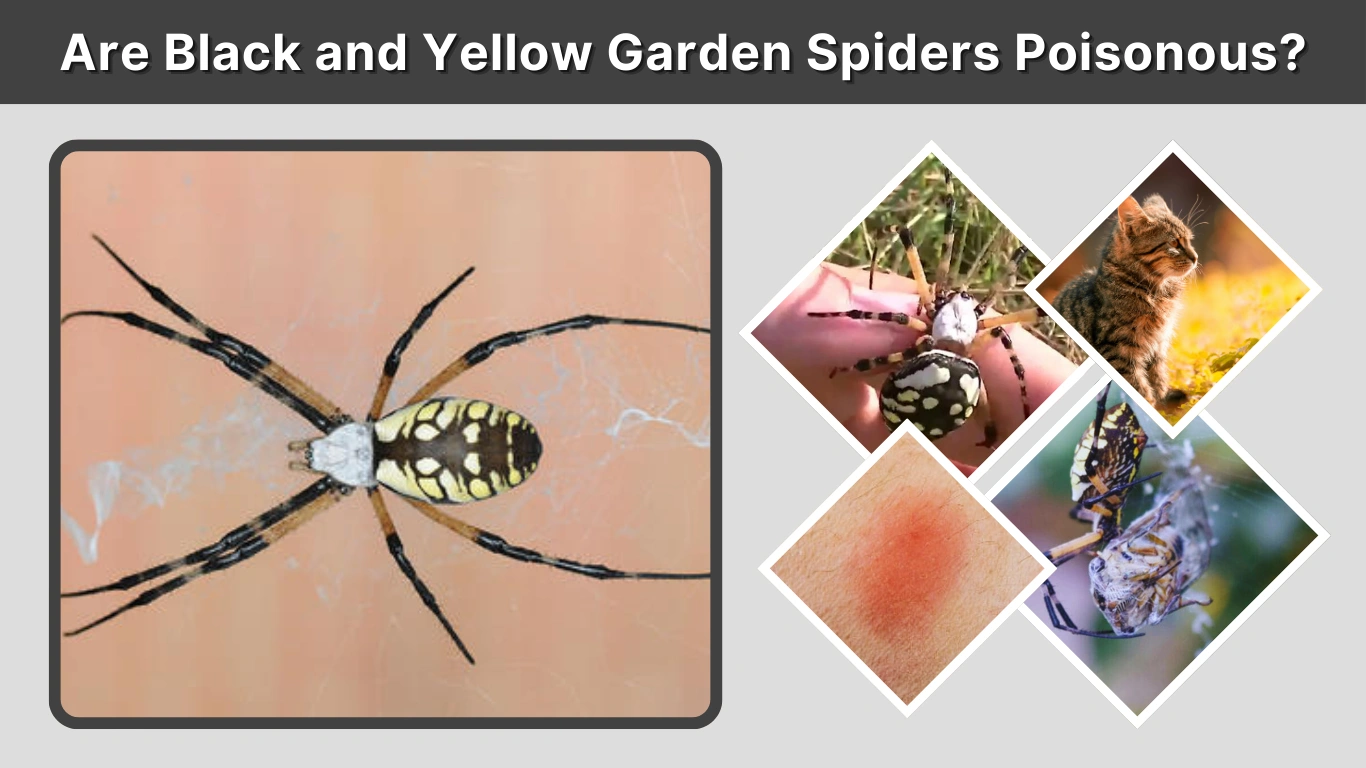
Black and yellow garden spiders appear in yards, porches, and grassy fields across North America and Europe, causing many people to wonder whether these boldly colored spiders are poisonous or dangerous. Despite their dramatic yellow-and-black patterns, large size, and intimidating webs, they are not harmful to people or pets. The following sections cover their identification, behavior, bite concerns, regional variations, and why so many homeowners mistake them for venomous species.
Identification

- Bright yellow and black abdomen with clear, blocky markings
- Long banded legs held in an X-shaped resting pose
- Large orb web featuring a distinct zigzag pattern
- Females much bigger than males; males are slim and pale
- Common around gardens, flowerbeds, porches, barns, and open fields
- Juveniles appear as tiny black-and-yellow speckled spiders before developing brighter patterns
What Species People Actually Mean
Most people searching about black and yellow spiders are referring to Argiope aurantia, the common garden orb-weaver. This species goes by several names including writing spider, zigzag spider, and yellow garden spider. Because females can reach over an inch in body length and their webs span several feet across, they are one of the most frequently noticed spiders near homes.
Confusion happens because several harmless spiders share similar colors. Yellow orb-weavers, wasp-like orb species, and even some jumping spiders get mistaken for the same “poisonous black and yellow spider.” Variants with orange tones, red-tinted undersides, or heavier striping also trigger worry even though they belong to the same harmless group of orb-weavers. Bright coloration is a form of natural camouflage and has nothing to do with increased danger.
Are Black and Yellow Garden Spiders Poisonous?

The central question most people have is whether these spiders are poisonous. While they do possess venom like nearly all spiders, their venom is very weak and designed only for subduing small insects. It is not dangerous to humans. They are also not poisonous to touch or to accidentally come into contact with, since their bodies do not contain toxins harmful through skin contact.
Many people assume a brightly colored spider must be harmful, but Argiope aurantia relies on visibility to deter predators and protect its web. These spiders avoid confrontation, drop from their webs when disturbed, and almost never bite unless they feel trapped or pressed against skin.
Are They Dangerous to Humans?
Bites from these spiders are extremely rare. Even when a bite does occur, the effects are usually mild: slight redness, brief stinging, or minor swelling that fades within a few hours. For most people the sensation is similar to a bee sting without long-lasting discomfort. Only individuals with severe insect or spider allergies may experience stronger reactions, and even then, complications are uncommon.
Because these spiders build webs near eye level, gardeners often walk into a web accidentally, leading to anxiety about being bitten. Yet the spider’s natural response is to flee rather than defend itself. They do not jump onto people, chase, or behave aggressively. Their size alone tends to exaggerate fear, especially when large females are mistaken for dangerous species.
Are They Poisonous to Dogs, Cats, or Other Pets?

Black and yellow garden spiders pose no real danger to household pets. Dogs and cats may occasionally disturb webs or investigate a spider out of curiosity, but the spiders rarely bite animals. Even if a bite happens, the venom is far too mild to cause serious symptoms in pets. At most, a dog or cat might experience brief irritation at the bite site. These spiders are not considered toxic to animals, and there are no documented cases of severe reactions linked to this species.
Outdoor pets often come across these spiders in grassy areas or near sheds, leading owners to worry about accidental exposure. However, the spiders’ instinct is to retreat or drop to the ground when approached. Their venom targets insects, not mammals, and is not strong enough to create lasting problems for pets.
Big, Large, and Tiny Black and Yellow Spiders
Size plays a major role in how threatening these spiders appear. Adult females can grow quite large, which leads many people to assume they are more dangerous than smaller spiders. In reality, size has no impact on the level of risk. The venom remains mild regardless of how big the spider is.
On the other end of the spectrum, tiny juveniles are often found in gardens during midsummer. These small versions carry the same coloration but lack the full intensity of the adult pattern. Homeowners frequently worry that tiny black-and-yellow spiders are young versions of a more dangerous species. In truth, they are simply immature orb-weavers that will eventually build larger webs. Whether large or tiny, all stages of this species are harmless to humans and pets.
Color Variations and Lookalikes

Not every spider fitting the yellow-and-black description is Argiope aurantia. Many harmless species share this color theme, which can lead to confusion. Some orb-weavers display softer orange tones, while others have red-tinted undersides. These visual differences often cause people to believe they have encountered a poisonous species, especially when the underside markings contrast sharply with the top.
Jumping spiders with yellow or orange accents are also mistaken for dangerous species due to their quick, energetic movements. Despite the bold colors and active behavior, they are completely harmless. The black-and-yellow striped appearance can also resemble certain wasps, but unlike stinging insects, these spiders cannot inject venom capable of harming people.
Regional Concerns and Local Sightings
People frequently search for information about these spiders in specific states or countries. Sightings in Florida, Texas, Georgia, Wisconsin, Michigan, and other areas prompt questions about whether the regional population is more dangerous. The truth is that location does not change the species’ venom or behavior. Argiope aurantia is widespread across North America and behaves the same regardless of climate.
In Canada and the United Kingdom, similar orb-weaver species or introduced populations cause the same level of curiosity. Though their patterns may differ slightly, their harmless nature remains consistent. These spiders prefer warm areas with abundant insects, which is why they are commonly seen in gardens, fields, and along fences during late summer.
Behavior and Habitat

Black and yellow garden spiders are active builders, creating large circular webs that can span several feet. The striking zigzag pattern in the center is believed to strengthen the web or warn larger animals to avoid walking through it. When disturbed, the spider may vibrate its web rapidly, giving the impression of aggression. This shaking behavior is actually defensive and meant to confuse predators.
They help control insect populations by feeding on flies, grasshoppers, and other garden pests. Their presence indicates a healthy outdoor environment, and they rarely enter homes. Because they rely on sunlight and open space, they typically remain outside where they can anchor their webs between plants or structures.
Range & Habitat
Black and yellow garden spiders are found throughout North America, from warm southern states to cooler regions in the north. They thrive in sunny, open spaces where insects are abundant, including gardens, crop fields, meadows, and backyard patios. Because they anchor their webs between wide gaps, they prefer fences, tall plants, and exterior structures. Seasonal visibility increases in late summer and early fall when females reach full size.
Their adaptability contributes to frequent sightings in states like Florida, Georgia, Texas, Michigan, and Wisconsin as well as in parts of Canada. While similar species are found in the United Kingdom and Europe, they share the same gentle nature and pose no threat to people or pets. Climate does not influence venom potency or aggression—these spiders remain harmless across their entire range.
Bite Treatment & Safety Tips

Encountering one of these spiders may be startling, but bites are extremely uncommon. If a rare bite does occur, simple first aid is typically enough. Wash the area with soap and water, apply a cold compress, and monitor for mild swelling. Most discomfort fades quickly, similar to a mosquito or bee sting.
People working in gardens can avoid accidental contact by wearing gloves and gently clearing webs before trimming plants. If a large web blocks entryways or paths, relocating the spider with a soft brush or stick is safe, as they usually drop away and rebuild elsewhere. Pets should be supervised outdoors if curious, though the risk remains minimal.
Myths & Misunderstandings
Black and yellow garden spiders attract myths due to their striking appearance. Many believe their large size indicates danger, but this is not the case. Their defensive vibration behavior is often mistaken for aggression, when it is really an effort to deter predators.
Another common myth is that brightly colored spiders must be venomous. In reality, their bold patterns evolved to help them blend with sunlight and vegetation or to warn birds away from their delicate webs. Social media often exaggerates their danger, but scientific evidence consistently shows they are harmless garden allies.
FAQ
Is a black and yellow garden spider poisonous?
No. These spiders are not poisonous and are only mildly venomous like most spiders. Their venom is designed to immobilize insects and is far too weak to harm humans. They do not pose a danger through touch, and they rarely bite unless accidentally pressed against skin.
Are black and yellow garden spiders dangerous to humans?
They are not dangerous at all. Even large females with bright patterns are harmless and avoid confrontation. A rare bite may feel like a mild sting, but medical issues are extremely uncommon. These spiders typically retreat or drop off their webs when approached by people.
Are Argiope aurantia spiders harmful to pets?
No. Their venom is not strong enough to harm dogs, cats, or other animals. Pets that disturb a web may cause the spider to flee, and even if a bite occurs, symptoms are usually limited to minor redness or brief irritation. There are no serious pet-related cases involving this species.
Do black and yellow spiders bite?
They rarely bite and only do so when provoked or trapped. Gardeners may fear bites when encountering large webs, but the spiders usually retreat. If a bite happens, the effects are mild and short-lived. Most people never experience any reaction beyond light swelling.
Are black and yellow garden spiders poisonous in Florida, Texas, or other regions?
No matter the region—Florida, Georgia, Texas, Wisconsin, Michigan, Canada, or the UK—these spiders are harmless. Climate and location do not change their venom’s strength. They behave the same everywhere and remain safe, beneficial predators of garden insects.
