
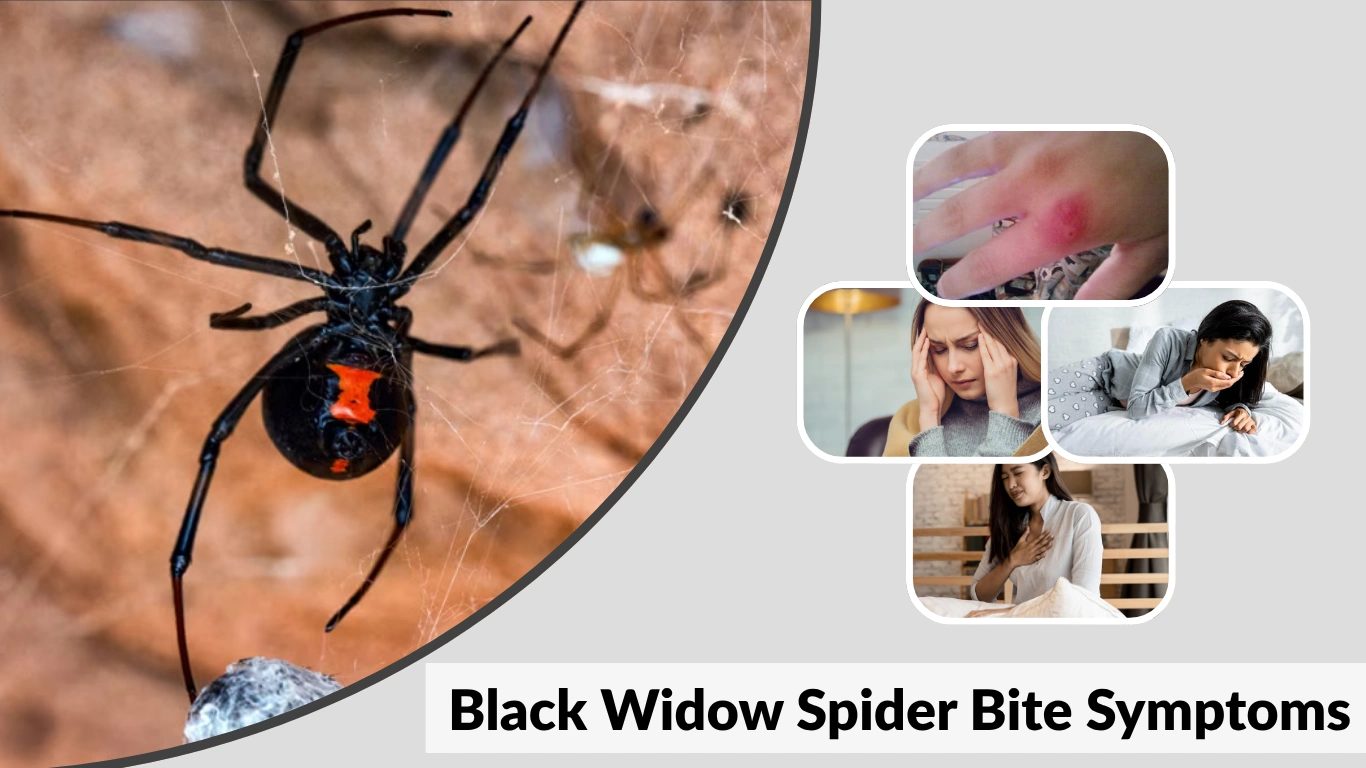
Black widow spiders are among the most infamous spiders in the world, known for their potent venom and distinctive black bodies with red hourglass markings. Although they are rarely aggressive, their bites can cause significant discomfort and, in some cases, serious medical complications. Understanding the symptoms of a black widow spider bite is essential for timely treatment and preventing complications, not only in humans but also in pets like dogs and cats. These spiders are found in dark, undisturbed areas such as sheds, garages, woodpiles, and occasionally inside homes, particularly in regions like the United States and parts of Europe.
What is a Black Widow Spider?

Physical Characteristics
Female black widows are easily recognizable due to their shiny black bodies and a red hourglass marking on the underside of their abdomen. They are relatively small, measuring about 1.5 inches with legs extended. Males are smaller and less venomous, and their bites typically cause minor or no symptoms. Baby black widows are tiny and rarely cause severe reactions.
Habitat and Behavior
Black widows prefer dark, undisturbed places, often hidden under logs, rocks, or inside cluttered corners of garages or sheds. They are defensive rather than aggressive and usually bite only when threatened or trapped. Their bites are more likely to occur when humans or pets inadvertently disturb their hiding spots.
How a Black Widow Spider Bite Occurs

Black widow spiders bite defensively. When their web or territory is disturbed, they inject venom through their fangs. The venom is a neurotoxin, which affects the nervous system, causing muscle pain, cramps, and sometimes systemic symptoms. Risk factors include handling firewood, gardening, or leaving outdoor shoes and clothing in areas where spiders may hide. Pets, especially curious dogs and cats, are also at risk when exploring similar environments.
Early Symptoms of a Black Widow Spider Bite
Initial Signs in Humans
The first indication of a black widow bite is usually a mild “pinprick” sensation at the bite site. Redness, swelling, and slight itching may follow within an hour. Some people report a burning sensation or tingling that spreads outward from the bite. While the initial reaction may seem minor, it can progress to more serious symptoms within a few hours.
Early Symptoms in Pets (Dogs & Cats)
In dogs, early symptoms can include mild swelling at the bite site, restlessness, whining, or excessive licking. Cats may show subtle signs such as hiding, grooming the affected area excessively, or displaying unusual lethargy. Early recognition of these symptoms in pets is crucial, as their reactions can escalate quickly.
Common Symptoms in Humans

Local Symptoms
The bite site often becomes red and swollen, sometimes with a small puncture mark at the center. Pain may intensify within 30–60 minutes and may extend from the bite site to surrounding areas. Local muscle cramps and stiffness are common and can affect the arms, legs, or abdomen depending on the bite location.
Systemic Symptoms
As the venom spreads, systemic effects can appear. These include:
- Abdominal cramps or generalized muscle pain
- Nausea and vomiting
- Sweating, chills, or fever
- Headache, dizziness, or anxiety
Severe Symptoms
In rare cases, more serious symptoms develop, which require immediate medical attention:
- Difficulty breathing or swallowing
- Severe muscle spasms or cramps
- Rapid heartbeat or elevated blood pressure
- Neurological signs such as numbness, tingling, or weakness
Symptoms Timeline
Understanding the timeline of black widow spider bite symptoms helps in assessing severity:
- Immediate (0–1 hour): Localized pain, redness, and mild itching
- Early (1–6 hours): Muscle cramps and early systemic signs such as nausea or sweating
- Peak (6–12 hours): Severe pain, widespread muscle cramps, and increased systemic symptoms
- Recovery (24–72 hours): Gradual improvement, though some neurological symptoms may persist longer
Black Widow Spider Bite Symptoms in Pets

Dogs
Dogs bitten by black widow spiders may exhibit a variety of symptoms. Early signs include restlessness, whining, and drooling. Muscle tremors or spasms, particularly in the limbs or abdomen, are common within the first few hours. Vomiting and panting may also occur, and in severe cases, dogs can experience difficulty walking or weakness. Prompt veterinary care is crucial to prevent serious complications.
Cats
Cats tend to hide or become lethargic after a bite. Other symptoms can include excessive grooming of the bite area, vomiting, or unsteady movement. Muscle stiffness and weakness may develop rapidly. Since cats often conceal pain, careful observation of behavior changes is important for early intervention.
Timeline in Pets
Symptoms in pets often appear within 30 minutes to a few hours after the bite. Without treatment, systemic signs such as tremors, severe abdominal pain, and respiratory difficulty can escalate. Early recognition and veterinary intervention improve recovery outcomes significantly.
False or Misdiagnosed Black Widow Spider Bites
Not all suspected black widow bites are genuine. Many cases are misdiagnosed due to similar-looking spider bites or skin irritation from insects. False black widow bites can mimic redness, swelling, or pain but usually lack severe systemic symptoms. Conditions such as allergic reactions, bacterial infections, or brown recluse spider bites may be mistaken for black widow bites. Correct identification is critical for proper treatment.
Differences Between Male, Female, and Baby Spider Bites

- Female bites are the most dangerous due to higher venom potency.
- Male bites are often minor or even asymptomatic.
- Baby black widows rarely cause significant reactions; symptoms are usually mild and localized.
Awareness of these differences helps gauge the risk and determine urgency for treatment.
Diagnosis and Medical Evaluation
A black widow spider bite is usually diagnosed clinically, based on visible bite marks and reported spider exposure. Laboratory tests are rarely necessary but may be used to monitor severe systemic effects or complications. In severe cases, imaging studies can assess muscle or nerve involvement. For pets, veterinarians evaluate symptoms, conduct blood tests, and may provide antivenom if indicated.
Treatment and Symptom Management

First Aid at Home
- Clean the bite site thoroughly with soap and water.
- Apply ice packs to reduce swelling and local pain.
- Over-the-counter painkillers may help manage mild discomfort.
Medical Treatment
- Muscle relaxants can relieve severe cramps.
- Anti-nausea or pain medications may be prescribed.
- In rare cases, antivenom is administered for severe systemic reactions. Hospitalization may be required for monitoring.
Treatment in Pets
Pets should receive immediate veterinary care. Treatment may include intravenous fluids, pain management, and in rare severe cases, antivenom. Monitoring is essential to prevent complications such as respiratory distress or severe systemic reactions.
Complications and When to Seek Help
Seek immediate medical attention if:
- You or a pet have difficulty breathing or swallowing.
- Muscle cramps are severe and widespread.
- Neurological symptoms such as numbness, tingling, or weakness develop.
Prompt treatment reduces the risk of serious complications and speeds recovery.
Preventing Black Widow Spider Bites
- Keep homes, sheds, and garages clean and free of clutter.
- Shake out shoes, clothes, and gloves before use.
- Wear gloves when handling firewood, rocks, or debris.
- Educate family members and pet owners about spider habitats and safety precautions.
FAQs
1. How long do black widow spider bite symptoms last?
Symptoms typically appear within 30 minutes to a few hours after the bite. Mild symptoms may resolve in 24–72 hours, while severe systemic symptoms, such as muscle cramps or neurological effects, may last several days and require medical treatment.
2. Can a black widow spider bite be fatal?
Fatalities are extremely rare, especially in healthy adults. Young children, the elderly, and pets are at higher risk of severe reactions. Prompt medical or veterinary care usually ensures full recovery.
3. How can I tell if a spider bite is from a black widow or another spider?
Black widow bites often cause immediate pain, redness, and muscle cramps, whereas brown recluse bites may be painless at first and can develop skin necrosis over time. Proper identification of the spider, if possible, is essential for accurate treatment.
4. What should I do if my dog or cat is bitten by a black widow spider?
Take your pet to a veterinarian immediately. Early symptoms may include restlessness, drooling, vomiting, muscle tremors, or lethargy. Treatment may involve pain management, IV fluids, and in rare severe cases, antivenom.
5. How can I prevent black widow spider bites at home?
Preventive measures include keeping garages, sheds, and storage areas clean, shaking out shoes and clothing before wearing, wearing gloves when handling firewood or debris, and educating family members and pets about spider habitats.
