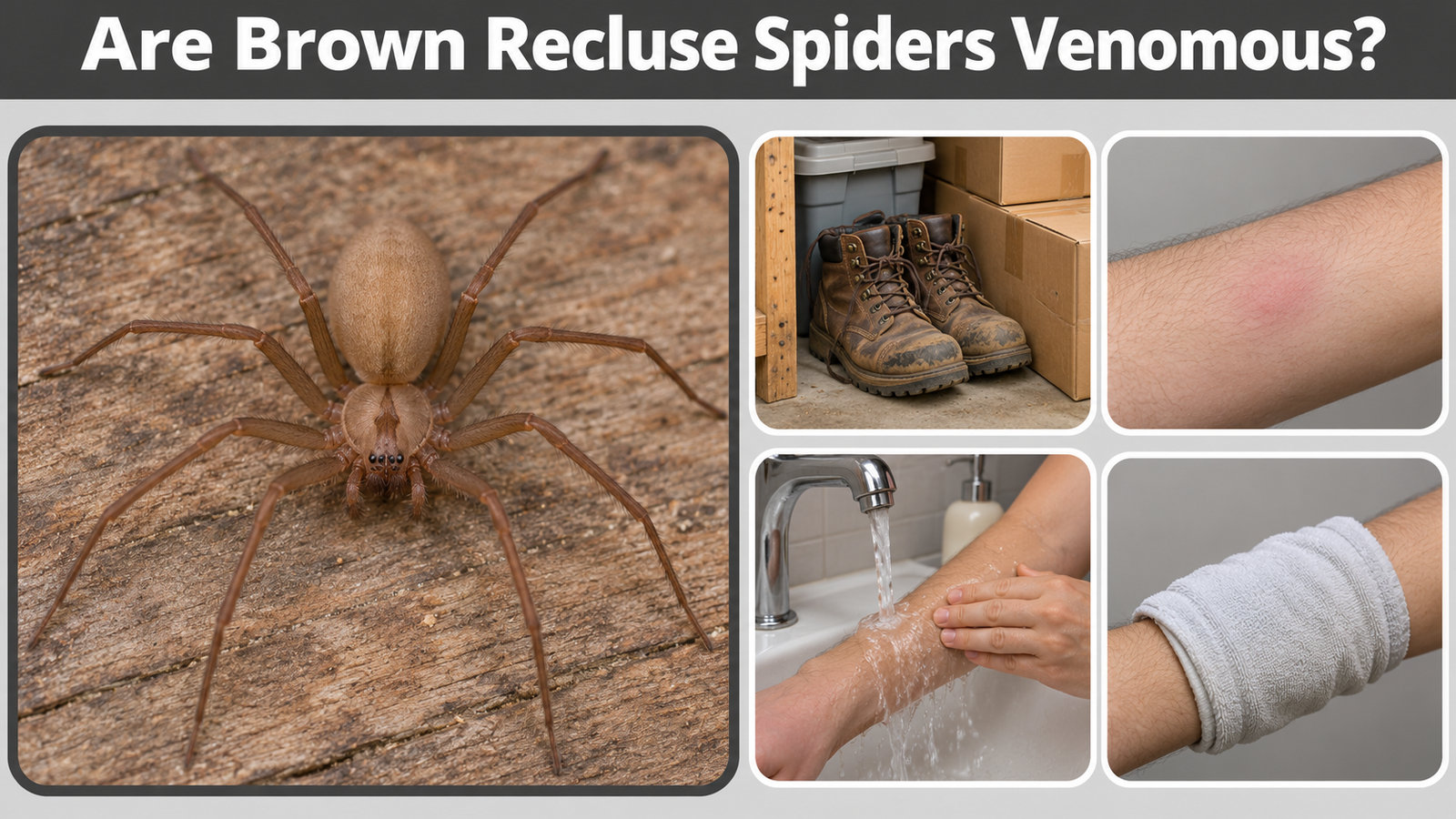
Yes, brown recluse spiders are venomous. They inject venom through their fangs when they bite, and that venom can cause irritation, pain, and sometimes damage to nearby skin. Many bites cause a mild reaction that stays near the bite site. Severe wounds and whole-body reactions are uncommon, but they can develop over several days. Because a bite may feel painless at first, an early look at the skin gives only a partial picture. If you suspect a brown recluse bite, wash the area and contact Poison Control or a healthcare professional promptly.
Are Brown Recluse Spiders Venomous or Poisonous?
Venomous is the correct term for the brown recluse spider (Loxosceles reclusa) because it delivers venom through a bite. In everyday conversation, people often use “poisonous spider” to describe a spider that can cause harm. The biological distinction comes down to how the toxin enters the body. Venom is injected, while a poison can act after it is swallowed, inhaled, or absorbed.
How Does a Brown Recluse Deliver Venom?
The brown recluse has a pair of fangs connected to venom glands. When the spider bites, its fangs can puncture the skin and deliver venom into the tissue. The spider normally uses venom to subdue prey, such as insects. A bite to a person typically happens when the spider is disturbed and trapped against the skin.
That can happen when someone puts on a shoe where a spider has been hiding or presses against one while handling stored clothing. Seeing a brown recluse on a wall or near a box poses a different risk from reaching into a space where you could accidentally pin it against your hand.
What Does Brown Recluse Venom Do to Humans?
Brown recluse venom contains several substances that can injure cells and trigger inflammation. One group of enzymes, called phospholipase D, plays an important role in the venom’s effects. The most common symptoms occur in the skin around the bite. In uncommon cases, the reaction extends beyond the bite site and affects the rest of the body.
Local Effects on the Skin
A bite can cause itching, tenderness, redness, or swelling. Some people develop a blister or a pale or dusky patch near the center. In a more severe reaction, nearby skin cells can die. This is called necrosis. The affected area may darken, form a crust, and eventually develop into an open sore.
Skin damage varies considerably. A small area of irritation may settle with basic wound care, while a deeper sore can take weeks or longer to heal and may leave a scar. A mildly irritated spot in the first few hours can change later, so take note if the pain increases or the skin starts to break down.
Rare Effects Beyond the Bite Site
A severe whole-body reaction is called systemic loxoscelism. One possible complication is hemolysis, which happens when red blood cells break down faster than the body can replace them. This can lead to anemia and, in some cases, kidney injury. Dark urine, yellowing of the skin or eyes, and unusual weakness are warning signs that need urgent medical evaluation.
Fever, chills, nausea, or vomiting can also develop. Whole-body symptoms may appear days after the bite, even when the skin wound looks small. Severe reactions are more common in children and adolescents than in adults, so seek prompt professional guidance if a child may have been bitten.
What Are the Symptoms of a Brown Recluse Bite?
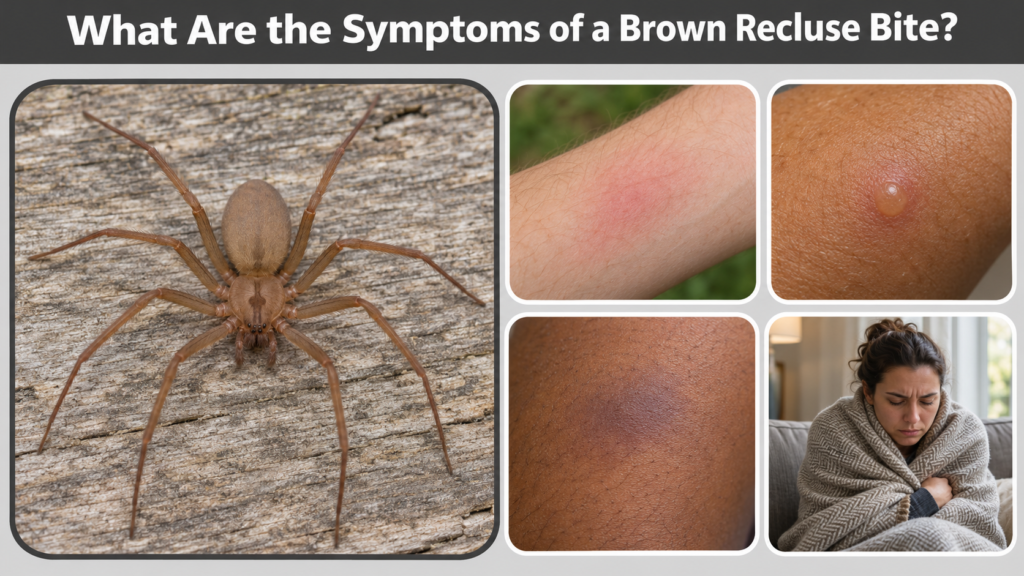
You may feel a slight sting or nothing at all when the bite happens. Tenderness or a burning sensation can develop over the next several hours. Some people notice only a small irritated spot. Others develop a blister or more noticeable skin changes over the following days. The timing varies, and a reaction can stop at any point.
| When symptoms may appear | What you might notice |
|---|---|
| At the time of the bite | Little or no pain, or a slight sting |
| Over the next few hours | Itching, redness, tenderness, or a burning sensation |
| Over the next day or two | Increasing pain, a blister, or a pale or dusky area in some cases |
| Over the following days | A dark crust or open sore if skin damage develops, or whole-body symptoms in rare cases |
Can You Tell From the Bite Mark Alone?
A skin sore cannot confirm a brown recluse bite. Bacterial infections and other skin conditions can also cause a painful bump, a blister, or an open wound. Even a dark center has several possible causes. Clinicians consider where the suspected bite happened, whether anyone saw the spider bite, and how the symptoms developed.
Geography helps put the risk in context. The true brown recluse is established mainly in the south-central United States and parts of the Midwest. A sore that appears outside that range warrants attention based on its symptoms, just like a sore within it. Recent travel or a shipment from an area where the spider lives can be relevant when there is a credible exposure.
How Does Brown Recluse Venom Compare With Black Widow Venom?
Both spiders can cause medically significant bites, but they tend to produce different symptoms. Brown recluse venom primarily damages tissue near the bite, while black widow venom mainly affects nerve signaling and can cause severe muscle cramps or pain beyond the bite site.
| Feature | Brown recluse | Black widow |
|---|---|---|
| Typical concern | Skin injury that can progress over several days | Muscle pain, cramps, and other effects on the nervous system |
| Possible changes near the bite | Tenderness, blistering, or an open sore | Local pain, sometimes with redness or sweating |
| Possible severe reaction | Red blood cell breakdown and kidney complications | Severe muscle cramping, widespread pain, and other whole-body symptoms |
These patterns can help a clinician evaluate an exposure. Get medical advice based on what happened and how the person feels, especially if the spider was unseen or its identity is uncertain.
What to Do After a Suspected Brown Recluse Bite
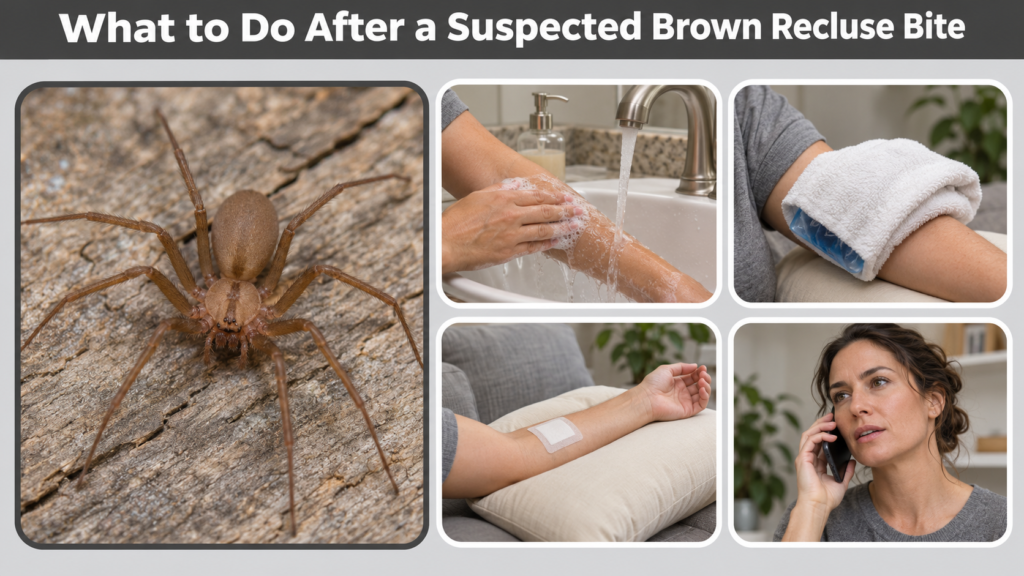
Wash the area gently with soap and water, then contact a healthcare professional or poison center promptly for advice. In the United States, you can reach Poison Control at 1-800-222-1222. Mention the person’s age, the time of the possible bite, any symptoms, and whether you saw the spider. A photo can help if you can take it safely from a distance without delaying care.
First Aid for the Bite Area
- Clean the skin. Use soap and water without scrubbing the sore.
- Apply a cool compress. Wrap a cold pack in a cloth and apply it for short intervals. Keep ice from touching bare skin.
- Elevate the affected limb. If the bite is on an arm or leg, raise it comfortably when practical.
- Protect broken skin. Use a clean, nonstick dressing and avoid picking at a scab or popping a blister.
Avoid cutting the wound, trying to suck out venom, or applying a tourniquet. If symptoms change, note when they started. A dated photo of the skin can help a healthcare professional see how it has changed.
When to Seek Urgent or Emergency Care
Call 911 or your local emergency number if the person has difficulty breathing, feels faint, becomes confused, or collapses. Seek urgent medical care for dark urine, yellowing of the eyes or skin, marked weakness, fever, or repeated vomiting after a possible bite.
A wound that becomes increasingly painful, develops an open sore, or has spreading redness also needs prompt evaluation. Depending on the symptoms, a clinician may check for infection, review tetanus vaccination status, or order blood and urine tests. In the United States, care generally focuses on treating the wound and any complications.
Frequently Asked Questions
Are baby brown recluse spiders venomous?
Juvenile brown recluses have venom and use it to capture prey. Their small size also makes them harder to identify. If you suspect a bite, use the circumstances and symptoms to guide your next steps.
Is brown recluse venom always dangerous to humans?
Many bites cause only mild symptoms near the bite site. The venom can sometimes damage enough tissue to cause an open sore, and rare whole-body reactions can become serious. Prompt guidance is appropriate even when a suspected bite looks mild initially.
How quickly does brown recluse venom cause symptoms?
Some people feel a sting immediately, while others first notice tenderness or irritation several hours later. More significant skin changes and whole-body symptoms can take days to develop.
Can a brown recluse bite leave a permanent scar?
Yes. A deep wound can leave a permanent scar after it heals. Bites that cause mild irritation and leave the skin intact are less likely to leave a lasting mark.
Can a brown recluse bite be fatal?
Fatal reactions are rare. Severe cases can involve red blood cell breakdown and kidney injury. Dark urine, yellowing of the eyes, or pronounced weakness after a possible bite needs urgent care.
