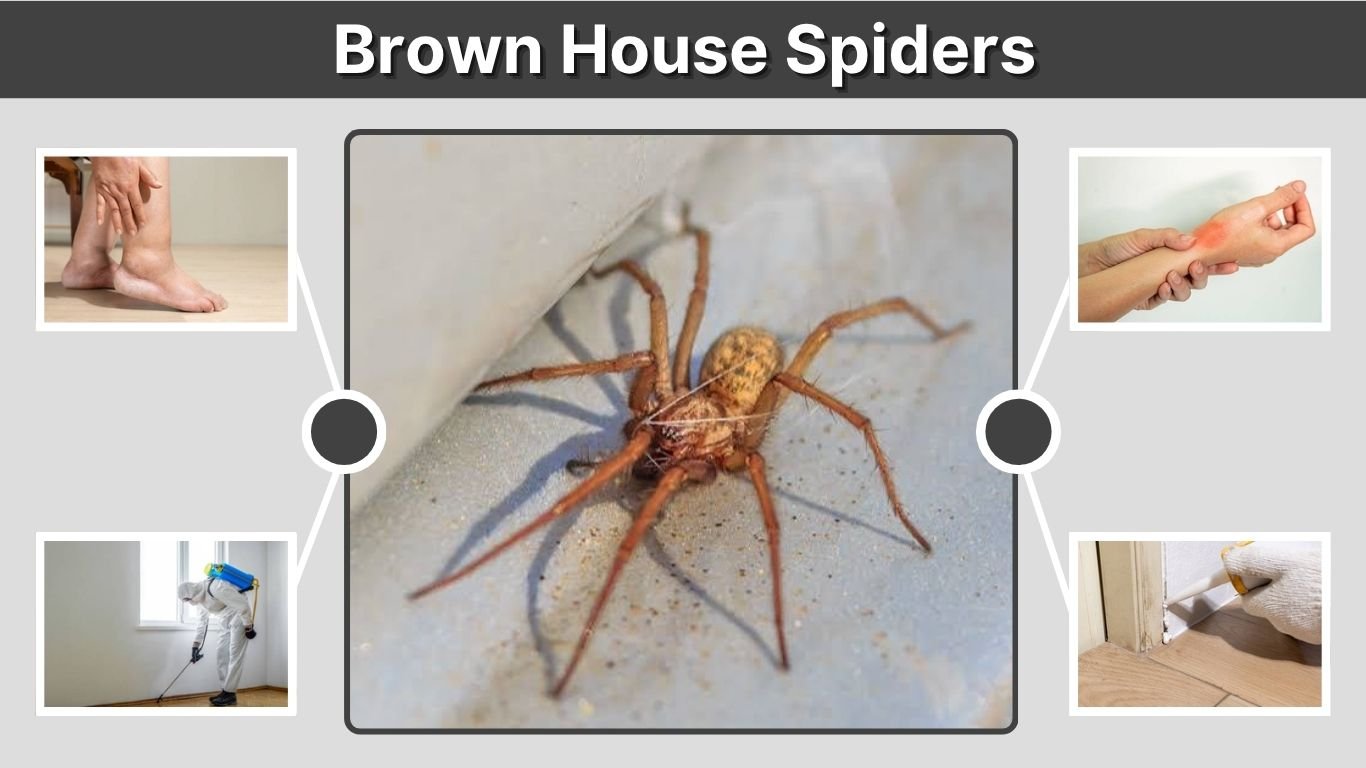
Brown house spiders are common visitors to bedrooms, basements, garages, and living rooms. Some are tiny and pale brown, while others have large, hairy bodies that move quickly across the floor. Most are harmless predators that feed on household insects, but certain species, especially brown recluse spiders, require caution. Knowing how to identify brown house spiders helps you distinguish ordinary visitors from potentially dangerous species. This guide explains the most common types, whether they bite, why they appear indoors, and how to remove and prevent them safely.
What Are Brown House Spiders?
Brown house spiders are several spider species that share brown, tan, or reddish-brown coloration. They are found in homes across the United States, although the species vary by region.
Some build webs in quiet corners, while others wander indoors while hunting insects. Their color alone cannot reliably identify them.
How to Identify Brown House Spiders
Look for these common characteristics when examining brown spiders inside your home.
- Color: Light brown, dark brown, reddish-brown, or tan.
- Size: Small spiders may measure only a few millimeters, while larger species have leg spans of several inches.
- Body shape: Rounded, oval, or elongated, depending on the species.
- Legs: Eight legs that may be slender, hairy, or marked with bands.
- Webs: Some build irregular cobwebs, while hunting species rarely construct prey-catching webs.
5 Common Types of Brown House Spiders
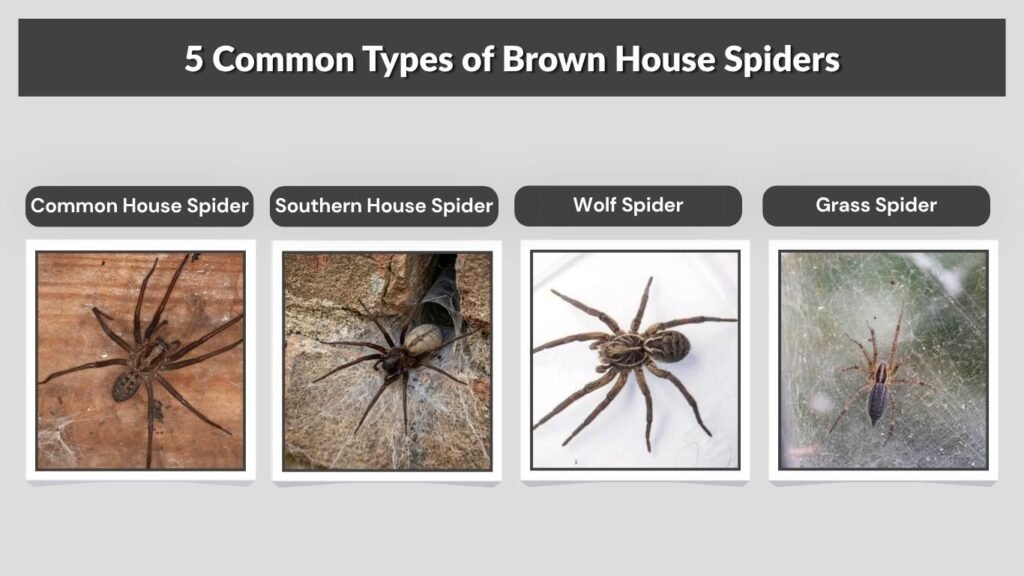
Several brown spider species regularly appear around residential buildings. Recognizing their distinctive features can help homeowners determine whether a spider is harmless or requires additional attention.
1. Common House Spider
The common house spider (Parasteatoda tepidariorum) is a small, brownish spider with a rounded, patterned abdomen.
It creates irregular cobwebs around windows, ceilings, garages, and basements. Females typically measure approximately 5–8 millimeters in body length.
These spiders are generally harmless and feed on small household insects.
2. Southern House Spider
Southern house spiders (Kukulcania hibernalis) commonly inhabit buildings in warmer regions, including Florida and Texas.
Females are usually dark brown, while males have lighter bodies and longer, slender legs.
Males are sometimes mistaken for brown recluse spiders. However, southern house spiders are generally harmless and have different eye arrangements.
3. Wolf Spider
Wolf spiders belong to the family Lycosidae and have hairy brown bodies with darker patterns.
These active hunters rarely build webs to catch insects. Instead, they chase prey across floors, gardens, and other surfaces.
Wolf spiders occasionally enter houses through open doors or small gaps. Although they can bite defensively, serious reactions are uncommon.
4. Grass Spider
Grass spiders (Agelenopsis species) are brown spiders with striped bodies, long legs, and prominent rear spinnerets.
They typically create funnel-shaped webs in grass, shrubs, and around building foundations.
Occasionally, they wander into garages and basements. Grass spiders are not considered dangerous to humans and usually avoid direct contact.
5. Brown Recluse Spider
Brown recluse spiders (Loxosceles reclusa) are tan to brown spiders primarily associated with the central and south-central United States.
They have six eyes arranged in three pairs and may display a violin-shaped marking.
Unlike most common house spiders, brown recluses have medically significant venom. They prefer dry, dark, undisturbed hiding places.
Brown House Spider vs. Brown Recluse Spider
Many harmless brown spiders resemble brown recluses. However, several physical characteristics can help distinguish them.
Key Identification Differences
Common house spiders generally have rounded, patterned abdomens and eight eyes. They frequently construct irregular webs in corners and around windows.
Brown recluse spiders typically have plain, oval abdomens and six eyes. Their legs generally lack obvious bands or heavy spines.
Although brown recluses often have violin-shaped markings, other spiders can display similar patterns. Geographic location and professional identification are important when distinguishing these species.
Are Brown House Spiders Dangerous?
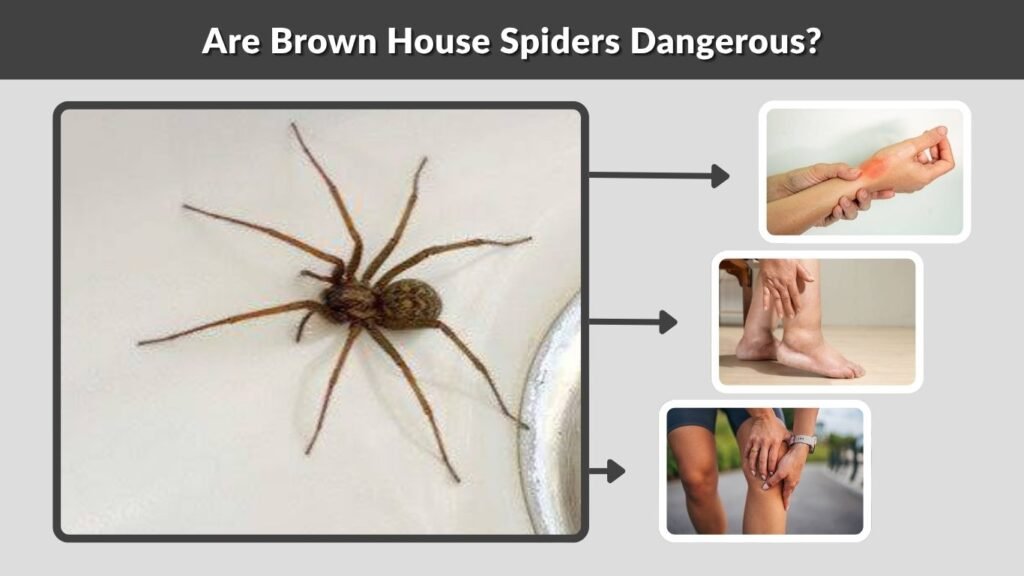
Most brown house spiders are harmless to humans and pets. They feed primarily on insects and usually avoid confrontation.
However, brown recluse spiders are an important exception because their bites can occasionally cause serious skin injuries.
Do Brown House Spiders Bite?
Brown house spiders can bite when trapped against skin or handled roughly. Most bites from common household species cause little or no reaction.
Possible symptoms include mild pain, redness, and localized swelling.
Brown recluse bites may occasionally produce worsening skin damage. Seek medical attention if a suspected bite causes significant symptoms, increasing pain, or spreading discoloration.
Why Are Brown Spiders in My House?
Brown spiders usually enter homes searching for insects, shelter, or suitable hiding places. Some species also reproduce indoors when conditions are favorable.
Several environmental factors can encourage spider activity.
- Available insects: Flies, mosquitoes, and other small insects provide food.
- Dark hiding places: Basements, closets, attics, and storage areas offer shelter.
- Entry points: Cracks, damaged screens, and gaps under doors allow spiders indoors.
- Household clutter: Cardboard boxes and unused belongings create protected spaces.
- Seasonal activity: Some spiders wander indoors during autumn or while searching for mates.
How to Get Rid of Brown House Spiders
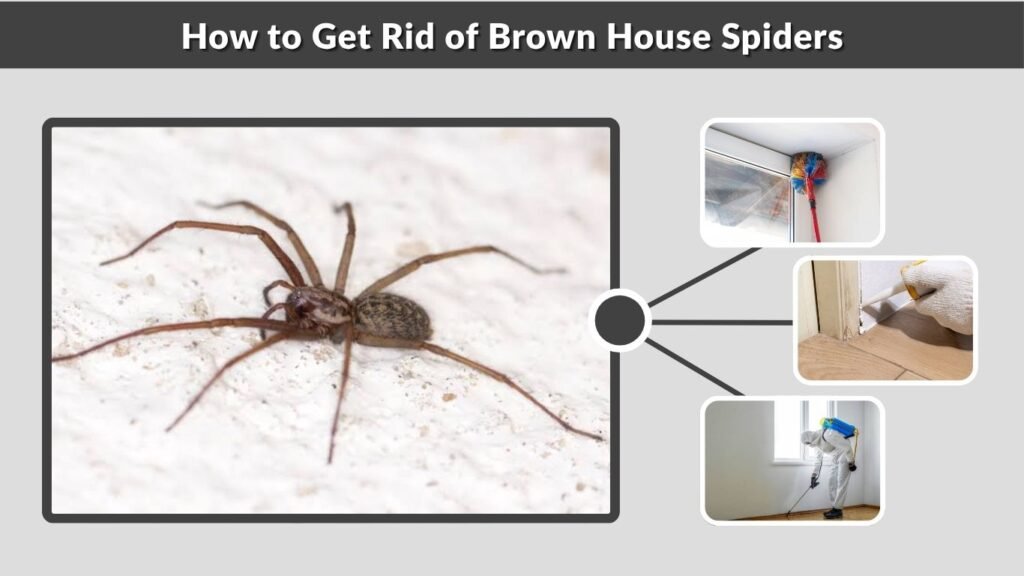
Reducing brown spider populations usually involves cleaning, removing hiding places, and preventing additional entry.
Most harmless spiders can be managed without insecticides. Confirmed brown recluse infestations may require professional treatment.
1. Remove Spiders and Webs
Vacuum spider webs, egg sacs, and accessible corners regularly. Capture harmless spiders using a container when possible and relocate them outside.
2. Seal Entry Points
Repair damaged window screens and seal cracks around doors, foundations, and utility openings. Install weatherstripping where necessary to reduce spider entry.
3. Reduce Household Insects
Clean food debris, manage insect infestations, and reduce unnecessary outdoor lighting near entrances. Fewer insects mean fewer food sources for spiders.
4. Organize Storage Areas
Remove unnecessary clutter from garages, basements, and closets. Replace cardboard boxes with sealed plastic containers, especially in areas where brown recluses occur.
5. Consider Professional Pest Control
If brown recluse spiders are repeatedly identified, consult a qualified pest control professional. Avoid handling suspected recluses directly or applying pesticides without following label directions.
How to Prevent Brown Spiders From Returning
Preventing brown spiders involves maintaining clean indoor spaces and reducing access from outside.
Regularly inspect door seals, window screens, and foundation cracks. Keep vegetation away from exterior walls and remove stored debris near entrances.
In regions with brown recluse populations, shake out shoes, clothing, and stored fabrics before using them.
Complete spider elimination is rarely practical, but consistent maintenance can substantially reduce unwanted encounters.
FAQs
1. What Are the Small Brown Spiders in My House?
Small brown spiders are often common house spiders, juvenile spiders, or other harmless indoor species. Their identification depends on body shape, markings, eye arrangement, and web structure. Brown coloration alone is not enough to determine the exact spider species.
2. Are Brown House Spiders Poisonous?
Most brown house spiders possess venom for subduing prey, but their bites rarely cause serious health problems. Brown recluse spiders are an exception because their venom can occasionally damage skin tissue. Accurate species identification helps determine the actual risk.
3. Are Brown House Spiders Common in Pennsylvania?
Yes, Pennsylvania has several common brown spider species, including house spiders and wolf spiders. However, brown recluse spiders are exceptionally rare in Pennsylvania and are usually introduced through transported belongings rather than occurring naturally throughout the state.
4. Where Do Brown Recluse Spiders Hide in Houses?
Brown recluse spiders prefer dark, dry, undisturbed areas such as closets, attics, basements, and storage rooms. They may hide inside cardboard boxes, behind furniture, or among stored clothing. Avoid reaching blindly into these spaces where recluses are established.
5. How Long Do Brown House Spiders Live?
The lifespan of brown house spiders varies by species, environmental conditions, and food availability. Some live approximately one year, while others survive longer. Brown recluse spiders can live several years under favorable conditions, including protected indoor environments.
