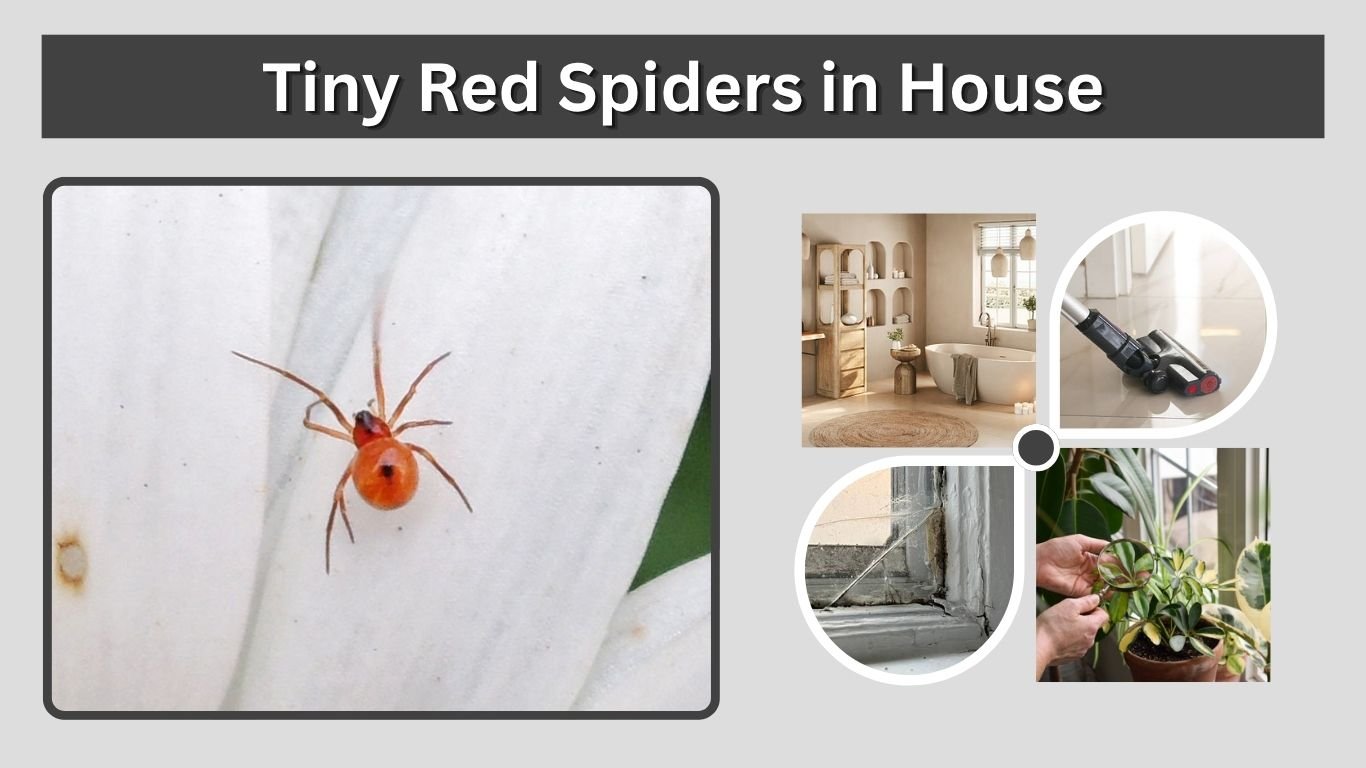
Finding tiny red spiders in your house can be surprising, especially when dozens appear on windowsills, walls, floors, or furniture. These miniature red creatures may resemble spiders, but most are actually clover mites or other small arachnids. Fortunately, they are usually harmless to humans and pets. However, large numbers can become frustrating, and certain mites may damage indoor plants. Understanding what these tiny red spiders are, why they enter your home, and how to remove them can help you prevent future infestations.
What Are the Tiny Red Spiders in My House?
The tiny red spiders found inside houses are most commonly clover mites (Bryobia praetiosa). These microscopic-looking arachnids belong to the mite family Tetranychidae and are closely related to spiders.
Clover mites normally live outdoors, where they feed on grass, clover, and other vegetation. However, they occasionally enter buildings through small openings around windows, doors, and foundations.
Unlike true house spiders, clover mites do not build webs to capture insects. They also cannot establish reproducing populations inside ordinary homes because they depend on outdoor plants for food.
They are especially common during spring and fall, when weather conditions encourage outdoor movement.
What Do Tiny Red House Spiders Look Like?
Recognizing their appearance is the easiest way to distinguish clover mites from other household pests.
- Size: Generally smaller than 1 millimeter, approximately the size of a tiny pinhead.
- Color: Reddish-brown, dark red, or sometimes purplish.
- Body shape: Oval or rounded with a slightly flattened appearance.
- Legs: Eight legs, with the front pair noticeably longer than the others.
- Movement: Crawl slowly or moderately quickly across surfaces.
- Stains: Leave reddish marks when accidentally crushed.
Their unusually long front legs can resemble antennae, making them easy to mistake for tiny insects.
Why Are There Tiny Red Spiders in My House?
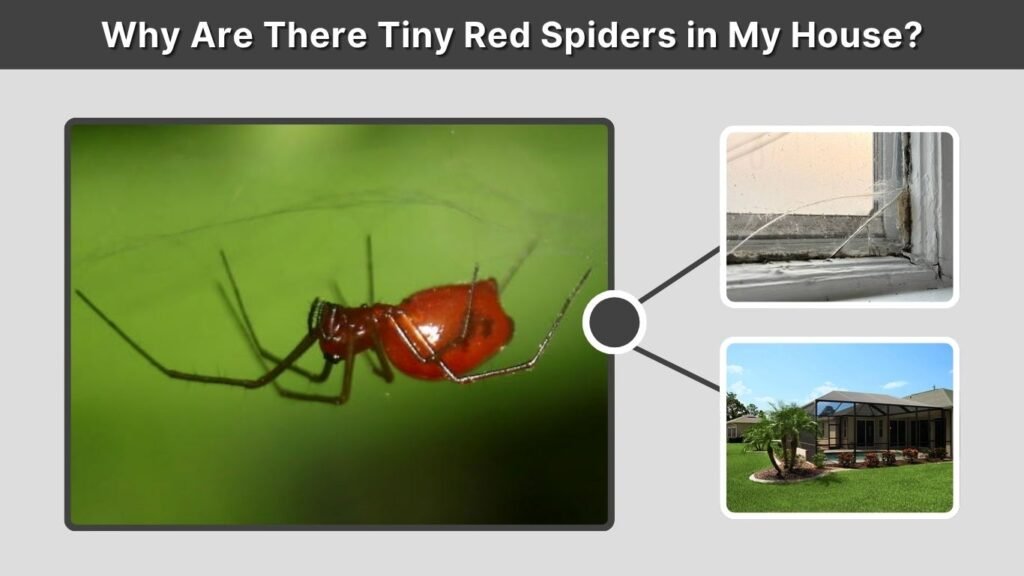
Tiny red spiders usually enter homes while searching for shelter from outdoor environmental conditions. Clover mites are particularly noticeable when large populations develop near building foundations, lawns, and garden beds.
Although they do not intentionally seek human food, several factors can encourage them to move indoors.
1. Changes in Weather Conditions
Clover mites become particularly active during mild spring and fall weather.
Warm, sunny days encourage movement across exterior walls, while sudden changes in temperature may lead them into protected spaces.
They sometimes enter houses during cooler periods or following changes in outdoor conditions.
2. Cracks Around Windows and Doors
Small gaps around windows, doors, siding, and foundations provide easy entry points.
Because clover mites are extremely small, even narrow openings can allow them inside.
Once indoors, they may crawl across curtains, furniture, walls, and windowsills.
3. Grass and Plants Near Your House
Lawns, flower beds, and vegetation growing directly against foundations provide feeding areas for clover mites.
When outdoor populations increase, hundreds may crawl onto nearby walls and eventually enter indoor spaces.
Heavily fertilized lawns can sometimes support larger clover mite populations.
Where Do Tiny Red Spiders Appear Inside Houses?
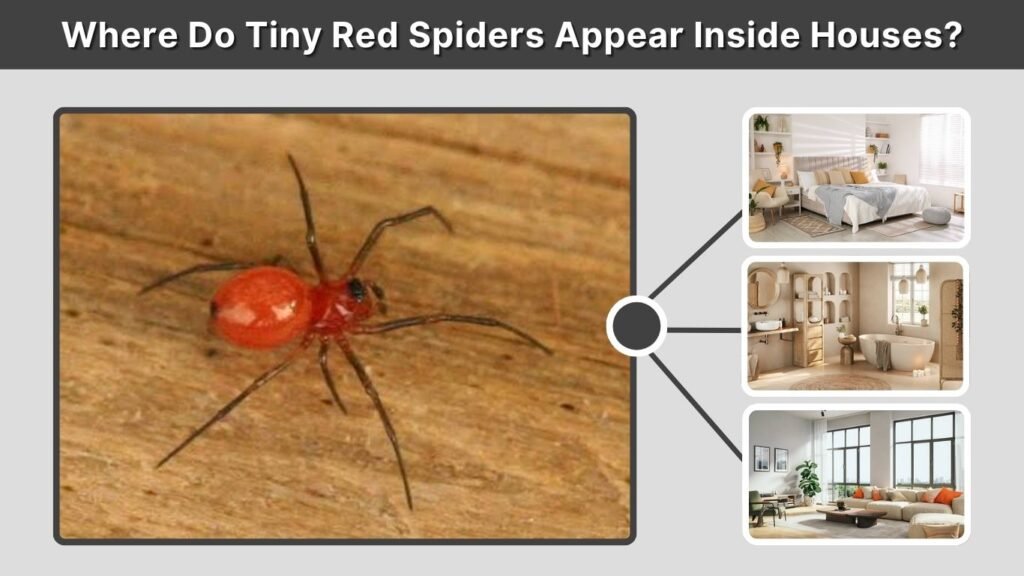
Tiny red spiders can appear in different rooms, but their location often reveals how they entered your home.
Clover mites are especially common near sun-exposed windows and exterior walls.
Common indoor locations include:
- Windowsills: Sunlight and nearby openings make windows common gathering spots.
- Bedrooms: Mites may enter through poorly sealed bedroom windows.
- Bathrooms: They occasionally wander into bathrooms through exterior gaps.
- Living rooms: Mites can crawl across walls, carpets, and furniture.
- Doorframes: Small cracks around exterior doors provide access.
- Ceilings and walls: They may wander upward after entering through nearby openings.
Finding several mites near the same window often suggests an exterior entry point rather than an indoor breeding site.
Are Tiny Red Spiders in the House Dangerous?
Most tiny red spiders commonly seen indoors are harmless clover mites. They are nuisance pests rather than dangerous household parasites.
They do not damage furniture, feed on humans, or transmit known diseases.
However, distinguishing clover mites from other mite species is important, particularly when skin irritation or plant damage occurs.
Do Tiny Red Spiders Bite Humans?
Clover mites do not bite humans or pets because they feed on vegetation.
However, other tiny mites, including bird mites, can bite people. Bird mites may enter buildings from nests near windows, vents, or roofs.
If unexplained bites occur, proper pest identification is necessary rather than assuming clover mites are responsible.
Can Tiny Red Spiders Damage Your House?
Clover mites do not damage walls, wood, clothing, furniture, or building structures.
However, crushing them releases reddish body pigments that can stain light-colored walls, carpets, and fabrics.
This staining is one of the main reasons homeowners should remove them carefully.
How to Get Rid of Tiny Red Spiders in House
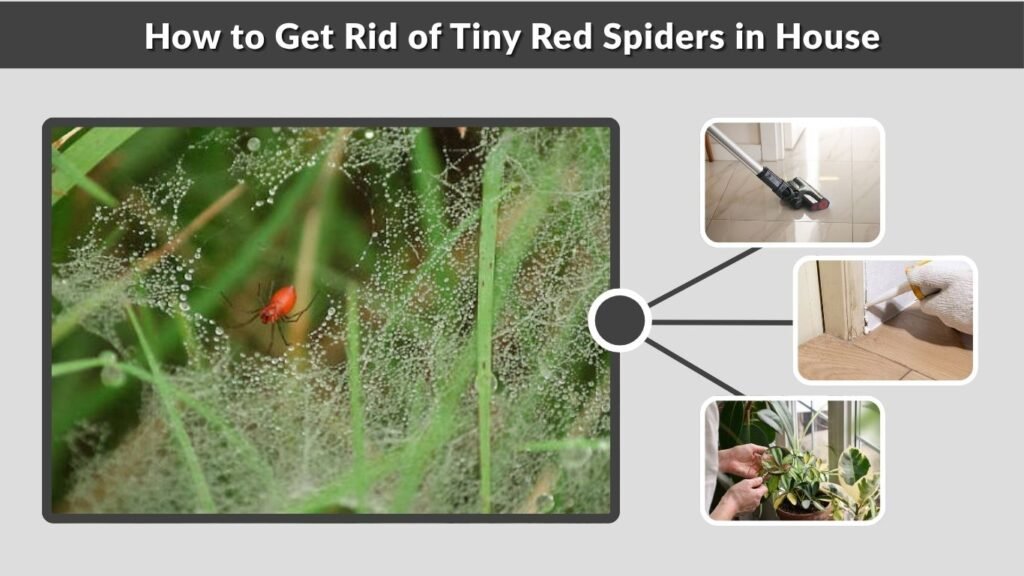
Eliminating tiny red spiders usually requires a combination of indoor cleaning, sealing entry points, and managing outdoor vegetation.
Fortunately, indoor insecticide treatments are generally unnecessary for clover mites because they cannot reproduce successfully inside houses.
1. Vacuum Tiny Red Spiders
Vacuuming is one of the safest and most effective ways to remove clover mites indoors.
Use a vacuum attachment to collect mites from windowsills, floors, walls, and furniture.
Avoid crushing them because they can leave reddish stains.
Empty the vacuum container or dispose of its contents in a sealed bag.
2. Seal Windows and Door Gaps
Inspect windows, doors, foundation cracks, and exterior wall openings.
Use appropriate caulk or weatherstripping to seal gaps where mites might enter.
Pay particular attention to windows near lawns, flower beds, and sunny exterior walls.
Sealing entry points reduces the chance of repeated invasions.
3. Create a Vegetation-Free Barrier
Removing grass and other vegetation directly beside foundations can discourage clover mites.
A plant-free strip approximately 18–24 inches wide is commonly recommended.
Keep leaves, weeds, and dense vegetation away from building foundations.
This strategy is particularly helpful if clover mites repeatedly enter the same rooms.
4. Manage Outdoor Mite Populations
Inspect exterior walls, patios, and areas around windows for large mite populations.
Avoid excessive lawn fertilization and maintain healthy grass without encouraging unusually lush growth beside your foundation.
If clover mites remain a serious recurring problem, a pest control professional can assess whether an exterior treatment is appropriate.
Always follow pesticide label instructions.
5. Check Indoor Plants
If tiny red mites are concentrated on houseplant leaves, they may be plant-feeding spider mites rather than clover mites entering from outside.
Look for pale leaf spots, yellowing, and fine webbing.
Rinse affected plants and consider a labeled insecticidal soap when needed. Avoid applying household insecticides indiscriminately.
How to Prevent Tiny Red Spiders From Returning
Preventing recurring mite problems is generally easier than repeatedly removing them.
The most effective strategy is to reduce entry points while managing vegetation near your home’s exterior.
Regularly inspect window seals, foundation cracks, and doorframes, especially during spring and fall.
Keep grass and plants from growing directly against exterior walls. Vacuum any mites immediately rather than allowing them to accumulate.
Check houseplants separately for spider mite damage, since plant infestations require different management.
These preventive measures can significantly reduce the chances of finding lots of tiny red spiders in your house.
Can Tiny Red Spiders Multiply Inside Your House?
Clover mites cannot establish permanent breeding populations indoors because they rely on vegetation for food.
Although hundreds may enter a building simultaneously, they generally die within a few days from dehydration or a lack of suitable food.
Therefore, repeated sightings usually indicate new mites entering from outside rather than an established indoor infestation.
FAQs
1. Why Do I Have Tiny Red Spiders in My House?
Tiny red spiders usually enter houses through cracks around windows, doors, and foundations. They commonly originate from nearby lawns or gardens. Clover mites become particularly active during mild spring and fall weather, sometimes appearing indoors in large numbers.
2. What Are the Tiny Little Red Spiders in My House?
Most tiny red spider-like creatures found on indoor windowsills and walls are clover mites. These reddish-brown arachnids have eight legs and unusually long front legs. They feed on outdoor vegetation and generally cannot reproduce inside homes.
3. How Do I Get Rid of Tiny Red Spiders in My House Naturally?
Vacuum visible mites, seal entry points, and remove dense vegetation beside your home’s foundation. Avoid crushing them because they can stain surfaces. Indoor pesticides are usually unnecessary for clover mites, which cannot establish permanent populations inside the house.
4. Why Are There Lots of Tiny Red Spiders in My House?
Large numbers of tiny red spiders may indicate a clover mite population developing near your home. They often gather on sunny exterior walls before entering through small openings. Nearby lawns and unsealed windows can contribute to recurring invasions.
5. Will Tiny Red Spiders Go Away on Their Own?
Yes, clover mites that enter houses generally die within a few days because indoor environments lack suitable food and moisture. However, additional mites may continue entering through exterior openings, so sealing cracks and managing nearby vegetation helps prevent repeated problems.
