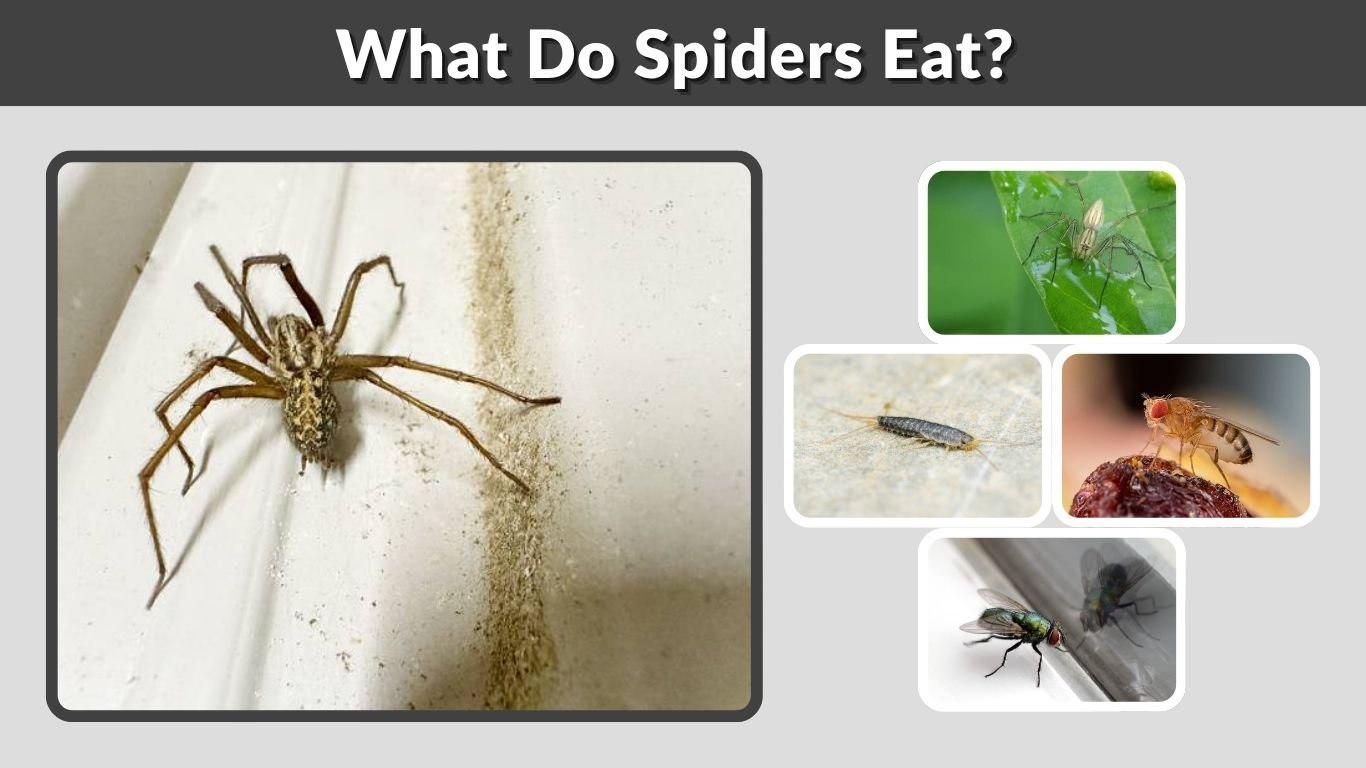
Spiders are fascinating predators that play an important role in controlling insect populations. But have you ever wondered what spiders eat inside your house, in gardens, or in the wild? Most spiders feed on insects such as flies, mosquitoes, moths, and beetles. However, their diets can vary depending on their species, habitat, and available food. Some spiders even eat other spiders or small animals. Understanding their feeding habits reveals how these eight-legged hunters survive in different environments throughout the year.
What Do Spiders Eat?
Most spiders are carnivorous predators that primarily feed on insects and other small invertebrates. Their food preferences depend on their size, hunting abilities, and natural habitat. While small spiders capture tiny flies and mosquitoes, larger species can overpower grasshoppers and other substantial prey. Certain spiders are specialized hunters, while others consume almost any suitable animal they can catch.
Common Foods Spiders Eat
Spiders consume a wide variety of insects and other small creatures, including:
- Flies: Houseflies, fruit flies, and gnats are common food sources.
- Mosquitoes: Many web-building spiders capture mosquitoes in their webs.
- Moths: Flying moths frequently become trapped in spider webs.
- Beetles: Some spiders hunt smaller beetles and their larvae.
- Ants: Certain species specialize in hunting ants.
- Grasshoppers: Larger hunting spiders can capture these insects.
- Other spiders: Some species prey on smaller spiders.
The availability of food strongly influences what a spider eats. Smithsonian research describes insects as the main food source for most spiders, although their prey can include many other animals.
Do All Spiders Eat the Same Food?
Different spider species have different feeding strategies. Orb-weaver spiders typically catch flying insects, while wolf spiders chase or ambush crawling prey.
Jumping spiders actively search for food using their excellent eyesight. Some spiders specialize in particular prey, while others hunt a broad range of insects.
What Do Spiders Eat in a House?
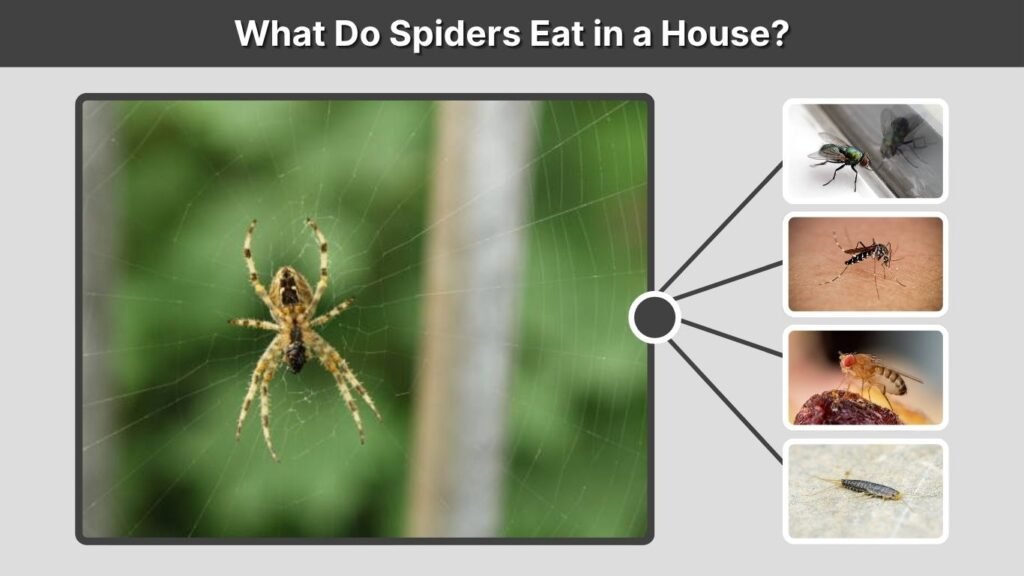
House spiders usually eat insects and other small arthropods that enter or live inside buildings. Common indoor spiders build webs around windows, ceilings, basements, and quiet corners where insects frequently travel. Hunting spiders may search floors and walls for crawling prey. Their presence can help reduce certain household pest populations.
Common Foods House Spiders Eat
- Houseflies: Often caught near windows and doors.
- Mosquitoes: Captured when flying through indoor webs.
- Fruit flies: Small prey for many household spiders.
- Cockroach nymphs: Occasionally captured by larger spiders.
- Silverfish: Prey for spiders that hunt along floors and walls.
- Other spiders: Some household species capture competing spiders.
The Missouri Department of Conservation identifies flies, mosquitoes, cockroaches, and other insects as prey of common house spiders.
What Do House Spiders Eat When There Are No Flies?
When flies become scarce, house spiders may capture alternative prey such as moths, ants, or other small arthropods.
Spiders can also survive periods without food by reducing activity and conserving energy. However, they cannot survive indefinitely without suitable nourishment.
If an indoor environment consistently lacks prey, some spiders may eventually die or move elsewhere in search of food.
What Do Spiders Eat Besides Insects?
Although insects dominate most spider diets, they are not the only source of nutrition. Many spiders eat other arachnids, while some larger species occasionally capture small vertebrates. A few unusual spiders even consume plant-derived materials. These feeding differences demonstrate the remarkable diversity of spider species worldwide.
Animals Spiders Eat Besides Bugs
Depending on the species and habitat, spiders may consume:
- Other spiders: Especially among spider-hunting species.
- Small crustaceans: Certain specialized spiders catch tiny terrestrial crustaceans.
- Small frogs: Occasionally captured by larger spiders.
- Small lizards: Sometimes taken by large hunting spiders.
- Small fish: Some semi-aquatic spiders hunt fish near the water’s surface.
These animals are not typical meals for most household spiders. Larger prey generally requires specialized hunting abilities.
Can Spiders Eat Plants or Nectar?
Some spiders consume nectar, pollen, and other plant-derived materials.
One remarkable example is the jumping spider Bagheera kiplingi, which feeds primarily on specialized nutrient-rich structures produced by ant-acacia plants.
Unlike most spiders, this species obtains much of its nutrition from plant material, although it also occasionally consumes animal prey.
What Do Spiders Eat and Drink?
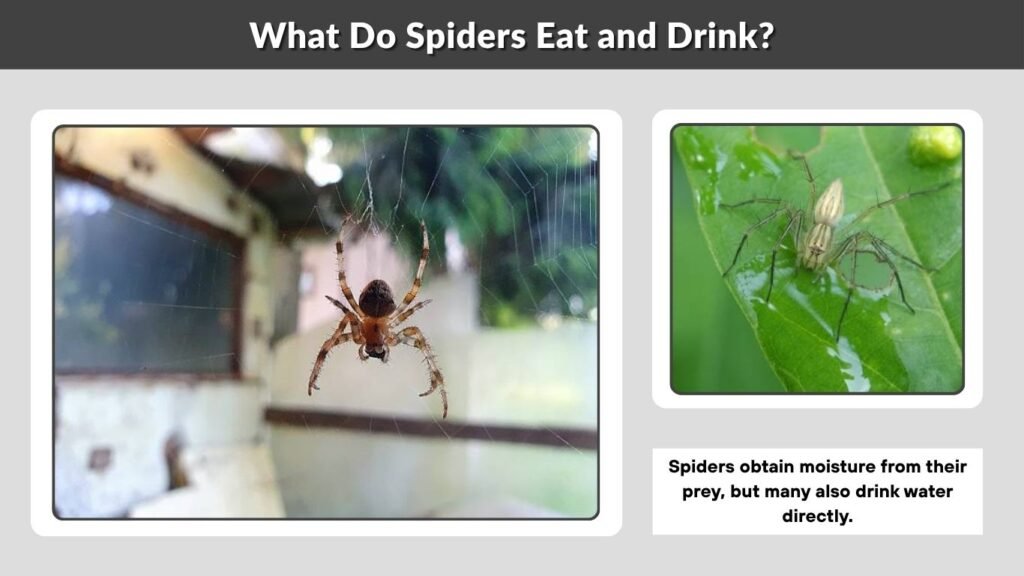
Spiders obtain nutrients by consuming liquefied food rather than chewing meals like humans. They typically inject or apply digestive substances to their prey before drawing in the resulting liquid. Water is also important for their survival, especially in hot or dry environments where dehydration can become a problem.
How Do Spiders Eat Their Prey?
Most spiders use venom to immobilize captured prey. They then release digestive enzymes that help break down the animal’s internal tissues.
The spider draws in the softened, liquid nutrients using its specialized feeding system.
Web-building spiders often immobilize prey with silk, while hunting spiders rely more heavily on speed, camouflage, or ambush techniques.
What Do Spiders Drink?
Spiders obtain moisture from their prey, but many also drink water directly.
They may drink from dew, raindrops, small puddles, and moisture collected on webs or leaves.
Indoor spiders sometimes find water around sinks, bathrooms, and other damp locations.
What Do Spiders Eat in the Winter?
Winter changes the availability of food for spiders, particularly in colder regions. Many flying insects become inactive, making hunting more difficult. However, spiders have developed different survival strategies depending on their species and environment. Some remain active in protected locations, while others greatly reduce their movement and energy requirements.
How Do Spiders Survive When Food Is Scarce?
During winter, many spiders reduce their activity and metabolic demands, allowing them to survive longer without eating.
Some overwinter as eggs or immature spiders, while others shelter beneath bark, rocks, fallen leaves, or other protected areas.
Indoor spiders may continue feeding on small insects that remain active inside heated buildings. Their winter diet depends mainly on the prey available in their surroundings.
What Do Spiders Eat in Captivity?
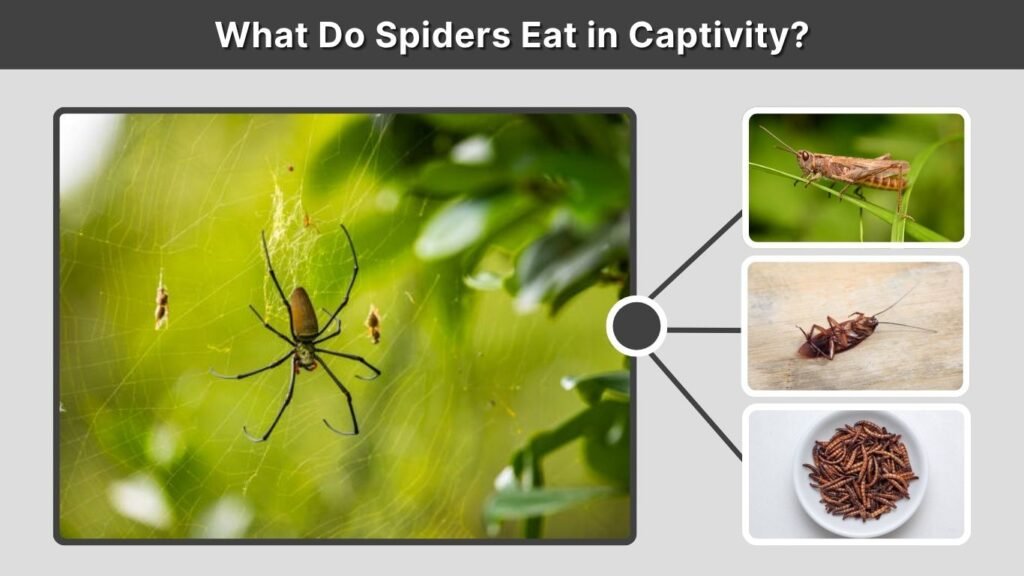
Pet spiders need diets that match their species, size, and natural feeding behavior. Tarantulas and jumping spiders are among the species commonly kept in captivity. Most captive spiders eat appropriately sized live or freshly killed invertebrates, although feeding requirements vary considerably between species.
Suitable Foods for Pet Spiders
Common feeder insects include:
- Crickets: Frequently offered to captive tarantulas.
- Small roaches: Suitable for many larger spiders.
- Fruit flies: Commonly fed to small jumping spiders and spiderlings.
- Mealworms: Appropriate for some species when correctly sized.
- Small flies: Useful for spiders that naturally hunt flying prey.
Captive spiders should receive appropriately sized prey and access to safe drinking water. Uneaten live insects should be removed because they may injure vulnerable or molting spiders.
Do Spiders Eat Human Food?
Spiders generally do not eat human foods such as bread, rice, cheese, or cooked meat. Their digestive systems are adapted mainly for extracting nutrients from animal prey.
However, certain spiders can consume plant-derived liquids or other unusual food sources.
A spider found near leftover food is usually searching for insects attracted to the food rather than eating the leftovers itself.
FAQs
1. What Do Spiders Eat the Most?
Most spiders primarily eat insects such as flies, mosquitoes, moths, and beetles. Their preferred prey depends on species, size, and habitat.
2. Do Spiders Eat Ants?
Yes. Some spiders regularly eat ants, while others avoid them because ants can defend themselves effectively. Certain spider species are specialized ant hunters.
3. How Long Can Spiders Survive Without Food?
Depending on their species, age, size, temperature, and access to water, spiders may survive weeks or sometimes months without eating. There is no single survival period for every spider.
4. Do Spiders Eat Dead Insects?
Some spiders accept recently dead insects, particularly in captivity. However, many species respond primarily to live, moving prey.
5. Do Spiders Eat Every Day?
No. Many spiders do not need to eat daily. Feeding frequency depends on their age, species, metabolism, and the size of their previous meal.
