
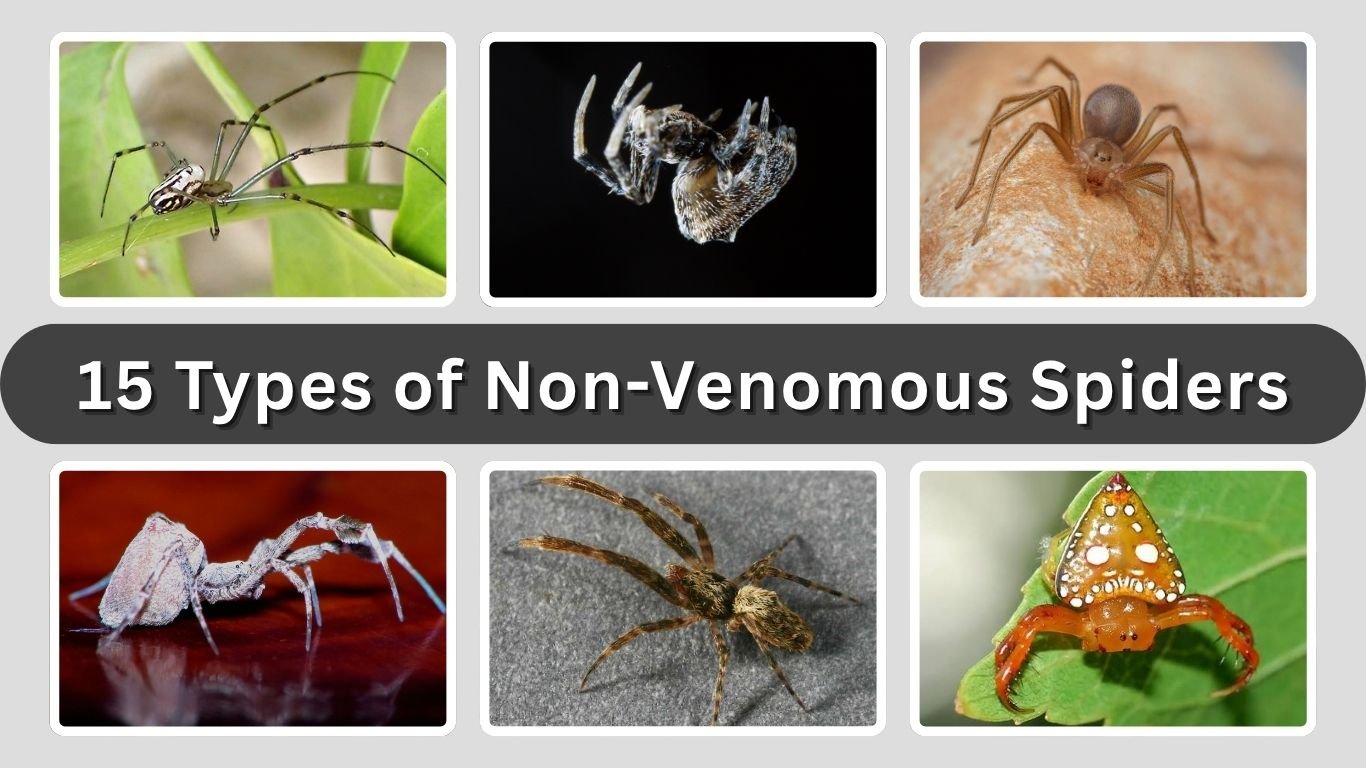
Not all spiders are venomous! While most spiders possess venom glands, certain species lack venom entirely and rely on specialized silk to capture their prey. These fascinating spiders can be found in forests, gardens, grasslands, and even around homes. From Feather-Legged Lace Weavers to Triangle Weaver Spiders, each species has unique characteristics and hunting techniques. Explore these 15 types of non-venomous spiders, including their identification features, habitats, feeding habits, and behavior.
1. Feather-Legged Lace Weaver (Uloborus plumipes)
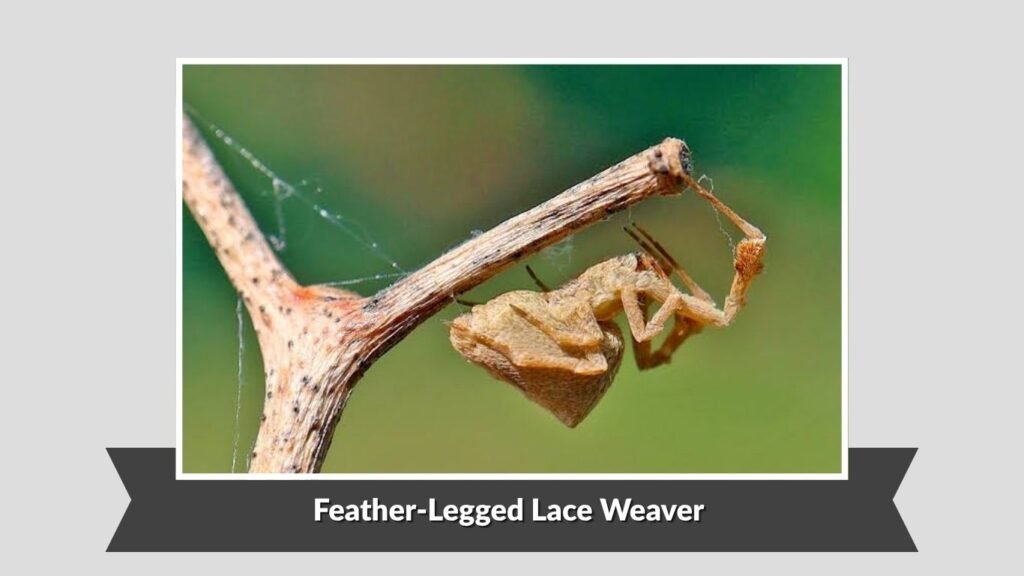
The Feather-Legged Lace Weaver is a fascinating non-venomous spider recognized for its unusual hairy legs and delicate web-building abilities. Belonging to the family Uloboridae, this species lacks venom glands, making it harmless to humans. Commonly found in greenhouses, gardens, and sheltered vegetation, these spiders rely on specialized silk rather than venom to capture prey. Their small size and excellent camouflage make them difficult to notice.
Identification
- Scientific Name: Uloborus plumipes
- Common Name: Feather-Legged Lace Weaver
- Body Color: Light brown, grayish-brown, or cream with darker markings.
- Body Size: Adult females typically measure 3–6 mm, while males measure 3–4 mm.
- Distinctive Features: Thick, feathery hair tufts on the front legs.
- Abdomen: Elongated, slightly humped, and covered with fine hairs.
- Legs: Long, slender, and decorated with alternating light and dark bands.
- Web Type: Small, horizontal orb webs constructed from fine, woolly silk.
- Venom Status: Completely non-venomous, lacking functional venom glands.
Habitat and Distribution
Feather-Legged Lace Weavers inhabit warm regions of Europe, Africa, and Asia. They commonly occupy greenhouses, garden centers, indoor plant collections, and sheltered outdoor vegetation. Their preference for warm environments allows them to survive in heated greenhouses throughout colder regions. These spiders frequently construct webs between plant leaves, branches, and structural supports where small flying insects are abundant.
Web Construction and Hunting Behavior
Unlike most spiders, Feather-Legged Lace Weavers capture prey without injecting venom. They produce specialized cribellate silk containing extremely fine fibers that entangle insects. Their webs are generally horizontal and may reach approximately 30 centimeters across. When an insect becomes trapped, the spider approaches and wraps it tightly in silk before applying digestive fluids. This unusual hunting technique allows the spider to immobilize prey without venom.
Feeding Habits and Human Safety
Feather-Legged Lace Weavers primarily feed on small flying insects, including whiteflies, mosquitoes, midges, and tiny flies. They are particularly beneficial in greenhouses because they help control plant pests naturally. These spiders are not aggressive toward humans and pose no medically significant threat. Their presence around indoor plants and gardens is generally beneficial, making unnecessary removal or extermination avoidable.
2. Triangle Weaver Spider (Hyptiotes cavatus)
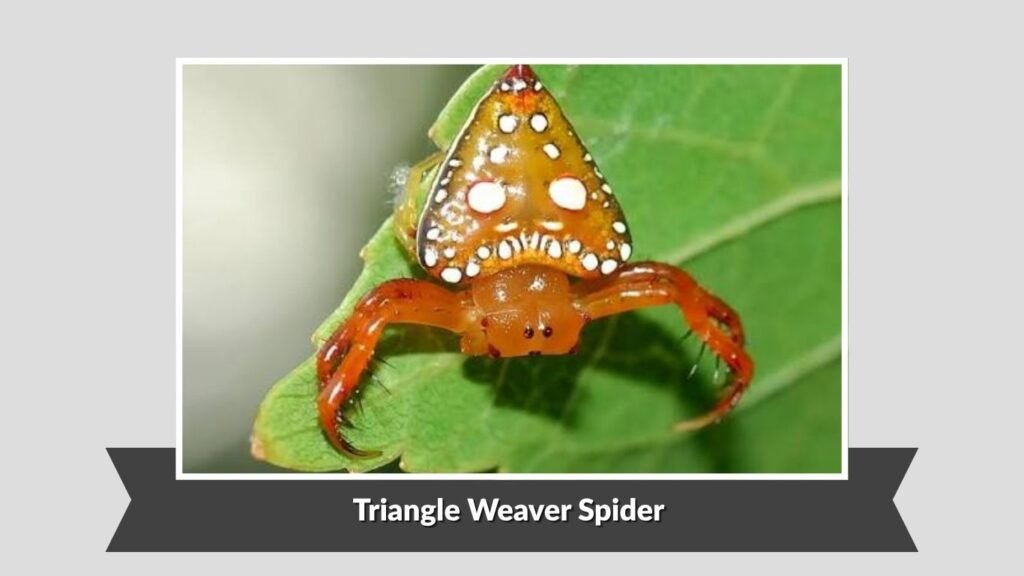
The Triangle Weaver Spider is a remarkable non-venomous spider known for its unusual triangular web and spring-loaded hunting technique. Belonging to the Uloboridae family, this small spider lacks venom glands and relies entirely on specialized silk to immobilize prey. Native to North America, it commonly inhabits wooded environments where branches and vegetation provide suitable web-building locations. Its unique hunting behavior makes it particularly interesting among web-building spiders.
Identification
- Scientific Name: Hyptiotes cavatus
- Common Name: Triangle Weaver Spider
- Body Color: Brown, grayish-brown, or mottled tan.
- Body Size: Small, generally measuring only a few millimeters in body length.
- Distinctive Features: Compact body with rough, textured coloration that resembles tree bark.
- Abdomen: Broad, rounded, and covered with fine hairs.
- Legs: Relatively short, sturdy, and adapted for controlling web tension.
- Web Type: Triangular webs made from specialized cribellate silk.
- Venom Status: Non-venomous, with no functional venom glands.
Habitat and Distribution
Triangle Weaver Spiders occur primarily in the eastern United States and parts of Canada. They inhabit forests, woodlands, and areas containing shrubs or small trees. These spiders frequently establish webs between branches, particularly in sheltered locations where flying insects pass regularly. Their mottled brown coloration helps them blend into bark and vegetation, making them difficult to detect.
Web Construction and Hunting Behavior
The Triangle Weaver Spider constructs an unusual web resembling a section of a traditional circular orb web. It holds the web under tension using its body and silk anchor lines. When an insect contacts the silk, the spider releases the stored tension, causing the web to spring forward and entangle the prey. This remarkable mechanism allows it to capture insects without relying on venom.
Feeding Habits and Human Safety
Triangle Weaver Spiders primarily feed on small flying insects, including flies, mosquitoes, and tiny moths. Their specialized webs capture insects that are subsequently wrapped in silk and consumed. Because these spiders lack venom glands and rarely interact with humans, they are considered harmless. Their presence in wooded gardens is beneficial because they naturally help regulate small insect populations.
3. European Triangle Spider (Hyptiotes paradoxus)
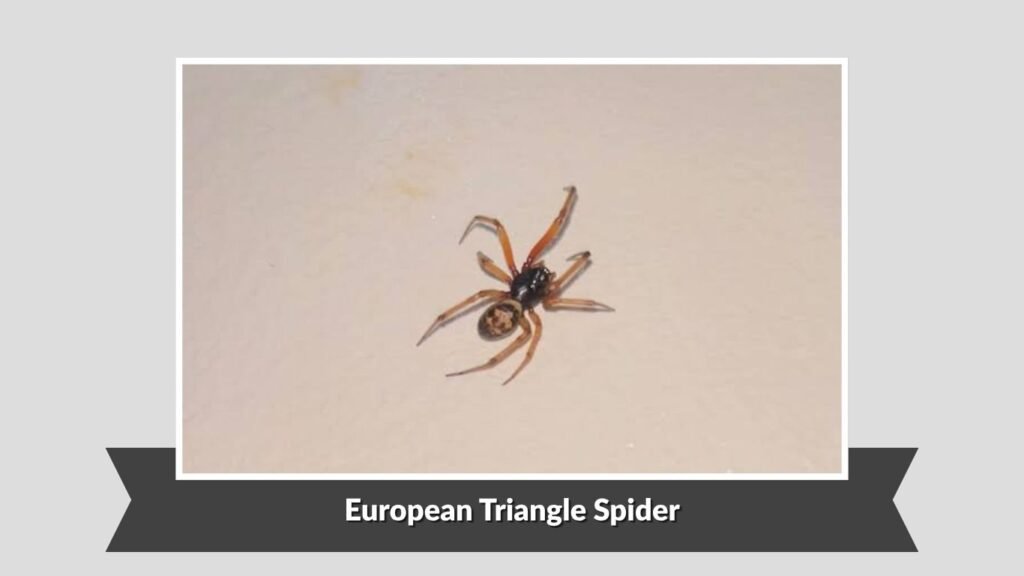
The European Triangle Spider is a small, non-venomous arachnid distinguished by its triangular web and excellent camouflage. Like other members of the Uloboridae family, this spider captures prey without venom, relying on silk tension and specialized trapping techniques. Commonly found in European forests, it blends remarkably well with bark and dry branches. Its unusual web construction distinguishes it from typical orb-weaving spiders.
Identification
- Scientific Name: Hyptiotes paradoxus
- Common Name: European Triangle Spider
- Body Color: Grayish-brown, reddish-brown, or dark brown.
- Body Size: Adult females measure approximately 5–6 mm, while males measure 3.5–4 mm.
- Distinctive Features: Compact body with mottled patterns and fine hairs.
- Abdomen: Broad, slightly humped, and irregularly shaped.
- Legs: Relatively sturdy, with the front pairs particularly well developed.
- Web Type: Triangular webs consisting of radial threads and woolly capture silk.
- Venom Status: Completely non-venomous, lacking venom glands.
Habitat and Distribution
European Triangle Spiders inhabit various parts of Europe, as well as Turkey, the Caucasus, and some neighboring regions. They prefer forests containing coniferous trees, particularly spruce and pine. Their webs are commonly positioned among dry twigs and lower tree branches, where small flying insects are available. Their brown coloration provides effective camouflage against woody surfaces.
Web Construction and Hunting Behavior
European Triangle Spiders create triangular silk structures rather than complete circular webs. The spider holds a supporting thread under tension while waiting for an insect to contact the capture surface. Once prey becomes entangled, it releases tension, causing the web to collapse around the insect. The spider then secures its prey with additional silk. This hunting method eliminates the need for venom while providing an effective way to capture small insects.
Feeding Habits and Human Safety
European Triangle Spiders feed primarily on small flying insects, including flies, midges, and other tiny arthropods. They remain concealed near their webs and respond to vibrations produced by trapped prey. These spiders pose no venom-related danger to humans and are not aggressive. Their presence in forests contributes to natural insect population control.
4. Humped Spider (Zosis geniculata)
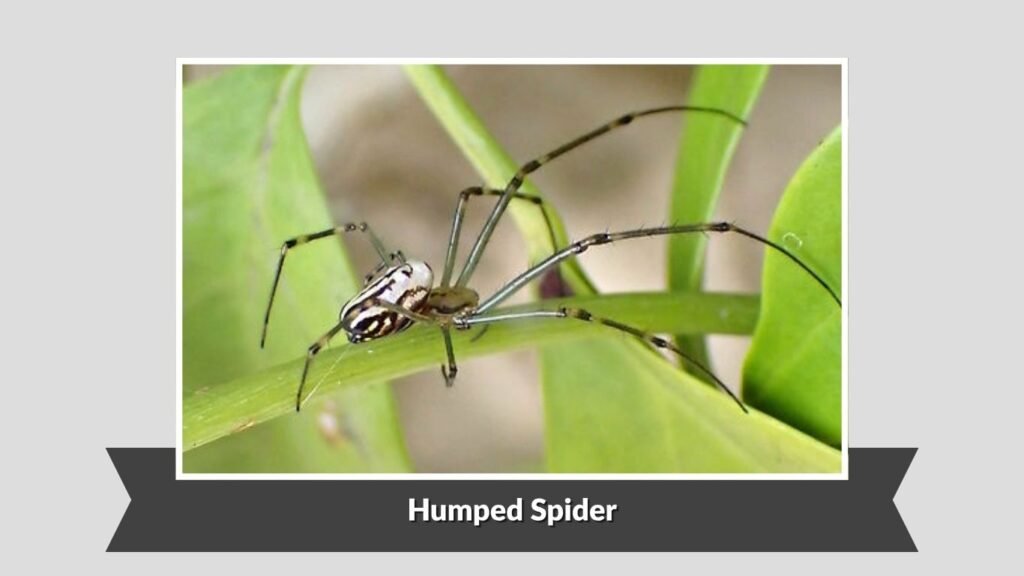
The Humped Spider is a fascinating non-venomous species recognized for its rounded abdomen, patterned legs, and delicate web-building behavior. Belonging to the Uloboridae family, this spider lacks venom glands and uses specialized silk to capture prey. Commonly found in tropical and subtropical regions, Humped Spiders frequently inhabit gardens, sheltered vegetation, and buildings. Their small size and unusual body shape make them distinctive among harmless spiders.
Identification
- Scientific Name: Zosis geniculata
- Common Name: Humped Spider
- Body Color: Light brown, grayish-brown, or cream with darker markings.
- Body Size: Small, with a body length generally measuring only several millimeters.
- Distinctive Features: Rounded abdomen with a slightly raised or humped appearance.
- Abdomen: Broad, oval-shaped, and decorated with mottled patterns.
- Legs: Long, slender, and marked with alternating light and dark bands.
- Web Type: Irregularly positioned orb webs made from fine cribellate silk.
- Venom Status: Non-venomous, lacking functional venom glands.
Habitat and Distribution
Humped Spiders occur throughout tropical and subtropical regions, including parts of Central America, South America, the Caribbean, Asia, and Australia. They are frequently found in gardens, forests, greenhouses, and sheltered areas around buildings. Their ability to live near human structures allows them to establish webs beneath roofs, along walls, and between vegetation. They prefer locations protected from strong winds and frequent disturbances.
Web Construction and Hunting Behavior
Humped Spiders construct orb-shaped webs using specialized silk containing extremely fine fibers. Unlike many orb-weaving species, their capture threads do not depend on liquid glue. Instead, the woolly silk mechanically entangles insects that contact the web. When prey becomes trapped, the spider approaches and wraps it securely with additional silk. This technique allows the spider to immobilize insects without injecting venom.
Feeding Habits and Human Safety
Humped Spiders primarily feed on small flying insects, including flies, mosquitoes, moths, and other tiny arthropods. They typically remain near their webs, waiting for vibrations that indicate captured prey. These spiders are harmless to humans because they lack venom glands and have no interest in attacking people. Their presence around homes and gardens can help reduce small insect populations naturally.
5. Uloborus Walckenaerius Spider (Uloborus walckenaerius)
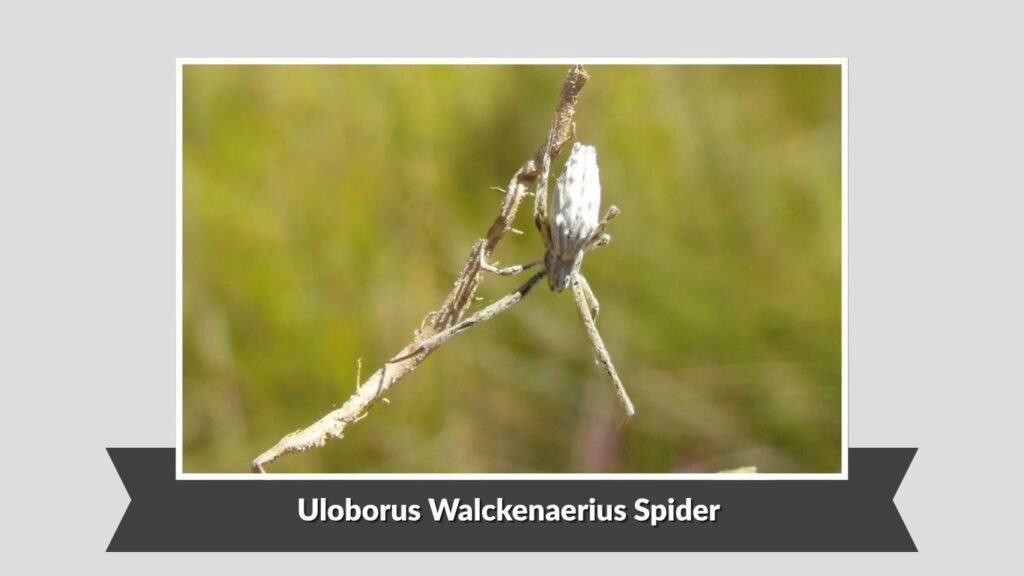
The Uloborus Walckenaerius Spider is a distinctive non-venomous orb-weaving species recognized for its elongated legs, patterned body, and horizontal silk webs. Belonging to the Uloboridae family, this spider captures prey without venom by using specialized woolly silk. Commonly found in warm, open habitats across Europe and Asia, it often constructs delicate webs close to the ground. Its unusual hunting strategy makes it an interesting example of venom-free predation.
Identification
- Scientific Name: Uloborus walckenaerius
- Common Name: Uloborus Walckenaerius Spider
- Body Color: Grayish-brown, whitish-gray, or brown with darker longitudinal markings.
- Body Size: Adult females measure approximately 6–8 mm, while males measure 4–5 mm.
- Distinctive Features: Long front legs and contrasting light and dark body markings.
- Abdomen: Elongated, covered with fine hairs, and decorated with pale patterns.
- Legs: Long, slender, and sometimes faintly banded.
- Web Type: Horizontal orb webs constructed from cribellate silk.
- Venom Status: Completely non-venomous, lacking venom glands.
Habitat and Distribution
Uloborus walckenaerius inhabits Europe and large parts of temperate Asia, with populations extending through Central Asia and into East Asia. It commonly occupies warm, open environments such as heathlands, grasslands, and low-growing shrub vegetation. These spiders frequently construct horizontal webs among heather or similar plants, often close to the ground. Their preference for sunny, sheltered locations makes them particularly associated with open habitats rather than densely shaded forests.
Web Construction and Hunting Behavior
This spider produces horizontal orb webs that commonly measure approximately 13–18 centimeters across. The silk contains fine cribellate fibers that entangle insects without requiring glue droplets. Some webs feature additional silk decorations known as stabilimenta, which may create visible patterns near the center. The spider typically hangs beneath the web while waiting for prey. Once an insect becomes trapped, it approaches and wraps the victim in silk before feeding.
Feeding Habits and Human Safety
Uloborus walckenaerius feeds primarily on small flying insects, including flies, midges, mosquitoes, and other tiny arthropods. Its horizontal web allows it to intercept insects moving through low vegetation. These spiders are harmless to humans because they lack venom glands and rarely come into direct contact with people. They contribute to healthy grassland ecosystems by helping regulate insect populations.
6. Uloborus Glomosus Spider (Uloborus glomosus)
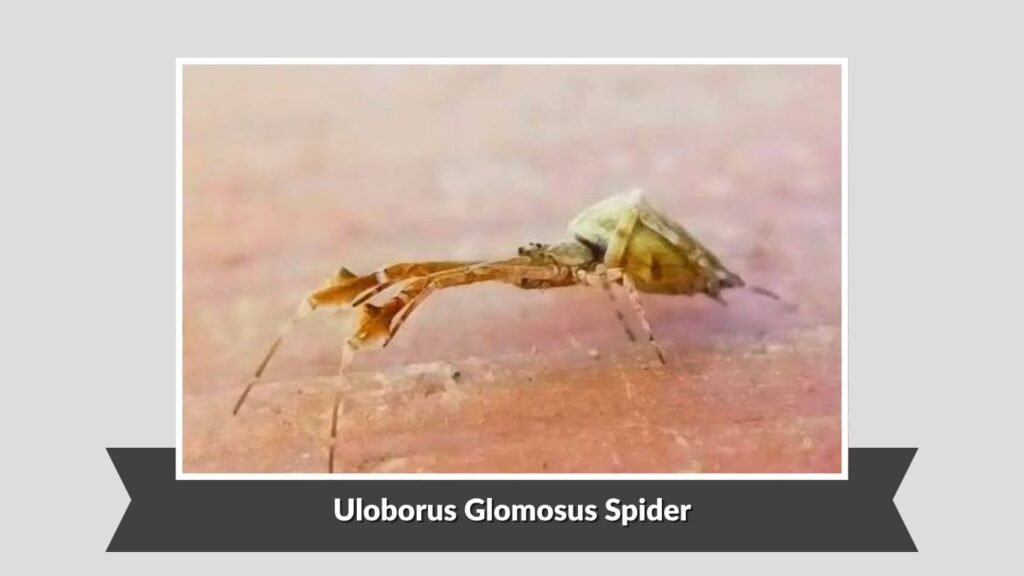
The Uloborus Glomosus Spider is a small, non-venomous orb-weaving species found in North America. Known for its mottled brown appearance and specialized silk, this spider belongs to the family Uloboridae, whose members lack venom glands. Unlike most spiders that immobilize prey through venomous bites, Uloborus glomosus relies on fine silk fibers and careful wrapping techniques. Its subtle coloration and delicate web structure help it remain inconspicuous in natural vegetation.
Identification
- Scientific Name: Uloborus glomosus
- Common Name: Uloborus Glomosus Spider
- Body Color: Brown, grayish-brown, or tan with lighter markings.
- Body Size: Small, typically measuring only a few millimeters in body length.
- Distinctive Features: Mottled coloration and a body covered with fine hairs.
- Abdomen: Oval to elongated, with brown and cream patterns.
- Legs: Long, slender, and marked with alternating dark and pale bands.
- Web Type: Orb-shaped webs made from fine cribellate silk.
- Venom Status: Non-venomous, lacking functional venom glands.
Habitat and Distribution
Uloborus glomosus is native to North America, with documented populations in Canada, the United States, and Mexico. These spiders inhabit vegetated environments where shrubs, branches, and other plant structures provide support for their webs. They are often difficult to recognize because their coloration blends with surrounding vegetation. Their small bodies and delicate silk structures make them less noticeable than many larger orb-weaving spiders.
Web Construction and Hunting Behavior
Uloborus glomosus constructs orb webs using cribellate silk made of extremely fine fibers. Rather than producing conventional glue-coated capture threads, it creates woolly silk that can entangle the legs and bodies of insects. When prey contacts the web, the spider detects vibrations and moves toward the trapped insect. It then wraps the prey in additional silk, preventing escape without using venom. This specialized hunting method is characteristic of the Uloboridae family.
Feeding Habits and Human Safety
Uloborus glomosus feeds on small insects and other tiny arthropods that become trapped in its web. Flying insects such as gnats, midges, and small flies are suitable prey for its delicate capture threads. These spiders are not aggressive toward humans and cannot deliver venomous bites. Their presence in gardens and natural habitats is beneficial because they help maintain ecological balance by capturing small insects.
7. Uloborus Diversus Spider (Uloborus diversus)
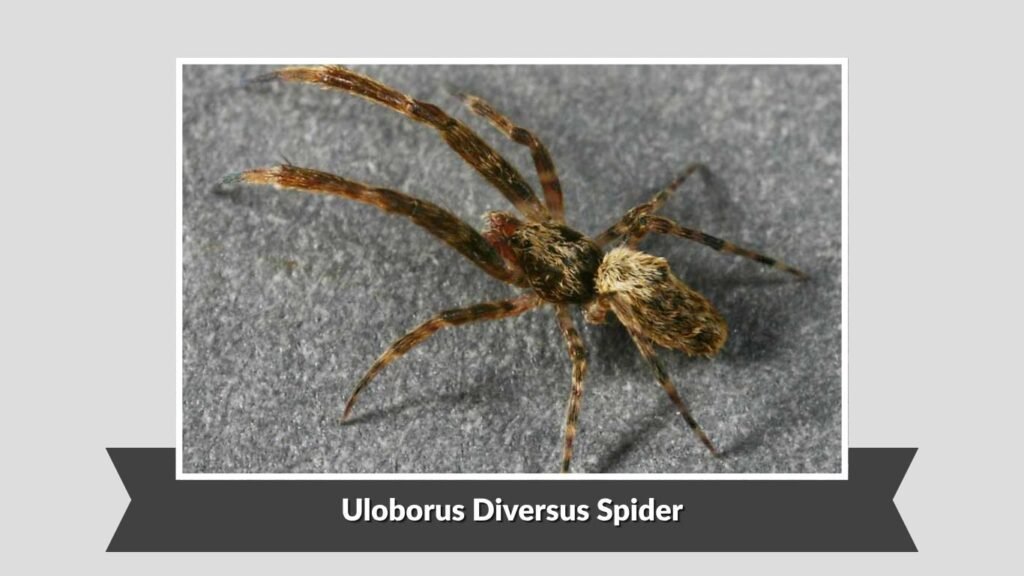
The Uloborus Diversus Spider is a small, non-venomous orb-weaving species recognized for its mottled body coloration and specialized silk-producing abilities. Belonging to the Uloboridae family, this spider lacks venom glands and relies on silk to capture insects. Native to the southwestern United States and Mexico, it is particularly interesting because scientists have extensively studied its complex web-building behavior and coordinated leg movements.
Identification
- Scientific Name: Uloborus diversus
- Common Name: Uloborus Diversus Spider
- Body Color: Brown, tan, or pale beige with darker markings.
- Body Size: Small, typically only several millimeters in body length.
- Distinctive Features: Mottled body patterns and a darker longitudinal marking on the abdomen.
- Abdomen: Oval to elongated, with variable brown and cream patterns.
- Legs: Long, slender, and marked with visible dark bands.
- Web Type: Orb-shaped webs constructed from specialized cribellate silk.
- Venom Status: Non-venomous, lacking functional venom glands.
Habitat and Distribution
Uloborus diversus occurs in the southwestern United States and Mexico, particularly in regions with dry and warm environmental conditions. These spiders inhabit areas where shrubs, branches, and other vegetation provide suitable supports for their webs. Their small size and mottled coloration help them blend with surrounding plants. They can construct webs in different orientations depending on environmental conditions and available attachment points.
Web Construction and Hunting Behavior
The Uloborus Diversus Spider builds intricate orb webs using coordinated movements of its legs and silk-producing organs. It creates supporting threads, radial lines, and capture spirals to form a functional insect trap. Unlike most orb-weavers, it uses fine cribellate silk rather than glue-coated threads.
Scientific research has demonstrated that this species follows recognizable sequences of movements during different stages of web construction. Its ability to produce complex structures without venom makes it an important subject in spider behavior studies.
Feeding Habits and Human Safety
Uloborus diversus primarily captures small flying insects and other tiny arthropods that encounter its webs. Once prey becomes entangled, the spider rapidly wraps it in silk before beginning digestion. Its prey-catching method does not involve injecting venom. These spiders are harmless to humans and play a beneficial ecological role by naturally capturing insects in their surrounding environments.
8. Uloborus Campestratus Spider (Uloborus campestratus)
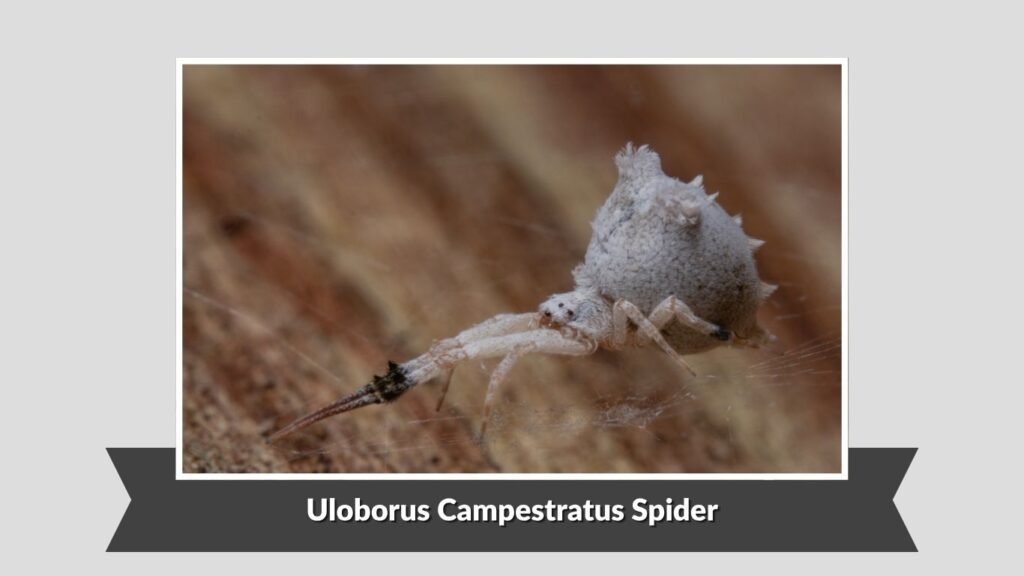
The Uloborus Campestratus Spider is a non-venomous species belonging to the family Uloboridae. This small orb-weaving spider occurs across parts of North, Central, and South America. Like other members of its family, it has lost functional venom glands and instead depends on specialized silk to immobilize prey. Although detailed information about its appearance and behavior is limited, its natural history reflects the distinctive hunting adaptations of venom-free spiders.
Identification
- Scientific Name: Uloborus campestratus
- Common Name: Uloborus Campestratus Spider
- Body Color: Precise coloration varies, and detailed field descriptions are limited.
- Body Size: Small-bodied, although reliable species-specific measurements are not readily established.
- Distinctive Features: Identification requires examination of anatomical characteristics.
- Abdomen: Typical of small Uloborus orb-weavers, with species-specific details requiring confirmation.
- Legs: Four pairs of legs adapted for web construction and prey handling.
- Web Type: Cribellate orb webs, characteristic of its genus.
- Venom Status: Non-venomous, belonging to a family without functional venom glands.
Habitat and Distribution
Uloborus campestratus has a documented geographical range extending from the United States through Central America to Venezuela. Its broad distribution includes regions with varying climatic and environmental conditions. Like other members of the genus, it depends on suitable attachment points for constructing webs. However, detailed species-specific studies describing its preferred vegetation, habitat structure, and seasonal activity remain limited.
Web Construction and Hunting Behavior
The Uloborus Campestratus Spider belongs to a group of spiders recognized for producing specialized cribellate silk. These extremely fine fibers mechanically entangle insects without relying on liquid glue droplets. Like related species, it is expected to construct orb-shaped capture webs supported by radial and spiral threads.
When an insect contacts the web, the spider can use silk wrapping to restrict its movement. This method compensates for the absence of venom and allows members of the Uloboridae family to capture prey effectively.
Feeding Habits and Human Safety
Uloborus campestratus is an insect-eating spider whose diet likely includes small flies, midges, and other tiny arthropods captured in its web. Detailed prey records for this particular species are limited. Because it belongs to the non-venomous Uloboridae family, it cannot inject venom into humans. Its ecological role is similar to that of other small orb-weavers, contributing to natural insect population regulation.
9. Uloborus Canus Spider (Uloborus canus)
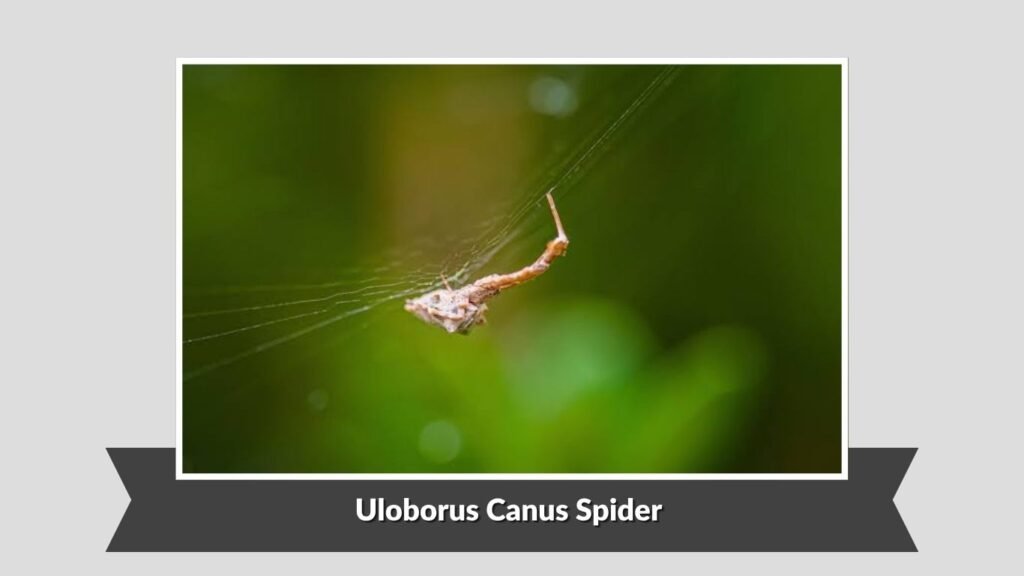
The Uloborus Canus Spider is a historically recorded Australian spider name associated with the non-venomous family Uloboridae. Originally described in 1827, its precise identity remains uncertain because the original specimen has been lost and the early description does not provide enough identifying details. Taxonomists now classify Uloborus canus as a nomen dubium, meaning its name is of doubtful application.
Identification
- Scientific Name: Uloborus canus
- Common Name: Uloborus Canus Spider
- Family: Uloboridae.
- Body Color: Not reliably documented for this named species.
- Body Size: No verified measurements are available.
- Distinctive Features: Reliable diagnostic characteristics have not been established.
- Abdomen: Precise shape and markings cannot be confirmed.
- Legs: Eight legs, as expected for spiders.
- Web Type: Unknown for this particular species; related Uloborus spiders construct cribellate webs.
- Venom Status: Historically assigned to the non-venomous Uloboridae family.
Habitat and Distribution
Uloborus canus was originally described from Australia, but its precise geographical distribution remains uncertain. The historical description did not include a sufficiently detailed collection location. Consequently, researchers cannot confidently associate the name with particular habitats, vegetation types, or environmental conditions. Other Australian Uloborus spiders inhabit gardens, forests, and areas with suitable supports for web construction, but these preferences cannot automatically be attributed to this uncertain species.
Web Construction and Hunting Behavior
Because the identity of Uloborus canus remains unresolved, its specific web-building behavior has not been reliably documented. However, members of the Uloboridae family typically capture prey using specialized silk rather than venom.
These spiders produce fine cribellate fibers that entangle insects upon contact. They immobilize captured prey through extensive silk wrapping before applying digestive fluids. Whether the historically described U. canus displayed these exact behaviors cannot be independently verified.
Feeding Habits and Human Safety
The specific diet of Uloborus canus remains unknown. Related spiders in the family Uloboridae feed primarily on small insects and other arthropods. Because this historical name was assigned to a family lacking venom glands, it is not associated with a known venomous spider. However, its doubtful taxonomic status means it should not be presented as a reliably identifiable living species without further research.
10. Tufted Uloborus Spider (Uloborus barbipes)
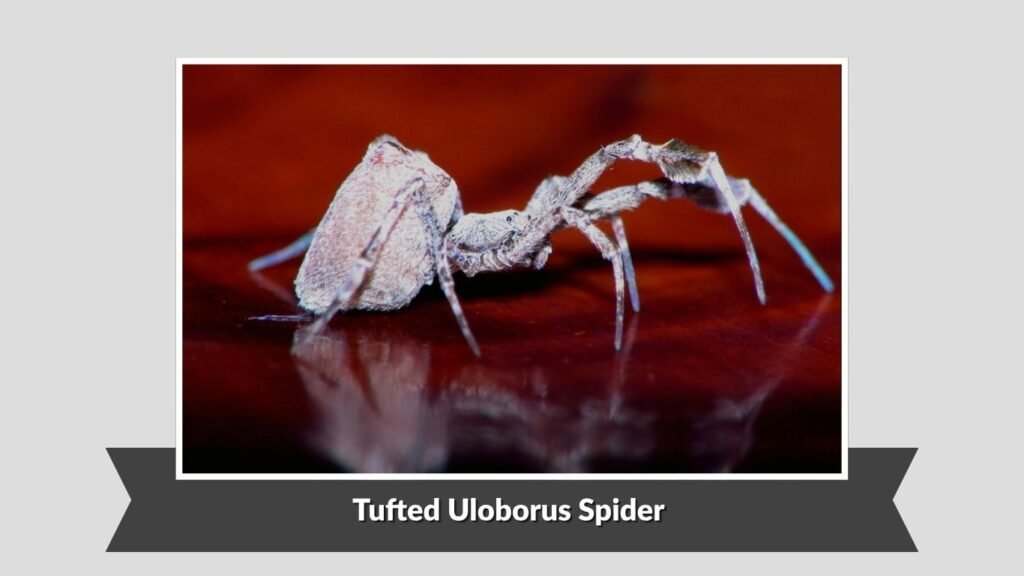
The Tufted Uloborus Spider is a small, non-venomous species native to Australia, recognized for its distinctive hairy front legs and remarkable camouflage. Belonging to the family Uloboridae, this spider lacks venom glands and depends on specialized silk to capture insects. Its elongated legs and pale coloration allow it to resemble a tiny twig or fragment of plant debris, helping it avoid predators while resting in vegetation.
Identification
- Scientific Name: Uloborus barbipes
- Common Name: Tufted Uloborus Spider
- Body Color: Off-white, gray, or cream with darker brown markings.
- Body Size: Adult females reach approximately 6 mm, while males reach about 4 mm.
- Distinctive Features: Noticeable tufts of hair on the front legs.
- Abdomen: Relatively small, with variable pale and dark markings.
- Legs: Long, slender, and prominently hairy on the first pair.
- Web Type: Small, loosely constructed horizontal or slightly inclined orb webs.
- Venom Status: Non-venomous, lacking functional venom glands.
Habitat and Distribution
Uloborus barbipes is documented from Queensland, Australia, particularly coastal areas and nearby drainage basins. It inhabits gardens, suburban bushland, low vegetation, and sheltered spaces around buildings. These spiders often construct webs close to the ground, using leaves, branches, and other structures as attachment points. Their pale coloration and unusual resting posture make them difficult to distinguish from surrounding plant debris.
Web Construction and Hunting Behavior
The Tufted Uloborus Spider constructs small, somewhat irregular orb webs from specialized cribellate silk. These webs are commonly positioned horizontally or at a slight angle among low-growing plants.
When resting, the spider may extend its front legs forward and remain completely motionless, resembling a small twig. If disturbed, it can drop from its web or move quickly to another resting location. Its camouflage provides protection while its fine silk helps capture small insects without venom.
Feeding Habits and Human Safety
Tufted Uloborus Spiders primarily feed on small, soft-bodied arthropods that become trapped in their webs. They wrap captured prey in silk before beginning digestion. Their hunting behavior relies on mechanical restraint rather than venom injection. These spiders pose no known medically significant threat to humans and are generally beneficial around gardens and vegetation because they help regulate small insect populations naturally.
11. Octonoba Sinensis Spider (Octonoba sinensis)
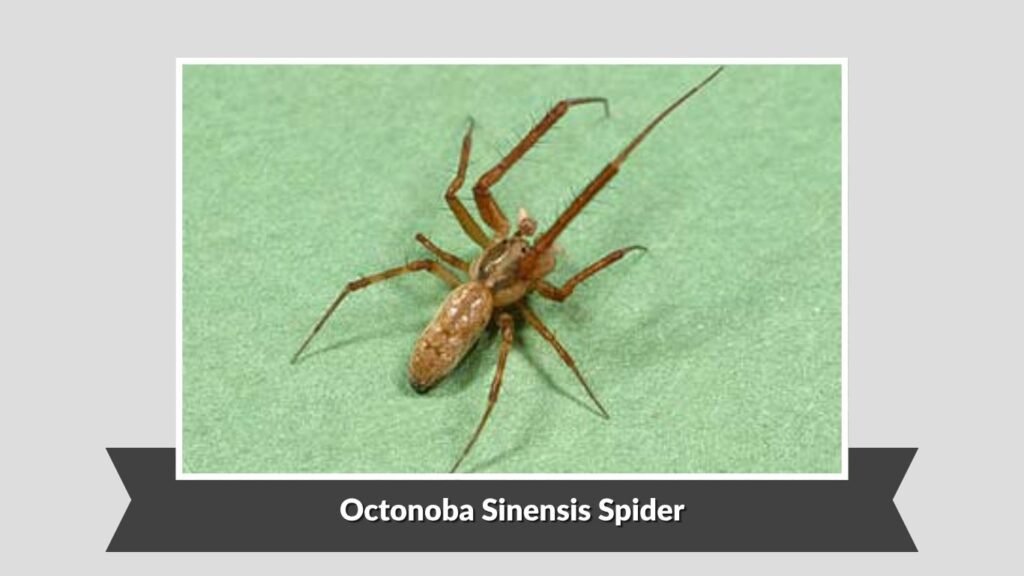
The Octonoba Sinensis Spider is a small, non-venomous orb-weaving species belonging to the family Uloboridae. Native to East Asia, this spider is recognized for producing specialized silk webs that trap insects without using venom. Its scientific importance extends beyond its unusual hunting behavior, as researchers have studied its genetic adaptations to understand how venom-free spiders capture and digest prey.
Identification
- Scientific Name: Octonoba sinensis
- Common Name: Octonoba Sinensis Spider
- Family: Uloboridae.
- Body Color: Generally brownish or grayish, with variations in markings.
- Body Size: Small-bodied; reliable identification requires detailed examination.
- Distinctive Features: Specialized silk-spinning structures, including a cribellum and calamistrum.
- Abdomen: Relatively small, with coloration that can help it blend into surrounding surfaces.
- Legs: Eight slender legs adapted for silk handling and web construction.
- Web Type: Cribellate orb webs containing fine capture threads.
- Venom Status: Non-venomous, lacking functional venom glands.
Habitat and Distribution
Octonoba sinensis is native to China, Korea, and Japan and has also been introduced to the United States. It belongs to a group of small web-building spiders that use vegetation and other suitable structures for anchoring their silk. Its geographical distribution reflects the adaptability of some Uloboridae species to different environmental conditions. However, detailed habitat preferences for individual populations remain less thoroughly documented than their taxonomy and silk-producing characteristics.
Web Construction and Hunting Behavior
The Octonoba Sinensis Spider produces cribellate silk containing extremely fine fibers that entangle insects without relying on traditional sticky glue droplets. Its web-building adaptations allow it to capture prey despite lacking venom glands.
Researchers have examined this species to understand the evolutionary relationship between silk production, muscle function, and venom loss. Genetic studies indicate that adaptations involving muscular performance and energy metabolism may support the extensive silk-wrapping behavior characteristic of this spider family.
Feeding Habits and Human Safety
Octonoba sinensis feeds on small insects and other arthropods captured in its web. Rather than injecting venom, it immobilizes prey through repeated silk wrapping and then applies digestive fluids to begin breaking down the tissues. This specialized feeding strategy allows it to survive without functional venom glands. The spider poses no known venom-related danger to humans and contributes to natural insect regulation in suitable habitats.
12. Miagrammopes Oblongus Spider (Miagrammopes oblongus)
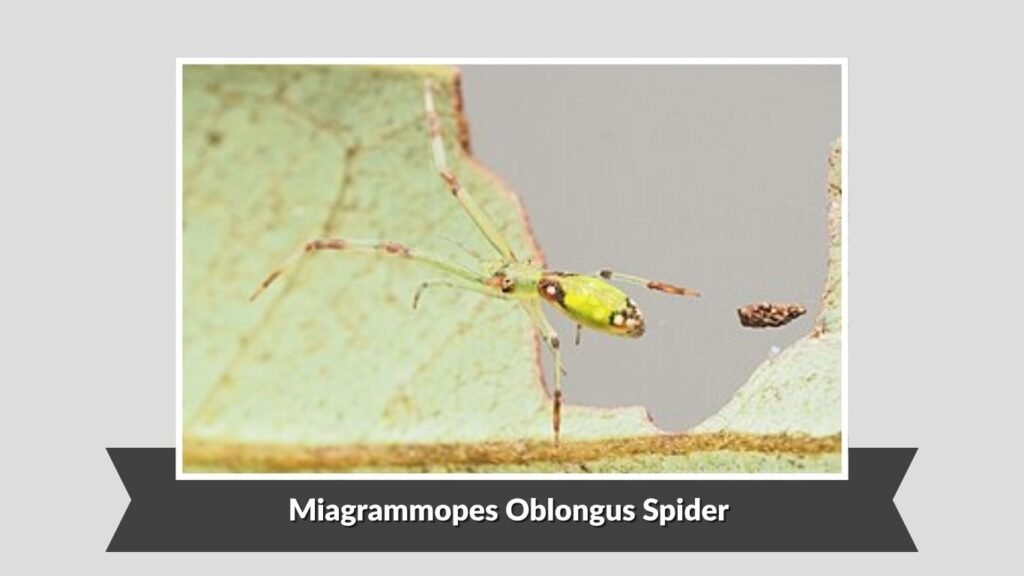
The Miagrammopes Oblongus Spider is a small, non-venomous species belonging to the Uloboridae family. Originally described in 1982, this spider occurs in East Asia and belongs to a genus known for its unusual web-building techniques. Unlike typical orb-weaving spiders, members of Miagrammopes often construct simplified silk traps. Their ability to immobilize prey without venom demonstrates the remarkable hunting adaptations found among non-venomous spiders.
Identification
- Scientific Name: Miagrammopes oblongus
- Common Name: Miagrammopes Oblongus Spider
- Body Color: Detailed species-specific coloration is not well documented in general identification guides.
- Body Size: Small, although reliable measurements require examination of taxonomic descriptions.
- Distinctive Features: A member of a genus characterized by slender bodies and specialized silk-trapping mechanisms.
- Abdomen: Generally elongated in related Miagrammopes species.
- Legs: Slender, with elongated front legs used in web manipulation.
- Web Type: Simplified cribellate silk traps characteristic of the genus.
- Venom Status: Non-venomous, lacking functional venom glands.
Habitat and Distribution
Miagrammopes oblongus has been recorded in Taiwan and Japan. It belongs to a family of spiders that commonly occupy vegetation and other sheltered environments suitable for attaching silk traps. Although its geographical distribution is established, detailed studies describing its preferred plants, microhabitats, and seasonal behavior are limited. Like other small uloborid spiders, it may be difficult to observe because of its size and inconspicuous appearance.
Web Construction and Hunting Behavior
Spiders in the genus Miagrammopes are known for constructing simplified webs rather than the complete circular structures produced by typical orb-weavers. Their silk traps may consist of only a few capture threads, sometimes forming a single-line snare.
The spider can maintain tension in its web while waiting for an insect to contact the silk. Fine cribellate fibers entangle the prey, allowing the spider to secure it through additional wrapping. This specialized strategy enables venom-free hunting, although the exact web construction behavior of M. oblongus has not been extensively documented.
Feeding Habits and Human Safety
Miagrammopes oblongus is an insect-eating spider whose diet likely consists of small arthropods caught in its silk trap. Related species capture tiny flies and other insects using fine, woolly silk before wrapping them tightly. Because this species lacks functional venom glands, it cannot deliver a venomous bite to humans. Its small size and secretive lifestyle also make encounters relatively uncommon.
13. Philoponella Republicana Spider (Philoponella republicana)
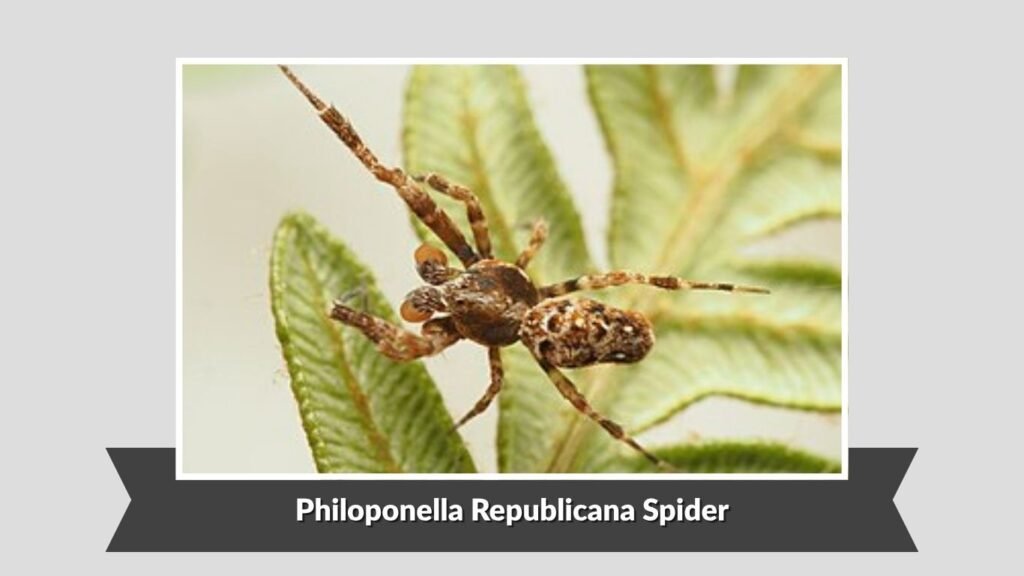
The Philoponella Republicana Spider is a fascinating non-venomous species particularly notable for its communal web-building behavior. Native to tropical regions of Central and South America, this spider belongs to the Uloboridae family and lacks venom glands. Unlike many solitary web-building spiders, Philoponella republicana frequently lives in colonies where individuals construct interconnected webs. Its unusual social organization makes it an important species in studies of spider behavior.
Identification
- Scientific Name: Philoponella republicana
- Common Name: Philoponella Republicana Spider
- Body Color: Brownish coloration, with detailed species identification requiring examination of body structures.
- Body Size: Small-bodied, typical of the Uloboridae family.
- Distinctive Features: Frequently occurs in colonies containing multiple interconnected capture webs.
- Abdomen: Relatively compact, with species-specific anatomical features.
- Legs: Slender and adapted for manipulating cribellate silk.
- Web Type: Individual orb-like capture webs connected within larger communal structures.
- Venom Status: Non-venomous, lacking functional venom glands.
Habitat and Distribution
Philoponella republicana occurs from Panama through parts of tropical South America to Bolivia. Researchers have documented colonies in tropical environments, including the Panama Canal region. These spiders occupy locations where vegetation provides stable support for extensive silk structures. Their communal colonies may contain numerous individuals living close together while maintaining separate prey-catching areas. Such arrangements allow them to inhabit suitable locations without requiring every spider to establish an entirely isolated web.
Web Construction and Hunting Behavior
The Philoponella Republicana Spider is especially interesting because individuals construct their own capture webs within a larger network of shared supporting silk. Unlike truly cooperative hunters, these spiders generally maintain individual feeding territories while benefiting from the communal structure.
Studies of this species have documented colony formation, dispersal, and changes in population size. Young spiders may establish new colonies in groups rather than dispersing entirely independently.
Their cribellate silk traps insects without conventional sticky glue droplets. Once prey becomes entangled, the spider restrains it through extensive silk wrapping before feeding.
Feeding Habits and Human Safety
Philoponella republicana primarily feeds on small insects and other arthropods captured in its web. Colony members generally capture and consume prey individually, even though their webs share structural connections. This behavior distinguishes them from spiders that actively cooperate in hunting and feeding. Because Philoponella republicana lacks functional venom glands, it poses no venom-related danger to humans. Its presence in tropical vegetation contributes to natural insect control and ecological balance.
14. Philoponella Congregabilis Spider (Philoponella congregabilis)
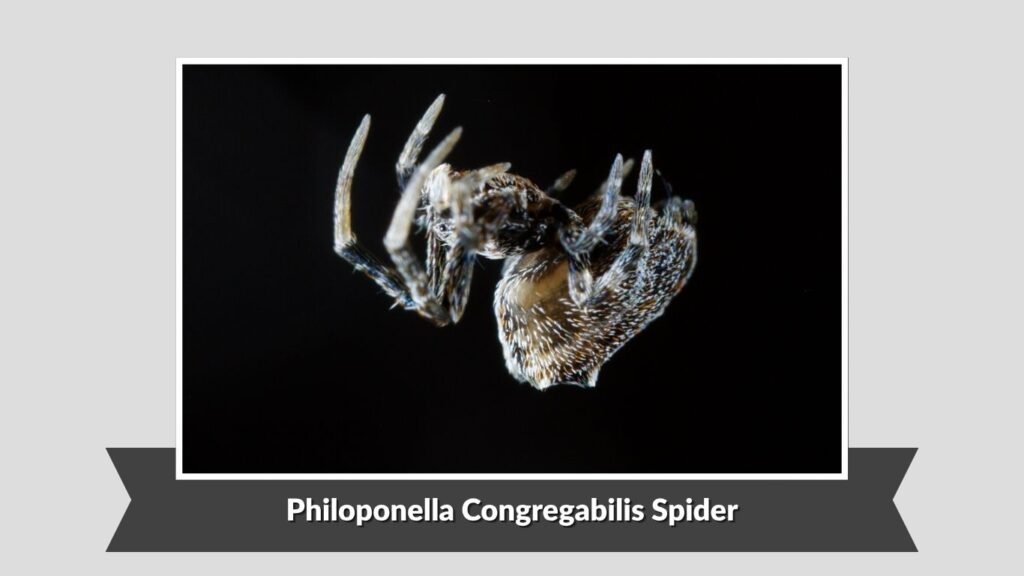
The Philoponella Congregabilis Spider is a small, non-venomous orb-weaving species native to Australia and introduced to New Zealand. Belonging to the Uloboridae family, this spider lacks functional venom glands and relies on specialized silk to capture prey. It is particularly interesting for its interconnected webs, which allow several individuals to occupy neighboring spaces. Its unusual abdominal shape and delicate web structures make it distinguishable from other small orb-weavers.
Identification
- Scientific Name: Philoponella congregabilis
- Common Name: Philoponella Congregabilis Spider
- Body Color: Brown or dark brown with lighter hairs and markings.
- Body Size: Documented adults include females approximately 4.9 mm long and males around 3 mm.
- Distinctive Features: A noticeable upward projection on the front portion of the abdomen.
- Abdomen: Oval-shaped with a characteristic dorsal hump.
- Legs: Long, slender, and often brown with darker sections.
- Web Type: Small horizontal or sloping orb webs made from cribellate silk.
- Venom Status: Non-venomous, lacking functional venom glands.
Habitat and Distribution
Philoponella congregabilis naturally occurs in eastern and southeastern Australia. It has also established populations in Christchurch, New Zealand, where researchers documented its presence in residential gardens and sheltered outdoor structures. These spiders commonly build webs among low-growing plants, beneath eaves, along fences, and inside outbuildings. Their ability to inhabit urban and suburban environments allows them to survive wherever suitable web attachment points and insect prey are available.
Web Construction and Hunting Behavior
The Philoponella Congregabilis Spider constructs small, reduced orb webs using fine cribellate silk. These webs are often positioned horizontally or at an angle between plants and surrounding structures.
An interesting characteristic of this species is that neighboring individuals may connect their webs, creating an interconnected silk network. Although several spiders can occupy the same general area, each typically maintains its own capture surface.
When insects become trapped, the spider wraps them tightly in silk before applying digestive fluids. This method allows it to hunt without injecting venom.
Feeding Habits and Human Safety
Philoponella congregabilis primarily feeds on small flying insects and other tiny arthropods captured in its web. Its specialized silk helps restrain prey while the spider completes the wrapping process. Because the species lacks venom glands, it cannot inject venom into humans. These spiders are generally harmless and may provide natural insect control in gardens, sheds, and sheltered outdoor spaces.
15. Hyptiotes Affinis Spider (Hyptiotes affinis)
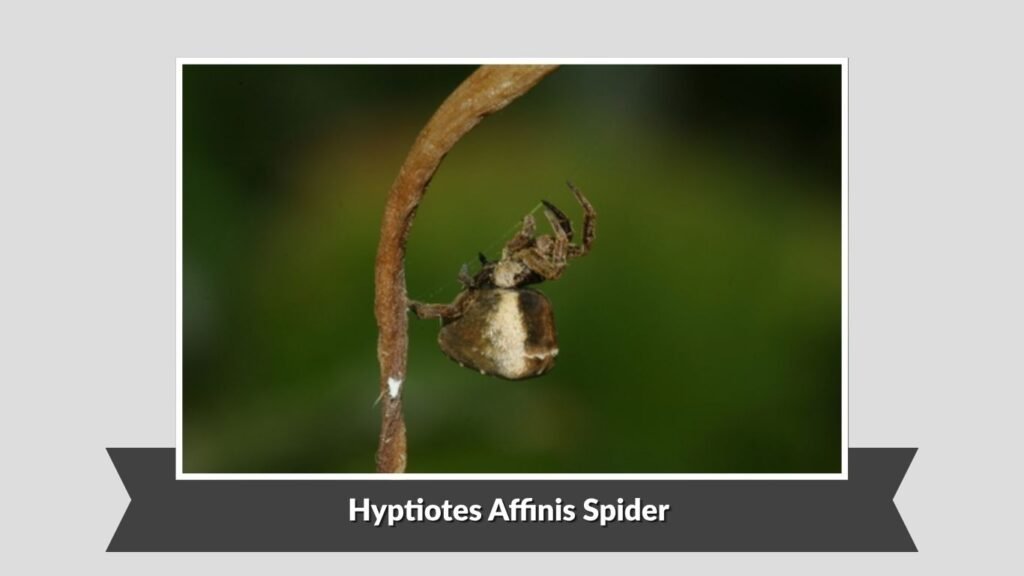
The Hyptiotes Affinis Spider is a fascinating non-venomous species recognized for its unusual triangular web and remarkable prey-catching technique. Native to parts of Asia, this small spider belongs to the Uloboridae family and lacks functional venom glands. Instead of relying on venom, it uses silk tension and rapid web movements to capture insects. Its brown coloration and compact body provide excellent camouflage among tree branches and forest vegetation.
Identification
- Scientific Name: Hyptiotes affinis
- Common Name: Hyptiotes Affinis Spider
- Body Color: Brown with darker longitudinal markings.
- Body Size: Adult females measure approximately 5 mm, while males measure about 4 mm.
- Distinctive Features: A triangular web and a compact body resembling a small piece of bark.
- Abdomen: Broad, with raised areas and dark longitudinal stripes.
- Legs: Relatively sturdy, with the front legs adapted for maintaining web tension.
- Eyes: Eight eyes, although some are small and difficult to distinguish.
- Web Type: Triangular, fan-shaped webs containing cribellate capture threads.
- Venom Status: Completely non-venomous, lacking functional venom glands.
Habitat and Distribution
Hyptiotes affinis occurs in several Asian countries, including India, China, South Korea, Taiwan, and Japan. It commonly inhabits forested environments where tree branches provide suitable locations for web construction.
In Taiwan, this species has been documented in mountainous broadleaf forests at elevations of approximately 1,000–2,500 meters. Its brown coloration helps it blend into bark and twigs, reducing visibility to predators. It generally selects sheltered positions where flying insects can encounter its triangular web.
Web Construction and Hunting Behavior
The Hyptiotes Affinis Spider creates an unusual triangular web consisting of several radial threads connected by cribellate capture silk. Unlike conventional orb-weavers, it does not construct a complete circular web.
Instead, the spider anchors itself to a nearby branch and holds the triangular web under tension with its front legs.
When an insect strikes the capture threads, the spider releases the tension, allowing the web to collapse forward and entangle the prey. The spider then approaches and secures the insect with additional silk.
This specialized hunting mechanism allows it to capture flying insects effectively without using venom.
Feeding Habits and Human Safety
Hyptiotes affinis primarily feeds on small flying insects, including flies, midges, and other tiny arthropods. Its unusual web design allows it to intercept prey moving through forest vegetation. After capturing an insect, it wraps the prey in silk and begins external digestion. These spiders are harmless to humans and rarely come into contact with people. Their presence contributes to healthy forest ecosystems by naturally regulating small insect populations.
FAQs
1. Are there spiders that are completely non-venomous?
Yes. Spiders belonging to the Uloboridae family are completely non-venomous because they lack functional venom glands. Examples include Feather-Legged Lace Weavers, Triangle Weaver Spiders, and Humped Spiders.
2. How do non-venomous spiders catch their prey?
Non-venomous spiders in the Uloboridae family use specialized cribellate silk to trap insects. They wrap their prey tightly in silk to immobilize it before applying digestive fluids.
3. Can non-venomous spiders bite humans?
Yes, non-venomous spiders may be physically capable of biting, but they cannot inject venom. Most Uloboridae spiders are small, nonaggressive, and pose little risk to humans.
4. Where are non-venomous spiders commonly found?
Non-venomous spiders inhabit forests, gardens, grasslands, greenhouses, and sheltered vegetation. Their distribution varies by species, with members of the Uloboridae family occurring across several continents.
5. Are non-venomous spiders beneficial to the environment?
Yes. Non-venomous spiders help control populations of flies, mosquitoes, moths, and other small insects. They contribute to ecological balance by serving as both predators and prey within natural food webs.
