
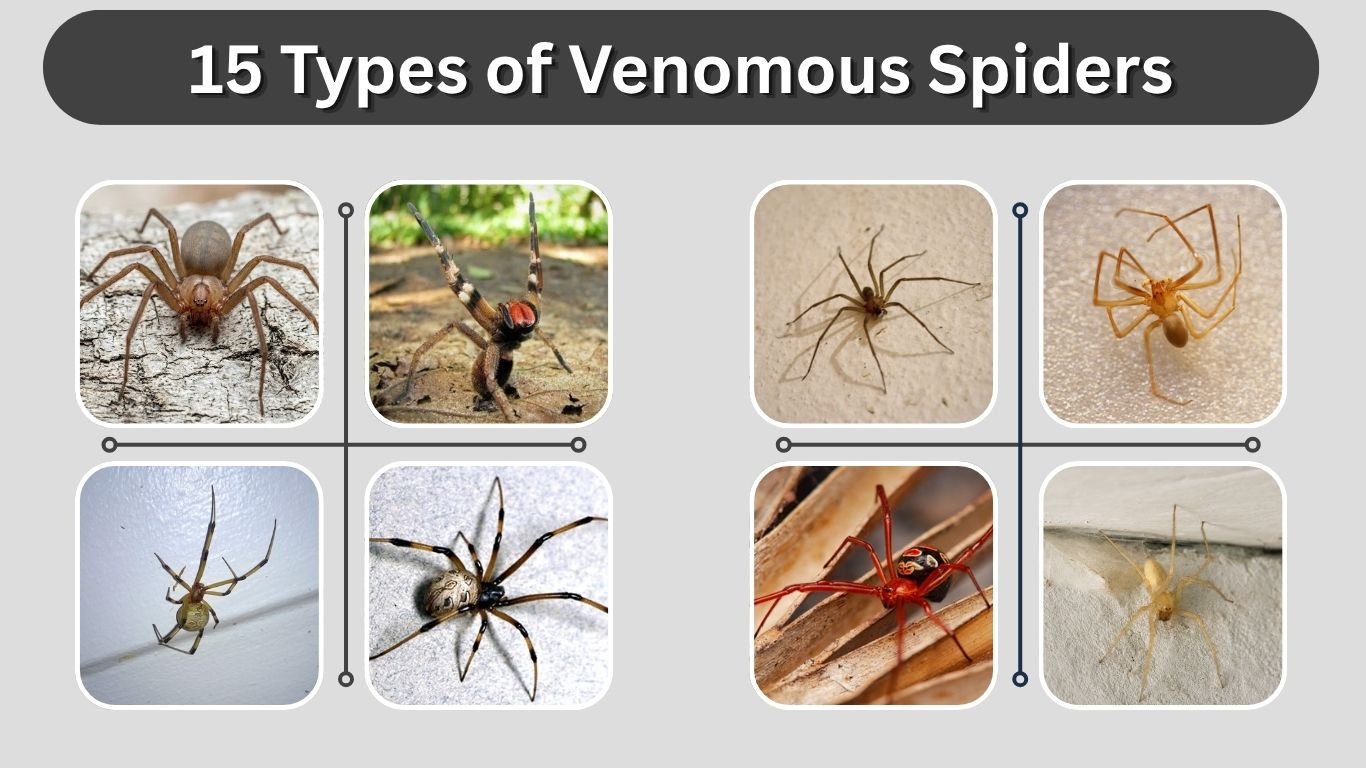
Venomous spiders are found worldwide, ranging from small, hidden hunters to large, powerful predators. Some species, such as Black Widows and Brazilian Wandering Spiders, possess venom capable of causing serious symptoms, while others pose relatively little danger to humans. Understanding their physical characteristics, habitats, behavior, and bite symptoms can help you recognize potentially dangerous species. Explore these 15 types of venomous spiders, including their identification features, natural habitats, and safety information.
1. Black Widow Spider (Latrodectus spp.)
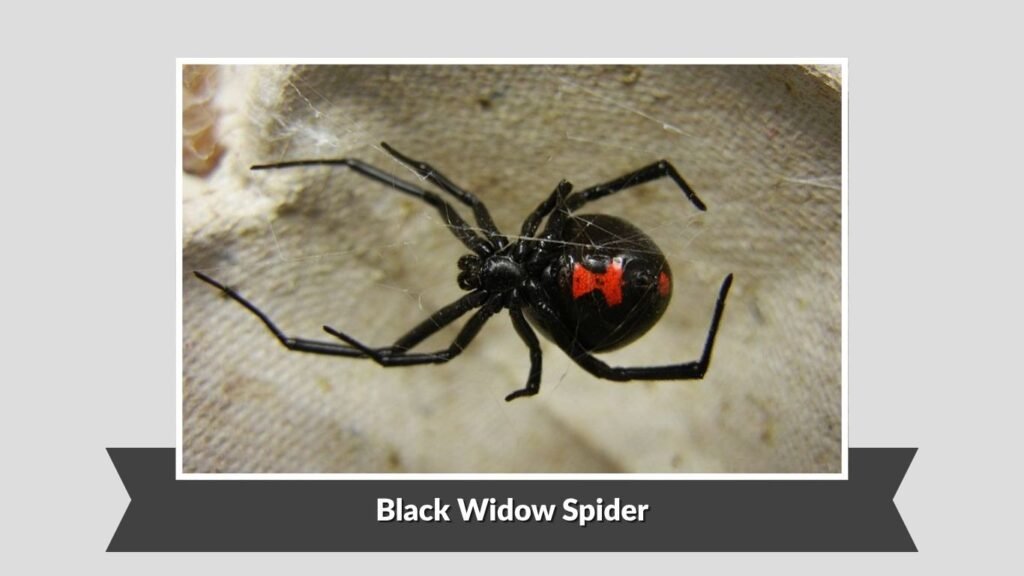
The Black Widow Spider is one of the most recognized venomous spiders in the world, known for its glossy black body and distinctive red hourglass marking. These spiders belong to the genus Latrodectus and are commonly found in North America and other regions worldwide. Although their venom can cause serious symptoms, black widows are generally shy and bite mainly when threatened or accidentally disturbed.
Identification
- Scientific Name: Latrodectus spp.
- Common Name: Black Widow Spider
- Body Color: Glossy black, sometimes with red or orange markings.
- Body Size: Adult females typically measure 8–15 mm in body length.
- Distinctive Markings: Red or orange hourglass-shaped marking on the underside of the abdomen in many species.
- Legs: Long, slender, and usually dark-colored.
- Web Type: Irregular, tangled cobwebs constructed in sheltered locations.
- Sexual Differences: Females are considerably larger than males, which may have lighter coloration and additional markings.
Habitat and Distribution
Black widow spiders prefer dark, dry, and sheltered environments where they can build webs without frequent disturbance. They commonly inhabit woodpiles, garages, sheds, basements, outdoor furniture, and spaces beneath rocks or debris. Different black widow species occur throughout North America, while related widow spiders inhabit other parts of the world. They usually remain hidden during daylight hours and become more active at night.
Venom and Bite Symptoms
Black widow spiders possess potent neurotoxic venom containing alpha-latrotoxin, which affects nerve signaling. Their bites may cause immediate or delayed pain, muscle cramps, abdominal discomfort, sweating, and nausea. Severe symptoms require medical attention, particularly in children, older adults, or individuals with underlying health conditions. Although black widow bites can be medically significant, fatalities are extremely rare with appropriate treatment.
Behavior and Feeding Habits
Black widow spiders are primarily nocturnal predators that capture insects using strong, sticky webs. Their diet includes flies, beetles, mosquitoes, and other small arthropods. Once prey becomes trapped, the spider immobilizes it with venom before feeding. Despite their reputation, black widows generally avoid confrontation and prefer retreating into sheltered areas when disturbed.
2. Brown Recluse Spider (Loxosceles reclusa)
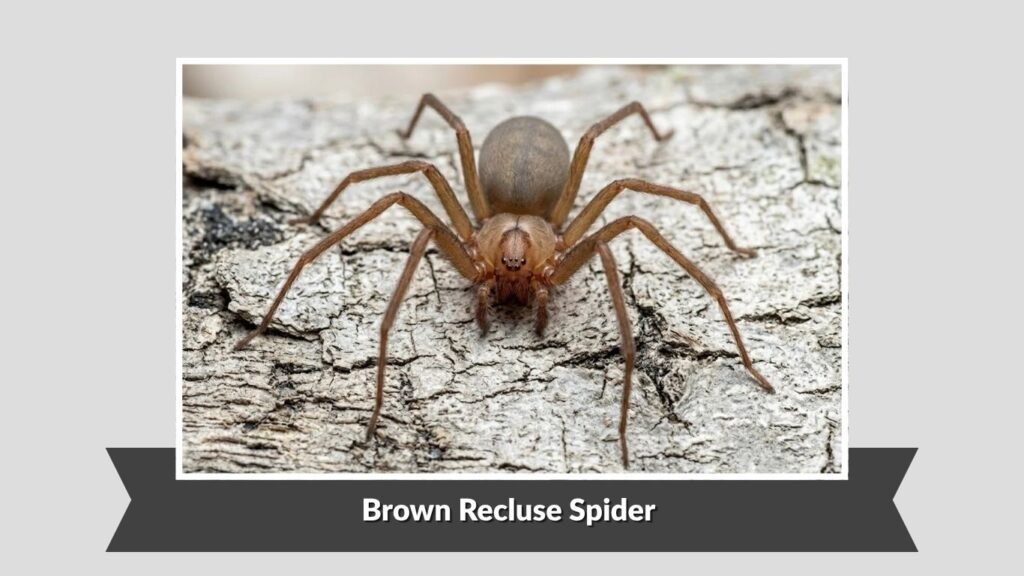
The Brown Recluse Spider is a medically significant venomous spider recognized for its brown coloration and distinctive violin-shaped marking. Commonly found in the central and southern United States, this species prefers quiet, undisturbed environments. Although brown recluse spiders generally avoid human contact, their venom can occasionally cause serious skin damage. Understanding their appearance and behavior is essential for proper identification and safety.
Identification
- Scientific Name: Loxosceles reclusa
- Common Name: Brown Recluse Spider
- Body Color: Light brown, tan, or yellowish-brown.
- Body Size: Adults typically measure 6–20 mm in body length.
- Distinctive Markings: Dark violin-shaped marking on the cephalothorax.
- Eyes: Six eyes arranged in three pairs, unlike most spiders with eight eyes.
- Legs: Long, thin, and uniformly colored without prominent bands.
- Web Type: Irregular silk retreats rather than large prey-catching webs.
Habitat and Distribution
Brown recluse spiders primarily inhabit the south-central United States, including Missouri, Kansas, Oklahoma, Arkansas, and surrounding states. They prefer dry, sheltered environments such as basements, attics, storage boxes, closets, and woodpiles. Outdoors, they hide beneath rocks, logs, and loose bark. Their ability to remain concealed makes accidental encounters possible, particularly when people move stored materials or wear clothing that has been left undisturbed.
Venom and Bite Symptoms
Brown recluse venom contains enzymes, including sphingomyelinase D, that can damage skin tissues. A bite may initially cause little discomfort, but pain, redness, and swelling can develop over several hours. Occasionally, affected skin develops blisters or an ulcer with tissue necrosis. Serious systemic reactions are uncommon but require immediate medical attention. Many suspected brown recluse bites are actually caused by other medical conditions, making accurate identification important.
Behavior and Feeding Habits
Brown recluse spiders are nocturnal hunters that feed primarily on insects and other small arthropods. Unlike orb-weaving spiders, they actively search for prey instead of relying on elaborate capture webs. During daylight hours, they remain hidden in protected locations. Despite their venomous nature, brown recluse spiders are not aggressive and usually bite only when pressed against human skin.
3. Brazilian Wandering Spider (Phoneutria spp.)
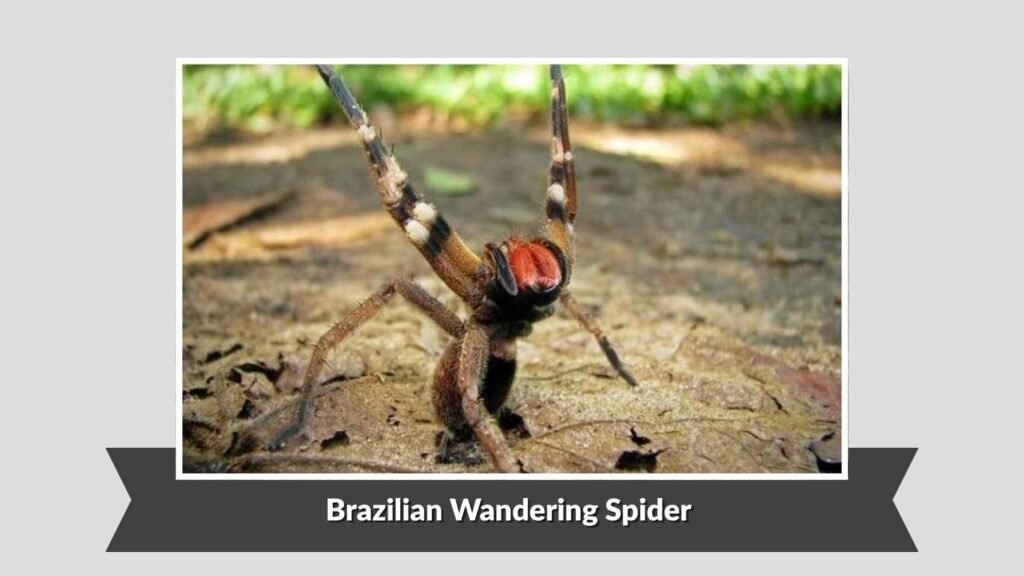
The Brazilian Wandering Spider is among the world’s most medically significant venomous spiders, recognized for its large size, powerful legs, and defensive behavior. Belonging to the genus Phoneutria, these spiders inhabit tropical regions of Central and South America. Unlike web-building species, Brazilian wandering spiders actively hunt prey on the ground. Their potent neurotoxic venom makes proper identification and avoiding direct contact particularly important.
Identification
- Scientific Name: Phoneutria spp.
- Common Name: Brazilian Wandering Spider
- Body Color: Brown, grayish-brown, or reddish-brown.
- Body Size: Large species can reach approximately 5 cm in body length.
- Leg Span: Some individuals have leg spans reaching approximately 15 cm.
- Distinctive Markings: Dark body patterns and contrasting markings on the legs.
- Legs: Long, muscular, and covered with fine hairs.
- Defensive Posture: Raises its front legs and displays its fangs when threatened.
- Web Type: Does not construct a web to capture prey.
Habitat and Distribution
Brazilian wandering spiders occur throughout tropical regions of South America, with some species extending into Central America. They commonly inhabit rainforests, grasslands, agricultural areas, and vegetation surrounding human settlements. During daylight hours, these spiders often shelter beneath logs, rocks, leaves, and other natural debris. Occasionally, they enter homes or agricultural storage areas while searching for shelter or prey.
Venom and Bite Symptoms
Brazilian wandering spiders possess neurotoxic venom that can interfere with nerve and muscle function. Bites may cause intense pain, sweating, increased heart rate, nausea, and other neurological symptoms. Severe envenomation can produce dangerous systemic effects, especially in children. However, not every bite results in serious poisoning. Anyone suspected of being bitten by a Phoneutria spider should seek emergency medical evaluation because species identification and the amount of venom injected can affect severity.
Behavior and Feeding Habits
Brazilian wandering spiders are active nocturnal predators that hunt insects, other spiders, and occasionally small vertebrates. Their speed and strong legs allow them to pursue prey across vegetation and forest floors. When threatened, they may assume a distinctive defensive posture by lifting their front legs. Despite their reputation, these spiders generally use this display to discourage threats rather than actively pursue humans.
4. Sydney Funnel-Web Spider (Atrax robustus)
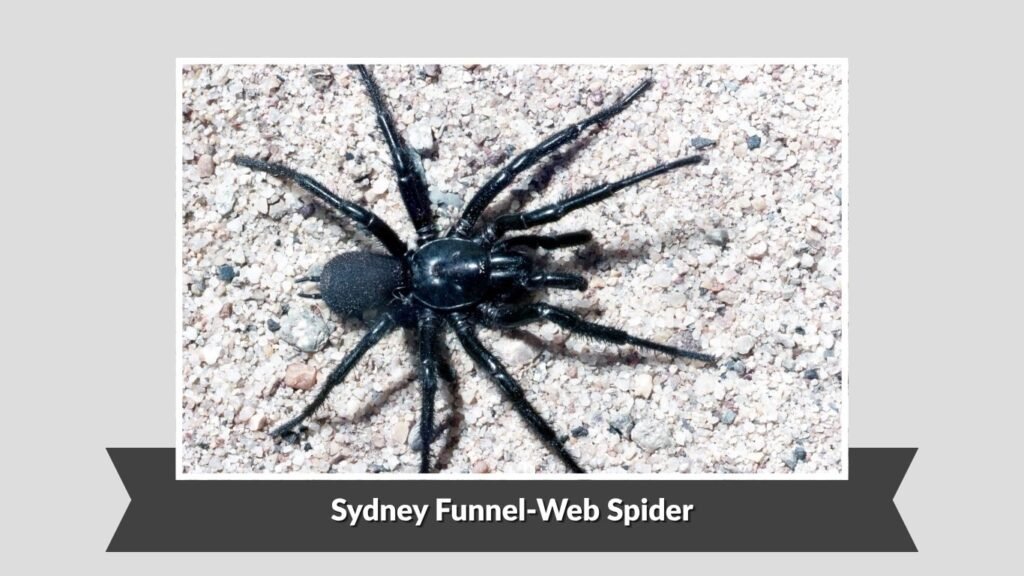
The Sydney Funnel-Web Spider is one of Australia’s most dangerous venomous spiders, famous for its powerful fangs and highly toxic venom. This species belongs to the family Atracidae and primarily inhabits the Sydney region of New South Wales. Its glossy dark appearance and preference for moist environments make it relatively recognizable. Although bites can be life-threatening, effective antivenom and emergency medical treatment have greatly reduced the risk of fatalities.
Identification
- Scientific Name: Atrax robustus
- Common Name: Sydney Funnel-Web Spider
- Body Color: Glossy black or very dark brown.
- Body Size: Adults typically measure approximately 1.5–3.5 cm in body length.
- Distinctive Features: Large downward-pointing fangs and a shiny cephalothorax.
- Legs: Thick, powerful, and covered with short hairs.
- Abdomen: Dark, rounded, and equipped with prominent spinnerets.
- Web Type: Funnel-shaped silk retreats connected to surrounding trip lines.
- Sexual Differences: Adult males are generally slimmer and have modified structures on their second pair of legs.
Habitat and Distribution
Sydney funnel-web spiders inhabit moist forests, shaded gardens, and suburban bushland in the Sydney Basin and surrounding areas. They usually construct silk-lined burrows beneath rocks, fallen logs, and dense vegetation. These environments provide the humidity necessary for their survival. During warm, humid weather, adult males may leave their burrows to search for females, occasionally entering buildings or swimming pools.
Venom and Bite Symptoms
Sydney funnel-web spiders possess extremely potent neurotoxic venom capable of producing serious symptoms in humans. Severe bites may cause intense pain, excessive sweating, muscle twitching, breathing difficulties, and cardiovascular complications. Male spiders are particularly associated with dangerous envenomation. A suspected bite is a medical emergency requiring immediate ambulance assistance, a pressure-immobilization bandage on the affected limb, and minimal movement. Effective antivenom has been available since 1981.
Behavior and Feeding Habits
Sydney funnel-web spiders are primarily nocturnal predators that capture insects and small invertebrates near their burrows. Their silk trip lines detect vibrations from approaching prey, allowing them to respond quickly. They generally remain concealed during daylight hours. When threatened, they can raise their front legs and expose their large fangs, demonstrating defensive behavior intended to discourage potential predators.
5. Redback Spider (Latrodectus hasselti)
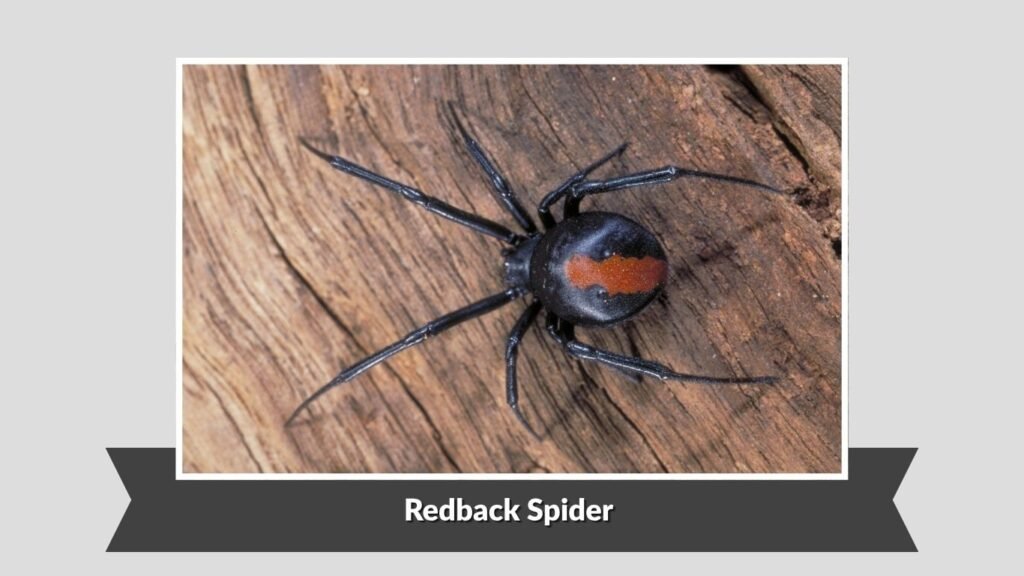
The Redback Spider is a highly recognizable venomous spider native to Australia, known for its glossy black body and distinctive red stripe along the abdomen. Closely related to black widow spiders, this species produces neurotoxic venom that can cause significant pain and systemic symptoms. Redback spiders frequently inhabit sheltered spaces around homes, gardens, and outdoor structures, making them an important species to recognize.
Identification
- Scientific Name: Latrodectus hasselti
- Common Name: Redback Spider
- Body Color: Glossy black or dark brown.
- Body Size: Adult females measure approximately 10 mm in body length.
- Distinctive Markings: Red or orange stripe along the upper abdomen in females.
- Abdomen: Rounded and relatively large compared with the cephalothorax.
- Legs: Long, slender, and dark-colored.
- Web Type: Irregular, tangled webs with sticky vertical capture threads.
- Sexual Differences: Males are much smaller, generally measuring 3–4 mm.
Habitat and Distribution
Redback spiders are widespread throughout Australia and commonly inhabit urban, suburban, and agricultural environments. They prefer dry, protected locations such as garden sheds, outdoor furniture, garages, fences, and spaces beneath containers. Their webs are frequently constructed close to the ground, where insects regularly travel. Redback spiders have also established populations in several locations outside Australia through accidental human transportation.
Venom and Bite Symptoms
Redback spider venom contains alpha-latrotoxin, a neurotoxin affecting nerve signaling. A bite can cause localized pain that gradually intensifies, along with sweating, nausea, muscle weakness, and occasionally more widespread discomfort. Although serious symptoms are possible, fatalities are extremely rare with modern medical treatment. Apply a cold pack for pain relief, avoid pressure-immobilization bandaging, and seek medical attention if a bite is suspected. Antivenom is available for selected cases.
Behavior and Feeding Habits
Redback spiders are primarily nocturnal predators that remain close to their tangled webs. They feed on insects, other spiders, and occasionally larger small animals trapped in their silk. Females generally stay within their established territories while males search for potential mates. Although their venom is medically significant, redback spiders are usually nonaggressive and prefer retreating when disturbed.
6. Brown Widow Spider (Latrodectus geometricus)
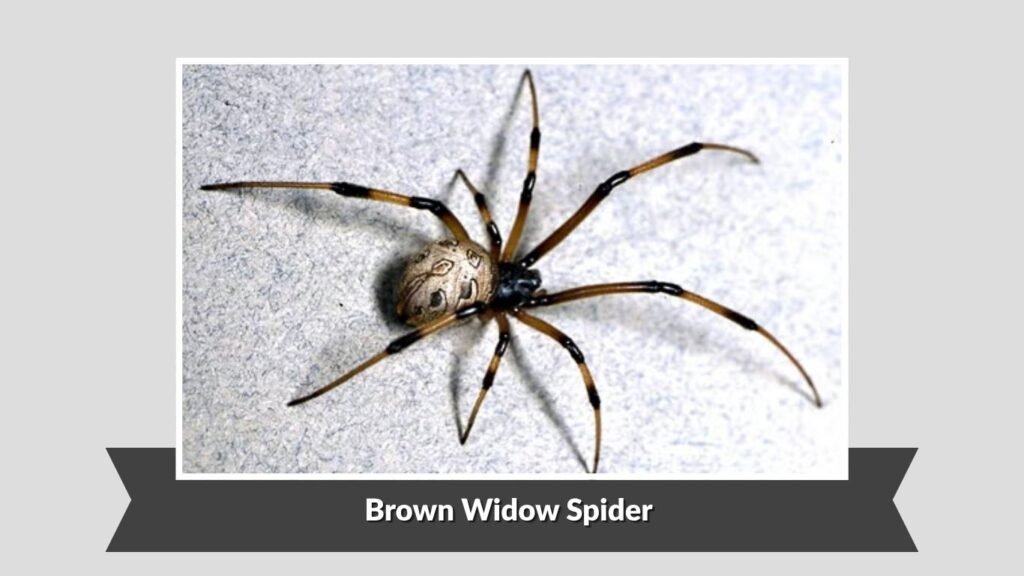
The Brown Widow Spider is a venomous species closely related to the black widow, distinguished by its lighter coloration and distinctive spiky egg sacs. Found in tropical, subtropical, and warm temperate regions, this spider frequently occupies sheltered locations around human structures. Although its venom contains powerful neurotoxins, brown widow bites typically produce less severe symptoms than black widow bites because they generally inject smaller amounts of venom.
Identification
- Scientific Name: Latrodectus geometricus
- Common Name: Brown Widow Spider
- Body Color: Light brown, tan, grayish-brown, or occasionally dark brown.
- Body Size: Adult females usually measure approximately 8–13 mm in body length.
- Distinctive Markings: Orange or yellowish hourglass marking beneath the abdomen.
- Abdomen: Rounded with variable geometric patterns and contrasting markings.
- Legs: Slender, often displaying alternating light and dark bands.
- Egg Sacs: Distinctive spherical silk sacs covered with pointed projections.
- Web Type: Irregular, tangled cobwebs constructed in sheltered locations.
Habitat and Distribution
Brown widow spiders inhabit tropical and subtropical regions worldwide, including parts of Africa, Asia, Australia, and the Americas. In the United States, they occur frequently in southern and coastal regions. They prefer protected outdoor locations such as patio furniture, mailboxes, flowerpots, fences, and storage areas. Their adaptability to human-modified environments allows them to establish populations around residential buildings and gardens.
Venom and Bite Symptoms
Brown widow spiders possess neurotoxic venom similar to that of other widow species. However, their bites are generally associated with milder symptoms than those of black widows. Typical reactions include localized pain, redness, swelling, and occasional muscle discomfort. More significant reactions can occur, particularly in vulnerable individuals. Anyone experiencing severe pain, spreading symptoms, or breathing difficulties after a suspected bite should seek prompt medical attention.
Behavior and Feeding Habits
Brown widow spiders are primarily nocturnal hunters that capture insects through irregular sticky webs. Their diet includes flies, mosquitoes, beetles, and other small arthropods. Females often remain near their webs and egg sacs, while males move between locations searching for mates. These spiders generally avoid confrontation and tend to retreat when disturbed, making accidental contact the most common circumstance associated with bites.
7. Northern Black Widow Spider (Latrodectus variolus)
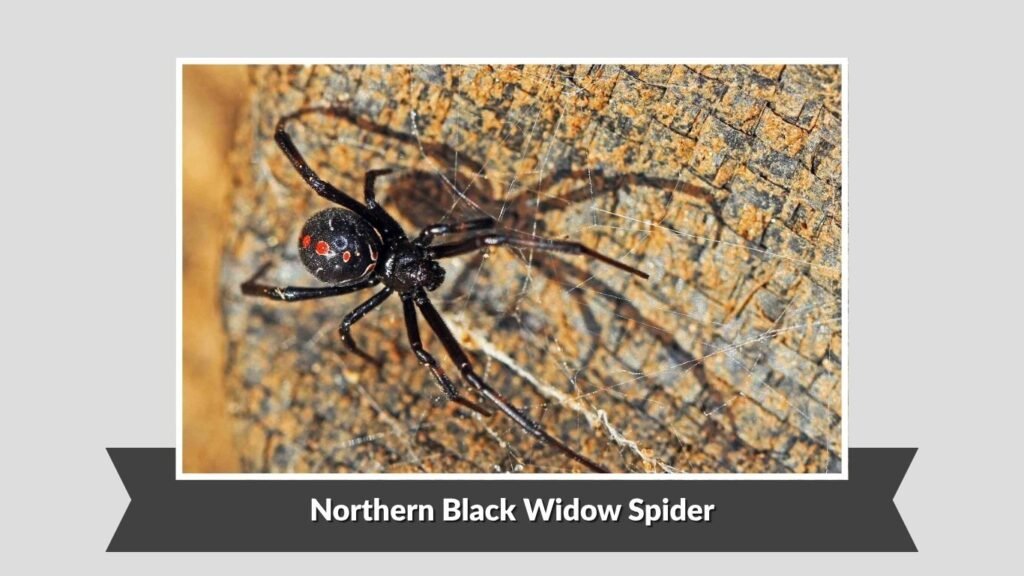
The Northern Black Widow Spider is a venomous species recognized for its glossy black body and distinctive red markings. Native to eastern North America, this spider closely resembles the Southern Black Widow but has several identifying differences. Although its venom can cause medically significant symptoms, Northern Black Widows generally avoid human interaction and prefer sheltered environments where they can build their irregular webs.
Identification
- Scientific Name: Latrodectus variolus
- Common Name: Northern Black Widow Spider
- Body Color: Glossy black with red or orange markings.
- Body Size: Adult females typically measure 9–13 mm in body length.
- Distinctive Markings: Red hourglass marking on the underside, often separated into two distinct sections.
- Abdomen: Rounded and bulbous, sometimes displaying red spots along the upper surface.
- Legs: Long, slender, and usually black.
- Web Type: Irregular, tangled cobwebs constructed in sheltered locations.
- Sexual Differences: Females are significantly larger and darker than males.
Habitat and Distribution
Northern Black Widow Spiders inhabit the eastern United States and parts of southeastern Canada. They commonly occupy woodlands, forests, rocky environments, and areas containing fallen logs or tree stumps. Unlike some other widow species, they frequently establish webs in natural outdoor shelters rather than buildings. They prefer protected locations where insects are abundant and environmental disturbances are limited.
Venom and Bite Symptoms
Northern Black Widow venom contains neurotoxins that affect the nervous system. A bite may cause localized pain, swelling, muscle cramps, sweating, and nausea. In more serious cases, individuals may experience widespread muscular discomfort or abdominal pain. Although fatalities are extremely uncommon, bites can require medical attention, particularly when systemic symptoms develop.
Behavior and Feeding Habits
Northern Black Widows are primarily nocturnal predators that remain near their tangled webs. They capture flies, beetles, moths, and other small insects using sticky silk threads. When prey becomes trapped, the spider immobilizes it with venom before feeding. These spiders are generally nonaggressive and usually retreat when disturbed.
8. Southern Black Widow Spider (Latrodectus mactans)
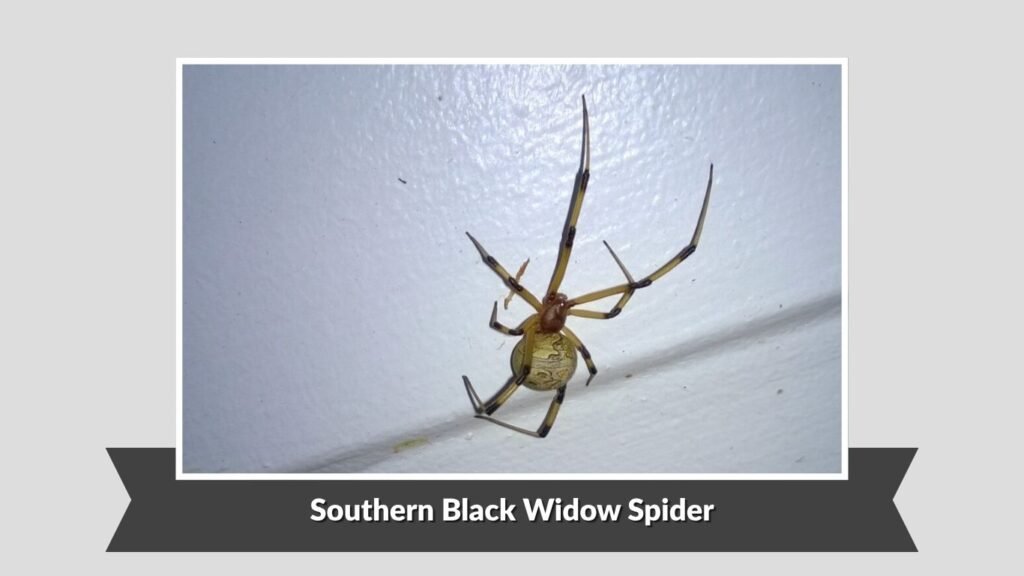
The Southern Black Widow Spider is one of North America’s most recognizable venomous spiders, distinguished by its shiny black body and bright red hourglass marking. This species commonly inhabits warm environments throughout the southeastern United States. Although its venom is powerful, Southern Black Widows are generally shy creatures that bite primarily when accidentally compressed or threatened.
Identification
- Scientific Name: Latrodectus mactans
- Common Name: Southern Black Widow Spider
- Body Color: Glossy jet black.
- Body Size: Adult females generally measure 10–13 mm in body length.
- Distinctive Markings: Bright red or orange hourglass marking underneath the abdomen.
- Abdomen: Large, smooth, and nearly spherical.
- Legs: Long, slender, and uniformly dark in mature females.
- Web Type: Strong, irregular cobwebs with sticky capture threads.
- Sexual Differences: Males are smaller and often display lighter body patterns.
Habitat and Distribution
Southern Black Widow Spiders are widely distributed across the southeastern United States, although their range extends into other eastern and south-central regions. They prefer sheltered environments such as woodpiles, garages, sheds, crawl spaces, and outdoor storage areas. Their webs are commonly constructed close to the ground, where crawling insects provide reliable food sources.
Venom and Bite Symptoms
Southern Black Widow venom contains alpha-latrotoxin, which affects nerve communication and can cause painful muscular contractions. Symptoms may include localized pain, abdominal cramping, sweating, nausea, and increased blood pressure. Severe reactions occasionally require hospital treatment, particularly among children and medically vulnerable individuals. Despite their dangerous reputation, deaths from Southern Black Widow bites are exceptionally rare with modern medical care.
Behavior and Feeding Habits
Southern Black Widows are nocturnal hunters that capture prey through their irregular silk webs. Their diet consists primarily of flies, beetles, grasshoppers, and other small arthropods. Females usually remain close to their webs, while mature males wander in search of mates. When disturbed, these spiders generally retreat into nearby hiding places instead of attacking.
9. Western Black Widow Spider (Latrodectus hesperus)
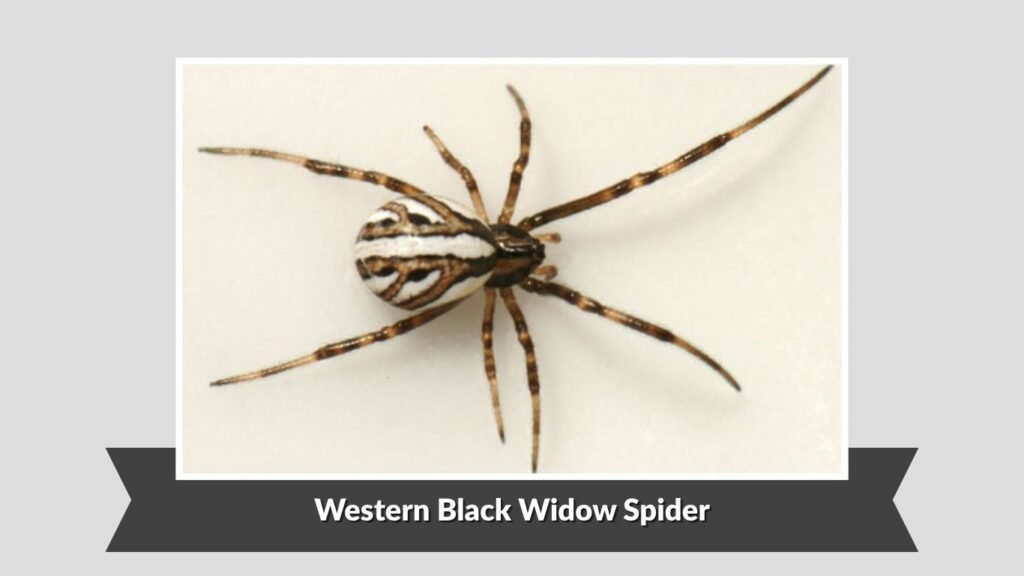
The Western Black Widow Spider is a venomous arachnid commonly found throughout western North America. Recognized for its shiny black body and distinctive red hourglass marking, this species closely resembles other black widow spiders. Its powerful venom can cause significant pain and neurological symptoms, but it is generally nonaggressive and prefers undisturbed environments.
Identification
- Scientific Name: Latrodectus hesperus
- Common Name: Western Black Widow Spider
- Body Color: Glossy black in mature females.
- Body Size: Adult females typically measure 8–13 mm in body length.
- Distinctive Markings: Red or orange hourglass-shaped marking on the underside.
- Abdomen: Large, rounded, and smooth.
- Legs: Long, slender, and usually dark-colored.
- Web Type: Irregular, tangled cobwebs built near sheltered surfaces.
- Sexual Differences: Males are considerably smaller and often have lighter markings.
Habitat and Distribution
Western Black Widow Spiders occur throughout the western United States, parts of Mexico, and southwestern Canada. They commonly inhabit deserts, grasslands, woodlands, and residential environments. Typical hiding locations include rock crevices, garages, sheds, outdoor furniture, and spaces beneath wooden structures. They prefer dry, protected environments with minimal disturbance and consistent access to insect prey.
Venom and Bite Symptoms
Western Black Widow venom contains potent neurotoxins capable of affecting nerve and muscle activity. Bites may initially produce mild discomfort before progressing to muscle cramps, sweating, nausea, or abdominal pain. Severe reactions can involve widespread muscular spasms and require prompt medical evaluation. Although the venom is medically significant, most bites are treatable, and fatalities are extremely rare.
Behavior and Feeding Habits
Western Black Widows are primarily nocturnal spiders that rely on strong silk webs to capture prey. They commonly feed on flies, beetles, ants, and other small arthropods. Vibrations traveling through the web alert the spider when insects become trapped. Females usually remain near established webs, while males actively search for potential mates. Their defensive behavior generally involves retreating rather than pursuing threats.
10. Chilean Recluse Spider (Loxosceles laeta)
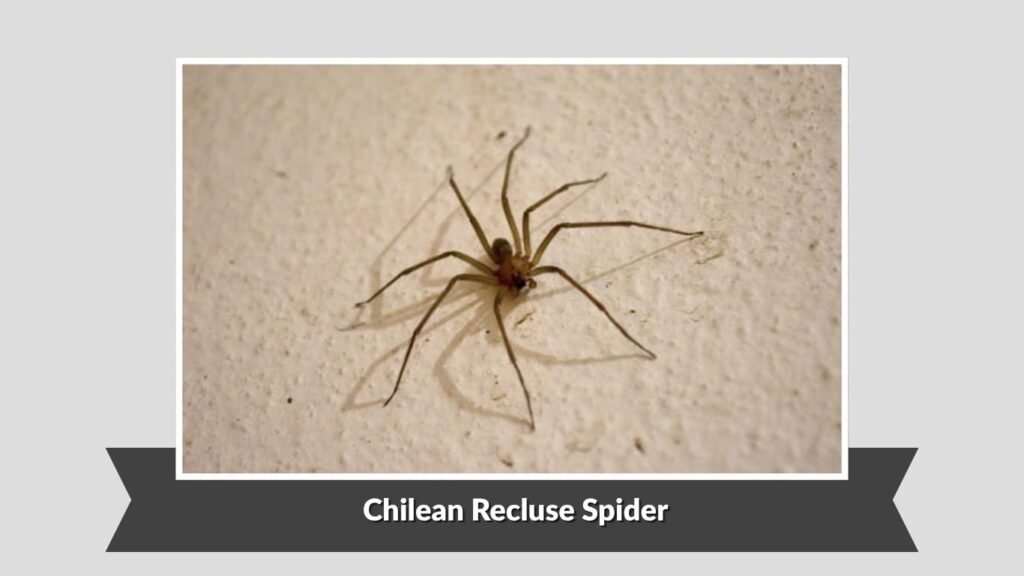
The Chilean Recluse Spider is a medically significant venomous species native to South America, particularly Chile and neighboring regions. Known locally as the corner spider, it prefers dark, undisturbed spaces inside buildings. Its brown coloration and characteristic violin-shaped marking make it similar to other recluse spiders. However, its venom can cause serious tissue damage and occasionally life-threatening systemic complications.
Identification
- Scientific Name: Loxosceles laeta
- Common Name: Chilean Recluse Spider
- Body Color: Light brown, reddish-brown, or dark brown.
- Body Size: Adults generally measure 8–15 mm in body length.
- Distinctive Markings: Dark violin-shaped marking on the cephalothorax.
- Eyes: Six eyes arranged in three separate pairs.
- Abdomen: Oval-shaped and usually without prominent patterns.
- Legs: Long, slender, and relatively uniform in coloration.
- Web Type: Irregular silk retreats rather than circular capture webs.
Habitat and Distribution
Chilean Recluse Spiders are widespread in Chile and occur in other parts of South America. They commonly inhabit homes, storage rooms, attics, closets, and spaces behind furniture. These spiders prefer warm, dry, undisturbed locations where they can hide during daylight hours. Outdoors, they may shelter beneath stones, bark, or debris. Their tendency to live near human structures increases the possibility of accidental encounters.
Venom and Bite Symptoms
Chilean Recluse venom contains sphingomyelinase D and other components capable of damaging skin and blood cells. A bite may initially be painless or mildly uncomfortable, followed by redness, swelling, and increasing pain. Severe cases can involve skin necrosis, blister formation, hemolysis, and kidney complications. Suspected bites require prompt medical assessment, particularly if systemic symptoms develop.
Behavior and Feeding Habits
Chilean Recluse Spiders are nocturnal hunters that feed on insects and other small arthropods. Rather than constructing elaborate capture webs, they leave their silk retreats to search for prey. Their secretive behavior allows them to remain hidden for long periods. Although their venom can be dangerous, these spiders generally avoid confrontation and bite primarily when trapped against human skin.
11. Six-Eyed Sand Spider (Hexophthalma hahni)
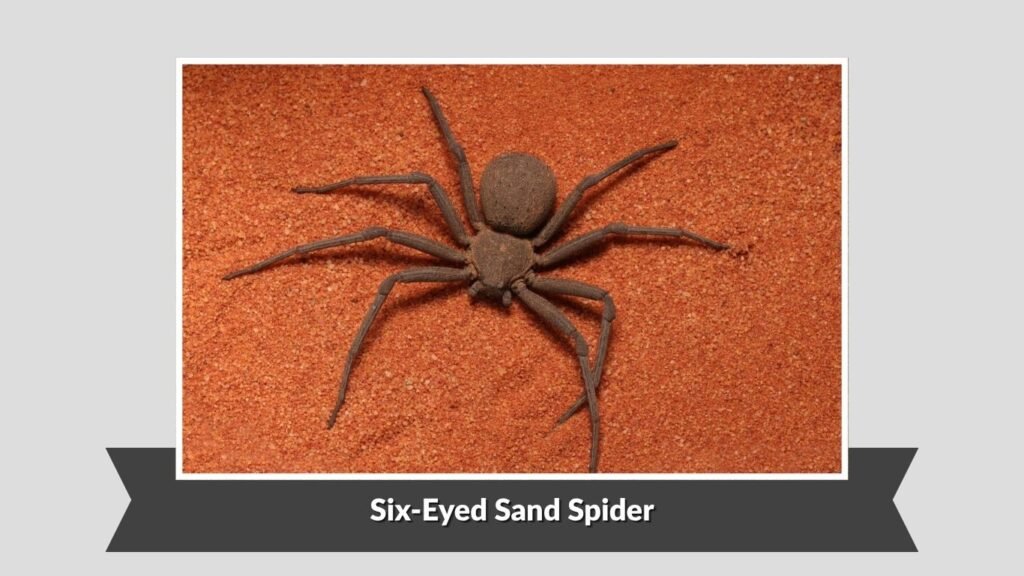
The Six-Eyed Sand Spider is a venomous desert-dwelling arachnid native to southern Africa. Famous for its extraordinary camouflage, this spider can bury itself beneath loose sand while waiting for unsuspecting prey. Its flattened body, sideways-projecting legs, and sand-colored appearance make it difficult to detect. Although laboratory studies indicate potentially harmful venom, confirmed human bites are exceptionally rare, and their clinical effects remain poorly documented.
Identification
- Scientific Name: Hexophthalma hahni
- Common Name: Six-Eyed Sand Spider
- Body Color: Sandy brown, yellowish-brown, or reddish-brown.
- Body Size: Typically measures approximately 8–15 mm in body length.
- Distinctive Features: Flattened body covered with fine hairs that retain sand particles.
- Eyes: Six eyes arranged in three pairs.
- Legs: Long, flattened, and positioned sideways in a crab-like arrangement.
- Abdomen: Broad and flattened, providing effective desert camouflage.
- Web Type: Does not construct webs for capturing prey.
Habitat and Distribution
Six-Eyed Sand Spiders inhabit arid and semi-arid environments across parts of southern Africa, including Namibia and South Africa. They prefer loose sandy soil, desert scrublands, and sheltered areas beneath rocks. Their specialized body structure allows them to bury themselves rapidly beneath sand, providing protection from predators and extreme environmental conditions. They are rarely encountered in residential environments.
Venom and Bite Symptoms
The Six-Eyed Sand Spider possesses venom containing tissue-damaging components associated with the Sicariidae family. Laboratory and animal studies suggest that its venom can cause significant tissue injury, but there is insufficient clinical evidence to describe typical symptoms in humans. No well-verified human envenomation cases have established its actual medical risk. Nevertheless, a suspected bite should receive prompt medical evaluation rather than being dismissed.
Behavior and Feeding Habits
Six-Eyed Sand Spiders are ambush predators that remain concealed beneath sand while waiting for prey to approach. Their diet includes small insects and other desert arthropods. When prey moves within reach, the spider quickly emerges and delivers a venomous bite. Unlike web-building species, these spiders rely on camouflage, patience, and sudden movements to capture food. Their secretive lifestyle significantly reduces encounters with humans.
12. Red Widow Spider (Latrodectus bishopi)
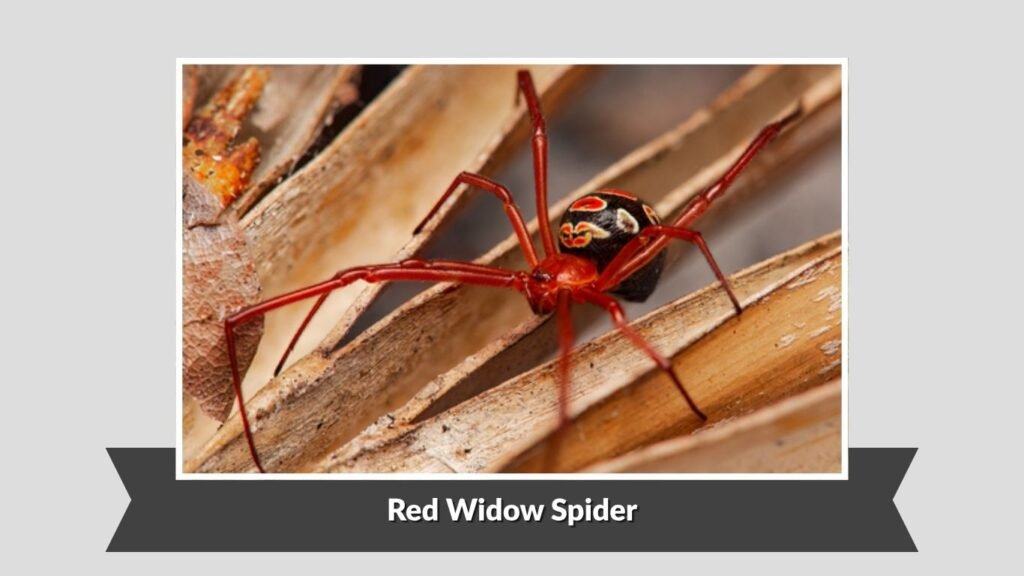
The Red Widow Spider is a rare and distinctive venomous spider native to Florida, recognized for its reddish-orange legs and dark abdomen decorated with colorful markings. Unlike many other widow spiders, this species primarily inhabits natural scrubland environments rather than residential buildings. Its unusual coloration and restricted geographical distribution make it one of North America’s most recognizable widow species.
Identification
- Scientific Name: Latrodectus bishopi
- Common Name: Red Widow Spider
- Body Color: Reddish-orange cephalothorax and legs with a glossy black abdomen.
- Body Size: Adult females typically measure approximately 8–15 mm in body length.
- Distinctive Markings: Red or orange abdominal spots surrounded by yellowish borders.
- Abdomen: Rounded, dark-colored, and decorated with contrasting patterns.
- Legs: Long, slender, and bright reddish-orange.
- Web Type: Irregular, tangled webs constructed among shrubs and palmetto leaves.
- Sexual Differences: Females are considerably larger and more colorful than males.
Habitat and Distribution
Red Widow Spiders are primarily restricted to the sand pine scrub habitats of central and southeastern Florida. They commonly inhabit palmetto shrubs, scrub oaks, and other vegetation growing in dry, sandy environments. Unlike many black widow species that frequently occupy garages and sheds, Red Widows usually remain within natural vegetation. Their specialized habitat requirements make them vulnerable to environmental changes and habitat destruction.
Venom and Bite Symptoms
Red Widow Spiders possess neurotoxic venom associated with the Latrodectus genus. However, confirmed human bite reports are extremely limited, making the specific clinical effects of this species poorly understood. Related widow spiders can cause localized pain, muscle cramps, sweating, and nausea. Therefore, anyone experiencing significant symptoms after a suspected Red Widow bite should seek medical attention. Their venomous nature should be respected without assuming that every encounter presents a serious danger.
Behavior and Feeding Habits
Red Widow Spiders are primarily nocturnal predators that capture insects using irregular silk webs. Their diet consists mainly of flying insects that become entangled in sticky threads. Females typically remain near their sheltered retreats, while males move through vegetation searching for mates. These spiders generally avoid human contact and are unlikely to bite unless physically disturbed or accidentally compressed.
13. Northern Tree Funnel-Web Spider (Hadronyche formidabilis)
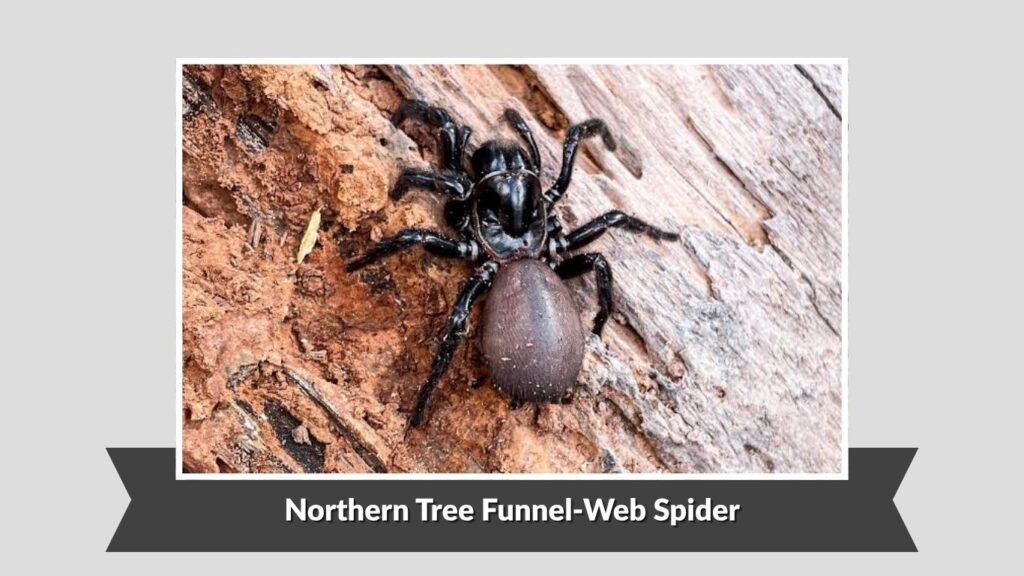
The Northern Tree Funnel-Web Spider is one of Australia’s largest and most medically significant venomous spiders. Known for its powerful fangs, dark coloration, and unusual tree-dwelling lifestyle, this species inhabits forests in eastern Australia. Unlike many funnel-web spiders that construct burrows in the ground, Northern Tree Funnel-Web Spiders frequently occupy hollows and decaying wood within trees.
Identification
- Scientific Name: Hadronyche formidabilis
- Common Name: Northern Tree Funnel-Web Spider
- Body Color: Glossy black or very dark brown.
- Body Size: Large adults may reach approximately 40–50 mm in body length.
- Distinctive Features: Heavy body, powerful fangs, and prominent spinnerets.
- Abdomen: Dark, oval-shaped, and covered with fine hairs.
- Legs: Thick, muscular, and relatively long.
- Fangs: Strong, downward-pointing structures capable of delivering venom.
- Web Type: Silk-lined retreats constructed inside tree hollows and decaying wood.
Habitat and Distribution
Northern Tree Funnel-Web Spiders inhabit moist forests of northeastern New South Wales and southeastern Queensland, Australia. They frequently establish retreats inside tree hollows, decaying trunks, and cavities formed by broken branches. Some individuals live more than 30 meters above ground, making them unusual among Australian funnel-web spiders. These environments provide protection from predators and suitable conditions for capturing insects and other small animals.
Venom and Bite Symptoms
Northern Tree Funnel-Web Spiders possess highly potent neurotoxic venom capable of causing life-threatening symptoms. A bite may produce severe pain, excessive sweating, muscle spasms, nausea, and breathing difficulties. Serious envenomation requires immediate emergency treatment. A pressure-immobilization bandage should be applied to the bitten limb while the person remains as still as possible until medical assistance arrives. Effective funnel-web antivenom is available in Australia.
Behavior and Feeding Habits
Northern Tree Funnel-Web Spiders are primarily nocturnal predators that hunt insects and other small animals living within forest trees. Their diet includes beetles, cockroaches, and various arthropods found in decaying wood. They detect prey through vibrations near their silk-lined retreats and respond rapidly when food approaches. Although capable of defensive aggression when threatened, these spiders do not deliberately pursue humans.
14. Yellow Sac Spider (Cheiracanthium inclusum)
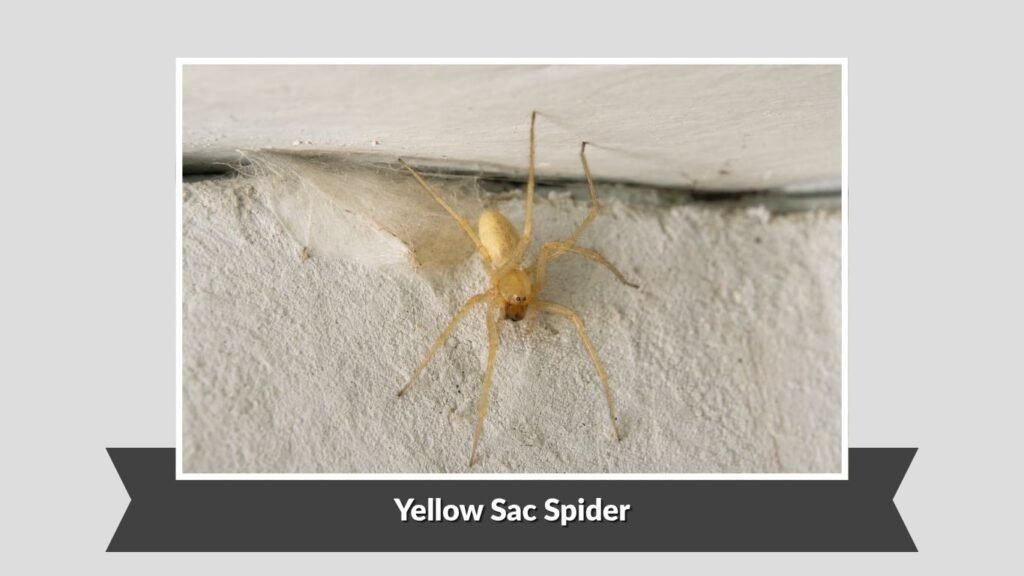
The Yellow Sac Spider is a small venomous spider commonly found in gardens, vegetation, and occasionally inside homes. Recognized for its pale yellow body and slender legs, this species belongs to the family Cheiracanthiidae. Unlike traditional web-building spiders, Yellow Sac Spiders actively search for prey at night. Their bites can be painful but generally cause mild, localized symptoms rather than serious medical complications.
Identification
- Scientific Name: Cheiracanthium inclusum
- Common Name: Yellow Sac Spider
- Body Color: Pale yellow, cream, or greenish-yellow.
- Body Size: Adults typically measure approximately 5–10 mm in body length.
- Distinctive Markings: Slightly darker mouthparts and sometimes a faint abdominal stripe.
- Abdomen: Elongated, oval-shaped, and usually pale-colored.
- Legs: Long, slender, and pale yellow, with the front pair often longer.
- Eyes: Eight small eyes arranged in two horizontal rows.
- Web Type: Small, silken sac-like retreats rather than circular prey-catching webs.
- Sexual Differences: Males are generally slimmer, with relatively elongated legs.
Habitat and Distribution
Yellow Sac Spiders are widely distributed throughout North America and commonly inhabit gardens, agricultural vegetation, woodlands, and residential surroundings. They frequently shelter beneath leaves, inside rolled foliage, or along plant stems. Although Cheiracanthium inclusum is primarily associated with outdoor vegetation, individuals occasionally enter houses. Their small size and pale coloration allow them to remain concealed in narrow spaces.
Venom and Bite Symptoms
Yellow Sac Spiders possess venom used to immobilize insect prey. Their bites may cause immediate stinging pain, redness, itching, and mild swelling. Symptoms usually improve without serious complications. Although Yellow Sac Spiders were historically blamed for severe necrotic wounds, research involving verified bites has found little evidence supporting this reputation. Persistent pain, worsening inflammation, or unusual symptoms should receive medical evaluation.
Behavior and Feeding Habits
Yellow Sac Spiders are active nocturnal hunters that move across vegetation and walls searching for prey. Their diet includes flies, mosquitoes, moths, and other small insects. During daylight hours, they usually remain inside silken retreats constructed beneath leaves or in protected corners. These spiders generally avoid confrontation, and bites most often occur when individuals become trapped against human skin.
15. Mediterranean Recluse Spider (Loxosceles rufescens)
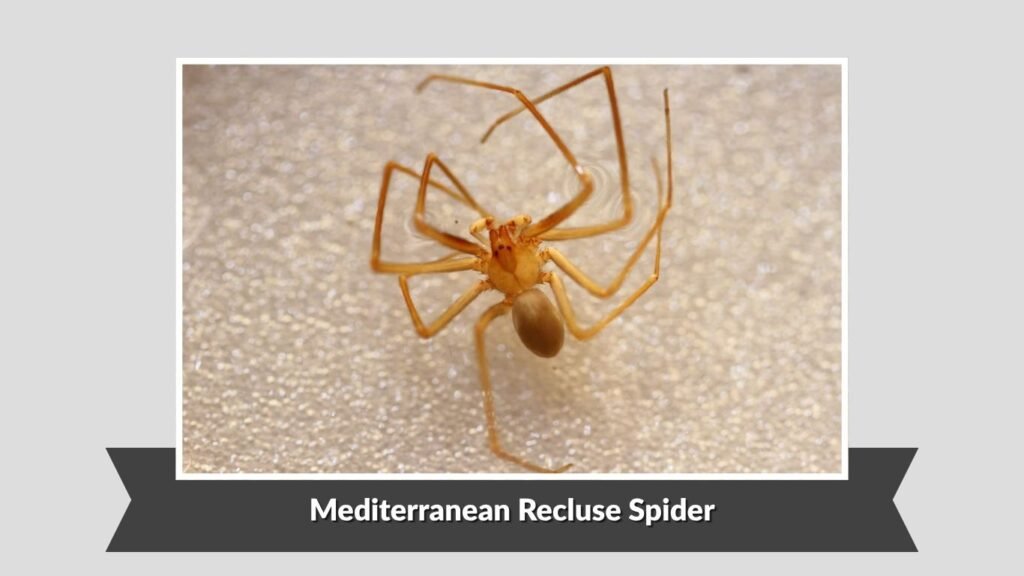
The Mediterranean Recluse Spider is a venomous species known for its brown coloration, slender legs, and characteristic violin-shaped marking. Originally associated with the Mediterranean region, this spider has spread to several other parts of the world through human transportation. Although its venom can cause tissue damage, verified bites are relatively uncommon, and most reported cases do not result in life-threatening complications.
Identification
- Scientific Name: Loxosceles rufescens
- Common Name: Mediterranean Recluse Spider
- Body Color: Light brown, tan, or reddish-brown.
- Body Size: Adults typically measure approximately 7–10 mm in body length.
- Distinctive Markings: Dark violin-shaped marking on the cephalothorax.
- Eyes: Six eyes arranged in three separate pairs.
- Abdomen: Oval-shaped and usually without distinctive patterns.
- Legs: Long, slender, and relatively uniform in coloration.
- Web Type: Irregular silk retreats rather than large circular webs.
- Sexual Differences: Males generally possess slimmer bodies and longer-looking legs.
Habitat and Distribution
Mediterranean Recluse Spiders are native to the Mediterranean Basin and nearby regions of the Middle East. They have also established populations in other parts of the world through accidental transportation. These spiders prefer warm, dry, sheltered environments such as rocky areas, caves, storage rooms, basements, and spaces behind furniture. Their ability to survive in human-modified environments contributes to their widespread distribution.
Venom and Bite Symptoms
Mediterranean Recluse venom contains tissue-damaging components, including sphingomyelinase D. A bite may initially cause little discomfort before developing into localized pain, redness, or swelling. Some verified cases have involved skin ulcers and tissue necrosis, although serious systemic complications appear uncommon. Suspected bites should be medically evaluated if pain increases, skin damage develops, or other concerning symptoms appear. Accurate spider identification is important because many unrelated skin conditions are mistakenly attributed to recluse bites.
Behavior and Feeding Habits
Mediterranean Recluse Spiders are primarily nocturnal hunters that feed on insects and other small arthropods. Unlike orb-weaving spiders, they do not construct elaborate webs for capturing prey. Instead, they establish irregular silk retreats in protected areas and emerge at night to hunt. Their secretive behavior helps them avoid predators and human encounters. Although venomous, Mediterranean Recluse Spiders generally bite only when trapped, pressed against the skin, or directly disturbed.
FAQs
1. What is the most venomous spider in the world?
The Brazilian Wandering Spider and Sydney Funnel-Web Spider are among the most medically dangerous spiders. However, identifying a single most venomous species depends on venom toxicity, the amount injected, and its effects on humans.
2. Are all 15 venomous spiders dangerous to humans?
No. All 15 spiders possess venom, but their medical significance varies considerably. Funnel-web spiders, widow spiders, and certain recluse spiders can cause serious reactions, while Yellow Sac Spider bites are generally mild.
3. Which venomous spiders are commonly found inside homes?
Brown Recluse Spiders, Black Widow Spiders, Brown Widow Spiders, Yellow Sac Spiders, and Mediterranean Recluse Spiders may inhabit residential environments. Their presence depends on geographical location and available shelter.
4. How can you identify a venomous spider?
Identification depends on body coloration, eye arrangement, distinctive markings, leg structure, web type, and geographical distribution. Red hourglass markings are characteristic of several widow spiders, while recluse spiders typically possess six eyes arranged in three pairs.
5. What should you do if bitten by a venomous spider?
Wash the affected area, avoid unnecessary movement, and seek medical advice if symptoms develop. Suspected Australian funnel-web bites require immediate emergency assistance and pressure immobilization, while other spider bites may require different first-aid methods depending on the species.
