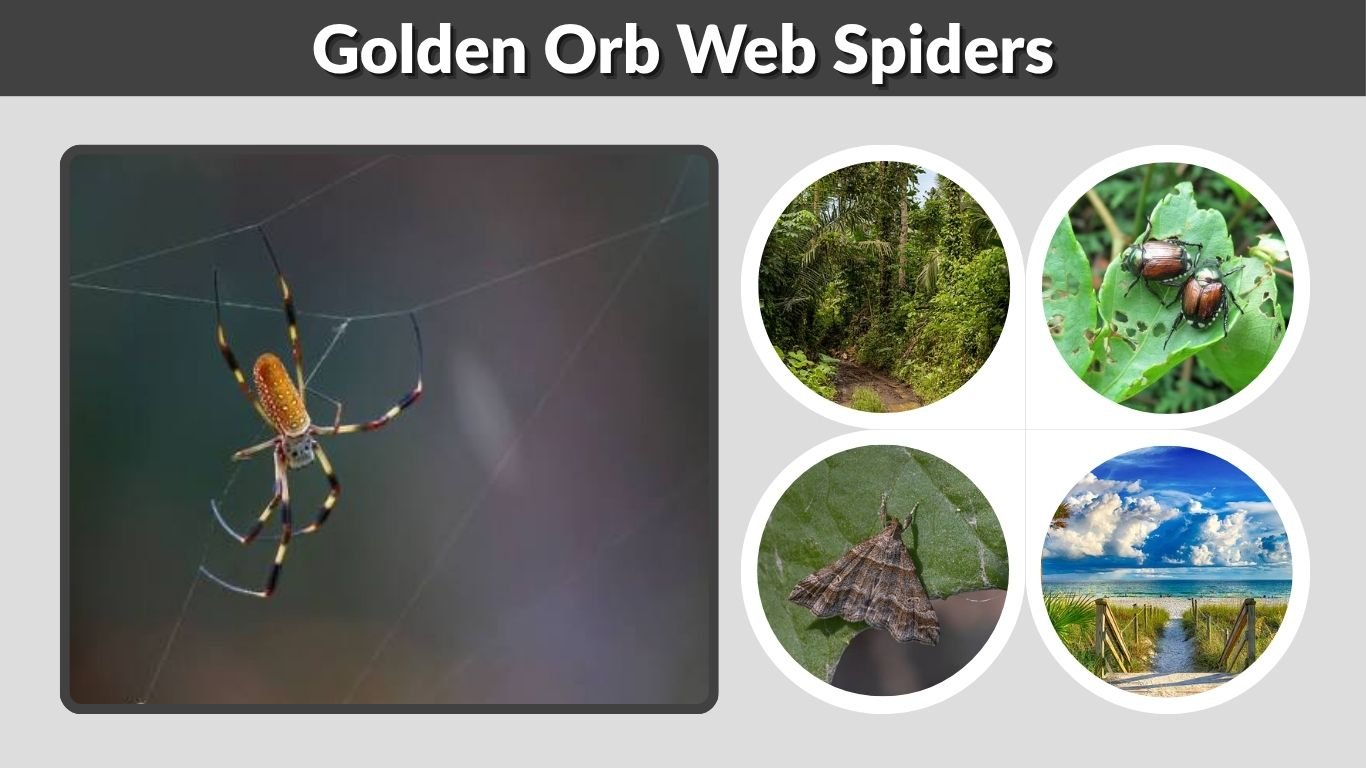
Golden orb web spiders are fascinating arachnids recognized for their large bodies, long legs, and impressive golden-colored webs. Found in tropical and subtropical regions, these spiders create strong silk structures that capture flying insects while helping maintain ecological balance. Although their appearance can be intimidating, they are generally harmless to humans and rarely bite unless threatened. Understanding their physical characteristics, web-building techniques, habitat preferences, and behavior can help you identify golden orb web spiders and appreciate their important role in nature.
What Are Golden Orb Web Spiders?
Golden orb web spiders are a group of large, web-building spiders famous for producing silk with a distinctive golden-yellow appearance. Many belong to the genera Trichonephila and Nephila. Their name refers to the circular shape and golden appearance of their webs rather than the spiders’ body coloration. They are especially noticeable in forests, gardens, and areas with dense vegetation.
Golden Orb Web Spider Identification
Golden orb web spiders have several recognizable physical features that distinguish them from other web-building species.
- Body Color: Typically yellow, brown, black, or orange, sometimes with silvery markings.
- Body Size: Adult females of many species measure approximately 2–4 cm in body length.
- Legs: Long, slender legs frequently display yellow bands or dark markings.
- Abdomen: Usually elongated or cylindrical, occasionally featuring distinctive spots.
- Web Appearance: Large circular webs with silk that can appear golden under sunlight.
- Sexual Differences: Females are considerably larger than males, which may remain near the edges of their webs.
The golden silk orb-weaver (Trichonephila clavipes) is a familiar example in the Americas. Its elongated abdomen, orange-brown legs, and distinctive leg tufts help distinguish it from other orb-weaving spiders.
What Does a Golden Orb Spider’s Web Look Like?
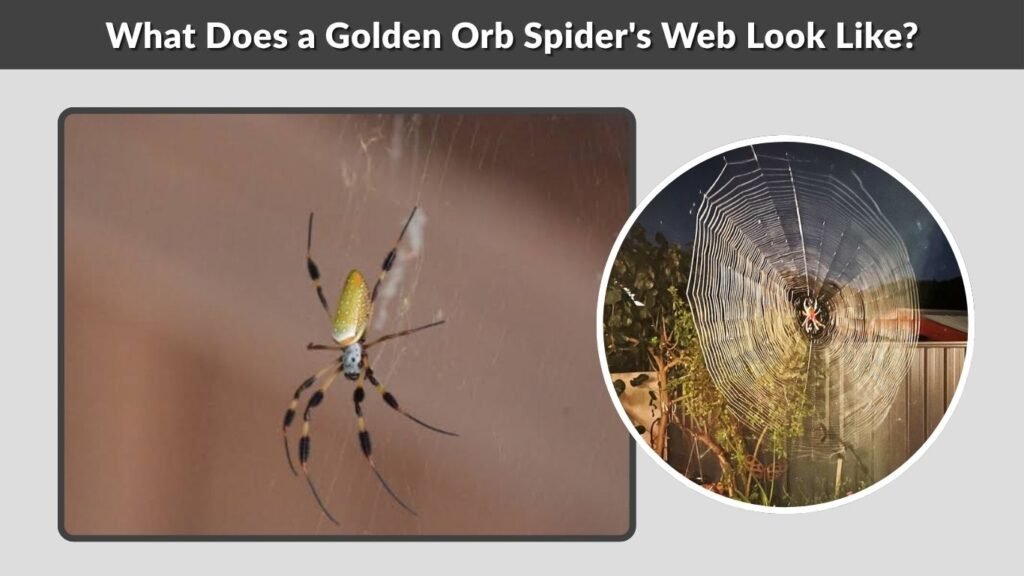
The golden orb spider’s web is one of its most remarkable features. Unlike irregular cobwebs, these structures contain organized radial threads connected by spiraling silk. Some webs extend more than a meter across and are suspended between trees, bushes, or other sturdy supports. Their golden coloration becomes particularly noticeable when sunlight passes through the silk.
How Do Golden Orb Spiders Make Their Webs?
Golden orb web spiders construct their webs through a coordinated sequence of silk-spinning movements.
- Establishing Support Threads: The spider creates anchoring lines between suitable branches or other structures.
- Building the Framework: Strong silk threads form the outer boundaries and supporting structure.
- Adding Radial Lines: The spider produces spokes extending from the central area toward the frame.
- Creating the Spiral: Additional silk connects the radial threads, forming a circular capture surface.
- Applying Sticky Silk: The capture spiral helps trap insects that collide with the web.
- Maintaining the Structure: The spider repairs damaged sections and replaces worn capture threads when necessary.
Unlike some orb-weavers that frequently rebuild their entire webs, golden silk orb-weavers can maintain semi-permanent structures, repairing damaged sections instead of starting over each day.
Why Is Golden Orb Spider Silk Yellow?
Golden orb spiders produce naturally colored silk containing compounds that give some threads their distinctive yellow appearance. The intensity of the color can vary with species, lighting conditions, and the web’s surroundings.
Research on the Joro spider, Trichonephila clavata, identified xanthurenic acid as a major pigment responsible for its golden dragline silk.
Scientists have suggested that golden silk may help attract flying insects under certain lighting conditions. The silk also combines strength and flexibility, allowing the web to withstand struggling prey and environmental disturbances.
Where Do Golden Orb Web Spiders Live?
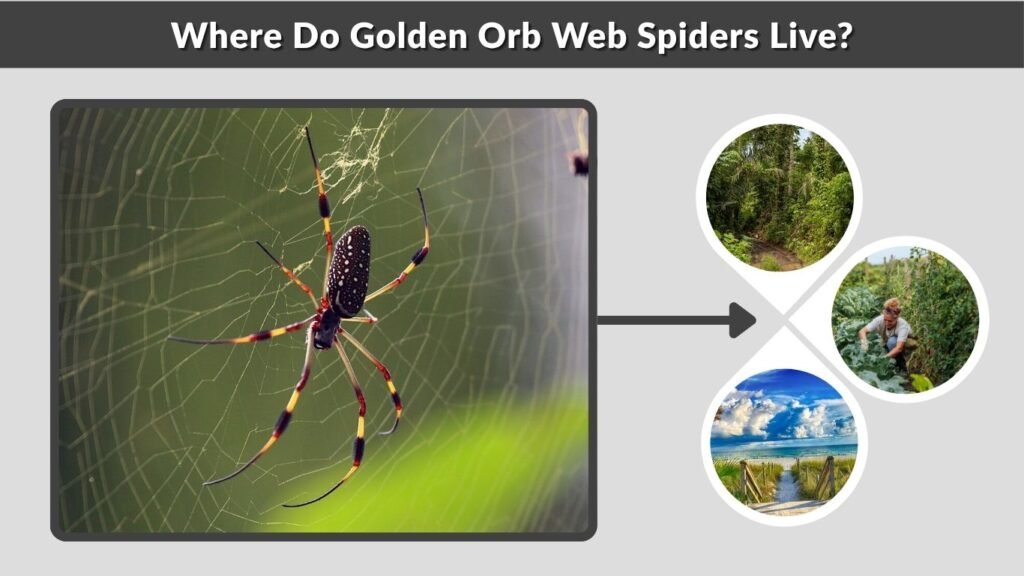
Golden orb web spiders inhabit warm regions where vegetation provides suitable locations for constructing large webs. Their distribution includes parts of Africa, Asia, Australia, and the Americas, although different species occupy different geographical ranges. They commonly select locations along insect flight paths, where their webs can capture passing prey efficiently.
Common Habitats of Golden Orb Web Spiders
These spiders are frequently found in environments offering vegetation, shelter, and abundant insect activity.
- Tropical Forests: Trees and branches provide excellent support for large webs.
- Woodlands: Open spaces between shrubs offer productive hunting locations.
- Gardens: Flowering plants and surrounding vegetation attract potential insect prey.
- Forest Edges: Partially open areas allow spiders to intercept flying insects.
- Coastal Vegetation: Some species inhabit mangroves and coastal shrubland.
Golden orb web spiders generally prefer undisturbed locations where their webs can remain intact for extended periods.
Golden Orb Web Spiders in Maryland
In Maryland, identifying a golden orb web spider requires particular care because several large orb-weavers may look similar.
The golden silk orb-weaver, Trichonephila clavipes, is primarily associated with warmer southeastern regions of the United States.
However, the related Joro spider (Trichonephila clavata) has established a population around Elkridge, Maryland. It also produces large webs containing golden silk.
Maryland residents may additionally encounter native yellow garden spiders, which resemble golden orb-weavers in coloration but belong to a different genus.
Golden Orb-Web Spiders in South Africa
South Africa supports several golden orb-weaving spider species, including Trichonephila fenestrata, commonly known as the black-legged golden orb-web spider.
These spiders occur in forests, woodlands, savannas, and other vegetated environments. Their strong golden webs may stretch between shrubs and trees, sometimes directly across walking trails.
South African golden orb-weavers play an important ecological role by capturing insects and providing food for spider-hunting predators.
What Do Golden Orb Web Spiders Eat?
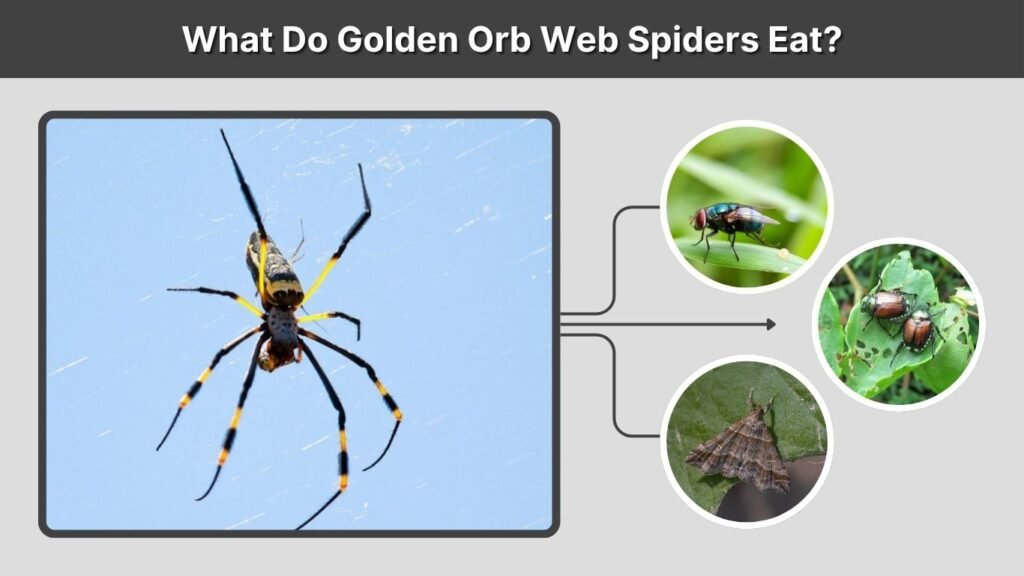
Golden orb web spiders are carnivorous predators that primarily feed on insects captured in their webs. Their hunting success depends on web placement, insect availability, and the ability of their silk to retain moving prey. Although they often remain motionless for long periods, they respond quickly when an insect becomes trapped.
Common Prey and Hunting Behavior
Their diet may include:
- Flies and mosquitoes
- Moths and butterflies
- Beetles
- Grasshoppers and locusts
- Cicadas and other flying insects
When prey enters the web, vibrations alert the spider to its location. The spider approaches, immobilizes the insect, and uses digestive fluids to break down its tissues before feeding.
Larger webs occasionally capture unusually large animals, but insects remain their primary food source.
Are Golden Orb Web Spiders Poisonous?
Golden orb web spiders are venomous rather than poisonous. They possess venom used to immobilize prey, but their bites are generally not considered medically significant for healthy humans. These spiders are usually nonaggressive and prefer remaining in their webs rather than confronting people.
Their intimidating size and long legs often make them appear more dangerous than they actually are.
Golden Orb Web Spider Bite Symptoms
A golden orb spider may bite if accidentally squeezed, trapped against the skin, or handled roughly.
Possible symptoms include mild localized pain, redness, swelling, or temporary numbness. Most uncomplicated bites resolve without serious consequences.
If bitten, gently wash the area with soap and water and apply a cold compress to reduce discomfort.
Seek medical attention if symptoms persist or worsen. Difficulty breathing, severe swelling, or signs of an allergic reaction require urgent medical care.
Golden Orb Web Spider Life Cycle and Reproduction
Golden orb web spiders undergo several developmental stages, beginning with eggs and progressing through juvenile molts before reaching adulthood. Their life cycles differ among species and environmental conditions, but reproduction generally involves much smaller males approaching mature females in their webs. Their remarkable size difference is an important feature of their biology.
Mating, Eggs, and Spiderlings
Adult males often remain near the edges of a female’s web while waiting for an opportunity to mate.
Following mating, the female produces eggs protected by a silk covering. Depending on the species, egg sacs may be attached to nearby vegetation rather than placed directly in the hunting web.
Young spiders emerge as spiderlings and undergo repeated molts as they grow.
Eventually, surviving females become large enough to construct the impressive golden webs associated with mature golden orb-weavers.
Are Golden Orb Web Spiders Beneficial?
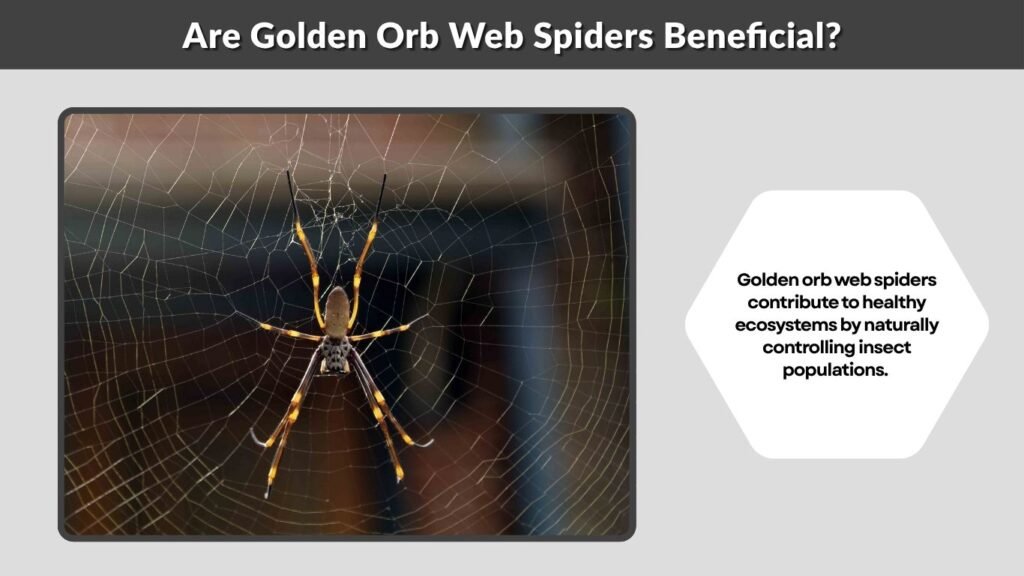
Golden orb web spiders contribute to healthy ecosystems by naturally controlling insect populations. Their large webs intercept numerous flying insects, while the spiders themselves provide food for birds, wasps, and other predators.
Their presence in gardens and wooded environments generally indicates suitable habitat and available prey.
Should You Remove a Golden Orb Spider’s Web?
If a golden orb spider constructs its web in a garden or another undisturbed location, leaving it intact is usually the best approach.
Avoid handling the spider or unnecessarily destroying its web. If the structure blocks a frequently used doorway or walking path, carefully moving around it is preferable.
These spiders generally do not need pest-control treatment and can be valuable residents of outdoor spaces.
FAQs
1. Are golden orb web spiders dangerous to humans?
Golden orb web spiders are generally harmless to humans. They rarely bite unless threatened or physically trapped, and most bites cause only mild localized symptoms.
2. Why do golden orb spiders make golden webs?
Their silk contains natural pigments that create a yellow or golden appearance. Researchers believe the coloration may help attract insects under certain lighting conditions.
3. How big can golden orb spider webs get?
Some golden orb-weaving species construct webs exceeding 1 meter in diameter. The American golden silk orb-weaver can produce webs approximately 1–2 meters across.
4. Do golden orb web spiders rebuild their webs every day?
Not necessarily. Many golden orb-weavers maintain semi-permanent webs, replacing damaged threads and repairing sections rather than rebuilding the entire structure daily.
5. Do golden orb web spiders live in Maryland?
Related golden orb-weavers, particularly the Joro spider, have been documented in Maryland. However, the golden silk orb-weaver native to the Americas is more characteristic of warmer southeastern states.
