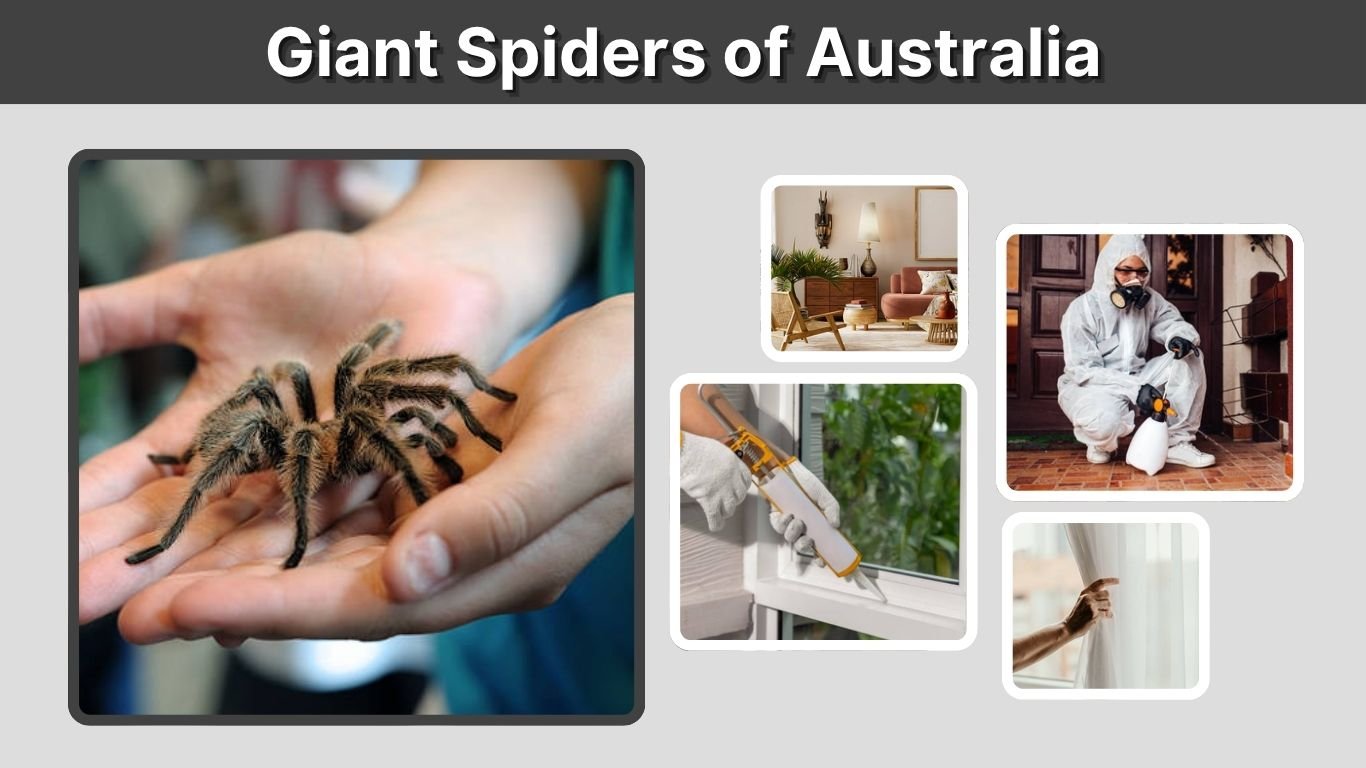
Australia is home to some of the world’s most impressive spiders, including giant huntsman spiders, enormous tarantulas, and long-legged orb-weavers. These fascinating creatures can appear frightening, especially when discovered inside houses, bathrooms, or gardens. However, not every large Australian spider is dangerous. Some are harmless insect hunters, while others possess medically significant venom. Understanding the giant spiders of Australia can help you recognize different species, compare their sizes, identify their habitats, and learn how to stay safe when encountering these remarkable arachnids.
What Are the Giant Spiders of Australia?
Australia has a remarkable diversity of large spiders, ranging from fast-moving hunters to powerful burrowing predators. Their sizes vary considerably depending on species, body structure, and leg length. Although huntsman spiders are among the most recognizable giants, Australian tarantulas and large fishing spiders can also reach impressive dimensions.
How Big Can Australian Spiders Get?
Some Australian spiders can reach a leg span of approximately 20 centimeters (8 inches), making them among the country’s largest arachnids.
Australian tarantulas can develop particularly large bodies, while huntsman spiders appear enormous because of their long, widely spread legs.
However, Australia is not home to the world’s largest spider species. The giant huntsman spider (Heteropoda maxima), famous for its exceptionally long legs, originates from Laos rather than Australia.
Types of Giant Spiders in Australia
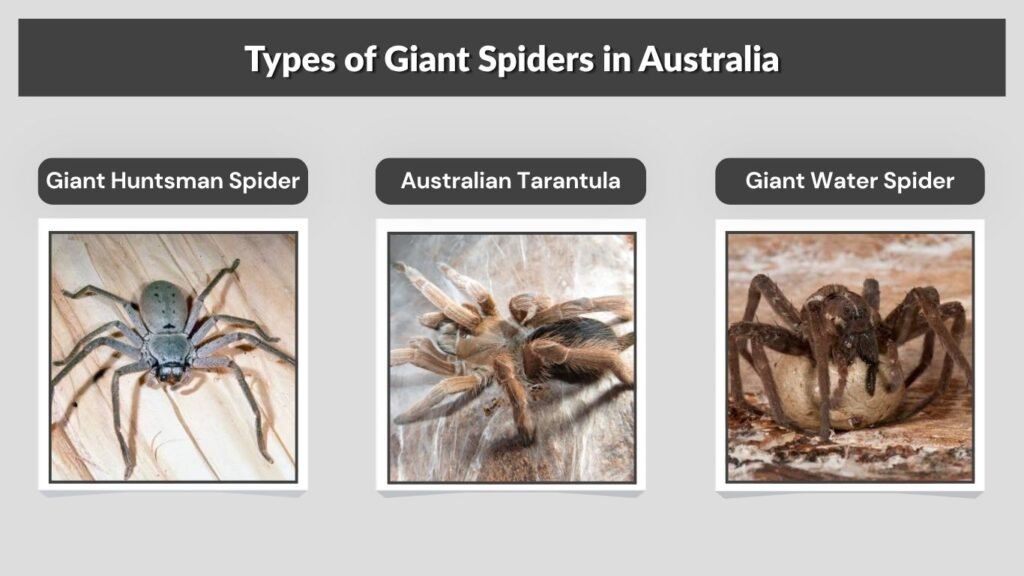
Several spider families contain exceptionally large species found throughout Australia. Some inhabit tropical rainforests and rocky environments, while others live close to residential areas. Their body shapes, colors, hunting strategies, and behaviors provide important clues for identification.
1. Giant Huntsman Spider
<text>Huntsman spiders belong to the family Sparassidae and are among Australia’s most recognizable large spiders.</text>
Their flattened bodies and long, sideways-oriented legs allow them to move quickly across walls, ceilings, and tree trunks.
Large Australian huntsman spiders can reach approximately 15 centimeters in leg span. They usually appear brown, gray, or mottled, helping them blend into natural surfaces.
Unlike web-building spiders, huntsman spiders actively chase insects and other small prey.
They sometimes enter homes, particularly when searching for shelter or hunting opportunities.
2. Australian Tarantula
Australian tarantulas belong to the family Theraphosidae and are sometimes called whistling spiders, barking spiders, or bird-eating spiders.
These spiders have thick, hairy bodies, powerful legs, and large fangs. Some reach around 20 centimeters in leg span.
Australian tarantulas generally live in underground burrows, rocky shelters, or suitable natural cavities.
Certain species produce a defensive whistling sound by rubbing specialized structures near their mouthparts together.
Their bites can cause substantial pain and should not be underestimated.
3. Giant Golden Orb-Weaving Spider
Golden orb-weaving spiders are famous for their impressive appearance and enormous circular webs.
Large females may have bodies measuring approximately 2–4 centimeters, with long legs making them appear considerably larger.
Their colors range from silver-gray to brown, often featuring yellow or dark markings on the legs.
They construct strong webs with a distinctive golden sheen between trees and shrubs.
These spiders commonly capture flies, beetles, moths, and other flying insects.
4. Giant Water Spider
Giant water spiders, including members of the genus Megadolomedes, are impressive hunters found around Australian freshwater habitats.
Some Australian water spiders have leg spans exceeding 15 centimeters.
Their long legs help them move across vegetation and water surfaces while searching for prey.
They may capture aquatic insects and other small animals around ponds, creeks, and wetlands.
Unlike huntsman spiders, these species are strongly associated with moist environments.
5. Australian Funnel-Web Spider
Australian funnel-web spiders are stocky, powerful spiders known for their shiny bodies and substantial fangs.
Some species reach approximately 5 centimeters in body length, although they generally have shorter legs than huntsman spiders.
They frequently inhabit sheltered burrows in moist soil, gardens, and forests.
Unlike most large Australian spiders, certain funnel-web species possess highly dangerous venom.
A suspected funnel-web bite requires immediate emergency medical attention.
How to Identify Giant Australian Spiders
Identifying large Australian spiders requires examining their body shapes, colors, leg arrangements, and habitats. Although size provides a useful starting point, different species can appear similar. Some harmless spiders also resemble medically significant species, making careful observation important.
Physical Features of Common Giant Spiders
Look for these distinguishing characteristics:
- Huntsman spiders: Flattened bodies, long sideways-oriented legs, and rapid movement.
- Australian tarantulas: Thick hairy bodies, strong legs, and powerful downward-pointing fangs.
- Golden orb-weavers: Long slender legs, relatively large abdomens, and prominent circular webs.
- Giant water spiders: Long legs and a preference for freshwater environments.
- Funnel-web spiders: Robust bodies, powerful fangs, and often glossy dark coloration.
Identification should never rely on appearance alone when there is a possibility of encountering a dangerous spider.
Which Is the Biggest Spider in Australia?
Australian tarantulas are among the country’s largest spiders by body size and weight.
Some species can reach approximately 20 centimeters in leg span, while large huntsman and water spiders can exceed 15 centimeters.
The exact answer depends on whether size is measured by body length, leg span, or weight.
Why Are Giant Spiders Found in Australian Houses?
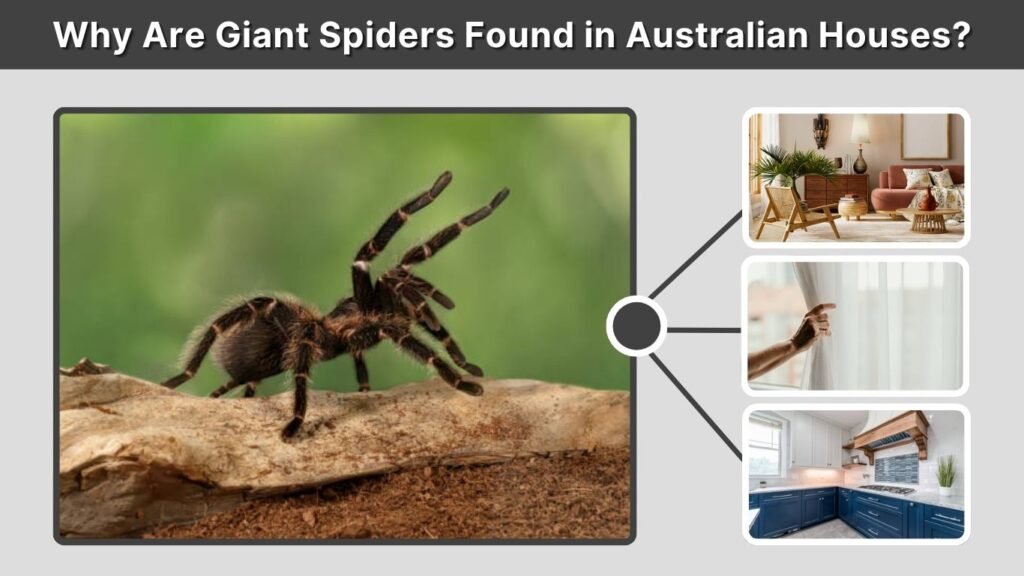
Large spiders occasionally enter Australian homes while searching for shelter, food, or suitable environmental conditions. Huntsman spiders are particularly well known for appearing on household walls and ceilings. Their ability to climb smooth surfaces makes indoor encounters surprisingly common.
Why Do Giant Huntsman Spiders Enter Homes?
Huntsman spiders often shelter behind furniture, curtains, cupboards, and other undisturbed areas.
Indoor insects can attract these active hunters, while open doors and windows provide entry points.
Some spiders may also enter buildings while escaping unfavorable outdoor conditions.
Their sudden appearance can be startling, but huntsman spiders generally avoid confrontation with humans.
Are Giant Spiders Found in Australian Toilets?
Yes, large spiders are occasionally discovered in Australian bathrooms or near toilets.
Huntsman spiders can enter bathrooms through ordinary openings and climb tiles, walls, and ceilings.
However, finding a spider near a toilet does not necessarily mean it traveled through the plumbing.
Bathrooms can provide sheltered spaces where spiders remain undisturbed.
Are Giant Spiders in Australia Dangerous?
Although Australia’s large spiders have frightening appearances, their size does not reliably indicate how dangerous they are. Most large Australian spiders pose relatively little medical risk to humans. However, some species possess venom capable of causing severe symptoms, making accurate identification and sensible precautions essential.
Which Giant Australian Spiders Are Dangerous?
The following distinctions are important:
- Huntsman spiders: Bites can be painful but are generally not medically serious.
- Golden orb-weavers: Usually reluctant to bite, with mild local symptoms in most cases.
- Wolf spiders: Most bites cause localized pain or irritation.
- Australian tarantulas: Some bites can cause substantial pain and other symptoms.
- Funnel-web spiders: Certain species can cause life-threatening envenomation and require emergency treatment.
Can Giant Australian Spiders Kill Humans?
Some Australian funnel-web spiders possess venom capable of causing life-threatening illness.
Fortunately, effective antivenom and emergency medical treatment have greatly improved outcomes.
Most other large Australian spiders, including huntsman spiders and golden orb-weavers, are not considered life-threatening to healthy adults.
Nevertheless, any suspected funnel-web bite must be treated as a medical emergency.
What Should You Do If You See a Giant Spider?
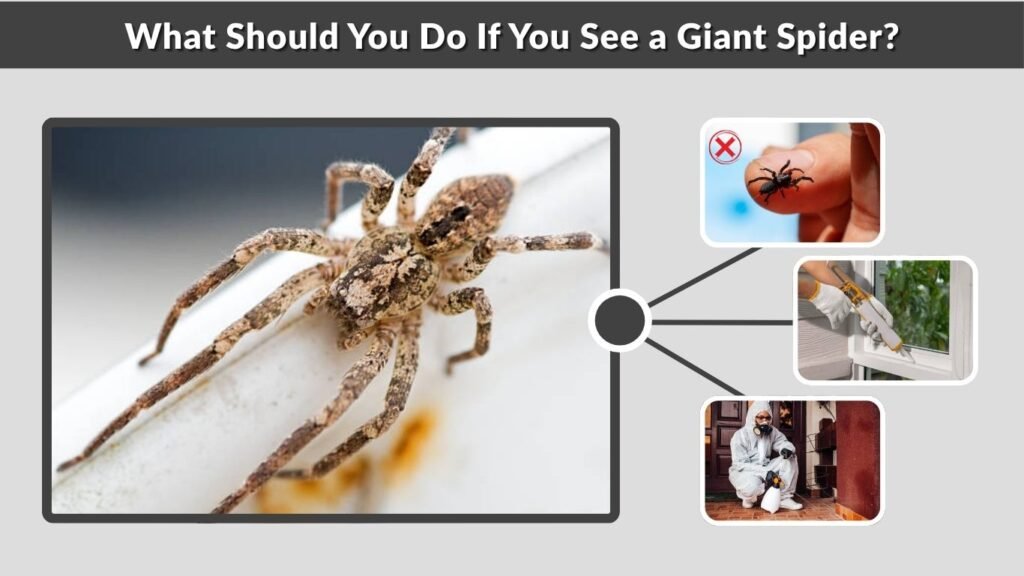
Encountering a large spider can be frightening, particularly inside a home. However, sudden movements and attempts to grab unfamiliar spiders may increase the chance of a bite. Maintaining a safe distance and allowing the spider to retreat is usually the best initial response.
Safety Tips for Giant Spider Encounters
- Avoid touching or handling unidentified spiders.
- Keep children and pets away from unfamiliar large spiders.
- Close gaps around doors, windows, and other potential entry points.
- Reduce indoor insect activity that may attract hunting spiders.
- Contact a qualified pest or wildlife professional when removal is necessary.
If someone is bitten by a suspected funnel-web or other unidentified large black spider in Australia, call 000 immediately. Follow Australian emergency first-aid guidance, including pressure immobilization when indicated.
FAQs
1. What is the biggest spider found in Australia?
Australian tarantulas are among the largest, with some reaching approximately 20 centimeters in leg span. Large huntsmen and water spiders also have impressive dimensions.
2. Are giant huntsman spiders dangerous?
Huntsman spiders are venomous, but their bites generally cause localized pain rather than severe medical complications. They usually prefer escaping over attacking.
3. Why does Australia have so many giant spiders?
Australia has diverse climates, habitats, and ecological conditions that support numerous spider species, including large hunting and burrowing spiders.
4. Can giant spiders enter Australian bathrooms?
Yes. Huntsman spiders and other species occasionally enter bathrooms through doors, windows, or structural gaps while seeking shelter or prey.
5. Do giant Australian spiders attack humans?
Most giant Australian spiders avoid humans and bite primarily when threatened, trapped, or handled. However, unfamiliar spiders should always be treated cautiously.
