
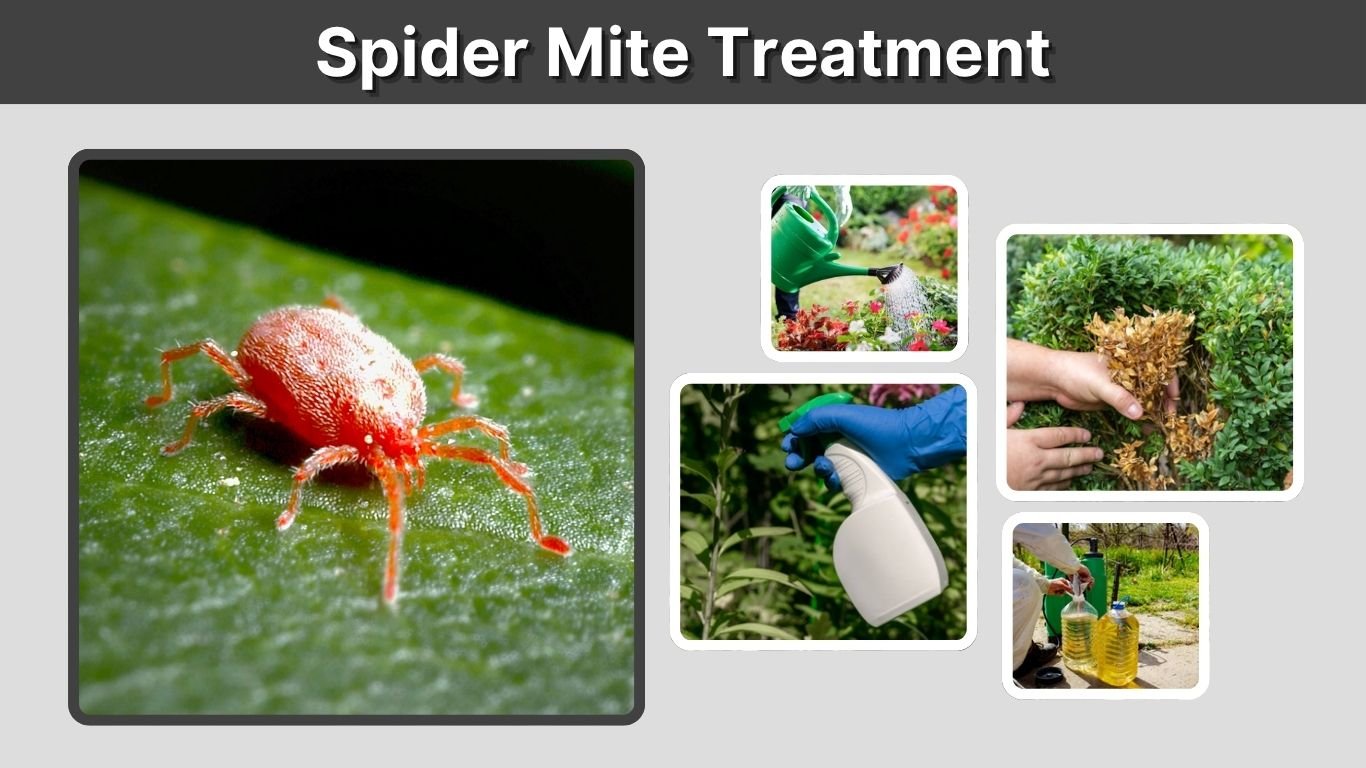
Spider mites can turn healthy green plants into yellow, dry, weakened specimens surprisingly quickly. An effective spider mite treatment combines early detection, physical removal, proper watering, and carefully selected products such as insecticidal soap or horticultural oil. Because mites often hide on the undersides of leaves, successful control requires thorough coverage and repeated monitoring. Whether you are dealing with spider mites on houseplants, tomatoes, roses, trees, or outdoor ornamentals, the following methods can help stop an infestation and protect new growth.
How to Identify Spider Mites on Plants
Correct identification should come before treatment because several plant problems can produce yellow or damaged leaves. Spider mites are extremely small arachnids that usually feed on the undersides of foliage. Typical damage begins as tiny pale dots, called stippling, and may progress to yellowing, bronzing, leaf drying, and leaf drop. Fine webbing becomes especially noticeable during heavier infestations.
Common Signs of a Spider Mite Infestation
Look for several symptoms rather than relying on webbing alone:
- Tiny yellow, white, or pale speckles across leaves
- Fine silky webbing between leaves, stems, or growing tips
- Very small moving dots on the undersides of leaves
- Yellow, bronze, dry, or curling foliage
- Premature leaf drop during severe infestations
- Clusters of tiny eggs when viewed with a hand lens
A useful test is to hold a sheet of white paper below a suspicious leaf and gently tap the foliage. Tiny mites may fall onto the paper and begin moving, making them easier to see.
Why Spider Mites Spread So Quickly
Spider mites commonly become troublesome when plants are hot, dusty, or water-stressed. Indoor conditions with relatively low humidity can also favor mite development. Because their life cycle can be relatively short under favorable temperatures, a small population can become much more noticeable before the gardener realizes the plant is infested.
Best Spider Mite Treatment for Plants
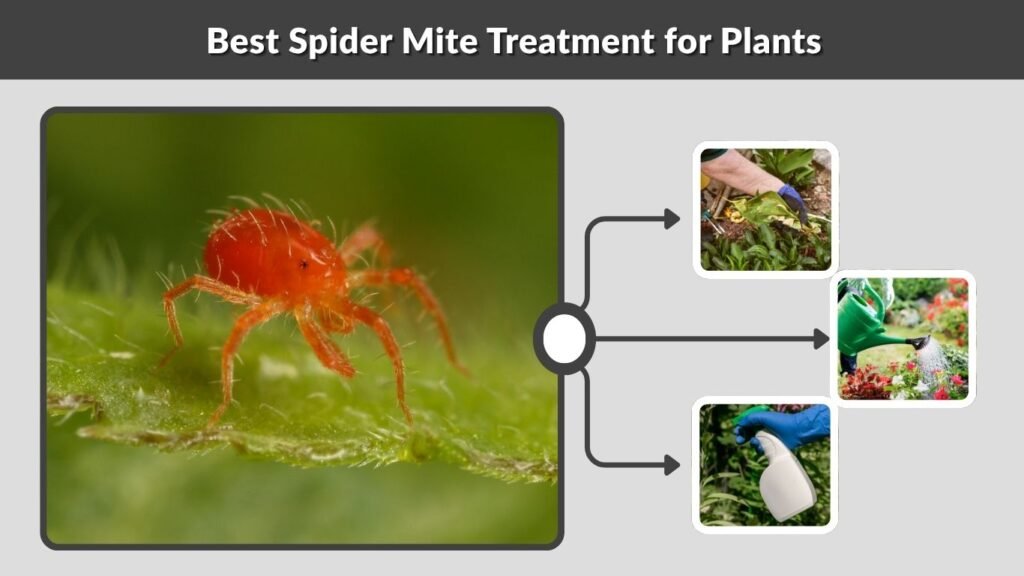
The best treatment for spider mites is usually an integrated approach rather than one aggressive spray. Begin by reducing the existing population physically, improve the plant’s growing conditions, and then use an appropriate contact treatment when necessary. Spider mites typically concentrate beneath leaves, so simply misting the upper surface is unlikely to provide satisfactory control.
Step-by-Step Spider Mite Treatment
For most houseplants and garden plants, use this sequence:
- Separate infested plants. Move affected houseplants away from healthy plants where practical.
- Remove badly damaged foliage. Dispose of heavily infested leaves that are unlikely to recover.
- Wash the plant. Use a firm but plant-safe stream of water, concentrating on leaf undersides.
- Apply insecticidal soap or horticultural oil. Choose a product labeled for the plant and pest.
- Cover leaves thoroughly. Contact products must reach the mites to work effectively.
- Monitor new growth. Inspect leaves regularly and repeat treatment according to the product label when needed.
University extension guidance notes that insecticidal soaps and horticultural oils have little residual activity, meaning good coverage and repeat applications may be necessary.
Insecticidal Soap and Horticultural Oil
Insecticidal soaps containing potassium salts of fatty acids are commonly used against spider mites. Horticultural oils work primarily by coating and smothering small pests and can also be useful for houseplant infestations. These treatments work best when the mites themselves are contacted.
Avoid treating drought-stressed plants or spraying during excessively hot conditions. Testing a product on a small portion of a sensitive plant before treating the entire specimen can also reduce the risk of plant injury.
Natural Spider Mite Treatment Options
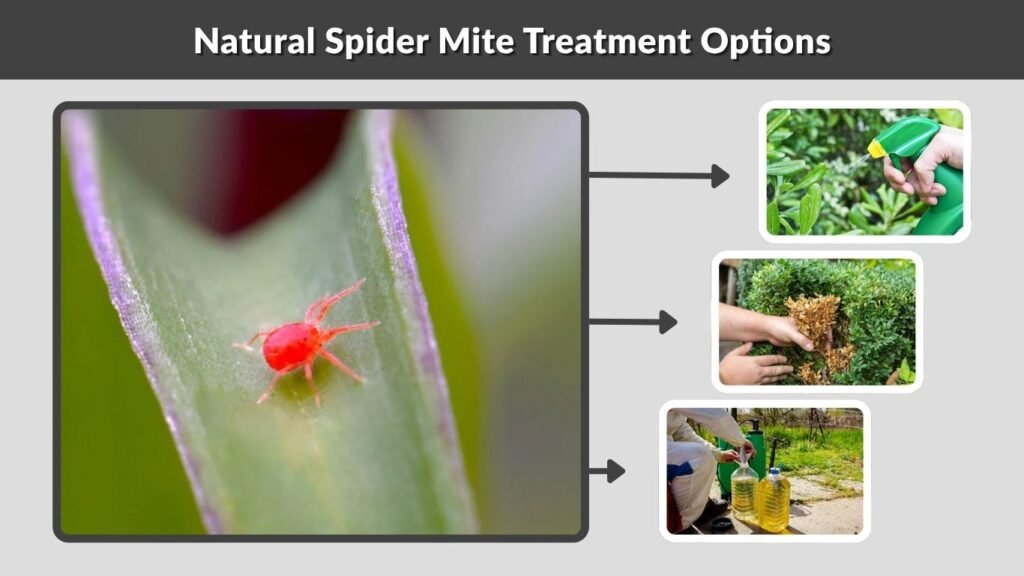
A natural spider mite treatment can be effective when an infestation is detected before extensive damage occurs. Physical removal, proper irrigation, reduced dust, and conservation of beneficial predators are important parts of nonchemical control. Outdoor plants in particular may already have natural enemies helping suppress mite populations, so unnecessary broad-spectrum insecticides can sometimes make the problem worse.
Natural Ways to Control Spider Mites
Useful options include:
- Spray leaf undersides thoroughly with water.
- Keep plants properly watered without constantly saturating the soil.
- Reduce dust around outdoor plants.
- Remove severely damaged foliage.
- Protect beneficial insects and predatory mites.
- Consider commercially available predatory mites in suitable greenhouse or garden situations.
- Use plant-safe insecticidal oils when physical methods are insufficient.
Predatory mites and beneficial insects such as lacewings, predatory thrips, and minute pirate bugs can contribute to spider mite control outdoors.
Does Neem Oil Treat Spider Mites?
Certain horticultural products derived from neem seed are used against mites. Their effectiveness depends on the formulation, coverage, plant species, and application method. Neem-based oil should therefore be treated like other horticultural oils rather than assumed to be a guaranteed one-spray cure.
Always use a product labeled for the intended plant and follow its application directions carefully.
Spider Mite Treatment for Indoor and Outdoor Plants
Treatment should be adjusted to where the plant is growing. Indoor plants can be isolated and cleaned individually, while outdoor plants are more influenced by heat, dust, drought stress, and beneficial predators. Trees and shrubs may also tolerate small mite populations without needing immediate pesticide treatment. Confirm that mites are still present before applying any product.
Spider Mite Treatment for Indoor Plants
For spider mites on houseplants, move the affected plant away from nearby plants, inspect the leaf undersides, and wash foliage thoroughly. Follow with labeled insecticidal soap or horticultural oil when necessary.
Check surrounding houseplants because mites can occur on many different plant species. Severely damaged plants that repeatedly fail to respond may sometimes be best discarded to prevent continued spread.
Spider Mite Treatment for Outdoor Plants
Tomatoes, roses, ornamentals, vegetables, trees, and shrubs can all experience mite problems. Outdoor control should focus on keeping plants adequately irrigated, washing mite-infested foliage where practical, and preserving natural predators.
Spruce spider mites and certain other species have somewhat different seasonal patterns than common two-spotted spider mites, so treatment timing may vary depending on which mite is present.
How to Prevent Spider Mites From Coming Back
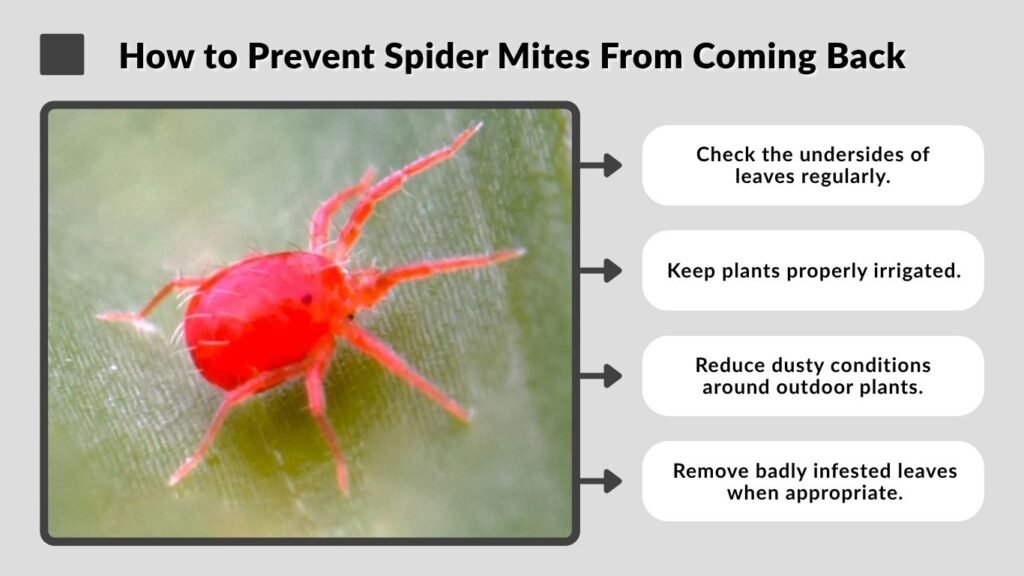
Spider mite prevention focuses on maintaining healthy plants and identifying new populations before they become severe. Regular inspection is particularly important during periods of warm weather or when plants are experiencing water stress. Keeping foliage reasonably clean, avoiding unnecessary pesticides, and checking newly acquired houseplants can significantly improve long-term management and reduce repeated infestations.
Spider Mite Prevention Checklist
- Check the undersides of leaves regularly.
- Keep plants properly irrigated.
- Reduce dusty conditions around outdoor plants.
- Inspect new houseplants before placing them near established plants.
- Remove badly infested leaves when appropriate.
- Avoid unnecessary broad-spectrum insecticide applications.
- Watch fresh growth for renewed stippling or webbing.
- Maintain growing conditions appropriate for each plant species.
Some broad-spectrum insecticides can kill natural mite predators and may contribute to later spider mite outbreaks. Selective treatment is therefore usually preferable when intervention is needed.
FAQs
Spider mites can affect both indoor and outdoor plants, and treatment questions often involve how quickly control works, which products are appropriate, and whether natural methods are enough. The answers below cover several common concerns while emphasizing plant-safe treatment, repeated inspection, and correct identification before applying pesticides or homemade mixtures.
What is the best treatment for spider mites?
Start by washing mites from the plant and improving watering and growing conditions. If mites remain, a labeled insecticidal soap or horticultural oil is commonly recommended for home plants. Thoroughly covering the undersides of leaves is essential.
Can I treat spider mites naturally?
Yes. Water sprays, removal of badly infested foliage, proper irrigation, dust reduction, and protection of natural predators can all reduce mite populations. Natural methods tend to work best when the infestation is identified early.
How often should I treat spider mites?
Contact treatments may require repeat applications because they generally do not provide long-lasting control and may miss eggs or hidden mites. Follow the specific interval printed on the product label rather than applying sprays more frequently than directed.
Should I use dish soap for spider mites?
Commercial insecticidal soap is safer because it is formulated and labeled for plant pest control. Homemade dish-soap mixtures can injure or burn certain plants, so University of Minnesota Extension specifically advises against substituting homemade soap solutions for properly formulated insecticidal soap.
Do spider mites live in soil?
Most troublesome spider mites feed and reproduce primarily on plant foliage rather than living as a soil pest. For that reason, treatment should concentrate on the leaves—especially their undersides—rather than automatically replacing soil or applying soil pesticides.
