
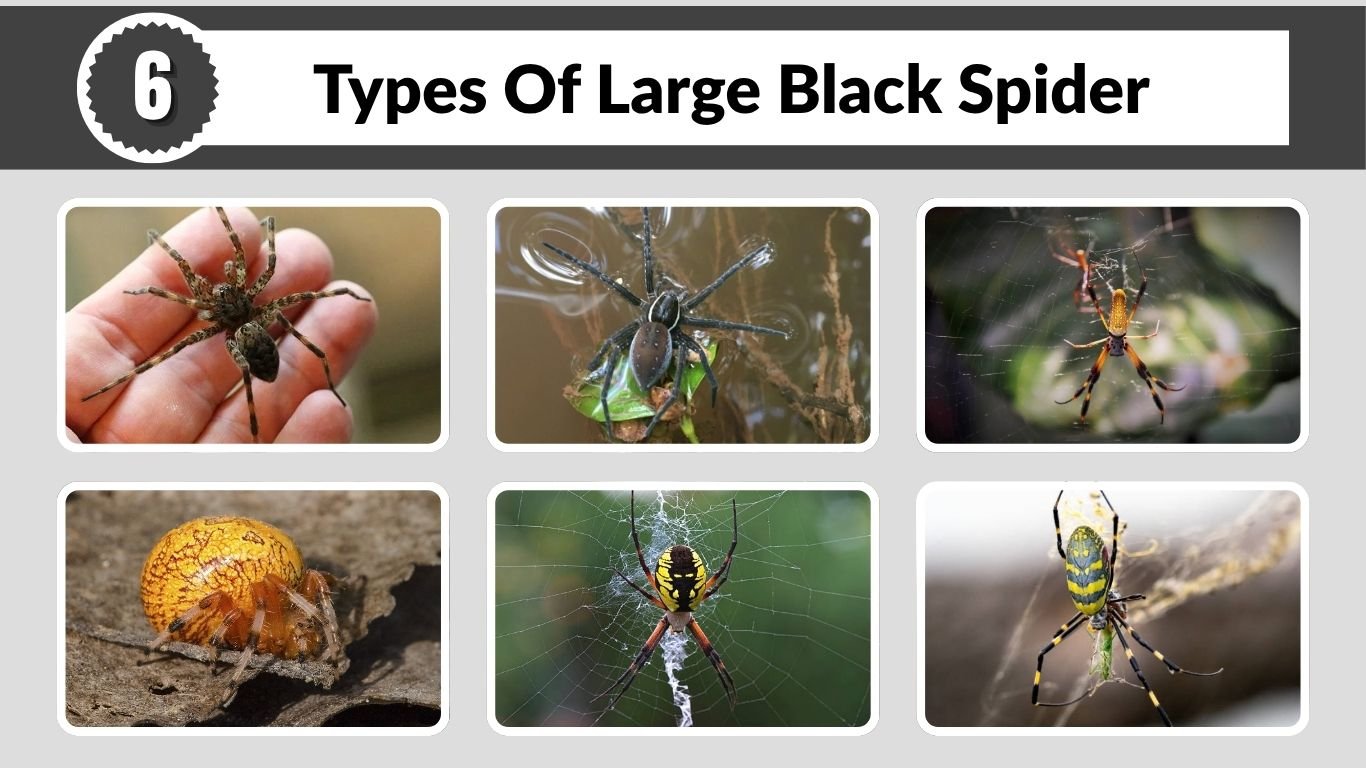
A large black spider may be a wolf spider, fishing spider, Joro spider, yellow garden spider, or another harmless species. Color alone is rarely enough for identification because lighting, age, sex, and viewing angle can make brown spiders look black. The spider’s web, body shape, markings, and location provide better clues. In Georgia and nearby southeastern states, most large spiders found in gardens or around homes are beneficial predators rather than medically dangerous species.
Common Large Spiders at a Glance
| Spider | Typical appearance | Web or behavior | Risk to people |
| Carolina wolf spider | Large, dark brown or nearly black | Hunts on the ground | Low |
| Fishing spider | Large, brown or dark gray | Hunts near water or trees | Low |
| Joro spider | Yellow, blue-black, and red | Large golden web | Low |
| Yellow garden spider | Black with bright yellow patches | Orb web with white zigzag | Low |
| Golden silk orb-weaver | Gold, orange, brown, and black | Large golden web | Low |
| Black widow | Glossy black with red underside marking | Irregular, tangled web | Medically significant |
1. Carolina Wolf Spider
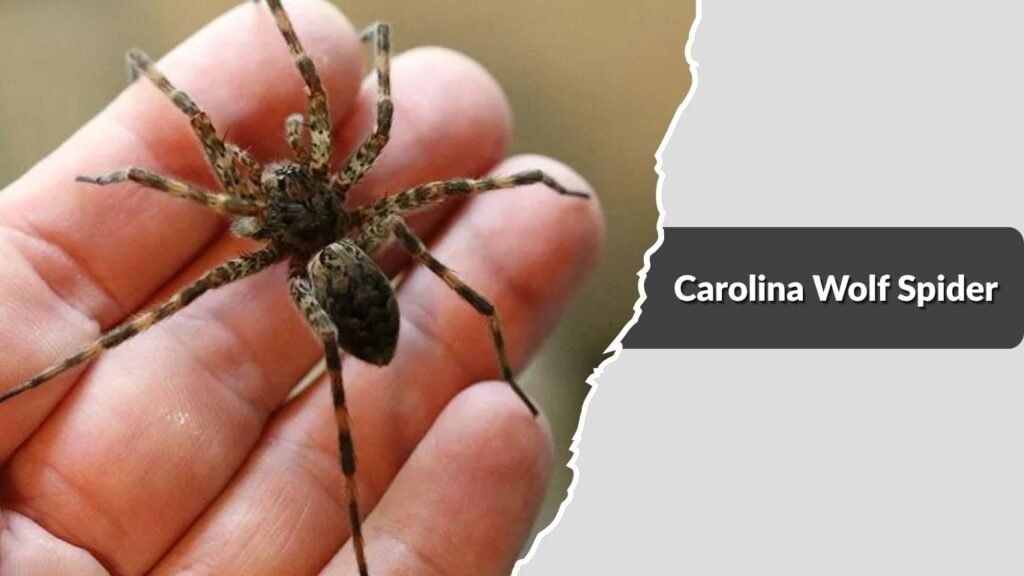
A large black spider running across a yard, garage, basement, or driveway may be a Carolina wolf spider. Despite its name, it usually appears dark brown, gray-brown, or nearly black rather than solid black.
Wolf spiders do not build circular webs to catch prey. They actively hunt insects on the ground, relying on speed and eyesight. Their robust bodies, thick legs, and rapid movement often make them appear more threatening than they are.
Identification
Look for:
- A broad, sturdy body
- Thick, hairy legs
- Brown, gray, or black camouflage
- Pale stripes or markings on the front body
- Two especially large forward-facing eyes
- No large prey-catching web
- Fast movement across the ground
Wolf and fishing spiders are among the largest non-web-building spiders in the southeastern United States. They may enter homes accidentally while searching for prey or shelter.
2. Fishing Spider
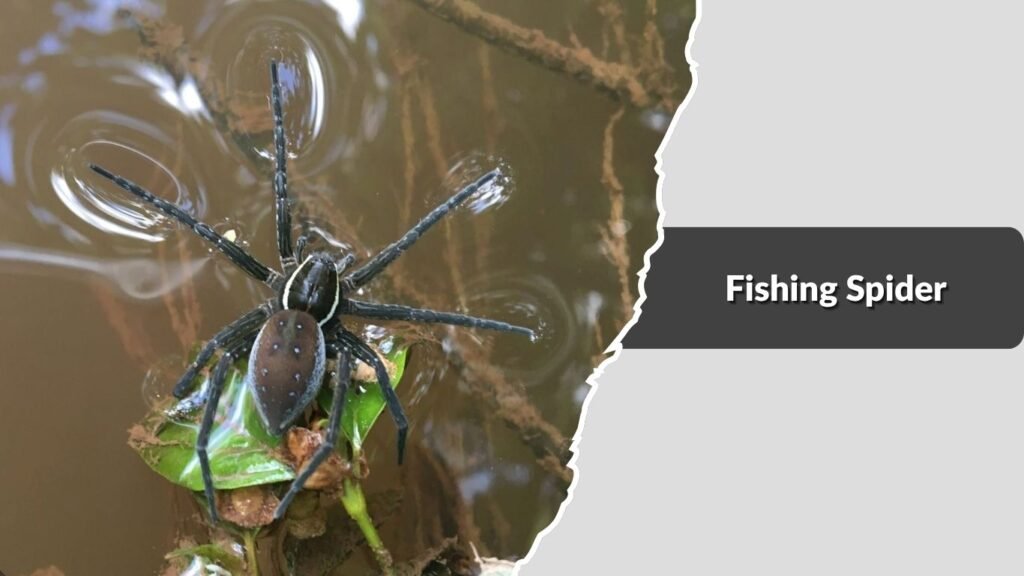
Fishing spiders resemble oversized wolf spiders. They have long legs, flattened bodies, and brown, gray, or dark markings. Some individuals become large enough to span several inches with their legs extended.
Fishing spiders are often associated with ponds, streams, docks, damp woods, and swimming pools. However, several species also climb trees and enter buildings far from water.
How to Recognize One
A fishing spider typically has:
- Long legs extending sideways
- A relatively flat body
- Brown, gray, or black markings
- Pale bands along the body or legs
- No round orb web
- A tendency to rest on walls, tree trunks, or docks
These spiders may run across water and capture aquatic insects or other small animals. They are intimidating but generally avoid people.
3. Joro Spider
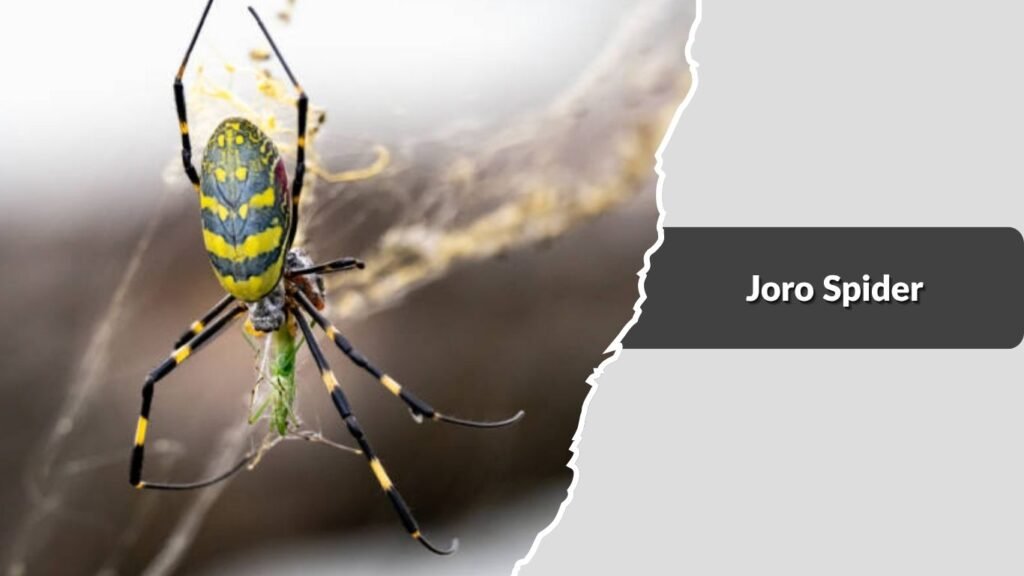
A large spider with black-and-yellow striped legs in Georgia may be a Joro spider, especially when it is sitting in a huge golden web.
The Joro spider, Trichonephila clavata, is native to East Asia and was first documented in Georgia in 2014. It has since become established in northern Georgia and expanded into surrounding areas.
Identification
An adult female has:
- A long yellow abdomen
- Broad blue-black or bluish-green bands
- Red markings underneath
- Long black legs with yellow bands
- A silvery front body
- A large, multilayered golden web
A female’s body can exceed one inch in length, while her extended legs make her appear three to four inches across. Males are dramatically smaller, duller, and easy to overlook.
Joro webs may span ten feet or more, with support lines stretching much farther between trees, buildings, and utility structures.
4. Yellow Garden Spider
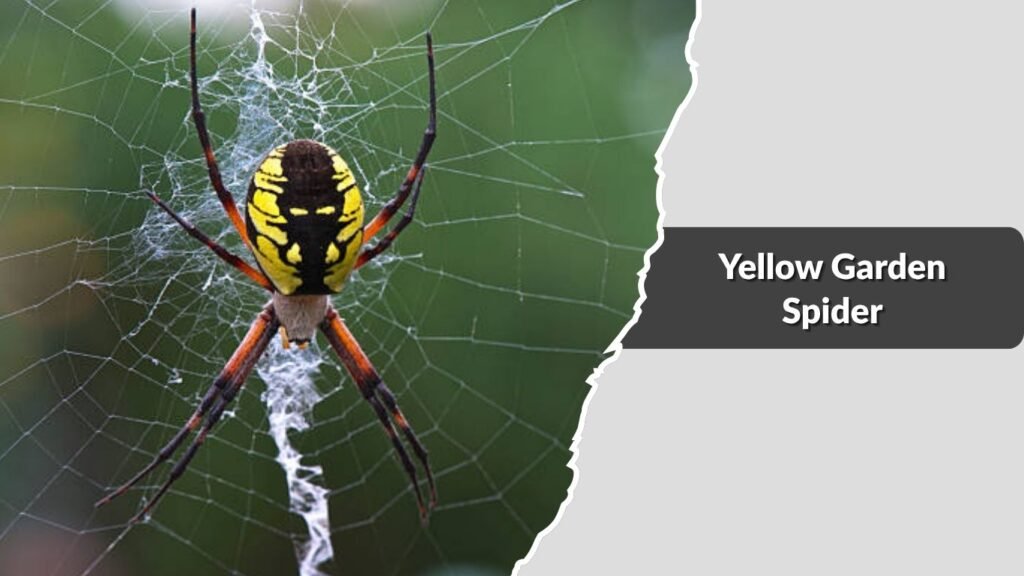
A large black spider with bright yellow markings is often the yellow garden spider, Argiope aurantia. It is also called the writing spider, zipper spider, or black-and-yellow garden spider.
This native orb-weaver commonly appears in gardens, fields, tall grass, and woodland edges during summer and early autumn.
Identification
Look for:
- A broad black abdomen with bright yellow patches
- A silvery front body
- Long black legs with short orange or yellow bands
- A large circular web
- A thick white zigzag through the web’s center
- Legs held together in pairs, creating an X-shaped posture
The white zigzag, known as a stabilimentum, is the quickest way to distinguish a yellow garden spider from a Joro. Joro webs are golden and multilayered but lack the garden spider’s bold central zipper. Yellow garden spider legs are black with shorter orange, yellow, or reddish bands.
5. Golden Silk Orb-Weaver
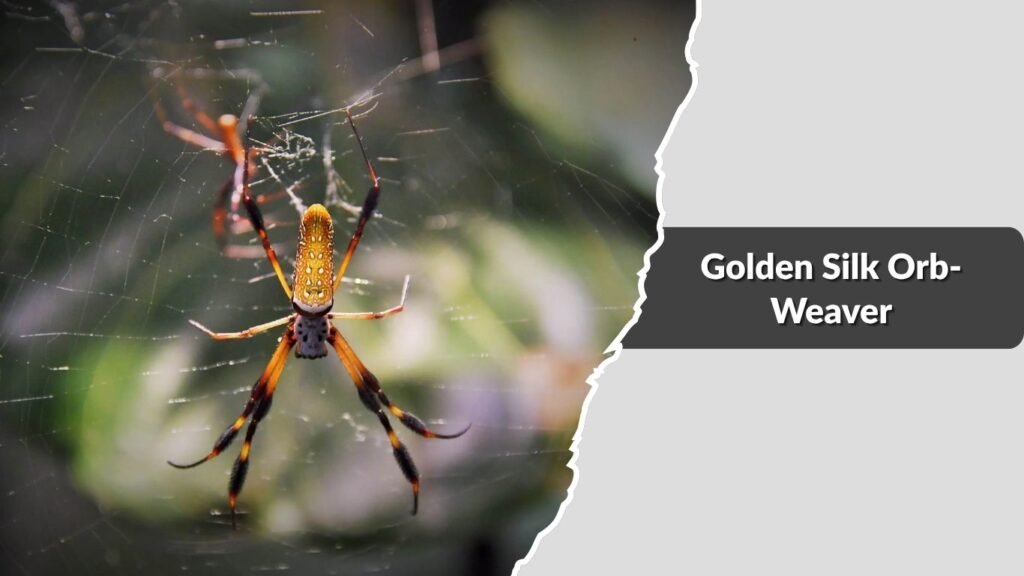
The golden silk orb-weaver is another large southeastern spider. It is frequently called a banana spider and may be confused with the Joro because both create golden webs.
A female golden silk orb-weaver has:
- A long orange or golden abdomen
- Yellow or pale spots
- Yellow-orange and brown legs
- Black brushes of hair near several leg joints
- A large, semi-permanent golden web
The black hair tufts on its legs are especially useful for identification. Joro spiders have smoother black legs with clear yellow bands. Golden silk orb-weavers are native to the Americas, whereas Joros were introduced from Asia.
6. Large Spotted and Marbled Orb-Weavers
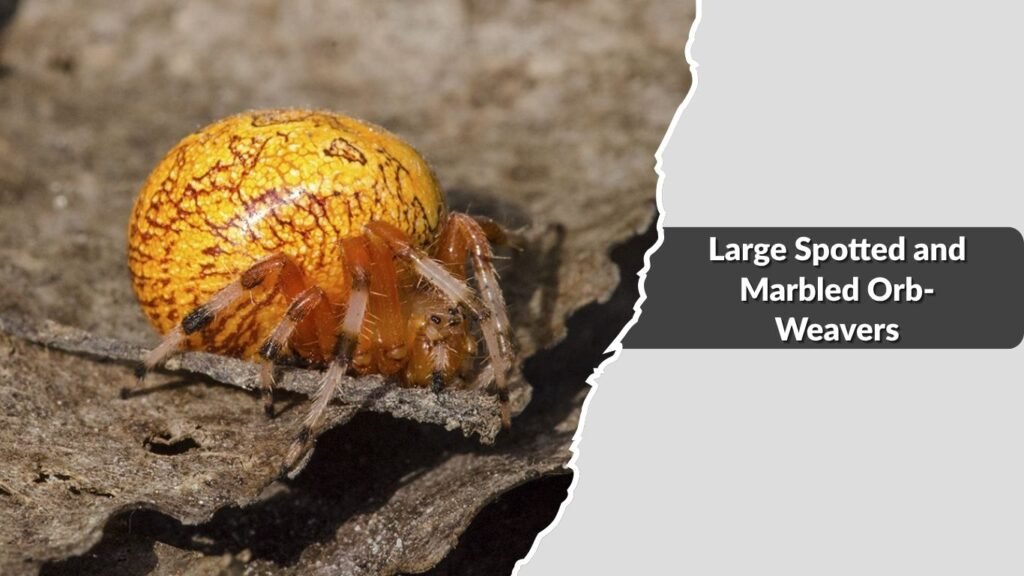
A spider with a large black abdomen or yellow spots may belong to one of several native orb-weaver species. Their rounded abdomens can become particularly swollen when females are mature or carrying eggs.
Possible species include:
- Spotted orb-weavers
- Marbled orb-weavers
- Tropical orb-weavers
- Banded garden spiders
- Spiny-backed orb-weavers
Colors vary widely. Some tropical orb-weavers range from nearly white to almost black, often with reddish-brown legs. Spiny-backed orb-weavers have a flattened abdomen with noticeable projections and black undersides marked by small yellow spots.
Is the Large Black Spider a Black Widow?
A large dark spider is not automatically a black widow. Adult female black widows have glossy, rounded black bodies and usually display a red hourglass-shaped marking underneath the abdomen.
Unlike Joros and garden spiders, black widows do not sit in organized circular webs. Their webs are irregular, tangled, and usually built in sheltered places such as:
- Woodpiles
- Sheds
- Crawl spaces
- Outdoor furniture
- Storage areas
- Dark corners
Black widows are medically significant, but they are shy and generally bite only when trapped or disturbed. Wolf spiders and other harmless hunting spiders are frequently mistaken for dangerous species.
How to Identify a Large Spider Quickly
Check for a Web
A wheel-shaped web indicates an orb-weaver. A messy tangled web in a protected corner could belong to a widow. A spider running without a web is more likely a wolf or fishing spider.
Examine the Markings
Bright yellow patches on a black abdomen suggest a yellow garden spider. Blue-black and yellow bands with red underneath indicate a female Joro. A plain dark, hairy body is more consistent with a wolf spider.
Observe the Body Shape
Orb-weavers generally have large, rounded or elongated abdomens and slender legs. Wolf spiders have stockier bodies and thicker legs. Fishing spiders look flatter and often hold their legs widely spread.
Consider the Location
Joros and garden spiders usually remain outdoors in large webs. Wolf spiders commonly enter garages and ground-level rooms. Fishing spiders are frequently found near water, trees, or damp woodland.
Are Large Black Spiders Dangerous?
Most large spiders encountered in Georgia are not medically dangerous. Orb-weavers, wolf spiders, and fishing spiders use venom to immobilize prey, but they generally avoid humans and bite only when handled, trapped, or squeezed.
A minor bite may cause temporary pain, redness, itching, or swelling. Wash the area with soap and water and apply a cool compress. Seek medical attention for severe pain, muscle cramps, breathing difficulty, widespread swelling, or other serious symptoms.
Should You Remove Them?
A spider outdoors usually provides natural insect control and can be left alone. It may capture moths, flies, mosquitoes, beetles, and other pests.
When a web blocks a doorway or walkway, remove it gently with a long broom while keeping your hands away from the spider. Reduce indoor encounters by sealing gaps, repairing screens, clearing clutter, and moving firewood away from the house.
FAQs
What is the large black spider in my house?
A large dark spider indoors is often a wolf spider or fishing spider. Both are active hunters that may wander inside accidentally. A clear photograph showing the eyes, body markings, and legs is needed for reliable identification.
What is the large black-and-yellow spider in Georgia?
The most likely possibilities are the yellow garden spider or Joro spider. A white zipper in the web indicates a yellow garden spider, while yellow and blue-black body bands in a golden web suggest a Joro.
How large can Joro spiders get?
An adult female’s body can exceed one inch, and the extended legs may create a span of approximately three to four inches. The male is much smaller and less colorful.
Why does the spider have such a large abdomen?
A large abdomen may indicate a mature female, especially one producing eggs. The abdomen also contains digestive, reproductive, respiratory, and silk-producing organs, so orb-weavers naturally look more rounded than hunting spiders.
Can large spiders jump or fly?
Wolf spiders can make short, rapid lunges but do not fly. Adult Joros cannot fly either. Newly hatched spiderlings can release silk and travel on air currents through a process called ballooning.
