
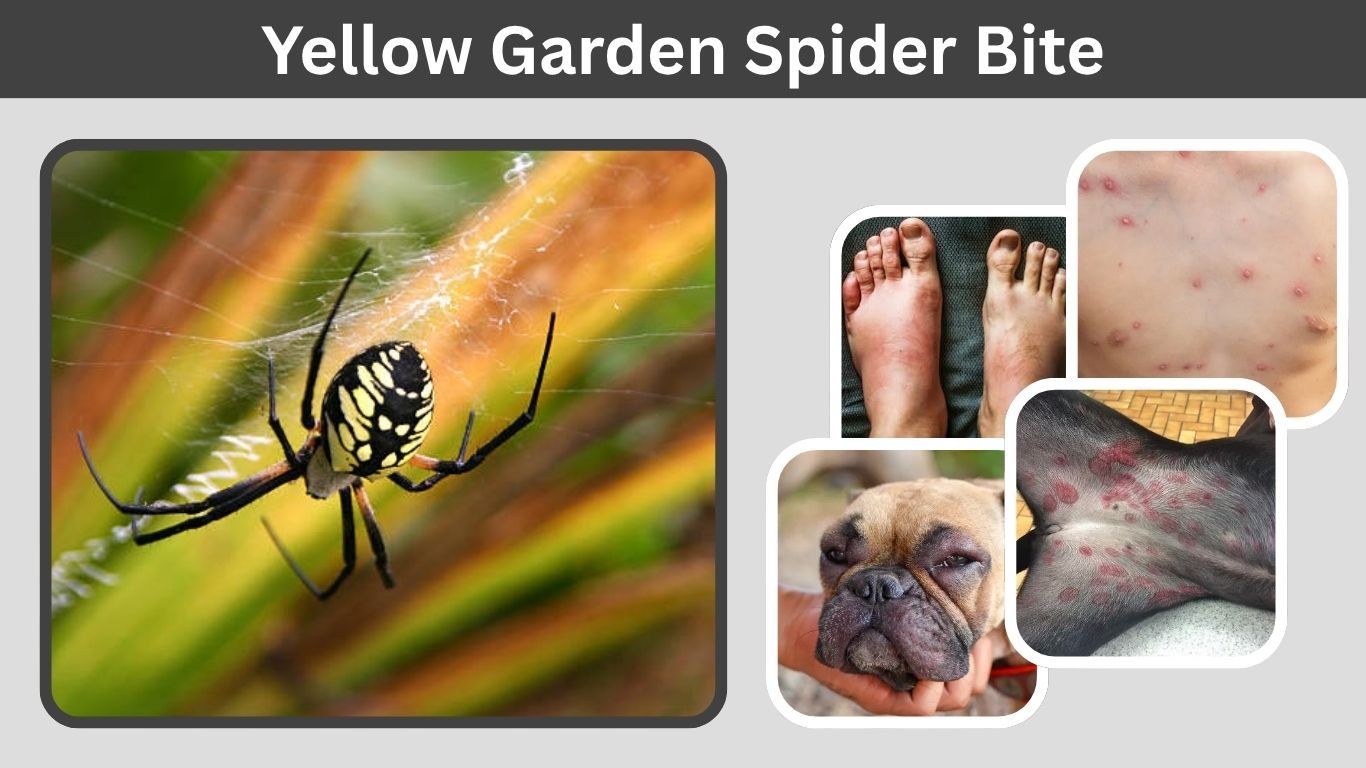
A yellow garden spider bite is possible, but it is extremely uncommon. The yellow garden spider, scientifically known as Argiope aurantia, is a large black-and-yellow orb-weaver that usually remains in the center of its circular web. Although its dramatic coloring and size can appear threatening, this spider is shy, relatively harmless, and more likely to escape than bite a person.
Most bites happen only when the spider is grabbed, squeezed, or accidentally trapped between clothing and skin. For most people, a bite causes temporary pain, redness, itching, or mild swelling rather than a serious medical emergency.
Does the Yellow Garden Spider Bite?
Yellow garden spiders have fangs and can bite, but they rarely do so. They normally use their venom to immobilize grasshoppers, flies, bees, wasps, beetles, moths, and other insects caught in their webs.
When disturbed, the spider usually responds by:
- Vibrating or bouncing its web
- Dropping into nearby vegetation
- Hiding behind leaves
- Moving away from the disturbance
- Remaining still and relying on camouflage
A defensive bite is most likely when someone handles the spider directly or presses it against the skin. Simply walking near its web, touching the silk, or working in the same garden will not normally result in a bite.
Is a Yellow Garden Spider Bite Poisonous?
The yellow garden spider is venomous, not poisonous. Venom is injected through a bite, while poison causes harm when it is touched, swallowed, or absorbed.
Its venom is effective against insects but is not considered medically significant to most humans. University extension sources describe garden orb-weavers as harmless to people and extremely unlikely to bite.
The spider cannot poison you by:
- Touching your skin
- Crawling across your clothing
- Building a web near your home
- Leaving silk on plants
- Being present around vegetables or flowers
A person with unusual sensitivity could experience a stronger reaction, but serious complications are not expected from a typical yellow garden spider bite.
Yellow Garden Spider Bite Symptoms
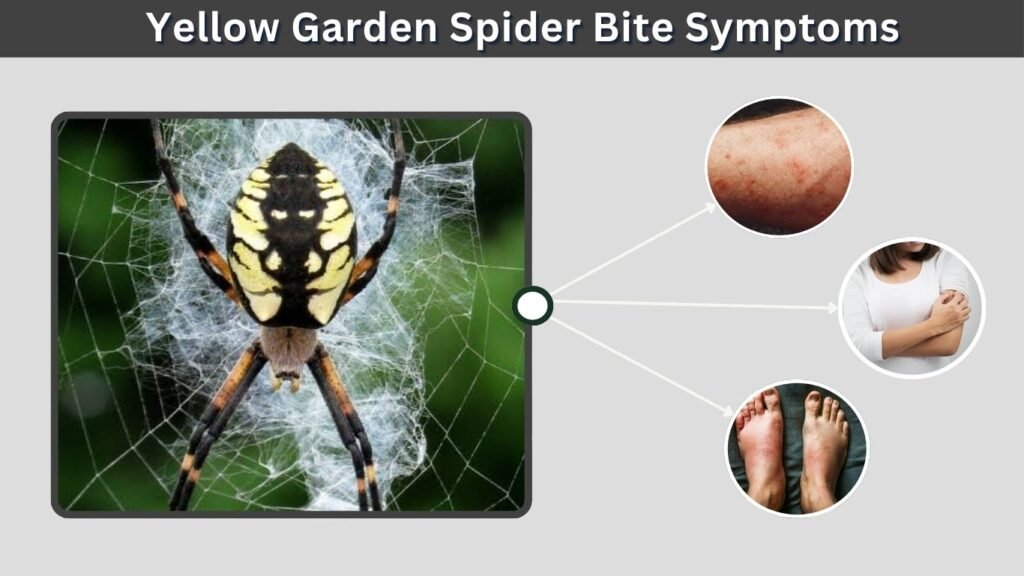
A mild bite reaction will normally remain close to the affected area. Symptoms may appear immediately or develop during the following several hours.
Common Local Symptoms
Possible symptoms include:
- A brief stinging or pinching sensation
- Mild or moderate pain
- Redness around the bite
- Minor swelling
- Itching
- Tenderness
- A small raised bump
- Two tiny puncture marks
General spider and insect bites may cause pain, redness, swelling, itching, and a bump at the site. The severity varies according to the person and the location of the bite.
What Does the Bite Look Like?
A yellow garden spider bite may resemble an ordinary insect bite. It can appear as a small red bump with mild swelling around it. Two fang marks might be visible, but they are often too small to notice.
The appearance alone cannot confirm which animal caused the injury. Mosquito bites, flea bites, skin infections, allergic reactions, and irritation from plants may all be mistaken for spider bites.
Unless someone witnessed the bite and correctly identified the spider, it is often difficult to prove that a yellow garden spider was responsible.
Yellow Garden Spider Bite Treatment
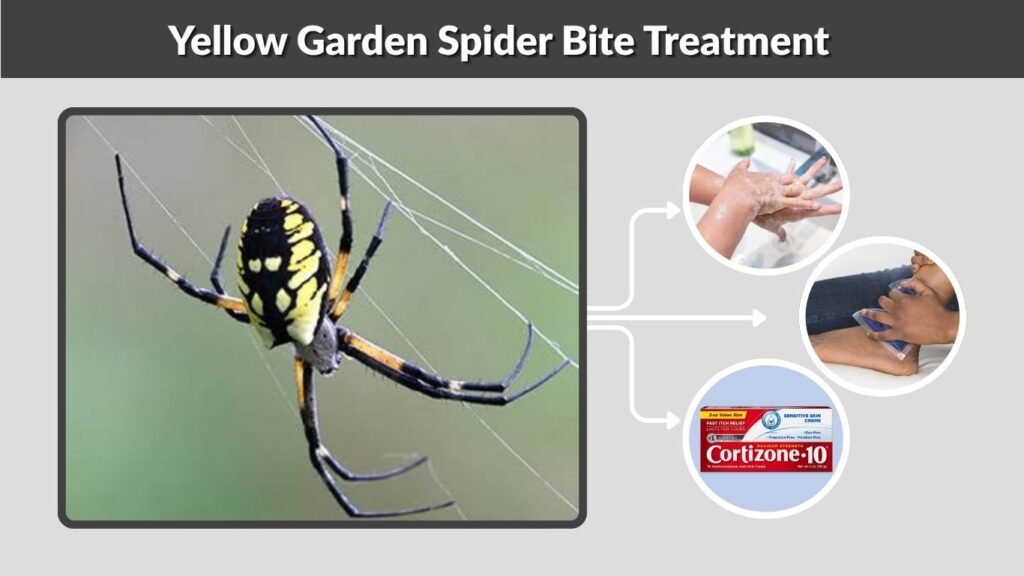
Most mild bites can be treated at home with basic first aid. The main goals are to clean the skin, reduce discomfort, and watch for signs of infection or an allergic reaction.
Immediate First Aid
- Move away from the spider.
Do not attempt to catch it with your bare hands. - Wash the bite.
Gently clean the area with soap and water. - Apply a cold compress.
Place a cloth filled with ice or cold water over the bite for approximately 10–20 minutes. - Elevate the affected area.
Raising an injured hand, arm, foot, or leg may help control swelling. - Avoid scratching.
Scratching may damage the skin and introduce bacteria. - Monitor the area.
Check whether the redness, pain, and swelling are improving or spreading.
Poison Control recommends washing bites with soap and water and applying cold for 10–20 minutes. It also notes that nonprescription antihistamines or topical anti-itch products may sometimes help, although medication should be used according to its label and personal medical circumstances.
Do not cut the bite, attempt to suck out venom, or place unwrapped ice directly on the skin.
How Long Do Symptoms Last?
A minor reaction may begin improving within several hours or a few days. Mild tenderness or itching can occasionally last longer, particularly if the skin has been scratched.
A bite should not normally cause expanding tissue damage, severe muscle cramps, or widespread illness. Symptoms that continue worsening rather than improving deserve medical evaluation because the cause may be infection, allergy, or a different biting animal.
When Should You Seek Medical Care?
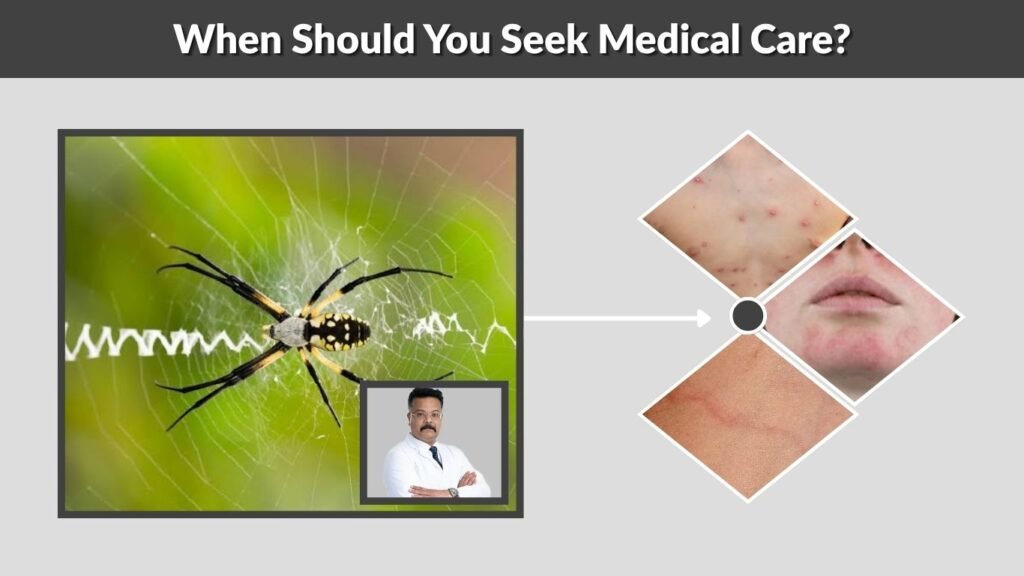
Contact a healthcare professional when local symptoms become severe, continue spreading, or show signs of infection.
Warning signs include:
- Rapidly increasing swelling
- Severe or worsening pain
- Expanding redness
- Skin that feels increasingly hot
- Pus or fluid draining from the wound
- Red streaks moving away from the bite
- Swollen lymph nodes
- Fever
- Symptoms lasting several days without improvement
Poison Control advises seeking help when local symptoms worsen significantly, symptoms affect other parts of the body, or the person has a history of severe reactions.
Signs of a Serious Allergic Reaction
Seek emergency care immediately if the person develops:
- Difficulty breathing
- Wheezing
- Swelling of the tongue, lips, face, or throat
- Widespread hives
- Dizziness or fainting
- Confusion
- Severe weakness
- Repeated vomiting
A serious allergic response would be unusual after a yellow garden spider bite, but any bite or sting can potentially trigger a dangerous reaction in a sensitive person.
Yellow Garden Spider Bite vs Dangerous Spider Bite
Yellow garden spiders are sometimes confused with medically important species because of their large bodies and bold markings. However, their behavior, web, and symptoms differ from those associated with widow or recluse spiders.
| Feature | Yellow garden spider | Medically important spider |
| Typical web | Large, organized circular web | Often irregular or sheltered |
| Behavior | Visible and likely to retreat | Varies by species |
| Bite frequency | Extremely uncommon | Still uncommon but potentially serious |
| Expected reaction | Local pain, redness, or swelling | May involve severe or systemic symptoms |
| Tissue damage | Not normally expected | Possible with certain species |
| Medical danger | Low for most people | May require urgent evaluation |
A yellow garden spider usually sits head-down in a large orb web containing a conspicuous white zigzag of silk. These identification features distinguish it from many spiders associated with medically significant bites.
Can a Yellow Garden Spider Bite a Dog?
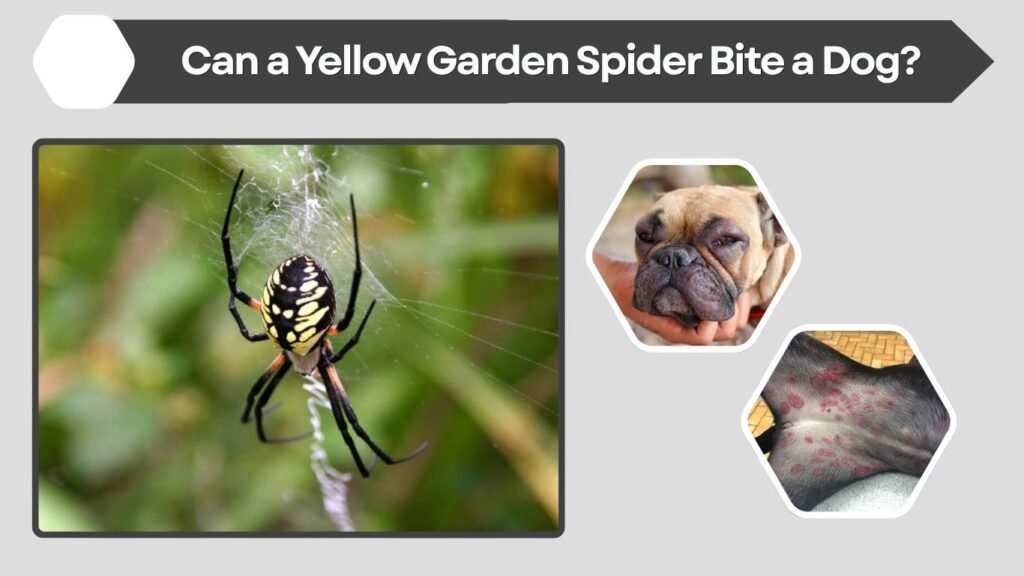
A dog could be bitten if it bites, paws at, or traps the spider against its skin. However, normal contact with the web or nearby vegetation is unlikely to cause harm.
A pet may show:
- Localized swelling
- Tenderness
- Licking or chewing at the area
- Temporary discomfort
- Redness around the mouth, nose, or paw
Contact a veterinarian if the dog develops facial swelling, vomiting, weakness, difficulty breathing, severe pain, or rapidly worsening symptoms. Do not give human pain medicine or allergy medication unless a veterinarian approves the product and dosage.
How to Avoid a Yellow Garden Spider Bite
Yellow garden spiders are beneficial predators, so killing them is usually unnecessary. Simple precautions can prevent accidental contact.
- Look carefully before reaching into dense plants.
- Wear gloves while pruning or clearing vegetation.
- Use a stick or garden tool to move webbing.
- Avoid handling spiders or egg sacs.
- Teach children to observe the spider without touching it.
- Relocate webs only when they block entrances or pathways.
- Shake out gloves and clothing stored outdoors.
These spiders help control many flying and plant-feeding insects, making them useful residents of gardens and fields.
FAQs
Can a yellow garden spider bite kill you?
A yellow garden spider bite is not considered deadly to a healthy person. Its venom is designed to immobilize insects, and bites are extremely rare. Emergency care is still necessary if someone develops difficulty breathing, facial swelling, fainting, or another severe allergic symptom.
What happens if a yellow garden spider bites you?
Most people would experience a localized reaction such as brief pain, redness, itching, tenderness, or mild swelling. Wash the skin, apply a cold compress, and monitor the area. Seek medical advice if symptoms spread, worsen, or show signs of infection.
Does a yellow garden spider bite hurt?
The bite may produce a short pinching or stinging sensation. Discomfort is generally expected to remain mild or moderate and localized. Pain that becomes severe or continues worsening may indicate an infection, allergic response, or a bite from another animal.
Should I capture the spider after a bite?
Do not attempt to capture it with your bare hands. A clear photograph taken from a safe distance may help with identification. Avoid risking another bite merely to collect the spider, especially when the person is already experiencing concerning symptoms.
Do yellow garden spiders bite without being touched?
They are extremely unlikely to approach and bite an undisturbed person. Most defensive bites would require direct handling, squeezing, or trapping the spider against the skin. Their normal response to disturbance is to retreat, drop from the web, or vibrate the silk.
