
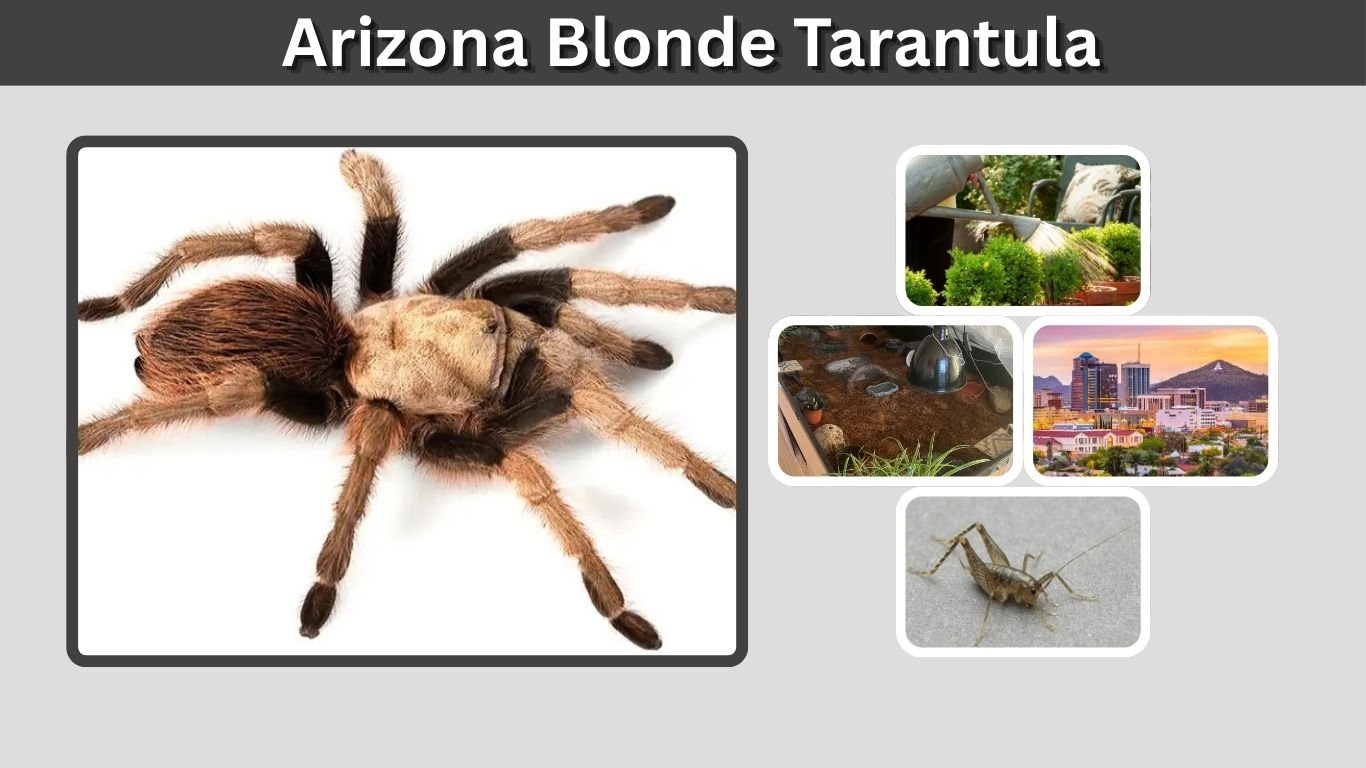
The Arizona blonde tarantula is a slow-moving desert spider recognized by its sandy carapace, pale hairs, dark abdomen, and sturdy terrestrial build. Its generally calm temperament and simple housing requirements make it a popular display species for beginner and experienced keepers. However, it is still a venomous wild animal capable of biting or releasing irritating abdominal hairs. Proper care requires a secure, low enclosure, deep dry substrate, a water dish, suitable insect prey, and minimal handling.
What Is an Arizona Blonde Tarantula?
The Arizona blonde tarantula’s accepted scientific name is Aphonopelma chalcodes. It belongs to the tarantula family Theraphosidae and may also be called the Arizona blond, desert blonde, western desert, or Mexican blonde tarantula. The World Spider Catalog recognizes Aphonopelma chalcodes as an accepted species.
This New World terrestrial tarantula spends most of its life at ground level or inside a burrow. Females may remain in the same general area for many years, while mature males leave their shelters and wander in search of mates.
Arizona Blonde Tarantula Identification
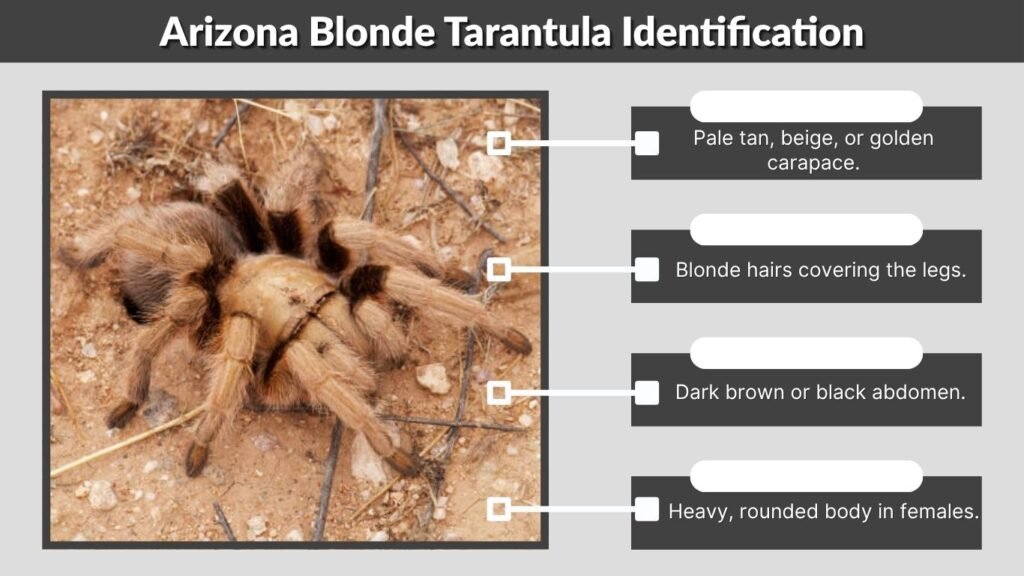
The spider’s pale desert coloration helps it blend into sandy soil and dry vegetation. Females usually have the classic blonde appearance, while mature males may become darker and leggier.
Key Identification Features
- Pale tan, beige, or golden carapace
- Blonde hairs covering the legs
- Dark brown or black abdomen
- Heavy, rounded body in females
- Longer and slimmer legs in mature males
- Dense abdominal hairs used defensively
- Ground-dwelling rather than tree-dwelling behavior
The species can resemble other southwestern Aphonopelma. Professional identification may require location, anatomy, and genetic information because coloration alone is not always reliable. A major taxonomic revision found that geography and molecular evidence are important for distinguishing it from similar species.
Arizona Blonde Tarantula Size
Adults commonly reach approximately four to six inches across the legs. Females generally develop heavier abdomens and more robust bodies, while mature males appear thinner and have proportionally longer legs. Zoo and university sources report adult body measurements around three to five inches, depending on how the spider is measured.
| Characteristic | Typical information |
| Adult leg span | Approximately 4–6 inches |
| Lifestyle | Terrestrial and burrowing |
| Activity | Mainly nocturnal |
| Temperament | Usually calm but defensive |
| Diet | Insects and other small prey |
| Female lifespan | Commonly 20–30 years |
| Male lifespan | Commonly 5–10 years |
Arizona blonde tarantulas grow slowly. Females may require eight years or longer to become mature, so an unsexed sling represents a considerable long-term commitment.
Arizona Blonde Tarantula Natural Habitat and Range
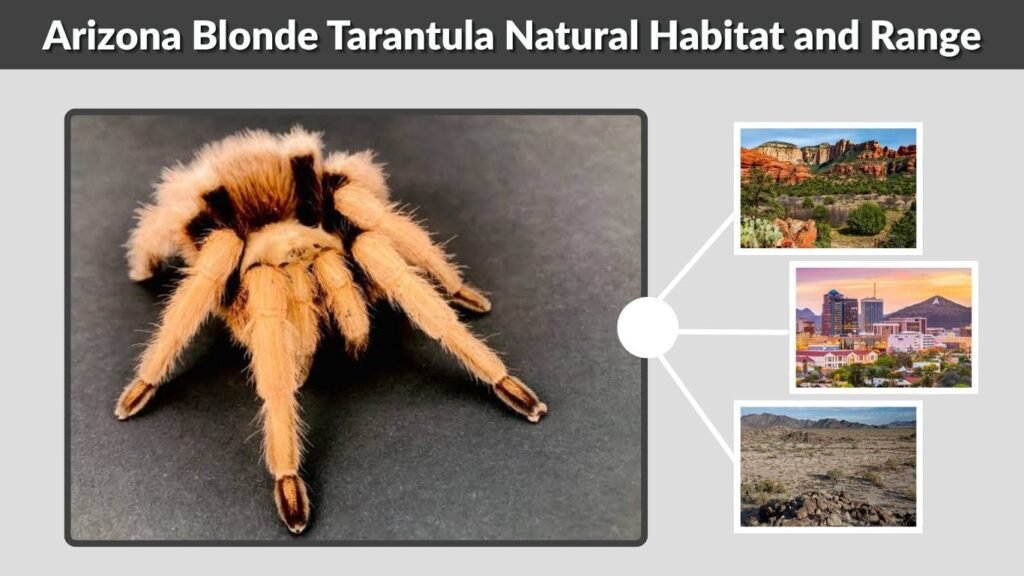
Arizona blonde tarantulas inhabit arid areas of the southwestern United States, especially southern Arizona, with records extending into parts of New Mexico. The species is strongly associated with the Sonoran Desert and dry landscapes containing soil suitable for burrowing.
The spider excavates its own burrow or uses a sheltered opening beneath rocks. A burrow protects it from extreme daytime heat, cold nights, predators, and dehydration. Silk placed near the entrance helps the tarantula detect vibrations produced by approaching prey or possible threats.
Arizona Blonde Tarantula Enclosure
An Arizona blonde requires a horizontal terrestrial enclosure with more floor space than climbing height. Adults can be kept in an enclosure around 12 inches long and wide, although the exact dimensions should be adjusted to the spider’s leg span.
Essential Enclosure Features
- Tight, escape-proof lid
- Approximately 4–6 inches of substrate
- Cork bark or another secure hide
- Shallow water dish
- Good ventilation
- Limited empty space above the substrate
- No tall rocks or hard climbing decorations
Suitable substrates include unfertilized topsoil, coco fiber, or a compactable soil-based mixture. The material should support a burrow without remaining wet or swampy.
A terrestrial tarantula can suffer a fatal abdominal rupture after falling onto hard decorations. Filling much of the enclosure with substrate reduces dangerous climbing height. Current husbandry guidance recommends approximately 10–15 centimeters of compactable substrate for adults.
Temperature and Humidity
Normal indoor temperatures of approximately 68–78°F are generally suitable. Additional heating is usually unnecessary when the room remains comfortably warm. Heat lamps and unregulated heating pads can overheat or dry the enclosure dangerously.
Keep most of the substrate dry while providing a clean water dish at all times. Occasionally overflow a small amount of water into one corner, particularly for younger spiders. Avoid maintaining constantly wet conditions because stagnant moisture can encourage mold and mites.
Arizona Blonde Sling Care
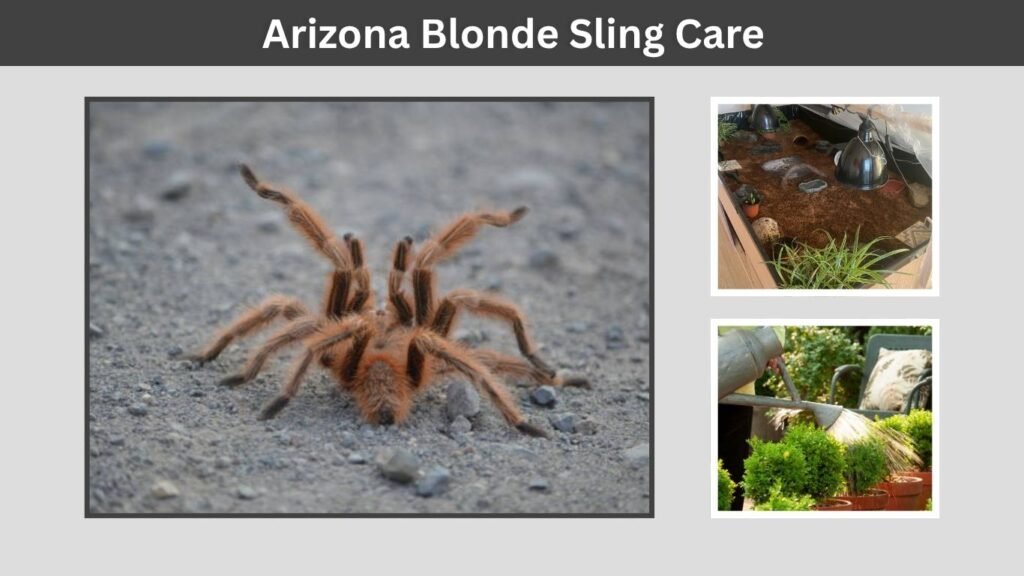
Spiderlings need smaller containers than adults so that food and hydration can be monitored easily. Provide enough substrate for digging, ventilation holes too small for escape, and a small starter burrow.
Young slings can dehydrate more quickly than adults. Keep one lower corner slightly moist without soaking the entire container. Water droplets may be placed on the wall for extremely small slings that cannot safely use a normal dish.
Feed slings small roach nymphs, cricket pieces, or other appropriately sized captive-raised prey. Pre-kill insects that are too large for the sling and remove uneaten food before it molds.
What Do Arizona Blonde Tarantulas Eat?
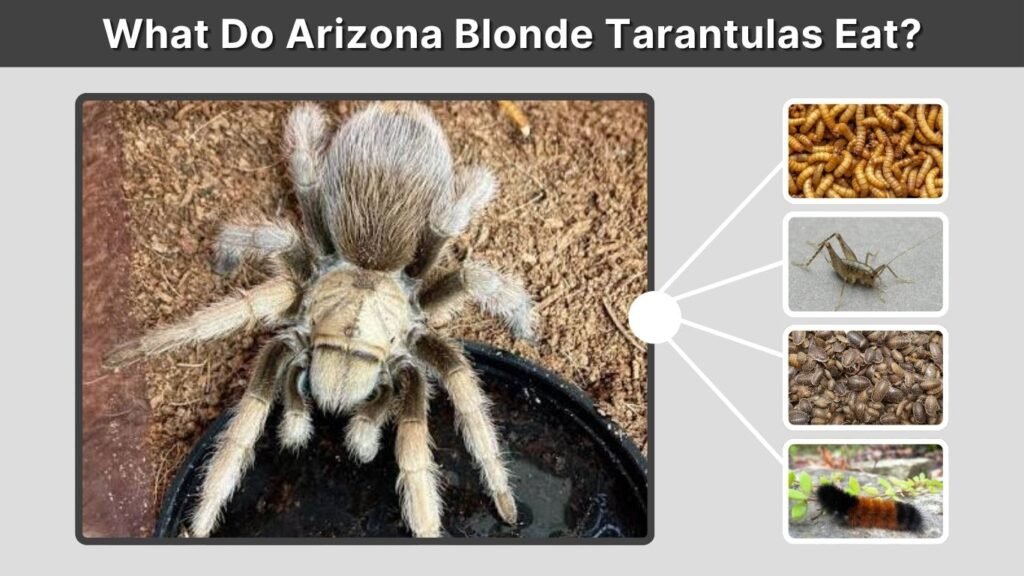
Arizona blonde tarantulas are carnivorous ambush predators. Wild individuals eat crickets, grasshoppers, beetles, caterpillars, cicadas, and occasionally other small animals.
Suitable captive foods include:
- Crickets
- Dubia roaches
- Mealworms
- Superworms
- Locusts
- Other captive-raised feeder insects
Juveniles may eat once or twice weekly, while adults often need food only every one or two weeks. Use the abdomen’s condition as a guide instead of feeding on a rigid schedule. Avoid allowing the abdomen to become excessively large.
Wild-caught prey may carry pesticides, parasites, or contaminants. Vertebrate prey such as mice is unnecessary and can injure the spider or create difficult-to-clean waste.
Molting and Food Refusal
Arizona blonde tarantulas may stop eating for weeks or even months, especially before molting. Long fasting periods are common in slow-growing Aphonopelma species and do not automatically indicate illness.
Possible premolt signs include:
- Refusing prey
- Becoming less active
- Darkening of the abdomen
- Closing the burrow entrance
- Increased webbing
- Lying on the back
A tarantula lying upside down is usually preparing to molt. Do not turn it over or disturb it. Remove all live prey because crickets and mealworms can injure a defenseless molting spider.
Wait until the new fangs have hardened and become dark before feeding again. Larger adults may require a week or longer after molting.
Temperament and Handling
Arizona blondes are widely regarded as slow-moving and relatively docile, which contributes to their popularity. However, temperament differs among individuals, and even a calm tarantula may react defensively when startled.
Defensive behaviors may include retreating, raising the front legs, exposing the fangs, flicking urticating hairs, or biting. Routine handling is not recommended because it provides no benefit to the spider and creates a serious risk of falling.
Use a clear catch cup and long tools when rehousing the tarantula. Never grab it with your fingers.
Are Arizona Blonde Tarantulas Venomous?
Yes. Like other tarantulas, Arizona blondes possess venom used to immobilize prey. A bite can cause puncture wounds, localized pain, redness, and swelling. Serious effects are uncommon, but individual reactions can vary.
Their urticating hairs may be a more frequent concern. The spider can brush tiny barbed hairs from its abdomen when threatened. These hairs may cause itching and skin irritation and can be especially dangerous if they enter the eyes or airways.
Wash exposed skin, avoid rubbing the affected area, and seek medical attention for eye exposure, breathing difficulty, severe swelling, spreading pain, or other significant symptoms.
Male vs Female Arizona Blonde Tarantula
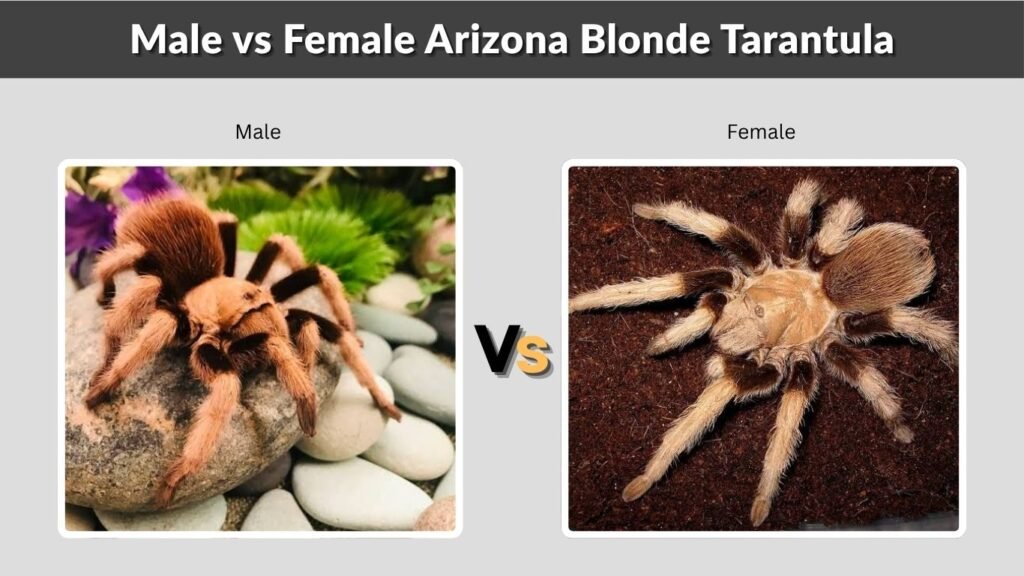
Females are generally heavier, paler, and longer-lived. Mature males develop slimmer bodies, longer legs, enlarged reproductive structures on their pedipalps, and hooks on the front legs.
| Feature | Female | Mature male |
| Body shape | Thick and robust | Slim and long-legged |
| Typical color | Classic blonde appearance | Often darker |
| Lifespan | Commonly 20–30 years | Commonly 5–10 years |
| Mature behavior | Usually remains near burrow | Wanders in search of females |
| Value to buyers | Usually more expensive | Generally less expensive |
Sex cannot be determined reliably from color alone. Examining a suitable molt is one of the safest methods for confirming whether a tarantula is male or female.
Buying an Arizona Blonde Tarantula
Arizona blondes may be sold as slings, unsexed juveniles, mature males, or confirmed females. Price varies according to size, sex, origin, availability, and location.
Before purchasing, confirm:
- The scientific name is Aphonopelma chalcodes
- The spider was captive-bred or legally sourced
- Its approximate size and molt history
- Whether the stated sex has been confirmed
- Local ownership and shipping regulations
- The seller’s live-arrival policy
Captive-bred spiders are preferable because removing slow-growing females from the wild can affect local populations. Informal names such as “palomino” or “Mexican blonde” may be used inconsistently, so the scientific name is the safest identification.
FAQs
Are Arizona blonde tarantulas good pets?
They can make excellent display animals for beginners who understand that tarantulas should not be handled. They are generally hardy, slow-moving, quiet, and inexpensive to feed, but females may require several decades of care.
Do Arizona blonde tarantulas burrow?
Yes. They naturally dig or occupy deep shelters that protect them from desert temperature extremes. Captive specimens should receive deep, compactable substrate and a starter hide.
How often should an Arizona blonde eat?
Slings may eat once or twice weekly, juveniles approximately weekly, and adults every one or two weeks. Feed according to abdomen condition and remove uneaten insects promptly.
Why does an Arizona blonde have a bald abdomen?
A bald patch commonly appears after the spider flicks defensive hairs. It may also become darker before a molt. The hairs normally return after the tarantula replaces its exoskeleton.
Are Arizona blonde tarantulas aggressive?
They are generally calm rather than aggressive. Nevertheless, they may defend themselves when threatened, cornered, or disturbed. Any individual can flick irritating hairs, display its fangs, or bite.
